What to Do When Mosquito Repellent Plant Has Bugs? Pest and Disease Control and Swallowtail Butterfly Elimination Methods
Every summer, many people keep a few pots of mosquito repellent plant at home, because with it, there is no need to worry about mosquitoes daring to come near! However, the mosquito repellent plant cannot repel all insects, and if it is not cared for properly, it can also be attacked by pests and diseases. So what should you do when the mosquito repellent plant has bugs? The following are several pest and disease control methods for the mosquito repellent plant. Follow along with the editor to take a look.
I. What to Do When the Mosquito Repellent Plant Has Bugs: Identify the Pest
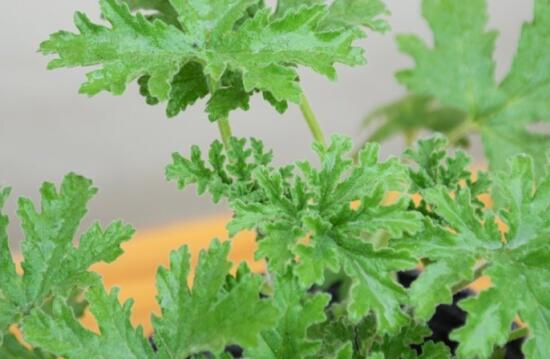
Because of the mosquito repellent plant's efficacy, many people keep a pot at home, but most of them are beginners, so many do not follow the mosquito repellent plant's cultivation methods. The result is that the mosquito repellent plant gets bugs, making it unable to repel mosquitoes! At this point, we should not panic, but should identify the pest and then solve it accordingly. Generally speaking, the mosquito repellent plant is mainly affected by 3 types of pests. Let us continue reading below.
II. Pest and Disease Control for the Mosquito Repellent Plant
1. Swallowtail butterfly larvae
Although the mosquito repellent plant can repel insects such as mosquitoes, it is helpless against swallowtail butterflies. It is understood that swallowtail butterfly larvae will feed on buds, tender leaves and mature leaves, and can consume 5-6 leaves in their lifetime. When the larvae are startled, they extend a pair of red or yellow antennae from their heads and secrete an unpleasant odor to drive away intruders.
Control method: After discovery, directly capture them by hand. You can also use 1000-1500 times dilution of killing emulsifiable concentrate, 800-1000 times dilution of 90% trichlorfon crystal, 80% dichlorvos or 50% fenitrothion for spraying control.
2. Mole crickets
One of the pests of the mosquito repellent plant, it is an insect spread through water, causing gaps between the plant roots and the soil, resulting in poor water absorption by the plant.
Control method: Remove any that can be seen, or use fresh horse manure to trap them, then eliminate them by hand; because mole crickets are phototactic, they can also be trapped and killed with light.
3. White grubs
This insect is also called the scarab beetle. It is one of the main pests of the mosquito repellent plant, able to feed on the plant's roots and gradually damage the plant.
Control method: When repotting, remove any insects you see, then use insecticide to sterilize the roots.
4. Leaf drop symptoms
Having discussed pests, let us now look at diseases, among which the most common is leaf drop symptoms. Once care is improper, such as high air humidity and poor ventilation, the root system of the mosquito repellent plant will rot, causing the leaves to become wrinkled and shrunken.
Solution: At this point, you should spray some fungicide, but be careful not to spray too much. Note: If yellowing and dropping of the mosquito repellent plant's leaves occur over a short period, this may be caused by temperature imbalance and insufficient light. In this case, we only need to provide adequate light on schedule.
5. Stunted growth
Among the pest and disease problems of the mosquito repellent plant, stunted growth symptoms often also appear. At this point, you should consider the soil problem. It is understood that the mosquito repellent plant prefers slightly acidic soil. If alkaline soil is used for cultivation when planting, it will cause the plant to be short and stop growing.
Solution: Loosen the soil on schedule, remove the top layer of soil, add some new soil, then add a small amount of diluted agent to improve the soil properties. Note that the new soil should be loose.
That is all the editor has to introduce about pest and disease control for the mosquito repellent plant. I believe everyone now knows what to do when the mosquito repellent plant gets bugs or becomes sick! Overall, the mosquito repellent plant is rarely troubled by pests and diseases, so as long as everyone cares for it carefully, these troublesome matters will not come knocking. Finally, may everyone's mosquito repellent plant be able to achieve its mosquito-repelling effect.
What to Do When Sage Has Bugs: Pest and Disease Control for Sage / 2 Pests and 2 Diseases
When we cultivate sage, the last thing we want to encounter is pests and diseases. Such problems are extremely harmful to the plant, not only affecting its ornamental value, but in severe cases also causing the plant to wither and die. So what should you do when sage has bugs? What also needs to be done for sage pest and disease control? Below, the editor will guide everyone through understanding this.
I. What to Do When Sage Has Bugs: Find the Cause
To know what to do when sage has bugs, we first need to understand what kind of bug it is, so that we can carry out targeted treatment, because the treatment methods for each pest and disease are different. Specific details are introduced in detail below for everyone to understand.
II. Pest and Disease Control for Sage (Pests)
1. Whiteflies
Whiteflies are a type of tiny plant-feeding piercing-sucking insect. They are extremely harmful to sage, gradually sucking the sap from its phloem, and because of their strong reproductive capacity, they can reach very high densities in a very short period of time, thereby sucking large amounts of sap and causing the plant to weaken.
Control method: When dealing with this sage pest and disease problem, we can use 25% buprofezin emulsifiable concentrate diluted 1500 times for spraying to kill them. It can kill eggs, nymphs and adults.
2. Aphids
Aphids are a relatively common plant-feeding insect, with more than 4000 species worldwide. Their body length is often less than 10 mm, making them rather difficult to spot. They leave honeydew on the plant's leaves and suck the sap from the leaves, causing sage leaves to wither, yellow and lose their luster, and can also cause sooty mold and other diseases.
Control method: For this sage pest and disease problem, we can directly use 2.5% fenpropathrin emulsifiable concentrate diluted 3000 times for spraying to kill them.
III. Pest and Disease Control for Sage (Diseases)
1. Leaf spot disease
Leaf spot disease is a disease that exists in many plants, and sage is no exception. It mainly harms sage's leaves, petioles and stems. When the disease occurs, many brown spots appear on the affected parts, and over time the spots gradually spread, eventually causing the plant to gradually wither and die.
Control method: When dealing with this sage pest and disease problem, we can use 4% flusilazole diluted 1000 times for spraying. Generally, spray once every 7-10 days, and after 2-3 times it can be cured.
2. Damping-off disease
Damping-off disease is a disease caused by infection with fungi of the Deuteromycotina subdivision. It mainly harms the base of the stem or underground roots of sage seedlings. At first, many dark brown irregular spots appear on the affected parts, and over time they gradually spread. After the spots expand and encircle the stem, the plant will dry up and die.
Control method: For this sage pest and disease problem, we can use 20% tolclofos-methyl emulsifiable concentrate diluted 1200 times or 72.2% propamocarb aqueous solution diluted 800 times to spray the diseased plants. Generally, apply once every 7-10 days, and after about 3 times it can be cured.
What to Do When Pitcher Plant Has Bugs: Pest and Disease Control for Pitcher Plant / 1 Pest and 2 Diseases Treated by Spraying
When talking about the pitcher plant, everyone thinks of its function of catching mosquitoes and flies. But did you know that even such a mosquito-repelling plant can get bugs! Because the pitcher plant is a tropical plant, its growth in our country will be affected, and if you are not careful it will be attacked by pests and diseases. So what should you do when the pitcher plant has bugs? The following is pest and disease control for the pitcher plant. Let us take a look together.
I. What to Do When the Pitcher Plant Has Bugs: Spray Pesticide
It is understood that the pitcher plant is a tropical plant, and cultivating it in most areas of our country will have a certain impact on its growth. If you are not careful, the pitcher plant will be attacked by pests and diseases. So what should you do when the pitcher plant has bugs? It is actually very simple, just spray pesticide.
As for what pesticide to spray, there is a detailed introduction in the pest and disease control for the pitcher plant. Let us continue reading below.
II. Pest and Disease Control for the Pitcher Plant
According to the editor's research, if you do not strictly follow the pitcher plant's cultivation methods, the pitcher plant is prone to leaf spot disease, root rot disease, sunscald disease, etc. Among these, leaf spot disease and root rot disease are more serious. In addition, it can also be attacked by scale insects. The specific symptoms and control methods are as follows:
1. Root mealybugs
A type of scale insect, it mainly sucks the fresh sap of the pitcher plant. Symptoms of attack: pitcher plant leaves turn yellow, wither, and even drop, seriously affecting the ornamental effect of the pitcher plant.
Control method: If a small number of root mealybugs are found, they can be wiped off with a brush or coarse linen, then the diseased leaves should be cut off and burned in a centralized manner to reduce the source of disease; finally, spray 40% profenofos emulsifiable concentrate diluted 1000-1500 times or 25% ikaruga emulsifiable concentrate diluted 700-800 times for spraying to check and kill them. Note that both the front and back sides of the branches should be covered to increase the insect-killing rate.
2. Leaf spot disease
One of the pests and diseases of the pitcher plant, it mainly infects its leaves. Symptoms of illness: water-soaked spots and small dots appear on the leaves, gradually expanding to form oval spots that are brown. The diseased part produces a black mold layer and later ruptures. It seriously affects plant growth and ornamental effect.
Control method: Promptly remove diseased leaves and destroy them in a centralized manner to reduce the source of disease; when the disease occurs, spray fungicide or 1000 times antibacterial solution. When spraying, it should be even and the entire plant should be covered, including the back of the leaves.
3. Root rot disease
In a high-temperature summer environment, if there is no ventilation and the water used for watering contains lime, then the pitcher plant will suffer from root rot disease. Symptoms of illness: the aboveground leaves turn yellow and gradually wilt. The underground roots turn brown, rot, and do not grow new roots for a long time.
Control method: In the early stage of the disease, promptly spray pesticide. You can choose lichujing, genfuling, etc., dilute with clean water into a solution and spray. To avoid root rot, you can mix peat soil, dry cow manure, leaf mold and sandy soil, hang it in a greenhouse, and provide appropriate shade.
4. Cold protection and pest prevention
The pitcher plant is a tropical plant and is prone to frostbite when the temperature is low, with many small patches appearing on the leaves. If it lives in a humid and dark environment for a long time, it is also prone to sooty mold. In summer, it can also be attacked by pests such as thrips and scale insects.
Control method: When the temperature drops, keep it warm in time, and it is best to place it in an air-conditioned room. To avoid attack by pests, promptly spray special insecticide. Ventilate in time, expose it to sunlight, and clean up any bugs promptly when found.
That is all the editor has to introduce about pest and disease control for the pitcher plant. I believe everyone now knows what to do when the pitcher plant gets bugs or becomes sick! Overall, although the pitcher plant can repel insects, it can also get bugs, so to avoid unnecessary trouble, everyone should care for it attentively.