What to do when Photinia × fraseri gets bugs? 7 pest and disease control methods
Photinia × fraseri has a fairly strong ability to adapt to the environment, and it can be planted in many places, such as streets, indoors, balconies and so on. But even with such strong adaptability, pests and diseases can still appear. What should you do when Photinia × fraseri gets bugs? Here we introduce common pest and disease control methods for Photinia × fraseri.
What to do when Photinia × fraseri gets bugs
1. Aphids
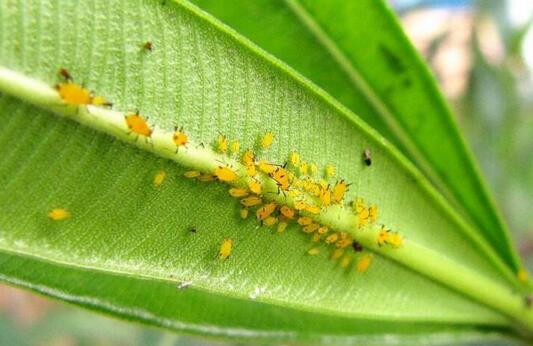
Usually they appear in the tender leaves or new buds of Photinia × fraseri, causing the leaves to become greasy and not bright red enough, and they also leave black or yellow spots on the leaves. In severe cases, the leaves turn yellow and fall off.
Control methods: (1) Sprinkle plant ash on the plant, then wash it with clean water; after washing, spray with chinaberry leaf juice; (2) Dilute 40% dimethoate or omethoate into a 1500-fold solution and spray it.
2. Root-knot nematodes
The main part they harm is the root system of Photinia × fraseri. Their specific manifestation is a marked increase in lateral roots and fibrous roots, and conical white root galls appear on the fibrous roots of young roots. The plant grows slowly and stays short, and the leaf color also becomes abnormal.
Control methods: (1) Deeply plow the soil before planting, turning the topsoil to at least 25 cm below, which can reduce the occurrence of pest damage; (2) Evenly apply granular agents such as 10% fosthiazate, 3% miral, and 5% isazofos to the soil, which has a good preventive effect on root-knot nematodes.
3. Longhorn beetles
They are extremely harmful to the branches and trunks of Photinia × fraseri, affecting the plant's normal growth and also bringing other pathogens. When wounds appear on the branches and trunks, these pathogens trigger other diseases. Among the pest and disease control problems of Photinia × fraseri, their damage period is the longest.
Control methods: (1) Strengthen maintenance and management. Using scientific cultivation methods for Photinia × fraseri can make its growth more vigorous, while longhorn beetles usually only harm weak-growing plants; (2) Dilute 50% phoxim or 50% isocarbophos into a 1000-fold solution and spray it.
4. Scale insects
They cause branches and leaves to turn yellow, grow deformed, and leaves to fall off. They are one of the more common pests that require attention, because they reproduce very quickly and can produce 2-7 generations in 1 year. If they reproduce in large numbers, they will be very difficult to deal with.
Control methods: (1) Fertilize regularly to improve the resistance of Tradescantia zebrina; (2) Use "Jie Bi Zhi" diluted into a 750-1000-fold solution for spraying; (3) Strengthen pruning and let the environment have ventilation and light, which can reduce the incidence of pest damage.
Pest and disease control for Photinia × fraseri
1. Gray mold
When leaves and petioles are affected, gray-white water-soaked spots appear, the tissue softens and rots, and then gray mold lesions appear on the surface. Water-soaked spots also appear at the base of petioles where there are many young stems, and diseased seedlings eventually rot, wither and die.
Control methods: (1) Before planting, clear away remaining branches and fallen leaves, and promptly remove diseased leaves, diseased flowers and so on; (2) Choose 50% iprodione or 20% pyrimethanil and dilute with water for spraying, applying once every 5—7 days for prevention; (3) Gray mold usually attacks residual petals on branches and leaves or the stigma, so pruning off the fruit stalk area can control the incidence of gray mold.
2. Brown spot disease
It starts from the lower leaves of Photinia × fraseri and slowly extends upward. At first, oval purplish-brown spots appear, then they turn black and the spots connect into one patch. After that, the leaves wither and fall off, and the tender leaves cannot grow normally.
Control methods: (1) Apply less nitrogen fertilizer, and in high temperature and high humidity, pay attention to good ventilation in the environment; (2) In the early stage of the disease, dilute mancozeb into an 800-fold solution and spray it, generally about once every 7 days, and 3 times can basically control the disease.
3. Root rot
Lateral roots or fibrous roots rot, and then the main root is also affected. Even newly sprouted buds quickly turn yellow and grow slowly, while at night they return to normal.
Control methods: (1) Absolutely avoid water accumulation in the soil, and pay attention to drainage and waterlogging prevention during the rainy season; (2) Before the disease or in the early stage of the disease, use a 1500-3000-fold dilution for root irrigation, with 200 ml of solution per plant. If the disease is severe, remove the diseased plants and at the same time use "Gu Gen" for root irrigation.
What to do when Hoya gets bugs: pest and disease control for Hoya / 2 pests, 2 diseases
In the process of growing Hoya, the last problem people want to encounter is certainly pests and diseases. Once this problem appears, it not only greatly affects the ornamental appearance, but also poses a huge threat to the plant itself. So what should you do when Hoya gets bugs? What also needs to be done for pest and disease control of Hoya? Below, the editor will take everyone through it.
1. What to do when Hoya gets bugs
2. Pest and disease control for Hoya
Pests
1. Scale insects
Scale insects are one of the more common pests among the pests and diseases of Hoya. They mainly feed on the sap in the leaves of Hoya, inserting their mouthparts deep into the leaves to gradually suck it out, thereby causing Hoya to wilt due to insufficient nutrients.
Control method: When controlling this pest, we can use 3% pyrethrin 1000-fold solution for spraying and killing.
2. Aphids
Aphids are a pest that appears on many plants, and Hoya is no exception. They mainly threaten Hoya seedlings, gradually sucking the sap from the seedlings, causing the seedlings to fail to grow and die. It can be seen that among the pests and diseases of Hoya, the harm of aphids is still very great.
Control method: The damage period of aphids is during the transition between spring and summer each year, so everyone must pay special attention during this period. When dealing with this pest, we can use trichlorfon 1000-fold solution for spraying and killing. Generally, three consecutive sprays can completely eliminate this pest.
Diseases
1. Anthracnose
Among the pests and diseases of Hoya, anthracnose is a relatively common disease. In the early stage of the disease, many black lesions appear on the leaves of Hoya, and they gradually spread over time, finally causing the plant to wither and die.
Control method: When controlling this disease, we can use 70% thiophanate-methyl 1000-fold solution to spray Hoya, generally once every 7-10 days, and after 2-3 times it can basically recover.
2. Soft rot
The peak period of soft rot is every summer, so everyone must pay special attention during this period. When the disease occurs, many water-soaked lesions appear on the leaves of Hoya, and they spread very quickly, finally causing the plant to rot and die.
Control method: When controlling this disease, it must be timely. If it is delayed too long, it will be very difficult to cure. During treatment, we can use methyl parathion 1000-fold spray to apply preventive control on Hoya.
What to do when Epiphyllum gets bugs: pest and disease control for Epiphyllum / 2 pests, 2 diseases
In the process of growing Epiphyllum, the last problem people want to encounter is pests and diseases. This kind of problem is extremely harmful to the plant. It not only affects the ornamental value, but if not dealt with for a long time, it also poses a fatal threat to the plant. So what should you do when Epiphyllum gets bugs? What needs to be done for pest and disease control of Epiphyllum? Below, the editor will take everyone through it.
1. What to do when Epiphyllum gets bugs
2. Pest and disease control for Epiphyllum
Pests
(1) Root-knot nematodes
Among the pests and diseases of Epiphyllum, root-knot nematodes are a relatively common pest. They are a dioecious pest and are extremely harmful to Epiphyllum, causing its growth to slow down, leaves to gradually turn yellow, fruits to become fewer, and finally leading to premature death of the plant.
Control method: When controlling this pest, it must be done early. The longer it is delayed, the greater the harm to the plant. During control, we can use 80% dichloropropane emulsifiable concentrate 1000-fold solution to directly spray and kill the pest.
(2) Aphids
Aphids are a pest that exists on many plants, and Epiphyllum is no exception. This pest mainly feeds on the sap of Epiphyllum, causing a large loss of nutrients in Epiphyllum and the appearance of yellowing and wilting. Among the pests and diseases of Epiphyllum, this pest is one of the most harmful.
Control method: When controlling aphids, we can use 50% fenitrothion emulsifiable concentrate 1000-fold solution to directly spray and kill them.
Diseases
(1) Stem rot
Among the pests and diseases of Epiphyllum, stem rot is also a frequently occurring disease. When this disease appears, a dark gray lesion appears on the new shoots of Epiphyllum, looking like a scald. If not dealt with for a long time, it will gradually cause the plant to wither and die.
Control method: When dealing with stem rot, we can use 50% carbendazim wettable powder 1000-fold solution to spray Epiphyllum, generally once every 7-10 days, and after 2-3 times it can recover.
(2) Brown spot disease
Brown spot disease is a disease caused by fungi and is one of the most harmful among the pests and diseases of Epiphyllum. When the disease occurs, many brown lesions appear on the leaves of Epiphyllum, and they gradually spread over time, finally causing the plant's leaves to turn yellow and fall off, and the plant to shrink and die.
Control method: When controlling this disease, we can use 50% procymidone 2000-fold solution to spray the diseased plants, generally once every 12-15 days, and after 1-2 times it can recover.