Is Cerinthe (hounds tongue) poisonous? It is non-toxic and can be grown indoors
Cerinthe is a fairly common flowering plant in our daily lives, with high ornamental value, and precisely because of this, many people want to keep one at home. However, many plants on the market today carry a certain degree of toxicity, so we need to be clear about this before growing them. Is Cerinthe poisonous? Can Cerinthe be grown indoors? Let's take a look together below.
1. Is Cerinthe poisonous? It is non-toxic
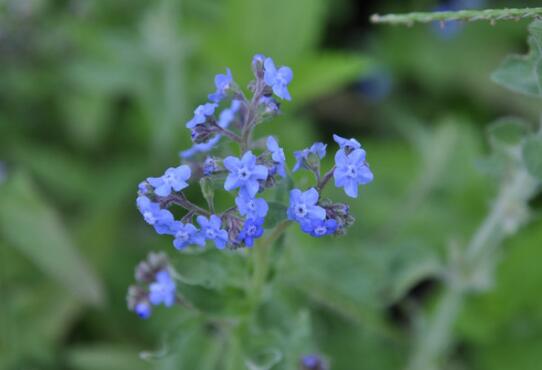
The answer to the question of whether Cerinthe is poisonous is no. This plant itself is not toxic, and moreover, it has high medicinal value and offers good therapeutic effects for many ailments. As for its specific medicinal uses, these are described in detail in the article on the benefits and effects of Cerinthe, which interested readers can look up.
2. Can Cerinthe be grown indoors? Yes
Whether planted in groups outdoors or grown in pots indoors, Cerinthe is very well suited. Grown outdoors it can freshen the natural environment, and grown indoors it also has many benefits. However, this plant needs light as it grows, so if we want to keep it indoors, it is best to place it on a windowsill, so that it can receive light and thus grow better.
3. Benefits of growing Cerinthe indoors
1. Beautifying the indoor environment
Cerinthe is a flowering plant with high ornamental value. Its leaves are grayish-green and its flowers are sky blue, and because its flowers are dense and brightly colored, it is loved by many people. If we grow it at home, it will also have a very good beautifying effect on the indoor environment.
2. Purifying indoor air
Many plants on the market today have the ability to purify air, and Cerinthe is one of them. It can absorb the vast majority of harmful substances in the air and also release oxygen, thereby making the surrounding air fresher. If we grow it at home, it will also be a safeguard for people's health in daily life.
3. Improving the feng shui of the home
In addition to the above two points, growing Cerinthe indoors can also improve the feng shui of the home. In feng shui, this plant carries very high symbolic meaning, can increase the good fortune of the owner, and also helps stabilize the energy field and magnetic field of the home. So if you want everything in life to go smoothly, then keep a Cerinthe at home.
50 potted plants suitable for indoor growing
Click the blue words above, Succulents & Flowers, to follow me. After clicking the blue words [Succulents & Flowers] and following, you can learn more about flowers.1: Aglaonema 'Silver King'
Aliases: Silver King Chinese Evergreen, Silver King Aglaonema, Silver King Dumb Cane
Family and genus: Araceae, Aglaonema
Morphological characteristics
Perennial evergreen herb, stem extremely short, plant height 40-50 cm, leaves densely clustered, 20-25 cm long, 5-7 cm wide, lanceolate, leaves dark green, leaf surface densely covered with silver-gray patches, leaf underside grayish-green. Petioles bear grayish-green spots, and the base of the petiole is sheath-like and clasps the stem.
Cultivation value
Beautifies the study, living room, and bedroom, and can be displayed long-term.
Growth habits
Prefers high temperature and high humidity conditions, tolerates both moisture and drought, likes diffused light, is fairly shade-tolerant, has no strict soil requirements, but prefers fertile soil rich in humus.
Cultivation techniques
For potting, use a culture soil made by mixing equal parts leaf mold and river sand; apply liquid fertilizer once a month during the growing season; in summer, water thoroughly and spray water on the leaves, gradually reduce watering in late autumn, and in winter do not water until the potting soil is dry; in winter it should be brought indoors to overwinter, and the indoor temperature must not be lower than 10°C; when placed indoors for care, pay attention to ventilation; in summer it must not be placed under the blazing sun.
2: Aglaonema 'Silver Queen'
Aliases: Silver Queen Chinese Evergreen, Silver Queen Aglaonema, Silver Queen Dumb Cane.
Family and genus: Araceae, Aglaonema
Morphological characteristics
A perennial herb. Plant height 30-40 cm, stem upright and unbranched, internodes obvious. Leaves alternate, petioles long, base enlarged into a sheath shape, leaves narrow and long, light green, leaf surface with grayish-green stripes, relatively large area. Cultivation value: Aglaonema 'Silver Queen' is known for its unique air-purifying ability and can remove nicotine and formaldehyde.
Growth habits
Prefers a warm and humid climate, is not cold-tolerant, likes diffused light, and is especially afraid of direct sunlight in summer; not cold-tolerant, when the temperature drops to 10°C, insulation measures must be taken, and after freezing, the whole plant rots.
Cultivation techniques
For potting, loose peat soil or turfy soil is best, and a mix of leaf mold and sandy loam can also be used. Indoors it should be placed in a spot with strong light so that the leaves are brightly colored; in winter it must not go below 15°C; in the peak growing seasons of spring and autumn, watering should be sufficient, the potting soil should be kept moist regularly, and the branches and leaves should often be sprayed with clean water close to room temperature to prevent dry tips, but there must be no waterlogging.
3: Dracaena fragrans
Aliases: Brazilian millennium tree, golden-edged fragrant dragon tree, Brazilian wood
Family and genus: Liliaceae, Dracaena
Morphological characteristics
An evergreen tree of the Liliaceae family, potted height 50 cm-150 cm, with branches; leaves clustered at the top of the stem, 40 cm-90 cm long, 6 cm-10 cm wide, curved in an arch shape, bright green and glossy; flowers small and inconspicuous, fragrant.
Cultivation value
Dracaena fragrans is mostly used as an indoor ornamental plant in homes or offices, and looks very impressive placed beside a sofa.
Growth habits
Prefers high temperatures; below 13°C the plant goes dormant and stops growing; prefers loose, well-drained soil; pot in leaf mold or peat soil.
Cultivation techniques
When placed indoors, Dracaena fragrans should be in a spot with sufficient light; if the light is too weak, the markings on the leaves will turn green, and the base leaves will yellow, losing ornamental value. During cultivation, keep the water clean, water 1-2 times a week, and avoid too much water to prevent the trunk from rotting. In high summer temperatures, misting can be used to raise air humidity, and water can be sprayed on the leaves to keep them moist.
4: Cycas revoluta
Aliases: iron tree, phoenix-tail banana, phoenix-tail pine, fire-avoiding banana
Family and genus: Cycadaceae, Cycas
Morphological characteristics
Evergreen palm-like woody plant; stem cylindrical, unbranched; the stem is densely covered with persistent leaf bases and leaf scars, and is scale-like; leaves arranged spirally, leaves emerging from the top of the stem, with 2 types of leaves, foliage leaves and scale leaves, foliage leaves pinnate, large, scale leaves short and small; leaflets linear, rolled inward when young, later spreading obliquely upward, slightly V-shaped, with edges notably rolled downward, thick leathery, hard, glossy.
Cultivation value
Cycas revoluta has a peculiar tree shape and verdant leaves, and carries a distinctly tropical flavor; it is suitable to use multiple plants together with rocks to create a scenic spot.
Growth habits
Prefers light, slightly tolerant of semi-shade. Prefers warmth, not very cold-tolerant, prefers fertile, moist, slightly acidic soil, but can also tolerate drought. Slow-growing; plants over 10 years old can flower.
Cultivation techniques
In spring, water once every half month or more; from late spring to summer, the peak growing season, give it full light; water when dry, keep the soil moist, and spray the leaves morning and evening; apply a relatively dilute liquid fertilizer once every ten days. After the start of autumn, gradually control the frequency and amount of watering; give full direct sunlight; when the temperature is high, spray water appropriately. In winter, control the amount and frequency of watering, about once every half month.
5: Black Beauty
Aliases: spring grass, spreading acanthus
Family and genus: Acanthaceae
Morphological characteristics
Perennial herb, plant low and short, only 5-10 cm tall. Leaves opposite, heart-shaped or broadly ovate, slightly wrinkled and curled, closely resembling black people's hair, hence the name; mature plants grow in clumps, with dense branches and leaves that do not easily become messy.
Cultivation value
Black Beauty is also an indoor air purifier; it can increase the negative oxygen ion content and can also absorb a certain amount of harmful gases in the air such as formaldehyde, sulfur dioxide, and hydrogen sulfide. Growth habits: it likes high temperature and high humidity, with an optimum growing temperature of about 22-30°C.
Cultivation techniques
For cultivation, fertile sandy loam is best, with drainage, and it needs good sunlight, though slight shade is also fine; for fertilizer use oil cake or nitrogen, phosphorus, and potassium, applied once a month, and more nitrogen fertilizer can promote more beautiful leaf color. When a cold wave strikes and the temperature falls below 15°C, attention must be paid to preventing cold damage, and avoid leaves being frostbitten from water standing overnight.
6: Chamaedorea elegans
Aliases: dwarf coconut, parlor palm, dwarf palm
Family and genus: Arecaceae, Chamaedorea
Morphological characteristics
When potted, the parlor palm does not exceed 1 m in height; its stem is slender, upright, unbranched, dark green, with irregular ring markings. Leaves emerge from the top of the stem, pinnately compound, fully divided, segments broadly lanceolate, with 20-40 pinnate leaflets, sickle-shaped, dark green, glossy.
Cultivation value
It can simultaneously purify benzene, trichloroethylene, and formaldehyde in the air, and is a "high-efficiency air purifier" among plants.
Growth habits
Prefers a warm, humid, and semi-shaded environment, is not cold-tolerant, likes weak light, and avoids direct strong sunlight; fairly tolerant of drought, also tolerant of wet conditions, and prefers well-drained, fertile, moist soil. The optimum growing temperature is 20-30°C; at 13°C it enters dormancy; the minimum winter overwintering temperature is 3°C.
Cultivation techniques
Generally, apply liquid fertilizer 1-2 times a month during the growing season, and in late autumn and winter apply little or no fertilizer; watering should follow the principle of preferring dry over wet, and the potting soil just needs to be kept moist; in summer and autumn when the air is dry, spray the plant regularly, and in winter appropriately reduce the amount of watering to help it overwinter.
7: Peace lily
Aliases: Spathiphyllum, spathe lily, peace lily
Family and genus: Araceae, Spathiphyllum
Morphological characteristics
Perennial evergreen herbaceous foliage plant. Plant height 40-60 cm, with short rhizomes, mostly growing in clumps. Leaves oblong or nearly lanceolate, tapering at both ends, wedge-shaped at the base. The flower is a spathe, slightly fragrant, leaf-like, closely resembling a palm, hence the name peace lily.
Cultivation value
Peace lily can inhibit waste gases exhaled by the human body such as ammonia and acetone, and it can also filter benzene, trichloroethylene, and formaldehyde in the air.
Growth habits
It likes a warm, humid, semi-shaded environment and avoids direct strong sunlight. Not cold-tolerant, with an optimum growing temperature of 20-28°C and an overwintering temperature above 10°C.
Cultivation techniques
Potted Spathiphyllum requires loose soil with good drainage and aeration, and heavy clay soil must not be used. During the growing season, apply liquid fertilizer once every 1-2 weeks; at the same time provide sufficient water, keep the potting soil moist regularly, and in high-temperature periods also spray water on the leaves to raise air humidity; in late autumn and winter reduce watering and just keep the potting soil slightly moist; in winter pay attention to cold protection and insulation while keeping the potting soil moist.
8: Devil's ivy
Aliases: devil's vine, pothos, bamboo-leaf grass
Family and genus: Araceae, Epipremnum
Morphological characteristics
Devil's ivy vines grow several meters long, and in tropical regions often climb on rocks and tree trunks in rainforests; there are aerial roots at the nodes, and as the plant ages, the stem thickens and the leaves also grow larger and larger, and it can grow into a huge vine; a few leaves may also carry slightly yellow or white mottling.
Cultivation value
Besides having high ornamental value, devil's ivy can also effectively absorb and remove pollutants in indoor air such as formaldehyde, benzene, and trichloroethylene, making it a natural "air purifier."
Growth habits
Prefers a warm, humid, and semi-shaded environment, and requires loose, fertile, well-drained soil; it is sensitive to light and avoids direct sunlight; it can tolerate a relatively dry environment and still grows well when air humidity is 40%-50%.
Cultivation techniques
The potting soil should be loose, fertile, and rich in organic matter; devil's ivy requires a growing environment with relatively high temperature and strong diffused light; while watering moderately and keeping the potting soil on the dry side, spray water regularly on the front and back of the leaves. In summer and autumn, spray water on the leaves in the morning, noon, and evening every day to increase humidity; apply dilute liquid fertilizer once every 10-1 days; the plant has many branches and should be pruned appropriately.
9: Philodendron 'Emerald Gem'
Aliases: long heart-leaf philodendron, emerald gem philodendron
Family and genus: Araceae, Philodendron
Morphological characteristics
Philodendron 'Emerald Gem' is a climbing species, with a thick stem and aerial roots at the nodes; leaves long heart-shaped, 25-35 cm long and 12-18 cm wide, with a sudden pointed tip at the end, deeply heart-shaped at the base, green, entire, and glossy. Young shoots and leaf sheaths are both green.
Cultivation value
Often grown as medium to large specimens, and displayed in halls, conference rooms, offices, and other places, where it looks extremely spectacular.
Growth habits
It likes a warm, humid, and semi-shaded environment. The optimum growing temperature is 20-28°C, and the overwintering temperature is 5°C.
Cultivation techniques
Generally water once a day in spring and summer, and once every 3-5 days in autumn; in winter reduce the amount of watering, but the potting soil must not be allowed to dry out completely. During the growing season, pay attention to regular topdressing, generally fertilizing 1-2 times a month; in late autumn and winter, when growth is slow or stops, stop fertilizing. It likes bright light but avoids strong sunlight.
10: Philodendron 'Imperial Green'
Aliases: Philodendron 'Imperial Green', imperial
Family and genus: Araceae, Philodendron
Morphological characteristics
The stem of Philodendron 'Imperial Green' has short internodes, with spacing of about 1-2°C cm, and adventitious aerial roots often grow at the nodes; the stem can be 2-4°C cm thick, light brown, and poor at standing upright; the leaves are large, growing in a rosette-like cluster, gradually changing from yellow-green to green or dark green, and glossy.
Cultivation value
It has an environmental protection function and can absorb dust in the air and large amounts of carbon dioxide, release oxygen, freshen indoor air, and increase the negative oxygen ion content.
Growth habits
It likes high humidity and high temperature, and is suitable for planting in slightly acidic soil.
Cultivation Techniques
When cultivating the Green Emperor (Dracaena fragrans 'Massangeana'), use slightly acidic peat soil or soil with high humus content plus a small amount of sandy soil or perlite; watering should be thorough,
and flexibly adjusted according to the season and temperature, in principle keeping the potting soil moist; the suitable growth temperature for Green Emperor is 20-30°C, air
humidity not lower than 70%, and in autumn the temperature should be kept above 14°C.
11: Lucky Bamboo
Alternative names: Wanshou Bamboo, Juhua Wanshou Bamboo, Kaiyun Bamboo, Fortune Tower, Bamboo
Tower, Tower Bamboo.
Family and genus: Agavaceae, genus Dracaena.
Morphological characteristics
Evergreen subshrub-like plant; plant height over 1 m, slender, erect with branches on the upper part; rhizome horizontal, nodular; leaves alternate or nearly opposite, papery, long lanceolate, with 3-7 distinct main veins, short petioles, dark green; umbel inflorescence with 3-10 flowers borne in leaf axils or opposite the upper leaves, perianth 6, corolla campanulate, purple; berries nearly spherical, black.
Cultivation value: Mainly used as a potted ornamental plant, with high ornamental value.
Growth habits: Prefers shade, humidity and high temperatures; tolerant of shade, waterlogging, strong fertility, and strong cold resistance.
Cultivation Techniques
For lucky bamboo grown in water in a vase, change the clean water every 3-4 days; after rooting, do not change the water, only add water promptly after evaporation; the water to be added should first be stored in a container for one day, and the water should be kept clean and fresh; do not use dirty water, hard water or water mixed with oil, otherwise the roots will easily rot; do not place lucky bamboo next to a TV or in places where air conditioners or electric fans frequently blow, to avoid the leaf tips and leaf margins drying up.
12: Snake Plant
Alternative names: Tiger Skin Plant, Jinlan, Golden-edged Snake Plant, Silver-veined Snake Plant.
Family and genus: Agavaceae, genus Sansevieria
Morphological characteristics
Underground stem unbranched, leaves clustered, lower part tubular, middle and upper parts flat, sword-shaped leaves rigidly upright, plant height 50 cm to 70 cm, leaf width 3 cm to 5 cm, leaf margins entire, surface alternating milky white, pale yellow and dark green, with horizontal banded markings.
Cultivation value
Placing a pot of snake plant in the bathroom can absorb moisture and kill bacteria. Growth habits: Drought-tolerant, moisture-tolerant, shade-tolerant, able to adapt to various harsh environments.
Cultivation Techniques
Watering should be moderate, not too wet; from spring to autumn it grows vigorously, so it should be watered sufficiently; during the winter dormant period, watering should be controlled and the soil kept dry; when watering, avoid pouring into the leaf cluster; absolutely avoid water accumulation, so as to prevent rotting that causes the leaves below to fold over; fertilizing should not be excessive. During the peak growth period, apply fertilizer 1-2 times per month, with a small amount of fertilizer.
13: Apollo
Alternative names: Dense-leaved Cordyline, Green Dense Dragon Blood Tree, Apollo Millennium Tree, Dense-
leaved Dragon Blood Tree
Family and genus: Agavaceae, genus Dracaena
Morphological characteristics
Evergreen small tree, dwarf variety. Stem erect, unbranched, leaves densely whorled, long elliptic lanceolate, 10-15 cm long, 2-4 cm wide, dark green. Cultivation value: The Apollo has a compact and small plant form, with excellent jade-green leaf color, and is a treasure for indoor greenery decoration.
Growth habits
Prefers high temperature and high humidity and a semi-shaded environment, drought-tolerant, strongly shade-tolerant, suitable growth temperature 22-28°C. Grows slowly. Prefers well-drained soil rich in humus.
Cultivation Techniques
In spring and autumn, place it in a bright place; when the air is dry, pay attention to spraying water to ensure suitable air humidity for growth, and avoid direct sunlight; during the high-temperature period in summer, if the air is too dry, it will cause leaf tip scorching, so water should be sprayed on the leaf surface frequently; in winter, water less, at most once a week during the growth period; during the winter dormant period, water about once every 10-15 days.
14: Spider Plant
Alternative names: Potted Grass, Hook Orchid, Gui Orchid, Hanging Bamboo Orchid, Folded Crane Orchid
Family and genus: Liliaceae, genus Chlorophytum
Morphological characteristics
Spider plant is a perennial herb, with clustered cylindrical fleshy fibrous roots and rhizomes; the edges on both sides or the middle of the green leaves are set with yellow-white stripes; it has flowers, white, flowering in spring and summer, and can also bloom indoors in winter.
Cultivation value
Spider plant has the function of absorbing toxic gases and purifying the air.
Growth habits
It prefers a warm, humid, semi-shaded environment. It is highly adaptable, relatively drought-tolerant, not very cold-tolerant; also tolerant of weak light.
Cultivation Techniques
The potting soil should be kept moist at all times; during the vigorous growth period, spray water on the leaf surface 1-2 times a day to increase air humidity; in summer, water once each in the morning and evening; in spring and autumn, water once a day; in winter, avoid moisture, water once every 4-5 days, and the amount of water should not be too much; during the growing season, apply liquid fertilizer once every two weeks; spider plant prefers a semi-shaded environment and can be grown year-round in a bright indoor room.
15: Aglaonema 'Lady Valentine'
Alternative name: White Snow Chinese Evergreen
Family and genus: Araceae, genus Aglaonema
Morphological characteristics
Plant erect, leaves lanceolate, leathery, acute, dark green; on both sides of the midrib there are large silver-gray striped patches, and the leaf margins and midvein are dark green; strong growth vigor, easy to branch.
Cultivation value
Purifies formaldehyde, removes volatile organic compounds
Growth habits
Suitable growth temperature 18-30°C, prefers humidity and fears dryness, shade-tolerant, fears strong light
Cultivation Techniques
The soil should be fertile, loose and acidic loam with strong water retention. It prefers humidity and fears dryness; during the stem and leaf growth period it needs sufficient water; in addition to normal watering, spray water in the morning and evening every day; in summer maintain air humidity at 60%-70%, and in winter at around 40%. However, when the indoor temperature is low in winter, watering and spraying should be reduced, otherwise the potting soil will be too wet, the roots will easily rot, and the leaves will turn yellow and wither.
16: Money Tree
Alternative names: Coin Tree, Zamioculcas, Zamioculcas zamiifolia, Dragon and Phoenix Tree
Family and genus: Araceae, genus Zamioculcas
Morphological characteristics
No main stem above ground; adventitious buds sprout from the tuber to form large compound leaves; leaflets fleshy with short petiolules, firm and dark green; the underground part is a fat tuber; roots emerge from leaves, pinnate compound leaves emerge from the top of the tuber, the leaf rachis is strong, and the leaflets are opposite or nearly opposite on the rachis. The petiole base is swollen and lignified; each compound leaf has 6-10 pairs of leaflets, with a lifespan of over 2-3 years, constantly renewed by new leaves.
Cultivation value
The money tree is a rather popular large indoor bonsai plant.
Growth habits
Prefers a warm, hot, slightly dry, semi-shaded environment with small annual average temperature variation; relatively drought-tolerant, but afraid of cold, avoids strong light exposure, and fears water accumulation.
Cultivation Techniques
The potting soil is best slightly moist and on the dry side; in winter, pay attention to spraying water on the leaf surface and the surrounding environment, so that the relative air humidity reaches above 50%. After mid-
autumn, reduce watering, or replace watering with spraying; in winter, pay special attention that the potting soil must not be overly moist, and is best on the dry side, otherwise
under low-temperature conditions, overly wet potting soil is more likely to cause root rot of the plant, or even death of the whole plant.
17: Golden Diamond
Alternative names: Golden Diamond Philodendron, Spring Feather, Philodendron
Family and genus: Araceae, genus Philodendron
Morphological characteristics
Palm-shaped, thick, pinnately deeply lobed, glossy; petioles long and stout, aerial roots extremely developed and stout, abundantly drooping. The leaves are evenly matched and moderately spread, the leaf texture is thick and emerald green, the leaf surface has a rigid luster, and the lifespan of each leaf is as long as 30 months.
Cultivation value
Has high ornamental value and also purifies the air.
Growth habits
Prefers a warm, humid, semi-shaded environment, fears severe cold, avoids strong light, and is suitable for growing in sandy loam rich in humus and well-drained.
Cultivation Techniques
Watering should be done when the surface soil is slightly dry, and it must not be overly wet; if the potting soil remains moist for a long time, the root system will rot; during the growth period, it should be placed in
a semi-shaded place, and direct sunlight should be avoided in summer; when grown indoors in a pot, it should be placed near a window. Watering should keep the soil moist at all times; when dry,
spray water on the plant to moisten and cool it; May to September is the peak growth season, fertilize with water 1-2 times a month, not too much.
18: Guanyin Bamboo
Alternative names: Phoenix-tail Bamboo, Rice Bamboo, Tendon-head Bamboo, Penglai Bamboo
Family and genus: Poaceae, genus Bambusa
Morphological characteristics
Culms densely clustered, short and slender but hollow; culm height 1-3 m, diameter 0.5-1.0 cm, leafy branchlets drooping, each branchlet has 9-13 leaves, leaves small, linear-lanceolate to lanceolate, 3.3-6.5 cm long, 0.4-0.7 cm wide. The plant is clustered, curved and drooping.
Cultivation value
Often used for potted ornamental display, embellishing small courtyards and living rooms, also often used to make bonsai or as low hedge material.
Growth habits
Prefers a warm, humid and semi-shaded environment, slightly poor cold tolerance, not tolerant of strong light exposure, fears waterlogging.
Cultivation Techniques
Cold tolerance is slightly poor, so it should be moved indoors in winter to keep warm; in summer it should not be exposed to the sun and needs to be placed under a shade shed for care; during the vigorous growth period, water frequently to keep the potting soil moist, but avoid water accumulation; in summer, water once every 1 to 2 days on average; in winter, water less, but ensure the potting soil is moist to prevent "dry freezing"; during the annual growth period, apply fertilizer 2-3 times; at the same time, the overly long branches and stems should be cut short.
19: Areca Palm
Alternative names: Yellow Coconut, Purple Palm
Family and genus: Arecaceae, genus Dypsis
Morphological characteristics
Clustered evergreen shrub or small tree. Stem smooth, yellow-green, without prickles, covered with wax powder when young, with obvious leaf scars on it, in ring patterns. Leaf surface smooth and slender, pinnate compound leaves, fully split, 40-150 cm long, petiole slightly curved, apex soft; segments linear-lanceolate, asymmetrical on the left and right sides, the middle segments about 50 cm long, the top segments only 10 cm, apex long acuminate, often with 2 short lobes, the main vein on the back raised.
Cultivation value
Potted areca palm is a high-grade potted foliage plant for decorating living rooms, dining rooms, conference rooms, family rooms, studies, bedrooms or balconies; it
can also be used as medicine, mainly treating vomiting blood, hemoptysis, blood in the stool, and uterine bleeding.
Growth habits
Prefers a warm, humid, semi-shaded and well-ventilated environment, not cold-tolerant, relatively shade-tolerant, fears strong sunlight.
Cultivation Techniques
Watering should follow the principle of "dry thoroughly, wet thoroughly" according to the season; water appropriately more in dry and hot seasons, and control watering in low-temperature rainy periods. Liquid fertilizer can be applied in all four seasons; in summer, appropriately apply additional nitrogen-containing organic fertilizer; in winter, apply organic flower fertilizer such as sesame paste residue. Regularly rotate the flower pot, often prune the lower and inner dead leaves, and pay attention to trimming the crown shape. In winter, the indoor temperature must be kept above 10°C.
20: Peacock Plant
Alternative names: Blue-flower Banana, Five-color Arrowroot
Family and genus: Marantaceae, genus Calathea
Morphological characteristics
Perennial evergreen herb. Height 30-60 cm, leaf length 15-20 cm, width 5-10 cm, ovate-elliptic, leaves thin, leathery, petioles purplish-red. On the green leaf surface a metallic luster faintly appears, bright and gorgeous, along both sides of the midrib are distributed pinnate, dark green, long elliptic velvety patches, arranged alternately left and right. The leaf underside is purplish-red.
Cultivation value
Can remove ammonia pollution from the air (within 10 sq m it can remove 0.86 mg of formaldehyde and 2.19 mg of ammonia).
Growth habits
Prefers semi-shade, not tolerant of direct sunlight, adapted to grow in a warm, humid environment.
Cultivation Techniques
For potted peacock plant, use loose, fertile, well-drained, humus-rich slightly acidic loam; during the growth period, give sufficient water,
especially in summer and autumn, in addition to often keeping the potting soil moist, also frequently spray water on the leaf surface to cool and moisturize. Avoid dry air and dry potting soil,
but water accumulation is not allowed. After late autumn, water should be controlled to help resist cold and survive the winter.
21: Ivy
Alternative names
Tu Drum Vine, Drill Sky Wind, Triangle Wind, Climbing Tiger, Scattered Bone Wind,
Maple-leaf Ivy Vine
Family & Genus Araliaceae, Hedera (ivy genus)
Morphological Characteristics
The stems produce aerial roots to climb on other objects; the young leaves and flower clusters are covered with star-shaped scales; the leaves are stalked, thick in texture, and the leaves on creeping branches are slightly triangular and palmate. Its fruits, seeds and leaves are all poisonous.
Cultivation Value It can purify indoor air, absorb harmful gases such as benzene and formaldehyde, and can also effectively counteract the carcinogens in nicotine.
Growth Habits
It likes a warm, shaded environment and avoids direct sunlight, but prefers ample light; it is relatively cold-tolerant and strongly resistant, with no strict requirements for soil and water, and neutral to slightly acidic soil is best.
Cultivation Techniques
Ivy cultivation and management are simple and undemanding, but it must be planted in a place with moist soil and good air circulation; for potted plants, various supports can be tied on to train and shape the plant; in summer, keep it under a shade frame, and in winter, move it into a greenhouse to overwinter; indoors, air humidity must be maintained and it must not be too dry, but the potting soil should not be too wet.
22: Clivia
Alternative Names Large-flowered Clivia, Large-leaf Lycoris, Sword-leaf Lycoris, Damulan
Family & Genus Amaryllidaceae, Clivia genus
Morphological Characteristics
Clivia is a perennial herbaceous plant; the roots are fleshy and fibrous, and a pseudobulb forms at the leaf base; the leaves are sword-shaped, up to 45 cm long, alternately arranged, with entire margins; the umbel inflorescence is terminal, with 7 to 30 florets per inflorescence, and some can reach more than 40; the florets are stalked, arranged in an umbel at the top of the flower, funnel-shaped, upright, yellow or orange-yellow. It can bloom all year round, mainly in spring and summer.
Cultivation Value
Clivia has very high ornamental value, and also has air-purifying effects and medicinal value.
Growth Habits
It avoids strong light and is a semi-shade plant; it likes cool conditions and avoids high temperatures. It prefers thick, well-drained soil and moisture, and avoids dry environments.
Cultivation Techniques
Clivia is suitable for soil rich in humus. Under normal circumstances, water once a day in spring; in summer, when watering, use a fine watering can to water the leaf surfaces and the surrounding ground together, and on sunny days water twice a day; in autumn, water once every other day; in winter, water once a week or less.
23: Split-leaf Philodendron
Alternative Names Chunyu, Split-leaf Philodendron, Tree Philodendron, Little Angel Philodendron
Family & Genus Araceae, Philodendron genus
Morphological Characteristics
A perennial evergreen herbaceous foliage plant; the stem is very short, and the leaves extend from the top of the stem in all directions, densely and neatly arranged, forming a clustered shape. The leaves are huge, with thick, deep pinnate lobes, dark green and glossy. The stem is upright and woody, producing many aerial roots; the plant is tall and can reach more than 1.5 m. The leaves are clustered and borne at the stem tip; the leaves are broadly heart-shaped, with the whole leaf deeply pinnately lobed like a palm.
Cultivation Value
The Split-leaf Philodendron has a peculiar leaf form and is very shade-tolerant, suitable for indoor hall display, and especially suitable for decorating music tea rooms and hotel lounges.
Growth Habits
Split-leaf Philodendron likes a high-temperature, humid environment, has no strict requirements for light, is not cold-tolerant, tolerates shade, and can be grown in pots anywhere indoors where the light is not too weak; it likes fertile, loose, well-drained, slightly acidic soil, and the winter temperature should not be lower than 5°C.
Cultivation Techniques
During the growing season, apply some light fertilizer appropriately, but not too much; usually spray water on the leaf surfaces more often, and in winter appropriately control watering; in summer high temperatures, avoid hot, strong direct sunlight; in summer, water thoroughly twice a day, frequently spray the leaf surfaces, clean the leaves, and keep them fresh and moist.
24: Dumb Cane (Alocasia)
Alternative Names Dripping Lotus, Bergamot Lotus
Family & Genus Araceae, Alocasia genus
Morphological Characteristics
Under warm, humid conditions with sufficient soil moisture, water drips down from the leaf tips or leaf edges; moreover, its flowers resemble Guanyin, hence the name Dripping Guanyin.
Cultivation Value
The white sap in the stem of the Dumb Cane is poisonous, and the dripping water is also poisonous, but it can purify the air.
Growth Habits
A perennial evergreen herbaceous plant that likes warm, humid and semi-shaded environments and is not cold-tolerant.
Cultivation Techniques
During the growing season, keep the potting soil moist; in summer, place it in a semi-shaded, ventilated spot, and frequently spray water around it and on the leaf surfaces to increase air humidity,
lower leaf temperature, and keep the leaves clean; stop fertilizing in winter and control the frequency of watering.
25: Money Tree
Alternative Names Guagua Chestnut, Zhongmei Kapok
Family & Genus Malvaceae (Bombacaceae), Pachira genus
Morphological Characteristics
An evergreen small tree with palmately compound leaves, 7 to 11 leaflets, oblong or obovate. The plant form is elegant, the leaf color is bright green, and the trunk is hammer-shaped. Its vitality is quite vigorous. Outdoor adult plants flower and bear fruit in spring, summer and autumn.
Cultivation Value
Potted plants are suitable for indoor arrangement and beautification.
Growth Habits
It likes a high-temperature, high-humidity environment and has poor cold tolerance; seedlings avoid frost; it likes fertile, loose, breathable, water-retaining sandy loam and acidic soil, and avoids alkaline
soil or heavy clay soil; it is relatively tolerant of waterlogging and also slightly drought-tolerant; it likes light but is highly shade-tolerant.
Cultivation Techniques
Watering should follow the principle of watering when dry and stopping when wet; in spring and autumn, control the watering frequency according to weather conditions such as sunny or rainy and dry or wet, generally watering once a day. When the temperature exceeds 35°C, water at least twice a day. During the growing season, fertilize twice a month; for newly grown leaves, also pay attention to spraying water to maintain relatively high environmental humidity to facilitate growth. In winter, water once every 5 to 7 days, and ensure sufficient light is provided.
26: Anthurium
Alternative Names Flamingo Flower, Anthurium, Fire Crane Flower, Red Goosefoot
Family & Genus Araceae, Anthurium genus
Morphological Characteristics
Anthurium is a perennial evergreen herbaceous flower; its plant height is generally 50 to 80 cm; it has fleshy roots and no stem; the leaves are drawn from the rhizome, with long stalks, solitary, heart-shaped, bright green, with sunken veins; the flowers are axillary, with a waxy spathe, from perfectly round to ovate, bright red, orange-red flesh-colored, or white, with a spadix, cylindrical and upright; it blooms in all four seasons.
Cultivation Value
Its flowers are unique, being a spathe, with bright, gorgeous colors and rich hues, and it is a precious flower of the world.
Growth Habits
It likes warm, shaded and humid conditions, avoids heat, and fears direct sunlight; its roots are aerial roots, so good ventilation is required.
Cultivation Techniques
The optimum temperature for Anthurium growth is 18°C to 28°C; in spring and autumn, generally water once every 3 days, and if the temperature is high, water once every 2 to 3 days depending on the dryness or wetness of the potting medium; in summer, water once every 2 days, and when the temperature is high, add one more watering; in winter, generally water once every 5 to 7 days; Anthurium growth requires relatively high air humidity, generally not lower than 50%.
27: Aloe
Alternative Names Luhui, Nehui, Xiangdan, Nuhui
Family & Genus Asphodelaceae, Aloe genus
Morphological Characteristics
An evergreen, succulent herbaceous plant; the leaves are clustered, rosette-shaped or borne at the stem tip; the leaves are often lanceolate or short and broad, with spiny teeth along the edges; the inflorescence is umbellate, racemose, spicate, paniculate, etc., in red, yellow or with red spots, with six petals and six pistils. The base of the perianth is mostly fused into a tube.
Cultivation Value
Ornamental, medicinal and edible
Growth Habits
It likes a warm, dry, semi-shaded environment; it is not cold-tolerant, fears high temperatures and excessive moisture, and avoids strong direct sunlight.
Cultivation Techniques
The most suitable growth temperature for Aloe is 15 to 20°C, and the lowest temperature must not be lower than 2°C; for potted Aloe, keep the potting soil mainly dry, maintaining it alternately dry and wet, and never overwater; in summer, when temperatures are high and evaporation is great, generally water once every 2 to 3 days, and spray the leaf surfaces in the morning and evening; in spring and autumn, keep it mainly dry and water a little less. In winter, generally water once a month.
28: Dracaena (Horse-tail Iron)
Alternative Names
Family & Genus Liliaceae
Morphological Characteristics
The plant height can reach 4 meters, sometimes branching, with an upright stem; the leaves are broadly linear, clustered, 30 to 40 cm long, 5 to 10 cm wide, oblong or lanceolate, with a sharply pointed tip and a tapering base, and the leaf color is entirely green; it is mainly grown for its foliage and belongs to the foliage plants.
Cultivation Value
Growth Habits
Shade-tolerant; it likes high temperatures and high humidity, and in winter it should be kept warm and sheltered from wind
Cultivation Techniques
Fertile loam or humus soil is best, and drainage must be good; place it in a relatively sunny spot indoors and avoid strong direct sunlight in summer; light that is too strong or too dim will cause the leaves to lose their color and turn green, and an overly dark environment will cause the lower leaves of the stem to drop; follow the principle of keeping it wet rather than dry when watering, reduce watering in winter, and it is best to let it go dormant.
29: Norfolk Island Pine
Alternative Names
Family & Genus Araucariaceae, Araucaria genus
Morphological Characteristics
An evergreen tall tree; it can be used as a large potted plant and can reach about 2 m tall. The crown of young trees is spire-shaped; the large branches spread out flat or grow obliquely, and the lateral branchlets are densely drooping, arranged in a nearly pinnate pattern; the leaves on young trees and lateral branches are awl-shaped, needle-shaped or triangular, slightly four-angled, 7 to 20 cm long, arranged rather loosely and spreading.
Cultivation Value
Potted seedlings are suitable for embellishing general living rooms, corridors and studies; they can also be used to decorate meeting places and exhibition halls of various forms.
Growth Habits
It likes a warm climate, fresh and humid air, and soft, ample light; it is not cold-tolerant and avoids drought.
Cultivation Techniques
Usually water moderately; during the growing season, water frequently, 2 to 3 times a week, with the water penetrating 10 to 15 cm deep as appropriate; as the seedling grows, reduce the watering frequency, always keep the potting soil and surrounding environment moist, and strictly guard against drought and waterlogging; in high-temperature, dry seasons, frequently spray or mist water on the leaf surfaces and surrounding environment to increase air humidity and keep the soil moist.
30: Bird's-nest Fern
Alternative Names Nest Fern, Mountain Sugu Flower, Crown Fern
Family & Genus Aspleniaceae, Asplenium genus
Morphological Characteristics
Bird's-nest Fern is a medium-sized epiphytic fern with a funnel-shaped or bird's-nest-shaped plant form, and a plant height of 60-120 cm; the rhizome is short and upright, and the stalk is thick and densely covered with large clusters of spongy fibrous roots; the leaves are clustered and radially arranged at the top of the rhizome, hollow like a nest-shaped structure; the leathery leaves are broadly lanceolate, about 1 m long, 9-15 cm wide in the middle, smooth on both sides, with the veins slightly raised on both sides.
Cultivation Value
Bird's-nest Fern is a relatively large shade-loving foliage plant.
Growth Habits
It likes high temperatures and humidity and is not tolerant of strong light.
Cultivation Techniques
For potted Bird's-nest Fern, peat soil or leaf mold is best. The suitable growth temperature is 22 to 27°C; indoors it should be placed in a brightly lit spot and must not remain in a dark place for a long time. Under high-temperature, humid summer conditions, when new leaves grow vigorously, spray more water and spray the leaf surfaces thoroughly. As the leaves enlarge, they often cover all the growing medium in the pot, so when watering, be sure to water through the pot, and when watering, note that water must not accumulate in the pot.
31: Fiddle-leaf Philodendron
Alternative Names Fiddle-leaf Philodendron, Fiddle-leaf Tree Vine, Split-leaf Philodendron
Family & Genus Araceae, Philodendron genus
Morphological Characteristics
A perennial herbaceous plant. The stem is trailing and woody, bearing many aerial roots that can attach to other objects to grow. The leaf base is expanded and the middle is narrow, shaped like a violin, leathery, dark green and glossy.
Cultivation Value
Suitable for indoor and hall display.
Growth Habits
It likes a high-temperature, high-humidity environment, is not drought-tolerant, is highly shade-tolerant, and likes fertile, well-drained, slightly acidic sandy loam. It is not cold-tolerant and avoids scorching sunlight.
Cultivation Techniques
It is mostly used for potted climbing cultivation; stand a lightweight, corrosion-resistant wooden stick 5-8 cm in diameter in the center of the pot, about 80-120 cm tall, and wrap it tightly with palm fiber; during the growing season, water the pot and the palm fiber frequently, and frequently spray water on the leaf surfaces and surroundings to increase air humidity; about every half a month, apply a dilute organic liquid fertilizer once; in winter, control water and fertilizer to prevent cold damage.
32: Dragon Tree
Alternative Names
Family & Genus: Agavaceae
Morphological Characteristics
Evergreen shrub; stems round and straight, leaves slender and long, new leaves extending upward, old leaves drooping; leaf centers green with purplish-red stripes along the edges.
Cultivation Value
The leaves and roots can absorb xylene, toluene, trichloroethylene, benzene and formaldehyde, and break them down into non-toxic substances.
Growth Habits
Prefers high temperatures and high humidity; also tolerant of drought and shade; not demanding about sunlight; easy to grow in water.
Cultivation Techniques
Generally, the ideal relative air humidity is around 80%, especially in summer and autumn, when soft water mist can be sprayed on the leaves regularly; it can be placed in bright indoor spots or places without sunlight, and if kept indoors long-term, sunning once a week is best.
33: Desert Rose
Alternative Names: Tianbao Flower
Family & Genus: Apocynaceae, Adenium
Morphological Characteristics
The Desert Rose flower resembles a small trumpet, rose-red, in umbel-like clusters of three to five, brilliant as brocade, blooming continuously through all four seasons; leaves are simple and alternate, obovate, with acute tips, 8 cm to 10 cm long and 2 cm to 4 cm wide, leathery, glossy, dark green on the upper surface and grayish-green beneath.
Cultivation Value
Growth Habits
Prefers high temperatures, dry conditions and a sunny environment; tolerant of extreme heat, not cold-hardy, drought-tolerant, and intolerant of waterlogging.
Cultivation Techniques
Potted plants need plenty of sunlight and good drainage; during the growing season keep dry rather than wet, water once daily in hot summer, and once every 2 to 3 days at other times; fertilize 2 to 3 times a year; during the winter drought dormancy period leaves drop normally; if grown indoors, plenty of light is needed.
34: Dumb Cane
Alternative Names: Dieffenbachia
Family & Genus: Araceae, Dieffenbachia
Morphological Characteristics
Evergreen shrub-like herb, stems thick and fleshy, plant height can reach 1.5 m; leaves large and glossy, growing on the upper part of the stem, elliptic-ovate or broadly lanceolate, with acuminate tips and entire margins, 20-50 cm long and 5-15 cm wide; the broad leaves are dark green on both surfaces, inlaid with dense, irregular spots, markings or blotches in varying colors such as white, milky white and pale yellow.
Cultivation Value
Young plants in small pots can be placed on desks or windowsills for viewing. Medium-sized potted plants can be placed in living room corners or beside sofas as decoration.
Growth Habits
Prefers a warm, humid and semi-shaded environment; not cold-hardy, afraid of drought, and intolerant of strong direct sunlight.
Cultivation Techniques
Dumb Cane prefers moisture and fears dryness; the potting soil should be kept moist, watered thoroughly during the growing season, with water sprayed around it and misted over the plant; soil moisture is best kept in an alternating wet-dry pattern; water more in summer, and control watering in winter, otherwise if the potting soil is too wet, the roots rot easily.
35: Golden Pothos
Alternative Names
Family & Genus: Araceae, Epipremnum
Morphological Characteristics
Perennial trailing climbing plant, with aerial roots that can attach to tree trunks, walls and other surfaces for growth; stem nodes have grooves; leaves leathery, oblong, heart-shaped at the base, short-pointed at the tip, often pinnately lobed; young leaves small, mature leaves 20-60 cm long and 20-50 cm wide, with stems and leaves growing larger the higher they climb and smaller when hanging downward; the upper leaf surface is glossy with pale yellow spots and stripes, and it does not flower.
Cultivation Value
Can purify the air, removing formaldehyde, benzene, carbon monoxide and nicotine.
Growth Habits
Prefers a warm and humid climate, semi-shaded light and fertile, loose soil; sensitive to light, afraid of strong direct sunlight, but if light is too weak, the variegated stripes fade and may gradually disappear.
Cultivation Techniques
The potting soil should be kept moist regularly, preferably by slow drip irrigation from the top of the pole; avoid drought in summer, provide ample water, and spray the leaves often; prevent waterlogging in winter, and do not let the potting soil stay wet for long; regularly rotate the plant's orientation so the green leaves receive even light and the plant keeps a well-proportioned, full shape.
36: Chinese Fagraea
Alternative Names: African Jasmine, Chinese Fagraea
Family & Genus: Rosaceae, Fagraea
Morphological Characteristics
Evergreen tree or shrub, sometimes climbing; leaves opposite, slightly succulent, elliptic or obovate-elliptic, 5-10 cm long, lateral veins inconspicuous; flowers solitary or in dichasial cymes; corolla white, fragrant; berry nearly spherical, pale green.
Cultivation Value
The flowering period is very long, blooming in both winter and summer, with the most splendid blooms in spring and summer; at dawn or dusk, a faint, elusive fragrance refreshes the heart.
Growth Habits
Fond of sunlight, shade-tolerant, strongly cold-tolerant, remaining green all year round in the southern subtropical region; not demanding about soil, highly adaptable.
Cultivation Techniques
In spring and autumn, water just enough to keep the potting soil moist; in the plum rain season, guard against water accumulation; in summer, spray water once in the morning and once in the afternoon to increase humidity and lower temperature; in winter, keep the potting soil slightly moist, and around midday when temperatures are relatively higher, spray a moderate amount of water on the leaves; it needs fairly ample scattered light, or placement near a window; do not keep it too dark, otherwise the leaves lose their green color, turn yellow or drop.
37: Golden-Edge Lucky Bamboo
Alternative Names: Striped Bamboo Lily
Family & Genus: Agavaceae, Dracaena
Morphological Characteristics
Perennial evergreen herb, plant height can reach 1.5-2.5 m or more, stems and leaves thick and fleshy; varieties include green leaves, green leaves with white edges (called Silver Edge), green leaves with yellow edges (called Golden Edge), and green leaves with silver centers (called Silver Center).
Cultivation Value
Suitable for home greenery decoration, placed on windowsills, balconies and desks, and can also be arranged in rows as accents in halls.
Growth Habits
Prefers high temperatures, high humidity and a sunny environment; not cold-hardy, tolerant of pruning; avoid strong direct sunlight in summer; loose sandy loam is best for the soil.
Cultivation Techniques
Keep the potting soil moist during the growing season, spray water to increase air humidity, fertilize once every half month, repot every year in April-May, and prune the whole plant to encourage new shoots; growth is vigorous in summer, so provide appropriate shading and water frequently, not letting the potting soil dry out.
38: Golden-Heart Yemen Dracaena
Alternative Names: Golden-Heart Brazilian Iron, Brazilian Dragon Tree
Family & Genus: Liliaceae, Dracaena
Morphological Characteristics
Potted height 50 cm to 150 cm, with branches; leaves clustered at the top of the stem, 40 cm to 90 cm long and 6 cm to 10 cm wide, curved in an arch shape, bright green and glossy; flowers small and inconspicuous, fragrant.
Cultivation Value
Can effectively absorb indoor harmful gases such as formaldehyde and benzene.
Growth Habits
Prefers a high-temperature, high-humidity, well-ventilated environment; the suitable growth temperature is 20-30°C; relatively fond of light but also shade-tolerant, afraid of scorching sun, intolerant of dryness and drought,
prefers loose, well-drained sandy soil.
Cultivation Techniques
The potting soil for cultivation should have good drainage and aeration; for regular watering, wait until the potting soil is about 70% dry before watering; during the growing season, spray water frequently to raise the surrounding humidity; if a single plant is placed indoors for viewing, besides spraying water, the pot can also be placed on a sand tray to create a humid microclimate; in the rainy season, prevent water from accumulating in the pot.
39: Aluminum Plant
Alternative Names: Transparent Grass, Variegated Nettle, Snow White Grass, Aluminum Leaf Grass
Family & Genus: Urticaceae, Pilea
Morphological Characteristics
Perennial herb, plant height 30-50 cm, above-ground stems fleshy, internodes swollen, leaves simple and opposite, elliptic-ovate, tips acuminate, leaf margins with sparse teeth on the upper half and entire on the lower half, with white blotches on both sides of the main vein on the leaf surface.
Cultivation Value
Displayed in studies and bedrooms, elegant and pleasant; also has medicinal value.
Growth Habits
Relatively cold-tolerant, prefers a warm and humid climate, afraid of direct sunlight exposure, not demanding about soil, can tolerate mild alkalinity, relatively tolerant of moisture, not drought-tolerant.
Cultivation Techniques
For fertilizer and water management, follow the principle of moist management; keep the potting soil dry without cracking, and moist without being soggy; in summer, frequently misting the leaves keeps them clean and glossy; in winter, spray less water on the leaves; relatively shade-tolerant, avoid scorching sun, prefers scattered light.
40: Dragon Bone
Alternative Names: Triangle Crown of Thorns, Painted Cloud Pavilion, Dragon Bone Column
Family & Genus: Euphorbiaceae, Euphorbia
Morphological Characteristics
Dragon Bone grows robustly, height can reach 2 m to 3 m, the plant is shrub-like, with many dense branches, young growth fleshy, leaves 2 cm to 4 cm long; there is a short main trunk at the base, with branches whorled around the main trunk, 3-4 ribs, rib edges saw-toothed, with hard short spines, growing vertically upward.
Cultivation Value
Growth Habits
Drought-tolerant, sun-tolerant, not cold-hardy, not demanding about soil; ordinary potting soil allows it to grow well.
Cultivation Techniques
Watering should be moderate; if the potting soil stays too wet for a long time, it causes root rot; during the winter dormancy period, watering once every 1-2 months will not let it die of dryness; it needs to be placed in a sunny spot to get plenty of sunlight, and the pot should be rotated at regular intervals.
41: Yucca
Alternative Names: Soft-Leaf Yucca, Hairy-Edge Yucca
Family & Genus: Agavaceae, Yucca
Morphological Characteristics
Evergreen shrub, stem short, leaves clustered at the base, arranged in a spiral, blades firm and thick, 50-80 cm long and 4-7 cm wide, tips with hard sharp spines, leaf surface wrinkled, deep green with a little white powder, extending stiffly and obliquely, leaf margins smooth, old leaves with a few filamentous strands.
Cultivation Value
Yucca has strong resistance to and absorption capacity for harmful gases such as sulfur dioxide, hydrogen fluoride, chlorine and ammonia; Yucca also has a relatively strong ability to absorb hydrogen fluoride; in addition, Yucca has a certain resistance to ammonia, ethylene and others.
Growth Habits
Tropical plant, robust in nature, easy to survive, fond of a sunny and well-ventilated environment, and extremely cold-tolerant; Yucca has a well-developed root system and strong vitality; its leaves have a thick cuticle and waxy coating that reduce evaporation, so its drought resistance is especially strong.
Cultivation Techniques
Loose, fertile sandy loam is best for the growing medium, with good drainage required; full sun or partial sun both work; during the growing season from late spring to summer, fertilize once every 1-2 months; for mature plants, prune off the aged lower leaves at any time, which promotes height growth and new leaf sprouting; the growing medium must not stay wet for long periods.
42: Cactus
Alternative Names: Immortal Palm, King Tree, Flame, Fire Palm, Jade Hibiscus
Family & Genus: Cactaceae, Opuntia
Morphological Characteristics
Perennial evergreen herb, shrub-like, 2-3 m tall, stems cylindrical, stem segments oblong, flat, fleshy, with many branches at the top; areoles scattered, spines short, yellowish-brown; flowers 2-3 in number, borne on areoles at the top of stem segments, perianth short funnel-shaped, yellow. Flowering period June-July, berries dark red.
Cultivation Value
Ornamental plant, edible, medicinal
Growth Habits
Prefers a sunny, warm and well-ventilated environment, slightly cold-tolerant, drought-tolerant, intolerant of waterlogging. Not demanding about soil, highly adaptable.
Cultivation Techniques
The potting soil is best made from equal parts coarse sand, garden soil and leaf mold; after it survives, give it direct sunlight, water only when the potting soil is dry, top-dress once every 2 months; in summer it can withstand direct scorching sun, and the overwintering temperature should be above 0°C.
43: Ball Cactus
Alternative names: Cao Qiu, Chang Sheng Qiu
Family and genus: Cactaceae, Echinopsis
Morphological characteristics
Perennial succulent herbaceous plant; the stem is spherical or oval, up to 25 cm tall, green, with several longitudinal ribs on the sphere, densely covered with spines on the ribs, yellow-green, of varying lengths, arranged radially; flowers grow among the spines of the longitudinal ribs, silvery white or pink, long trumpet-shaped, up to 20 cm long, with scales on the outside of the trumpet, and long hairs in the scale axils.
Cultivation value
Radiation resistance, air purification, edible, medicinal
Growth habits
Prefers dryness, drought-tolerant, prefers high temperatures, intolerant of moisture, intolerant of cold.
Cultivation techniques
Requires sufficient sunlight, but cannot be exposed to strong direct sunlight in summer; the best time for watering in summer is early morning, in winter it should be done in the morning on clear days, while in spring and autumn it can be done in the morning or evening; generally do not pour water from the top; summer is the growing season for ball cacti, with high temperatures and large water demand, so they must be watered thoroughly; during winter dormancy, watering should be controlled to keep the potting soil from becoming excessively dry.
44: Dracaena fragrans
Alternative names
Family and genus: Liliaceae, Dracaena
Morphological characteristics
Cultivation value: Ornamental value
Growth habits: Prefers a warm, humid, well-ventilated environment, likes semi-shade and also tolerates shade
Cultivation techniques
Use well-drained leaf mold soil, slightly acidic is best; place in direct sunlight on a windowsill in winter, and in indoor scattered light in other seasons; mainly use nitrogen fertilizer, pay attention to combining fertilization with watering to prevent root burn; water once a week during the growing season, water when dry; during high summer temperatures, mist the leaf surface once each in the morning and evening.
45: Broadleaf Lady Palm
Alternative names: Guanyin Bamboo, Jin Tou Bamboo, Palm Bamboo, Dwarf Lady Palm
Family and genus: Arecaceae, Rhapis
Morphological characteristics
Clumping shrub, stems erect, 1-3 m tall; stems slender as fingers, unbranched, with leaf nodes; leaves clustered at the top of the stem, palmate, deeply divided almost to the base, with 3-12 segments, 20-25 cm long and 1-2 cm wide; petioles slender, about 8-20 cm; spadix axillary, flowers small, pale yellow, very numerous, unisexual, dioecious.
Cultivation value: Ornamental value, can be used medicinally
Growth habits: Prefers a warm, humid, well-ventilated semi-shaded environment, intolerant of waterlogging, extremely shade-tolerant. Afraid of strong sunlight, slightly cold-tolerant.
Cultivation techniques
For pot cultivation, a mixture of equal parts leaf mold soil, garden soil, and river sand can be used as the substrate; the potting soil should be kept moist, better wet than dry, but not waterlogged; appropriately reduce watering in autumn and winter; provide shade during the growing season, especially avoiding strong sunlight in summer; requires a well-ventilated environment.
46: Asparagus Fern
Alternative names: Yun Pian Song, Ci Tian Dong, Yun Zhu
Family and genus: Liliaceae, Asparagus
Morphological characteristics
The roots of asparagus fern are slightly succulent, stems soft and clumping, elongated stems climbing; the true leaves are reduced to scales, light brown, growing at the base of the cladodes; cladodes slender and clustered, spreading horizontally in a triangular feather-like shape; each cladode has 6-13 branchlets, branchlets 3-6 mm long, green. The scales on the main stem are mostly spine-like, like pine needles, delicate and beautiful.
Cultivation value: A well-known indoor foliage flower, can be used medicinally
Growth habits: Likes warm, humid and semi-shaded environments, intolerant of severe cold, intolerant of drought, avoid direct sunlight.
Cultivation techniques
In winter, spring and autumn, watering should be appropriately controlled, generally watering when the surface of the potting soil is dry, or alternating light and heavy watering, that is, after 3-5 light waterings, give 1 thorough watering, keeping the potting soil moist top and bottom without holding too much water; in summer, water in both morning and evening; water the potting soil only when it is dry; during the growing period, water thoroughly, but do not overwater, otherwise it is easy to cause root rot, and the standard should be that water quickly seeps into the soil without pooling on the surface; reduce watering after late autumn.
47: Gardenia
Alternative names
Mu Dan, Xian Zhi, Zhi Zi, Yue Tao, Zhi Zi Hua, Shan Zhi Hua, Huang Yi Zi, Zhi Zi Hua, Huang Zhi Zi, Shan Huang Zhi, Yu He
Hua, Bai Chan Hua, Chan Ke Hua
Family and genus: Rubiaceae, Gardenia
Morphological characteristics
Evergreen shrub or small tree, 100-200 cm tall, most plants relatively low; trunk gray, branchlets green, leaves opposite or whorled on main branches, obovate-oblong, 5-14 cm long, glossy, entire, flowers solitary at the top of branches or in leaf axils, white, strongly fragrant; corolla salverform, 6-lobed, fleshy.
Cultivation value: Gardenia is resistant to sulfur dioxide and can absorb sulfur to purify the atmosphere. Can be used medicinally and is edible.
Growth habits: Likes warmth, humidity, and plenty of sunlight, prefers high air temperature with good ventilation, intolerant of cold, tolerant of semi-shade, afraid of waterlogging.
Cultivation techniques
During the seedling stage, pay attention to watering, keep the potting soil moist, and frequently apply diluted decomposed fertilizer; for potted gardenias, after flowering in August, water only with clear water and control the amount of watering; before Cold Dew in October, move indoors and place in a sunny spot; strictly control watering in winter, but you can frequently mist the leaves with clear water; from May to July each year, when the vigorous growth period is about to end, prune the plant by removing the terminal shoots to promote branching.
48: Cordyline
Alternative names: Red Iron (red), Green Iron (green)
Family and genus: Agavaceae, Cordyline
Morphological characteristics
Shrub-like, erect, 1-3 m tall. Stem 1-3 cm thick, sometimes slightly branched. Leaves clustered at the upper end of the stem or branches, oblong to oblong-lanceolate, 25-50 cm long, 5-10 cm wide, green or with purplish red, petioles grooved, 10-30 cm long.
Cultivation value: Ornamental value, can be used medicinally
Growth habits
Green Iron likes light and semi-shaded environments, suitable for warm and humid climates, intolerant of cold, avoid saline-alkali soil, and is best planted in fertile, moist, well-drained sandy loam.
Cultivation techniques
During the growing period, the potting soil must remain moist; water shortage easily causes leaf drop, but too much water or waterlogging in the pot also causes leaf drop or yellowing of leaf tips; during the stem and leaf growing period, mist frequently, with an air humidity of 50%-60% being more suitable.
49: Arrowhead Plant
Alternative names: Green Elf, White-spotted Leaf, Syngonium, Arrowleaf Elephant Ear
Family and genus: Araceae, Syngonium
Morphological characteristics: Herbaceous foliage plant, leaves with long petioles, new leaves arrow-shaped, old leaves trifoliate or palmate compound leaves with five lobes, green with white spots, stems relatively short, leaves often clustered, sometimes stems elongate into vines. Nodes often have aerial roots.
Cultivation value: Indoor foliage plant
Growth habits
Naturally robust, likes moisture, fairly shade-tolerant. Likes high temperatures, high humidity, and semi-shaded environments, afraid of strong sunlight, afraid of drought, avoid low temperatures, intolerant of cold, afraid of strong sunlight, afraid of drought.
Cultivation techniques
Apply topdressing once every 1-2 weeks during the growing season. Likes warm, humid and semi-shaded environments. The overwintering temperature should be above 13°C. Suitable for indoor medium-light to outdoor partial-sun environments. Likes warm and humid conditions. This plant has high water requirements; for year-round hydroponics, the water level in the container should be kept on the high side rather than low, and mist frequently to keep the surrounding environment humid.
50: Silver-edged Dracaena
Alternative name: Fragrant Dracaena
Family and genus: Liliaceae, Dracaena
Morphological characteristics: Potted plants are usually below 1.5 m, sometimes branched. Leaves clustered at the top of the stem, curved into a bow shape, leaf margins wavy and undulating, tips slightly blunt, bright green, glossy.
Cultivation value: A new generation of indoor ornamental plants, can remove harmful substances from the air.
Growth habits: Likes growing in high-temperature, humid, semi-shaded environments.
Cultivation techniques
Water sparingly, at most once a week during the growing season. If low temperatures can be maintained during winter dormancy, water about once every 10-15 days. Direct sunlight will scorch the leaves, so the pot should be kept 1-2 m away from south- or southwest-facing windows. Apply liquid fertilizer for foliage plants once every 15 days. Mist the leaves (leaf surface and especially the leaf underside) daily. At the same time, the pot can be placed on a moist gravel layer to remedy excessively dry indoor air.
Click the blue text above, Succulent Flowers, to follow me. Click the blue text [Succulent Flowers] to follow, and you can learn more about flowers.