Norfolk Island pine vs. Chinese yew: which is more expensive? Norfolk Island pine bonsai costs 400-1200 yuan
Growing plants indoors has now become a popular trend, and many flower lovers are very fond of bonsai. As the outstanding ones among bonsai, the Norfolk Island pine and the Chinese yew are naturally loved by more people. If you want to grow them, you need to understand the prices, so what are the prices of Norfolk Island pine bonsai and Chinese yew bonsai? Which is more expensive, the Norfolk Island pine or the Chinese yew? Let's take a look together below.
I. Which is more expensive, the Norfolk Island pine or the Chinese yew
(1) Norfolk Island pine bonsai price
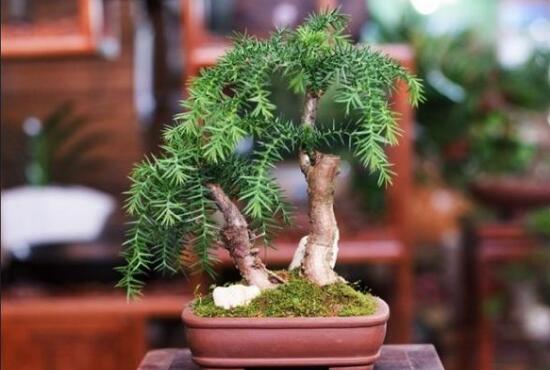
Depending on the shape and size of the Norfolk Island pine bonsai, the price varies. According to the editor's research, based on the market conditions of many flower shops, the price of Norfolk Island pine bonsai is generally between 400-1200 yuan. There are also some small bonsai, which can probably be bought for around one or two hundred, but they don't look very good.
(2) Chinese yew bonsai price
As a highly regarded natural rare plant, the Chinese yew bonsai is very famous. As for the price, it varies greatly according to specifications, ranging from a few tenths of a yuan to tens of thousands. According to the editor's research, the current market price of Chinese yew bonsai is mainly calculated by the height of the Chinese yew, with specific standards as follows:
Height 50 cm: 25 yuan;
Height 60 cm: 60 yuan;
Height 70 cm: 80 yuan;
Height 90 cm: 100 yuan;
Height 1 m: 130 yuan;
Height 2 m: 400 yuan.
So which is more expensive, the Norfolk Island pine or the Chinese yew? Based on the above content, it is obvious that the Norfolk Island pine is a bit more expensive. Of course, this is for ordinary bonsai, with special exceptions. Next, let's look at the role of the Norfolk Island pine bonsai and the symbolism behind it.
II. The role of the Norfolk Island pine bonsai
1. Ornamental value
When it comes to the role of the Norfolk Island pine bonsai, the first is naturally its strong ornamental value. As shown in the picture above, the Norfolk Island pine has a graceful plant shape, especially its leaves, which stay green all year round. Made into a bonsai, whether placed in the living room or the office, it can produce a very good ornamental effect.
2. Beautifying effect
Placing a Norfolk Island pine bonsai also has a certain effect on beautifying the home. In addition, the Norfolk Island pine is also beneficial to people's eyes. If your eyes are tired, you can stare at it for a while, and your eyes will feel much more comfortable. Not only that, often gazing at it when you have nothing to do can also prevent dry and gritty eyes.
3. Purifying effect
As a green plant, the Norfolk Island pine has a powerful application in purifying the air. It can not only absorb carbon dioxide and release oxygen, but also acts like a natural humidifier, regulating indoor air humidity and making the air at home fresher.
4. Feng shui effect
In plant feng shui, the Norfolk Island pine also has a very good effect. Placing it in a spacious living room can attract good luck. In addition, placing the Norfolk Island pine in the wealth position of the home can bring more prosperity and wealth to the household and improve the feng shui fortune of the head of the household.
5. The symbolism of the Norfolk Island pine
The symbolism of the Norfolk Island pine is also extremely beautiful. If there is a businessperson in the family, it is very suitable to grow a Norfolk Island pine, symbolizing that business can stay evergreen like the tree, and that the person can stand in glory like the tree.
Overall, as the outstanding ones among bonsai, whether it is the Norfolk Island pine or the Chinese yew, they are both very beautiful. So flower lovers who are tempted and have the conditions can get one to grow at home. Those who don't know how to grow them can look at the cultivation methods for the Norfolk Island pine (cultivation methods for the Chinese yew). As for the price of Norfolk Island pine bonsai and the price of Chinese yew bonsai, the editor has introduced them here, hoping to be of help to everyone.
Chinese yew - Chinese yew benefits and effects | how to grow Chinese yew | price | pictures
Chinese yew
The Chinese yew, also known as the yew, is a plant of the genus Taxus. The Chinese yew is a shallow-rooted plant, with an inconspicuous main root and well-developed lateral roots. It is recognized worldwide as a rare natural anti-cancer plant on the verge of extinction. It is an ancient relict tree species left over from the Quaternary glaciation and has a history of 2.5 million years on Earth. Because the Chinese yew grows slowly under natural conditions and has poor regenerative capacity, for a long time no large-scale Chinese yew raw material forest base has formed worldwide.Cultivation methods for the Chinese yew
1. Light: The Chinese yew likes a cool growing environment, so during cultivation it should be properly shaded and should not be placed in direct sunlight, as that will cause the Chinese yew's water to evaporate quickly, leading to dehydration of branches and leaves and dry, withered leaves. In midsummer, during the day the Chinese yew can be placed in the living room, on the balcony, in a corner, and so on, and in the evening it can be placed on the windowsill for ventilation. At the same time, no light will also affect the growth of the Chinese yew, so in weather with not-too-strong sunlight, it should receive appropriate sunlight.
Benefits and effects of the Chinese yew
1. It has a powerful effect in treating cancer. Paclitaxel extracted from the bark and leaves of the Chinese yew has outstanding efficacy against a variety of advanced cancers and is called "the last line of defense in cancer treatment." The roots, stems, leaves, and fruits of the Chinese yew are all treasures. Paclitaxel extracted mainly from Chinese yew plants as the raw material is mainly used for the treatment of advanced breast cancer, advanced ovarian cancer, esophageal cancer, nasopharyngeal cancer, bladder cancer, lymphoma, prostate cancer, malignant melanoma and head and neck tumors, upper gastrointestinal cancer, and small cell and non-small cell lung cancer. Experience has proven that paclitaxel has a unique anti-tumor mechanism and a significant tumor-inhibiting effect.
Medicinal value of the Chinese yew
Medicinal value of the Chinese yew: 1. Preventing and treating cancer
Paclitaxel extracted from the Chinese yew has the effect of preventing and treating cancer, and has no obvious adverse reactions. It is an internationally recognized plant-purified anti-cancer drug in recent years, and clinical application has shown good results against many cancers. Clinical research in the United States has proven outstanding efficacy against ovarian and breast cancer. In addition, it also has a certain effect on hypertension, diabetes, and coronary heart disease.
Southern Chinese yew
Differences between the southern Chinese yew and the Media Chinese yew:
1. The Media Chinese yew grows slowly, with an annual growth of about 10-15 cm, while the southern Chinese yew grows quickly, with an annual growth of 30-50 cm.
Media Chinese yew
Cultivation methods for the Media Chinese yew:
1. Light. The Media Chinese yew likes shade, so do not place it in direct sunlight. Place it in the living room, bedroom, or a corner of the balcony. In the evening, it can be placed on the windowsill for ventilation.
Chinese yew production areas
Chinese yews worldwide can be divided into 11 species according to growing regions and biological characteristics. Except for Australia's AUSTROTAXUS SPICATA, which is produced in the Southern Hemisphere, the rest are respectively distributed in the temperate to subtropical regions of the Northern Hemisphere.
Chinese yew bonsai price
Chinese yew bonsai price
30 cm above ground - nursery stock quote - 8 yuan
40 cm above ground - nursery stock quote - 12 yuan
50 cm above ground - nursery stock quote - 25 yuan
60 cm above ground - nursery stock quote - 60 yuan
1 m above ground - nursery stock quote - 100 yuan
2 m above ground - nursery stock quote - 360 yuan
3 m above ground - nursery stock quote - 680 yuan
Can the Chinese yew be placed in the bedroom
First, the biggest difference between the Chinese yew and ordinary plants is that it can release oxygen 24 hours a day. It is an all-weather oxygen-enriching tree species and is especially suitable for indoor placement.
Chinese yew cutting techniques
I. Cutting period In our area, the Chinese yew can be propagated by cuttings 3 times a year, in March, July, and November.
II. Building a cutting bed If the number of Chinese yews to be cut is small, pots can be used for cuttings, but if the number is large, a cutting bed should be built. The cutting bed is generally 2.5 m wide, with a 30 cm wide walkway left in the middle. Bricks are used around it to build a width of about 20 cm, with 10 cm left on each edge, and a layer of coarse sand about 20 cm thick is placed, with a small amount of sterilized nutrient soil added. The cutting bed is supported with an arch frame, and plastic film is covered on the frame for heat and moisture retention.
Related encyclopedia
Pocket scale non-woven bag rush pith bamboo shoot crab claw Redmi Note 3 YKK zipper YBS zipper Prunus sargentii climbing rose Senna nomame wintersweet green pine wristwatch Omega Longines famous watch children's building blocks flint Cremastra appendiculata curling iron soursop
Chinese yew
The Chinese yew is suitable for planting in both northern and southern parts of China. It has the characteristics of liking shade, tolerating drought, and resisting cold, and requires soil with a pH value of 5.5-7.0.
The Chinese yew can reach 30 m in height and 65-100 cm in diameter at breast height; the bark is grayish brown, reddish brown, or dark brown, splitting into strips and falling off; the large branches spread out; one-year-old branches are green or light yellow-green, turning green-yellow or light reddish brown in autumn; two- and three-year-old branches are yellowish brown, light reddish brown, or grayish brown; winter buds are yellowish brown, light brown, or reddish brown, glossy; the scales of the winter buds are rounded on the back or have blunt ridges; the leaves are linear, the species is dioecious, and the seeds are flat and round. The seeds are used to extract oil and can also be used medicinally. It is a shallow-rooted plant, with an inconspicuous main root and well-developed lateral roots.
The leaves are spirally alternate, twisted at the base into two rows, linear and slightly curved, 1-2.5 cm long and 2-2.5 mm wide, with slightly recurved leaf margins and acuminate leaf tips. The leaf back has 2 broad yellow-green or gray-green stomatal bands, the midrib is densely covered with small raised dots, and the green band at the leaf margin is extremely narrow. The species is dioecious. The male cones are solitary in the leaf axils, and the ovules of the female cones are solitary at the top of the lateral short axis on the upper part of the floral axis, with a disc-shaped aril at the base. The seeds are flat and oval, with 2 ridges; the seed is oval, and the aril is cup-shaped and red.
It is widely distributed in Lechang, Guangdong, Shaanxi, Hubei, western Anhui, and as far as Fanjing Mountain and Foding Mountain areas in Tongren City, Guizhou, Sichuan, most of southwestern Chongqing, as well as the Daban Camp primeval forest in Youyang and southern Gansu.
Except for Australia's Austrotaxus Spicata, which is produced in the Southern Hemisphere, all other Chinese yews are produced in the Northern Hemisphere. There are 4 species and 1 variety of Chinese yew in China, distributed across most areas of China. The northeastern Chinese yew is mainly distributed in the Changbai Mountains of Jilin Province and the Heilongjiang area, with a small amount also distributed in the mountainous areas of eastern Liaoning. The Yunnan Chinese yew is mainly distributed in western Yunnan and 16 counties of prefectures, with a total area of about 90,000 sq km. Its characteristics are wide distribution, scattered growth, no pure forests, and mostly scattered trees in forests. The southern Chinese yew is mainly distributed in eastern Yunnan and southwestern Yunnan, in pure forests in eastern Yunnan, and is mostly scattered trees in forests.
Chinese yew cultivation and propagation methods
Seed propagation
Chinese yews are mostly propagated by seed. After the seeds mature in November, they can be harvested, and then the fleshy seed coat should be cleaned and dried, and then buried in wet sand in layers in a shady, dry place, covered with plastic film and straw curtains. In summer and autumn, the seeds should be turned twice a month, and by early March of the following year they can be sown and raised as seedlings. The seedbed should be selected as a slightly acidic sandy loam plot with shelter from the wind and good drainage, with a bed width of 1 m and a ditch width of 40 cm, with high ridges running east-west, and steel plates 25 cm high and 4 cm thick buried on both sides of the ridge, 10 cm deep. The bed soil should be deeply turned and finely cultivated, and carbofuran should be applied to control underground pests. Use equal parts vermiculite, river sand, peat, and garden soil, and add fungicides such as carbendazim or thiophanate-methyl, mix into a substrate and fill it into the steel plates, level with the side plates and 3-5 cm higher in the middle. Cover with plastic film and seal for fumigation for 3 to 5 days, then sow. Sow the seeds evenly on the bed surface, with a sowing rate of about 200 seeds per sq m. After sowing, press flat slightly with a wooden board, cover with 1-2 cm of mixed substrate soil, and cover with straw curtains or plastic film to retain heat and moisture. In dry weather, spray water appropriately. Generally after 40 days, they can germinate and emerge. At this time, remove the plastic film or straw curtains, and build a 2 m high shade shed above the seedbed, covering it with shade netting to prevent direct sunlight. Keep the seedbed moist. On rainy days, build a low arch shed and cover it with plastic film to prevent excessive moisture in the seedbed. Do a good job of drainage and ventilation in the seedbed, and timely prevent and control pests and diseases. During the seedling stage, apply decomposed dilute cake fertilizer water once every 10 days, and avoid chemical fertilizers and concentrated fertilizers. After a year of careful maintenance and management, the seedlings can reach 15-25 cm in height and have 2-3 forked branches. Transplanting can be carried out in early April. The planting site should be selected as a slightly acidic sandy loam site with shelter from the wind, dryness, and rich humus, deeply turned 20 cm, and 5 kg of decomposed organic fertilizer applied per sq m. Build high ridges, dig deep ditches, with a ridge width of 100 cm and a ditch width of 30 cm. Plant 5 rows per ridge, with a row spacing of 20 cm and a plant spacing of 15 cm. Transplanting should preferably be chosen on cloudy days, and should be done as it is transplanted, with soil balls needed for transplanting. After transplanting, immediately water thoroughly once, and build a 2 m high shade shed above it. Cover with shade netting on sunny days, and remove it on cloudy and rainy days and at night. Strengthen fertilizer and water management during the growing period, generally applying decomposed cake fertilizer water once every 10 days. Do a good job of pest and disease control and management. Strengthen shading and cooling work in summer, and if necessary, spray water to cool down, so as to create a cool and humid environment conducive to seedling growth. The Chinese yew is not only an excellent material for making high-grade furniture, but also a medicinal material with great medical value, and moreover an excellent tree species for landscaping. With the maturity and development of its artificial propagation and artificial cultivation techniques, the application scope of the Chinese yew will become even broader.
When propagating seedlings with Chinese yew seeds, attention should be paid to the storage method of the seeds. They should be stored mixed with sand or treated with temperature control, which has a very good effect on sprouting after overwintering and breaking dormancy habits. Before sowing, the seed coat should be rubbed and damaged, the seeds should be soaked in warm water, and treated with chemicals and hormones. Shading after emergence is the key to seedling cultivation. It can prevent the seedlings from being burned by high temperatures and keep them moist, with a suitable light transmittance of 40%. The emergence rate of both the northeastern Chinese yew and the southern Chinese yew can reach 70-80%, and the emergence temperature is required to be above 15 degrees.
The dynamic growth of seedlings is as follows: the plant height and stem thickness of seedlings grow slowly in the first two years after emergence, with plant height generally increasing by about 10 cm per year, and growth accelerating one year after transplanting. From 3-5 years, the annual increase can reach 20-30 cm.
Cutting propagation
For cutting propagation of the Chinese yew, softwood cuttings are better in spring, and hardwood cuttings are better in autumn. Generally, low-shed shading treatment should be done during cutting. The general cutting survival rate can reach more than 70%. Conventional cuttings, however, are only about 3%-20%. The shading rate should not be less than 60%. Careful rooting treatment should be done at the base of the cuttings. At the beginning, humidity should be maintained intermittently at about 75-85%. Avoid strong winds causing water loss.
Factors affecting the cutting survival rate generally include: tree age, temperature, chemical treatment concentration, substrate, season, humidity, variety, and other human factors.
In the first year of rooting of cutting seedlings, the aboveground part grows slowly, but rooting is rapid and lateral roots are well developed. After transplanting in the second year, further shading treatment and seedbed management are needed. Ensure corresponding environmental conditions, and growth accelerates. Growth is fastest in summer and slow in winter and spring. At this time, attention should be paid to temperature changes. Long-term dryness can cause growth inhibition or sudden death. However, after the seedlings are strengthened in the seedbed, the afforestation survival rate of the Chinese yew is very high. There is very little death, and growth is rapid.
Seedling management
Temperature regulation
After cuttings are inserted, the ground temperature on the bed surface should be maintained at 18°C-25°C, the temperature inside the shed at 22°C-28°C, and the soil humidity at 60%-70%.
Seedling stage management
Observe the temperature and humidity inside the plastic shed every day. When there are water droplets inside the plastic film of the arch shed, it means there is no water shortage; when there are no water droplets, it means there is a water shortage. When there is a water shortage, open the plastic film to let in rain appropriately or water. When the temperature inside the shed reaches 30°C, promptly open the plastic at both ends of the arch shed for ventilation. After sunset, seal the plastic film tightly again to maintain the temperature inside the shed. Before snowfall, remove the upper shade netting and move it under the plastic inside the arch shed to continue shading and prevent direct sunlight on the seedlings. About 45 days after cutting, the cuttings begin to root, and after about 65 days they are basically fully rooted. In the same year, 3-5 cm tender branches can grow. After 2 years, transplanting can be carried out, and at this time the root system is relatively well developed and easy to survive. When they grow to 6-8 years, the saplings are 80-90 cm tall.
Weeding and disease prevention
Weeding should be carried out when the grass has just grown. If the grass is large and its roots are strong, carelessness may pull out the seedlings along with it, or create air leaks that cause seedling death. Therefore, weed early and frequently to avoid loss of water and fertilizer. In the rainy season, Chinese yew seedlings are prone to root rot and stem rot. At this time, 70% dexon 400-700 times solution can be sprayed and poured: in dry and high-temperature seasons, seedlings are prone to leaf blight, and 1% Bordeaux mixture can be sprayed for control.
Tissue culture
Tissue culture makes use of the totipotency and clonability of plant cells. The tender stems, needles, bark, cambium, aril, embryos, etc. of Chinese yew plants are used as explants for culture research.
1. Select excellent Chinese yew varieties as explants, inoculate them into the culture medium, and through steps such as callus formation, rooting, and seedling bud cluster formation, a large number of tissue-cultured seedlings can be obtained in the laboratory. After substrate transplanting, seedling hardening, and inspection and quarantine, they become production seedlings.
2. The ratio of early to late callus formation in the Chinese yew differs among different species and among different plants of the same species. At the same time, it is related to factors such as explant type, sampling site and collection season, light conditions, and culture medium type.
Potted maintenance
1. For newly purchased Chinese yew bonsai that have just sprouted new buds, try not to spray fertilizer solution on the leaf surface, because at this time the Chinese yew bonsai has not truly survived or the leaves are too tender. If fertilized at this time, it will cause the tender leaves or tender buds to shrink and curl. This will affect the normal sprouting of new roots. Do not spray too much clean water on the leaf surface; the degree should be that water droplets can be seen on the leaf surface but do not drip down. Spray two hours before dark in the afternoon, and do not leave water droplets at night (especially not when the amount is large), otherwise it will affect the normal growth of tender leaves or cause the leaves to turn yellow, affecting the healthy growth of the plant. (The underside of the leaves can be sprayed more than the front, because the front of the leaf has a waxy protective film that hinders the absorption of nutrients and water, while the back of the leaf has no waxy layer, has more stomata, and has a stronger ability to absorb water and fertilizer. Therefore, the back absorbs faster and more than the leaf surface.) Depending on the situation and temperature, do it once a day or two or three times a day. Note that the room needs frequent ventilation.
2. For newly purchased Chinese yew bonsai, because transplanting from the planting base into the flowerpot will damage part of the root system, this causes an imbalance in the nutrient supply between the roots and the branches and leaves. Especially for those bonsai with luxuriant branches and leaves, the transpiration of the leaves is greater than the absorption of the root system. When the pot soil remains moist, the top leaves become curled and dry. At this time, it is best to properly prune the branches and leaves to reduce excessive consumption of water and nutrients by the branches and leaves, so as to restore root growth as soon as possible. At the same time, control watering and keep the pot soil slightly dry, so as to facilitate the rapid growth of root hairs and accelerate the restoration of normal nutrient supply. At the same time, the Chinese yew has a relatively strong sprouting ability, especially the new branches have strong growth ability and are very tolerant of pruning. After survival, new branches and new leaves will soon sprout. If necessary, plant rooting or root-increasing agents can be used to water the pot soil once about every seven days, for three or four consecutive times (use products of better quality and do not use too much water at the same time), so that the root system can grow quickly and healthily. Restore the supply balance between roots and leaves as soon as possible, so that the Chinese yew grows well.
3. Because the Chinese yew bonsai is planted in a flowerpot, the nutrients are limited and can only provide about half a year of growth needs, or the current plant shape is relatively large and nutrient consumption is great, so consumers are advised to replace the original pot as soon as possible after purchase. Because our company carries out a recovery period of more than one month for the bonsai, and it is then stored for a period in the distribution company, and in addition the Chinese yew likes fertile and loose soil. It is best to change the pot as soon as possible. When changing the pot, calculate by the inner diameter of the flowerpot; the inner diameter of the new pot should be at least 5 cm larger. Do it before new buds sprout in February or March each year, and pour the tree and pot soil out together when the pot soil is neither dry nor wet. Try not to break the original soil ball. If too many roots are found after survival, the bad roots can be properly cut off. Place the tree into the new pot, fill nutrient soil around it, and press it gently and firmly. Only by closely connecting the soil and roots in the pot can the survival rate be improved; otherwise, the plant is not easy to survive or grows poorly. But do not press the soil too firmly. If it is too firm, the roots cannot breathe air, which will lead to root rot and plant death. After planting, immediately water thoroughly once. And place the pot in a cool place for a few days. After watering, the pot soil should not be turned or pressed again, otherwise the pot soil is prone to compaction, or the soil is too firm and poorly ventilated, which can easily cause root rot.
4. Fertilization methods for Chinese yew bonsai: the three major elements of plant growth are nitrogen, phosphorus, and potassium fertilizers. Nitrogen fertilizer can promote the growth of flowers and plant branches and leaves; phosphorus fertilizer can promote the formation of flowers and fruits; potassium fertilizer can promote the growth of stems and roots.
Because bonsai are cultivated in limited pot space and limited cultivation soil, organic matter is decomposed by bacteria into inorganic salts and absorbed by the roots. With the consumption of Chinese yew growth, the nutrients in the pot soil gradually become insufficient, resulting in an inability to supply growth needs. Although prepared nutrient soil is used in the bonsai, do not fertilize within three months after purchase. Just water with about 1000 times potassium dihydrogen phosphate solution in the evening every seven to ten days or spray it on the leaf surface. Control watering well and do not water too much. Only when the leaf color becomes lighter, the plant is thin and weak, the leaves are yellow-white, and "dry-burnt edges" appear at the leaf margins and leaf tips, and the leaves age prematurely and fall off, apply 1000 times urea and 800 times potassium sulfate quick-dissolving high-quality compound fertilizer solution after removing sediment to the pot soil, about once a month. It is best to use fully decomposed dilute bean cake fertilizer water (about 10%-15%), avoiding the trunk area when applying, applying as much as possible along the pot wall, once every half month. On the second day after fertilization, water once more with clean water to dilute it in case the fertilizer applied is too concentrated. The above two fertilizers can be used alternately, or two small holes can be dug in each pot and five or six granules of urea and seven or eight granules of high-quality compound fertilizer placed inside. Then cover with soil and water so that the fertilizer dissolves. Chinese yew bonsai should avoid raw fertilizer and concentrated fertilizer. Topdressing should mainly be nitrogen and phosphorus fertilizer and should not be too concentrated.
5. Watering methods for bonsai: the principle is "do not water if not dry, water thoroughly when watering"
Water is an important component of the flower and plant body. All life activities of flowers and plants must be carried out with the participation of water. Whether photosynthesis or transpiration, water is indispensable. Water can maintain cell turgor pressure and keep branches and leaves upright. But exceeding the limit will instead make the plant grow thin and weak. If there is too much water in the pot soil for a long time, it will cause the leaves to turn yellow, leaf drop, root rot, and even death.
1. When the surface color of the pot soil becomes slightly lighter and the leaves are slightly curled, and when pressing the pot soil with a finger feels somewhat soft and loose, and when gently tapping the upper middle part of the pot body with a finger joint produces a relatively dull sound, do not water the pot soil; just spray the leaf surface to replenish the water in the leaves. When the soil surface turns white, pressing with a finger feels relatively hard, a ring of cracks appears between the pot and the soil, gently tapping the upper middle part of the pot body with a finger joint produces a clear "bang bang" sound, and the new shoots and young leaves wilt, then the pot soil should be watered. Before watering, the cracks between the soil and the pot should be pressed firm with a hard object, then water with a large ladle. When pouring water, the ladle should be close to the pot rim, pour the water in all at once, and water thoroughly in one go, so that the pot soil absorbs enough water. If a small amount of water is poured into the pot and after a while the water is seen flowing quickly out from the bottom of the pot, it means the soil and pot are not completely pressed firm. An object should be used to press the gap between the pot wall and the soil tightly before watering. When the pot soil structure is normal, after watering it is better if the water slowly seeps out from the bottom of the pot after about 40 seconds to one minute. The water temperature for watering must be close to or consistent with the temperature at the time. When using tap water for watering, first place the water in the sun for about three hours before watering, because light helps decompose oxides in tap water and can raise the water temperature. The water can also be placed in a large basin for half a day or a night before watering. If there are many bonsai, it is best to place the water in a large vat so that the water temperature is as close as possible to the air temperature and soil temperature. Especially in hot seasons, in addition to watering the pot soil, water mist should also be sprayed on the leaf surface to keep the leaf surface moist, which is beneficial to growth. The pot soil can be kept slightly dry and must not be too wet. When there are many pots, be sure to check each pot according to the actual situation, and be careful not to miss watering or overwater.
2. Chinese yew leaves are evergreen all year round and are suitable for indoor placement. But Chinese yew bonsai should not be placed at the air outlet of an air conditioner, otherwise it will increase the evaporation of water from the Chinese yew leaves, easily causing rapid dehydration of the Chinese yew branches and leaves, resulting in curled and dry leaves. If placed in an air-conditioned room where the air conditioner is turned on every day, spray the leaf surface every day to maintain leaf surface humidity, and place a basin of clean water indoors. If in a room with heating in the northern winter, it should be kept away from the radiator, and a basin of clean water should be placed on the radiator to increase indoor air humidity. In summer and autumn, when the temperature exceeds 30°C, shading and cooling work should be strengthened, and it can be moved to a ventilated room facing north. If necessary, spray water to cool down, so as to create a cool and humid environment conducive to the growth of the Chinese yew. Also avoid rooms where western sunlight directly shines on the Chinese yew bonsai. In winter, the watering amount of the bonsai should be controlled to avoid long-term excessive moisture in the pot soil. Because plant growth is not vigorous in winter and the leaves volatilize less water, if the pot soil is too wet for a long time, the surface of the pot soil will become compacted and impermeable, which can easily cause root rot in the plant. When growing the Chinese yew indoors, be sure to pay attention to frequent indoor ventilation.
3. The soil for planting the Chinese yew should preferably be loose, rich in humus, fertile, and slightly acidic soil (pH=5.5-7). Do not pour tea water into the Chinese yew bonsai. If leftover tea water is often poured in, because the tea water contains theophylline and other raw alkalis, it will change the soil pH and also have a relative destructive effect on the organic nutrients in the soil. It inhibits the growth of the Chinese yew and can also cause excessive soil moisture, hindering pot soil ventilation and causing the occurrence of root rot and stem rot. If conditions permit, about once a week, move the Chinese yew bonsai to the balcony at night to receive dew, and in the morning place it in the sun for about one or two hours to receive light (before ten in the morning), which is beneficial to the growth of the Chinese yew and improves disease resistance. In summer and autumn, prevent western sunlight from directly shining through the window onto the Chinese yew, so as to prevent high temperatures from burning the leaves and affecting ornamental value.
VI. Points to note
1. Because the Chinese yew tree is small, attention should be paid to regulating light. It needs light but should not be placed in strong light for too long. Generally, in summer and autumn, about two hours of sun before ten in the morning or after five in the afternoon is enough. At ordinary times, receive more scattered sunlight. Otherwise, strong light will burn the leaves and cause the leaf tips to become scorched yellow. Also maintain indoor ventilation, so that the plant does not develop poor growth phenomena such as wilting and drooping due to excessively dry indoor air.
2. If a new bonsai shows dark yellow, lusterless tender leaves and wilting at the growing point of new shoots, it is generally caused by watering too frequently and too much, compacted and impermeable soil, and rot of part of the root hairs, weakening the ability to absorb water and fertilizer. For mild symptoms, control the amount of watering, and use a hard and blunt object to gently loosen the surface soil of the pot so that the pot soil can breathe. Move it at night to a place where it can receive dew, and move it to a shady place at eight or nine in the morning, which is conducive to the healthy recovery and growth of the root system. If the leaves yellow and curl within a short period, it indicates severe root rot, so immediately repot to check the root rot condition (normal fibrous roots are tender, plump, and white in shape). If more than half are affected, generally it cannot be saved.
3. Old leaves turn yellow from bottom to top, but new leaves generally grow normally. This is generally caused by not watering thoroughly in one go and watering too little, resulting in root water shortage. Sometimes the top leaves dry and curl, and dry leaves fall off at a touch, but the old leaves grow normally. This is also generally caused by root water shortage, and watering should be done thoroughly in one go. When watering, be sure to first press the cracks along the pot rim firm with an object to prevent water from quickly leaking out through the cracks after watering. This creates the false appearance of thorough watering. Over time, it will cause the trunk to die due to root water shortage. Move it outdoors at night to receive more rain and dew, and receive two hours of sunlight in the morning and evening to restore the Chinese yew's growth.
4. The Chinese yew is suitable for weakly acidic soil. If alkaline water is used for irrigation for a long time, it will cause the leaves to turn from green to yellow, and even fall off. Therefore, add acidic nutrients or spray the leaves or water the pot soil with a 0.2% ferrous sulfate solution, once every ten days, for three consecutive times. This can make leaves yellowed by alkalinity turn green again.
5. Every year in March and April, the Chinese yew will sprout a large number of tender buds, which will consume a large amount of nutrients. At this time, the tender buds growing toward the inside can be removed to prevent the branch shape from being too dense and unventilated, which would cause the leaves to yellow or fall off. For crossing branches, inward-facing branches, and leggy branches, thin them out, which can improve ventilation and light penetration and can save excessive consumption of water and nutrients. When the tender buds have just sprouted, it is best not to spray liquid fertilizer on the leaf surface, or apply concentrated fertilizer at the roots.
6. For normal fertilization amount, if urea is used alone for nitrogen topdressing, the concentration is generally 0.1%; if potassium dihydrogen phosphate is used alone for phosphorus topdressing, the concentration used is 0.1% to 0.2%, with an interval of seven to ten days between topdressings.
Chinese yew pest and disease control
Chinese yew stem rot is one of the most serious diseases harming Chinese yew cutting seedlings during the growth period. About 2 months after Chinese yew cutting, stem rot occurs successively at the stem base of the cutting seedlings (the junction between the underground and aboveground parts of the cutting). It starts with individual plants becoming diseased and then spreads to entire clusters, causing the leaves of the cuttings to lose green, die, and fall off. Because this disease mainly occurs in high-temperature summer and autumn seasons, cutting seedlings are damaged by high soil temperature, which provides conditions for pathogen invasion. The occurrence and prevalence of the disease mainly depend on the temperature in July and August. If the disease occurs earlier, the seedlings have weak heat resistance, and the disease is more severe.
Control measures
1. Lower the surface soil temperature of the seedbed during summer and autumn to prevent burning the stem base of the seedlings, so as to avoid wounds that lead to pathogen invasion;
2. Apply more fertilizer to promote the growth of cutting seedlings and enhance their disease resistance.
3. Use quintozene powder and dexon powder mixed at a concentration of 5 g/kg with water for irrigation. Its control effect is the best, reaching 89%, or use carbendazim and thiophanate-methyl wettable powder mixed at a concentration of 4 g/kg with water for irrigation. Its control effect reaches 83%.
4. For large-area control of this disease, alternating the above 2 methods can basically control the occurrence of stem rot in cutting seedlings