Differences Between Rixiang Gui and Sijigui: Body Size, Appearance, and Propagation Methods All Differ
Rixiang Gui and Sijigui are two different plants. Sijigui belongs to the order Scrophulariales, while Rixiang Gui belongs to the order Polemoniales. However, because the two look quite similar, they are often confused by people. In fact, if you observe carefully, there are still many differences between them. What are the differences between Rixiang Gui and Sijigui? Let's take a look below.
1. Which Is Better, Rixiang Gui, Sijigui, or Jingui? It Depends on Personal Preference
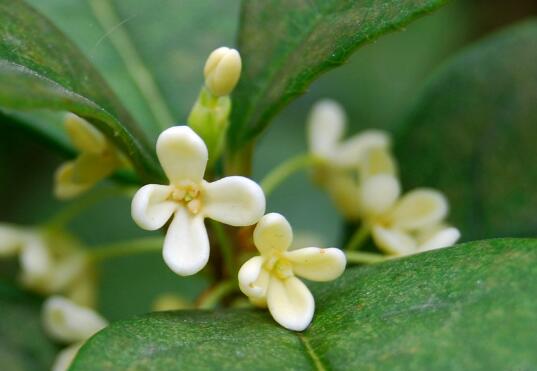
As for the question of which is better, Rixiang Gui, Sijigui, or Jingui, there is actually no standard answer, because everyone's preferences are different, so it is impossible to say which is better. The advantages of Rixiang Gui and Sijigui are their long ornamental period and long flowering period, while Jingui has a relatively strong fragrance, so which one is better still depends on everyone's personal preference.
2. Differences Between Rixiang Gui and Sijigui
Rixiang Gui
Rixiang Gui is a horticultural cultivar of osmanthus. Each new shoot has 3 to 4 pairs of leaves, and in the leaf axil of each leaf there are 2 to 3 pairs of superimposed axillary buds. Other Sijigui-type cultivars generally have only 2 to 3 pairs of leaves per new shoot, and in the leaf axil of each leaf there are only 1 to 2 pairs of single or superimposed leaf buds. This creates the objective material basis for its relatively large number of flowers and relatively large flowering potential. Its cumulative flowering period throughout the year can reach more than 200 days, and the cultivar is therefore named Rixiang Gui.
Sijigui
Sijigui is a variant of osmanthus in the genus Osmanthus. Its leaves are opposite, mostly elliptical or oblong-elliptical, with smooth, leathery leaf surfaces and serrated leaf margins; it blooms in autumn, with flowers clustered in the leaf axils, the corolla split to the base, in colors such as milky white, yellow, and orange-red, and extremely fragrant; the drupe is purple-black when mature. This plant is mainly distributed in Zhejiang, Jiangsu, Fujian, Taiwan, China, Sichuan, Yunnan, and other places in China.
1. Body Size Differences
When it comes to the differences between Rixiang Gui and Sijigui, the most obvious is their size. Although both are cultivars of osmanthus, there is still a big difference in size. The plant height of Rixiang Gui generally can reach about 6 m, and the bark color is generally mostly light gray, while the plant height of Sijigui can reach up to 12 m, and the bark color is relatively dark, generally blackish brown.
2. Appearance Differences
In addition to body size, we can also see their differences in appearance. First, in terms of leaves, the leaf color of Rixiang Gui is generally green or dark green, and the surface is glossy, while the leaves of Sijigui generally grow symmetrically and are relatively thinner. Second, in terms of flower color, the flowers of Rixiang Gui are mostly pale yellow or lemon yellow, while the flowers of Sijigui are more white or pale yellow.
3. Propagation Differences
In addition to the above two points, we can also see the differences between Rixiang Gui and Sijigui from their propagation methods. The propagation method of Rixiang Gui is generally mainly cutting propagation, and grafting propagation can also be carried out. The propagation methods of Sijigui are relatively more numerous. In addition to cuttings and grafting, layering propagation can also be carried out, and the survival rate is also very high.
Differences Between Rixiang Gui and Sijigui
The osmanthus tree is a very beautiful plant and flower, and it includes many cultivars. Common ones include Jingui, Yingui, Bayue Gui, and Sijigui. It is a very common evergreen broad-leaved tree in our daily lives. This flower generally blooms in the golden autumn season, and when in full bloom the whole tree is covered with small yellow-white flowers, competing in beauty and exceptionally lovely. Moreover, osmanthus flowers have a rich fragrance and are loved by many friends. But there are still many people who cannot distinguish the different types of osmanthus. Below, YJBYS has gathered and organized information for you on the differences between Rixiang Gui and Sijigui. Let's take a look!
Differences Between Rixiang Gui and Sijigui
Rixiang Gui is one cultivar among Sijigui. The plant of Rixiang Gui is relatively loose, and the distance between nodes is relatively long, while the plant of Sijigui is relatively dense and also relatively compact. The leaves of Sijigui are like willow leaves, relatively narrow and long. The older leaves and plants are serrated, and the leaf margins curl downward. By touching with your hands, you can easily distinguish the differences between Rixiang Gui and Sijigui.
The flower color of Rixiang Gui is relatively yellowish, and the flowers are relatively small and few in number, but it can bloom continuously, and its flowering period is also relatively long. The flower colors of Sijigui are relatively rich, including white, red, and yellow, and the flowers have a relatively rich fragrance, making them very popular. Most people very much like to grow Rixiang Gui, which has very good ornamental value.
Rixiang Gui
Rixiang Gui is also called Jiulixiang and Muxi. It is an evergreen shrub plant with many branches, and the nodes of the plant are relatively short. The leaves are very glossy and green, and the leaf margins have a small number of tooth-like serrations. It has petioles, and there are glandular points on both sides. The flowers are bisexual, and the inflorescence is clustered above the leaf axils. There are two bracts, and their bases are connate. The calyx is bell-shaped.
The corolla is white or yellowish white, cylindrical or urn-shaped, and it bears fruit. When the flowers are in full bloom, they give off a fresh and pleasant fragrance, giving people a refreshing feeling. It can bloom all year round, and its flowering period is continuous. The age of the plant is generally 100 years, the tree height is 6 m, the diameter at breast height is generally 22 cm, and the crown width is 5.8 m. It is generally distributed in Fujian, Guangdong, Hainan, Guangxi, Northeast China, North China, and other regions.
Sijigui
Sijigui is also called Yueyue Gui. It is a tree plant belonging to the genus Osmanthus in the family Oleaceae. Its leaves are opposite, generally oblong-elliptical and elliptical, with smooth leaf surfaces, and the leaves are thin and relatively leathery. The leaf margins are serrated. Sijigui generally blooms in autumn, and the flowers grow below the leaf axils. The corolla is split to the base, and the flower colors are very rich, including white, yellow, orange, and so on, with fragrance spreading all around. The drupe is purple-black after maturity.
Sijigui is a variation of osmanthus in the genus Osmanthus. Its biggest difference from other osmanthus trees is that it blooms all year round, so it is called Sijigui and Yueyue Gui. However, its floral fragrance is the lightest among osmanthus tree types, and it is generally difficult to smell the floral fragrance. The cultivars of Sijigui are further divided into Rixiang Gui, Sijigui, Yuegui, Tianxiang Taige Gui, and so on.
Cultivation Methods for Sijigui
1. Water conditions. Watering Sijigui needs to be moderate, and the principle of two less and one more should be mastered. Plants repotted before new shoots appear need less watering, and less watering is also needed in cloudy and rainy weather, while in dry and early weather such as summer and autumn, more watering should be given. After repotting and watering thoroughly, it is also necessary to often maintain a water content of about 50%. From July to September after entering the dog days, the soil water content should be about 60%. Generally, if the pot soil can be pinched into a ball by hand and then scatter when released, the moisture is sufficient. At the same time, attention should be paid to drainage on cloudy and rainy days to prevent waterlogging from rotting the roots and drowning the plant.
2. Soil conditions. Sijigui likes to grow in slightly acidic, well-drained, and fertile sandy loam. On the contrary, Sijigui grows relatively slowly in strongly acidic soil, with yellow and withered leaves and few branches, showing a phenomenon of malnutrition. We generally graft two-year-old seedlings in soil with a pH value of 3 to 4. In the same year, there are generally 2 to 3 branches, with branch length of about 6 cm, which is 2 times fewer branches than in soil with a pH value of 6. In alkaline soil, Sijigui shows leaf withering within two or three months and gradually dies.
3. Fertilization conditions. People all say that flourishing flowers depend on fertilizer. Sijigui relatively likes and is suitable for pig manure as fertilizer. We can mix it into the pot soil or place it in the bottom of the pot after rotting and drying. The amount of fertilizer is generally based on 1/4 of the pot height, and a layer of soil about 1 to 2 cun thick needs to be covered over the fertilizer. Then plant the Sijigui, and within one year there is no need to fertilize again. If grown in urban areas, you can use the hoof horns of donkeys, horses, or mules soaked into water, water once when it sprouts in spring, and then water once every 7 to 10 days before August.
4. Shaping conditions. Sijigui is a plant with relatively strong ornamental value, mainly for leaf viewing, form viewing, and flower viewing. Although this osmanthus has small flowers, it is relatively fragrant, and its leaves and form are very beautiful. Therefore, when shaping osmanthus, we need to express an air of prosperity and wealth, solemnity, and elegance and innocence. To achieve beauty, we can choose privet as the rootstock, and first move large-leaf privet into a flowerpot. From the summer solstice to the autumn equinox, the approach grafting method can be used throughout this period. After survival, cut the osmanthus from the mother plant to form a new osmanthus plant, and it generally can survive.
Differences Between Rixiang Gui and Sijigui
.html
What Are the Differences Between Rixiang Gui and Sijigui?
There are very many types of osmanthus, and common osmanthus trees include Sijigui, Bayue Gui, Jingui, Yingui, and so on. They are all plants with very good ornamental value. People often grow them in gardens, parks, courtyards, and indoors. They can give off a faint floral fragrance, bringing people a feeling of being close to nature, very comfortable. Each type of osmanthus is different, and the same is true for Rixiang Gui and Sijigui. Below let's take a look at what the differences are between Rixiang Gui and Sijigui.
Differences Between Rixiang Gui and Sijigui - Rixiang Gui
Rixiang Gui is also called Jiulixiang and Muxi. It is an evergreen shrub plant with many branches, and the nodes of the plant are relatively short. The leaves are very glossy and green, and the leaf margins have a small number of tooth-like serrations. It has petioles, and there are glandular points on both sides. The flowers are bisexual, and the inflorescence is clustered above the leaf axils. There are two bracts, and their bases are connate. The calyx is bell-shaped. The corolla is white or yellowish white, cylindrical or urn-shaped, and it bears fruit. When the flowers are in full bloom, they give off a fresh and pleasant fragrance, giving people a refreshing feeling. It can bloom all year round, and its flowering period is continuous. The age of the plant is generally 100 years, the tree height is 6 m, the diameter at breast height is generally 22 cm, and the crown width is 5.8 m. It is generally distributed in Fujian, Guangdong, Hainan, Guangxi, Northeast China, North China, and other regions.
Differences Between Rixiang Gui and Sijigui - Sijigui
Sijigui is also called Yueyue Gui. It is a tree plant belonging to the genus Osmanthus in the family Oleaceae. Its leaves are opposite, generally oblong-elliptical and elliptical, with smooth leaf surfaces, and the leaves are thin and relatively leathery. The leaf margins are serrated. Sijigui generally blooms in autumn, and the flowers grow below the leaf axils. The corolla is split to the base, and the flower colors are very rich, including white, yellow, orange, and so on, with fragrance spreading all around. The drupe is purple-black after maturity. Sijigui is a variation of osmanthus in the genus Osmanthus. Its biggest difference from other osmanthus trees is that it blooms all year round, so it is called Sijigui and Yueyue Gui. However, its floral fragrance is the lightest among osmanthus tree types, and it is generally difficult to smell the floral fragrance. The cultivars of Sijigui are further divided into Rixiang Gui, Sijigui, Yuegui, Tianxiang Taige Gui, and so on.
Differences Between Rixiang Gui and Sijigui
Rixiang Gui is one cultivar among Sijigui. The plant of Rixiang Gui is relatively loose, and the distance between nodes is relatively long, while the plant of Sijigui is relatively dense and also relatively compact. The leaves of Sijigui are like willow leaves, relatively narrow and long. The older leaves and plants are serrated, and the leaf margins curl downward. By touching with your hands, you can easily distinguish the differences between Rixiang Gui and Sijigui. The flower color of Rixiang Gui is relatively yellowish, and the flowers are relatively small and few in number, but it can bloom continuously, and its flowering period is also relatively long. The flower colors of Sijigui are relatively rich, including white, red, and yellow, and the flowers have a relatively rich fragrance, making them very popular. Most people very much like to grow Rixiang Gui, which has very good ornamental value.
Value of Rixiang Gui and Sijigui
1. Rixiang Gui: It is a very rare plant among osmanthus tree types. It is evergreen all year round and has very good stress resistance. It is very easy to grow. In one year it blooms for a total of 240 days, and the period of relatively vigorous flowering is from September to April. It is a landscaping plant and is often used by people as a bonsai plant. It can extract natural plant aromatic oil and has health benefits such as resolving phlegm, lowering blood pressure, relieving cough and asthma, and anti-inflammatory and antibacterial effects. It also has very good ornamental value.
2. Sijigui: The leaves and fruits of Sijigui can both extract very good aromatic oil. It can be made into various food and soap flavors, and the leaves can be used as flavoring spices for fragrances and canned goods. Sijigui is a very excellent osmanthus cultivar. It can bloom all year round and has the effect of beautifying the environment, with very good medicinal value. It can be stewed with meat and eaten, mainly for toothache and sore throat. Sijigui has very good resistance to sulfur dioxide and hydrogen fluoride. In order to purify the air, it is suitable for planting in courtyards and some public places. It is a plant very favored by people.
That is all for the sharing of what the differences are between Rixiang Gui and Sijigui. I hope this article is helpful to everyone. Good luck to everyone.