How to prevent and control pests and diseases in coleus? Seven methods to effectively reduce the incidence rate
Coleus is much loved for its graceful plant shape, rich leaf colors and ease of landscaping, but no matter how strong its adaptability, growing coleus will inevitably run into trouble with pests and diseases. What should you do if coleus gets bugs or shows signs of disease? Let's look at the methods for preventing and controlling pests and diseases in coleus.
Pest and disease control for coleus
Coleus pests
1. Aphids
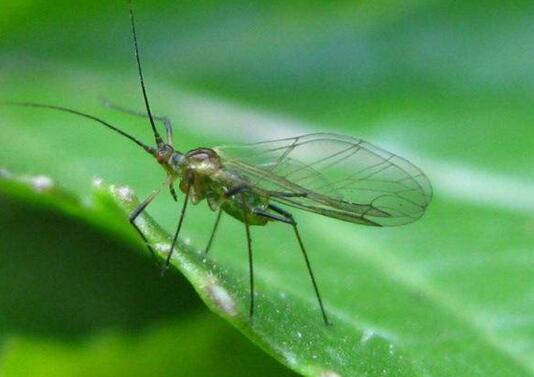
There are many species of aphids on Earth, and more than 200 of them can cause serious damage to coleus. They hide on the leaf surface of coleus and suck the sap, causing the leaves to discolor, curl and then wither. They are one of the natural enemies of most plants.
Control measures: When aphids appear in large numbers, spray with a 3000-fold dilution of 50% pirimicarb wettable powder. For prevention, when temperatures drop in autumn, brush the base white, then prune away spent flowers and dead branches, which can prevent aphids from laying eggs.
2. Red spider mites
Red spider mites have extremely strong reproductive capacity, so when red spider mite damage is found on coleus, it should be dealt with as early as possible. It usually occurs in mid-May, and the more serious period is in June. It causes leaves to turn yellow and whitish, leading to nutrient deficiency in the coleus.
Control measures: Red spider mites are pests active in high temperatures, so avoid keeping coleus in a hot, dry environment. When the pest appears, spray with a 1000-fold dilution of 10% fenbutatin oxide plus pyridaben emulsifiable concentrate, once every 10 days; two treatments can basically clear out the red spider mites.
3. Leaf roller caterpillars
Leaf roller caterpillars most often appear on plants with dense foliage. They are one of the most destructive pests in coleus pest and disease control, feeding on the leaf mesophyll, causing the leaf color of coleus to fade, followed by yellowing and leaf drop even during the peak growing season.
Control measures: Leaf roller caterpillars are phototactic, so black-light traps can be used to kill the adults. In addition, chemical control can be used, such as spraying with a 1000-fold dilution of 25% phosmet emulsifiable concentrate or a 1000-fold dilution of 50% phoxim emulsifiable concentrate.
Coleus diseases
1. Stem blight
The lesions are initially oval, then become brown, sunken and canker-like, then spread from the stem to the whole plant, finally turning the lesions into a dark brown dry rot. Brown irregular lesions appear on the leaf surface, the edges curl, and the whole plant dies.
Control measures: In coleus pest and disease control, stem blight is usually sprayed with a 500-fold dilution of 70% thiophanate-methyl wettable powder, or a 500-fold dilution of 75% chlorothalonil wettable powder, to effectively control the disease. In everyday care, make sure plants are not too densely planted and maintain light penetration to prevent stem blight.
2. Anthracnose
It often occurs on the leaf tips of coleus, first appearing as brown spots that then continuously expand. The entire leaf surface shows brown ripples, and gray small spots also appear within the lesions; the small spots then merge into one, causing the leaves to yellow, wither and drop off.
Control measures: Spray with a 500-fold solution of 25% anthracnose-ling wettable powder, once every 7-10 days; three treatments can basically prevent anthracnose from spreading. Remove diseased leaves promptly and burn them to avoid the pathogen remaining on the leaves.
3. Phytophthora blight
The leaves change from bright colors to brown, the leaf surface begins to rot, green water-soaked lesions appear at the base of the stem, and the branches and leaves begin to wither. If phytophthora blight is not treated in time, it can trigger stem blight. Its main causes are a lack of pruning over a long period, leading to poor light penetration, combined with a stuffy, hot environment.
Control measures: Cut off the diseased branches and leaves to increase light penetration and reduce nutrient loss; at the same time, spray the leaf surface with an 800-fold dilution of 25% metalaxyl wettable powder.
4. Leaf blight
Brown lesions usually appear first at the leaf tips, then spread toward the leaf base. The leaves change from green or red to grayish brown, black spots form on the underside, and the coleus grows slowly with premature leaf drop.
Control measures: Thoroughly clean up diseased leaves and fallen leaves to reduce the amount of pathogen, then strengthen care and management; when the disease occurs, spray the leaf surface with a 1000-fold dilution of 50% carbendazim wettable powder, or a 500-fold dilution of 65% zineb.
Pest and disease control for coleus
1. Control during the seedling stage The high-temperature, high-humidity environment inside a warm shed is extremely suitable for the reproduction of many pathogens, and the most serious and damaging disease is damping-off, which is caused jointly by Fusarium, Rhizoctonia and Pythium. It is generally most severe about 20 days after the seedlings emerge, and soil-borne infection is the main cause of the disease. Its symptoms include: seedling blight, damping-off and rot. At this time, control watering, provide appropriate ventilation, and after the seedlings emerge, spray Lvheng No. 1 and Lvheng No. 2 for chemical control.2. Control during the growing period
(1) Common diseases and control methods Gray mold: This is a common fungal disease of herbaceous flowers, caused by Botrytis cinerea, and can harm leaves, stems, flowers and fruits. In the early stage of leaf damage, water-soaked spots appear and gradually expand into brown to dark brown soft rot. Flower buds are affected the same way. When humidity is high, gray mold grows on the diseased parts. This disease relapses very easily, so gray mold control must be persistent. In care and management, apply less nitrogen fertilizer; for chemical control, choose Ronilan, Shijiale, Huimeike, Ridomir and others. Phytophthora blight: This is also a fungal disease, invading from the roots and base of the stem of the flower. In the early stage, the affected area shows water-soaked dark green spots, which can develop into dark brown patches; in severe cases, the entire stem turns black and rots, disrupting the transport function of the cortex and ultimately causing the plant to die. If this disease is found, choose Shuangyi Sukang, Antaisheng, mancozeb, Ridomir and others for spraying control.
Sclerotinia rot: It is caused by infection by Sclerotinia sclerotiorum. The pathogen also invades from the base of the stem. In the early stage, light brown water-soaked spots appear at the affected area and spread to the stem and leaf stalks; rot occurs, and in humid conditions white cotton-like mycelium grows on the diseased part. For this disease, choose quintozene, Junhejing or Junshajing for spray control.
Southern blight: The pathogen mainly invades from the stem and roots of the plant. It mostly occurs at the base of the stem; the affected area becomes brown and rots, and white silky strands grow on the diseased part. A 1000-fold dilution of 5% carbendazim can be used to spray the soil around the roots for control.
Bacterial soft rot: In the early stage, the affected area is water-soaked, then turns brown and becomes sticky, slippery and soft-rotted. Within the soft-rotted tissue there is a white, yellow or grayish brown paste-like sticky substance, and it gives off a foul odor. For chemical control, agricultural streptomycin can be used, spraying it on the diseased plants and the soil around the roots.
Phytophthora blight, sclerotinia rot, southern blight and bacterial soft rot have similar symptoms and must be carefully analyzed. Although in cultivation management they all involve moderating watering and providing appropriate ventilation, their chemical control measures are all different. Powdery mildew: It harms the young leaves, flower buds and flower stalks of flowers. First, white powdery spots appear on the affected parts, gradually covering them to form a layer of white powdery substance. The affected parts become curved and deformed, with fewer and smaller flowers, or even no flowers at all. This disease is often found on plants such as cineraria, impatiens and Chinese rose. For chemical control, choose thiophanate-methyl, Fuxing and others.
Rust: This disease often occurs on leaves, fruits and branches, and is common on chrysanthemums. The affected parts have orange-yellow to dark brown powdery masses, scab-like or hair-like growths. It can be controlled with fungicides such as triadimefon, thiophanate-methyl, carbendazim and Fuxing. Black spot and brown spot: These two diseases mainly harm the leaves. Watering should be moderated and humidity reduced; for chemical control, chlorothalonil and thiophanate-methyl can be used.
Viral disease: It is a disease caused by extremely tiny parasites. Affected plants are prone to symptoms such as distortion, leaf curling and stunting. The control agents are Jiedukang, Xiaoyedi mixed with Virus A spray, W2000 and others.
(2) Common pests and control methods Red spider mites: They occur in high-temperature, low-humidity environments. The affected parts lose their green color and develop grayish yellow spots, and eventually the leaves wither and drop. For chemical control, choose dimethoate, omethoate, Beileba, Tiantianxing, dichlorvos and others.
Aphids: They mostly suck nutrients from flowers on the underside of leaves, causing the leaves to discolor and curl. For chemical control, choose dichlorvos, dimethoate, Yibianqing, Kangfuduo and others. Scale insects: There are many species, the bodies are small, and their surface is often covered with a waxy scale. For chemical control, choose Sushajie, omethoate and dichlorvos.
Whiteflies: Small, white, and not strong fliers; affected leaves turn yellow and drop. They can be controlled by spraying with deltamethrin, dimethoate, omethoate, dichlorvos and others. Leafminers: The larvae burrow into the leaf mesophyll of flowers, tunneling winding yellow-white galleries through the leaves. Damage starts in May and continues until August. Root irrigation with a 1000-fold dilution of 40% omethoate emulsifiable concentrate can be used for control.
Control of common pests and diseases of coleus
1. Control during the seedling stage
The high-temperature, high-humidity environment inside a warm shed is extremely suitable for the reproduction of many pathogens, and the most serious and damaging disease isdamping-off, which is caused jointly by Fusarium, Rhizoctonia and Pythium. It is generally most severe about 20 days after the seedlings emerge, and soil-borne infection is the main cause of the disease. Its symptoms include: seedling blight, damping-off and rot. At this time, control watering, provide appropriate ventilation, and after the seedlings emerge, spray Lvheng No. 1 and Lvheng No. 2 for chemical control.
2. Control during the growing period
(1) Common diseases and control methods
Gray mold:This is a common fungal disease of herbaceous flowers, caused by Botrytis cinerea, and can harm leaves, stems, flowers and fruits. In the early stage of leaf damage, water-soaked spots appear and gradually expand into brown to dark brown soft rot. Flower buds are affected the same way. When humidity is high, gray mold grows on the diseased parts. This disease relapses very easily, so gray mold control must be persistent.
Control methods: In care and management, apply less nitrogen fertilizer; for chemical control, choose Ronilan, Shijiale, Huimeike, Ridomir and others.
Phytophthora blight:This is also a fungal disease, invading from the roots and base of the stem of the flower. In the early stage, the affected area shows water-soaked dark green spots, which can develop into dark brown patches; in severe cases, the entire stem turns black and rots, disrupting the transport function of the cortex and ultimately causing the plant to die.
Control methods: If this disease is found, choose Shuangyi Sukang, Antaisheng, mancozeb, Ridomir and others for spraying control.
Sclerotinia rot:It is caused by infection by Sclerotinia sclerotiorum. The pathogen also invades from the base of the stem. In the early stage, light brown water-soaked spots appear at the affected area and spread to the stem and leaf stalks; rot occurs, and in humid conditions white cotton-like mycelium grows on the diseased part.
Control methods: For this disease, choose quintozene, Junhejing or Junshajing for spray control.
Southern blight:The pathogen mainly invades from the stem and roots of the plant. It mostly occurs at the base of the stem; the affected area becomes brown and rots, and white silky strands grow on the diseased part.
Control methods: A 1000-fold dilution of 5% carbendazim can be used to spray the soil around the roots for control.
Bacterial soft rot:In the early stage, the affected area is water-soaked, then turns brown and becomes sticky, slippery and soft-rotted. Within the soft-rotted tissue there is a white, yellow or grayish brown paste-like sticky substance, and it gives off a foul odor.
Control methods: For chemical control, agricultural streptomycin can be used, spraying it on the diseased plants and the soil around the roots.
Phytophthora blight, sclerotinia rot, southern blight and bacterial soft rot have similar symptoms and must be carefully analyzed. Although in cultivation management they all involve moderating watering and providing appropriate ventilation, their chemical control measures are all different.
Powdery mildew:It harms the young leaves, flower buds and flower stalks of flowers. First, white powdery spots appear on the affected parts, gradually covering them to form a layer of white powdery substance. The affected parts become curved and deformed, with fewer and smaller flowers, or even no flowers at all. This disease is often found on plants such as cineraria, impatiens and Chinese rose.
Control methods: For chemical control, choose thiophanate-methyl, Fuxing and others.
Rust:This disease often occurs on leaves, fruits and branches, and is common on chrysanthemums. The affected parts have orange-yellow to dark brown powdery masses, scab-like or hair-like growths.
Control methods: It can be controlled with fungicides such as triadimefon, thiophanate-methyl, carbendazim and Fuxing.
Black spot and brown spot:These two diseases mainly harm the leaves.
Control methods: Watering should be moderated and humidity reduced; for chemical control, chlorothalonil and thiophanate-methyl can be used.
Viral disease:It is a disease caused by extremely tiny parasites. Affected plants are prone to symptoms such as distortion, leaf curling and stunting.
Control methods: The control agents are Jiedukang, Xiaoyedi mixed with Virus A spray, W2000 and others.
(2) Common pests and control methods
Red spider mites:They occur in high-temperature, low-humidity environments. The affected parts lose their green color and develop grayish yellow spots, and eventually the leaves wither and drop.
Control methods: For chemical control, choose dimethoate, omethoate, Beileba, Tiantianxing, dichlorvos and others.
Aphids:They mostly suck nutrients from flowers on the underside of leaves, causing the leaves to discolor and curl.
Control methods: For chemical control, choose dichlorvos, dimethoate, Yibianqing, Kangfuduo and others.
Scale insects:There are many species, the bodies are small, and their surface is often covered with a waxy scale.
Control methods: For chemical control, choose Sushajie, omethoate and dichlorvos.
Whiteflies:Small, white, and not strong fliers; affected leaves turn yellow and drop.
Control methods: They can be controlled by spraying with deltamethrin, dimethoate, omethoate, dichlorvos and others,
Leafminers:The larvae burrow into the leaf mesophyll of flowers, tunneling winding yellow-white galleries through the leaves. Damage starts in May and continues until August.
Control methods: Root irrigation with a 1000-fold dilution of 40% omethoate emulsifiable concentrate can be used for control.