What to Do When Delphinium Gets Pests? 2 Pest and 2 Disease Control Methods
When growing delphiniums, the problem people fear most is pests and diseases. Such problems are extremely harmful to the plants, and if not dealt with in time, they can easily cause the plants to wither and die. So what should you do when delphiniums get pests? How should pest and disease control for delphiniums be carried out? Below, the editor will walk you through it.
I. What to Do When Delphinium Gets Pests
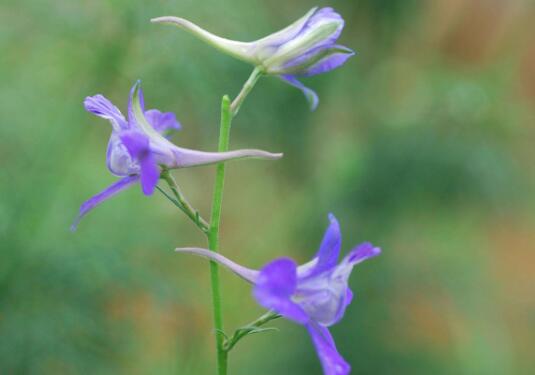
To know what to do when delphiniums get pests, we first need to know what kind of pest it is, so that we can handle it in a targeted way, because the treatment for each pest and disease is different. The specifics are covered in the pest and disease control section for delphiniums below. Let's take a look.
II. Pest and Disease Control for Delphinium
Pests
1. Noctuid moths
Noctuid moths are a type of insect in the order Lepidoptera. They are very small, with a body length generally between 28-32mm, and are mostly grayish-brown in color. Among the pests and diseases of delphinium, this pest mainly damages its leaves. It gradually chews away the leaf tissue of the delphinium, causing the leaves to become damaged and drop early, which greatly affects their appearance.
Control method: This pest has an extremely strong reproductive capacity, so when dealing with it, you must act promptly. For treatment, we can generally use 2.5% trichlorfon powder to spray and kill the pests.
2. Aphids
Among the pests and diseases of delphinium, aphids are a relatively common pest. They are extremely harmful to delphinium, gradually sucking the sap from the plant, causing a massive loss of nutrients and leading to withering and death.
Control method: When aphid infestation is discovered, it must be dealt with promptly. For treatment, we can use a 50% malathion emulsion at 1000 times dilution to spray the delphinium, thereby achieving the effect of killing the aphids.
Diseases
1. Powdery mildew
Among the pests and diseases of delphinium, powdery mildew is a relatively common disease. When it occurs, many white powdery mold spots appear on the leaves of the delphinium. It inhibits the growth of the delphinium, gradually causing the leaves to shrivel and drop.
Control method: When controlling this disease, we can use a 15% triadimefon wettable powder at 800-1000 times dilution to spray the delphinium. Generally, spray once every 5-7 days, and after 2-3 times it can be cured.
2. Black spot
Black spot harms the entire delphinium plant. When it occurs, many black spots appear on the leaves of the delphinium, and over time they gradually spread, eventually causing the plant to wither and die.
Control method: For this disease, we can use a streptomycin 1000 times dilution spray to treat the delphinium. Generally, spray once every 10-15 days, and after 1-2 times it can basically be cured.
Summary of Common Pests and Diseases of Delphinium and Their Control Methods
Delphinium needs a sunny and cool growing environment. It is both cold-tolerant and drought-tolerant, but not tolerant of high temperatures or wet conditions. Under high temperature and wet conditions, delphinium is prone to pests and diseases. What kinds of pests and diseases affect delphinium? How to control them?
Common disease of delphinium: Powdery mildew
Symptoms
This disease harms the leaves and stems of the plant. In the early stage, white powdery mold spots appear on the affected parts of the diseased plant. In severe cases, the young leaves and young shoots become curled, and growth is inhibited. In the later stage, small black granular bodies form within the mold spots, which are the cleistothecia of the pathogen.
Occurrence pattern
The pathogen overwinters as ascocarps. In the spring of the following year, it produces conidia and ascospores. The spores spread through wind and rain, infecting and harming the host. The disease is severe in humid and cool seasons.
Control methods
Reduce sources of infection: After flowering ends, collect the diseased plants and diseased remnants and burn them.
Strengthen cultivation management: The planting site should have good drainage to prevent dampness. Plants should not be too dense, and good ventilation and light conditions should be maintained.
Chemical control: When the disease occurs, spray 50% benomyl wettable powder at 1000 times dilution, or 15% triadimefon wettable powder at 800-**** times dilution. Delphinium root and crown rot is a devastating disease of delphinium. The pathogen invades the plant through the roots and root crown, cutting off the water supply and causing the plant to suddenly wilt and die.
Common disease of delphinium: Black spot
Symptoms
This disease harms the leaves, petioles, stems, and flowers of the plant, mainly the leaves. It often starts on the lower leaves of the plant. The upper surface of infected leaves develops shiny black spots, and the spots are irregular in shape. The spots on the underside of the leaves are light brown.
Occurrence pattern
The pathogenic bacteria overwinter on the soil surface or on diseased leaves. In the spring of the following year, when conditions are suitable, the bacteria spread through rainwater and enter through the host's stomata to cause infection. Seeds can also carry the bacteria and transmit the disease. Under conditions of abundant rain and moist soil, the disease is more severe.
Control methods
Manual removal: When diseased leaves are found, remove and burn them immediately. In autumn, prune off old stems.
Chemical control: When the disease occurs, spray with streptomycin 1000 times dilution.
That is all I have learned about delphinium today. I hope fellow flower lovers will find this article helpful. To learn more about delphinium, please continue to follow Duorou Huapu, and we will provide you with more related knowledge!
Common Diseases of Delphinium and Their Control Methods
Common disease of delphinium: Powdery mildew
Symptoms
This disease harms the leaves and stems of the plant. In the early stage, white powdery mold spots appear on the affected parts of the diseased plant. In severe cases, the young leaves and young shoots become curled, and growth is inhibited. In the later stage, small black granular bodies form within the mold spots, which are the cleistothecia of the pathogen.
Occurrence pattern
The pathogen overwinters as ascocarps. In the spring of the following year, it produces conidia and ascospores. The spores spread through wind and rain, infecting and harming the host. The disease is severe in humid and cool seasons.
Control methods
Reduce sources of infection: After flowering ends, collect the diseased plants and diseased remnants and burn them.
Strengthen cultivation management: The planting site should have good drainage to prevent dampness. Plants should not be too dense, and good ventilation and light conditions should be maintained.
Chemical control: When the disease occurs, spray 50% benomyl wettable powder at 1000 times dilution, or 15% triadimefon wettable powder at 800-**** times dilution. Delphinium root and crown rot is a devastating disease of delphinium. The pathogen invades the plant through the roots and root crown, cutting off the water supply and causing the plant to suddenly wilt and die.
Common disease of delphinium: Black spot
Symptoms
This disease harms the leaves, petioles, stems, and flowers of the plant, mainly the leaves. It often starts on the lower leaves of the plant. The upper surface of infected leaves develops shiny black spots, and the spots are irregular in shape. The spots on the underside of the leaves are light brown.
Occurrence pattern
The pathogenic bacteria overwinter on the soil surface or on diseased leaves. In the spring of the following year, when conditions are suitable, the bacteria spread through rainwater and enter through the host's stomata to cause infection. Seeds can also carry the bacteria and transmit the disease. Under conditions of abundant rain and moist soil, the disease is more severe.
Control methods
Manual removal: When diseased leaves are found, remove and burn them immediately. In autumn, prune off old stems.
Chemical control: When the disease occurs, spray with streptomycin 1000 times dilution.