Hibiscus pest and disease control: 5 insect pests and 2 diseases that should be dealt with sooner rather than later
Although the hibiscus flower is beautiful and has high edible and medicinal value, all of this depends on it growing healthily and blooming smoothly. If pests or diseases appear, they not only harm its health but can also kill the entire plant, so timely control is essential. Let's take a look below at the methods for controlling hibiscus pests and diseases.
What insect pests affect hibiscus
1. Bagworm
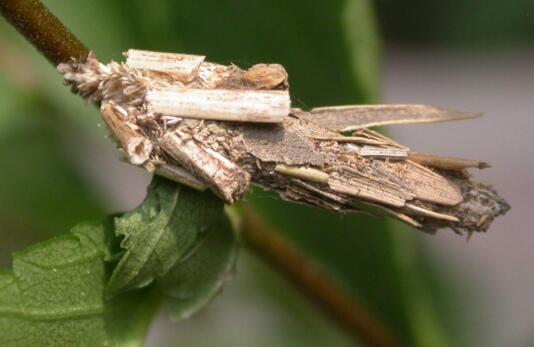
Bagworm larvae feed on hibiscus leaves and tender branches, and also feed from buds and flowers, affecting the sprouting of new buds and tender shoot tips, severely affecting its growth, and causing the flowering period to be delayed or even preventing blooming altogether.
2. Aphids
They are the most widely distributed pests in the world and can harm the vast majority of plants, including hibiscus. They feed by sucking on hibiscus leaves. Although not the most lethal, they are absolutely the most damaging in hibiscus pest and disease control.
3. Red spider mites
They feed on the sap of hibiscus leaves and are extremely destructive to the chlorophyll in the leaves. When chlorophyll is lacking, the leaves turn yellow and drop due to nutrient deficiency, thus affecting its growth, and flowering will naturally be affected as well.
4. Noctuid moths
They often fly in the evening and at night, can pierce fruit skins to suck fruit juice, and also feed on plant leaves. Newly hatched larvae gather on the underside of leaves at the top of the egg-laying plant, feeding on the leaf mesophyll and creating sieve-like small holes. They often occur during the rainy season.
5. Leaf roller caterpillars
Also commonly known as cabbage worms, they often hide inside leaves and feed on the mesophyll, causing hibiscus leaves to dry out, turn yellow and drop early, resulting in slow growth of the hibiscus.
Hibiscus pest control
When pests appear, promptly remove infested branches and spray with highly effective, low-toxicity pesticides such as trichlorfon and dimethoate emulsion. Control work should be done during the growing season or late autumn, avoiding spraying during flowering.
Hibiscus disease control
1. Anthracnose
Small brown spots appear on the leaf surface and leaf tips of hibiscus, and the spots gradually expand while brown wavy edges appear. Gray small spots also appear within the lesions. It is one of the most common diseases in hibiscus pest and disease control.
Control method: Dilute 25% carbendazim wettable powder into a 500-fold solution, spray once every half month, and it can be cured after 3-4 consecutive applications.
2. Powdery mildew
Small yellow spots first appear on hibiscus leaves, and these spots spread into circular or oval lesions with a white powdery mold layer on the surface. Usually there are more on the lower leaves than the upper ones, and more on the front than the back.
Control method: Strengthen fertilizer and water management, apply more phosphorus and potassium fertilizer, keep the soil moist, and spray the leaf surface with 80% sulfur at 400-fold plus 72% benothiazole-cymoxanil at 600-fold.
Spring flower pest and disease control
Common pests and diseases of spring flowers include powdery mildew, rust, black spot, leaf curl, chlorosis, etc., as well as pests such as longhorn beetles, aphids, scale insects, and scarab beetles.
Control methods
(1) Powdery mildew: Commonly seen on flowers such as impatiens, cineraria, dahlia, Chinese rose, and hall crabapple. It mainly occurs on leaves, but also harms tender stems, flowers and fruits. At the initial stage, multiple faded lesions first appear on the leaves, but there is no obvious edge around them, and later the small spots merge into large spots. As the disease progresses, the lesions become covered with white powder, the leaves shrink, affected flowers cannot bloom normally, and affected fruits stop developing. This disease can occur from early spring, extend through summer, and last until autumn. Its control methods include: at the initial stage, promptly remove diseased leaves to prevent spread; in severe cases, spray 0.2 to 0.3 degree lime sulfur mixture, or 70% thiophanate-methyl at 1000-fold.
(2) Rust: Flowering trees susceptible to this disease are mostly Rosaceae plants such as Chaenomeles speciosa, including roses and hall crabapple. In addition, peonies and dianthus are also susceptible. The disease occurs in early spring. Initially, speckled chlorosis appears on young leaves, followed by densely packed small black spots. Initially there are yellow round patches on young leaves, and grayish-white wool-like growths emerge from the underside. From August to September, yellow-brown powdery material is produced, spreads with the wind to juniper trees, and in early spring of the following year spreads again with rain to harm the above-mentioned flowers. Therefore, this disease requires parasitic damage on both types of plants to continue, and in pest and disease theory it is called "alternate host disease." When severe, it causes defoliation; when mild, it causes lesions that affect appearance and photosynthesis. Its control methods are: try to avoid planting alternate host plants such as juniper nearby; in early spring, around mid-March, begin spraying 20% carboxin emulsion at 400-fold or 50% tebuconazole wettable powder, then spray once more after about half a month until early April. If spring has little rain or is dry, one fewer spray can be applied.
(3) Leaf curl: It mainly occurs on the leaves of Rosaceae plants such as plum and peach. When leaves first unfold in early spring, affected leaves become deformed and swollen, and turn red. As the leaves grow, they curl toward the underside, the lesions gradually turn white, and a powdery substance appears on them. Because the leaves are damaged, tender shoots cannot grow normally and may even die. If leaf damage is severe, they drop, affecting tree vigor and reducing flower quantity. Its control methods include: at the initial stage, promptly remove diseased leaves showing early symptoms to reduce the spread of the pathogen; before sprouting in early spring, spray 3 to 5 degree lime sulfur mixture to eliminate the pathogen overwintering inside and outside the bud scales and on diseased shoot tips. If this can be done for two or three consecutive years, the disease can be fairly thoroughly controlled. For severely affected potted flowers, apply more fertilizer and strengthen management to restore tree vigor so they can bloom more.
(4) Aphids: Also known as honey bugs. Many potted flowers are harmed by aphids, such as peach, Chinese rose, elm-leaved spirea, plum blossom, and cherry blossom. Aphids mostly gather on the underside of leaves and live by sucking leaf sap. Because they reproduce quickly, as early spring temperatures rise, affected leaves cannot unfold normally, new shoots cannot grow, and in severe cases leaves drop, affecting flowering. During high summer temperatures, some aphids migrate to other plants such as vegetables, and do not fly back to the trees to lay eggs and overwinter until early the following year. Its control methods include: after sprouting and before leaf unfolding, spray 40% dimethoate emulsion at 1000-fold to kill newly hatched young aphids; alternatively, do not spray pesticide first in order to protect natural enemies such as ladybugs and let them eliminate the aphids, until the imbalance in population dynamics means natural enemies cannot control the aphids, then consider using pesticide. When using this method, it must still be combined with the auxiliary method of manually picking and crushing aphids.
(5) Scale insects: The scale insects are the most numerous in variety and harm the greatest number of flowering trees among all pests. Tortoise shell scale, white lipid, circular. Mulberry white scale, white, pointed. Oyster shell scale, dark brown, males elongated, females circular. Helmet scale, dark brown, circular, shaped like a helmet. Plants susceptible to scale insect damage include camellia, pomegranate, oleander, azalea, hibiscus, cherry blossom, plum, peach, crabapple, and Chinese rose. The larvae first suck sap on leaves, causing chlorosis, and as adults they mostly suck sap on branches and stems, severely weakening tree vigor and affecting flowering. Its control methods include: crush by hand or scrape off pests on leaves and branches with a small knife, and during the larval stage spray 40% dimethoate emulsion at 1000-fold 1 to 2 times, with an interval of 7 to 10 days between applications.
(6) Red spider mites: Mite category. The mite body is small and almost indistinguishable to the naked eye. They often gather in groups and reproduce extremely quickly. Many plants are susceptible, such as Chinese rose, rose, flowering peach, cherry blossom, and azalea. The mites gather on the underside of leaves and suck sap, first causing chlorosis, and ultimately causing leaf drop and death of new shoots. In severe cases, small trees weaken in growth and even die. Its control methods include: at the initial stage, spray 40% dimethoate emulsion at 1000-fold, or 40% dicofol emulsion at 1000-fold to 1500-fold. When spraying to kill them, coverage must be thorough and dense. During high summer temperatures, these mites reproduce extremely fast and control is often too late, so pesticide should be sprayed early and continuously 3 to 4 times, with an interval of about 7 days between applications, and do not use only one type of pesticide to avoid resistance.
(7) Nematodes: Nematodes harm plant roots and cause abnormal plant development. Affected plants include orchids, carnations, narcissus, and tree peonies. When the infestation is mild, it is often hard to notice. When severe, plants grow poorly and bloom weakly. Because there are many kinds of nematodes in the soil and the bodies are tiny and almost invisible to the naked eye, prevention must be the main approach. You can add 20 to 30 granules of 3% furadan granules per kilogram of planting soil, which dissolve in the soil and release slowly to eliminate nematodes.
(8) Caterpillars: Including tent caterpillars and black-backed prominent caterpillars, etc. They have very mixed feeding habits, harm almost all plants, and occur in outbreaks. They should be controlled early. Manual capture can mainly be used, and when necessary, spray 40% dimethoate emulsion at 1000-fold.
(9) Carpenter moths: The larvae bore and feed inside branches and stems, commonly seen on peach, plum, and cherry blossom. In severe cases, they can bore through 2- to 3-year-old large branches, affecting the tree's shape. Its control methods are: observe carefully at ordinary times. When there are borer holes on branches and small granular frass is excreted from the holes, use an iron wire to dig out the insect from the hole along the tunnel, or cut off the branch to kill the pest. The insect itself is reddish-brown, with hairs on the head and each segment of the body, clearly different from the milky white of longhorn beetles. This method is also used to control longhorn beetles. You can also use 80% dichlorvos emulsion at 150-fold, inject it into the tunnel from the frass opening with a syringe, then plug the tunnel with wet mud to kill the pest.
(10) Scarab beetles or beetles: Omnivorous pests that feed on leaves or flowers. Roses and others are susceptible. Manual capture is the main control method.
(11) Underground pests: White grubs, which are the larvae of scarab beetles, white. Cutworms, green-black. In the soil they live by feeding on plant roots or the root crown, often causing plant death. The control method is to promptly dig them out from their entry holes in the soil.
Control of spring flower pests and diseases
Common pests and diseases of spring flowers include powdery mildew, rust, black spot, leaf curl, chlorosis, etc., as well as pests such as longhorn beetles, aphids, scale insects, and scarab beetles.
Control methods
(1) Powdery mildew: Commonly seen on flowers such as impatiens, cineraria, dahlia, Chinese rose, and hall crabapple. It mainly occurs on leaves, but also harms tender stems, flowers and fruits. At the initial stage, multiple faded lesions first appear on the leaves, but there is no obvious edge around them, and later the small spots merge into large spots. As the disease progresses, the lesions become covered with white powder, the leaves shrink, affected flowers cannot bloom normally, and affected fruits stop developing. This disease can occur from early spring, extend through summer, and last until autumn. Its control methods include: at the initial stage, promptly remove diseased leaves to prevent spread; in severe cases, spray 0.2 to 0.3 degree lime sulfur mixture, or 70% thiophanate-methyl at 1000-fold.
(2) Rust: Flowering trees susceptible to this disease are mostly Rosaceae plants such as Chaenomeles speciosa, including roses and hall crabapple. In addition, peonies and dianthus are also susceptible. The disease occurs in early spring. Initially, speckled chlorosis appears on young leaves, followed by densely packed small black spots. Initially there are yellow round patches on young leaves, and grayish-white wool-like growths emerge from the underside. From August to September, yellow-brown powdery material is produced, spreads with the wind to juniper trees, and in early spring of the following year spreads again with rain to harm the above-mentioned flowers. Therefore, this disease requires parasitic damage on both types of plants to continue, and in pest and disease theory it is called “alternate host disease”. When severe, it causes defoliation; when mild, it causes lesions that affect appearance and photosynthesis. Its control methods are: try to avoid planting alternate host plants such as juniper nearby; in early spring, around mid-March, begin spraying 20% carboxin emulsion at 400-fold or 50% tebuconazole wettable powder, then spray once more after about half a month until early April. If spring has little rain or is dry, one fewer spray can be applied.
(3) Leaf curl: It mainly occurs on the leaves of Rosaceae plants such as plum and peach. When leaves first unfold in early spring, affected leaves become deformed and swollen, and turn red. As the leaves grow, they curl toward the underside, the lesions gradually turn white, and a powdery substance appears on them. Because the leaves are damaged, tender shoots cannot grow normally and may even die. If leaf damage is severe, they drop, affecting tree vigor and reducing flower quantity. Its control methods include: at the initial stage, promptly remove diseased leaves showing early symptoms to reduce the spread of the pathogen; before sprouting in early spring, spray 3 to 5 degree lime sulfur mixture to eliminate the pathogen overwintering inside and outside the bud scales and on diseased shoot tips. If this can be done for two or three consecutive years, the disease can be fairly thoroughly controlled. For severely affected potted flowers, apply more fertilizer and strengthen management to restore tree vigor so they can bloom more.
(4) Aphids: Also known as honey bugs. Many potted flowers are harmed by aphids, such as peach, Chinese rose, elm-leaved spirea, plum blossom, and cherry blossom. Aphids mostly gather on the underside of leaves and live by sucking leaf sap. Because they reproduce quickly, as early spring temperatures rise, affected leaves cannot unfold normally, new shoots cannot grow, and in severe cases leaves drop, affecting flowering. During high summer temperatures, some aphids migrate to other plants such as vegetables, and do not fly back to the trees to lay eggs and overwinter until early the following year. Its control methods include: after sprouting and before leaf unfolding, spray 40% dimethoate emulsion at 1000-fold to kill newly hatched young aphids; alternatively, do not spray pesticide first in order to protect natural enemies such as ladybugs and let them eliminate the aphids, until the imbalance in population dynamics means natural enemies cannot control the aphids, then consider using pesticide. When using this method, it must still be combined with the auxiliary method of manually picking and crushing aphids.
(5) Scale insects: The scale insects are the most numerous in variety and harm the greatest number of flowering trees among all pests. Tortoise shell scale, white lipid, circular. Mulberry white scale, white, pointed. Oyster shell scale, dark brown, males elongated, females circular. Helmet scale, dark brown, circular, shaped like a helmet. Plants susceptible to scale insect damage include camellia, pomegranate, oleander, azalea, hibiscus, cherry blossom, plum, peach, crabapple, and Chinese rose. The larvae first suck sap on leaves, causing chlorosis, and as adults they mostly suck sap on branches and stems, severely weakening tree vigor and affecting flowering. Its control methods include: crush by hand or scrape off pests on leaves and branches with a small knife, and during the larval stage spray 40% dimethoate emulsion at 1000-fold 1 to 2 times, with an interval of 7 to 10 days between applications.
(6) Red spider mites: Mite category. The mite body is small and almost indistinguishable to the naked eye. They often gather in groups and reproduce extremely quickly. Many plants are susceptible, such as Chinese rose, rose, flowering peach, cherry blossom, and azalea. The mites gather on the underside of leaves and suck sap, first causing chlorosis, and ultimately causing leaf drop and death of new shoots. In severe cases, small trees weaken in growth and even die. Its control methods include: at the initial stage, spray 40% dimethoate emulsion at 1000-fold, or 40% dicofol emulsion at 1000-fold to 1500-fold. When spraying to kill them, coverage must be thorough and dense. During high summer temperatures, these mites reproduce extremely fast and control is often too late, so pesticide should be sprayed early and continuously 3 to 4 times, with an interval of about 7 days between applications, and do not use only one type of pesticide to avoid resistance.
(7) Nematodes: Nematodes harm plant roots and cause abnormal plant development. Affected plants include orchids, carnations, narcissus, and tree peonies. When the infestation is mild, it is often hard to notice. When severe, plants grow poorly and bloom weakly. Because there are many kinds of nematodes in the soil and the bodies are tiny and almost invisible to the naked eye, prevention must be the main approach. You can add 20 to 30 granules of 3% furadan granules per kilogram of planting soil, which dissolve in the soil and release slowly to eliminate nematodes.
(8) Caterpillars: Including tent caterpillars and black-backed prominent caterpillars, etc. They have very mixed feeding habits, harm almost all plants, and occur in outbreaks. They should be controlled early. Manual capture can mainly be used, and when necessary, spray 40% dimethoate emulsion at 1000-fold.
(9) Carpenter moths: The larvae bore and feed inside branches and stems, commonly seen on peach, plum, and cherry blossom. In severe cases, they can bore through 2- to 3-year-old large branches, affecting the tree's shape. Its control methods are: observe carefully at ordinary times. When there are borer holes on branches and small granular frass is excreted from the holes, use an iron wire to dig out the insect from the hole along the tunnel, or cut off the branch to kill the pest. The insect itself is reddish-brown, with hairs on the head and each segment of the body, clearly different from the milky white of longhorn beetles. This method is also used to control longhorn beetles. You can also use 80% dichlorvos emulsion at 150-fold, inject it into the tunnel from the frass opening with a syringe, then plug the tunnel with wet mud to kill the pest.
(10) Scarab beetles or beetles: Omnivorous pests that feed on leaves or flowers. Roses and others are susceptible. Manual capture is the main control method.
(11) Underground pests: White grubs, which are the larvae of scarab beetles, white. Cutworms, green-black. In the soil they live by feeding on plant roots or the root crown, often causing plant death. The control method is to promptly dig them out from their entry holes in the soil.