What to Do When Gerbera Gets Bugs? Pest and Disease Control and Fungicide Methods for Root Rot
Gerbera, also called fushang flower, is a very beautiful flowering plant. Not only is its flower shape lovely, but its colors are also very rich, making it a favorite among many flower growers. However, when growing gerbera, you may sometimes run into pests and diseases, which are very harmful to gerbera and require timely detection and control. So what should you do when gerbera gets bugs? Next, let's take a look at gerbera pest and disease control together!
I. When Gerbera Gets Bugs, Spray with Pesticide
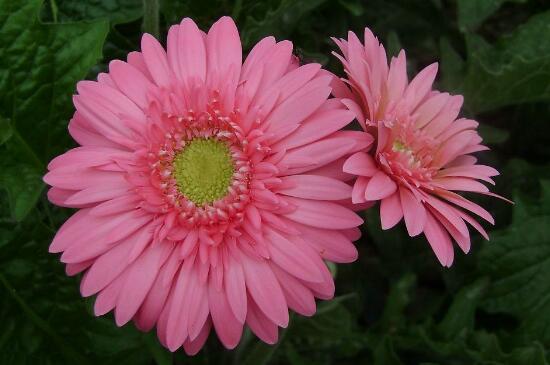
Generally speaking, gerbera has strong adaptability and is rarely attacked by pests and diseases. But if you do not follow the proper gerbera growing methods, it can still get bugs and get sick, and by then flower growers must be very anxious! What should you do when gerbera gets bugs? It is actually very simple: first determine which kind of bug it is, then treat it accordingly. The following is the pest and disease control for gerbera, with a total of 4 pests and 3 diseases. Let's continue reading.
II. Pest and Disease Control for Gerbera
1. Aphids
The thing plants fear most is being infested by pests, and gerbera is no exception. Among pests, aphids appear most often. These insects mainly live on new shoots and survive by sucking sap. Symptoms of infestation: gerbera leaves become smaller and curl up.
Control method: When a small number of aphids is found, you can wash them off with water, or scrape them off with a bamboo strip, then spray a 1000-2000 times dilution of omethoate solution, or kill them with tobacco leaf water: add 50 grams of tobacco leaves to 5 kg of water and boil it.
2. Spider Mites
One of the main pests of gerbera, its larvae live by eating the mesophyll cells of leaves. Symptoms of infestation: spots or winding marks appear on the surface of gerbera leaves.
Control method: When the above symptoms are found, regularly spray 40% propargite 1000-1500 times solution or 20% mitek emulsifiable concentrate 1000-2000 times solution, generally once every 3-4 weeks, and when the damage is severe, spray once every 5-7 days, and 4-5 consecutive sprays will take effect.
3. Thrips
One of the pests that harms gerbera the most, its adults and nymphs suck the sap of the plant's tender tissues (shoots, leaves, flowers, fruits, etc.). Symptoms of infestation: gerbera leaves turn yellow and wither, the plant grows slowly, and the internodes shorten.
Control method: Remove diseased leaves promptly and burn them in a centralized way or bury them deeply to reduce the source of disease; when the incidence is severe, spray 25% imidacloprid 1000 times or 25% thiamethoxam Dagongniu 3000-5000 times for control.
4. Cabbage Caterpillars
One of the pests and diseases of gerbera, they mainly bite the leaves, and in severe cases eat all the leaves, leaving only the thick veins and petioles, causing total loss of yield and easily triggering an outbreak of Chinese cabbage soft rot.
Control method: The damage from cabbage caterpillars is mainly divided into damage by larvae and older larvae, and the pests need to be sprayed promptly, with several sprays to prevent the damage from spreading further. Commonly used agents include: 90% crystal trichlorfon 1000-1500 times solution, or 50% dichlorvos emulsifiable concentrate 1000 times solution spray, etc.
5. Gerbera Root Rot
When it comes to pests and diseases, gerbera root rot is definitely the most damaging one. This disease occurs commonly and easily causes the whole gerbera plant to wither. Symptoms: the diseased roots become brown and rot, and the cortex peels off easily. Several diseased roots gradually invade the surrounding roots, causing the whole plant to wither and the root system to rot.
Control method: Remove diseased leaves promptly and burn them to reduce the source of disease; in the early stage of the disease, spray with fungicides such as 50% carbendazim 500-600 times solution or 70% thiophanate-methyl 800 times solution, once every 7-10 days, and 2-3 consecutive sprays will take effect.
6. Mosaic Disease
Mosaic disease is also one of the pests and diseases of gerbera. Once infected, it will seriously affect the plant's ornamental value. Symptoms: gerbera leaves fade in color, become deformed, and develop patches, affecting flowering or causing plant death.
Control method: When the above symptoms are found, spray 0.5% antiviral agent No. 1 aqueous solution 300 times or 5% JunDuQing aqueous solution 400-500 times for control, once every 7-10 days, and 2-3 consecutive sprays will take effect.
7. Powdery Mildew
Powdery mildew easily breaks out in a high-temperature, poorly ventilated environment, and it mainly harms gerbera leaves. Symptoms: white lesions appear on diseased leaves and gradually expand.
Control method: In the early stage of the disease, spray fungicides such as 25% triadimefon 2000 times solution or 65% zineb 500 times solution. Alternating the agents gives better results.
That is all for the introduction to gerbera pest and disease control. I believe everyone should know what to do when gerbera gets bugs or gets sick! Overall, gerbera is rarely troubled by pests and diseases, so as long as you care for it carefully, these troublesome matters will not come knocking. Finally, may everyone's gerbera bloom into beautiful flowers.
How to Grow Gerbera
Gerbera is very popular in flower shops, but few people dare to grow it as a potted plant. Everyone says they do not understand it and find it hard to keep alive, and they do not know how to grow gerbera. I have grown it for several years and think it is quite good, and I hope to share my experience with more people. This time I will try to be as concise as possible, unlike the long-winded previous post, for everyone's reference.
[Characteristics of Gerbera]
1. Loves light: when not short of water, the more sun the stronger it grows, growing fast and blooming abundantly;
2. Loves fertilizer: like petunia, it loves fertilizer. If you want more flowers, fertilizer must keep up;
3. Drought-tolerant: its fleshy roots are well developed and have very strong water absorption, but it fears waterlogging, which is the main cause of its death. Properly controlling water so that it does not wilt is the safest approach (detailed later);
4. Temperature: the suitable temperature for flowering is 15-30 degrees, within which it blooms continuously. The extreme tolerated temperature is 5-40 degrees. Below 7 degrees it stops growing. In the high-temperature season growth slows down, but it does not become weak and still blooms sporadically, so the peak flowering period is in spring and autumn, March-May and September-November;
5. Pests and diseases: this is the fatal weakness of gerbera and all Asteraceae plants. Anyone who has grown chrysanthemums knows they are magnets for insects, so early detection and early treatment are needed. Diseases are mainly fungal root rot and crown rot, commonly known as root rot and stem rot, which can be avoided by paying a little attention to watering methods.
6. Flowers: conventional varieties have a flower diameter of 8-12 cm, and the flower colors cover all colors except blue-purple, leaning warm, bright and passionate. A single flower lasts a very long time, and as a cut flower in a vase it can even last more than half a month without wilting, so it is suitable as a cut flower.
7. Difficulty of care: its habits are similar to geranium, and neither tolerates waterlogging. Gerbera is much more heat-tolerant than geranium, but it also has more pests and diseases than geranium and needs focused control. It does not need frequent pruning, and the watering frequency is also relatively low. Overall, it is a relatively easy and simple herbaceous flower to grow. Everyone does not need to worry that it will not survive after being bought home or will be difficult to rebloom; flower buds grow continuously and it will not bloom only once and then stay silent forever.
[Gerbera Care]
1. Pot and soil: the pot does not need to be too large. Use 18 cm for large plants, 15 cm for medium ones, and 12 cm for mini varieties. The soil must be airy and permeable. Peat : perlite = 2:1, or use other media instead. Commercially available culture soil with peat as the main component is also fine, such as Cuiyun and others.
2. Light: the more the better. For example, I now only have an east-facing enclosed balcony, and 4 hours of direct light per day is the minimum for gerbera to grow and bloom normally. If petunia can grow normally without becoming leggy, then gerbera will be fine.
3. Water: the opposite of light, supply should be properly limited. Newly bought mature plants should not be watered in a hurry. You can often touch the leaves with your hand. If they are firm, they do not need water. Slightly soft but not wilted is the best time to water. At this time most of the potting soil is still dry, so you can water thoroughly immediately. Touch the leaves again within half an hour and they should already have become firm. This is a sign that the root function is normal (water absorption is very strong), which distinguishes it from root-rotted plants that often wilt and do not improve quickly after watering (in this situation, the more wilted it is, the more it gets watered, and the more it is watered, the worse the root rot becomes, leading to plant death). When watering, be careful not to pour fertilizer water into the leaf center, and especially not onto the flower buds, as this may rot the buds and increase the possibility of stem rot.
4. Fertilizer: it should be sufficient and balanced. Like other herbaceous plants, if you want vigorous growth, use fertilizer with balanced nitrogen, phosphorus and potassium, such as Biwang, Huaduoduo No. 1, or any other reasonable combination of organic fertilizer and chemical fertilizer. For mature plants, use high-phosphorus and high-potassium fertilizer to promote flowering, such as Bikaihua, Huaduoduo No. 2, potassium dihydrogen phosphate, flowering liquid fertilizer, etc. Before planting, sufficient base fertilizer can be added; cake fertilizer, chicken manure and bone meal are all fine, and mixing them is best. Do not use too much nitrogen fertilizer, otherwise the leaves will be thick, large and crowded like leafy greens, affecting flower bud development.
5. Pest and disease control: red spider mites, whiteflies, aphids, scale insects and thrips may all occur, especially the first three, and early detection and early treatment are enough. Its leaves are broad, so spraying is relatively simple; be careful to cover both the leaf surface and the leaf back. There are several diseases, but the only one we commonly see is root rot, and as long as a certain amount of light is ensured and water is given according to its needs, it will not occur.
Once symptoms of wilting, scorched leaves, and soft wilted flower stems appear, be alert. Place it in a ventilated, semi-shaded place, stop water and fertilizer, spray water appropriately to keep the plant from dehydrating, and wait quietly for the root system to regrow. In severe cases, immediately repot and change the soil, cut off the rotten roots, replant, and pay attention to moisture retention; the chance of survival is still quite high.
6. Cut flowers: after flowering, when the inner whorl of tubular flowers has opened one or two rounds, cut it off, or shake it repeatedly by hand to break it off, then cut it diagonally and put it in clean water. Frequently shortening the softened flower stem, changing the water, and adding preservative all help extend the vase life. Cut flowers can last longer than those left on the plant. If the flower stem is tall and not attractive, then cutting it off for viewing is also a good choice.
[Gerbera Propagation]
1. Division: healthy plants will grow several side shoots in a year, so many flowers will open at the same time. When the plant becomes crowded, its growth will weaken. Generally, divide once every three years. Cut it open from the middle with a sharp blade; each division must have one to several terminal buds and enough roots. Disinfect the wounds and pot them up.
2. Cuttings: this operation is inconvenient. In summary, it means cutting off the top, then using the many side shoots produced for cuttings. I have not tried it, and I do not recommend everyone use it.
3. Seeds: imported ones are better. Asteraceae plants are self-infertile, and at least two different gerbera plants must cross-pollinate to set seed. Offspring vary greatly, and excellent new varieties may appear, but most offspring have unsatisfactory flower diameter and great color variation, so propagating with self-collected seeds is not recommended.
The Effects and Benefits of Cockscomb and How to Grow Cockscomb
What is cockscomb? Looking for the answer from its appearance, we find:
1. Its exterior looks very much like a rooster's comb. It is an annual herb, 40-100 cm tall, with an upright thick stem and alternate leaves that are long ovate or ovate-lanceolate. The spike-like inflorescence is terminal, fan-shaped, kidney-shaped, flat-spherical, etc. Its natural flowering period is summer and autumn until Frost's Descent. It is commonly propagated by seed, likes high temperature, full light and dry air during the growing period, is relatively drought-tolerant but not cold-tolerant, and has strong reproductive capacity. Harvest when the flowers are in full bloom in autumn and dry in the sun. Leaves are ovate-lanceolate to lanceolate, with entire margins. Inflorescences are terminal and axillary, flat and cockscomb-shaped. Flowers come in white, pale yellow, golden yellow, pale red, fiery red, purplish red, brownish red, orange red and other colors. The utricle is ovate, and the seeds are black and glossy. There are also red or pale green stems; leaves are alternate and stalked, and leaves have many colors such as deep red, emerald green, yellow-green, and red-green; flowers gather at the top, resemble a cockscomb, are flat, thick and soft, and on the plant look like an inverted broom. Flower colors are also rich and varied, including purple, orange-yellow, white, and mixed red and yellow. The seeds are tiny, purple-black, and hidden within the hairs of the flower crown. Cockscomb plants come in three types: tall, medium and dwarf. Dwarf types are only 30 cm tall, while tall ones can reach 2 m.
2. Cockscomb has many aliases, but none can be separated from "cockscomb." Cockscomb, also called jiji flower, laolaihong, reed cockscomb, pen cockscomb, big-head cockscomb, phoenix-tail cockscomb, rooster flower, rooster-foot root, and red cockscomb, is an annual herbaceous plant that blooms in summer and autumn. Its flowers are mostly red and cockscomb-shaped, hence the name.
3. Cockscomb has a rather special growing environment. It is native to Africa and tropical America and India, and is widely cultivated around the world as an annual herbaceous plant. It likes abundant sunlight and warm, humid conditions, and is not resistant to frost. It is not tolerant of barren soil and likes loose, fertile and well-drained soil. Its flowering period is summer and autumn until Frost's Descent. It likes a warm, dry climate, fears drought, likes sunlight, and is not tolerant of waterlogging, but it is not strict about soil. It can generally be planted in ordinary soil and courtyards, making it a new way to develop courtyard economy at present, and people of insight may as well give it a try.
Cockscomb used as medicine has first-class effects. Cockscomb tea is made from the inflorescence of the Amaranthaceae plant cockscomb, harvested when the flowers are in full bloom in autumn and dried in the sun. It tastes sweet and astringent. It astringes and stops bleeding, stops vaginal discharge, and stops diarrhea. It is used for vomiting blood, uterine bleeding, blood in the stool, hemorrhoidal bleeding, red and white vaginal discharge, and chronic diarrhea that does not stop.
Cockscomb has many more characteristics. If you want to know more, you need to pay more attention. Below, we introduce the effects and benefits of cockscomb and how to grow it.
The Effect of Cockscomb on the Home Environment
Next, let us explain one by one the impact of cockscomb on the home environment.
1. Cockscomb really greens your home thoroughly. Cockscomb has good resistance to sulfur dioxide and hydrogen chloride, and can play multiple roles in greening, beautifying and purifying the environment. It is suitable for factory and mine landscaping, and can be called a popular ornamental flower resistant to polluted environments. Tall-stemmed types can be used in flower borders, dotted along the outer edges of tree clusters, and as cut flowers and dried flowers. Dwarf types are used for planting flower beds or potted viewing. The phoenix-tail cockscomb native to India has upright, much-branched stems and spike-like inflorescences. It is also widely used. With such a strong attraction to harmful components in the air, can you still say it cannot green your home?
2. Cockscomb lets you live a tasteful home life. Cockscomb flower language: sincere love. Loves dressing up, holds its head high. Loves beauty, affected. Undying. I crane my neck and wait. Because cockscomb withstands wind and frost, its flower posture does not diminish and its flower color does not fade, it is regarded as a symbol of love that never fades or unchanging love. In Europe and America, the flower first given to a lover was the fiery red cockscomb, implying sincere love. Flower horoscope: the guardian flower of Virgo, it will increase your desire to dress up and give off a neat and clean charm. See, a cockscomb-filled home full of romance, would you still refuse it?
3. Its ability to beautify the home environment leaves you nothing to criticize. Cockscomb gets its name because its inflorescence is red and flat, resembling a cockscomb, and enjoys the reputation of "the bird among flowers." Cockscomb is one of the famous open-field herbaceous flowers in gardens. Its inflorescence is terminal and conspicuous, varied in shape and color, bright and lively, with high ornamental value, and it is an important flower bed flower. Tall varieties are used in flower borders and flower beds, and are also good cut flower materials; cut flowers in a vase can be kept for more than 10 days. They can also be made into dried flowers that last a long time without fading. Dwarf varieties are potted or used as edge planting. A fiery color and a curvaceous appearance are enough to make your home beautifully stunning.
4. Cockscomb also leads you to a healthy home life. Cockscomb has a spike-like inflorescence, flat and fleshy, cockscomb-shaped. It is 8 to 25 cm long and 5 to 20 cm wide. The upper edge is broad, wrinkled, and densely covered with linear scales, while the lower end gradually narrows and often has residual stem. The surface is red, purplish red or yellowish white; below the middle it is densely covered with many small flowers. Bracts and perianth segments are persistent and membranous. The fruit dehisces by a lid, and the seeds are flat, round-kidney-shaped, black, glossy, light in weight, and flexible in texture. It has no odor and a mild taste. Those that are large, flat and bright in color are considered good. White ones are customarily considered superior in quality. According to different processing methods, it is divided into cockscomb, cockscomb charcoal, and vinegar cockscomb. After processing, store in a dry container; fried cockscomb and cockscomb with minor details should be placed in a cool, dry place. After being decocted into soup, it tastes sweet and astringent, and is cool in nature. It enters the liver and large intestine meridians. It is light in quality and astringent. It astringes to stop bleeding, stops diarrhea and stops vaginal discharge. It mainly treats vomiting blood, uterine bleeding, blood in the stool, hemorrhoidal bleeding, bloody strangury, red and white vaginal discharge, diarrhea, chronic diarrhea that does not stop, and boils and sores. Add a free personal doctor to your home.
The Feng Shui Role of Cockscomb
Cockscomb offers feng shui help to specific groups of people. People born in the Year of the Rooster have the earthly branch You, and their five elements belong to metal. Auspicious colors include gold, brown, brownish yellow, and yellow; avoid green, red, blue, and gray. Cockscomb is their lucky flower.
1. From the perspective of personality, people born in the Year of the Rooster need cockscomb. People born in the Year of the Rooster are frank and straightforward, saying whatever comes to mind. They think highly of themselves, do not like others criticizing them behind their backs, and are equally strict with others, and are relatively inflexible. They strictly observe discipline and have a keen sense of color. From this we can see that the colors of cockscomb are very bright and eye-catching, very consistent with the personality of this type of person. People born in the Year of the Rooster who plant cockscomb at home can certainly encourage each other.
2. Cockscomb warns people to have perseverance in doing things. The task heaven gave the "rooster" is to wake people up on time, hence the saying that the rooster announces the dawn. Therefore, people born in the Year of the Rooster must have the habit of getting up on time and with perseverance if they want to succeed. Looking across all industries in the world, carving is most similar to the rooster's habits. To succeed in carving, one must work on time and complete the carving with perseverance. Therefore, when creating characters, the character "diao" for carving has the "zhou" component placed next to the "jia" component to indicate that perseverance and a certain amount of time are needed for success, so the character for carving derives from the rooster, and the reasoning lies here. Carving this kind of thing also emphasizes perseverance, so cockscomb has a reminding effect on people.
3. Cockscomb is the lucky flower of people born in the Year of the Rooster. People born in the Year of the Rooster, whether male or female, are easily tempted by the opposite sex from afar, date quite a lot, and each time they give true feelings. They have high self-esteem, dislike depending on others, and have a straightforward personality, so not every type of person suits you. Therefore, when choosing a partner, you must think thrice before acting. Thus, for the sake of their love luck, people born in the Year of the Rooster should consider placing a cockscomb in their living space!
The Benefits of Cockscomb
How cockscomb serves as medicine, how it is eaten by people, and what other effects it has, below, these questions are answered one by one for you.
1. It has a good role in decorating the home, and this is beyond doubt. Cockscomb, also called reed cockscomb, pen cockscomb, big-head cockscomb, phoenix-tail cockscomb, etc. Because its flower shape and color resemble the comb on a rooster's head, it is named cockscomb. Cockscomb is native to India and is an annual herbaceous flower of the Amaranthaceae family. Cockscomb has red or pale green stems; leaves are alternate and stalked, and leaves have many colors such as deep red, emerald green, yellow-green, and red-green; flowers gather at the top, resemble a cockscomb, are flat, thick and soft, and on the plant look like an inverted broom. Flower colors are also rich and varied, including purple, orange-yellow, white, and mixed red and yellow. The seeds are tiny, purple-black, and hidden within the hairs of the flower crown. From its appearance, it can be seen that it will certainly not disappoint us in decorating the home.
2. It can effectively treat gynecological diseases. According to different inflorescence forms, cockscomb varieties can be divided into broom cockscomb, face cockscomb, mandarin duck cockscomb, yingluo cockscomb, etc. Test tube methods prove that decocted cockscomb has a good effect on human Trichomonas vaginalis, and the worms disappear after contact with the medicinal liquid for 5-10 minutes. It mainly cools the blood, stops bleeding, treats hemorrhoidal bleeding, red and white dysentery, vomiting blood, coughing blood, bloody strangury, women's uterine bleeding, and red and white vaginal discharge.
3. It is an ideal health food. Per 100 grams of fresh cockscomb, the main components come from the cockscomb inflorescence, containing a large amount of protein, as well as rich potassium, sodium, calcium, magnesium, iron, phosphorus, zinc, beta-carotene, vitamins 1 and 2, vitamins and other minerals and vitamins; in addition, the protein content in the tender stems, leaves and seeds of cockscomb is also very high, accounting for 2.29%-5.14% of fresh weight, and it also contains a certain amount of fat, minerals, vitamins, natural coenzymes, dietary fiber, etc., with a good nourishing and strengthening effect on the human body. After long-term observation and research, Italian scientists proposed two years ago: "Cockscomb and its seeds can provide amino acids especially needed by the human body." Some children often become blind because of a lack of amino acids in food. The protein content of cockscomb seeds reaches 73%, and the seeds taste like hazelnuts and can be stir-fried. Mixing the seeds with wheat to make flour is an ideal food. Eating 100 grams of cockscomb petals every day also helps supplement the amino acids needed by the human body.
4. Cockscomb can make very delicious soup.
(1) Turtle glue cockscomb egg soup: Beat 150 grams of eggs in a bowl, add 20 grams of turtle glue and stir evenly; wash 75 grams of cockscomb and cut into slices; heat melted chicken oil in a wok, add the egg mixture and stir-fry until puffy, add pork soup and refined salt, and after boiling for 2 minutes, add cockscomb and pepper, cook until done, remove from the wok into a bowl, and add 25 grams of chopped fragrant scallions before eating. This soup has the effects of nourishing yin and moistening dryness, nourishing and enriching blood, and cooling blood to stop bleeding.
(2) Bird's nest cockscomb lung slice soup: Add 18 grams of high-grade bird's nest to clean water and steam until the bird's nest is soft, then put half a portion of high-grade clear soup, refined salt, cooking wine, ginger-scallion juice, the softened bird's nest, and 300 grams of blanched clean pig lung slices into a clean pot. Place over high heat and bring to a boil, then add 60 grams of clean cockscomb slices, bring to a boil and cook until flavorful, and it is ready to eat. This soup has the effects of nourishing yin and moistening dryness, benefiting the spleen and stomach, clearing lung heat, stopping diarrhea and coughing, and treating coughing blood and vomiting blood.
(3) Cockscomb yellow catfish soup: Bring stock to a boil in a clean pot, add 750 grams of preliminarily prepared yellow catfish and boil, skim off the foam, add ginger slices, pepper and refined salt, cook until flavorful, then add chicken essence and 100 grams of clean cockscomb slices, cook until done, sprinkle in 20 grams of chopped scallions, and it is ready to eat. This soup has the effects of clearing damp-heat, preventing blood diseases, tonifying the spleen and stomach, reducing edema, promoting urination, and preventing cancer.
(4) Cockscomb clam meat soup: Put pork soup, 70 grams of clean soaked wood ear slices, and 200 grams of clean clam meat into a clean pot. After bringing to a boil, skim off the foam, add pepper, cooking wine, and ginger-scallion juice, and cook until soft, then add refined salt, 100 grams of clean cockscomb slices, and chicken essence, cook until done, remove from the pot and drizzle with 10 grams of sesame oil, and it is ready to eat. This soup has the effects of cooling blood to stop bleeding, clearing heat and detoxifying, clearing the liver and improving eyesight, and nourishing yin and moistening dryness.
5. Cockscomb has a very good role in greening the home. Cockscomb[3] gets its name because its inflorescence is red and flat, resembling a cockscomb, and enjoys the reputation of "the bird among flowers." Cockscomb is one of the famous open-field herbaceous flowers in gardens. Its inflorescence is terminal and conspicuous, varied in shape and color, bright and lively, with high ornamental value, and it is an important flower bed flower. Tall varieties are used in flower borders and flower beds, and are also good cut flower materials; cut flowers in a vase can be kept for more than 10 days. They can also be made into dried flowers that last a long time without fading. Dwarf varieties are potted or used as edge planting. Cockscomb has good resistance to sulfur dioxide and hydrogen chloride, and can play multiple roles in greening, beautifying and purifying the environment. It is suitable for factory and mine landscaping, and can be called a popular ornamental flower resistant to polluted environments. Tall-stemmed types can be used in flower borders, dotted along the outer edges of tree clusters, and as cut flowers and dried flowers. Dwarf types are used for planting flower beds or potted viewing. The phoenix-tail cockscomb native to India has upright, much-branched stems and spike-like inflorescences. It is also widely used.
Cockscomb has many uses, so you may as well buy one and take it home to observe, and gradually you will discover even more of its effects.
The Role of Cockscomb in Matching Home Style
From historical background to practical application, we have made great discoveries.
1. Cockscomb once came from the mouth of an emperor, reflecting a noble home style. In the Ming Dynasty there is also an interesting legend. One day, the emperor wanted to test the literary talent of the Hanlin scholar Xie Jin, so he asked him to write a poem on the theme of cockscomb. Xie Jin of course did not hesitate and blurted out: "The cockscomb was originally dyed with rouge, ..." Unexpectedly, as soon as the words were spoken, the emperor suddenly took a white cockscomb from his sleeve that had been prepared long ago and said to him with a smile: "This one is white." Seeing this, Xie Jin had a quick wit and immediately changed his words and chanted: "Why is it lightly made up today? Only because it greedily crows at the fifth watch, and to this day wears frost all over its head." He very cleverly changed the red cockscomb he had just begun to chant about into a white cockscomb. The emperor and everyone present could not help but admire Xie Jin's quickness and talent. It can be seen that cockscomb has considerable fame, and even the emperor liked to use it as an object of amusement. From this it can be seen that it can enter the kitchen and also appear in the hall, and using it as home decoration is not at all unrefined.
2. Placed in the bedroom, it reflects a home style that advocates love. Cockscomb flower language: sincere love, loves dressing up, holds its head high, loves beauty, affected, undying, I crane my neck and wait. Because cockscomb withstands wind and frost, its flower posture does not diminish and its flower color does not fade, it is regarded as a symbol of love that never fades or unchanging love. In Europe and America, the flower first given to a lover was the fiery red cockscomb, implying sincere love. Cockscomb horoscope: the guardian flower of Virgo, it will increase your desire to dress up and give off a neat and clean charm. Its horoscope can further explain the pursuit and appreciation of love. Placed in the bedroom, the place the owner faces most, it has an even better influence.
3. Behind it there are also beautiful stories hidden. Placed at home, it reflects a home style that loves fantasy. When the ancients chanted and admired cockscomb, most began with color and image. For example, Luo Ye of the Tang Dynasty wrote: "A branch of rich beauty faces the autumn light, dew drips and wind sways beside the steps. In the morning scene, at first glance what does it resemble? The Xie family's newly dyed purple silk garment." Zhao Qi of the Song Dynasty wrote: "Autumn light touches things and the eyes are still dazzled, leaves whirl and seem to mimic a green pheasant. Its splendor is so vivid it seems about to move, all that is missing at the fifth watch is a single crow." Yao Wenhan of the Yuan Dynasty: "Where does one crow turn the world white, frost flowers brush at dusk the crimson cloud crown. After the fights at Wuling are over and it returns, it stands alone in the autumn pavilion with blood not yet dry." And so on. These both vivid and beautiful lines express the poet's endless love for cockscomb. For people who love literature, as long as cockscomb is at home, they will most easily recall these intoxicating lines. It must be said that cockscomb has added quite a lot of charm to our lives.
How to Grow Cockscomb
Below, we introduce cockscomb care from basic requirements to special requirements.
I. Its basic living requirements:
1. Grow cockscomb roughly according to its own nature. Cockscomb likes sunlight, tolerates barren soil, fears water accumulation, is not cold-tolerant, and grows well under high-temperature and dry climate conditions. Under normal circumstances, it does not need watering or fertilizing. Cockscomb can be grown as a potted ornamental flower. When potting, generally do not use seedlings in pots; instead, during the flowering period, choose plants from field-grown cockscomb for potting. When potting, plant it slightly deeper, so that the leaves are close to the soil surface. When transplanting, do not let the root ball break apart. After planting, water thoroughly, start fertilizing after 7 days, and apply liquid fertilizer once every half month. Before the inflorescence forms, the potting soil should be kept somewhat dry to facilitate inflorescence development. After the flower buds form, apply liquid fertilizer once every 7-10 days and water appropriately.
2. Prevention and treatment of common cockscomb diseases. If root rot occurs at the seedling stage, quicklime can be broadcast in the field. During the growing period, small stickworms are prone to occur; spraying diluted detergent, dimethoate or pyrethroid pesticides on the leaf surface can provide control. Propagation and cultivation.
(1) Ring spot disease, main symptom is large round lesions with brown edges appearing on leaves. The lesion surface has obvious concentric rings, and later the center of the lesion becomes grayish brown with scattered small black grains.
(2) Phytophthora blight, main symptom is that small dark green spots first appear on leaves, then expand. Under high humidity the lesions become soft and rotted, and under low humidity they become light brown and dry.
(3) Leaf spot disease, main symptom is that lesions on leaves are mostly polygonal or round, 1-5 mm in diameter, with dark brown edges and a light brown center.
(4) Damping-off, main symptom is that the pathogen mainly infects the root crown. If disease occurs before emergence, the seed sprouts rot in the soil, showing missing seedlings on the ground. If disease occurs after emergence, the affected root crown appears blackish brown, soft, and water-soaked. In the later stage the top of the plant wilts, and finally it dies. When the disease is severe, leaves touching the ground also easily develop dark green to brown water-soaked large spots, causing leaf rot.
(5) Stem rot, main symptom is that this disease mostly harms the base of the stem. In the early stage, yellow-brown spots appear at the affected area, then gradually expand into oval or elongated lesions, with brown edges and a yellow or grayish white center, and finally small black grains are produced on the lesions.
3. Treatment mainly starts from two aspects.
(1) Spray pesticide promptly in the early stage of disease. The agents include 1:1:200 Bordeaux mixture, 50% thiophanate-methyl wettable powder, 50% carbendazim wettable powder 500 times solution spray, 40% JunDuQing suspension concentrate 600-800 times solution spray; or irrigate with zineb wettable powder 300-500 times solution.
(2) In addition to using diluted detergent, modern environmentally protective pest removal methods also include planting some plants around it that keep insects away, or releasing some beneficial insects that eat those pests.
II. Its special living requirements:
If you want the cockscomb plant to be sturdy and the flower crown large, thick and brightly colored, you can move it to a larger pot after the inflorescence forms, but be careful not to let the root ball break apart when transplanting, because its root system is extremely weak, otherwise it will not survive easily. Cockscomb is cross-pollinated, and varieties easily hybridize and vary. Therefore, varieties kept for seed should be isolated during the flowering period. When saving seeds, collect the seeds from the lower part of the inflorescence, which can preserve the characteristics of the variety. There are many cockscomb varieties; plant types include tall, medium and dwarf 3 kinds; shapes include cockscomb-shaped, torch-shaped, pom-pom-shaped, feather-shaped, fan-shaped, etc.; flower colors include bright red, orange-yellow, dark red, purple, white, mixed red and yellow, etc.; leaf colors include deep red, emerald green, yellow-green, red-green and are extremely attractive, making it a commonly used flower bed flower in summer and autumn. During cultivation, if management and care are improper, it often blooms sparsely and the flower colors are dull, affecting the ornamental value of cockscomb. To make cockscomb flowers large and colorful, attention should be paid during cultivation and care:
(1) Plant in sandy loam soil with high, dry terrain, facing the sun, fertile, and well drained.
(2) Do not water too much during the growing period; control watering after flowering; water appropriately when the weather is dry; drain promptly on rainy days.
(3) Remove all axillary buds starting from the seedling stage.
(4) After the cockscomb forms, apply dilute compound liquid fertilizer once every 10 days, 2 to 3 times.
The above is an introduction to the effects and benefits of cockscomb and how to grow it. For more home plants, please stay tuned.