What to do when Hosta flowers get bugs? Control methods for 2 pests and 2 diseases
In the process of growing Hosta, the last thing people want to encounter is problems like pests and diseases. Once such problems appear, they not only greatly affect the ornamental value of the Hosta, but if left untreated for a long time, they can also cause the plant to wither and die. So what should you do when Hosta flowers get bugs? How should pest and disease control for Hosta be carried out? Below, the editor will walk you through it.
I. What to do when Hosta flowers get bugs
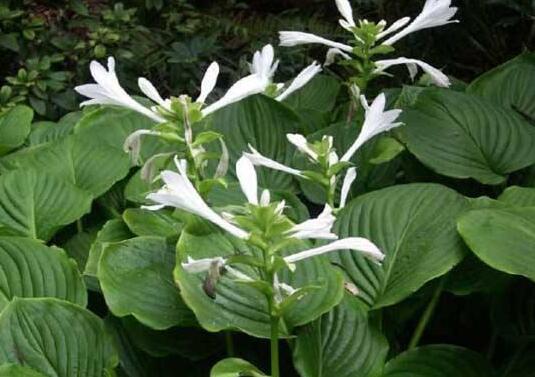
To know what to do when Hosta flowers get bugs, we first need to know what kind of bug it is, so that we can deal with it in a targeted way, because the control methods for each pest and disease are different. The specific details are introduced in the pest and disease control section for Hosta below. Let's keep reading.
II. Pest and disease control for Hosta
Pests
1. Slugs
Among the pests and diseases of Hosta, slugs are a relatively common pest. They mainly feed on the leaves of Hosta, causing many holes to appear in the leaves, which greatly affects their appearance and also causes the leaves to fall off early.
Control method: When dealing with this pest, we can use metolcarb wettable powder for direct spraying to kill them.
2. Aphids
Aphids are a pest of the order Homoptera. Among the pests and diseases of Hosta, the harm caused by aphids is relatively serious. They gradually suck the sap from the leaves of Hosta, causing it to lose nutrients and wilt.
Control method: Aphids have very strong reproductive capacity, so they must be dealt with promptly. When dealing with them, we can use a 3000-fold dilution of 2.5% fenpropathrin emulsion for spraying and control.
Diseases
1. Leaf spot disease
Among the pests and diseases of Hosta, leaf spot disease is a relatively common disease. Its peak period is in summer, so special attention should be paid at this time. This disease mainly threatens the leaves of Hosta. When it occurs, many water-soaked lesions appear on the leaves, and over time they gradually spread, eventually causing the plant to gradually dry up and die.
Control method: When controlling leaf spot disease, we can use a 600-800-fold dilution of 20% flusilazole and prochloraz to spray Hosta. Generally, spray once every 7-8 days, and after 2-3 times it can be cured.
2. Powdery mildew
Powdery mildew is a very harmful pest and disease of Hosta. This disease harms the entire Hosta plant. When it occurs, many powdery white mold layers appear on the leaves, and they gradually spread until they cover the plant, causing the plant to be unable to carry out photosynthesis and gradually wither.
Control method: When dealing with this disease, we can use 80% sulfur at a 400-fold dilution plus 72% benzothiazole and cymoxanil at a 600-fold dilution for spraying Hosta. Generally, spray once every 7-10 days, and after 1-2 times it can basically be cured.
Pests and diseases of Hosta and their control
Pests of Hosta
In summer, Hosta should be protected against harm from snails and slugs.
Control methods for pests
When Hosta is affected by pests, pesticides need to be sprayed promptly for treatment.
Diseases of Hosta
Hosta prefers moist and fertile soil and is suitable for growing in shady places. Hosta is prone to leaf spot disease. When the temperature is between 22°-28° and the relative humidity is above 85%, leaf spot disease is easily triggered. If there is weather with high temperature and drought during the day and dew formation at night, it can also easily trigger leaf spot disease in Hosta. In addition to the above conditions, when growing Hosta, situations such as lack of fertilizer, lack of water, or flood irrigation and poor growth may all cause leaf spot disease to occur.
Leaf spot disease is caused by bacterial infection. Its main harm to Hosta is to the leaves, mostly starting from old leaves or the edges and tips of leaves. At first, it appears as small water-soaked chlorotic spots, which then gradually expand into semicircular, irregular large patches. The edges are greenish-brown with indistinct boundaries, and the middle is grayish-white. In the later stage, dense small black spots grow on the spots, causing the leaves to turn yellow and wither, affecting yield and quality.
Control methods for leaf spot disease
Strengthen management of diseased Hosta, apply sufficient fertilizer, cultivate strong seedlings, water appropriately, never use flood irrigation, and strengthen ventilation and air permeability inside the cultivation shed to lower the temperature. At the same time, promptly remove diseased and residual plant material.
Chemical methods can also be used to treat leaf spot disease in Hosta. Regularly spray Guoguang Yintai (80% zineb wettable powder) at a 600-800-fold dilution + Guoguang Tasiling amino acid chelated multi-trace-element foliar fertilizer. This can prevent Hosta from being infected with leaf spot disease, supplement nutrients, and improve the ornamental value of the flowers. In the early stage of the disease, spray 25% prochloraz emulsifiable concentrate at a 500-600-fold dilution, with an interval of 7-10 days, and spray continuously 2-3 times, which can effectively treat leaf spot disease in Hosta.
What is the flower language of Hosta? The legend of Hosta / tranquility, tolerance
Hosta is a plant with high ornamental value. This was also mentioned in the article on the effects and functions of Hosta. Like many ornamental flowers, Hosta also has its own flower language. So what is the flower language of Hosta? What legends about Hosta are there? Below, the editor will walk you through it.
I. What is the flower language of Hosta? / tranquility, tolerance
The flower color of Hosta is generally mostly white, giving people a very noble and elegant feeling, just like the unmarried daughters of prominent families in ancient times, fresh and refined. Therefore, the flower language of Hosta also represents tranquility and tolerance.
II. Legends of Hosta
Legend one
It is said that during the Shang Dynasty in our country, King Zhou of Shang had a concubine who loved white flowers very much, and among white flowers she loved Hosta most. One year, when this concubine was about to give birth, she had a difficult labor and could not deliver the child no matter what, which made everyone in the palace extremely anxious. The concubine also knew that her life might be in danger, so she asked a palace maid to pick the best pot of Hosta from the imperial garden.
Unexpectedly, after the palace maid arrived at the imperial garden, she found that not a single Hosta flower had bloomed, so she picked a pot of Hosta in bud and placed it in front of the concubine. When the concubine saw it, her tears also flowed down. Unexpectedly, at that very moment, the cry of a baby rang out. People knew the baby had been born. Everyone felt it was thanks to the Hosta, and this saying gradually spread. Therefore, Hosta is also called the childbirth-inducing grass.
Legend two
It is said that the famous talented woman of the Tang Dynasty, Shangguan Wan'er, loved to read in front of flowers, especially on summer evenings, accompanied by the faint fresh fragrance of Hosta, savoring the words and lines in books. This talented woman's poems were also as full of melancholy and sorrow as Hosta, expressing her lament for life within the palace confines.
Legend three
It is said that the Queen Mother of the West in heaven was very strict in disciplining her daughters, yet her youngest daughter was very rebellious and yearned for freedom. Once, she wanted to take advantage of the Queen Mother's grand birthday to slip down to the mortal world, but unexpectedly the Queen Mother saw through her intentions and locked her up. So she pulled the jade hairpin from her head and threw it down to the mortal world.
A year later, the place where the jade hairpin had fallen was covered with white flowers. These flowers looked just like white jade hairpins, with a very elegant temperament and a faint fresh fragrance, so they were loved by many people and later called the “first flower of Jiangnan.”