What to do when pitcher plants get bugs? 1 pest 2 disease spraying control methods
When talking about pitcher plants, everyone thinks of their ability to catch mosquitoes and flies. But did you know that even this mosquito-repelling plant can get bugs? Because pitcher plants are tropical plants, growing them in our country can be affected, and if you're not careful, they can be attacked by pests and diseases. So what should you do when pitcher plants get bugs? Below is the pest and disease control for pitcher plants. Let's take a look together.
I. What to do when pitcher plants get bugs - spray pesticide
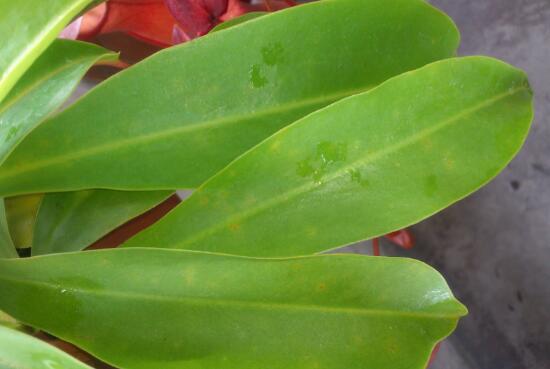
It is understood that pitcher plants are tropical plants, and growing them in most parts of our country will have some effect on their growth. If you're not careful, pitcher plants will be attacked by pests and diseases. What should you do when pitcher plants get bugs? Actually, it's very simple - just spray pesticide.
As for what pesticide to spray, there is a detailed introduction in the pest and disease control section for pitcher plants. Let's continue reading below.
II. Pest and disease control for pitcher plants
According to the editor's research, if you don't strictly follow the cultivation methods for pitcher plants, they are prone to leaf spot disease, root rot disease, and sunscald disease. Among these, leaf spot disease and root rot disease are the more serious, and in addition they can also be attacked by scale insects. The specific symptoms and control methods are as follows:
1. Root mealybugs
A type of scale insect that mainly sucks the fresh sap of pitcher plants. Symptoms of infestation: pitcher plant leaves turn yellow, wither, and even drop off, seriously affecting the ornamental value of the pitcher plant.
Control method: If you find a small number of root mealybugs, you can brush or wipe them off with a brush or coarse burlap, then cut off the diseased leaves and burn them in a centralized manner to reduce the source of disease; finally, you can spray 40% Supusha emulsifiable concentrate at 1000-1500 times dilution or 25% Aikashi emulsifiable concentrate at 700-800 times dilution for spraying to kill them. Note that both the front and back sides of the branches should be covered to increase the insecticidal rate.
2. Leaf spot disease
One of the pests and diseases of pitcher plants, it mainly infects the leaves. Symptoms: water-soaked spots and small dots appear on the leaves, gradually expanding to form oval spots that are brown in color. The diseased area produces a black mold layer, which later ruptures. This seriously affects plant growth and ornamental value.
Control method: Promptly remove diseased leaves and destroy them in a centralized manner to reduce the source of disease; when the disease occurs, spray fungicide or a 1000 times diluted antibacterial solution. When spraying, it should be even and cover the entire plant including the undersides of the leaves.
3. Root rot disease
In summer high-temperature environments, if there is no ventilation and the water used for watering contains lime, then the pitcher plant will develop root rot disease. Symptoms: the above-ground leaves turn yellow and gradually wilt. The underground roots turn brown and rot, and no new roots grow for a long time.
Control method: In the early stages of the disease, spray pesticide promptly. You can choose Likujing, Genfuling, etc., dilute with clean water into a solution and spray. To avoid root rot, you can use a mix of peat soil, dried cow dung, leaf mold and sandy soil, hang it in a greenhouse, and provide appropriate shade.
4. Cold and pest prevention
Pitcher plants are tropical plants and are prone to frostbite when temperatures are low, with many small patches appearing on the leaves. If kept in a damp and dark environment for a long time, they are also prone to sooty mold disease. In summer, they can also be attacked by pests such as thrips and scale insects.
Control method: When temperatures drop, provide timely insulation, and placing them in an air-conditioned room is best. To avoid pest damage, spray specialized insecticide promptly. Provide timely ventilation, exposure to sunlight, and clean up any bugs found promptly.
That's all the editor has to share about pest and disease control for pitcher plants. I believe everyone now knows what to do when pitcher plants get bugs or diseases! In summary, although pitcher plants can repel insects, they can also get bugs, so to avoid unnecessary trouble, everyone should take good care of them.
Control of major pests and diseases of pitcher plants
Control of major pests and diseases of pitcher plants
Leaf spot disease
Symptom characteristics
Many small dots appear on the leaves, gradually expanding to form large brown spots. A black mold layer forms locally and gradually ruptures. This affects plant growth and ornamental value.
Control method
Strengthen management, maintain properly, and enhance the plant's disease resistance.
When the disease occurs, spray fungicide for sterilization, spray a 1000 times diluted antibacterial solution. When spraying, it should be even and cover the entire plant including the undersides of the leaves.
Root rot disease
Symptom characteristics
When pitcher plants grow slowly and their disease resistance declines, various diseases will come knocking. Root rot disease manifests as above-ground leaves turning yellow and gradually wilting. The underground roots turn brown and rot, and no new roots grow for a long time.
Root rot disease is caused by Fusarium invasion. In the early stages, it only gradually begins to rot at the wound, but as it worsens it will attack the entire plant. Low temperatures or overwatering can both trigger this disease.
Control method
Pitcher plants prefer warm environments, with growth temperatures not below 24°C. High-temperature and foggy environments are more favorable for growth. To avoid root rot, you can use a mix of peat soil, dried cow dung, leaf mold and sandy soil, hang it in a greenhouse, and provide appropriate shade.
In summer, place in a high-temperature environment with good ventilation, and the water used for watering should not contain lime. Watering with cow dung water during the growing season helps root growth.
In the early stages of the disease, spray pesticide promptly. Choose Likujing, Genfuling, or Duo.Fu.Xin, dilute with clean water into a solution, and spray.
Main pest damage
Control method
For scale insects, spray with 40% dimethoate emulsifiable concentrate at 2000 times dilution.
Cold and pest prevention
Symptom characteristics
Pitcher plants are tropical plants and are prone to frostbite when temperatures are low. Many small patches appear on the leaves. If kept in a damp and dark environment for a long time, they are prone to sooty mold disease. In summer, they can also be attacked by pests such as thrips and scale insects.
Control method
When temperatures drop, provide timely insulation, and placing them in an air-conditioned room is best.
To avoid pest damage, spray specialized insecticide promptly. Provide timely ventilation, exposure to sunlight, and clean up any bugs found promptly.
What to do when Venus flytraps get bugs - pest and disease control for Venus flytraps / soft leaf dehydration disease stop light exposure
When talking about Venus flytraps, everyone knows they are a mosquito-repelling plant whose traps can attract insects and then snap them dead. But did you know? If not cared for properly, even the insect-eating Venus flytrap can get bugs. What should you do then? Below are several common Venus flytrap pests and diseases, among which soft leaf dehydration disease particularly needs attention. Follow the editor to take a look.
I. What to do when Venus flytraps get bugs - use tobacco water
Keeping Venus flytraps indoors is not like in the wild; we need to create everything ourselves, and once you don't follow the cultivation methods for Venus flytraps, they will get bugs. So what should you do when Venus flytraps get bugs? At this point, don't panic, but calmly find the cause and address it accordingly. If you don't know what kind of bug it is, you can use the following method:
If you are a smoker, then it's very simple. Once you find bugs on your Venus flytrap, you can use tobacco to solve it. Specific operation: put cigarette butts in water and soak for two to three days, then pour that water into the pot. After a few days, the bugs will be gone. Of course, this method is slow-acting. Only by identifying the specific pest or disease and then addressing it accordingly will it work. For specific pest and disease control for Venus flytraps, let's continue reading below.
II. Pests and diseases of Venus flytraps
1. Nematodes
Although Venus flytraps can catch insects, they are also very afraid of bugs. According to the editor's research, the bugs found in the soil of Venus flytraps by flower enthusiasts are mostly nematodes, and the reason they are attracted is that the soil contains humus.
Symptoms and solutions: Nematodes are divided into ectoparasitic and endoparasitic types. Ectoparasitic nematodes only eat decaying matter, and once found, you just need to change the potting soil; while endoparasitic nematodes parasitize inside the Venus flytrap's body and cannot be eradicated.
2. Venus flytrap soft leaf dehydration disease
If you want Venus flytrap traps to grow large, you need to give them plenty of sunlight. But many flower enthusiasts will notice that in summer, their Venus flytraps inexplicably develop soft and yellowing leaves. What's going on? Actually, this means the Venus flytrap is sick, and the disease is soft leaf dehydration disease.
What is Venus flytrap soft leaf dehydration disease? Simply put, Venus flytraps are plants that love light and humid environments. In summer, because the weather is stuffy and hot, the required moisture cannot be met while light is too strong, causing Venus flytraps to develop soft leaf dehydration disease. In layman's terms, you could say the Venus flytrap has heatstroke.
Solution for soft leaf dehydration disease: During cultivation, many flower enthusiasts will encounter Venus flytrap soft leaf dehydration disease. At this point, everyone must pay attention and it's best to do the following two things:
① Because it is caused by high temperature and high humidity, once you find your Venus flytrap has soft leaf dehydration disease, you should immediately stop exposure to sunlight and stop watering. After 2-3 days, wait for the potting soil to naturally dry before watering again, controlling the amount of water. Note: Choose to water in the evening or at night when it is cool.
② The above method is for mild cases. If the condition is severe, besides cutting off the diseased leaves, you also need to repot and pour out the substrate, wait for the substrate to naturally air dry until loose before using it again.
3. Soft rot disease
One of the pests and diseases of Venus flytraps, it is the most serious disease affecting Venus flytraps. After onset, the plant will gradually die.
Solution: For soft rot disease, mainly take preventive measures, spraying 50% carbendazim at 600-800 times dilution, or thiophanate-methyl at 1000 times dilution once a month for control.
Although it's a bit odd for a plant that can catch insects to be afraid of bugs, as long as it's a plant, it ultimately cannot escape insect damage. Thinking about it this way, it's understandable - after all, nature is just that amazing. That's all the editor has to share about pest and disease control for pitcher plants. I believe everyone now knows what to do when pitcher plants get bugs or diseases!