What to Do When Silk Tree Flowers Get Bugs? 3 Pests and 1 Disease Control Methods
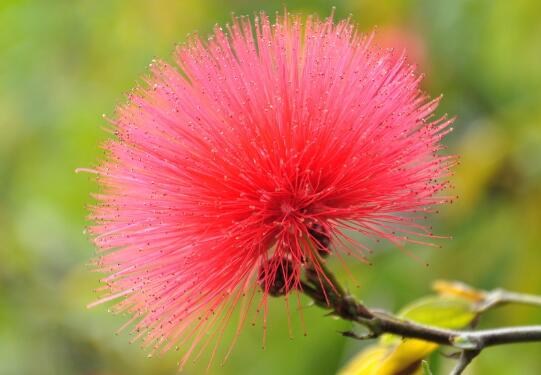
Silk tree flower is a flowering plant grown all over the world, with high ornamental value, but if you are not careful during the cultivation process, problems such as pests and diseases can still occur. When such problems appear, they seriously affect the ornamental value of the silk tree flower, and in severe cases can even cause it to wither. So what should you do when silk tree flowers get bugs? And how should pest and disease control for silk tree flowers be done? Let me walk you through it below.
I. What to Do When Silk Tree Flowers Get Bugs
II. Pest and Disease Control for Silk Tree Flowers
Pests
1. Cottony cushion scale
Cottony cushion scale is a pest of the order Hemiptera. This pest mainly damages the tender buds and new shoots of silk tree flowers. In the early stages it causes the leaves to turn yellow, and if it is not dealt with for a long time it can also cause the plant to die.
Control method: When eliminating this pest, we can use 50% fenitrothion 1000x solution for spraying and killing. Generally spray once every 2 weeks, and after 2-3 times it can be completely eliminated.
2. Longhorn beetle
Among the pests and diseases of silk tree flowers, the longhorn beetle is a relatively common pest. It mainly feeds on the leaves of silk tree flowers, gradually eating away at the leaves, leaving them tattered and very unsightly, and in severe cases it can even cause the silk tree flower to wither.
Control method: When controlling longhorn beetle pests, we can choose to use 20% fenvalerate-killing emulsifiable concentrate and 25% fenvalerate mixture 2000x for direct spraying and killing.
3. Leafhopper
Leafhopper is a pest of the suborder Auchenorrhyncha. This pest mainly sucks the sap of silk tree flowers. In the early stages many white spots appear on the leaves, and if it is not dealt with for a long time it causes the leaves of the silk tree flower to gradually fall off and the plant to gradually die.
Control method: When eliminating this pest we can use light traps to lure and kill them, or use 2.5% deltamethrin wettable powder 2000x for spraying and killing.
Diseases
1. Fusarium wilt
Among the pests and diseases of silk tree flowers, fusarium wilt is a relatively common disease. This disease is extremely harmful to the leaves, flowers and fruit of silk tree flowers. If it occurs it must be dealt with promptly; if the matter drags on it becomes very difficult to control.
Control method: When controlling fusarium wilt, we can choose 41% polyoxin·pyrimethanil diluted to 600x-800x solution and spray the diseased plants for control.
What to Do When Calendula Gets Bugs, Calendula Pest and Disease Control / 3 Pests and 3 Diseases
Calendula, also called pot marigold, belongs to the Asteraceae family and is a flowering plant with strong ornamental value, welcomed and loved by many people. However, although calendula is beautiful, once it is improperly cared for and bugs appear, its ornamental value will be seriously affected. So what should you do when calendula gets bugs? Below are 6 calendula pest and disease control methods; follow me to take a look.
I. When Calendula Gets Bugs, Spray with Pesticide
When growing calendula indoors, careful maintenance is fine, but once you fail to strictly follow the calendula cultivation methods, symptoms of bugs and disease will appear, and in severe cases flowering will be affected. By then flower lovers must be very anxious! So what should you do when calendula gets bugs? First determine the specific pest, then address it accordingly. For this, I have summarized 6 calendula pests and diseases; let us continue reading.
II. Calendula Pest and Disease Control
1. Aphids
As one of the main pests of flowering plants, aphids also attack calendula. It is understood that aphids mainly appear in large numbers in spring, sucking the branches and leaves of calendula; they also appear in autumn, harming the buds and petals of calendula. Damage symptoms: calendula leaves turn yellow and deformed, flower buds are ruined, and the flowering period is shortened.
Control method: After discovering aphids, at home you can wipe them off with clean water or soapy water, which works well. When the infestation is severe, spray 1000-2000x omethoate solution, or kill them with tobacco leaf water: add 50 grams of tobacco leaves to 5 kilograms of water and boil.
2. Red spider mites
Red spider mites mostly occur in the hot summer season and are one of the main pests of calendula. They mainly appear on the underside of leaves, piercing and sucking the branches and leaves. Damage symptoms: calendula leaves dry out and turn yellow; during the flowering period they harm the petals, causing the flowers to wither.
Control method: When red spider mites are found, the whole calendula plant should be thoroughly washed with plenty of water, then spray 80% dichlorvos 1000x solution, or 40% dicofol 1000-1500x solution, both of which have significant effects.
3. Spilosoma oblique
One of the pests and diseases of calendula, it rarely appears in home cultivation. It mainly uses its larvae to chew the leaf flesh, causing damage in scattered spots and eating away at the leaves. Damage symptoms: leaves become incomplete with holes, leaving the calendula unrecognizable.
Control method: Spilosoma oblique has low density and weak pesticide resistance. When there are few, they can be removed manually. When there are many, spray a mixture of Guoguang Yike 1500x solution + Leke 2000x; it can be used 1-2 times consecutively with an interval of 7-10 days, with good results.
4. Powdery mildew
Powdery mildew is one of the main diseases of calendula. After it occurs the leaves look disgusting, seriously affecting its ornamental value. Disease symptoms: white round lesions appear on both the front and back of the leaves, and the leaf surface looks as if it is covered with a layer of white powder; the stem is likewise covered with white powder. In severe cases the whole plant withers and dies.
Control method: After the flowers fall, promptly remove fallen leaves and spent flowers to reduce the source of disease. When the disease is severe, spray thiophanate-methyl 1500x solution or diniconazole wettable powder, once every 10-15 days; 2-3 times in a row will show results.
5. Mosaic disease
One of the pests and diseases of calendula, it mainly harms the leaves. Disease symptoms: calendula leaves form a mottled or mosaic pattern, the leaves turn yellow, the plant's growth is stunted and it becomes dwarfed, and the flowers grow deformed.
Control method: When the above symptoms are found, you can spray 0.5% antiviral agent No. 1 aqueous solution 300x, or 5% juntoxin clear aqueous solution 400-500x for control, once every 7-10 days; spraying 2-3 times in a row will show results.
6. Rust disease
In summer, under high temperature and high humidity, calendula is prone to rust disease. Disease symptoms: diseased leaves develop rust-stained spots, causing leaf drop and poor growth. In severe cases, calendula quickly withers and dies due to massive evaporation of water from within.
Control method: Once the above symptoms are found, the leaves should be promptly removed to reduce the source of disease. In addition, 50% carboxin wettable powder 2000x solution should also be promptly sprayed for control.
That is all I have to introduce about calendula pest and disease control. I believe everyone now knows what to do when calendula gets bugs or becomes sick! Overall, calendula is rarely troubled by pests and diseases, so as long as everyone takes careful care, these troubles will not come knocking. Finally, may everyone's calendula bloom into beautiful flowers.
What to Do When White Orchid Gets Bugs, White Orchid Pest and Disease Control / 3 Pests and 2 Diseases
In the process of growing white orchid, the last thing we want to encounter is problems like pests and diseases, because such problems are extremely harmful to the plant, not only affecting its ornamental value but in severe cases also causing the entire plant to die. So what should you do when white orchid gets bugs? And how should pest and disease control for white orchid be done? Let me walk you through it below.
I. What to Do When White Orchid Gets Bugs
If you want to know what to do when white orchid gets bugs, first we need to know what kind of bug it is, so that we can deal with it in a targeted way, because the control methods for each pest and disease are different. Below are various white orchid pest and disease control methods; friends with similar troubles can take a look, since prevention is better than cure.
II. White Orchid Pest and Disease Control
Pests
1. Red wax scale
Red wax scale is a relatively common pest among the pests and diseases of white orchid. It mainly sucks the sap from the plant, and its excrement can also cause sooty mold, making a layer of black mold appear on the leaves, causing the white orchid to gradually weaken, and in severe cases even preventing it from blooming.
Control method: When controlling this pest, we can use 25% phosmet emulsifiable concentrate 1000x solution to spray the white orchid. We can spray once every 4-6 days, and after spraying three times in a row this pest can basically be eliminated.
2. Red spider mites
Among the pests and diseases of white orchid, red spider mites are also a relatively common one. Their peak period is around May each year, so at this time everyone must pay extra attention. If your white orchid has this pest, its leaves will gradually turn dry and yellow and whitish, and finally gradually wither.
Control method: When controlling red spider mites, we can use 15% pyridaben emulsifiable concentrate 2000x solution for spraying and killing. After spraying and killing we should also disinfect the white orchid to avoid residual pathogens.
3. Cottony cushion scale
Cottony cushion scale is a pest of the order Hemiptera. This pest is harmful to many plants, and white orchid is one of them. Cottony cushion scale mainly harms the leaf buds and branch tips of white orchid, gradually causing the leaves to turn yellow and the branch tips to fall off, and in severe cases the entire white orchid will die. This shows how great the harm of cottony cushion scale is among the pests and diseases of white orchid.
Control method: When controlling this pest, if it is not severe we can cut off the branches and leaves bearing eggs; of course we can also use the most direct method, directly using 40% omethoate 1000x solution to spray and kill them.
Diseases
1. Anthracnose
Among the pests and diseases of white orchid, anthracnose is a relatively common one. When it occurs, many round brown lesions 2-8mm in size appear on the leaves of the white orchid, and over time they gradually spread, finally causing the plant to rot.
Control method: When controlling this disease, we can use 70% anthracnose thiram 600x solution to spray the diseased plants, generally spraying once every 10-15 days; after 2-3 times it can be cured.
2. Chlorosis
Chlorosis does not occur as frequently among the pests and diseases of white orchid as the above few, but there is still a certain chance of it appearing. When this disease occurs, the leaves of the white orchid gradually lose their green color, and the leaf color gradually changes from green to yellow, and finally from yellow to white; in severe cases the entire leaf dries up and falls off.
Control method: When controlling chlorosis, we can use yellow-leaf quick-greening plant antiviral compound nutrient agent 500x solution to spray the plant, spraying once every 7-10 days; spraying 2-3 times in a row will cure it.
Summary: After reading the above, I believe everyone also knows how to solve the problem of white orchid getting bugs. In fact, the main cause of such problems is improper care. When you have time you should still read more of the article on white orchid cultivation methods, which contains detailed care instructions. That is all I have to introduce about white orchid pest and disease control, and I hope it can help everyone.