How to control basil pests and diseases? 4 pests, 1 disease, prevention is key
Basil leaves are broad and wrinkled. Although their edible and medicinal value is very high, they can also become a target of pest and disease attacks. Therefore, when growing basil, we need to understand basil pest and disease control methods so that we can promptly adopt the correct control measures when basil develops insects or disease spots.
Basil pest and disease control
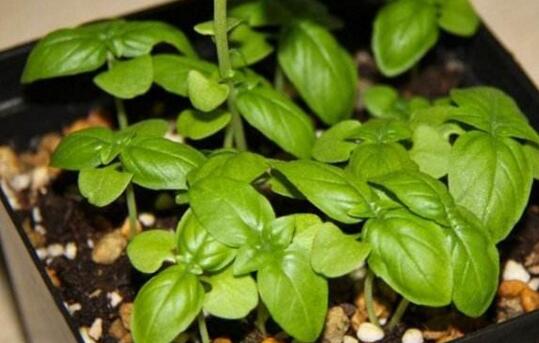
Basil gives off a fragrance, and this scent keeps many pests from coming near, such as whiteflies and so on. However, some pests still feed on basil leaves, such as aphids, leafminers, snails, thrips and so on. As for diseases, wilt disease is the main one and causes relatively great harm to basil.
1. Aphids
They mainly harm basil leaves and stems. They use their mouthparts to pierce into the leaves and suck the sap. The damaged leaves show symptoms of nutrient deficiency such as withering and yellowing, which greatly reduces the efficacy and effects of basil.
2. Leafminers
The larvae of leafminers burrow into the tissues of basil leaves and petioles, hiding inside to eat the mesophyll tissue, thereby affecting the plant's photosynthesis, causing irregular white streaks on the leaves. Chlorophyll gradually breaks down and the leaves finally fall off.
3. Snails
Snails are in fact also one of the pests that harm basil. They mainly feed on basil leaves, causing the leaves to turn yellow and lose their luster. They are very interested in young buds and the sap of basil, and can cause the leaves to rot.
4. Thrips
There are many kinds of thrips. They feed by sucking the sap of branch tips, leaves and flowers, and mainly harm the tender leaves of basil, making the plant grow very slowly. After the leaves are damaged, they become thinner and grayish-brown streaks appear, which greatly affects their appearance.
Control methods: For the above pests, the main preventive measures are to keep the environment ventilated, clean and hygienic, avoid excessively high temperature and humidity, and avoid water accumulation when watering, and so on. The treatment methods are mainly pesticide spraying, and insect-proof mesh covers are also used.
Basil leaf diseases
Wilt disease is one of the diseases that causes relatively great harm to basil. In the early stage, the leaves appear dehydrated, then yellow markings and net-like faded spots appear. After that, the leaves keep falling off, causing the entire basil plant to die.
Control methods: Before planting, disinfect the soil and keep the soil from becoming too dry. When fertilizing normally, pay attention to adding potassium fertilizer, which can improve basil's resistance to the pathogen of wilt disease and prevent wilt disease caused by lack of water and fertilizer in the soil.
Basil pests and diseases and their control
Basil diseases and their control
Basil can be attacked by diseases, such as fungal wilt disease. When fungal wilt disease breaks out in basil, the pathogen invades through the vascular bundles of basil, causing poor growth of the basil plant and withered, falling leaves. These pathogens can usually lie dormant in the soil for many years. Therefore, in disease prevention, the soil needs to be changed regularly, or the soil should be disinfected and sterilized to reduce the chance of disease outbreaks. In addition, if the environment where basil grows has excessively high air humidity, poor ventilation, or poor soil drainage, it will also cause germs and bacteria to breed, leading to various diseases and affecting growth.
Usually, pay attention to more ventilation and ensure that the soil does not accumulate water, so as to minimize the chance of basil developing diseases. Do not use pesticides frequently. Basil is an edible and medicinal plant, and pesticides will leave certain residues that can harm human health. Use biological control or safe, green control methods as much as possible.
Basil pests and their control
Basil is actually not prone to pest outbreaks, because basil itself has a special odor, and these odors drive certain pests away from basil, preventing basil from being harmed. However, basil still cannot avoid being harmed by some pests.
Basil is sometimes harmed by pests such as aphids, cutworms, thrips, Japanese beetles, snails, leafminers and slugs. These pests all have adverse effects to varying degrees on the growth of basil plants.
When these pests break out and harm basil, use manual methods or safe homemade insecticides to kill the pests. For example, install some insect-proof mesh covers and use various materials to trap and kill pests. Reduce the use of pesticides to avoid pesticide pollution.
How to grow basil
Basil is generally sown in mid-to-late April and can be direct-sown.
Choosing the container
Basil is a deep-rooted plant, and its roots can go 0.5-1 m into the soil, so it is more suitable to choose a taller flower pot.
Therefore, it is advisable to choose well-drained, fertile and loose coconut soil for cultivation, and apply base fertilizer or nutrient soil before planting.
Seed treatment method:
Put the seeds into a container, first pour in a little cold water, and wet the seeds. After about 3-5 minutes, when the seed coats are wet and have absorbed some water, slowly pour hot water into the container while stirring with a wooden stick so that the seeds are heated evenly. When the water temperature in the container rises to 50-55°C, stop adding hot water; when the temperature drops, add some more hot water to keep the water temperature at the required temperature for 15-20 minutes, then let it cool naturally to about 25°C and continue soaking the seeds. The soaking time is based on the seeds having just reached saturation in water absorption. After basil seeds are soaked, a layer of mucus usually appears on the seed surface, which is prone to mold during germination and leads to seed rot. Therefore, after soaking, rinse the seeds repeatedly with clean water and rub them vigorously until the mucus on the seed surface is removed. Put the seeds into a gauze bag, shake off the water vigorously, cover with a wet towel or gauze, keep warm and moist, and place at about 25°C for germination.
During germination, rinse once a day with clean water and drain thoroughly. If the seed quantity is large, turn them 1-2 times a day to balance the temperature and make germination uniform. In the early stage of germination, the temperature can be slightly higher to promote sprouting. When the sprouts are about to emerge (the seeds are about to open), begin sowing.
Sowing should be done on a sunny morning. Put the nutrient soil into a sowing tray and water it thoroughly with hot water or warm water. After the water seeps down, scatter 1 layer of soil, evenly sow the germinated seeds in the tray, cover with 1 cm of soil on top, and cover with plastic film to keep warm and moist.
When the seedlings are 6-10 cm tall, thin and fill in the seedlings. For hole sowing, keep 2-3 seedlings per hole; for drill sowing, keep 1 plant about every 10 cm. The first shallow hoeing of the surface soil is done 10-20 days after emergence. The second is from early May to early June, before the seedlings close the rows. After each cultivation, apply nutrient soil. Seedlings are afraid of drought, so water promptly.
Pest control
In terms of pests, the main ones are aphids, Japanese beetles, thrips, leafminers, snails and slugs. For organic cultivation, water can be sprayed to drive away aphids, and Japanese beetles can be picked off by hand and thrown into soapy water. As for slugs and snails, they can be trapped and killed with small beer containers, or copper strips can be tied 5 cm from the base of the plant (10 cm is even better). Because the copper strips react with slug mucus, the invading insects retreat. In terms of diseases, sweet basil varieties are highly susceptible to fungal wilt disease (Fusarium oxysporum). The pathogen invades through the vascular bundles of the roots, hindering plant growth and causing leaf wilt. The pathogen can lie dormant in the soil for many years. Varieties of clove basil that are resistant to fungal wilt disease can be selected. In addition, high humidity and poor drainage also make it more susceptible to fungal leaf spot. Mixing basil with asparagus, peppers, tomatoes and most vegetables can increase the growth and flavor of these crops, but it cannot be mixed with cabbage and beans. In addition, it should also be kept away from Rutaceae plants. Because it has a special odor, it can block whiteflies and hawk moth larvae. Slugs also do not like the smell of basil. In organic cultivation in Taiwan, China, basil is also used as an insect-repellent crop to reduce pest damage.
Basil contains a special odor, and these odors themselves have a repellent effect on certain pests, but some pests will still chew the leaves. For example, some basil varieties will have cutworms. At this time, it is better to spend a little effort to pick them off by hand, or use an insect-proof mesh cover for isolation. For disease control, prevention is better than treatment. The method is not to use previously cultivated old soil to grow herbs, because the hidden pathogens inside will become a source of infection. Another method is to grow herbs in a suitable environment or season, so that the plants are strong and naturally able to resist disease attacks. Remember that fresh herbs are eaten raw or only briefly heated when used. If they contain pesticide components, they will have adverse effects on health. Or use diluted detergent.