What to do when heavenly bamboo gets pests? 2 pests and 2 diseases controlled this way
In the process of growing heavenly bamboo, the last thing we want to encounter is problems like pests and diseases. Such problems are extremely harmful to the plant, and if not dealt with in time, they can easily cause the plant to wither and die. So what should you do when heavenly bamboo gets pests? How should pest and disease control for heavenly bamboo be done?
1. What to do when heavenly bamboo gets pests: find the cause
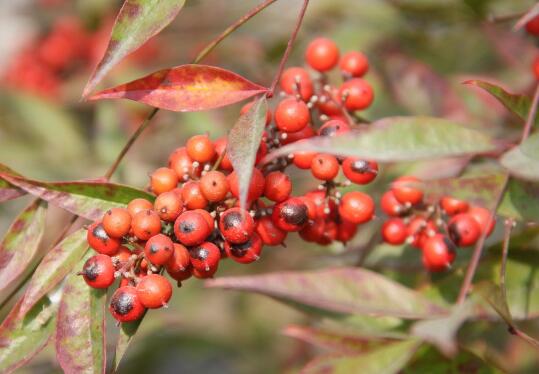
2. Pest and disease control for heavenly bamboo (pests)
1. Aphids
Aphids are a type of phytophagous insect and are extremely harmful to heavenly bamboo. They mainly suck the sap from the leaves of heavenly bamboo, causing the leaves to gradually lose their green color. In severe cases, they can also cause the leaves to continually shrivel and drop off, and can even affect flowering.
Control method: When controlling this pest and disease problem of heavenly bamboo, we can use a 3000-fold dilution of 50% pirimicarb wettable powder to spray and kill them. Generally, spraying 2-3 times in a row can eliminate this pest.
2. Scale insects
Scale insects are a relatively common pest during the growth of heavenly bamboo. They mainly threaten the leaves, branches and fruits of heavenly bamboo, causing its leaves to gradually turn yellow and drop off, and eventually the entire heavenly bamboo plant will gradually wither.
Control method: When controlling this pest and disease problem of heavenly bamboo, we can use a 1000-fold dilution of 255 phosmet to spray and kill them. Treatment must be timely; if it is delayed too long, the harm to the plant is extreme.
3. Pest and disease control for heavenly bamboo (diseases)
1. Red spot disease
Red spot disease is a disease that is very harmful to heavenly bamboo. In the early stage of the disease, many brown spots appear on its leaves, and there is a faint red halo at the outer edge of the lesions. As time goes on, clusters of sooty mold-like masses grow at the lesions, causing the plant to gradually wither and die.
Control method: When controlling this pest and disease problem of heavenly bamboo, we can use thiophanate-methyl wettable powder to spray the plant. Generally, spray once every 10-15 days, and after 2-3 times it can fully recover.
2. Anthracnose
Anthracnose mainly threatens the leaves of heavenly bamboo. In the early stage of the disease, many brown lesions appear on the leaves, and as time goes on the lesions gradually expand and can occupy half the area of a leaflet, preventing the plant from carrying out photosynthesis so that it gradually turns yellow and withers, and the leaves also gradually drop off.
Control method: When controlling this pest and disease problem of heavenly bamboo, we can use a 1000-fold dilution of 75% thiophanate-methyl wettable powder to spray the diseased plants. Generally, spray once every 7-10 days, and after 2-3 times it can fully recover.
Summary: After reading the above content, I believe everyone now has some understanding of pest and disease control for heavenly bamboo. In fact, these problems mainly arise from improper care. When you have time, you can read the article on heavenly bamboo growing methods and precautions, which contains correct care instructions, so I will not introduce too much here.
What to do when broadleaf lady palm gets pests: pest and disease control for broadleaf lady palm / 2 pests and 2 diseases
In the process of growing broadleaf lady palm, the last thing we want to encounter is problems like pests and diseases. Such problems are extremely harmful to it, not only affecting its ornamental value, but in severe cases also causing it to wither and die. So what should you do when broadleaf lady palm gets pests? How should pest and disease control for broadleaf lady palm be done? Below, I will walk everyone through it.
1. What to do when broadleaf lady palm gets pests: find the cause
If you want to know what to do when broadleaf lady palm gets pests, we first need to understand what kind of pest it is, so that we can deal with it in a targeted way, because the control methods for each pest and disease are different. The details are described below, so let us take a look.
2. Pest and disease control for broadleaf lady palm (pests)
1. Aphids
Aphids are one of the more common pests and diseases of broadleaf lady palm, and also a pest and disease that exists on many plants. They are a type of phytophagous insect that mainly harms the leaves and stems of broadleaf lady palm. They gradually absorb the sap within, causing the plant to lose a large amount of nutrients, and as time passes they can also cause the plant to gradually wither and die.
Control method: If the number of these pests is relatively small, we can prune off the affected branch tips and then disinfect the plant. If the number is relatively large, we can directly use a 3000-fold dilution of 50% pirimicarb wettable powder to spray and kill them.
2. Scale insects
Scale insects are a pest that appears during the growth of many plants, and broadleaf lady palm is no exception. These pests mainly feed on the sap in the leaves and stems of broadleaf lady palm. They gradually suck out the sap within, causing broadleaf lady palm to gradually lose nutrients and finally shrivel.
Control method: For this pest and disease problem of broadleaf lady palm, we can use a 1500-fold dilution of 50% malathion to spray and kill them.
3. Pest and disease control for broadleaf lady palm (diseases)
1. Bud rot
This disease mainly threatens the young buds and tender leaves of broadleaf lady palm. When the disease begins, the unopened leaves first wither, turning brown, and then droop. The pathogen spreads from the base of the tender leaves to the young tissues of the bud, causing the young buds to wither and rot, the plant to stop growing, and in severe cases the entire plant to die.
Control method: When dealing with this pest and disease problem of broadleaf lady palm, we can use a 500-fold dilution of 80% mancozeb wettable powder to spray the diseased plants. Generally, spray once every 10 days, and after 3-4 times it can fully recover.
2. Anthracnose
Anthracnose mainly threatens the leaves of broadleaf lady palm. When the disease occurs, many semicircular lesions appear at the leaf tips or leaf margins, appearing yellow-brown or gray-brown. When the air is too humid, vermilion needle-head-sized droplets appear on the leaves, and as time goes on the plant gradually withers and dies.
Control method: For this pest and disease problem of broadleaf lady palm, we can use a 600-800 fold dilution of Guoguang Yintai wettable powder to spray it. Generally, spray once every 7-10 days, and after 2-3 times it can fully recover.
What to do when umbrella papyrus gets pests: pest and disease control for umbrella papyrus / 2 pests and 2 diseases
During the growth of umbrella papyrus, the last problem we want to encounter is pests and diseases. Such problems are extremely harmful to the plant, not only affecting its ornamental value, but in severe cases also causing it to wither and die. So what should you do when umbrella papyrus gets pests? How should pest and disease control for umbrella papyrus be done? Below, I will walk everyone through it.
1. What to do when umbrella papyrus gets pests: find the cause
Regarding what to do when umbrella papyrus gets pests, we first need to know what kind of pest it is, so that we can deal with it in a targeted way. This is because umbrella papyrus has many pests and diseases, and the control method for each is different. Below are the control methods for various pests and diseases, which everyone can read about.
2. Pest and disease control for umbrella papyrus (pests)
1. Red spider mites
Red spider mites are a pest that exists on many plants, and umbrella papyrus is no exception. These pests are very small in size and generally hard to spot. Their method of harm is to pierce the leaves with their mouthparts and suck the sap, causing chlorophyll to be destroyed so that the leaves turn yellow. In severe cases they can also cause the leaves to drop off or even fall off completely.
Control method: When dealing with this pest and disease problem of umbrella papyrus, if only a few individual leaves are affected, we can pick them off. If many leaves are affected, we can use a 1500-fold dilution of 40% dimethoate emulsifiable concentrate to spray the plant, once, to eliminate this pest.
2. Bamboo borers
Bamboo borers are a pest of the order Lepidoptera. These pests mainly feed on the leaves of umbrella papyrus. They gnaw on the leaves, leaving them riddled with holes, which greatly affects their appearance, and as time goes on the bamboo leaves are gradually eaten up entirely, which seriously affects its yield.
Control method: For this pest and disease problem of umbrella papyrus, we can use a 400-fold dilution of 90% trichlorfon or a 400-fold dilution of phoxim to spray and kill them directly.
3. Pest and disease control for umbrella papyrus (diseases)
1. Leaf blight
Leaf blight is a relatively common disease of umbrella papyrus and mainly threatens its leaf margins, leaf tips and other areas. When the disease occurs, many irregularly sized lesions appear on the leaves, and as time goes on they gradually spread, finally causing the plant to wither and die.
Control method: When dealing with leaf blight, we can use a 1000-fold dilution of 50% thiophanate to spray the plant. Generally, apply once about every 10 days, and after 1-2 times it can fully recover.
2. Rust disease
Rust disease is a type of plant disease caused by parasitism by rust fungi. It mainly harms the leaves, stems and fruits of umbrella papyrus. When the disease occurs, many small blister-like spots appear on the affected parts, and in severe cases the blister-like spots densely merge into patches, so that the plant also withers and dies rapidly due to the massive evaporation of water from within.
Control method: For this disease, we can use a 1500-2000 fold dilution of 25% triadimefon or a 3000-fold dilution of 75% oxycarboxin to spray the plant. Generally, spray once every 7-12 days, and after 2-3 times it can fully recover.