How to propagate passionflower? Three methods with cutting survival rates as high as 85%
Passionflower is probably familiar to everyone. Also known as passion fruit, it is a plant with powerful benefits. Today, passionflower is widely grown all over the world, not only because of its unusual flower shape, but also because of its rich nutritional value and edible taste. So how do you propagate passionflower? Below are three propagation methods for passionflower. Come along with the editor and take a look.
I. How to propagate passionflower: cuttings / sowing / layering
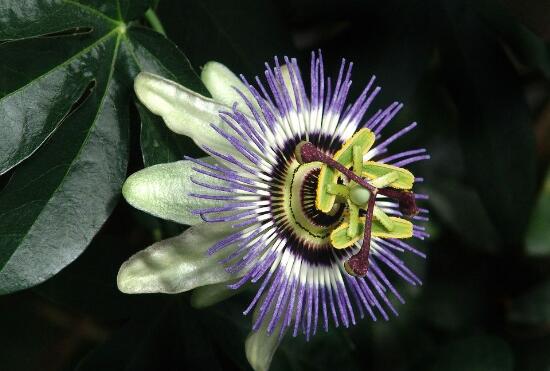
Because of passionflower's benefits, many people grow it at home. Compared with beginners who directly buy existing potted plants, experienced growers propagate it themselves. As for how to propagate passionflower, there are generally three methods: cuttings, sowing and layering. Among them, the most convenient and simplest is cuttings. The editor will introduce them in detail below.
II. Three propagation methods for passionflower
(1) Passionflower cutting technique
1. Cutting season for passionflower
For passionflower cutting propagation, if indoors in the north, it can be done all year round. However, the best cutting season is autumn, specifically July-August, when passionflower is in its rapid growth period and has strong vitality.
2. Selection of cuttings
In passionflower cutting technique, the most important thing is good cuttings. If they are selected well, the overall cutting success rate will be very high. For passionflower cuttings, mature, plump vines should be selected as cuttings. Each cutting is best with two or three nodes. The lower cut should be 1 cm from the internode, and the upper cut should be 2 cm above the terminal bud. This makes rooting easiest.
Cutting treatment: After passionflower cuttings are selected, they need root-promoting treatment. Soak the lower part of the cuttings in a 3000-fold to 10,000-fold indolebutyric acid solution for 30 seconds to 2 minutes. In addition, keep half a leaf to one leaf on the cutting and cut off all tendrils, which helps save nutrients.
3. Cutting medium
According to the growth habits of passionflower, the cutting medium can be loose, fertile garden soil or soil mixed with paddy field soil.
4. Starting the cuttings
Once the above preparations are done, passionflower cutting can officially begin. Insert the cuttings into the prepared medium. The insertion depth should be 2/3 of the cutting length, leaving the upper part with one bud to sprout and grow shoots. After inserting, arrange the nutrient bags on the seedbed and water immediately. The first watering must be thorough. After that, water according to weather conditions to keep it moist.
5. Post-cutting management
After 30 days, the passionflower cutting seedling rate can reach more than 85%! After cutting, keep the seedbed humid. Use a small plastic-film arch tunnel or greenhouse for seedling raising, and water daily to maintain humidity. In winter and early spring, pay attention to cold protection for the seedbed. When using a small plastic-film arch tunnel or greenhouse for cold protection during seedling raising, except on sunny days when it needs to be opened for heat dissipation, the plastic film should be kept covered at other times.
(2) Passionflower propagation by sowing
Passionflower blooms and fruits, so naturally seeds are left behind. Therefore, passionflower can be propagated by sowing, with spring and autumn being suitable sowing times. Specific operation: evenly scatter passionflower seeds on the seedbed, cover with a thin layer of grass, and water thoroughly. After sowing, water according to weather conditions. On sunny days, spray water once in the morning and once in the evening. After about half a month, they begin to emerge.
(3) Passionflower propagation by layering
Besides cuttings and sowing, passionflower can also be propagated by layering, with February-March being suitable. Specific operation: press strong, well-growing branches from the mother plant into the soil to form adventitious roots, then separate the branches above the adventitious roots from the mother plant to form an independent new plant. This method is a bit [difficult] for beginners, so it is enough to simply understand it.
Overall, when propagating passionflower, whether by cuttings, sowing or layering, it can survive, but the most suitable for the majority of flower growers are still sowing and cuttings. Interested flower growers can learn them all. That is the end of the editor's introduction to passionflower propagation methods. Hope it helps everyone.
How to propagate passionflower: cuttings, sowing and division methods
Flower growers preparing to propagate passionflower, take a look. Passionflower can be propagated by cuttings, division and seed sowing. Below are the steps for passionflower propagation by cuttings, division and sowing respectively.
How to propagate passionflower 1. Cutting propagation methodCutting propagation is the main propagation method for passionflower. Cuttings can be taken in early spring each year, and also in summer and autumn. Generally, cuttings in a greenhouse or hotbed in March-April have the highest survival rate. The cutting soil is best as sandy loam with a small amount of leaf mold or peat.
Cuttings are taken from sprouted tuberous roots. When a pair of leaves at the base of the new shoot unfolds, they can be peeled from the base for cuttings. They can also be taken by leaving more than one node at the base of the new shoot, and later, as growth continues, young shoots from axillary buds can be taken, so more cuttings can be obtained.
Spring cuttings, after full growth through summer and autumn, can bloom in the same year. From early June to August, buds can be taken from growing plants for summer cuttings, but the survival rate is lower than spring cuttings. Cuttings in September-October have a lower survival rate than spring, but higher than summer cuttings.
2. Division propagation methodDivision propagation is also a commonly used propagation method for passionflower, because passionflower can only sprout at the root crown. When dividing, it must carry part of the root crown, otherwise it cannot sprout new plants. To make identification easier, the pre-burying root method is often used for sprout promotion.
Wait until adventitious buds on the root crown of passionflower sprout, then divide and plant. The division method is simple and easy, with a high survival rate and strong seedlings, but the number of propagated plants is limited.
3. Seed propagation methodThe seed sowing method is limited to flowerbed varieties and breeding use. Generally, passionflower seeds are mostly collected from those that mature after the autumn cool. Because the pendulous-petal variety is not easy to obtain seeds from, artificial supplementary pollination is required. Sowing is generally carried out in a sowing box at around 20 C. They sprout and emerge in 4-5 days. After true leaves grow, transplant them separately. They bloom after 1-2 years.
How to propagate passionflower? Propagation methods for growing passionflower
Passionflower has edible, ornamental and medicinal value. It is both a fragrant and delicious fruit and a fairly famous herbal medicine, and also a very ideal courtyard ornamental plant, with high planting value. In the process of growing passionflower, sowing, layering and cutting propagation methods are often used. So, how do you propagate passionflower? Below is an introduction to propagation methods for growing passionflower. Take a look.
Image: Passionflower
I. Propagation by sowing
Seed propagation can be done all year round, but spring and autumn sowing are better. Generally, choose plants with strong growth, no pests or diseases, and high and stable yield as mother plants. Collect fully ripe fruits with a regular shape and slightly heavy weight, take out the seeds, wash off the residue, dry them and sow. When sowing, mix 1 kg of seeds with 10-20 g of carbendazim for about 20 minutes, then evenly scatter the seeds on the seedbed, cover with a thin layer of grass, water thoroughly, and transplant when the seedlings grow 4 true leaves.
Image: Passionflower
II. Propagation by layering
Layering propagation is a type of asexual propagation. It is suitable in spring, February-March. It is a propagation method in which branches on the mother plant are pressed into the soil or wrapped with soil and other materials to form adventitious roots, and then the branches above the adventitious roots are separated from the mother plant to form an independent new plant. When layering, in order to interrupt the downward transport of organic matter from leaves and the upper part of branches, such as sugars, auxins and other substances, so that these substances accumulate in the upper part of the treated area for use during rooting, ring barking can be carried out. This method is simple, grows quickly, and shortens the time to seedling formation.
Image: Passionflower
III. Propagation by cuttings
Use the cutting seedling propagation method. The cutting time is suitable in spring, February-March, and autumn cuttings are also possible. Choose strong, mature one-year-old vines as cutting material. Cut the cuttings into pieces with 2-3 nodes, about 10 cm-15 cm long, with the lower cut 1 cm below the node and the upper cut 3 cm from the node, with 1 whole leaf on the cutting. After cutting, soak the cuttings in an Abr rooting powder 25 mg/kg aqueous solution for 30 minutes, then insert them into nutrient bags with a diameter of 8 cm × height of 12 cm for cultivation. The nutrient soil is best as 50% fine loess and 50% humus soil. The cutting depth reaches 2/3 of the cutting length. After inserting, arrange the nutrient bags on the seedbed and water immediately. The first watering must be thorough. After that, water according to weather conditions to keep it moist. The seedbed is 1.0 m-1.2 m wide, and the length depends on the terrain. Use bamboo strips to build arched supports and cover with a 50% shade sunshade net. After 30 days, the seedling rate can reach more than 85%. From cutting to leaving the nursery takes about 3-4 months.
[Editor's concluding remarks]Doing a good job in passionflower propagation is the foundation for successfully growing passionflower. The above has introduced propagation methods for growing passionflower for everyone. Have you all learned them?