What to Do If Your Rubber Plant Gets Bugs? Pest and Disease Control and Care Management Are Very Important
A well-cared-for rubber plant can grow vigorously with lush branches and leaves, but if you neglect care and management, it will grow slowly or even develop a thin trunk and yellow, withered leaves, and it becomes prone to pests and diseases, which are extremely harmful to the health of the rubber plant. What should you do if your rubber plant gets bugs? Let's take a look at pest and disease control for rubber plants.
What to Do If Your Rubber Plant Gets Bugs
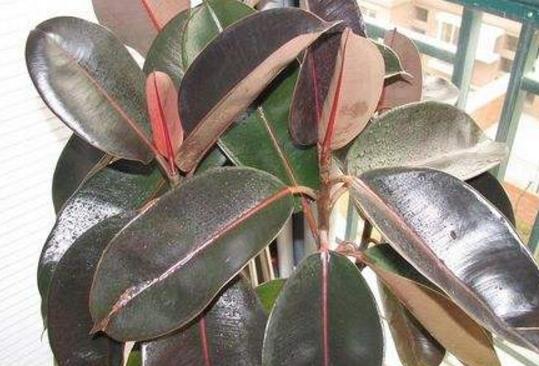
One of the most common pests of the rubber plant is the root-knot nematode, which hides in the roots and harms the root development and nutrient absorption of the rubber plant, causing the plant to stop growing and the leaf edges to turn yellow and scorched. It leaves gall-like growths on the lateral roots and fibrous roots; when these galls are opened, yellow-white oval root-knot nematodes are found inside.
Control Measures
1. Before potting, sterilize the soil. You can sun-dry the soil for 1-2 days, or soak it in potassium permanganate solution and then let it dry, or after potting apply 15% aldicarb granules to the pot at a rate of 2 g of pesticide per 2 kg of soil.
2. Repot regularly. To prevent insect eggs from appearing in the soil, replace the potting soil once every 1-2 years, reducing the chance of pests breeding in the soil due to environmental factors.
3. Remove diseased and residual roots promptly, and keep the healthy roots for replanting.
4. Spray with chemicals. Use granular pesticides such as 10% ethoprophos, 3% isazofos, and 5% fosthiazate for chemical control. In normal times, pay attention to scientific and reasonable fertilization; we have described the method in detail in "How to Fertilize a Rubber Plant."
Pest and Disease Control for Rubber Plants
1. Anthracnose
Symptoms: Round gray spots appear on both sides of the leaf veins, after which the lesions join together into a single patch, and the entire leaf wilts and turns yellow. The pathogen is Gloeosporium elasticae, which often appears in the hot midsummer and is relatively common in pest and disease control for rubber plants.
Control: Remove diseased branches, diseased leaves, and withered shoot tips to reduce the presence of the pathogen; in normal times, pay attention to light and ventilation in the environment, and prune promptly when branches are too dense; when the disease occurs, spray with 50% thiophanate-methyl wettable powder or carbendazim.
2. Gray Leaf Spot
Symptoms: Small gray spots appear on the rubber plant's leaves and then become irregular in shape; within the gray spots, gray-white areas with dark brown edges appear, the leaves begin to crack and dry, and black granular matter is produced. It is mainly caused by pathogens invading through wounds.
Control: Try to avoid leaving too many wounds on the plant. After a wound appears, place the plant in a cool place and wait for it to dry naturally. When the disease occurs, spray with 50% carbendazim 1000x solution or 70% thiophanate-methyl 1200x solution.
Complete Home Flower-Growing Techniques: A Step-by-Step Guide to "Watering, Fertilizing, and Pest and Disease Control"
Complete Home Flower-Growing Techniques: A Step-by-Step Guide to "Watering, Fertilizing, and Pest and Disease Control"
Admiring flowers and growing flowers have now become a fashion, and home flower growing is generally focused on potted flowers. To grow flowers well, you must master care and management knowledge, especially the three key techniques of watering, fertilizing, and pest and disease control. Brother Dadi has compiled a complete home flower-growing guide for everyone today. Flower friends, remember to save it well!!
1. Choosing Water Quality for Watering
Home flower growing mostly uses tap water for watering, but tap water contains the disinfectant bleaching powder, and the chloride ions in it easily damage the tender root hairs of potted flowers. It must be stored for 1~2 days, and only after the chlorine has volatilized and the water temperature is close to the soil temperature can it be used to water flowers. As for magnetized water, because the natural arrangement of its water molecules has been disrupted by the magnetic field and it is similar to the water molecules in plant cells, it is easily absorbed and used by plants, so magnetized water is best for watering potted flowers.
Watering Amount
The principle of watering is "water thoroughly when you water, and water thoroughly without letting it leak out," that is, each time water until water seeps out from the saucer under the pot. In addition, it should also be determined according to the size, depth, and material of the flower pot. A small pot is shallow, so water less and more frequently; clay pots have good permeability, and the potting soil dries easily, so water frequently; stone pots and glazed pots do not permeate water easily, and with long-term water accumulation, flowers will rot at the roots.
Different flowers and trees have different watering periods. The first is the "prefer moist over dry" type, referring to flowers and trees that will be damaged and die once the potting soil is completely dry; these flowers and trees should be watered thoroughly when the potting soil is slightly dry, such as maidenhair fern (Adiantum) and brake fern (Pteris). The second is the "prefer dry over moist" type, referring to flowers and trees that should be watered after the potting soil has dried completely, such as cactus and aloe. The third is the "alternately dry and moist" type, referring to flowers and trees that should be watered immediately when the surface of the potting soil is dry to about 3 cm, such as Monstera deliciosa and pothos (Epipremnum aureum).
Watering changes with the seasons. In early spring when it turns warm, the weather is changeable. At this time, potted flowers begin to sprout and take root, and their water demand is high, so the potting soil should be kept moist. Summer is dry and evaporation is fast, so watering should be doubled. In autumn, watering should be appropriately reduced to prevent branches from growing excessively and affecting flowering the next year. In winter, most flowers and trees are in a dormant state, so it is enough to keep the potting soil slightly dry.
Complete Home Flower-Growing Techniques: A Step-by-Step Guide to "Watering, Fertilizing, and Pest and Disease Control"
Watering Time
The daily time for watering flowers differs in spring, summer, autumn, and winter. As the flower proverb says, "Morning water is sweet dew, noon water is arsenic, evening water is a life-saving soup." This means that in spring and autumn, around 10 a.m. and after 4 p.m. are suitable times to water flowers, while in summer never water flowers at noon. At noon in midsummer the temperature is highest, and the difference between the potting soil and water temperature is greatest; watering at this time easily hinders the normal physiological activity of the root system, weakens the roots' absorption of water, causes physiological drought, and makes branches and leaves wilt. By the same reasoning, in winter it is better to water flowers at noon. In short, "water at noon in spring, in the morning and evening in summer, every other day in autumn, and check frequently in winter."
Watering Methods
Before watering potted flowers, the compacted potting soil must be loosened so that the water applied is absorbed in time and does not bubble out from the edge of the pot. It is best to use a fine-hole watering can to water evenly and thoroughly. For small potted flowers, the immersion method is best for watering, that is, place the flower pot in a larger water basin so that water seeps into the potting soil through the drainage holes, and move it out after the surface of the potting soil is slightly moist. This can prevent the potting soil from compacting due to watering and is beneficial to the root respiration of potted flowers. Generally, shade-loving foliage potted flowers, under the special environment of a dry room and covered with dust, often find it difficult to show their bright true colors. In addition to regular watering, leaf-surface irrigation methods such as sprinkling water to wash off dust and spraying water to moisten leaves should also be used. This method can also lower the temperature and relieve the heat for potted flowers at noon in summer, and help semi-dormant flowers break dormancy and continue to bloom well.
Complete Home Flower-Growing Techniques: A Step-by-Step Guide to "Watering, Fertilizing, and Pest and Disease Control"
2. Fertilizing
Types of FertilizerOrganic fertilizer. Organic fertilizer is fertilizer formed from the seeds, organs, residues, or excrement of various plants and animals after processing and decomposition, such as human feces and urine, livestock and poultry manure, cake meal, distiller's grains, and green manure from weeds. Organic fertilizer is a slow-release fertilizer with complete nutrients and long-lasting effect, and it must be fermented and decomposed before use.
Inorganic fertilizer. Inorganic fertilizer is fertilizer made by chemical synthesis or processing of natural ores, such as urea, superphosphate, and monopotassium phosphate. Inorganic fertilizer has a quick effect, but its nutrients are simple and its effect does not last long. The nutrient content is single, and long-term use alone will make the potting soil compact, so it is better to use it together with organic fertilizer.
Complete Home Flower-Growing Techniques: A Step-by-Step Guide to "Watering, Fertilizing, and Pest and Disease Control"
Reasonable Fertilization
The principle of fertilization is timely and appropriate. "Timely" means applying only when the flowers need it, such as applying fertilizer when the flower leaves become lighter in color or the plant grows thin and weak. No matter when, it should be done in appropriate amounts; excessive fertilization will affect the growth and development of flowers. Too much nitrogen fertilizer makes plants prone to leggy growth, with weak stems and leaves, affecting flowering and fruiting, and making them susceptible to pests and diseases. Too much phosphorus fertilizer hinders flower growth and development and affects flowering and fruiting. Too much potassium fertilizer makes plants short, with wrinkled brown leaves and even wilting.
Change fertilization according to the growth stage of the flower seedlings. During the seedling stage, growth is rapid, so more nitrogen and potassium fertilizer should be applied to make the stems and branches sturdy and the root system well developed. Before flowering and at bud formation, apply more phosphorus fertilizer to promote large, beautifully colored flowers and plump buds. Spraying monopotassium phosphate during color change and after flowers fade can prevent flower and bud drop. During the flowering period and early fruit set, control fertilizer and water, otherwise flowers and fruit are prone to drop.
Change the fertilization concentration according to seasonal changes. In winter, temperatures are low and plant growth is slow; most flowers are in a dormant or semi-dormant state, so fertilizer is generally not applied. Spring and autumn are peak growth seasons, so more topdressing should be applied appropriately. In summer, temperatures are high, water evaporates quickly, and flowers grow vigorously, so adhere to the principle of light fertilizer applied frequently. Organic fertilizer must be fully decomposed before use. The concentration of chemical fertilizer must not be too high, to prevent flowers from being "burned to death."
In different seasons, fertilization times differ. Generally, in summer it is better to fertilize in the evening, and in winter it is better to fertilize around noon. Generally, fertilize on sunny days when the climate is dry or before rain; do not apply after rain or during continuous rainy days. Apply more when the climate is warm and suitable for growth; do not apply when the climate is hot or cold and plants are semi-dormant or dormant. Apply when the potting soil is dry; do not apply when it is wet. Apply more to old potting soil and less to newly replaced potting soil. Apply less when base fertilizer is sufficient, and more when there is no base fertilizer or it is insufficient.
Fertilize according to the characteristics of the flowers. For foliage-focused flowers, such as pine, bamboo, and spider plant (Chlorophytum comosum), mainly use nitrogen fertilizer, which can promote the growth of branches and leaves and give them a rich green color. For flowers grown mainly for their blooms and fruit, the fertilizer required is greater. When growing branches and leaves, apply 1~2 times a fertilizer mainly of nitrogen; during the growth stages of flower bud differentiation, flower bud formation, and before flowering, apply a fertilizer mainly of phosphorus, which can make the flowers abundant and the fruit plentiful. Generally, for diseased or newly transplanted flowers, do not fertilize for the time being; for flowers in the flowering period, it is best not to fertilize, so as to avoid causing buds and flowers to drop.
Complete Home Flower-Growing Techniques: A Step-by-Step Guide to "Watering, Fertilizing, and Pest and Disease Control"
Fertilization Methods
Base fertilizer. There are generally 2 methods of applying base fertilizer: first, mix the fertilizer evenly with potting soil in a certain proportion (about 1:9) and then use it to grow flowers, which can both improve the physical properties of the soil and supply the nutritional needs of the flowers throughout their growth. Second, place a small amount of fertilizer at the bottom of the pot when potting, repotting, or turning over the pot, generally not exceeding 1/10 of the potting soil, and cover it with 1 layer of soil before planting the flowers.
Topdressing. There are generally 2 methods of topdressing: first, soil application, that is, applying fertilizer directly into the soil. For liquid topdressing, first dilute it and spray it onto the potting soil; for solid topdressing, it can be evenly scattered on the surface of the potting soil and then covered with 1 layer of soil. Note that after fertilizing, water to aid absorption. Second, foliar spraying, also called root-outside topdressing, which has the advantages of saving fertilizer and taking effect quickly. It is usually used during the vigorous growth period of flowers or when a certain element is lacking. Generally, prepare inorganic fertilizer into a 0.1%~0.5% concentration and spray it in the morning or evening when there is no wind, so that the leaf surface is moistened; the most commonly used are urea, monopotassium phosphate, superphosphate, and ferrous sulfate.
Complete Home Flower-Growing Techniques: A Step-by-Step Guide to "Watering, Fertilizing, and Pest and Disease Control"
3. Control of Common Pests and Diseases
Diseases① Powdery mildew. Diagnosis of powdery mildew: small yellow transparent spots appear on the leaf surface and later gradually spread to the entire leaf, with white powdery spots appearing, and in the later stage the lesions turn gray. It mainly harms many flowers such as Chinese rose, rose, dahlia, chrysanthemum, peony, cineraria, impatiens, and banksia rose.
② Anthracnose. Diagnosis of anthracnose: yellow-brown sunken spots appear on the leaves and spread outward into dark brown round spots, or irregular patches appear on the leaves, and the leaf tips dry up and continuously spread downward. In the later stage, small black dots form on the lesions, often arranged in concentric rings, and in severe cases the leaves die. It mainly harms many flowers such as orchid, rubber plant, rose species, cactus species, peony, jasmine, dianthus, and fishtail palm.
③ Black spot. Diagnosis of black spot: nearly round or irregular black lesions appear on the affected leaves and gradually expand; in severe cases the leaves turn yellow, fall off, and even cause the plant to die. It mainly harms flowers such as Chinese rose, azalea, camellia, cherry, and elm-leaved spirea.
Complete Home Flower-Growing Techniques: A Step-by-Step Guide to "Watering, Fertilizing, and Pest and Disease Control"
Control Methods:
① Agricultural control. Strengthen cultivation management, appropriately increase the application of phosphorus and potassium fertilizer, and enhance plant disease resistance; remove diseased and fallen leaves early and burn them, clean the environment, and reduce transmission vectors; pay attention to ventilation and light.
② Chemical control. At the initial stage of disease, spray 1:1:100 Bordeaux mixture for protection to stop the occurrence and development of the disease; in the early stage of disease, spray fungicides such as 50% carbendazim, 50% thiram, 65% zineb, 75% chlorothalonil, 50% thiophanate-methyl 500x solution, and 50% benomyl 1000x solution.
Pests
① Aphids. Aphids, also known as "grease bugs," can occur in all four seasons and mainly harm bougainvillea, chrysanthemum, pomegranate, and others. The affected plant's leaves curl, branches and leaves turn yellow, causing a large number of leaves and flowers to fall, and in severe cases causing the plant to die quickly.
Control methods: Take 50 g of red chili pepper, add 30~50 g of water, soak for 24 hours, and spray the filtrate on the affected plant; the control effect is very good. Or spray 40% dimethoate emulsifiable concentrate 2000~3000x solution, 50% menazon emulsifiable concentrate 1000~1500x solution, or 80% dichlorvos emulsifiable concentrate 3000x solution.
② Red spider mites. Red spider mites, also called "fire dragon bugs," have multiple generations per year. They mainly harm the leaves and petals of wild elm, Chinese boxthorn plum, five-needle pine, and others. The red spider mite's body is about the size of a needle tip, dark red or purple, and with the naked eye only red dots can be seen. The affected plant's leaves lose their green color, the leaf edges curl upward, so that they scorch and fall off, causing early shrinkage of flower buds and, in severe cases, plant death.
Control methods: Take 50 g of citrus peel, add 0.5 kg of water, soak for 24 hours, filter, and spray the plant; or spray dicofol 1500x solution or 40% omethoate 2000x solution for control. When spraying, spray both the front and back of the leaves for a better effect.
How to Grow and Care for the Echeveria pulvinata 'Ruby' Succulent and Points to Note: Pests and Diseases of Echeveria pulvinata 'Ruby' and Their Control
Echeveria pulvinata 'Ruby' is a succulent plant with thick, fleshy leaves covered in white fuzz, and the leaf edges are surrounded by a striking red color, especially beautiful and lovely, deeply loved and sought after by flower friends. So do you know how to plant Echeveria pulvinata 'Ruby'? Come and learn about it with the editor below!
How to Grow and Care for the Echeveria pulvinata 'Ruby' Succulent and Points to Note
1. For the soil used to grow Echeveria pulvinata 'Ruby', mix humus-rich soil with sandy soil, so that it is both nutritious and has good air permeability, and root rot is not easily caused.
2. Echeveria pulvinata 'Ruby' is a succulent plant with strong drought resistance, so water it less in normal times; if it is not dry, there is no need to water, and each watering should be thorough, but there must be no water accumulation.
3. The dormant period of Echeveria pulvinata 'Ruby' is in summer. During the dormant period, almost all the leaves fall off, and at this time growth is slow or even stops. Then watering should be reduced, and watering once every 30 days is enough.
4. There are many propagation methods for Echeveria pulvinata 'Ruby'; it can be propagated by leaf cuttings or stem cuttings, and both root easily. Before inserting, first moisten the potting soil.
5. When growing Echeveria pulvinata 'Ruby', place it in a location with good ventilation and sunlight, and turn the pot once a week so that the light is even. In winter, pay attention to the indoor temperature, which should also be kept at around ten-plus degrees.
6. Fertilize Echeveria pulvinata 'Ruby' once a month. When fertilizing, do not splash fertilizer onto the leaf surface. It is best to first dissolve the chemical fertilizer in water and then pour it into the soil.
Pests and Diseases of Echeveria pulvinata 'Ruby' and Their Control
Although Echeveria pulvinata 'Ruby' has a very tenacious vitality, it also has no ability to resist when facing pests, especially natural enemies led by the black vine weevil. The black vine weevil is one type of what we commonly call the “weevil.” It is mainly classified by differences in color. More than 1200 species have been found in China alone, and this kind of insect, as the name suggests, has black as its greatest external feature. The immature weevil will destroy their flower heads and seeds, thereby seriously affecting the plant's growth. The adult black vine weevil is even more harmful; they stop at nothing and will destroy even the plant's stems and roots.
Solutions:
1. Manual control. The manual placement method means that when the adult black vine weevil has not yet fully grown and is growing its wings, taking advantage of the fact that the dew on the trees or plants in the early morning has not yet dried, you can knock this stage of insects down from the trees. Because the black vine weevil plays dead, it will remain motionless when stimulated, and this is exactly the best time to eliminate them.
2. Physical control. Physical control means cooperating with long-lasting and effective insecticides to organize or even poison the pests shortly after the adults have grown but before they begin to harm the plant.
3. Chemical control. Because the black vine weevil spends a period of its growth underground, this method uses that period, combined with insecticides and turning the soil, to thoroughly eliminate them.
When Does Echeveria pulvinata 'Ruby' Bloom
Echeveria pulvinata 'Ruby' is a succulent plant of the genus Echeveria in the Crassulaceae family, and it easily forms a trunk-like Echeveria. Under normal conditions it is green, and when sunlight is sufficient it turns red, and its flowers are especially beautiful. Echeveria pulvinata 'Ruby' generally blooms in winter or the early spring season.
Growth Habits of Echeveria pulvinata 'Ruby'
Echeveria pulvinata 'Ruby' is a succulent plant of the genus Echeveria in the Crassulaceae family, and summer is its vigorous growth period.
Echeveria pulvinata 'Ruby' is native to Mexico. It likes a warm, humid, dry, and sunny environment, and its most suitable growth temperature is 18~25°C. Echeveria pulvinata 'Ruby' is drought-tolerant, not cold-tolerant, likes a semi-shady environment, and avoids excessive moisture and water accumulation. During the growth period, water once every two weeks.
Through the above content, I believe everyone has gained some understanding of Echeveria pulvinata 'Ruby'. In fact, Echeveria pulvinata 'Ruby' is a succulent plant that is very easy to grow and care for, and it has extremely high ornamental value. Friends who like succulent plants might as well plant a pot to decorate the room, which is also very nice!