How to grow aster (China aster) seeds: sterilize the soil first
When it comes to the propagation of China aster, sowing seeds is generally the main method. After countless trials, this method still has a relatively high survival rate. So how do you sow China aster? What is the method for growing China aster seeds? Let's take a look below.
1. How to sow China aster
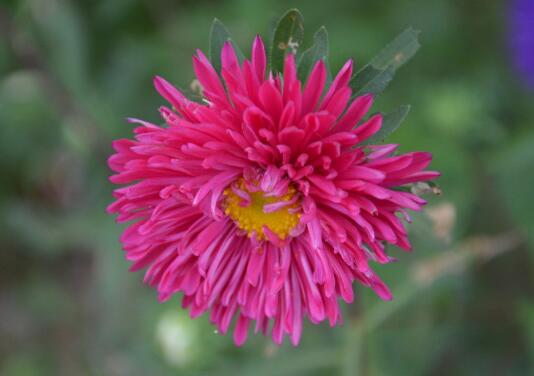
There are many things to pay attention to when sowing China aster, such as the sowing time and the choice of soil, none of which can be done carelessly. The specific details are introduced in the section below on how to grow China aster seeds. Friends who want to grow it can take a look.
2. How to grow China aster seeds
1. Sowing time
The sowing time of China aster has a certain effect on its survival rate. Choosing a suitable time to sow it can improve the survival rate. We can choose spring as this suitable time, because the climate and environment are both relatively suitable for the growth of China aster.
2. Soil selection
When it comes to how to sow China aster, choosing the soil is a very important point. This is like building a house, where you must lay a good foundation. Only by choosing suitable soil can it grow vigorously. Generally, we can choose relatively fertile humus soil. This kind of soil has good drainage and can allow China aster to absorb nutrients better.
3. Soil sterilization
After choosing the soil, we also need to sterilize it to prevent pests and diseases in it from infecting the China aster. When sterilizing, we can break it up and spread it flat under the hot sun to disinfect it, or put it in a pot and stir-fry it over heat, so that if there are pests in the soil, they will also be killed.
4. Seed germination
Harvested China aster seeds are not suitable for direct sowing. Before sowing, it is best to soak them in warm water for 1-2 days. Once the seeds begin to absorb water and swell, we can take them out and plant them. This can play a role in promoting germination and allow them to sprout faster.
5. Sowing method
As for how to sow China aster, the method is actually very simple. First, we can evenly scatter the seeds on sterilized soil, then cover them with 1-2 cm of soil and water them. When watering, be careful to water thoroughly at one time, and remember that there must be no waterlogging. After about 4 days, they can germinate, and in 10 days they can emerge.
6. Follow-up management
After the China aster seedlings emerge, we can move them to the balcony for care. There are also many things to pay attention to during care, such as fertilizing, light, and watering, all of which have many particular requirements. If you want to know the specific details, you can refer to the article on how to grow China aster. I will not repeat them here.
Summary: After reading the above content, I believe everyone has gained some understanding of how to sow China aster. That is all for the introduction on how to grow China aster seeds. As long as everyone plants according to the above methods, the survival rate is still very high.
How to grow chrysanthemums
How to grow chrysanthemums Complete collection of chrysanthemum pictures
Chrysanthemum is also known as autumn chrysanthemum and festival flower, in the Asteraceae family, Chrysanthemum genus.
1. Morphology
Perennial herbaceous flower, stem height 60-150 cm, leaves pinnately lobed or deeply lobed, with serrated edges, downy on the underside, and their size, shape, and texture vary significantly among cultivars; the flower is a capitulum, with the center of the inflorescence generally consisting of bisexual tubular florets and the edge consisting of female or neutral ray florets, terminal or axillary. Flower size, shape, and color vary among cultivars, including yellow, white, purple, green, and other colors, with yellow being prized. The flowering period is from October to December. The fruit is an achene, and the fruit ripening period is within one to two months after flowering. There are many chrysanthemum cultivars, about three thousand or more nationwide, making it the flower with the most cultivars at present. According to cultivation methods, chrysanthemums are divided into the following major categories:
Single-stem chrysanthemum: one plant with one flower, the flower is large, and it best displays the characteristics of various chrysanthemum cultivars. Potted single-stem chrysanthemums require strict control of cultivation techniques. They need a relatively small amount of fertilizer. If the pot is too large and dry fertilizer is excessive, the plant will grow too tall and its ornamental value will be reduced.
Large standing chrysanthemum: one plant blooms with hundreds to a thousand flowers, with a consistent flowering period, forming a large circular flower disc. To cultivate large standing chrysanthemums, it is necessary to choose chrysanthemum cultivars that grow quickly and have many and thick branches.
Tower chrysanthemum: dozens of chrysanthemum shoots of different forms and flower colors are grafted in layers onto a 2-3 m tall white mugwort or yellow mugwort, forming flowers of various forms and colors in layers, looking like a flower tower from a distance.
Multi-flower chrysanthemum: one plant opens dozens of flowers, suitable for dwarf plants, with relatively large flowers, and is a good cultivar for arranging flower beds.
Cliff chrysanthemum: also known as phoenix-tail chrysanthemum. The whole plant is much branched, the flowers are small, the number of flowers is large, and the plant droops, 2.5-3 m long. It is a good material for placing in high places or arranging with rockery.
2. Habits and uses
Native to our country, it likes cool conditions and needs
a shaded and well-ventilated environment. The soil should preferably be sandy loam containing humus and with good drainage. It is resistant to frost and cold, and avoids waterlogging.
Chrysanthemum is one of China's famous flowers and has a cultivation history of more than three thousand years in our country. In late autumn, when dew is heavy and hundreds of flowers wither, only the chrysanthemum thrives, becoming even more upright and elegant after frost and dew, and is loved by people. There are too many ancient poems praising chrysanthemums to count. The Book of Rites, Chapter on Monthly Ordinances records, "In the month of late autumn, the chrysanthemum has yellow flowers." Qu Yuan's Songs of Chu
contains the line "I eat the fallen petals of autumn chrysanthemums." Tao Figure 3-1 Chrysanthemum
Yuanming's famous lines "Autumn chrysanthemums have fine colors; I gather their petals wet with dew" and "Picking chrysanthemums by the eastern fence, I carelessly see the southern mountains" are still recited today. Yuan Zhen's poem Chrysanthemum, "Autumn clusters surround the house like Tao's home; after this flower blooms, there are no more flowers," vividly explains the chrysanthemum's cold-resistant and frost-defying character.
Potted chrysanthemums can be used to arrange rockery, decorate halls, and make bonsai, flower beds, flower borders, and so on for people to admire. White chrysanthemums and yellow chrysanthemums can be used as medicine and have the functions of dispersing wind-heat and clearing the liver to improve eyesight. In addition, chrysanthemums have a strong ability to absorb sulfur dioxide and can play a role in purifying the environment. In the north, when coal is burned indoors for heating in winter, if a few pots of chrysanthemums can be placed there, the concentration of sulfur dioxide can be greatly reduced.
3. Cultivation
Selection of mother plants: To preserve diverse chrysanthemum cultivars, during the flowering period, select mother plants that themselves have excellent form and strong heredity.
Cultivation of mother plants: During the cultivation process, pay attention to ventilation, watering, hoeing and weeding, and fertilizing to promote the sprouting of new buds. If crossbreeding is being done, at flowering time there should not be too much residual fertilizer in the soil, otherwise the seed-setting rate will decrease significantly.
Growing medium: The growing medium for potted chrysanthemums requires loose soil texture and rich humus. Generally, prepare the growing medium one year in advance, with the ratio: 5 parts sandy soil, 4 parts humus, 1 part grass and wood material, plus a small amount of bone meal mixed in.
Repotting and planting out: Always choose a sunny or cloudy day, and strictly avoid rainy days. Pay attention to drainage at the bottom of the pot. Small seedlings are first transplanted into shallow boxes or shallow pots, with a plant-to-row spacing of 5x6 cm. In the north, in April, plant the small seedlings with soil into 3-inch pots, then move them to a warm bed for hardening off. Pay attention to cold protection at night. At the end of May, change to 5-inch pots, and in June change to 7-8-inch pots, placing them in a sunny, flat place. On rainy days, elevate the bottom of the pots. Water at the right time. During the seedling stage, control watering, and gradually increase the amount of water as the plant grows. On consecutive rainy days, lay the pots on their sides to prevent water accumulation in the pots. In autumn, to promote flower bud formation, topdress with fully decomposed dried manure, evenly scatter it on the surface soil in the pot, and water thoroughly in time so that the fertilizer effect is uniform.
To inhibit plant growth, promote the sprouting and fullness of side branches, and achieve the expected number of flowers, pinch once after the first potting, and then pinch 2-3 times with each subsequent repotting. In early August, shape the plant and set the number of flowers, generally 5-7 is appropriate, not exceeding 8. After that, remove all buds growing from leaf axils, keep the whole plant, and retain one flower bud of the same size at the top of each branch, and set up supports, tying the branches and stems to prevent lodging. To promote seed formation, artificial pollination can be carried out. The method is to cut short the tubular part at the base of the ray florets, and pollinate with a brush around 10 a.m. on a sunny day. Chrysanthemum is a short-day flower, and by controlling light, flowering time can be controlled, advancing or delaying flowering.
4. Propagation
The propagation methods of chrysanthemum include: cuttings, division, grafting, sowing, and so on, with cutting propagation as the main method.
Cuttings: In the Northeast region, carry this out in a greenhouse in January; in the Beijing region, carry it out in August. When taking cuttings, choose young shoots sprouting from robust mother plants. The cuttings should be 2-3 inches long, remove the lower two leaves, cut the base into a horseshoe shape, first make a small hole in a sand pot with a bamboo stick, insert two-thirds of the cutting into the hole, water thoroughly after insertion, place in sunlight, and keep the indoor temperature above 10 degrees Celsius. After 20 days, they can root and unfold leaves, and can be potted or transplanted.
Division: In the north, generally carry this out around the Spring Festival. Cut off the new buds (foot buds) sprouting from the old plants retained from that year together with rhizomes using a knife, and transplant them into sand beds or pots. Through division propagation, the characteristics of the mother plant can be preserved.
Grafting: When cultivating new cultivars of large standing chrysanthemums or tower chrysanthemums, the grafting method is generally used. The rootstock used for grafting should be white mugwort or yellow mugwort with angular stems, relatively sparse internodes, and relatively large leaves. Pot them in late autumn and place them indoors. Fertilize appropriately in spring to promote root development. Before "Grain in Ear," carry out grafting indoors. The scion should be selected from robust branches with terminal buds, 4-10 cm long, with the lower leaves cut off, leaving only the top 3-4 leaves, and the base cut into a knife-edge shape. Split the rootstock, insert the scion, then wrap the joint with plant bark. After shading for 10 days, they can survive.
Sowing: This method is often used when breeding new cultivars. Because chrysanthemums do not easily set seed, artificial pollination is needed to obtain seeds. Sow in spring. When the plant grows 4-6 leaves, it can be transplanted or potted for cultivation.
5. Protection
Seedlings are often harmed by cutworms. The trapping method is to use 50 grams of 90% trichlorfon, dissolve it in warm water, mix it with 3-4 kg of fried wheat bran, then add a little sesame oil and water to make a poisoned bait for trapping and killing; in summer and autumn, aphids, red spiders, and whiteflies are also relatively common, and can be sprayed with a 1500-fold solution of dimethoate. When black spot disease occurs on chrysanthemum leaves and leaf spot disease with small black spots on the lesions occurs, remove the diseased leaves and burn them, or spray with a 500-fold solution of 65% zineb for prevention and control.
Chrysanthemum, with aliases such as Shouke, Jinying, Huanghua, Qiuju, and Taoju, is a genus of perennial herbaceous plants in the order Asterales, family Asteraceae. It contains about 40 species, most of which are native to East Asia, with its center of variation in China. [1]
In classical Chinese literature and culture, the chrysanthemum holds an important place. Together with plum, orchid, and bamboo, it is known as one of the Four Gentlemen.
Chrysanthemums are widely used for ornamental purposes. During the traditional Chinese Lunar New Year, many people like to place chrysanthemums at home. The Double Ninth Festival has the custom of admiring chrysanthemums and drinking chrysanthemum wine. Meng Haoran's Passing by an Old Friend's Farm: "When the Double Ninth Festival comes, I will come again for the chrysanthemums."
Cultivation and management of chrysanthemums
Chrysanthemum cultivars
A chrysanthemum flower is composed of many small florets forming a capitulum. There are two kinds of florets: one is the ray floret, which has only a pistil and can be fertilized, and the other is the tubular floret, which usually has both pistil and stamens. The proportion, shape, size, and color of these two kinds of florets produce various flower types and colors, and can be divided into many types such as single-petal chrysanthemum, tray chrysanthemum, pompon chrysanthemum, decorative chrysanthemum, and standard chrysanthemum. According to flower size, they can be divided into large, medium, and small wheel series; according to flower color, they are mainly yellow, white, pink, orange-red, and red. Its fruit is an achene. [3]
Chrysanthemum is a short-day plant. By using electric lighting to extend day length, or black cloth shading to shorten day length, year-round chrysanthemum production can be achieved. According to classification by photoperiodic response, cultivars that can reach full bloom with short-day periods of only 6, 7, 8, 10, or 11 weeks are early-season cultivars, while cultivars requiring short days of 12, 13, 14, or 15 weeks are late-season cultivars. Generally, commercial cultivars are mainly 9-11 week cultivars. Growers planting them should record various farming operations such as planting, lighting cutoff, and harvest times, in order to estimate the planting and harvest periods.
Chrysanthemum propagation
In chrysanthemum propagation, apart from breeding by seed, asexual propagation is mostly used. Commercial cultivation mostly uses terminal bud cuttings. The cutting propagation method is extremely simple to carry out and can obtain quite a lot of young plants in a short time for growers of cut flowers or pot flowers to plant, while maintaining the good horticultural characteristics of the original cultivar.
As for the rooting ability of cuttings, young stems root most easily. Generally, the best are 5-7 cm terminal shoots that can be easily broken off by hand, with 4-6 leaves and a stem thickness of more than 0.3 cm. When taking cuttings, to prevent possible transmission of pathogens, it is best to break them off by hand rather than cut them with scissors. For cut flower growers, it is more convenient to buy from specialized seedling producers.
Chrysanthemum planting
For planting spacing, each flower stem should have 120-180 cm2 of space. If each plant is pinched once to get 3 side branches, then for planting spacing, each plant should have 360-540 cm2 of space. Generally, chrysanthemum growers plant 10,000-12,000 per 10 ares (about one fen of land).
Photoperiodic effect
Under natural climate conditions, chrysanthemums often bloom in autumn when the temperature turns cooler and the day length becomes shorter. If planted in winter, because the day length is too short, flower buds have already formed when the plant is still extremely short. To increase flower stem length, artificial electric lighting must be used to extend day length to inhibit flower bud differentiation. In fact, a short night is more important than extending day length. If the continuous dark period does not exceed 6 hours, chrysanthemums will not differentiate flower buds. For lighting during the long night, an intensity of only 2 candlepower (about 20 lux) on chrysanthemum leaves is enough to inhibit flower bud differentiation.
Soil and fertilizer
The soil for planting chrysanthemums must not only have good drainage and aeration, but also contain abundant organic matter. When necessary, it should be sterilized with steam or chemicals. However, steam sterilization equipment in Taiwan is expensive. If soil fumigants such as "Basamid" or "Vapam" are used for sterilization, pests and diseases in the soil and weed growth can be prevented. Rotating with rice can reduce soil pests and diseases and the nutrient imbalance caused by excessive fertilization.
Overview of pests and diseases
Diseases
There are many kinds of chrysanthemum diseases occurring in Taiwan, with ten common ones, namely white rust, stem rot, black spot, wilt, anthracnose, black rust, southern blight, gray mold, sclerotinia rot, and bacterial soft rot. Wilt, stem rot, southern blight, sclerotinia rot, and bacterial soft rot are systemic diseases, and when infected, they often cause the death of the whole plant.
Pests
Chrysanthemums are planted throughout the year, providing pests and mites with abundant food and habitat. Therefore, whether chrysanthemums are cultivated in net houses or in the open field, they cannot escape damage from pests or mites. Important pests on chrysanthemums include aphids, thrips, tobacco cutworm, beet armyworm, tomato fruitworm, and two-spotted spider mite. Secondary pests include cutworms, inchworms, leafminers, whiteflies, tussock moths, mealybugs, and spider mites. The species can be said to be quite numerous. For chrysanthemums supplied to the domestic market (cut flowers or pot flowers), as long as the flower quality is not affected, a small amount of pest occurrence can be tolerated.
Weeds
Chrysanthemum cultivation is mostly open-field cultivation and rotated with paddy fields. Generally, dryland weeds commonly found in paddy-dryland rotation fields can all occur in chrysanthemum fields. The competitive harm of weeds is related to the cultivation method of chrysanthemums, weed flora, density, competition period, and environmental factors. The competition of weeds for water, nutrients, light, and so on can directly cause poor growth and reduced quality of chrysanthemums, and is unfavorable for field management operations.
Weeds occurring in the field area and the surrounding environment can cause indirect losses because their non-competitive harm can make them hosts or habitats for pests and diseases. Among the annual weeds occurring in flat dryland in Taiwan, weed species occurring in the high-temperature season include barnyardgrass, goosegrass, crabgrass, purple nutsedge, purslane, and wild amaranth; the main weeds in the low-temperature autumn and winter seasons include chickweed, cudweed, small-leaved lamb's quarters, small-leaved bittercress, field mustard, hemisteptia, and early smartweed. In addition to directly competing with chrysanthemum growth for water, nutrients, light, and so on, weeds are also unfavorable for field management operations of chrysanthemums or easily breed other pests and diseases. Therefore, during chrysanthemum cultivation, appropriate control must be carried out.
The history and culture of chrysanthemums
• The Book of Rites: "In the month of late autumn, the chrysanthemum has yellow flowers."
• Qu Yuan, Li Sao: "In the evening I eat the fallen petals of autumn chrysanthemums."
• Tao Yuanming of the Jin Dynasty greatly loved chrysanthemums. When chrysanthemums are mentioned, one thinks of Tao Yuanming. His works often mention chrysanthemums: "Picking chrysanthemums by the eastern fence," "Autumn chrysanthemums have fine colors" (Twenty Poems on Drinking Wine), "How many clumps of chrysanthemums this life" (Asking the Envoy), "Chrysanthemums can prevent aging" (Leisure on the Ninth Day), and "The three paths are almost deserted, but the pines and chrysanthemums still remain" (Returning Home). He used chrysanthemums to express a feeling of "leisure."
• Bai Juyi of the Tang Dynasty, Ode to White Chrysanthemums: "The whole garden of chrysanthemums is richly golden yellow; among them is a solitary clump whose color is like frost."
• Huang Chao at the end of the Tang Dynasty, Inscription on Chrysanthemums: "In the rustling west wind they are planted all over the courtyard; their pistils are cold and their fragrance chilled, so butterflies find it hard to come. If in some year I were the Green Emperor, I would report that they should bloom together with peach blossoms." After Failing the Examination, Ode to Chrysanthemums: "Wait until autumn comes on the eighth day of the ninth month; after my flowers bloom, all other flowers are killed. The soaring fragrance penetrates Chang'an, and the whole city is clad in golden armor!"
• Zhou Dunyi of the Song Dynasty, On the Love of the Lotus, says, "The chrysanthemum is the recluse among flowers."
• In Li Qingzhao's famous line from the Song Dynasty, "A person is thinner than yellow flowers," the "yellow flowers" refer to chrysanthemums.
• Wang Xiangjin of the Ming Dynasty, in Qunfangpu, verified the "Jiuhua chrysanthemum" in Tao Yuanming's poetry collection, which has two layers of petals, white petals and a yellow center.
• Huang Xingzeng of the Ming Dynasty recorded 220 chrysanthemum cultivars in his Book of Cultivating Chrysanthemums.
• Chen Haozi of the Qing Dynasty recorded 153 chrysanthemum cultivars in Flower Mirror.
Information about morning glory_How to grow morning glory
Morning glory is the morning glory we often see. Its shape is very similar to the shape of a trumpet, so it is named morning glory. Especially many children who grow up in rural areas are very familiar with morning glory, which often appears in the fields. It has many colors, including red, white, pink, and so on, and looks very beautiful, with very good ornamental value. Let's take a look below at the information about morning glory and an introduction to how to grow morning glory.
[Information about morning glory—Introduction]
Morning glory is also called morning glory, large morning glory, diligent lady, and tendon-pull vine. It is an annual twining herbaceous flower plant in the genus Ipomoea of the family Convolvulaceae. Its trailing stems are very slender, generally 3-4 m long, and the whole plant has many dense short bristles on it. The leaves are alternate, with entire or lobed blades. The flowers grow in the leaf axils in cymes, and the number of flowers is very abundant. Its corolla is like a trumpet. When the flowers of morning glory are in full bloom, they are very bright and beautiful. It not only has very good ornamental value, but also has very good medicinal value. Cultivars include Chouniuzi, Baichou, Erchou, Heichou, and so on. Generally, Heichou is used as medicine, and it has effects such as promoting diuresis and draining water, killing insects, and expelling sugar.
[Information about morning glory—Growth habits]
Morning glory is native to tropical America and is cultivated throughout the country, with very good ornamental value. It generally grows in hillside thickets at 100-200 m, as well as in parks, beside residences, roadsides, river valley roadsides, and so on. Morning glory has very strong vitality. It likes to grow in a mild climate and in environments with insufficient light and good ventilation. It has a very strong ability to adapt to its living environment, and can grow normally in relatively dry saline-alkali conditions or in high temperature and severe heat. Morning glory is a rooting plant, and generally grows best in fertile soil.
[How to grow morning glory]
Morning glory is generally sown in spring and summer, and the suitable temperature for sowing is 20-25 degrees Celsius, so it is very suitable for flowering in autumn and summer. Before sowing morning glory seeds, generally soak them in warm water for 4-6 hours. Sulfuric acid can be added for appropriate sterilization treatment in the soil, sprinkling it in the soil, and then covering a layer of soil on top. Keep the soil moist, and in about one week they can take root and sprout. When two or three leaves have grown, they can be transplanted into pots.
[Information about morning glory—Care methods]
1. Key cultivation points: When transplanting morning glory, choose soil with relatively good drainage. During care, provide sufficient light and place it in a ventilated place for cultivation, then carry out watering treatment. Generally, fertilize once every half month, and control the amount of nitrogen fertilizer applied, thereby preventing the stems and leaves from becoming overly lush.
2. Pinching: Generally, after morning glory grows two or three true leaves, the center begins to trail, and at this time appropriate pinching should be carried out. When branches and leaves begin to trail between the leaf axils, three or four true leaves can trail, and appropriate pinching should be carried out, then combined with shaping treatment. After each pinching, appropriate topdressing should be carried out. It can choose to use the fertilizer used when planting chrysanthemums.
3. Temperature: The suitable temperature for morning glory germination is 20-25 degrees Celsius, and sowing begins in spring and summer. Generally, the suitable temperature for morning glory growth is 22-34 degrees Celsius, and the flowering period can be enjoyed in both autumn and summer.
More related information: red maple price money tree pictures how to grow Buddhist pine seeds wild water chestnut pictures money tree planting techniques