How to propagate lipstick plant? Cutting method with high survival rate
As the beauty among hanging plants, the lipstick plant is widely popular because its flowers look like lipsticks, and it is kept in many flower lovers' homes. The lipstick plant has strong benefits, and as more and more people learn about this, it is being propagated in large numbers. So how do you propagate the lipstick plant? Below are the propagation methods for the lipstick plant. Follow along with the editor to learn more.
I. How to propagate the lipstick plant: cuttings / water culture
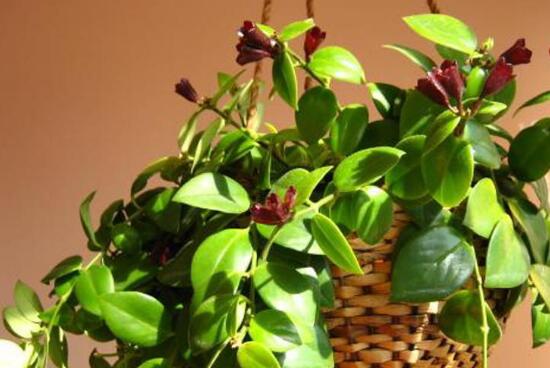
As a beginner, mastering the cultivation methods of the lipstick plant is enough, but if you are an experienced grower, you should also understand the propagation methods of the lipstick plant. Only then will growing it be more enjoyable. As for how to propagate the lipstick plant, there are mainly two methods: cutting propagation and water culture propagation. Let's continue below to see exactly how to do them.
II. The two propagation methods of the lipstick plant
(1) Cutting method for the lipstick plant
1. Cutting time
Cutting propagation of the lipstick plant is generally carried out in spring or autumn. At this time, the lipstick plant is in its rapid growth period, with strong vitality and a high cutting survival rate.
2. Selection of cuttings
In the cutting method for the lipstick plant, the most important thing is good cuttings. If they are selected well, the overall cutting success rate will be very high. You can choose robust branches, cutting each 7-10 cm section as one cutting. Place the branches in a cool place to dry, or coat them with plant ash for disinfection.
3. Cutting medium
If you want to take cuttings, you need soil. The cutting medium for the lipstick plant can be loose sandy soil, or a growing mix made of 50% fine tree fern fiber, 20% perlite, and 30% coarse sand.
4. Starting the cuttings
The cutting method for the lipstick plant now formally begins. Insert the cuttings into the prepared medium, water after inserting, ensure sufficient humidity, then provide 50%-60% light every day. After about 30-40 days, they can root and become seedlings. After the root system grows vigorously, transplant them into pots or flower beds for cultivation.
(2) Water culture propagation of the lipstick plant
1. Water culture time
To propagate the lipstick plant by water culture, you first naturally need to choose a time. For this, you can choose to do it around Qingming, because at this time spring is warm and flowers are blooming, making it easier for the lipstick plant to take root.
2. Container selection
The lipstick plant is a plant with relatively strong propagation ability, and it roots very easily in water culture. After choosing the time, select a transparent glass container, medium size is fine, so you can better observe the root growth of the lipstick plant, then add water to 2/3 of the container.
3. Choosing water culture seedlings
For water culture propagation of the lipstick plant, after the bottle and water are ready, it is time to choose the water culture seedlings. From the lipstick plant, select some robust branches free of pests and diseases as water culture seedlings, as these are more likely to take root.
4. Water temperature / water quality
Insert the water culture seedlings into the prepared glass container. Room-temperature water is fine, but if it is tap water, you need to place it in sunlight for two days in advance to remove the chlorine from the tap water. Of course, cooled boiled water also works; no need to sun it, just use it directly.
5. Rooting / care
One month after cutting, the water-cultured lipstick plant will basically have grown new roots. After that, once the plant has completely survived, place it on a balcony for cultivation. Be careful to change the water frequently and keep the air moist.
Overall, whether by cutting propagation or water culture propagation, the lipstick plant can survive, but for ordinary flower lovers, just choose the method you are good at. If you have a lipstick plant at home and happen to want to grow one more pot, then you might as well try it yourself. That is all the editor has to introduce about the propagation methods of the lipstick plant, and I hope it can help everyone.
Complete flower language guide: What is the flower language of the lipstick plant?
The lipstick plant flower is a unique flower species introduced in recent years, with relatively high ornamental value. As is well known, as a small indoor foliage and flowering plant, the lipstick plant has a graceful plant shape, lush stems and leaves, and brilliant flower colors. It can be placed on a table or viewed as a hanging plant. It is a fashionable fine product for home gardening. The lipstick plant's calyx is dark purple, tubular, and when the tube grows to about 2 cm, the red corolla grows out from the mouth of the calyx, like a “lipstick” twisted out from the tube. So, do you know what the flower language of the lipstick plant is? Today, the editor has compiled it for everyone. Let's take a look together!
Lipstick plant flower language:The flower is beautiful for a time, you are beautiful for a lifetime
The calyx tube grows long, dark purple in material, bright red rouge slowly twists open.
The flower ingeniously understands boudoir delight, reminding the beauty to come to the mirror at dawn.
The lipstick plant, also known as Huaman grass, is a perennial green trailing herbaceous flower in the Gesneriaceae family, genus Aeschynanthus. Because it is often used as a hanging basket ornamental plant, it is also often called lipstick plant. The lipstick plant is native to Southeast Asia and other places. Its plant trails, with branches hanging down, reaching 30 cm to 100 cm in length. Its leaves are ovate and opposite, slightly fleshy, 4.5 cm long and 3 cm wide, with dark green upper leaf surfaces and light green undersides. The inflorescences are mostly axillary or terminal. The calyx is tubular, dark purple and covered with fine hairs, much like the tubular shell of a lipstick. The corolla is tubular and bright red, extending from the calyx, just like a “lipstick” twisted out from the tube. When room temperature is suitable, the lipstick plant can bloom from December to February of the following year.
The lipstick plant likes a warm, semi-shaded environment and is extremely suited to indoor conditions. For home cultivation, it is suitable to hang it near a south-facing window. The lipstick plant is relatively drought-tolerant, dislikes moisture and fears waterlogging. Its suitable growth temperature is between 20°C and 30°C. It is not cold-tolerant. When winter comes and the temperature is below 15°C, it must be moved into a warm room. The potting soil for planting should preferably be loose, fertile, slightly acidic humus soil. During the growing season, apply an organic liquid fertilizer once a month, water appropriately, keep it moist, and absolutely avoid water accumulation, so as to maintain vigorous growth. After flowering in winter, the branches should be properly pruned to promote the sprouting of new buds, so as to help it bloom more the following year.
The lipstick plant is mainly propagated by cuttings. Seedlings can be grown throughout the year, but the survival rate of cuttings is higher in spring and summer. Cut 10 cm to 15 cm long top shoots and insert them into clean river sand, maintaining appropriate temperature and humidity. They can take root and survive in about one month.
The lipstick plant is bright and beautiful. It is a hanging basket plant with beautiful flowers, and also a rare excellent foliage and flowering plant for greening and beautifying indoor spaces. Grow a pot of lipstick plant. Whether placed on a desk or hanging in front of a window or on a balcony, its bright, dark green leaves and lush, low-hanging branches will bring a beauty full of life vitality. If it happens to be in bloom, those wonderful lipstick-shaped flowers will add a touch of elegant charm for you.
How to grow hanging plants more vigorously? Introduction to the cultivation methods of four different hanging plants
Hanging plants are all foliage plants that are very easy to keep alive, and basically do not require much careful tending. But for some beginners, making a newly bought hanging plant become especially lush is actually not an easy thing.
In order to help more flower lovers master the skills of caring for hanging plants, this article will discuss the cultivation methods of these four different hanging plants.
Mudan hanging plant, its leaves and flower colors are all very beautiful, the flowers are brilliant, and it can also be eaten as a vegetable. It is suitable for growing in a ventilated place with sufficient sunlight.
Cutting method: except in winter, it can be done in spring, summer, and autumn, and the cutting survival rate is very high. Choose thicker branches and cut them into lengths of about ten cm.
After drying for one day, dip them in a little rooting powder and insert them into a medium mixed of garden soil and perlite.
Then water thoroughly, and after half a month they begin to take root.
Lipstick plant, also called Huaman grass, is a very easy-to-grow flower. Both the flowers and leaves are very beautiful. It grows very quickly, with luxuriant branches and leaves, and its flowering period is especially long. Its hanging appearance is very attractive.
Cutting method: it can be propagated by cuttings, in spring or autumn. Select healthy, thick branches, each about ten cm long, and insert them into loose sandy soil.
Keep the soil moist and provide diffused light. After about one month, they can take root and sprout.
Pinch the tips appropriately, then transplant into flower pots and water and care for them normally.
Goldfish plant, its flower shape is vivid and interesting. It is also called goldfish flower or kangaroo flower. It likes a warm, humid, semi-shaded environment. When the temperature is low in winter, it needs to be placed in a warm place. In summer, it needs shade.
Cutting method: it can be cut in all four seasons. Select one-year-old branches, ten cm long, and leave four leaves.
Insert them into sandy soil, cover with a layer of plastic film, maintain air humidity, and they can take root and sprout in four weeks.
Then you can pinch the tops and pot them. Water when the potting soil becomes dry; it is very easy to care for.
Bamboo-segment hanging plant, also called hanging bamboo plum, has brightly patterned leaves, with purple-red undersides, and likes an environment with sufficient sunlight.
Cutting method: it can be done in spring or autumn. It is very easy to survive. Select trailing stems with young buds, about ten cm long.
Insert them into soil, and they can take root in one week.
In twenty days they can be transplanted into pots. After watering, place them in a ventilated place with diffused light for care. Usually pinch the tips more, water, and fertilize, and when they fill the pot they are truly beautiful.