How to propagate the yew? Either cuttings or sowing will do
The yew grows relatively slowly and has weak regenerative capacity, but after artificial cultivation its growth rate can be increased, and at the same time we can use the correct propagation methods to grow more yews. So how do you propagate the yew? Generally, yew propagation methods include sowing and cuttings. The two methods are described in detail below.
How to propagate the yew
I. Cutting propagation techniques for the yew
1. Timing of cuttings
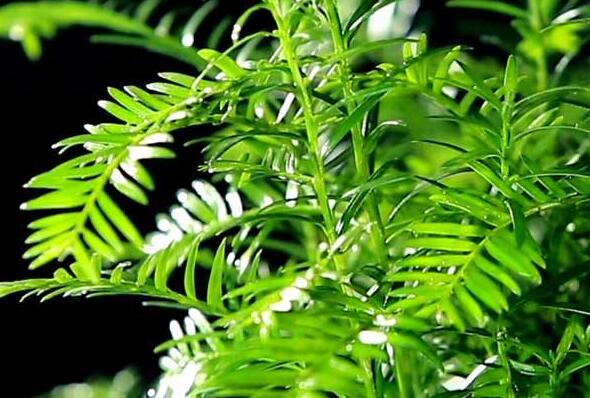
Cuttings are the most commonly used yew propagation method. Since the yew's growth period is from February to November each year, and cuttings usually require branches selected from plants in the growing period, the cutting time is generally May to June, when the temperature is suitable for rooting after cutting.
2. Method of operation
(1) First, select branches from a 1-4 year old yew, making sure the branches are relatively vigorous and have no yellowing leaves or twigs. After cutting off the branches, cut them into small sections 10-30 cm long, taking care to keep the cut smooth; the lower cut is best made in a horse-ear shape.
(2) Next, remove the leaves from the lower two-thirds of each branch section, then soak the lower cut end in rooting powder. The soaking time is 3-12 hours. The rooting powder can be ATP, ABT, NAA, IBAA, etc. Doing this can increase the survival rate.
(3) While soaking the branches, we can prepare the substrate for cuttings, generally made by mixing sand, sawdust and perlite. After soaking is complete, place the branches in a cool place to dry naturally, then insert them into the prepared substrate.
(4) Finally, care and management. Place the pot with the cuttings in a cool, ventilated place, water thoroughly and then cover with plastic sheeting to avoid direct sunlight, keep the temperature between 20-30 degrees, and keep the soil moist. Roots will form in 30-40 days, after which carry out normal management according to yew cultivation methods.
II. Yew propagation by sowing
1. Timing
Usually sowing is done in early spring, but the seeds are collected in October each year, and after collection the seeds need to be stored for 1 year before they are more likely to germinate.
2. Method of operation
(1) Late October is the ripening period for yew fruit. Pick the dark red fruit and then extract the seeds. Storing them in wet sand for 1 year can increase the germination rate. When sowing, soak the seeds in a 0.2% potassium permanganate solution for 10 minutes for disinfection, then rinse clean with water and dry.
(2) Evenly scatter the dried seeds on a sand bed, cover the seeds with sterilized loam, then pay attention to watering and shading. The shading level must be kept above 60%. Pay attention to care and management and prevent the seedbed from wind and rain; this can bring the emergence rate up to 70%.
How to propagate the yew? Cutting propagation techniques for the Japanese yew
The yew is a precious landscaping tree species in China, its leaves are evergreen all year round, and its wood is excellent timber, so it has very good planting prospects. Below, the editor will tell you about cutting propagation techniques for the Japanese yew, hoping it will be helpful to growers.
1 Propagation techniques by sowing
1.1 Seed collection
The seeds of the Japanese yew generally mature from late September to early October, and after maturing they need to be collected promptly. During the seed maturation period, select robust middle-aged mother trees that are free of pests and diseases. After collecting the seeds, wash and rub off the red aril on the surface, rinse them clean, soak them and then store them in wet sand. The seeds of the Japanese yew have a long after-ripening period and double dormancy characteristics, and need to go through two winters and one summer before they can germinate.
1.2 Site selection and land preparation
The Japanese yew likes moisture but fears waterlogging, prefers cool shade and is extremely shade-tolerant, with an inconspicuous main root but well-developed lateral roots. Therefore, generally choose a plot with loose, fertile soil and convenient drainage and irrigation, and it can also be planted under Korean pine forests or mixed coniferous-broadleaf forests with low planting density. After choosing the seedling site, plow it, with a plowing depth of 30-35 cm being suitable. Then apply base fertilizer, mainly decomposed organic farmyard manure, at a rate of about 1 000 kg/667 m2. After fertilizing, rake the land level.
1.3 Seed treatment
About half a year before sowing, soak the seeds in a 0.5% potassium permanganate solution for 40 min, then rinse them with clean water 2-3 times. After removing them, mix them evenly with fine sand at a ratio of 1:3. First spread the seed bag flat on wet sand, then cover it with a layer of wet sand and bury it with soil. In the spring of the following year, take the seeds out 15 d before sowing and spread them out to dry in a sheltered, sunny place, turning them often. On the 2 d before sowing, soak the seeds in 500 mg/L gibberellin for 24 h, take them out and rinse them with clean water 2-3 times, and they are ready for sowing.
1.4 Sowing
The Japanese yew is generally sown in drills or broadcast. The sowing time is generally early May. Before sowing, water first so the soil is soaked through. For broadcast sowing, sow directly, then cover with about 1 cm of soil and press lightly. For drilling, first open furrows about 5 cm wide and 2-3 cm deep, with about 20 cm between furrows, scatter the seeds in the furrows and then cover with soil.
1.5 Seedling stage management
After the seedlings emerge completely, water them promptly. After rain, loosen the soil and weed promptly to ensure the soil is loose. When the seedlings grow to 2-3 leaves, thin them promptly. In the first year of sowing, generally fertilize 2-3 times, mainly with nitrogen and potassium fertilizers, applied as a foliar spray. After the seedlings grow for 2-3 years, they can be lifted from the nursery and planted out.
2 Cutting propagation techniques
2.1 Collection and treatment of cuttings
Around mid-March, select robust, pest- and disease-free middle-aged superior varieties as mother plants from which to collect cuttings[2]. The cuttings are generally new shoots grown within one year, collected at a length of 10-15 cm. After collection, the cuttings should be stored at low temperature, preferably -5-5 degrees C, and their bases should be covered with 60% wet sand to retain moisture and block sunlight.
2.2 Timing of cuttings
Cutting at the right time can greatly increase the survival rate of the yew. When the deep soil temperature is above 10 degrees C and the greenhouse indoor temperature is stable above 15 degrees C, it is favorable for promoting cell division at the cut and for rooting and surviving as soon as possible. Therefore, the cutting time can be determined according to the local temperature changes in that year.
2.3 Preparation of the cutting bed
The cutting bed only needs to be prepared about 7 d before cutting. The cutting bed is generally 1-1.2 m wide, about 20 cm high, and the length is determined according to the actual length of the plot. First spread a layer of decomposed organic farmyard manure at the bottom of the cutting bed as base fertilizer. To reduce the occurrence of pests and diseases, a certain amount of dexon or carbofuran can be added to the base fertilizer, then spread a layer of cutting substrate 8-10 cm thick on top of the base fertilizer, made by mixing decomposed sawdust, garden soil and fine river sand at a ratio of 3:2:1.
2.4 Cutting
First cut off the leaves about 5 cm from the base of the cuttings, then cut off 1-1.5 cm from the lower cut to promote rooting, keeping the terminal bud. Soak the cuttings in a rooting powder solution and they are ready for insertion. When cutting, first make holes with a pointed wooden stick, 4-5 cm deep, with a plant and row spacing of about 10 cm x 10 cm. After cutting, firm the soil around the roots and water.
2.5 Management after cutting
On the one hand, keep the temperature inside the greenhouse at 15-25 degrees C; on the other hand, maintain sufficient ventilation and air humidity above 80%. If the temperature is relatively high, mist appropriately to cool and retain moisture; if the temperature is relatively low, reduce the ventilation time appropriately. If weeds grow, pull them out promptly. Generally after about 1.5-2 months, they will root and survive. With proper management, the survival rate can reach 80%-90%.
After surviving, they generally grow in the nursery for about 2 years before being transplanted and planted out. In the second year after surviving, the insulation facilities need to be removed, and topdressing should be carried out according to their growth to cultivate strong seedlings.
The yew has two propagation techniques: it can be propagated by sowing or by cuttings. According to the editor's understanding, the yew combines ornamental, medicinal and economic value, and it is currently planted in many regions of China. If you want to plant landscaping seedlings, you might consider planting the yew. The above are its propagation techniques, which you can refer to.
How to propagate the yew by cuttings
Propagation methods for the yew
The yew can be propagated by sowing, but this propagation method is relatively slow, and the yew's growth cycle becomes very long. So when propagating the yew, in order to cultivate a yew relatively quickly, we often choose the cutting method to propagate the yew.
Methods of propagating the yew by cuttings
We generally choose to carry out yew cutting propagation between May and June of the year. First we need to choose a 1-4 year old yew, cut a woody seedling branch of about ten centimeters, remove the leaves from about the lower two-thirds, and soak the cut end of the branch in a solution prepared with rooting powder for about three to twelve hours. For the soil in which we cultivate the yew, we should choose relatively coarse soil such as sand and perlite as the cutting soil. Plant the treated yew cuttings into the cutting soil, then cover with plastic sheeting and the like, taking care not to expose them to strong light. Spray and water two to three times a day, and after a month this can be reduced to watering once a day. The soil temperature is best kept at 20-30 degrees C. Generally they will root in thirty to forty days, at which point we can apply a little fertilizer to promote the growth of the yew seedlings. After the seedlings have rooted, they can be transplanted into ordinary soil for growing.