How to propagate pothos and spider plant? Cutting survival rate can reach 100%
Pothos and spider plant have extremely strong benefits. It is a foliage plant that not only looks good, but also can absorb toxic gases such as formaldehyde, making indoor air fresh. Such a good plant naturally is in great demand, and it is therefore propagated in large quantities. So how do you propagate pothos and spider plant? Below are two propagation methods for pothos and spider plant, among which the cutting survival rate can reach 100%. Let us take a look together.
1. How to propagate pothos and spider plant: cuttings/grafting
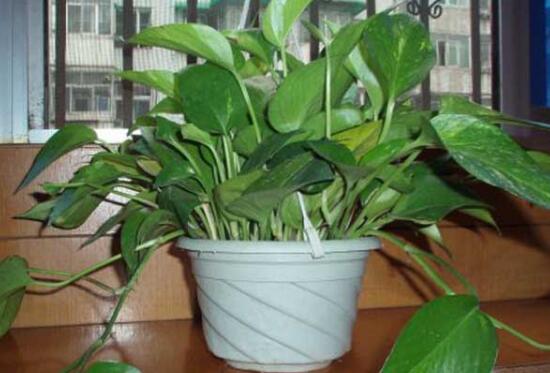
For ordinary gardening enthusiasts, mastering the cultivation methods of pothos and spider plant is enough, but if you are an old hand, understanding the propagation methods of pothos and spider plant is very necessary. This can not only increase your cultivation enjoyment, but also let one pot of pothos and spider plant become many pots. As for how to propagate pothos and spider plant, according to research, the methods commonly used by gardening enthusiasts are two: cuttings and grafting. Next, let us take a look at the specific operations.
2. Two propagation methods for pothos and spider plant
(1) Cutting method for pothos and spider plant
In daily life, pothos and spider plant can be said to be one pot per person. Growing it at home really makes the air very clear. So many people want to make one pot become two pots, and this requires everyone to propagate it. According to the editor's research, when propagating pothos and spider plant, most gardening enthusiasts choose cuttings. As long as the operation is proper, the survival rate can reach as high as 100%. Let us learn together.
1. Cutting time
If you want to propagate pothos and spider plant, you must choose a good time. Spring is when pothos and spider plant have the highest activity, so cuttings are best carried out at this time.
2. Cutting substrate
Cutting propagation naturally requires soil. According to the growth habits of pothos and spider plant, everyone should choose loose, breathable, and water-permeable soil. For this, the editor recommends using vermiculite or a soil mixed from coconut coir brick soil + perlite.
3. Selection of cuttings
This is the most important part of the cutting method for pothos and spider plant. If it is selected well, more than half of the entire propagation success is achieved. Everyone can choose robust branches free of pests and diseases as cuttings. Before cutting, use scissors to cut the cuttings into nodes, with each node retaining one leaf and one bud point.
4. Starting the cuttings
After doing the above work, the cutting of pothos and spider plant can formally begin: insert the treated cuttings into the prepared soil, with one third of the cutting exposed. Then water the soil thoroughly so that the cuttings and soil are closely combined. If conditions permit, cover with a plastic bag.
5. Care after cutting
After the above steps are done, the final care also cannot be careless. After cutting, pay attention to keeping the soil moist, frequently spray water on the cuttings, and maintain relatively high air humidity. In addition, move the flowerpot to a place with diffused light and pay attention to sun protection, so that the leaves can both carry out photosynthesis and promote rooting of the cuttings. After all requirements are met, the survival rate of pothos and spider plant cutting propagation can basically reach 100%. Everyone might as well give it a try~
(2) Layering propagation of pothos and spider plant
Besides cuttings, the propagation method for pothos and spider plant can also choose grafting. It is also very simple, and the survival rate is also good. Method: insert the creeping rhizome of pothos and spider plant into the soil, then use your hands or a tool to completely cover and press it down. After some time, the rhizome will grow aerial roots. At this time, complete propagation by trimming with scissors or cutting it off.
Overall, propagating pothos and spider plant is not difficult. Both cuttings and grafting can survive, but when it comes to survival rate, cuttings are still the best. Of course, methods are fixed while people are flexible. Everyone can choose a method for propagation according to the actual situation. Regarding the propagation methods of pothos and spider plant, the editor has introduced them here, hoping to bring help to everyone.
[Pothos and spider plant pictures] How much do you know about pothos and spider plant?
With the continuous development of us humans, we are also constantly pursuing a better life. Of course, many people also like to plant some flowers and grasses, and some like to keep fish. Today the editor wants to ask everyone how much basic understanding you have of pothos and spider plant? Its living habits, what varieties there are, how much do you know? People who like pothos and spider plant, if you do not know this information, then follow the editor to specifically understand pothos and spider plant pictures.
First, let us understand the overview of pothos and spider plant:
Pothos belongs to Araceae, Philodendron genus, a climbing vine foliage flower, native to Central America and South America. Pothos vines are several meters long, with aerial roots at the nodes. As the growth age increases, the stems thicken, and the leaves also become larger and larger. Leaves alternate, green, a few leaves also slightly mottled with yellow, entire, heart-shaped.
Large evergreen vine plant. Growing in tropical areas, it often climbs on rocks and tree trunks in rainforests and can grow into a huge vine plant. Green leaves
Pothos and spider plant often grow on rocks and tree trunks, can reach up to 20 m long, with aerial roots at the nodes; entire, nearly heart-shaped, a few leaves slightly mottled with yellow.
Growth characteristics of pothos and spider plant:
It likes warm, humid environments and requires loose, fertile soil with good drainage. Potted pothos should use fertile, loose, well-drained leaf mold soil, preferably slightly acidic. Pothos is extremely shade-tolerant and can be placed in a sunny indoor spot all year round. In a dimly lit room, it should be moved to a brighter environment every half month for a period of recovery, otherwise the internodes tend to lengthen and the leaves become smaller. Pothos likes hot and humid environments. The overwintering temperature should not be lower than 15°C. The pot soil should be kept moist, and water should often be sprayed on the leaf surface to increase air humidity, so as to facilitate the growth of aerial roots. During the vigorous growth period, liquid fertilizer can be applied once a month. For plants kept indoors for a long time, the leaves at the base of the stems easily fall off, reducing ornamental value. In May and June when the temperature turns warmer, pruning and renewal can be carried out together with cuttings to encourage new buds to sprout from the base stems.
Main varieties of pothos and spider plant:They are respectively green-leaf pothos, golden pothos, and variegated pothos. Their distinction and naming are basically because their leaves each have characteristics
Green-leaf pothos: the leaves are all green, without patterns or mixed colors
Yellow-leaf pothos (golden pothos): the leaves are light golden yellow, and the leaves are relatively thin
Variegated pothos:
Variegated pothos refers to pothos leaves having markings of different colors. According to the color of the markings, 3 varieties have currently been found.
Silver pothos (E.a.'Marble Queen'): the leaves have milky white markings and are sturdier than the original variety.
Golden pothos (E.a.'Golden Pothos'): the leaves have irregular yellow stripes.
Tricolor pothos (E.a.'Tricolor'): the leaf surface has green, yellow, and milky white markings. Tricolor pothos is not very common.
Cultivation methods
Mainly propagated by cuttings. Cut 15-30 cm long branches, remove the leaves from the basal 1-2 nodes, and plant directly in pots with humus soil. Keep the soil and air moist. In an environment with a temperature of about 25°C, roots and sprouts form in about 3-4 weeks, becoming new plants.
For potted pothos, relatively loose and breathable soil such as humus soil, peat soil, or fine sandy soil can be used. It does not have high fertilizer requirements; applying complete fertilizer once every 3-4 months is enough. It is usually cultivated indoors in all four seasons, and can also be moved outdoors to a shaded place after spring warms up, then moved indoors in autumn. It needs a certain amount of light. Generally, after being placed in a darker room for 2-4 weeks, it needs to be moved to a brighter room for 2-4 weeks of cultivation to restore growth. Pothos likes humid environments. In home cultivation, during the dry seasons of winter and spring in the north, water can often be sprayed on the leaf surface, and dust on the leaf surface should be wiped off. For pothos cultivated over a long period, the leaves at the base of the stems and branches easily fall off, exposing the stems and making the appearance poor. Pruning can be carried out after the temperature rises in May-June to encourage sprouting on the basal stems and the appearance of new branches and leaves.
Usually pothos cultivation uses cuttings and stem burial methods. Select robust pothos vines, cut them into sections of two nodes, being careful not to damage the aerial roots, then insert them into plain sand or coal cinders, with a depth of 1/3 of the cutting. Water thoroughly and place in a shaded place. Spray water on the leaf surface every day or cover with plastic film to retain moisture. As long as the environment is kept no lower than 20, the survival rate is above 90%.
In early spring and summer, take 15 to 30CM branches, remove the leaves, insert them into pots with cultivation soil, place them in a cool and ventilated place, and keep the pot soil moist. In about one month, pothos and spider plant will take root and sprout. Pothos and spider plant like warm, humid environments, so the cultivation method for pothos and spider plant is best with loose, fertile soil and good drainage.
When planting this kind of pothos and spider plant, be sure to pay attention to temperature, light, and moisture. It generally grows at temperatures above 20°C, but what should be done in winter? In winter, put it indoors. Of course, the indoor temperature must be above 10°C, otherwise the leaves of pothos and spider plant are very likely to freeze. When watering, do not use too much. It likes moist soil. Do not put it next to the heater just to make it feel better; this is unreasonable. The above is the content related to pothos and spider plant pictures. I hope it can be helpful to everyone!
Pothos cultivation methods|Pothos cultivation methods and precautions|How to grow pothos|Cultivation methods of pothos and spider plant
Pothos functions:
The place of origin of pothos is the Mexican plateau. Pothos can simultaneously purify benzene, trichloroethylene, and formaldehyde in the air, so pothos is very suitable for placement in newly renovated rooms. It also has high ornamental value. The vine stems naturally droop, which can both purify the air and make full use of space, adding lively lines and bright colors to dull cabinet surfaces. Therefore pothos has the reputation of "efficient air purifier." Now let us introduce the cultivation methods of pothos:
Pothos pictures:
Pothos cultivation methods:
The growing environment for pothos needs a temperature above 15°C. Below this temperature range, the leaves will turn yellow. Watering requires keeping the pot soil moist; it must not be dry, nor can it be waterlogged for a long time. The light environment should mainly be semi-shade. When the winter temperature is relatively low, it can be kept in full sun. When the summer sun is strong, direct sunlight is absolutely forbidden. However, being in a dark place for a long time will also cause yellow leaves, and the position needs to be adjusted in time. Fertilization requires applying little but often; do not feed it full all at once, otherwise fertilizer damage is easily caused. The air humidity requirement is preferably 60-85%. When below 50%, the leaves easily turn yellow. When there is damage from red spiders or scale insects, the leaves also easily turn yellow, and the condition spreads very quickly, so special pesticide sprays are needed for control. In addition, frequently wiping the leaves is a good preventive method.
In spring, summer, and autumn, pothos can be placed near an east- or north-facing windowsill, and in winter it can be placed at a south-facing window. If it is placed in an overly dark environment for a long time, it will not only cause the trailing stems to grow excessively, with longer internodes and a sparse plant shape, but the yellow-white stripes on the leaf surface will also become smaller and lighter in color, and even the markings may completely disappear and fade to green. If cultivated outdoors, pay attention to shading, especially in summer, and even more attention must be paid to preventing direct strong light, otherwise new leaves will become smaller, leaf color dull, and leaf edges will easily be scorched. The suitable temperature for pothos growth is 20°C-30°C. In winter, room temperature should not be lower than 15°C, to prevent freezing injury leading to withered yellow. Pothos likes moisture. During the growing season, watering should keep the pot soil moist frequently. Never let the pot soil dry out, otherwise it easily causes yellow leaves and poor plant shape. If watering too much causes water accumulation in the pot soil, it easily causes root rot and withered leaves, especially when the winter room temperature is low, and watering must be controlled even more. In summer, while watering sufficiently, also pay attention to frequently spraying water on the leaf surface.
In winter, when the climate is dry, it is also necessary to spray and wash the leaves once every 4-5 days with warm water to wash away dust on the leaf surface, so as to help keep the leaves bright and green. Potted pothos should use fertile, loose, well-drained leaf mold soil, preferably slightly acidic. Pothos is extremely shade-tolerant and can be placed in a sunny indoor spot all year round. In a dimly lit room, it should be moved to a brighter environment every half month for a period of recovery, otherwise the internodes tend to lengthen and the leaves become smaller. Pothos likes hot and humid environments. The overwintering temperature should not be lower than 15°C. The pot soil should be kept moist, and water should often be sprayed on the leaf surface to increase air humidity, so as to facilitate the growth of aerial roots. Usually pothos propagation uses cuttings and stem burial methods. In late spring and early summer, select robust pothos vines, cut 15 cm to 30 cm branches, remove the leaves from the basal 1 to 2 nodes, being careful not to damage the aerial roots, then insert them into plain sand or coal cinders, with a depth of 1/3 of the cutting. Water thoroughly and place in a shaded place. Spray water on the leaf surface every day or cover with plastic film to retain moisture. As long as the environment is kept no lower than 20°C, the survival rate is above 90%. During care, pay attention to the following aspects: 1. Light 2. Temperature 3. Humidity 4. Water 5. Fertilization.
What to do if pothos leaves turn yellow:
There are mainly several reasons that cause pothos leaves to turn yellow: 1 Too much watering 2 Lack of sunlight 3 Lack of fertilizer
1. Pothos itself is not tolerant of low temperatures. Long-term low temperature together with too much water can lead to root rot, resulting in insufficient water supply from the roots. Finally, the leaves at the roots begin to turn yellow, and the leaves at the top lose their luster, feeling soft and limp when touched by hand. Try irrigating the roots with root rot medicine. If it does not work, the only option is to cut off the vines without yellow leaves and re-cut them for propagation. In winter, keep the pot soil slightly dry; do not water unless it is dry.
2. There is another situation. If there is no problem with the root system, then it is a lack of fertilizer. Long-term lack of nitrogen fertilizer will also cause the root leaves to turn yellow. In this situation, the top leaves still have texture
。