How to Propagate Aglaonema commutatum? Detailed Guide to Cutting and Division Methods
Aglaonema commutatum is a plant of the genus Aglaonema, commonly grown as a potted plant. Many people in China grow it, and as more people cultivate it, questions about its propagation have drawn considerable interest. So how do you propagate Aglaonema commutatum? What are the common propagation methods for Aglaonema commutatum? Let's take a look below.
1. How to Propagate Aglaonema commutatum: Cuttings / Division
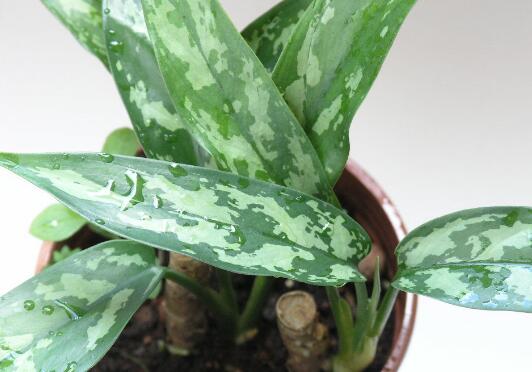
When it comes to how to propagate Aglaonema commutatum, cuttings are actually the main method; apart from that, division can also be used. In fact, the survival rate of both propagation methods is quite high, provided you master the correct procedure. So how exactly do you carry out these two propagation methods? Let's read on.
2. Common Propagation Methods for Aglaonema commutatum
Cutting Propagation
1. Substrate Selection
The common propagation method for Aglaonema commutatum is mainly cutting propagation. Before taking cuttings, we must first choose a substrate. It prefers fertile humus soil, because this kind of soil has good drainage and aeration, allowing Aglaonema commutatum to absorb nutrients better, and it is also less prone to waterlogging.
2. Substrate Disinfection
After choosing the substrate, we cannot propagate Aglaonema commutatum right away; it also needs to be disinfected, to prevent pests and diseases in it from infecting the plant. When disinfecting, we can break it up and put it under the sun to sterilize it, or put it in a pot over high heat and stir-fry it, so that even if there are pests in it, they will be killed by the high temperature.
3. Cutting Selection
After choosing the substrate, we also need to select the cuttings. The quality of the cuttings directly affects the survival rate of cutting propagation, so we must be careful. Generally, it is best to choose branches of Aglaonema commutatum that are robust and free of pests and diseases, which will greatly increase the survival rate. If you choose branches that already look very thin and small, then the cutting can basically be declared a failure.
4. Cutting Method
When taking cuttings of Aglaonema commutatum, it is best to do so in late spring and early summer. Then cut the cuttings into small segments, each with 2 nodes, and insert them into the disinfected soil. Note that the buds must face upward, or insert them vertically, and be sure not to insert them upside down, otherwise they will be very hard to root. After the cuttings are done, they will root in about 20-25 days.
5. Follow-up Management
After successful rooting, we can carry out follow-up care for Aglaonema commutatum. There are many points to pay attention to during care, such as watering, fertilizing and lighting. If you don't know how to grow it, you can refer to the article on how to grow Aglaonema commutatum, which contains detailed instructions.
Division Propagation
Besides cutting propagation, Aglaonema commutatum can also be propagated by division. Although this method is not very commonly used, its survival rate is still not low. The division method for Aglaonema commutatum differs somewhat from that of other plants: not every plant can be divided. Observe whether young shoots emerge from the base of Aglaonema commutatum; if there are any, you can sow them and replant them.
Propagation Methods of Aglaonema commutatum and Its Feng Shui Effects
Aglaonema commutatum is a common indoor foliage plant. Today we will talk about the propagation methods of Aglaonema commutatum and its feng shui effects.
Propagation Methods of Aglaonema commutatum:
There are mainly two propagation methods for Aglaonema commutatum: cutting propagation and division propagation, and cutting propagation is the most commonly used method.
1. Cutting Propagation of Aglaonema commutatum
Cutting propagation of Aglaonema commutatum is generally carried out in late spring and early summer. Cut the top stem of Aglaonema commutatum with a sharp knife into small segments with one or two nodes, and insert them into the prepared cutting medium. The cutting medium can be plain sand, vermiculite or perlite, and if conditions permit, it can be sterilized. When taking cuttings of Aglaonema commutatum, be sure to keep the buds facing upward; you can also insert them vertically, but never insert them upside down. After cutting, shade them appropriately; they generally root in 20-25 days. After cutting, spray a sterilizing solution once every 7-10 days; diluted solutions of 0.1% carbendazim, thiophanate-methyl or thiram are all fine. They generally root in 20-25 days, and when the roots grow to about 2cm they can be transplanted and planted out.
2. Division Propagation of Aglaonema commutatum
Division propagation of Aglaonema commutatum is generally carried out in spring; simply peel off the tiller buds sprouting from the base of Aglaonema commutatum and plant them. When cutting the stem of an Aglaonema commutatum plant, a transparent liquid is secreted; be careful not to let pets or children lick it, because plants of the Araceae family are generally toxic. After division, Aglaonema commutatum needs plenty of water; in midsummer, spray water on the leaves morning and evening every day, and place it in a semi-shaded spot. The lower leaves of mature Aglaonema commutatum tend to wither, causing the stem to become bare; you can cut off the top stem for cuttings, and the remaining base can sprout new shoots again.
Feng Shui Effects of Aglaonema commutatum:
Aglaonema commutatum is an excellent feng shui plant. It can not only attract blessings and gather qi, but also has a good effect in warding off evil and blocking disasters from entering the home. Aglaonema commutatum can be placed anywhere in the home; when you feel the home's feng shui is not good, you can place a pot of Aglaonema commutatum to improve it.
1. Attracting Blessings
Aglaonema commutatum belongs to the Araceae family. Its stem is thick and sturdy, its leaves are thick and large, and its color is deep green, giving it tremendous vitality. The large leaves of the large-leaf Aglaonema commutatum spread out like thick palms reaching out, drawing in qi and receiving blessings from outside; it has a powerful strengthening effect on home feng shui and can bring blessings to the home. Therefore, the bigger the leaves of Aglaonema commutatum, the better, and they should be kept evergreen and ever-green.
2. Warding Off Evil
Aglaonema commutatum is an excellent evil-warding plant. Generally speaking, the deeper the color of a plant, the stronger its evil-warding effect. The front of the Aglaonema commutatum leaf is green, and the back is dark green, so its evil-warding effect is very good. Aglaonema commutatum tolerates shade, and the silver spots on its leaves can more effectively drive away evil qi. If you pay close attention, you will find that many households like to put Aglaonema commutatum in places in the home with heavier evil qi, restoring a sense of cleanliness to the home.
3. Blocking Disasters
Placing Aglaonema commutatum in the entrance hall can effectively block disasters from entering the home and protect the family. Its powerful air-purifying effect can keep the living room's environment fresh and natural, safeguard the family's health and drive away illness. Give the home a good start every day.
Common Propagation Methods of Aglaonema commutatum
Cutting Propagation Method of Aglaonema commutatum
After a mature plant has been grown for some time, its lower leaves gradually wither, leaving the stem bare, which looks quite unattractive. At this point you can choose to propagate to renew the plant. Cut off the top stem for cuttings, and the remaining base can sprout new shoots again.
Cuttings are usually taken in late spring and early summer. Cut the stem of the plant into small segments, each with 2 nodes, and insert them into disinfected soil. Note that the buds must face upward, or insert them vertically, and be sure not to insert them upside down, otherwise they will be very hard to root.
After cutting, shade them appropriately and keep them moist; you can cover them with plastic film, and at noon on sunny days you can uncover the film, spray lightly, and cover it again. Spray a sterilizing agent once every 7-10 days (diluted solutions of 0.1% carbendazim, thiophanate-methyl or thiram are all fine); they usually root in 20-25 days, and when the roots reach 2cm they can be potted.
Division Propagation Method of Aglaonema commutatum
The division method for Aglaonema commutatum is slightly different from that of other plants: not every Aglaonema commutatum can be divided. Observe whether young shoots emerge from the base of Aglaonema commutatum; if so, you can sow them and replant them.