How to propagate Abutilon striatum? Cuttings give a high survival rate
Abutilon striatum is a highly ornamental flowering plant, and people in many regions of our country grow it. As more people grow it, questions about its propagation have drawn more attention. So how do you propagate Abutilon striatum? What are the propagation methods for Abutilon striatum? Below, the editor will walk you through it.
1. How to propagate Abutilon striatum: mainly by cuttings
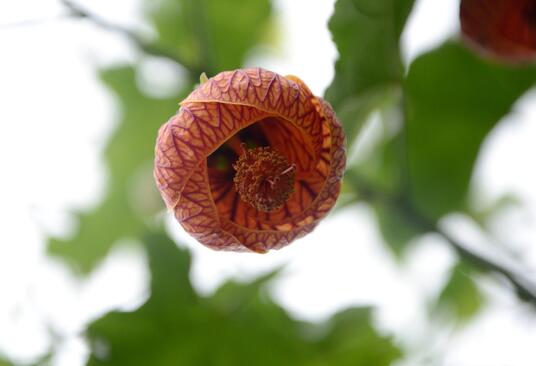
As for how to propagate Abutilon striatum, it is mainly done by cuttings. This propagation method has been tested countless times and the survival rate is quite high. However, there are many points to pay attention to when propagating. The details are covered in the propagation methods section below. Let's take a look.
2. Propagation methods for Abutilon striatum
1. Propagation time: June-August
The propagation methods for Abutilon striatum are generally based mainly on cuttings. When propagating, choosing a suitable time is very important. Generally, the best time to take cuttings is from June to August each year, because the climate is more suitable, which favors the growth of Abutilon striatum, and the survival rate is relatively higher.
2. Substrate selection: good drainage required
Abutilon striatum prefers soil with good drainage, so we can choose slightly acidic humus soil. This kind of soil has high drainage and air permeability, allowing Abutilon striatum to absorb nutrients better, and it also makes it easier for the cuttings to take root.
3. Cutting selection: choose robustly growing branches
Before propagating Abutilon striatum by cuttings, we first need to choose the cuttings (the branches of Abutilon striatum). Generally, it is best to choose branches that grow robustly and are free of pests and diseases, as this greatly increases the survival rate. If you choose branches that already look very weak and slender, the cutting is basically declared a failure, so this point is very important. Everyone should remember it.
4. Cutting method: water thoroughly, avoid waterlogging
The cutting method for Abutilon striatum is relatively simple. First, we can use chopsticks to poke a small hole in the soil, then insert the cutting about two-thirds of the way in, and then water it. When watering, make sure to water thoroughly, but do not water too much. If water accumulates, it can easily cause root rot. About 25-35 days after watering is completed, the branch can take root.
5. Follow-up management: pay attention to care
After successful rooting, we can carry out normal care for Abutilon striatum. When caring for it, there are also particular requirements for watering, fertilizing, lighting, and other aspects. If you do not know how to grow it, you can refer to the article on how to grow Abutilon striatum, which has detailed instructions. The editor will not introduce too much here.
Summary: After reading the above content, everyone should have a certain understanding of how to propagate Abutilon striatum. The editor will introduce the propagation methods of Abutilon striatum here. As long as everyone propagates according to the above methods, propagation will definitely succeed.
Is Abutilon striatum poisonous? Growing methods and tips for Abutilon striatum
Abutilon striatum is a common herbaceous plant, and it also has another name: Chinese lantern flower. It is an evergreen shrub. Because its leaves are evergreen, its flower shape is very unique, its flowering period is relatively long, and its planting survival rate is very high, it is quite popular among flower lovers. The shape of Abutilon striatum is like a bell, orange-yellow, with bright purplish-red veins on it. The stamens and style are both very long, and the whole flower looks like a hanging golden bell.
Is Abutilon striatum poisonous?
Abutilon striatum is not poisonous and is a plant that can be grown with peace of mind. Because its leaves are evergreen, its flower shape is unique, its flowering period is relatively long, and it is easy to propagate, Abutilon striatum is quite popular. It can not only be used to arrange flower clusters and flower borders, but can also be potted, with very ideal results. It is a very good potted plant for decorating the home. It can also be grown hanging in the air like a spider plant, and the hanging golden bells are especially beautiful. Also, it has no toxic sap, and placing it at home offers high ornamental value.
How do you grow Abutilon striatum?
Soil: Abutilon striatum is not strict about soil and grows best in well-drained sandy soil.
Watering: Abutilon striatum is not drought-tolerant, so during the growing season it needs sufficient water to meet its growth needs. When the flower buds are coloring, water should be withheld appropriately to control leaf growth and concentrate nutrients on the flowers. In winter, watering should be reduced.
Light: Abutilon striatum likes a sunny environment and is suitable for growing in sunny places. It tolerates partial shade.
Temperature: Abutilon striatum has poor cold tolerance. In winter it should be moved indoors, and the temperature should be kept at 0°C to 10°C to let it go dormant naturally.
Fertilizing: Abutilon striatum needs more fertilizer and water during the spring budding period. Each winter or spring, apply some organic fertilizer to help the plant grow vigorously with abundant flowers and lush leaves. However, do not fertilize too much, as this will affect the flowering period.
Pests: The common red spider mite is the most common pest and disease, while the small green leafhopper and cotton leafhopper should not be underestimated either. They can be sprayed with 5% carbaryl powder.
Pruning: Abutilon striatum tolerates pruning and can be pruned into shape as needed. Cut dead branches and fallen leaves into pieces to ensure light penetration. In winter, attention should be paid to keeping it warm. It is also best to cultivate its plant shape into a shrub form.
Propagation methods for Abutilon striatum:
1. Cutting method: Cuttings are best taken after leaf fall in autumn. However, it is best to cut them into 15-20 cm segments, tie them in bundles, and store them in sand in a sunny place to overwinter. The survival rate of cutting propagation can reach more than 95%.
2. Division method: Division is best done before early spring. It is also best to plant with wet soil and dry planting, then wait a week before watering. This way it grows faster. Plants propagated by division grow very quickly and can bloom in the same year.
3. Layering method: From July to August each year, bend the branches and bury them in the soil. The part of the branch pressed into the soil can produce roots, and in the following spring it can be transplanted to open ground for cultivation. This method is very simple.
Abutilon striatum is a plant with great ornamental value in gardens. It can be used to arrange flower clusters and flower borders, and can also be potted or used in hanging flower baskets. Today, the editor's introduction to the growing methods of Abutilon striatum ends here. For more flower-growing experience and tips, please keep following.
Chinese holly price, how to plant Chinese holly
✿ Related reading recommendations
✿ Silk tree pictures
✿ Flamboyant tree pictures
✿ Goldflame spiraea
✿ Golden trumpet tree
✿ Money tree care
✿ Cherokee rose pictures
(◕‿◕✿) For flowers and bonsai, and plant growing, please follow the Meilele flowers and bonsai section!
.......
Chinese holly is an evergreen tree, usually shrub-like. The bark is grayish-white and smooth. The leaves are alternate, hard and leathery, oblong and rectangular; on old trees the leaf base is rounded and spineless; the upper surface of the leaves is green and glossy, and the lower surface is yellow-green. Do you want to learn about it? Today the editor will briefly introduce the price and planting methods of Chinese holly.
.......
Chinese holly price. The flowers of Chinese holly are white, axillary, numerous, arranged in umbels; male flowers and bisexual flowers are on the same plant; the calyx is cup-shaped, 4-lobed, with triangular lobes and short pubescence outside; petals 4; obovate, with bases united; stamens 4, borne at the base of the corolla lobes, alternating with the petals, anthers longitudinally dehiscent; pistil 1. The drupe is elliptical and bright red. Seeds 4. Flowering period April to May. Fruiting period September to October.
.......
.......
Chinese holly price. Chinese holly is generally propagated by softwood cuttings during the rainy season, when the survival rate increases greatly. Cuttings are cut from branches of plants that bear abundantly and grow robustly, about 12-15 cm long, inserted 8 cm deep, and then shaded and kept moist. This is done to promote rooting and improve propagation results.
.......
.......
Before cutting, treat the cuttings to some extent: dissolve 1 gram of rooting powder with 500 grams of alcohol, then add 500 grams of tap water, then add water to dilute. Before cutting, put the branches in for more than 2 hours, then insert the treated branches into the seedbed. After inserting, press firmly so they fit closely with the cuttings, then water.
.......
.......
Chinese holly price. Chinese holly can also be grown by sowing. The best sowing time is March and April. It is best to collect mature seeds in September to October, store the collected seeds in layered sand, and sow in March to April of the following year. Before emergence, be sure to shade and keep moist. Perennial Chinese holly plants tend to send up suckers beside the roots, which can be cut off together with part of the plant for cultivation.
.......
.......
The leaves, fruits, and roots of Chinese holly are all used medicinally. The leaves can treat pulmonary tuberculosis with tidal fever and hemoptysis; the fruits are often used for excessive vaginal discharge and chronic diarrhea; the roots are often used to treat rheumatic pain and icteric hepatitis; the seeds contain oil and can be made into soap; the bark can be used as a dye. The leaves contain saponins, tannins, bitter principles, etc.; the bark contains alkaloids, etc. The price of trees largely depends on their size, and the price of Chinese holly is the same. Generally, a Chinese holly with a ground diameter of 17 cm costs around four to five thousand.
.......
Conclusion: It is produced in Nanjing, Jiangning, Zhenjiang, Yixing, Wuxi, Suzhou, Shanghai, and other places, growing in thickets in mountain slopes and valleys. It is now often cultivated in gardens in various places. Today the editor's introduction to the price and planting methods of Chinese holly ends here. If you want to learn about the planting methods of other plants, you can click the article source below to learn more.
[Article source] Flowers and Bonsai
✿Flowers and Bonsai✿
✿ Kalanchoe ✿ Water lily ✿ False spiraea ✿ Foxglove ✿ Red poppy ✿ Musella lasiocarpa ✿ White chrysanthemum pictures ✿ Indian rubber tree
✿ Billbergia ✿ Udumbara ✿ Snow White ✿ Dianthus ✿ Kudzu pictures ✿ Aucuba ✿ Orange jasmine price ✿ Lucky bamboo in water
✿ Sedum morganianum ✿ Pansy ✿ Echeveria 'Daehojin' ✿ Vanda ✿ Silk tree pictures ✿ Water lily planting ✿ Variegated shell ginger ✿ Serissa pictures
✿ Peacock flower ✿ Red spider lily ✿ Sedum 'Hachiandai' ✿ Leucaena ✿ White balsam ✿ Asparagus fern bonsai ✿ Globe amaranth pictures ✿ Blue calla lily
✿ Abutilon striatum ✿ Redtwig dogwood ✿ Sedum 'Otome Kokoro' ✿ Yellow narcissus ✿ Elderflower ✿ Black rose ✿ Clivia blooming ✿ Saffron crocus pictures
✿ Red lilac ✿ Firecracker vine ✿ Edelweiss ✿ Orange jasmine ✿ Passion fruit ✿ Potted lotus ✿ Rose varieties ✿ How to grow orchids