Dragon trees can be propagated by layering or by cuttings.
The dragon tree is a perennial plant, but after several years of cultivation it may lose the leaves at its base, which reduces its ornamental value. At this point, gardeners should propagate it, but some gardeners are not familiar with the techniques for propagating it. So how do you propagate a dragon tree? Let's take a look at the propagation methods for dragon trees.
How to propagate a dragon tree
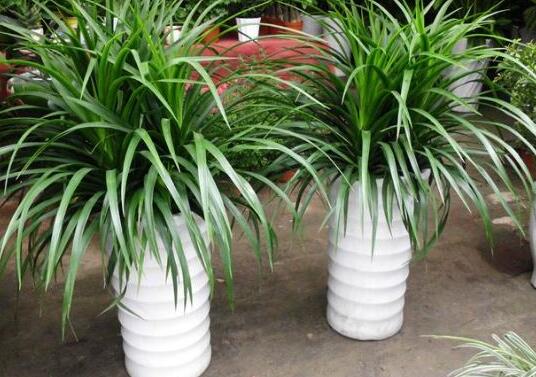
According to gardeners' growing experience, the most commonly used propagation methods for dragon trees are mainly cuttings and layering, with cuttings being the most common. Of course, gardeners can choose a suitable method according to the actual situation. Below we will introduce the specific steps of these two methods in detail.
Propagation methods for dragon trees
I. How to take cuttings of a dragon tree
1. Timing
Generally, you should choose the period when the dragon tree grows most vigorously, that is, May to June each year. At this time the plant grows relatively robustly, and the branches and leaves contain richer nutrients, so it is easier for the cuttings to survive after planting.
2. Cutting steps
(1) Selecting the cuttings. Choose robust branches on the plant, preferably branches that are more than two years old. Cut off the branches and divide them into sections 10-20 cm long. It does not matter whether they have leaves or not, but it is best if they can have leaves.
(2) Treating the cuttings. Use a tool to cut the base into a flat end, make a cross cut at the top but keep the leaves, then wash the sap from the cut with clean water, place it in a cool place to dry naturally, and then soak the base 2-3 cm in 500-1000 ppm naphthalene acetic acid for 5 seconds, take it out and begin planting.
(3) Cutting technique. Once the cuttings are ready, you can begin planting. So how do you propagate a dragon tree? Insert the cuttings into a flowerpot filled with substrate. The substrate is made by mixing vermiculite and perlite, and it is best if it has been sterilized. Then water thoroughly and keep it in a cool place for care.
(4) Care and management. Generally no watering is needed during the rooting process, but the substrate needs to be kept moist. This allows the cut to heal quickly and begin to root. From cutting to rooting generally takes 35-40 days. After rooting, do not rush to transplant; you can wait 2-3 weeks and transplant elsewhere depending on leaf growth.
II. Layering propagation of dragon trees
1. Timing
Layering needs to be done when temperatures are high, usually from May to July. The plants used for layering propagation are generally ones that have grown for many years and then produce few branches while old leaves begin to drop. Of course, healthy dragon trees can also be layered.
2. Operating steps
(1) Make a ring cut at a suitable position on the main trunk. Keep the width of the ring at about 2 cm, and cut deep enough to reach the xylem. After peeling off the bark layer with a tool, wipe away the sap with a clean wet cloth, then apply a 5000-1000 ppm aqueous solution of naphthalene acetic acid to the bark above the cut.
(2) Tie a plastic bag around the lower end of the cut and shape the film into a funnel. Then put a ball of soil into it, which can be made by mixing moss and mountain soil. Then water thoroughly, tie the upper end tightly as well, and place the plant in a ventilated spot with sufficient light.
(3) Carry out care and management according to normal dragon tree growing methods, while strengthening fertilizer and water management, replenishing water and fertilizer in time. After 30-40 days, new roots can grow from the ring-cut area, and in September to October it can be separated from the mother plant and transplanted.
How to propagate a dragon tree_Propagation methods for dragon trees_Common dragon tree variety pictures
“How to grow and care for a dragon tree and points to note" has now been introduced to everyone. You have also learned a little about how to grow dragon trees. Next, what Xiao Qi wants to share is the propagation methods for dragon trees and dragon tree varieties.
Propagation methods for dragon trees
1. Layering propagation
Layering propagation of dragon trees is generally done in the hot, humid season from May to July. At a suitable part of the plant's stem, make a ring cut with a ring width of 1.8-2.2 cm and deep enough to reach the xylem, and use a small knife to peel off the bark at the ring. Use a clean wet cloth to wipe away the sap overflowing from the cut, apply a 5000-1000 ppm aqueous solution of naphthalene acetic acid to the bark above the cut, then tie white plastic film around the lower end of the cut, straighten it into a funnel shape, add rooting medium made by mixing moss and mountain soil, wrap it around the cut, pour water through once, tie the upper end of the film tightly, then place the plant outdoors for cultivation and strengthen fertilizer and water management. After air layering a dragon tree, check at any time whether the substrate is dry and replenish water at any time. Generally, after 30 to 40 days of cultivation, new roots appear at the ring-cut area, and in September to October it can be cut away from the mother plant and cultivated separately to become an independently growing plant.
2. Cutting propagation
Dragon trees can also be propagated asexually by cuttings, from May to June. This is precisely the vigorous growth period of the dragon tree, when the plant is rich in nutrients, so cuttings survive very easily after planting. Select a mother plant with relatively high ornamental value, take robust branches that have grown for more than two years, each section about 10-20 cm long, with or without leaves. Cut the base of the cutting into a flat end, make a cross cut at the top and keep the leaves. The upper and lower cuts can be soaked and washed with clean water to remove the overflowing sap, then placed in a cool, ventilated place to dry for a while. Then soak the base 2-3 cm of the cutting in 500-1000 ppm naphthalene acetic acid, generally for 5 seconds, and insert it immediately after soaking.
For dragon tree cuttings, the seedbed can use a small earthenware flowerpot, and the substrate can use vermiculite, perlite or clean sand that has been sterilized at high temperature. Insert the cuttings after filling the pot. One plant per pot. After inserting, water thoroughly once, place the seedbed in a spot with dappled light, and care for it carefully. The later management work is mainly to keep the substrate moist. Dragon trees heal their wounds quickly, root early and sprout rapidly. Generally after 15 to 20 days, under the action of wound hormones, the cut produces callus tissue. After 25 to 35 days, under the action of endogenous hormones, the cutting quickly produces root primordia. After 35 to 40 days, new roots can sprout. After two months, it can be repotted and transplanted with growing soil.
What common dragon tree varieties are there
1. Dracaena cochinchinensis
Dracaena cochinchinensis is an evergreen tree-like plant, with stems up to 5-15 m tall. The stem is thick, with many branches, the bark is grayish white and smooth, the bark of old trunks is grayish brown and flakes off, and young branches have ring-shaped leaf scars. The leaves are clustered at the top of the stem, branches or twigs, overlapping each other, sword-shaped, thinly leathery, 50- 00 cm long and 2-5 cm wide, slightly narrowing toward the base and then widening, stem-clasping, sessile. The panicle is more than 40 cm long, and the inflorescence axis is densely covered with papillate short pubescence, even more so when young; flowers are clustered in groups of 2-5, milky white; pedicels 3-6 mm long, with the joint near the apex; tepals 6-8 mm long, about 1/4-1/5 connate below; filaments flat, about 0.6 mm wide, with reddish brown wart-like dots above; anthers about 1.2 mm long; style slender. Berries about 8-12 mm in diameter, orange-yellow, with 1-3 seeds. Flowering in March, fruiting in July to August.
2. Hainan dragon tree
(Dracaena cambodiana Pierre ex Gagnep), Liliaceae, tree-like, 3-4 m tall, stem unbranched or branched, bark grayish brown, young branches with dense ring-shaped leaf scars. Leaves clustered at the top of the stem and branches, almost overlapping each other, sword-shaped, thinly leathery, up to 70 cm long and 1.5-3 cm wide, slightly narrowing toward the base and then widening, stem-clasping, sessile. The panicle is more than 30 cm long; the inflorescence axis is hairless or nearly hairless; flowers are clustered in groups of 3-7, greenish white or pale yellow; pedicels 5-7 mm long, with the joint at the upper 1/3; tepals 6-7 mm long, about 1/4-1/5 connate below into a short tube; filaments flat, about 0.5 mm wide, without reddish brown wart-like dots; anthers about 1.2 mm long; style slightly shorter than the ovary. Berries about 1 cm in diameter. Flowering in July.
3. Dwarf dragon tree
Small shrub-like, less than 1 m tall, with thick, stout roots. Stem unbranched or sometimes slightly branched, with sparse ring-shaped leaf scars. Leaves borne on the upper part or top of the stem, spaced some distance apart, elliptical or elliptically lanceolate, 20-30 cm long and 6-8 cm wide, midvein slightly obvious, petiolate, petiole 3-6 cm long. Raceme terminal, about 15 cm long; flowers borne 1-3 together, recorded as about 2 cm long; pedicels 3-4 mm long, with the joint at the upper part. Berries 10-13 mm in diameter, with 1-3 seeds. Flowering period unknown, fruiting in August.
4. Long-flowered dragon tree
Shrub-like, 1-3 m tall. Stem unbranched or slightly branched, with sparse ring-shaped leaf scars, bark gray. Leaves borne on the upper part of the stem or near the top, spaced some distance apart, linear-oblanecolate, 20-30 (-45) cm long and 1.5-3 (-5.5) cm wide, midvein obvious below the middle, base gradually narrowing into a petiole-like form, sometimes with an obvious petiole, petiole 2-6 cm long. Panicle 30-50 cm long; inflorescence axis hairless; flowers clustered in groups of 2-3 or solitary, greenish white; pedicels 7-8 mm long, with the joint at the upper part or near the apex; perianth cylindrical, 19-23 mm long; tepals connate below into a tube, tube 7-8 mm long, lobes 11-16 mm long; filaments thread-like, anthers 2-3 mm long; style 5-8 times as long as the ovary. Berries about 8-12 mm in diameter, orange-yellow, with 1-2 seeds. Flowering from March to May, fruiting from June to August.
5. Slender-branched dragon tree
Large shrub-like, 1-5 m tall. Stem often with many branches, branches relatively slender, with sparse ring-shaped leaf scars. Leaves borne on the upper part of the branches or near the top, spaced some distance apart, narrowly elliptic-lanceolate or linear-lanceolate, 10-15 cm long and 2-3 cm wide or wider, midvein obvious, petiolate, petiole 1 cm long. Panicle borne at the top of the branches, relatively short, less than 10 cm long; flowers usually solitary, recorded as up to 2.2 cm long; pedicels up to 1 cm long, with the joint at the upper part.
The above isdragon tree propagation methodsanddragon tree varietiesintroduced. Friends who like dragon trees can learn about the propagation methods and grow more dragon trees.
How to propagate a dragon tree, propagation methods for dragon trees, common dragon tree variety pictures
“How to grow and care for a dragon tree and points to note" has now been introduced to everyone. You have also learned a little about how to grow dragon trees. Next, what Xiao Qi wants to share is the propagation methods for dragon trees and dragon tree varieties.
Propagation methods for dragon trees
1. Layering propagation
Layering propagation of dragon trees is generally done in the hot, humid season from May to July. At a suitable part of the plant's stem, make a ring cut with a ring width of 1.8-2.2 cm and deep enough to reach the xylem, and use a small knife to peel off the bark at the ring. Use a clean wet cloth to wipe away the sap overflowing from the cut, apply a 5000-1000 ppm aqueous solution of naphthalene acetic acid to the bark above the cut, then tie white plastic film around the lower end of the cut, straighten it into a funnel shape, add rooting medium made by mixing moss and mountain soil, wrap it around the cut, pour water through once, tie the upper end of the film tightly, then place the plant outdoors for cultivation and strengthen fertilizer and water management. After air layering a dragon tree, check at any time whether the substrate is dry and replenish water at any time. Generally, after 30 to 40 days of cultivation, new roots appear at the ring-cut area, and in September to October it can be cut away from the mother plant and cultivated separately to become an independently growing plant.
2. Cutting propagation
Dragon trees can also be propagated asexually by cuttings, from May to June. This is precisely the vigorous growth period of the dragon tree, when the plant is rich in nutrients, so cuttings survive very easily after planting. Select a mother plant with relatively high ornamental value, take robust branches that have grown for more than two years, each section about 10-20 cm long, with or without leaves. Cut the base of the cutting into a flat end, make a cross cut at the top and keep the leaves. The upper and lower cuts can be soaked and washed with clean water to remove the overflowing sap, then placed in a cool, ventilated place to dry for a while. Then soak the base 2-3 cm of the cutting in 500-1000 ppm naphthalene acetic acid, generally for 5 seconds, and insert it immediately after soaking.
For dragon tree cuttings, the seedbed can use a small earthenware flowerpot, and the substrate can use vermiculite, perlite or clean sand that has been sterilized at high temperature. Insert the cuttings after filling the pot. One plant per pot. After inserting, water thoroughly once, place the seedbed in a spot with dappled light, and care for it carefully. The later management work is mainly to keep the substrate moist. Dragon trees heal their wounds quickly, root early and sprout rapidly. Generally after 15 to 20 days, under the action of wound hormones, the cut produces callus tissue. After 25 to 35 days, under the action of endogenous hormones, the cutting quickly produces root primordia. After 35 to 40 days, new roots can sprout. After two months, it can be repotted and transplanted with growing soil.
What common dragon tree varieties are there
1. Dracaena cochinchinensis
Dracaena cochinchinensis is an evergreen tree-like plant, with stems up to 5-15 m tall. The stem is thick, with many branches, the bark is grayish white and smooth, the bark of old trunks is grayish brown and flakes off, and young branches have ring-shaped leaf scars. The leaves are clustered at the top of the stem, branches or twigs, overlapping each other, sword-shaped, thinly leathery, 50- 00 cm long and 2-5 cm wide, slightly narrowing toward the base and then widening, stem-clasping, sessile. The panicle is more than 40 cm long, and the inflorescence axis is densely covered with papillate short pubescence, even more so when young; flowers are clustered in groups of 2-5, milky white; pedicels 3-6 mm long, with the joint near the apex; tepals 6-8 mm long, about 1/4-1/5 connate below; filaments flat, about 0.6 mm wide, with reddish brown wart-like dots above; anthers about 1.2 mm long; style slender. Berries about 8-12 mm in diameter, orange-yellow, with 1-3 seeds. Flowering in March, fruiting in July to August.
2. Hainan dragon tree
(Dracaena cambodiana Pierre ex Gagnep), Liliaceae, tree-like, 3-4 m tall, stem unbranched or branched, bark grayish brown, young branches with dense ring-shaped leaf scars. Leaves clustered at the top of the stem and branches, almost overlapping each other, sword-shaped, thinly leathery, up to 70 cm long and 1.5-3 cm wide, slightly narrowing toward the base and then widening, stem-clasping, sessile. The panicle is more than 30 cm long; the inflorescence axis is hairless or nearly hairless; flowers are clustered in groups of 3-7, greenish white or pale yellow; pedicels 5-7 mm long, with the joint at the upper 1/3; tepals 6-7 mm long, about 1/4-1/5 connate below into a short tube; filaments flat, about 0.5 mm wide, without reddish brown wart-like dots; anthers about 1.2 mm long; style slightly shorter than the ovary. Berries about 1 cm in diameter. Flowering in July.
3. Dwarf dragon tree
Small shrub-like, less than 1 m tall, with thick, stout roots. Stem unbranched or sometimes slightly branched, with sparse ring-shaped leaf scars. Leaves borne on the upper part or top of the stem, spaced some distance apart, elliptical or elliptically lanceolate, 20-30 cm long and 6-8 cm wide, midvein slightly obvious, petiolate, petiole 3-6 cm long. Raceme terminal, about 15 cm long; flowers borne 1-3 together, recorded as about 2 cm long; pedicels 3-4 mm long, with the joint at the upper part. Berries 10-13 mm in diameter, with 1-3 seeds. Flowering period unknown, fruiting in August.
4. Long-flowered dragon tree
Shrub-like, 1-3 m tall. Stem unbranched or slightly branched, with sparse ring-shaped leaf scars, bark gray. Leaves borne on the upper part of the stem or near the top, spaced some distance apart, linear-oblanecolate, 20-30 (-45) cm long and 1.5-3 (-5.5) cm wide, midvein obvious below the middle, base gradually narrowing into a petiole-like form, sometimes with an obvious petiole, petiole 2-6 cm long. Panicle 30-50 cm long; inflorescence axis hairless; flowers clustered in groups of 2-3 or solitary, greenish white; pedicels 7-8 mm long, with the joint at the upper part or near the apex; perianth cylindrical, 19-23 mm long; tepals connate below into a tube, tube 7-8 mm long, lobes 11-16 mm long; filaments thread-like, anthers 2-3 mm long; style 5-8 times as long as the ovary. Berries about 8-12 mm in diameter, orange-yellow, with 1-2 seeds. Flowering from March to May, fruiting from June to August.
5. Slender-branched dragon tree
Large shrub-like, 1-5 m tall. Stem often with many branches, branches relatively slender, with sparse ring-shaped leaf scars. Leaves borne on the upper part of the branches or near the top, spaced some distance apart, narrowly elliptic-lanceolate or linear-lanceolate, 10-15 cm long and 2-3 cm wide or wider, midvein obvious, petiolate, petiole 1 cm long. Panicle borne at the top of the branches, relatively short, less than 10 cm long; flowers usually solitary, recorded as up to 2.2 cm long; pedicels up to 1 cm long, with the joint at the upper part.
The above isdragon tree propagation methodsanddragon tree varietiesintroduced. Friends who like dragon trees can learn about the propagation methods and grow more dragon trees.