How does basil propagate? Sow seeds from March to May, or take cuttings
Basil is easy to grow and highly adaptable, and can be grown on a large scale or in pots for ornamental purposes. So how does this hardy plant usually propagate? This is probably a question many flower lovers want to know, so how does basil propagate? Let's look at basil's propagation methods.
How does basil propagate
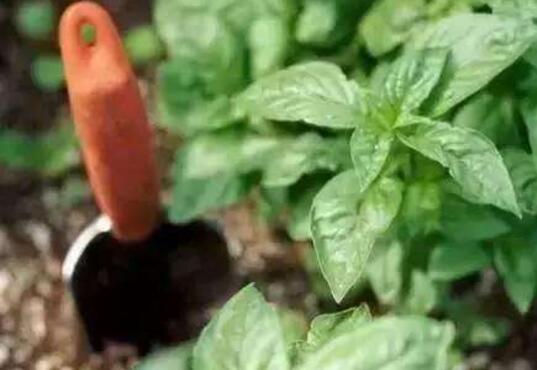
The propagation methods most commonly used by flower lovers are seed sowing and cuttings. For those growing basil in pots, cuttings are one of the better choices, as they have relatively low requirements for facilities and technique and are easier to care for and manage. Seed propagation requires finding high-quality seeds, but it can produce a large number of basil plants at once.
Basil propagation methods
I. Basil propagation by cuttings
1. Can basil be grown from cuttings?
Although basil's branches are not long and its leaf stalks are relatively short, it can still be grown from cuttings, and taking cuttings has little effect on the mother plant and is relatively easy to care for. However, you must pay attention to technique when choosing cuttings.
2. Choosing branches
Be sure to choose branches from a basil plant that has never flowered, so the cutting time should generally be before the flowering period, that is, before July, and preferably in spring. Select a 5-10 cm branch from the plant, then cut it off.
3. Trimming the branch
Cut off the leaves at the bottom of the branch, keeping only the 2 leaves at the top, then place it in a cool place and wait for the cut end to dry naturally. Never put the branch in direct sunlight, otherwise the leaves will easily wilt, which may affect the cutting's survival rate.
4. Soil cuttings and later management
Insert the cutting into the prepared potting soil, then water immediately, and water thoroughly. Then place it in a bright, well-ventilated place. There is no need to water or fertilize again; if the soil is relatively dry, you can mist it appropriately. Roots generally form after 3-4 weeks.
II. Water propagation
Besides soil propagation above, basil can also be propagated in water. Preparing the cuttings is the same as for soil propagation, but afterward the cuttings are placed in water, and the care and management differ slightly. When propagating in water, change the water once every 3-4 days, and after roots form, change the water every day; after roots form, it can be transplanted into potting soil.
III. Basil propagation by seed
1. When to sow basil
Because suitable temperatures are needed after sowing to ensure rooting, the time is generally from March to May. In the south, where temperatures rise quickly, the time is generally from March to April, while in the north you need to wait until April to May to start sowing.
2. Method of operation
When using seed propagation, how does basil propagate? First, choose excellent seeds and pre-sprout them. Wrap the seeds in a damp towel and keep the temperature at 25 degrees. When the seeds sprout small shoots, it means pre-sprouting has succeeded, and at this point you can keep the temperature at around 22 degrees.
Plant the pre-sprouted seeds into the prepared nutrient soil, water thoroughly with warm water, then cover with plastic film to keep them warm and moist. Control light and temperature well, then raise the seedlings and transplant them.
[Illustrated] Sowing and cutting propagation of basil
Basil propagation by seed
Key points for propagation
Wrap the harvested seeds in a clean damp towel and keep the temperature at 25°C to pre-sprout them. When the seeds' small shoots grow out, lower the temperature by 3°C to 5°C, care for them for a period, and then sow.
For sowing time, in southern regions it is from March to April, and in northern regions it is from late April to May. Fill the flowerpot with nutrient soil, water thoroughly, and put in the seeds. After that, water regularly, and after a period of care they can be transplanted and planted out.
Illustrated basil sowing
Choose a good flowerpot and put an appropriate amount of nutrient soil in it
After watering, put a certain number of seeds into the flowerpot; generally about 10 or more seeds is enough
Care for them well, do the watering work, and also control temperature and light
Basil propagation by cuttings
Key points for propagation
Basil can be grown from cuttings. The main tasks of cutting propagation are choosing the cuttings, taking the cuttings, and caring for them.
In choosing cuttings, basil cuttings should not be taken from flowering plants, so cuttings need to be taken before flowering. Cut off a 5 to 10 cm long branch, trim it, and keep only two leaves. Insert the cutting into the prepared medium, water thoroughly, and wait for it to take root. You can also propagate directly in water; the operation is simple, and it is clean and attractive.
Illustrated basil water propagation
Choose a suitable branch on the basil plant and cut it off with a small knife
Remove the leaves on the lower part of the branch, keeping only the leaves on the upper part
Insert the basil cutting into a glass, care for it carefully, and pay attention to changing the water
After a period of growth, roots will grow
How to grow the basil plant
Basil
Scientific name: Ocimum basilicum
Aliases: dwarf basil, nine-story pagoda, jinbuhuan, St. Joseph's wort, sweet basil, lanxiang
Family and genus: Lamiaceae, genus Ocimum.
Cultivation management: propagate by sowing or cuttings. In North China, sow indoors or in a hotbed in early spring, and plant out in early April. Young shoots can also be tip-cut in summer. After sowing, they sprout in about 3~7 days, and are transplanted at about one month when they have two pairs of true leaves (plant height about 15 cm). The usual row spacing and plant spacing for planting is (15~30) cm × (50~90) cm. After growing, the plant becomes a branching, clumping form. If the main purpose is producing leaves for fresh eating, then pinching is needed to promote branching and increase the harvest. The usual fertilizer application ratio of N-P205-K20 is 1:1:1. It is recommended to use about 230~300 kg of nitrogen (N) per hectare as base fertilizer, and after harvest use 50~75 kg of nitrogen as top dressing.
Uses: mostly used as a background for courtyard flower borders or as ground cover. The whole plant contains aromatic volatile oil and is a major aromatic and medicinal plant.