How to propagate rubber plant (Ficus elastica) by leaf cuttings? Both soil and water propagation work
The rubber plant is an evergreen tree, and its propagation method is somewhat special compared to other plants. For example, in the commonly used cutting propagation, you can use either stem cuttings or single buds, and both water propagation and soil propagation work, so there are many options. So how do you propagate a rubber plant? How do you propagate rubber plant leaves by cuttings? Let's take a look at the propagation methods for rubber plants.
How to propagate a rubber plant
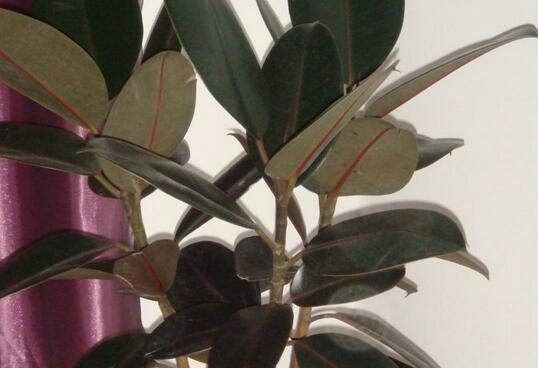
According to statistics from the propagation experience of gardening enthusiasts, the propagation methods that can be used for rubber plants are mainly cutting and layering, and cutting includes multiple forms. By cutting material, there is stem cutting and leaf cutting. By substrate choice, there is water propagation and soil propagation. Below is a detailed introduction to these methods.
Propagation methods for rubber plants
I. Rubber plant cutting propagation
Making cuttings
1. Stem cuttings
(1) Time. The time for stem cuttings is generally chosen in April-May or September, because the temperature at this time is easier to keep above 20 degrees.
(2) Selecting cuttings. Choose relatively thick, semi-lignified branches from the rubber plant, cut them off, and then divide them into several sections of 12-15 cm as cuttings. Seal the cut ends with clay or plant ash to prevent too much milky sap from flowing out, then place them in a cool place to dry for later use.
2. How to propagate rubber plant leaves by cuttings
(1) Time selection. The time is likewise chosen in spring when the temperature is above 20 degrees, for the purpose of making rooting easier.
(2) Selecting leaves. Choose leaves from the rubber plant that are not yet sturdy and thick with obvious gloss, cut the leaves off together with the petiole, then cover the wound with plant ash. After the milky sap stops flowing, disinfect with potassium permanganate solution, then place in a cool place to dry.
Starting the cuttings
1. Soil propagation
(1) Making the substrate. Use river sand, perlite, and so on to make the substrate, and water the surface appropriately to keep the surface moist, making later cuttings easier.
(2) After the substrate is ready, how do you propagate a rubber plant? Insert the branches or leaves into the substrate, then water thoroughly. After that, keep the soil moist but not waterlogged, keep the temperature at 18-25°C, spray water onto the soil frequently, then place in a cool place for 2-3 weeks and they will root. After new shoots appear, light can be increased.
2. Water propagation
(1) Leaf water propagation. Take out the dried and disinfected leaves, put the petioles into water, keeping only 5 cm of the petiole in the water, while the leaf blade part must be exposed outside the water. Then change the water every 3-5 days. After rooting, change the water once every 1-2 days, and after 50 days they can be transplanted.
(2) Stem water propagation. Take out the branches cut from the rubber plant, insert the lower part of the branches into water, with the portion in the water being one third of the branch. Then change the water once every 3 days. After waiting two months for rooting, they can be transplanted into pots.
II. Layering propagation
1. Time
The time for layering is generally June, because after layering it will root in July-August, and after being transplanted elsewhere it can smoothly adapt to the new environment and prepare early for overwintering.
2. Layering method
When using layering, how do you propagate a rubber plant? What is mainly introduced here is air layering. From the plant, choose a sturdy and full 2-year-old branch, perform ring barking 1 cm wide at the predetermined position, then apply 30-50 ppm naphthalene acetic acid solution.
Use a plastic bag filled with moist soil to wrap the wound, tie the upper and lower ends of the plastic film tightly, be careful to keep the soil inside the bag moist, then wait 3-4 weeks and it will root. After it roots, it can be cut off and transplanted, and afterward managed normally according to rubber plant cultivation methods.
How to propagate a rubber plant, rubber plant leaf cutting method
Flower and Bonsai Network introduction: Today we will introduce how to propagate a rubber plant, mainly the leaf cutting method for rubber plants. Let's take a look.
For rubber plant propagation, cutting propagation is mainly used; for some types that are relatively difficult to root, air layering is also commonly used for propagation.
Rubber plant cutting propagation method
Using greenhouse cuttings, this can be done from December to April; when the rooting medium temperature is maintained at 20 degrees Celsius, rooting takes about 20 days. Outdoor cuttings are all done from May to June.
For cuttings, choose 1-year-old branches, 7-10 cm long, keep the top 2 leaves, and cut off the remaining lower leaves. When there are not enough cuttings, the leaf-bud cutting method can also be used, that is, cutting off the upper end of each leaf on the branch so that each leaf has a section of stem as the cutting material, and inserting the stem section diagonally into the rooting medium. After the cutting roots, the buds in the leaf axils sprout into new plants. For both types of cutting material, after cutting, the base cut will secrete white latex, which should be rinsed with clean water to prevent it from coagulating and affecting root formation. When cutting, each cutting should be supported with a thin stick, and the leaves rolled into a tube shape and tied well with thin string. The rooting medium for cuttings can be pure sand, or moss can be used to wrap the base of the cutting. For the leaf-bud cutting method, the insertion depth should leave the axillary bud exposed above the sand surface. After cutting, place the cutting box or pot in semi-shade and keep the rooting medium moist. Generally after more than 30 days they can root, and after 40-50 days they can be potted for cultivation.
Rubber plant leaf cutting propagation method
Rubber plants can be propagated by leaf cuttings using leaves removed during cutting, pruning, and so on. This method has a relatively high survival rate.
Cutting time: In a greenhouse, it can be done all year round. For open-field cultivation, spring is best, so that they can be potted in autumn. Harvesting leaves: choose fully opened, mature leaves, break them off along the direction, use a sharp knife to slightly trim the leaf scar flat, place in clean water, wash away the white sap that flows out, and after there is no more water, they can be inserted.
The leaf cutting method is suitable for flowers that can grow adventitious buds and adventitious roots on the leaves. For example, rubber plants, begonias, gloxinia, snake plant, Echeveria, Oxalis, mother of thousands, and so on can all be propagated by leaf cuttings. For leaf cuttings, select sturdy, fully mature leaves. When doing leaf cuttings for rubber plants, first cut off the petiole and the thin tender parts of the leaf margin to reduce evaporation, and use a small knife to make some horizontal cuts on the veins on the back, then lay the leaf flat on fine sand or a substrate of half peat and half sandy soil, and finally place a few small stones on the leaf surface, or use bamboo skewers to fix the veins so that they cling tightly to the substrate and continuously absorb water, so as to prevent wilting. Afterward, adventitious roots will grow at the cuts and buds will sprout to form small plants. When doing leaf cuttings for snake plant, cut the harvested leaves horizontally into leaf sections about 5 cm long, insert them straight into sand, with 2 cm exposed above the sand surface, and then new rhizomes can grow at the base of the leaf sections, and the upper part sprouts to form a new plant. When doing leaf cuttings for gloxinia, the leaf carries a section of petiole (about 3 cm long); insert the petiole into sandy soil, and afterward a small bulb forms at the base of the petiole, roots and buds develop. In addition, the scales of lily-type flowers can also be used for leaf cuttings. During leaf cuttings, the leaves can be placed flat on the sand surface and made to closely connect with the sand surface, and then small plants can grow at the veins. Leaf cuttings are usually done indoors, and after cutting they are placed in a shaded place. Water with the immersion method, and never spray water onto the leaf surface, to prevent the cut veins of the cutting leaf from getting wet and affecting survival.
Growing a plant successfully by leaf cuttings is a great way to experience the wonder of life. The raw material for leaf cuttings can be a leaf with a petiole, or part of a leaf blade. Many plants, such as begonias, African violets, gloxinia, snake plant, and so on, can be propagated by leaf cuttings.
One day before leaf cutting, first wash the plant, then choose a shallow and flat dish to place the leaves, and also prepare a box with a transparent lid. First thoroughly wash the box with diluted bleach, and place 3 to 4 inches of moist sandy soil in the box.
Use a sharp knife to cut off a mature and healthy leaf (young leaves are especially prone to shriveling, while over-mature leaves are not easy to root), place it on the dish, cut off the petiole, then divide the leaf into several pieces (begonia leaves can usually be divided into 5 pieces), and the center of each leaf piece must have the main vein. Soak the end near the petiole in rooting hormone, remove the liquid droplets, and bury it in the sandy soil. 2/3 of the cutting leaf should be exposed outside, and the burial direction is best kept consistent, with spacing of about one inch being best. Water gently, cover with the lid, and place the box in a place without direct sunlight, maintaining a temperature of 20°C to 22°C. Check the box regularly, and water when the sand surface dries.
After a few weeks, roots grow out. After about 2 months, small leaves will break through the soil. When the new leaves grow to the size of a thumb, the plant can be moved out of the sandy soil box. Gently shake off the sand from the roots, and remove the original cutting leaf. The new plant should be placed in a container with good drainage, and avoid direct sunlight, leaving it for some days to give it enough time to adapt to the new environment. After that, it can be placed on an east- or west-facing windowsill. Be careful to maintain humidity around the plant; you can place the container in a dish with water and small pebbles. When the soil surface dries, water thoroughly again. Before long, you will enjoy the pleasure brought by a plant you cultivated with your own hands.
Although rubber plant leaf cuttings can grow adventitious roots from the petiole, they cannot produce adventitious buds, so they cannot grow into a new individual. Therefore, it is necessary to use a leaf with a bud at the base or a terminal bud for cuttings to form a new plant. The depth should be only enough to expose the bud tip. After cutting, cover with a glass cover to prevent water evaporation. If the leaves are opposite, they can be split into two halves, with each leaf carrying one bud as a cutting.
Rubber plant leaf cuttings can use one leaf with one bud, or one leaf, half a leaf, or even smaller propagation material. In an intelligently controlled rapid propagation seedbed, they can root quickly. A whole leaf can be dipped quickly in 2000 PPM rapid propagation treasure, while half a leaf treated with 400 PPM for 1 hour has the best rooting effect, with a rooting rate reaching 100%.
The branches and leaves of rubber plants root very easily, and the rooting speed of different varieties differs little.
For larger leaves, appropriate pruning can be done. Leaves that are too large consume too many nutrients and affect rooting. Half of the leaf can be cut off, dried in a cool place, and then used for leaf cuttings.
Then insert the prepared leaves into sandy soil. If you want rapid rooting, you can buy special rooting agents on the market. The fastest can root in 1 hour, and before long, select leaves with young buds and pot them separately to form complete plants!
Rubber plant air layering propagation method
Variegated varieties are mostly difficult to root by cuttings, so this method is often used. The suitable period for air layering is after being moved outdoors (between April and May). First choose a full 1-year-old branch, and perform ring barking at a suitable location. The ring barking width is 1-2 cm (according to the thickness of the branch). Then wrap the ring-barked area with moss or clay, the size of a fist, and wrap the outside with plastic sheeting. Afterward, inject water into the rooting medium once every 2-3 days to keep it often moist, and it can root in about 30 days. When new roots are seen from outside the plastic sheeting, it can be cut off from the lower part to separate from the mother plant, and potted for cultivation.
Rubber plant Ficus elastica Roxb. ex Hornem Rubber plant illustrated guide: how to grow rubber plant / how to propagate rubber plant
Rubber plant profileRubber plant Ficus elastica Roxb. ex Hornem
Rubber plant cultivation methods and precautions Rubber plant introduction
The rubber plant is an evergreen tree of the Moraceae family. It is native to India and Malaysia, so it is also called Indian rubber tree and Indian banyan. It is cultivated in many places across China. It likes a high-temperature, humid, sunny environment, and can also tolerate shade but not cold. The rubber plant has an obvious trunk, few branches, and aerial roots. Leaves are alternate, leaf blades oblong, thick leathery, bright green, with many parallel lateral veins, young leaves red, petioles thick and strong; the rubber plant has high ornamental value and is a famous potted foliage plant. It is extremely suitable for indoor beautification arrangements. Small and medium-sized plants are often used to beautify living rooms and studies; medium and large plants are suitable for arranging on both sides of the entrance halls of large buildings and in the center of lobbies, appearing majestic and spectacular, and can reflect tropical scenery.
Evergreen woody foliage plant. Rubber plant leaves are relatively large, thick leathery, glossy, round to oblong; the leaf surface is dark green, and the leaf back is light green. Initially wrapped outside the terminal bud, after the new leaves expand the stipules fall off and leave stipule scars on the branches. Its variegated varieties have yellow-white patches on the green leaves, even more beautiful and pleasing to the eye, but its leaves are toxic. The rubber plant is an evergreen tree of the Moraceae family and can reach more than 25 m in height. On the leaves, young leaves are rolled inward, thick leathery, glossy, elliptical to oblong, with the leaf surface dark green or red-green and the back light green.
There are extremely many species in the same genus, about 1000-2000 species, widely distributed in tropical and subtropical regions, with about 120 species in China.
It likes a high-temperature, humid, sunny environment, and can also tolerate shade but not cold.
[Propagation]: Cutting propagation is commonly used. It is best done in spring and summer. Choose a previous-year branch from the upper part of the plant, 20 cm long; after cutting it roots in 30 days, and is potted in 50 days.
[Cultivation]: For potted seedlings, the pot must be changed every spring; for adult plants, the pot can be changed once every 2-3 years, adding fertile soil. In midsummer, pay attention to watering; in dry periods, water can be sprayed on the leaf surface to maintain leaf moisture. Fertilize once every half month. When the plant grows to 1 m high, the top needs to be cut off to promote branching and maintain a beautiful tree shape. In autumn and winter, watering should be reduced.
[Pests and diseases]: Anthracnose, leaf spot disease, and gray mold disease are common, and can be sprayed with 500-times 65% zineb solution. Pests include scale insects and thrips, and can be killed by spraying with 1000-times 40% omethoate emulsifiable concentrate.
[Morphological characteristics]: It is an evergreen large tree. The bark is smooth, grayish brown, and the young branches are green with few branches. Leaves are elliptical, 10-30 cm long, thick leathery, with an obtuse caudate apex, rounded base, entire margin, dark green leaf surface with gray-green or yellow-white markings and brown spots, and light green back. Stipules are reddish brown, wrapping outside the terminal bud, and fall off when the new leaves unfold. The whole plant has milky sap. Variegated rubber plant leaves are broad and glossy, with beautiful colored patches, and the tree shape is lush and dignified.
[Growth habits]: It likes a warm and humid environment. The suitable growth temperature is 20-25°C, and the safe overwintering temperature is 5°C. It likes bright light and avoids direct sunlight. It tolerates dry air. It avoids clayey soil, does not tolerate barrenness and drought, and likes loose, fertile, well-drained, slightly acidic soil.
[Landscape use]: Small plants can be used for windowsill or table arrangements, while medium and large plants are suitable for arranging halls, offices, meeting rooms, and other places.
Morphological characteristics of the rubber plant
Evergreen tree. Plant height 2-3 m. Stems hairless, with milky sap. Leaves thick, leathery, with long petioles, and the leaves are oblong or elliptical. Rubber plant leaves are thick and beautiful, broad, attractive, and glossy; the red top looks like a lying cloud, and after the stipules split they look just like a red tassel hanging down, quite charming. It is a potted foliage plant. Suitable for indoor beautification arrangements.
Distribution area of the rubber plant
The rubber plant is native to India, Malaysia, and other places, and is now cultivated in many places in China. It likes a high-temperature, humid, sunny environment. The suitable growth temperature is 20-25°C, and it avoids direct sunlight. It can also tolerate shade but not cold, and the safe overwintering temperature is 5°C. It tolerates dry air. It avoids clayey soil, does not tolerate barrenness and drought, and likes loose, fertile, well-drained, slightly acidic soil.
Rubber plant cultivation techniques and key cultivation points
(1) Temperature: It likes warmth, and the most suitable growth temperature is 20-25°. It tolerates high temperatures and can grow well even when the temperature is above 30°. It is not cold-tolerant, and the safe overwintering temperature is 5°. Variegated varieties have slightly weaker cold tolerance, and the overwintering temperature is best maintained above 8°. When the temperature is low, a large number of leaves will fall.
(2) Light: It likes bright scattered light and has a certain shade tolerance. It is not tolerant of strong sunlight exposure; when light is too strong, it will scorch the leaves and cause yellowing and scorched leaves. It should also not be too shady, otherwise it will cause a large number of leaves to fall and make the beautiful patches of variegated varieties fade. From May to September, shading should be carried out, or the plant should be placed in a place with sufficient scattered light. At other times, sufficient sunlight should be given.
(3) Watering: It likes a moist soil environment, and during the growing period water should be fully supplied to keep the pot soil moist. In winter, watering needs to be controlled; when the temperature is low and the pot soil is too wet, it easily leads to root rot.
(4) Environmental humidity: It likes a humid environment. During the growing season, when it is sunny and the air is dry, water should often be sprayed on the branches, leaves, and surrounding environment to increase relative air humidity.
(5) Fertilization: Because it grows rapidly, nutrients should be supplied in time to make the plant grow vigorously. A nitrogen-based fertilizer should be applied 2-3 times a month as a top dressing. Variegated types grow relatively slowly, so the number of fertilizer applications can be reduced, while increasing the application of phosphorus and potassium fertilizer to make the patches on the leaf surface bright and colorful. If too much nitrogen fertilizer is applied or only nitrogen fertilizer is applied, the patch color will fade or even disappear. In September, nitrogen fertilizer should be stopped, and only phosphorus and potassium fertilizer should be applied as a top dressing to improve the plant's cold resistance. In winter, the plant goes dormant, so fertilization should be stopped.
(6) Pruning: In spring, pruning should be carried out together with moving the plant out of the shed, removing the forked branches, inward-growing branches, dead branches, and thin weak branches inside the crown, and cutting back the runaway branches protruding from the crown, so that the interior of the plant has good ventilation and light transmission and the tree shape remains round and neat. If the crown is too large, the outer branches can be shortened as a whole. During the growing period, overly dense branches should be thinned at any time and long branches should be cut back.
(7) Repotting: Usually the pot needs to be changed once every 2 years. It likes fertile, loose, well-drained sandy loam. The substrate can be made from garden soil, leaf mold, and plain sand, and farmyard manure can be mixed in as a base fertilizer.
(8) Pest and disease control: There are leaf spot disease and pests and diseases such as red spider mites, Ficus thrips, and scale insects.
Selection of cultivation soil
For pot cultivation, use peat soil and leaf mold plus 1/4 river sand and a small amount of base fertilizer to make the growing soil, or fine sandy soil can also be used. The rubber plant grows relatively fast and likes fertilizer; apply fertilizer once a week. Usually, change the pot or soil before new shoots grow in spring. When seedlings are 80 cm-100 cm tall, pinch the tips as needed to promote side branch sprouting. Generally keep 3 main branches and remove the other excess ones. If cultivated well, after about 3 years it can grow into a large plant 2 m tall. The rubber plant likes strong sunlight; from spring to autumn, during the entire growing season, it should be cultivated entirely in sunlight when planted in the ground; in winter it should also be placed in the brightest place indoors. If placed indoors for viewing, generally replace it about once every 2 weeks, and it should not be kept too long. The rubber plant grows very fast in a high-humidity, moist environment, producing one leaf every 5-7 days. During this period, sufficient fertilizer and water must be guaranteed. In autumn, gradually reduce fertilization and watering to promote full and solid branch growth. Because the rubber plant has strong resistance to dry environments, cultivation in North China is also relatively easy. It should be placed in a room above 10°C for overwintering; long-term low temperature and wet pot soil easily cause root rot. Move it outdoors for cultivation from the end of April to early October each year.
Potted maintenance
1. Soil preparation
When potting rubber plants, it is suitable to use 1 part leaf mold, 1 part garden soil, and 1 part river sand, and add a small amount of base fertilizer to make the growing soil.
2. Watering and fertilizing
It grows very fast in a high-temperature, humid environment, producing one leaf every 5-10 days. During this period, sufficient fertilizer and water must be guaranteed. Generally apply liquid fertilizer or compound fertilizer 1-2 times a month, while maintaining relatively high soil moisture. After autumn begins, gradually reduce the frequency of fertilization and watering to promote full plant growth and benefit overwintering.
3. Sunlight
The rubber plant likes strong sunlight. From spring to autumn, during the entire growing season, it should be cultivated in sunlight, and in winter it should also be placed in a relatively bright place; but it can also tolerate shade, and cultivation indoors under low light is also fairly good.
4. Pinching
In addition, in order to make the plant grow evenly and ensure a good plant shape, pinch the tip when the seedling grows to a height of 50-80 cm to promote side branch sprouting; after the side branches grow, choose 3-5 branches, and thereafter shorten the side branches once a year. After 2-3 years, a relatively large plant with a complete, round, and full plant shape can be obtained.
5. Pruning tips: The central stem usually grows straight and tall without branches. Regularly prune the growing tip, and side branches form as it grows. By simply cutting off the top, once it becomes too tall, you can control its height. Use sharp pruning shears to avoid tearing the stem.
6. Change water regularly: to keep the rubber plant healthy. When rubber plant leaves turn yellow and fall off, it is a sign of excessive water. [7]
Precautions
[Watering]: Just keep the soil often in a slightly dry or slightly moist state. Summer is the stage when the rubber plant needs the most water, so more watering can be done. Winter is the period when the rubber plant needs the least water, so water should be supplied less. Fertilization: In the vigorous growth season, diammonium phosphate, potassium dihydrogen phosphate, and so on should be applied as top dressing.
[Light]: The rubber plant likes strong direct sunlight and also tolerates shady environments. However, during cultivation, it should receive no less than 4 hours of direct sunlight every day. If conditions permit, it is best to ensure the plant can receive full sun.
[Ventilation]: Just maintain appropriate ventilation in the environment.
[Temperature]: The rubber plant likes a high-temperature environment, so it grows fastest in summer and autumn. The environmental temperature should be kept between 20-30 degrees. When the environmental temperature is below 10 degrees, the rubber plant is basically in a state of stagnant growth. The overwintering temperature should not be lower than 5 degrees.
Propagation methods of the rubber plant
Rubber plants commonly use cuttings and air layering for propagation. Cutting propagation is relatively simple, extremely easy to survive, and grows quickly.
Cuttings
Cutting is the main method, but air layering or leaf-bud cuttings can also be used. Propagation is mostly carried out in spring. Before cutting, choose good branches as cuttings. Branches 1-2 years old are best, with 3 nodes as one cutting. The cutting substrate is made by mixing peat, perlite, river sand, and so on. Remove the lower leaves of the cutting and insert it into the substrate. After cutting, keep the temperature at about 25°C, and rooting can occur in about 1-1.5 months. During the cutting process, pay attention to moisture retention, frequently spray water on the cuttings, and place them in a shaded environment for cultivation. After rooting, pot them and enter the normal management stage.
The substrate can be made by mixing peat soil, leaf mold, river sand, and so on. Slightly acidic is best. Rubber plant leaves are thick, and the demand for water is not very high. In the high-temperature summer and dry autumn environment, pay attention to watering and just keep the substrate moist. After winter begins and the temperature drops, watering should be controlled, and the substrate can be slightly drier. The rubber plant does not have high fertilizer requirements. In the peak growth season, apply compound fertilizer once every half month, and do not fertilize in winter. The optimal growth temperature is 20-30°C.
It is generally done in late spring and early summer together with pruning. Choose a lignified middle branch of the current year as a cutting, with the cutting retaining three buds as the standard, cut off the lower leaf, bring the upper two leaves together, and tie them well with plastic, or cut off half of the upper leaves to reduce water evaporation; in order to prevent excessive loss of milky sap from the cut and affect survival, the wound should be promptly coated with plant ash; insert the prepared cutting into a cutting bed with river sand or vermiculite as the substrate; after cutting, keep the cutting bed relatively humid, and frequently sprinkle water on the ground (but it must not be waterlogged) to increase air humidity. At 18-25°C and under semi-shade conditions, rooting can occur in about 2-3 weeks.
Air layering propagation
Using air layering at home is also relatively convenient, and the success rate is also high. When air layering, choose a 2-year-old branch, first make a ring bark 1-1.5 cm wide on the branch; then wrap moist moss or peat soil around the wound, finally wrap tightly with plastic film, and tie the upper and lower ends; after 1-2 months, the rooted branch can be cut off and potted.
In addition to daily fertilization, for maintaining rubber plants. There are also two cultivation techniques:
(1) Cutting method. This method is simple to operate, extremely easy to survive, and grows quickly. The cutting time is in late spring and early summer, and it can be done together with pruning. The cuttings mostly use 1-year-old semi-lignified middle branches. After the cuttings are cut, in order to prevent excessive flow of milky sap from the cut and affect survival, the wound should be promptly sealed with clay or plant ash. The length of the cutting is based on retaining 3 buds. Cut off the lower leaf, bring the upper two leaves together, and tie them well with thin plastic rope to reduce leaf surface evaporation. Then insert them into a cutting bed with plain sandy soil or vermiculite as the substrate. After cutting, keep the cutting bed relatively humid, but do not let it become waterlogged. The suitable temperature is 18-25°C. Frequently sprinkle water on the ground to increase air humidity, and do a good job of shading and ventilation. Rooting can occur in about 2-3 weeks. After potting, place in a slightly shaded place, and after new buds sprout, gradually increase light.
(2) Air layering method. For home gardeners, propagation by air layering is relatively convenient, and the success rate is also relatively high. The method is: choose a 2-year-old branch of appropriate size, well developed, and full in tissue, make a light ring bark about 1 cm wide at the predetermined soil-wrapping location, and apply 30-50 ppm naphthalene acetic acid solution, then use moist soil or a moss mixture or vermiculite that has absorbed enough water to wrap the ring-cut area, and wrap the outside with plastic film, tie the lower end tightly, and leave an opening at the upper end to facilitate ventilation and watering. Pay attention to maintenance. If layered in June, it roots in July-August. After rooting, it can be cut off and potted.
Landscape uses of the rubber plant
Rubber plant leaves are thick and beautiful, broad, attractive, and glossy; the red terminal bud looks like a lying cloud, and after the stipules split they look just like a red tassel hanging down, quite charming. It has high ornamental value and is a famous potted foliage plant. Although the rubber plant likes sunlight, it is also shade-tolerant and highly adaptable to light, so it is extremely suitable for indoor beautification arrangements. Small and medium-sized plants are often used to beautify living rooms and studies; medium and large plants are suitable for arranging on both sides of the entrance halls of large buildings and in the center of lobbies, appearing majestic and spectacular, and can reflect tropical scenery.
Rubber plant leaves are large and shiny, evergreen all year round, and it is a large shade-tolerant foliage plant. Pot cultivation is a good material for decorating hotel halls and family rooms. In the south, it is often arranged in front of buildings, in the center of flower beds, and on both sides of roads. Its common varieties in the same genus include variegated rubber plant and fiddle-leaf fig. The rubber plant is a green "vacuum cleaner."
Placing some plants in a closed room makes dust decrease significantly faster than when there are no plants. Dust in indoor air mainly comes from smoking, heating, cooking, office equipment, and the wear and heating of building materials. Dust is divided into two types: one is settled dust, which generally falls naturally to the ground because its particles are relatively large; the other is called floating dust or inhalable particulate matter, whose particles are relatively small and are always in suspension. Cigarette smoke belongs to this type, and green plants placed indoors are a powerful "weapon" against these tiny particles. Floating dust carries an electric charge, and when it approaches an uncharged plant, it will be adsorbed onto the plant epidermis.
Therefore, in places where cigarette smoke is relatively concentrated, in addition to placing more green plants, the leaf surfaces should also be frequently rinsed or wiped with a spray bottle, so that the dust-absorbing effect will be better. The rubber plant has a unique function of purifying dust, and can also purify formaldehyde among volatile organic compounds. The rubber plant can also absorb carbon monoxide, carbon dioxide, and hydrogen fluoride in the air, purifying the air. The rubber plant likes places with sufficient sunlight, which can ensure vigorous photosynthesis and transpiration. For offices with more dust, it is most suitable to place it by the window. The rubber plant is not cold-tolerant, so it should not be placed in a low-temperature place in winter. Change the pot once every 2-3 years.
Rubber plant disease control: anthracnose
Rubber plants are prone to anthracnose, whose pathogen is Gloeosporium elasticae. This disease mainly occurs in the high-temperature summer season, and the main affected part is the leaves. Its symptoms are round or elliptical gray spots appearing on both sides of the veins, and in severe cases the lesions connect into one piece and spread to the whole leaf.
Control methods:
1. Combined with pruning, remove diseased branches, diseased leaves, and dead tips to reduce the pathogen.
2. Pay attention to light transmission and ventilation on ordinary days, do not place them too densely, and choose disease-free plants for collecting cutting branches and propagating seedlings.
3. After new shoots grow in early spring, spray 1% Bordeaux mixture. From June to September, spray 1% Bordeaux mixture or 0.3 degrees Baumé lime sulfur mixture or 0.5% potassium permanganate once every half month. In addition, before or in the early stage of disease onset, spray 500 to 800-times solutions of 50% thiophanate wettable powder, Tuzet, chlorothalonil, carbendazim, and other wettable powders.
Gray leaf spot
It is more severe from September to October. Small gray spots first appear, expand into irregular shapes, with the inside grayish white and the edges dark brown. Later the diseased leaves dry and crack, and black granular matter appears. The pathogen invades through wounds.
Control methods:
In the early stage of disease onset, spray 1000-times 50% carbendazim or 1200-times 70% thiophanate-methyl solution.
Root-knot nematode disease
After a rubber plant (Ficus elastica) is infected with root-knot nematode disease, its growth stalls, the plant becomes stunted and upright, and the leaf margins turn yellow or scorched. When the roots are dug up, many lumpy growths of varying sizes, called galls, can be seen on the lateral roots and fibrous roots. When a gall is cut open, many yellow-white oval female nematodes can be seen inside. The roots of affected plants rot, the above-ground part grows slowly, and in severe cases growth stops entirely or the plant dies. .
Pathogen Nleloidogyne incogn,ita Kofoid et White, known as the southern root-knot nematode, belongs to the nematodes. Under the microscope, the perineal pattern of the female has 1 distinctly high dorsal arch; the arch is made up of smooth to wavy striae, some striae fork at the sides, but there is no obvious lateral line, and there are often some fine striae curving toward the vulva; the pattern as a whole is long-oval in shape.
Transmission routes and disease conditions It overwinters as adults or eggs in diseased tissue, or as larvae in the soil. Diseased soil and diseased manure are the main sources of the disease. The following year, overwintered larvae and larvae hatched from overwintered eggs invade through the roots, causing primary infection in the field, and then the cycle repeats, continually causing re-infection. The southern root-knot nematode occurs fairly commonly nationwide, mostly in sandy soil or sandy loam. The optimum temperature for development of this nematode is 25-30°C; larvae lose their ability to live when exposed to a low temperature of 10°C, die after 5 minutes at 48-60°C, survive in soil for 1 year, and all die by 2 years. This nematode is best suited to surviving in the warm regions of the south. In the north, the temperature in Baotou City is unsuitable for its growth and development, but many garden plants in the north are transported from the south, and when introduced they are all in their original pots and original soil, so the southern root-knot nematode becomes established in greenhouses or homes in Baotou, where it reproduces and causes damage. The southern root-knot nematode is the dominant species and can infect many flowers and woody plants, including chrysanthemum, begonia, cyclamen, red-backed excoecaria, gardenia, Chinese peony, tree peony, coleus, snapdragon, carnation, jasmine, rose, and small-leaved boxwood.
Control methods (1) When propagating rubber plants in the open field, plow the soil deeply, to a depth of 24cm, turning the galls in the surface soil into the deeper layers to reduce the source of nematodes, and at the same time apply more fully decomposed organic fertilizer. (2) Promptly remove diseased and residual roots and bury them deeply or burn them. (3) Chemical control. Apply 10% Force granule formulation in holes, 5kg per 667 sq m, or 5% Force granule formulation, 10kg per 667 sq m, 3% isofenphos-methyl granule formulation, 10-15kg per 667 sq m, 3% Miral granule formulation, 1-1.5kg per 667 sq m at the seedling stage and 1.5-2kg at the mature-plant stage, applied in furrows. It can also be sprayed or drenched with 40% isofenphos-methyl 250 ml, i.e. a 1000-fold solution, with a control effect of more than 85%. (4) For potted plants, apply 15% aldicarb granule formulation per pot, 2g of pesticide per 2kg of soil.
Yellow leaf phenomenon
1. It is caused by the soil becoming compacted because the plant has not been repotted for a long time. In the early growth stage, the rubber plant needs repotting once a year, and the pot diameter should be larger each year. After 6-8 years of growth, it can be repotted once every three years. If it is not repotted for a long time, the potting soil will become severely compacted, the soil aeration will be poor, and the fibrous roots of the rubber plant will suffocate and die, unable to absorb water and nutrients, causing the leaves to turn yellow and drop.
The remedy is: when the temperature reaches above 15°C, repot it, cut off the dead roots, and shake off most of the old soil. Remove the yellowed leaves, cut the stem back appropriately, replace the original compacted potting soil with fresh fertile culture soil, and keep the soil moist regularly. This can prompt it to send out new roots again, recover to a healthy state, and grow into a plant with many branches. In subsequent care, keep the potting soil well aerated and permeable. While keeping the potting soil moderately moist, loosen the potting soil once every 15 to 20 days, so as to avoid repeated watering causing the potting soil to compact and leading to root rot or root shrinkage.
2. It is caused by the plant not being fertilized for a long time. The rubber plant likes heavy fertilizer and heavy water, and not fertilizing for a long time will cause malnutrition, leading to yellowing of the leaves. The remedy is: add an appropriate amount of base fertilizer when repotting, remove the yellow leaves, and thereafter apply liquid fertilizer once every half month, mainly phosphorus and potassium fertilizer.
3. It is caused by the overwintering temperature being too low. The minimum suitable temperature for the rubber plant is above 6-8°C. If the indoor temperature in winter is below 5°C, the leaves will turn yellow and drop. The remedy is: raise the overwintering room temperature, and be sure to keep it above 6-8°C.
4. It is caused by too much watering or fertilizing. Although the rubber plant is a plant that likes water and fertilizer, if it is watered and fertilized too much, especially from August to September when the weather is still rather muggy, too much watering will cause water to accumulate in the pot; or if it is watered too much during overwintering, when the plant is in the dormant period and transpiration is reduced, the water in the pot cannot be discharged in time; or if raw fertilizer, heavy fertilizer, or concentrated fertilizer is applied by mistake, root rot will occur due to water damage or fertilizer damage, causing the leaves to turn yellow. If the root rot is caused by fertilizer damage, the roots will be accompanied by an unpleasant odor. The remedy is: first cut off the already rotted roots until the cut surface is fresh and white milky sap exudes. Let it air briefly until the sap at the wound dries, and you can also apply sulfur powder to the wound for disinfection, or smear clean plant ash or charcoal bits on the wound. At the same time, cut off part of the branches and trunk to reduce transpiration loss of water, then repot it; when replanting, it is best to use clean, slightly damp fine sand to first surround the root wound, and on the outside use fresh, loose sandy loam to plant it. Strengthen shading and misting management, and do not water again until the potting soil is dry; as long as the root system of the plant is not too severely damaged, new fine, tender fibrous roots will emerge from the root wounds after one month. In subsequent care, simply keep the potting soil slightly moist, do not water excessively, and mist the leaves more in the morning and evening.
5. It is caused by the indoor air being too dry, so that the moisture in the potting soil is insufficient to supply the transpiration needs of all the leaves, causing some leaves, especially the lower old leaves, to turn yellow and even drop. The remedy is: check the moisture level of the potting soil from time to time, replenish water in time, and mist the leaves in the morning and evening every day. If this is still insufficient, mist the leaves again around noon. Note: the water temperature for watering and misting should be basically the same as the soil temperature and room temperature. If the water temperature for watering and misting differs greatly from the soil temperature and air temperature, it is easy to cause adverse physiological reactions.
6. It is caused by poor indoor ventilation. If the room is not ventilated for a long time, some harmful gases accumulate, such as excessively high carbon dioxide concentration, and the yellow leaf phenomenon will also occur. The remedy is: open the windows in time for ventilation, and keeping the room ventilated and the air fresh can improve it. In winter, open the doors and windows at noon when the temperature is relatively high to replace the indoor air.
7. It is caused by long-term shading. The rubber plant is a tropical tree species that likes sufficient sunlight and cannot tolerate shade. If it cannot see sunlight indoors for a long time, the yellow leaf phenomenon will also occur. The remedy is: place the plant in a spot with sunlight.
8. It may be infected with gray mold. The remedy is: promptly remove and burn diseased leaves when found. Increase indoor light and raise the room temperature. Or alternately spray with 50% Ronilan (vinclozolin) wettable powder 1200-fold solution, or 40% chlorothalonil wettable powder 600-fold solution, once every 7 to 10 days, spraying continuously 2 to 3 times, which can effectively control the spread of the disease.
Variety classification of rubber plants: varieties and cultivars
Commonly cultivated varieties and cultivars include: golden-edged rubber plant, whose leaf margins are golden yellow; mosaic rubber plant, whose leaves are slightly round with many irregular yellow-white blotches on the leaf margins and leaf blade, with weaker growth vigor and slower propagation; white-spotted rubber plant, whose leaves are narrower and have many white blotches; golden-star broad-leaf rubber plant, whose leaves are much larger and rounder than ordinary rubber plants, brown-red-green when young and tender, and after the leaves mature the red-brown fades slightly, with sparse needle-head-sized spots scattered near the edges, which can be distinguished with a little attention. It is an excellent cultivar of the rubber plant.
New cultivars
Ordinary rubber plants are mostly green, and the color is somewhat monotonous and lacking in vitality. The new rubber plant cultivar introduced from Italy - Hei Jingang (Black Diamond) - adds some new interest to the monotonous and dull color of ordinary rubber plants. The name Hei Jingang sounds somewhat masculine, but its red leaf sheath is like a shy young girl, so fresh and red it seems about to drip, revealing charm within its masculinity.
Expert: The biggest characteristic of the rubber plant is that its leaf color is especially red, and within the red there is green. In particular, unlike ordinary rubber plant cultivars, its leaf sheath is very red, and the edges of the leaves have two rows of very neat small round dots, which is very distinctive and very beautiful. The rubber plant Hei Jingang has a graceful yet substantial leaf form, is strongly robust by nature, and can grow in all four seasons.
The rubber plant Hei Jingang grows fast and has good adaptability. Ordinarily, simple watering and fertilizing are enough, and no special management is needed. Because the rubber plant Hei Jingang has only just been introduced, compared with ordinary rubber plants, farmers also have an advantage in price when growing it.
In terms of sales volume, ordinary cultivars do not sell well. The sales volume of the new cultivar is especially large, and compared with ordinary cultivars, the price of the new cultivar differs by half.
The rubber plant Hei Jingang can be grown in pots or in the ground. In the north it is more suitable for indoor care, while in the south it is an excellent cultivar for outdoor landscaping. Hei Jingang likes warmth, likes color, and is shade-tolerant. Farmers should pay attention to keeping it warm when growing it. Its temperature must not be lower than zero degrees; below zero degrees it will suffer cold damage. Protected cultivation is generally recommended. When watering normally, try to make it on the wetter side and water more. In high temperatures it should be shaded, because if the light is too strong it easily burns its leaves.
Hei Jingang is a rare fine specimen among rubber plants, adding one more choice while beautifying life.
The uses and purposes of the rubber plant
1. The rubber plant is an ornamental plant with tropical characteristics
Those of us who have always lived in the northern temperate zone, do we not also long for the tropical life of Southeast Asia? With high temperatures and humidity all year round, the plants are all emerald green with fat, large leaves. Then the rubber plant is a very good choice. It does not need you to set aside a large space for it; with just a small flowerpot it can quietly grow on its own. Emerald green all year round, it has thick, fleshy leaves that seem to give off the flavor of sunny beaches, letting you appreciate the tropical atmosphere right at home. Therefore, the rubber plant is a green ornamental bonsai that many tropical-plant lovers like to grow at home.
2. Refusing to inhale secondhand smoke
Many men, because company and outside public places are all set as no-smoking areas, start smoking at home. Secondhand smoke is very harmful to other family members, especially women, the elderly, and children, seriously affecting their health. But if a pot of rubber plant is kept at home, it can not only be ornamental but also has a very good effect in purifying the air and absorbing secondhand smoke and toxic gases. If your home has just been renovated, or if there is a heavy smoker in the family, be sure to buy an air purifier for your family - the rubber plant!
3. A plant that tenaciously grows on its own
The rubber plant is a kind of plant with very strong vitality and also strong adaptability to the environment, so generally when you buy a pot of rubber plant, it does not need careful daily care, and it can still grow very vigorously. It is like a selfless family member who does not need anything in return from you but every day dedicates a share of emerald green and a safe air environment. Many flower lovers very much like this quality of the rubber plant.
Rubber plant pictures