How to grow Alocasia? Growing methods and precautions, do a good job of shading
Alocasia is a world-famous flowering plant with high ornamental value, and it is cultivated in many regions of our country, but there are many points to pay attention to if you want to grow it well. About how to grow Alocasia? What are the growing methods and precautions for Alocasia? Below, the editor will take everyone to learn about it.
I. How to grow Alocasia, understand its habits
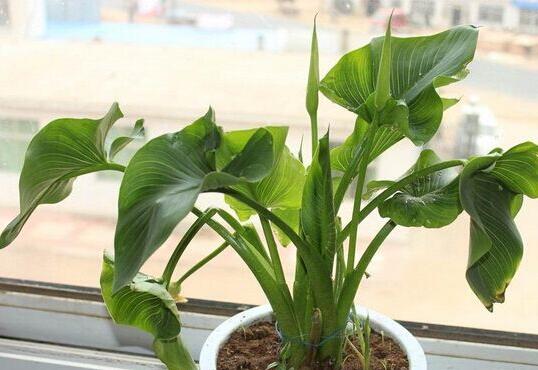
To know how to grow Alocasia, we first need to understand its growth habits. This plant prefers a warm and humid environment, has a certain tolerance for shade, and is rather afraid of strong light exposure, so we should provide appropriate shading when growing it. In addition, daily water and fertilizer management also needs attention.
II. Growing methods and precautions for Alocasia
1. Soil, humus soil
When growing Alocasia, we first need to choose the soil, which is the step of laying a good foundation, so we must choose the most suitable one. Generally, it is best to choose loose, fertile humus soil. This kind of soil has good drainage and aeration, can let the plant absorb nutrients better, and is not prone to water accumulation.
2. Fertilizing, once a week during the growing season
Fertilizer is one of the main nutrients in the growth process of Alocasia. Especially after entering the growing season, its demand for water is very high, and it basically needs fertilizing once every week so that its leaves can grow large. However, when fertilizing, there is one point we must pay attention to, that is, the fertilizer must first be diluted with water. If the concentration is too high, it will burn the plant.
3. Water, better wet than dry
Alocasia likes to grow in a humid environment, so when growing it we should water frequently, because a dry environment is very unfavorable to its growth. During cultivation, we should spray water around it more often to increase air humidity. In its growing season, keep to the principle of better wet than dry, but do not water too much. If water accumulation is caused, it can easily lead to root rot, so everyone should grasp the right degree.
4. Light, avoid strong light
Alocasia is not tolerant of strong light, so when growing it, it is best to place it in a spot with scattered sunlight and avoid direct sunlight. Especially from June to October when the light is relatively strong, we should also shade 50-70% of the sunlight for it, so as to avoid burning it with too strong light.
5. Pest and disease management
In the process of growing Alocasia, if we are not careful enough, pests and diseases can easily take advantage of the opportunity. Such problems are very harmful to the plant, so we must pay special attention. If found, they must be dealt with immediately. For specific treatment methods, everyone can refer to the article on pest and disease control of Alocasia, which has detailed introductions.
What to do when Alocasia leaves turn yellow, apply thin fertilizer / replenish water / shade light
Alocasia is a perennial herbaceous plant of the genus Alocasia in the Araceae family. It has high ornamental value, and it can be seen in various places in our country. However, even a beautiful plant, if its leaves turn yellow, will affect its overall beauty. So what to do when Alocasia leaves turn yellow? What are the causes and how should they be solved? Below, the editor will take everyone to learn about it.
I. What to do when Alocasia leaves turn yellow, find the cause
To know what to do when Alocasia leaves turn yellow, we first need to find the cause. We need to know what is causing the yellowing of the leaves, so that we can carry out targeted treatment. Improper watering, insufficient humidity, and pest and disease infestation are all causes of this phenomenon. As for how to solve it, there are detailed introductions below. Let us take a look.
II. Causes of Alocasia leaves turning yellow (with solutions)
1. Improper fertilizing
Fertilizer is one of the main nutrients in the growth process of Alocasia. If we fertilize too little or the fertilizer concentration is too high, it will cause Alocasia leaves to turn yellow. If too little fertilizer is applied, it will turn yellow and withered due to insufficient nutrients. If the fertilizer concentration is too high, it will burn the plant and cause yellowing.
Solution: Alocasia has a very high demand for fertilizer during its growth process. Especially after entering the growing season, its demand for water is very high, and it basically needs fertilizing once every week so that its leaves can grow large. However, when fertilizing, the fertilizer concentration must not be too high. Before application, it must first be diluted with water. If the concentration is too high, it can easily burn the plant.
2. Insufficient water
Alocasia prefers a warm and humid environment, so water is very important to it. However, the amount of watering is a point we need to pay attention to. If too much water is given, its root system will be unable to breathe, resulting in yellowing leaves. If too little water is given, the plant will become dry and turn yellow.
Solution: If water accumulation occurs when we water Alocasia, we must promptly clear the accumulated water. As long as it is cleared in time, the problem generally will not be too serious. If the yellowing of Alocasia leaves is caused by dryness, we can spray water on the leaves more often to maintain environmental humidity.
3. Too strong light
Alocasia likes to grow in a warm and moist environment and is relatively intolerant of direct sunlight. In the process of growing it, if the light is too strong, it can easily burn the plant, thus causing the problem of Alocasia leaves turning yellow.
Solution: When growing Alocasia, it is best to place it in a spot with scattered sunlight and avoid direct sunlight. In summer, when the light is relatively strong, we can keep it indoors in a semi-shaded place to avoid burning the plant and causing its leaves to turn yellow.
4. Pest and disease damage
During the growth process of Alocasia, if we do not care for it properly, some adverse phenomena such as pests and diseases can easily appear. Such problems are extremely harmful to the plant. They not only affect its ornamental value, but in severe cases can also cause Alocasia leaves to turn yellow and dry up.
Solution: When problems such as pests and diseases appear, we must deal with them promptly. If the time is dragged out, the harm to the plant will be great, and handling will also be more troublesome. For specific control methods, everyone can refer to the article on pest and disease control of Alocasia. The editor will not repeat them here.
Growing methods and picture appreciation of the Peace Tree
Peace Tree, due to its excellent ornamental value and the fragrance it gives off that corrects odors and purifies the air, continues to sell well despite its relatively high price. The bark of the Peace Tree can be used as medicine and has the effects of dispelling wind and dispersing cold, relieving pain and resolving blood stasis, and promoting blood circulation and strengthening the stomach. It can be said to be very friendly to humans. So, what are the growing methods for the Peace Tree?
Growing methods and picture appreciation of the Peace Tree
——————————————————————————————————————————————
[Plant profile]
——————————————————————————————————————————————
Chinese name:Peace Tree (actual name Lanyu cinnamon)
Scientific name:Cinnamomum kotoense
Alternative names:Hongtouyu cinnamon, Hongtoushan cinnamon, Fanglanshan cinnamon, large-leaf cinnamon, Taiwan cinnamon, etc.
Family:Cinnamomum
Genus:Alocasia
Place of origin and distribution:Lanyu Island in Taiwan, China
Morphological characteristics:Evergreen small tree, with a dignified tree shape, yellowish-brown bark, and large leaves, 10 cm to 22 cm long and 5 cm to 8 cm wide, bright green on the surface with a metallic luster, grayish-green on the back, and petioles about 1.5 cm long, reddish-brown to brown. It is both a beautiful potted foliage plant and a very attractive landscape tree.
Growth habits of the Peace Tree
——————————————————————————————————————————————
The Peace Tree likes a warm, humid, and sunny environment. It likes light but is also shade-tolerant, and prefers warm and hot places without frost or snow and with much fog and high temperatures. It is not tolerant of drought, water accumulation, severe cold, or dry air. For cultivating the Peace Tree, it is suitable to use loose, fertile, well-drained acidic sandy loam rich in organic matter.
Temperature and water management of the Peace Tree
——————————————————————————————————————————————
The suitable growth temperature for the Peace Tree is 20°C to 30°C. If there is frost for more than 5 days, it can cause the bark to crack from freezing and the branches and leaves to wither. After midsummer temperatures exceed 32°C, measures should be taken to build a shade shed for the Peace Tree and spray water on the leaves. It is best to keep the relative humidity of the Peace Tree's environment above 80%. In the high-temperature summer season or in autumn when the air is relatively dry, it is necessary to frequently spray water on the leaves and surrounding environment of the Peace Tree. After autumn, control watering, and in winter spray more and water less. If water accumulates in the pot soil, it can easily lead to the serious consequences of yellowing and root rot death of the Peace Tree.
Soil and fertilizer management of the Peace Tree
——————————————————————————————————————————————
For the Peace Tree, it is suitable to use loose, breathable, well-drained, fertile acidic culture soil or leaf mold rich in organic matter. If the pot soil is compacted or the pH value is >7.5, it will cause the leaves of the Peace Tree to turn yellow, seriously poor growth, and reduced sprouting ability, and may even shorten its lifespan. Therefore, small Peace Trees should be repotted once a year, large Peace Trees can have their soil changed once every 2 years, and during the growing season the soil should be loosened once a month. The Peace Tree has a relatively large fertilizer demand. From mid-spring to early autumn, a thin cake fertilizer water or alum fertilizer water, etc. can be applied once a month. After autumn, phosphorus and potassium fertilizer should be applied 2 times in succession to increase the cold resistance of the Peace Tree.
Light management of the Peace Tree
——————————————————————————————————————————————
The Peace Tree needs relatively good light, but is also relatively shade-tolerant. 3-5 year old Peace Trees grow quickly under shaded conditions, while 6-10 year old Peace Trees require relatively sufficient light. After entering summer, if the light is too strong, it can easily cause the leaves to turn yellow and reduce their due ornamental value.
" Conclusion:This article comes to an end here. To summarize its content, it is all closely related to the growing methods of the Peace Tree. It elaborates in detail from multiple aspects such as temperature and humidity, light, nutrition, and soil, hoping to provide some theoretical help for flower lovers growing the Peace Tree.
【Related recommendations】