How to grow Trollius chinensis? Cultivation methods, precautions and the key point of avoiding strong light
Trollius chinensis is a plant in the genus Trollius of the Ranunculaceae family. It has very high ornamental value, and people all over China cultivate it, but if you really want to grow it well, there are still many points that need attention. How to grow Trollius chinensis? What are the cultivation methods and precautions for Trollius chinensis? Let the editor take you through them below.
I. How to grow Trollius chinensis: understand its habits
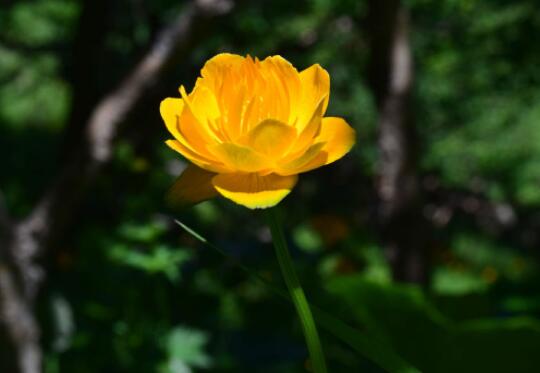
To know how to grow Trollius chinensis, we first need to understand its growth habits. This plant prefers cool and moist environments and has strong cold tolerance, but it is not tolerant of strong light, so when growing it we had best keep it in a cool, ventilated place so that it can grow better.
II. Cultivation methods and precautions for Trollius chinensis
1. Soil: sandy soil
Before growing Trollius chinensis, we first need to choose the soil. Although this plant is highly adaptable to its environment, it still grows differently in different soils. Generally, it is best to choose sandy soil rich in organic matter. This kind of soil has good drainage and aeration, allows the plant to absorb nutrients better, and is not prone to waterlogging.
2. Fertilizing: once a month
Fertilizer is one of the main nutrients in the growth process of Trollius chinensis. Especially after it enters the growing season, its demand for fertilizer is very high, and it basically needs fertilizing once about every 1 month. However, before fertilizing there is one point we need to note: the fertilizer must first be diluted with water. If the concentration is too high, the plant cannot absorb it and it will also burn the plant.
3. Water: avoid waterlogging
Trollius chinensis is not drought-tolerant, so during cultivation we must water it frequently to keep the soil somewhat moist, and it will grow better this way. But when watering we still need to control the amount; do not water too much, otherwise waterlogging easily occurs and the roots rot easily.
4. Light: avoid strong light
Trollius chinensis is relatively intolerant of strong light. In spring and autumn, when the light is not too strong, we can place it in a spot with scattered sunlight so that it can still receive some light. However, after summer arrives, because the light is stronger, we had best move it indoors to grow so as not to affect its growth.
5. Pests and diseases: deal with them promptly
During the growth of Trollius chinensis, if we are not careful enough with care, pests and diseases can easily take advantage of the situation. Such problems are very harmful to the plant, so when we find them we must deal with them immediately. As for the specific treatment methods, the editor introduced them in detail in the article on pest and disease control of Trollius chinensis, and you can take a look.
Cultivation methods and precautions for Aconitum gymnandrum
Chinese scientific name: Aconitum gymnandrumLatin scientific name: Aconitum gymnandrum Maxim.Other names: Eupatorium, Luotieba, HawksbeardTwo-name method: Aconitum gymnandrumKingdom: PlantaeDivision: AngiospermsClass: DicotyledonsSubclass: ArchichlamydeaeOrder: RanunculalesFamily: RanunculaceaeSubfamily: TrollioideaeGenus: AconitumSpecies: Aconitum gymnandrumNaming author and year: Maxim., 1876Aconitum gymnandrum (scientific name: Aconitum gymnandrum Maxim.) is a perennial herb. Its root is annual, nearly cylindrical, 5-14 cm long and 1.5-4.5 mm thick. The stem is 25-55 cm tall, with leaves arranged evenly along it, often branched. The leaf blade is broadly ovate or triangular-ovate, divided into three parts. The raceme has 6-16 flowers; the sepals are blue-purple, rarely white, the upper sepal is boat-shaped, the filaments are sparsely covered with short hairs; there are 6-13 carpels, and the seeds are obovoid, densely covered with narrow transverse wings. It flowers from June to August. It grows on mountain grassy slopes, field-edge grasslands or riverside sandy areas at altitudes of 1550-3800 m. It is distributed in Tibet, western Sichuan, Qinghai and southern Gansu in China.1. Morphological characteristics
The root is annual, nearly cylindrical, 5-14 cm long and 1.5-4.5 mm thick. The stem is (6-)25-55(100) cm tall, sparsely or densely covered with short pubescence, sometimes becoming hairless in the lower part, with leaves arranged evenly along it, often branched. There are 1-3(-6) basal leaves, which usually wither at flowering along with the lowest stem leaves; the leaf blade is broadly ovate or triangular-ovate, 3.5-6.4 cm long and 4-5 cm wide, divided into three parts, with the segments deeply divided two to three times, and the small segments narrowly ovate to narrowly lanceolate, sparsely covered with short appressed hairs on the surface, and sparsely covered with long soft hairs along the veins on the underside or becoming hairless; the lower petioles are 4-7 cm long, and the upper petioles gradually become shorter, with narrow sheaths.The raceme has 6-16 flowers; the basal bracts are leaf-like, the other lower bracts are three-lobed, and the bracts above the middle are lanceolate to linear; the pedicels are 1-5(-9) cm long; the bracteoles are born on the upper part or tip of the pedicel, leaf-like to linear, 0.5-1.5 cm long; the sepals are blue-purple, rarely white, sparsely covered with soft hairs on the outside, with relatively long claws, the upper sepal is boat-shaped, about 1.8 cm high, the claw about 1.4 cm long, the lateral sepals 1.5-1.8 cm long, and the limb nearly as long as the claw; the limb of the petal is 6-8 mm wide, sparsely ciliate, with a short, head-shaped spur, sparsely covered with short hairs; the filaments are sparsely covered with short hairs; there are 6-13 carpels, and the ovary is covered with soft hairs. The follicle is 0.8-1.2 cm long; the seeds are obovoid, about 1.5 mm long, densely covered with narrow transverse wings. It flowers from June to August.
2. Growth habits
It grows on mountain grassy slopes, field-edge grasslands or riverside sandy areas at altitudes of 1550-3800 m.3. Species distribution
It is distributed in Tibet, western Sichuan, Qinghai and southern Gansu in China.4. Harvesting and storage
Collect flowers and leaves during the flowering period, and dig up the roots in autumn.During the full bloom period from June to August, dig up the whole plant, remove the soil and dead leaves completely, cut into sections and dry in the sun.
5. Cultivation techniques
After sowing, the seeds emerge in about one month. In the first year the seedlings have only 2 cotyledons and 1-2 true leaves. In the early stage of seedling growth they like moisture, are not drought-tolerant, and are afraid of strong light; after the tuberous roots form in autumn they are relatively drought-tolerant, like light, can overwinter normally, and have strong cold resistance. In the second year the seedlings can reach 20-30 cm in height, and in late May new tuberous roots grow from the top of the original tuberous roots. In this year some plants can flower a little, but rarely bear fruit. In the third year all seedlings flower and can bear fruit. In autumn the fruits gradually mature from bottom to top, and should be collected as they mature to avoid losses from dropping. Disease control: if the planting density is very high, in the rainy season with high air humidity, leaf blight is likely to occur. This disease harms the leaves and causes the plants to die prematurely. It seriously affects the yield of tuberous roots and seeds, so before the disease occurs in the rainy season, spray with procymidone or mancozeb 3-4 times according to the instructions, with an interval of about 10 days each time, which can prevent the disease.Lotus bamboo: Lotus bamboo illustrated guide: how to grow lotus bamboo / how to propagate lotus bamboo
Lotus bamboo profileLotus bamboo
Other names: Lotus bamboo, Lotus-leaf bamboo
Category: shrub flowers
Family and genus: Plantae, Angiosperms, Monocotyledons, Liliales, Liliaceae, Dracaena
Full bloom period: does not flower
Lotus bamboo is a species in the genus Dracaena of the Liliaceae family. Lotus bamboo is suitable for water culture, potting and hydroponics. Its ornamental value is extremely high, and it is one of the few greenery and decorative items that can be placed indoors for a long time. The optimum growth temperature for lotus bamboo is 25-30 degrees, and the nighttime temperature in winter had best not be lower than 8 degrees. Lotus bamboo combines the meanings of "flowers bloom bringing wealth and honor" and "bamboo brings peace", and is the best gift for a beauty and friends. Lotus bamboo is extremely adaptable and can grow well in full light, partial light and shady places. It likes high temperature, high humidity and a sunny environment. It likes sandy soil, avoids waterlogging, and is drought-tolerant.
Cultivation methods and precautions for lotus bamboo: introduction to lotus bamboo
Lotus bamboo is a species in the genus Dracaena of the Liliaceae family. Lotus bamboo is suitable for water culture, potting and hydroponics. Its ornamental value is extremely high, and it is one of the few greenery and decorative items that can be placed indoors for a long time.
The optimum growth temperature for lotus bamboo is 25-30 degrees, and the nighttime temperature in winter had best not be lower than 8 degrees. Lotus bamboo combines the meanings of "flowers bloom bringing wealth and honor" and "bamboo brings peace", and is the best gift for a beauty and friends.
Lotus bamboo is extremely adaptable and can grow well in full light, partial light and shady places. It likes high temperature, high humidity and a sunny environment. It likes sandy soil, avoids waterlogging, and is drought-tolerant.
Morphological characteristics of lotus bamboo
Lotus bamboo has emerald green leaves, and straight stems that are round like bamboo. The leaves are ovate with pointed tips, and the base of the petiole clasps the stem. It is an extremely shade-tolerant plant and still grows well and stands tall and strong under weak light conditions. It can be placed indoors for a long time for its foliage and does not need special care; as long as there is enough water, it can grow vigorously.
When hydroponically growing lotus bamboo, cut the bamboo stems into small sections of more than 20 cm as cuttings and insert them in water. As long as 1/3 of the cutting can be immersed in water, it can take root and survive.
Ecological habits of lotus bamboo
The growth temperature of lotus bamboo is 25-30 degrees, and the nighttime temperature in winter should not be lower than 8 degrees.
Lotus bamboo is a plant that likes warmth, humidity and diffused light. It is most suitable for moist, shaded and well-drained sandy loam. It is afraid of waterlogging, and the optimum growth temperature is 22-30°C. Yellowing leaves that slowly fall off may be due to too strong light or insufficient watering.
Lotus bamboo is a coarse-growing, coarse-developing plant, mostly cultivated in gardens and nurseries, and also found wild. It likes shade and moisture, has thick stems and leaves, and dark green leaves. It is mainly used as an ornamental plant, with upright stems and dark green leaves, evergreen in winter and summer.
Cultivation techniques for lotus bamboo: soil culture
Lotus bamboo likes shade, moisture and high temperature, is tolerant of waterlogging, has strong fertilizer tolerance and strong cold resistance; it likes semi-shaded environments. It is suitable for growing in well-drained sandy soil or semi-muddy sand and alluvial clay, and the suitable growth temperature is 20-28°C. It can tolerate low temperatures of 2-3°C, but frost prevention is needed in winter. The high-temperature and humid seasons of summer and autumn are very favorable for the growth of lotus bamboo and are its best growing period. It is not strict about light and is suitable for growing under bright scattered light. Too strong light or exposure to the sun can cause yellowing leaves, loss of green color and slow growth.
Therefore, when planting in the field, a shade shed with a 1.7-1.8 m high sunshade net should be built, with a shading rate of 75% being appropriate, to create a semi-shaded, scattered-light environment. Especially from April to September, avoid direct strong light, sun exposure or excessive drought, otherwise the leaf surface easily becomes rough, scorched, and the growth weak, and the leaves lack luster, reducing ornamental value. During the growing season, the soil should be kept moist frequently, and water should often be sprayed or sprinkled on the leaf surface to increase air humidity; after heavy rain, the field should be drained of standing water to prevent lodging. In winter, pay attention to cold and frost protection; below 10°C the leaves will turn yellow and wilt. At this time, the soil should be alternately dry and moist, but not too dry or too wet, and watering should be reduced and fertilizing stopped.
Lotus bamboo has strong growth and strong root and bud sprouting ability, and is often propagated by cuttings, which can be done throughout the year as long as the temperature is suitable. Generally, leafless stem segments are cut as cuttings, 5-10 cm long, preferably with 3 internodes, and inserted in a sand bed or semi-muddy sandy soil. In the south, in spring and autumn, roots and buds generally sprout in 25-30 days, and after 35 days they can be put on trays or transplanted to the field for growing.
Hydroponics
Water cuttings can also take root, and soilless cultivation is also possible. In recent years in various places in Guangdong, top ear branches (that is, tender stems) are cut into sandy loam or semi-muddy sand or alluvial clay fields, and after careful care and cultivation they can be harvested and cut for vase material by the Spring Festival of the same year. In areas south of Guangzhou, such as farmers in Haiyan Town, Taishan City, they are directly inserted into the field in spring and autumn. It is also possible from October to December to use top ear branches or internode top seedlings or side-bud top ears cut into 15-20 cm cuttings and insert them into coarse sand or semi-muddy sand fields, burying 2 nodes in the soil, watering once a day to keep the soil moist; they generally take root in 35-45 days.
Spring cuttings are most suitable from late January (after Great Cold) to mid-to-late February (around Rain Water), and can be directly inserted into the field in the open ground, generally taking root in 30-35 days. They can also be cut from mid-March to early April (Spring Equinox to Pure Brightness), and it is best to plant in late March, because during this period the temperature gradually rises and the humidity is suitable; after cutting, they can take root in about 7-15 days, with a survival rate of 100%, and with good management they can be marketed the same year.
Bottle insertion
Cut off the long branches of lotus bamboo and insert them directly into an elegant vase (with soil put in the vase for fixing and as fertilizer); after they grow larger they can also be bent into shapes.
Shading
Building a shade shed means covering with a sunshade net. Build a frame around the rice field with wooden posts or cement stakes. The wooden posts are required to be 2.4 m high and buried 0.4 m deep. If four wooden posts (or cement posts) are used per 20 square meters, about 30-35 wooden posts are needed per mu, and the top of the shed is tied tightly with iron wire or nylon rope. Then cover with 10 bundles of plastic sunshade net per mu (width 1.5 m/100 m, 55 yuan per bundle), cover for shade, and tie it securely all around with nylon rope.
Reasonable close planting
When preparing the land, the bed surface height is 15-20 cm, the bed surface width is 120-150 cm, and the bed ditch is 25 cm. Apply 30 loads of fully decomposed farmyard manure per mu, level it thoroughly, then insert the seedlings. The planting spacing is 8 x 5 cun or 6 x 5 cun, and more than 15,000-20,000 plants can be planted per mu. Generally, planting should not be too dense. The planting depth is best 2.5-3.5 cm (that is, with 4 node positions on the seedling, insert 2 node positions), keeping appropriate space for ventilation and light.
Scientific fertilizing
Lotus bamboo can grow on sloping land and semi-dry paddy fields. To accelerate its growth, shorten the production cycle and improve economic benefits:
1. Apply sufficient base fertilizer: when inserting, apply Jinzhi Yuye (rich in nitrogen, phosphorus, potassium, calcium, magnesium, iron, zinc, copper, etc.) as a base fertilizer, then insert.
2. Apply seedling fertilizer appropriately: 20 days after planting, the plant begins to send out new roots, and one application of manure water at 30-40 loads/mu can be poured. After 30-40 days, depending on the growth of the seedlings, apply a seedling-promoting fertilizer once, generally mainly compound fertilizer, at 15-20 kg of compound fertilizer per mu, and earth up after application. When the plant grows to 35-45 cm tall, its nutrient demand also increases, which is the beginning of the plant's vigorous growth stage. Therefore, at this stage the topdressing should be heavy, with 25-30 kg of compound fertilizer and 10-15 kg of urea per mu being appropriate. At the same time, foliar fertilizer can be sprayed in combination, using plant growth regulators such as Xinzhi Su or Penshibao, to promote balanced growth, lush leaves and thick stems, and improve stress resistance.
Key points for bottle insertion
1. Remove leaves from the base and cut a slanted opening: before putting into the vase, remove the leaves from the base of the cutting, and use a sharp knife to cut the base into a slanted opening. The cut should be smooth to increase the area for absorbing water and nutrients. Change the clean water once every 3 to 4 days, and a few small pieces of charcoal can be put in to prevent rot. Do not move the position or change the direction within 10 days, and in about 15 days silvery-white fibrous roots will grow.
2. Change water to adding water: after rooting, it is not suitable to change the water; after the water evaporates, only add water in time. Frequent water changes easily cause yellow leaves and withered branches. The water added is best well water; if tap water is used, it should first be stored in a container for one day. The water should be kept clean and fresh; dirty water, hard water or water mixed with oil cannot be used, otherwise the roots rot easily.
3. Fertilize in time: to prevent leggy growth in hydroponic lotus bamboo, do not apply chemical fertilizer. It is best to inject a few drops of brandy into the bottle about every 3 weeks and add a small amount of nutrient solution; you can also dissolve half a tablet of aspirin crushed into powder or one tablet of VC in 500 grams of water, and drip a few drops in when adding water, which can keep the leaves emerald green (no need after roots grow).
4. Avoid wind: do not place lotus bamboo next to a TV or in places where an air conditioner or electric fan often blows, so as to avoid dry and withered leaf tips and leaf edges.
Cultivation methods
In northern China, the growing season for lotus bamboo is from April to October. The potting soil should be kept moist, and humic acid liquid fertilizer should be applied once every half month. In summer, if it is maintained outdoors, it should be shaded; too strong light will make the leaves yellow, and it is better to place it on a north-facing balcony or under sparse shade. When the climate is dry, sprinkle water on the ground and leaves 1-2 times a day. From November to March of the following year, it should be maintained indoors, placed in a sunny spot in front of a south window, and kept above 10°C so it can grow slowly. From March to April in spring, repot and change the soil. The potting mixture can be made of peat soil plus 50% garden soil. First place 2-3 cm thick ceramsite or coarse gravel at the bottom of the pot as a drainage layer, then add the potting soil. After planting, keep the potting soil slightly moist, and after new buds emerge, normal water and fertilizer management can be carried out. After about two years of cultivation, the stem should be cut back and replanted; the plant can be cut back leaving 5-6 nodes, and the cut parts can be used for cuttings or water culture.
The tied and shaped "lucky bamboo" is mostly grown in water. Usually it should be placed in a bright place indoors. When the temperature is low, change the water once every 7-10 days; in the peak growing seasons of spring and autumn, change the water once every 3-5 days, and a complete-element compound fertilizer can be added to the water. In the high-temperature period of summer, it is best to use cooled boiled water for water culture to avoid root rot or algae growth. Stop fertilizing in winter. In severe cold seasons in the north, water culture in rooms without heating facilities is prone to freezing damage. In early October it can be planted in river sand, and when it is cold, cover the pot with a plastic bag and place it indoors where cold wind cannot reach; it can overwinter safely at around 5°C.
In spring it can be potted in potting soil or, after washing off the river sand, grown in water. During maintenance, if there are rotten stems or roots, they should be removed in time, and the roots and stems should be soaked in a 1000-fold aqueous solution of 75% chlorothalonil for 30 minutes, rinsed with clean water and then continued in water culture. If the plant is already very weak, it should be planted in soil to restore vigor.
Hydroponic lotus bamboo likes humus water. After rooting, it is not suitable to change the water; after the water evaporates and decreases, only add water in time. Frequent water changes easily cause yellow leaves and withered branches. To prevent leggy growth, do not apply chemical fertilizer. It is best to inject a few drops of brandy into the bottle about every 3 weeks and add a small amount of nutrient solution, which can keep the leaves emerald green.
After soil-cultured plants take root, a small amount of compound chemical fertilizer should be applied in time, so the branches grow thick and the leaves are oily green. In spring and autumn, applying compound fertilizer once a month is enough.
Propagation tips
In spring, cut the removed stems into 5-10 cm leafless stem nodes, or cut the base tips, which dry easily. Cut branches with stem tips that have grown for a long time in indoor shady places and insert them in clean coarse river sand, water thoroughly, cover with a plastic bag, keep the substrate moist, place in a bright place indoors, and they can take root in about 25 days. Or insert the cut branches into water, and at 25°C they can take root in about half a month.
Steps for water insertion and water culture
1. At the beginning of growing it, cut off the leaves at the bottom to prevent inhibiting the bamboo's own growth. The specific situation depends on the size and length of the bottle. Note that the leaves below the bottle mouth should be cut off. Also, cut off a small section at the bottom of the root at an angle, and note that the cut should be smooth, so that the elegant bamboo can absorb water better.
2. Control the water volume and choose water selectively. The water volume only needs to be about one-third to two-thirds of the bottle. And before roots grow, change the water frequently, once every 3-4 days. After rooting, it is almost unnecessary to change the water; just add an appropriate amount of water to the bottle. In summer and other dry weather, more water should be sprayed on the leaf surface.
3. Grasp the indoor water-culture temperature for lotus bamboo well, because lotus bamboo prefers warmth, with 16 to 25 degrees being moderate. It is not suitable to place it in a cold place for growing, and antifreeze measures should be taken.
4. Give lotus bamboo enough lighting time. Even when growing indoors, let lotus bamboo receive sunlight moderately; just place it in a ventilated place with sufficient light.
5. Depending on the actual situation, fertilize about once every 30 days on average. Moderate fertilizing can keep its leaves oily green and spread out for a long time, or an appropriate amount of culture solution can be added.
Cultivation methods for lotus bamboo: key points of hydroponics
It is very suitable for indoor hydroponic flowers. Lotus bamboo has emerald green leaves, and straight stems that are round like bamboo. The leaves are ovate with pointed tips, and the base of the petiole clasps the stem. It is an extremely shade-tolerant plant and still grows well and stands tall and strong under weak light conditions.
It can be placed indoors for a long time for its foliage and does not need special care; as long as there is enough water, it can grow vigorously. When hydroponically growing it, cut the lotus bamboo stems into small sections of more than 20 cm as cuttings and insert them in water. As long as 1/3 of the cutting can be immersed in water, it can take root and survive.
Watering
From May to September, during the peak growth period, water more to keep the soil moist, preferring wet over dry, but it must not be waterlogged, otherwise the roots rot easily. In the high-temperature period, water should also often be sprayed on the leaves and ground to increase air humidity, and in autumn and winter the amount of watering should be appropriately reduced.
Fertilizing
During the growth period, lotus bamboo should be given liquid fertilizer 1-2 times a month, which can promote dark green, verdant leaf color. Fertilizing should be stopped in winter.
Lotus bamboo is extremely adaptable and can grow well in full light, partial light and shady places. It likes high temperature, high humidity and a sunny environment. It likes sandy soil, avoids waterlogging, and is drought-tolerant.
Causes of yellow leaves
There are many reasons for yellow leaves in lotus bamboo, which can basically be divided into the following types:
1. Scorch yellow
Strong direct sunlight shining on lotus bamboo easily causes the leaf tips and leaf edges to dry up, and yellow spots appear on the sun-facing part of the leaves. Moving it to a shady place is enough.
2. Lack-of-light yellow
When placed in a shady environment for a long time, the leaves cannot get enough sunlight and cannot form chlorophyll, and the whole plant's leaves turn yellow and then fall off. Supplementing light can avoid this problem.
3. Fertilizer yellow
Yellowing of lotus bamboo caused by too much fertilizer or too high concentration shows as dry brown tips on new leaves; generally the leaf surface is thick and lusterless, and uneven and not spread out, and the old leaves scorch yellow and fall off. Fertilizing should be stopped immediately, and in severe cases a large amount of clean water should be used to wash out part of the fertilizer.
4. Lack-of-fertilizer yellow
This shows as the color of young leaves becoming lighter, yellow or light green, while the old leaves are relatively normal or gradually turn from green to yellow. Usually apply thin fertilizer frequently and add some alum water at the right time. (Lotus bamboo is a foliage plant and should be given fertilizer mainly based on nitrogen fertilizer.)
Pest and disease control of lotus bamboo
Lotus bamboo commonly suffers from leaf spot, stem rot and root rot. It can be sprayed multiple times with 100-fold Bordeaux mixture. Common pests of lotus bamboo include thrips and scale insects, which can be sprayed with 50% omethoate emulsifiable concentrate at 1000-fold dilution.
Anthracnose
It is a common disease with a fairly widespread occurrence and is a serious disease affecting lotus bamboo (Dracaena sanderiana) in southern China. Because of the high temperatures last winter and this spring and the long period of drought, early-planted lotus bamboo in Zhanjiang, Guangzhou, Taishan and other areas of Guangdong has grown luxuriantly. According to many flower growers, the leaf tips to the leaf blades of many lotus bamboo plants have dried up and the damage has kept spreading and extending to the upper leaves; because of the long spell of drought and high temperatures, the arrival of rainfall triggered an outbreak of the disease. It was diagnosed as an epidemic of anthracnose in lotus bamboo, and it occurred in epidemic form early, in mid-March.
[Symptoms] The disease mostly starts at the leaf tip, leaf margin or on the leaf blade. In the early stage, the diseased part shows water-soaked, dark green, irregular spots, which gradually spread and enlarge toward the upper leaves; in the middle stage, the spots become semicircular to irregular in shape, with a dark brown edge and a clearly defined boundary; in the late stage, the outer edge of the leaf spot has a yellow halo, and the center of the spot is grayish brown or grayish white to yellowish brown. The concentric rings on the surface of the spot may be obvious or not, and small black dots appear on the spots, and the leaf begins to gradually turn yellow and die. Once the spots spread and extend to the leaf blades, young leaf buds, main stem and the base of the leaf stalk, the stems and leaves will rapidly wilt and die when the disease is severe. Under weather conditions of continuous rain and abundant fog and dew, the diseased leaves spread, the plants grow poorly, and the ornamental effect of the foliage is seriously affected.
[Control methods] Strengthen the care and management of lotus bamboo; planting too densely should be avoided; take care to prevent frost damage and frost injury; irrigate to keep moist, fertilize rationally, and apply extra phosphorus and potassium fertilizer to promote growth and improve disease resistance. In winter and spring, cut off diseased leaves and clear away dead leaves, and burn them in a centralized pile to reduce the incidence of disease, and spread quicklime once to sterilize and disinfect the soil; or spray once with 50% compound carbendazim 500 times dilution to prevent the disease, which gives a fairly good preventive effect. Improve the air permeability of the field or nursery; for open-field cultivation, pay attention to ditching to drain accumulated water after rain, to reduce field humidity, and avoid excessive application of nitrogen fertilizer. During the growing season, set up shade netting to reduce exposure to high temperatures and strong light. Promptly kill spiders, longhorn beetles, leaf mites, scale insects and so on to reduce the vectors of transmission.
When diseased plants are found, spray promptly to control the disease. In the early stage of the disease, alternately spray 75% chlorothalonil + 70% thiophanate-methyl wettable powder (1:1) 600-800 times dilution, or 50% compound thiophanate 800 times dilution or 50% Kasugamycin wettable powder 600-800 times dilution, or 12.5% emulsifiable concentrate Jiaobantu 1000-1500 times dilution, 25% Tanteling wettable powder 500 times dilution, or 50% anthracnose Fumei wettable powder 500 times dilution, 50% Shibaogong wettable powder 1000 times dilution, or 75% chlorothalonil + 70% Daigaole (1:1) 1000-1200 times dilution, for good control results. The above pesticides should be used alternately, once every 7 days, for 3-4 consecutive sprays. Generally, spray promptly before or after heavy rain to control the production of fungal spores and the spread and infection of conidia, for fairly good control results.
Leaf spot disease
[Symptoms] It occurs on the leaf blades. In the early stage, the spots are brown, with a yellow edge; after expanding, the spots become nearly round, gray inside, with a dark brown edge and yellow around them, and under humid conditions black granular bodies appear on the spots.
[Causes] It is a fungal disease. The pathogen survives on the diseased plant residues and spreads by air currents, insects and so on, and can directly infect and damage the plant through the leaf stomata. It tends to occur year-round in greenhouse environments; it is severe under humid conditions.
[Control methods] During the care period, control the planting density of the plants and maintain ventilation and light penetration. In the early stage of the disease, spray fungicides such as Ribangkejun and ethylicin-aluminum-manganese-zinc.
Stem rot
This disease causes the death of lotus bamboo and reduces its ornamental value. It occurs more often under high temperature and high humidity from May to September, and mainly damages the leaves and stems.
Symptoms: the leaves at the base of the stem of the seedlings turn yellow; the stem base rots, turns yellow and becomes soft; the interior of the stem turns red; the pathogen gradually damages upward from the lower cut.
[Control methods]
(1) Cultivate robust seedlings with well-filled tissue; remove diseased plants and burn them in a centralized pile; dig deep drainage ditches and plant on raised beds 25 cm high.
(2) Soak the lower cut of the seedlings for 24 hours in 42% Kejunjing powder 3000 times dilution, or 88% hygromycin 1000 times dilution.
Variety classification of lotus bamboo
Lotus bamboo mainly includes four types: green-leaf lotus bamboo, golden-edge lotus bamboo, silver-edge lotus bamboo and the newly emerging lotus bamboo. Because people favor green-leaf lotus bamboo, what we usually call lotus bamboo specifically refers to green-leaf lotus bamboo.
Lotus bamboo was originally named Dracaena sanderiana. It is a tropical evergreen foliage plant, native to the islands of the western Indian Ocean and the tropical regions of Asia and Africa. It was introduced to mainland China in the early 1980s and began to be planted in large quantities in the early 1990s, and has now become a major cash crop in the coastal areas of southern China.
Distribution range of lotus bamboo
Lotus bamboo is widely distributed in China and is commonly used as an indoor ornamental plant for the home.
Lotus bamboo is native to western Africa, and is also distributed in Guangdong, Guangxi, Fujian, Taiwan, China, Anhui, Hubei, Hunan, Shaanxi, Sichuan, Yunnan, Guizhou and Xizang in China, as well as in Thailand and India.
Uses of lotus bamboo: home decoration
Lotus bamboo is suitable for water culture, pot culture and hydroponics. It has extremely high ornamental value and is one of the few greenery and decorative items that can be placed indoors for a long time. Lotus bamboo has a short, small plant form, suitable for home greenery decoration; it can be placed on windowsills, balconies and desks, and can also be used in rows as a decoration in halls, and used as a cut flower accessory.
Placement locations: homes, restaurants, hotels, offices.
Air purification
Lotus bamboo can absorb harmful gases such as ammonia, acetone, benzene, trichloroethylene and formaldehyde, and its distinctive plant form placed on an office desk has the effect of relieving eye fatigue.
The flower language of lotus bamboo
The flower language of lotus bamboo: wealth and good fortune, rising step by step, and lasting youth.
Lotus bamboo has extremely high ornamental value and is one of the few greenery and decorative items that can be placed indoors for a long time. Lotus bamboo combines "blooming flowers bring wealth" and "bamboo brings peace", and is the best gift for a beauty and friends. Lotus bamboo is suitable for water culture, pot culture and hydroponics.
Pictures of lotus bamboo