Ginseng ficus grafting method illustrated: tear off the grafting film after the wound heals
As an ornamental plant, the ginseng ficus is the first choice for many flower lovers. When growing it indoors, grafting is often needed to improve its ornamental value. So how do you graft a ginseng ficus? According to research, ginseng ficus grafting methods generally fall into two types: branch grafting and wedge grafting. Next, let the editor introduce them in detail.
I. How to graft a ginseng ficus: branch grafting and wedge grafting
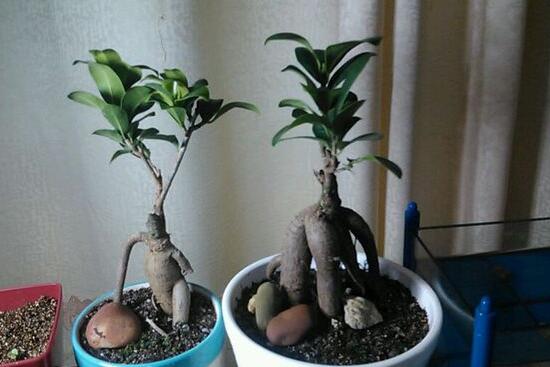
The beauty of the ginseng ficus lies mainly in its protruding roots, whose shape looks like ginseng and is extraordinarily peculiar. To make the ginseng ficus even more beautiful, some people usually think of ways to do so, such as grafting, or making the ginseng ficus roots bigger. As for how to graft a ginseng ficus, the methods generally fall into two types, branch grafting and wedge grafting. Let us look at the specific methods below.
II. Ginseng ficus grafting methods
(1) Branch grafting
1. Grafting time: Among ginseng ficus grafting methods, branch grafting is the most commonly used. It is generally carried out around Qingming Festival each year or during the period when autumn buds sprout.
2. Rootstock and scion: Newly sprouted branches can be used for both, but the scion branch should be relatively more mature, while the rootstock must be a tender branch that is still growing and has not yet capped. The rootstock and scion should be directly the same, and the scion should retain the terminal bud and the upper two leaves.
3. Starting the graft: Sterilize the blade at high temperature, then use it to cut the top of the rootstock vertically downward along the pith for 1 cm, then take a 2~3 cm long scion, cut the lower end into a V shape, insert it into the V-shaped groove of the rootstock, align the cambium, and then tie it.
4. Grafting management: After the ginseng ficus graft is completed, cover it with a transparent plastic film, water it thoroughly once, and place it in a semi-shaded spot. After that, uncover the film once a day for ventilation, strictly avoid disturbing it, and it can be untied after about 45 days.
(2) Wedge grafting
1. Grafting time: Among ginseng ficus grafting methods, wedge grafting can also be used. Wedge grafting is generally carried out in spring when the terminal buds have just sprouted and the new shoots have not yet grown out.
2. Scion selection: On a potted ginseng ficus, choose a plump one-year-old branch, take its middle part and cut it into small sections 6~10 cm long with more than 2 axillary buds as the scion.
3. Starting the graft: Cut the base of the scion into two slopes of different sizes, one about 3 cm long and the other about 1 cm long. Then cut the rootstock into a flat surface, and split it vertically with a crack about 2~3 cm deep. Finally, with the long cut face of the scion facing inward, insert it into the cut of the rootstock, then tie the joint tightly from bottom to top with a plastic strip.
III. When to remove the grafting film from a ginseng ficus
The purpose of the ginseng ficus grafting film is to ensure the survival rate, so when can the grafting film be removed? For this, the editor suggests everyone observe more. Flower lovers can first remove a little of the grafting film to see whether it has healed. If the wound has healed, tearing it earlier is better than later, because this is more helpful for plant growth.
When should the ginseng ficus grafting film be torn off?
Looking at the ginseng ficus grafting film, many flower lovers are probably wondering when the ginseng ficus grafting film can be torn off. Theoretically, as long as the graft union has healed, it can be torn off. To let flower lovers understand a bit more, this article will take flower lovers through some knowledge about grafting film.The function of the ginseng ficus grafting film: when grafting a ginseng ficus, to ensure the survival rate, the graft union is wrapped with grafting film, which can not only fix the scion and rootstock, but also greatly increase the survival rate of the graft.
When should the ginseng ficus grafting film be torn off? Theoretically, as long as the graft union has healed, the grafting film can be torn off, and if it is not torn off, it is also not good for plant growth. Flower lovers can first remove a little of the grafting film to see whether it has healed. If it is torn off too early, it is easy for water to get in and easy for it to break. However, because the ginseng ficus scion is relatively small and is always cared for indoors, breakage or water getting in is not very likely.
Seeing this, do flower lovers already know when to tear off the ginseng ficus grafting film? As long as the graft union has healed, it can be torn off. Do not think that not tearing it off will be better. If the wound has healed, tearing it earlier is better than later, because this is more helpful for plant growth.
When should the ginseng ficus grafting film be torn off?
The ginseng ficus needs grafting, and after grafting, many people do not know when to remove the plastic strip. Looking at the ginseng ficus grafting film, many flower lovers are probably wondering when the ginseng ficus grafting film can be torn off. Theoretically, as long as the graft union has healed, it can be torn off. To let flower lovers understand a bit more, this article will take flower lovers through some knowledge about grafting film.
The function of the ginseng ficus grafting film: when grafting a ginseng ficus, to ensure the survival rate, the graft union is wrapped with grafting film, which can not only fix the scion and rootstock, but also greatly increase the survival rate of the graft.
When should the ginseng ficus grafting film be torn off? Theoretically, as long as the graft union has healed, the grafting film can be torn off, and if it is not torn off, it is also not good for plant growth. Flower lovers can first remove a little of the grafting film to see whether it has healed. If it is torn off too early, it is easy for water to get in and easy for it to break. However, because the ginseng ficus scion is relatively small and is always cared for indoors, breakage or water getting in is not very likely.
Seeing this, do flower lovers already know when to tear off the ginseng ficus grafting film? As long as the graft union has healed, it can be torn off. Do not think that not tearing it off will be better. If the wound has healed, tearing it earlier is better than later, because this is more helpful for plant growth.