How to prune a ginseng ficus bonsai? 3 tricks to teach you to cut a perfect shape
Ginseng ficus (Ficus microcarpa) gets its name because its roots emerge above the soil surface and resemble ginseng. It is a plant that flower enthusiasts quite like to grow. However, if you want a ginseng ficus bonsai to look good and be more ornamental, in addition to daily water, fertilizer and light management, timely pruning is crucial. So, how do you prune a ginseng ficus bonsai? Below are the pruning methods for ginseng ficus, follow along with the editor and take a look!
1. How to prune a ginseng ficus bonsai, the method matters
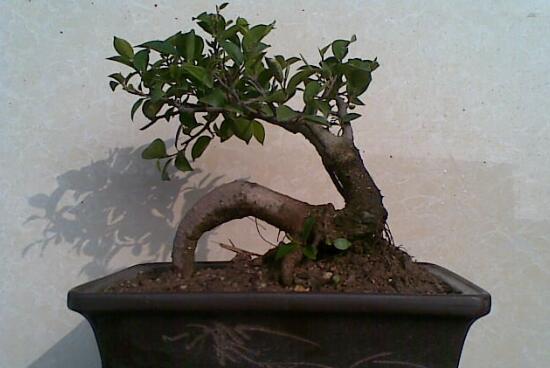
The ginseng ficus has strong adaptability. If you care for it according to ginseng ficus cultivation methods, it will grow lush branches and leaves. At this point, if timely pruning is not carried out, the ginseng ficus will look quite ugly overall. So in order to create a perfect shape, during the growth of the ginseng ficus, we need to prune it continuously. However, pruning requires a certain amount of skill. Next, the editor will introduce a few simple pruning methods for everyone.
2. Pruning methods for ginseng ficus
(1) Purpose of pruning
When it comes to how to prune a ginseng ficus bonsai, the early stage is mainly about shaping the form, while the later stage is about pruning branches and leaves and grafting. But no matter which pruning method is adopted, there are only three purposes: one is to promote the growth of the plant, two is to control the plant shape so it is beautiful, and three is to make the ginseng ficus roots swell and display the ornamental value of the bonsai.
(2) Pruning tips
1. Shaping and pruning
How do you shape a ginseng ficus bonsai? Actually, this is not a difficult task. First, when growing a ginseng ficus, cultivate a rudimentary form for it: in the first year, do not prune heavily, just cut off the buds that are growing in the wrong direction. Second, by the second year, the branches of the ginseng ficus begin to lignify, and at this point you can prune again.
Pruning plus tying: In order to shape the ginseng ficus, you can focus mainly on pruning, with tying as a supplement. Generally, prune once a year; if the plant grows vigorously, you can prune one extra time. Through repeated pruning, the ginseng ficus plant shape will become fuller and fuller, and the branches and leaves will become more reasonable. In this way, a highly ornamental ginseng ficus bonsai is created.
2. Branch and leaf pruning
Because the ornamental value of the ginseng ficus is basically reflected in its unusually developed roots, in order to make the roots of the ginseng ficus swell, in addition to the above pruning, its branches and leaves also need appropriate pruning.
3. Grafting
In the process of growing a ginseng ficus, in order to make it more ornamental, it is usually also grafted. After the grafted plant has grown into shape, you can remove most of the leaves entirely. After new buds grow on the plant, cut off all the remaining leaves and thin out the buds, so that they are well spaced and have a certain ornamental effect.
How to prune a ginseng ficus bonsai
Shaping and pruning of the ginseng ficus bonsai
Actually, shaping a ginseng ficus bonsai is not very difficult. When growing a ginseng ficus, the first thing is to cultivate a rudimentary form. In the first year, do not prune heavily, just cut off the buds that are growing in the wrong direction. By the second year, the branches begin to lignify, and at this point you can prune again.
When shaping the form, you can focus mainly on pruning, with tying as a supplement, to achieve a perfect effect. Pruning is generally carried out once a year; if the plant is growing vigorously, you can prune one extra time.
Generally, after repeated pruning, the plant shape will become fuller and fuller, and the growth and distribution of branches will become more reasonable. In this way, a highly ornamental ginseng ficus bonsai is created.
Branch and leaf pruning of the ginseng ficus
Actually, in addition to pruning to satisfy the overall shape of the ginseng ficus, its branches and leaves also need appropriate pruning.
When growing a ginseng ficus, for ornamental purposes, it is grafted. After the grafted plant has grown into shape, you can remove all the leaves, keeping a small portion on each branch, and let it sprout again.
When new buds appear on the plant, the leaves should be cut off in time, and the buds should be thinned out, so that they are well spaced and have a certain ornamental effect.
Properly pruning branches and leaves can increase the plant's ventilation and light penetration, make it grow well, and reduce the occurrence of pests and diseases.
How to prune a ginseng ficus bonsai, cultivation methods and precautions for ginseng ficus
Flower Bonsai Network introduction: Today the Flower Bonsai Network editor will share with you an article about how to prune a ginseng ficus bonsai, cultivation methods and precautions for ginseng ficus. Let's take a look.
The ginseng ficus has a peculiar shape and very unique ornamental value, so it is suitable for making into a bonsai. So when making a bonsai, how should it be pruned?
Ginseng ficus, Latin name Ficus microcarpa. Moraceae, evergreen tree, ficus bonsai. Because the ficus root system is developed, the roots often bulge and protrude above the ground. Because its root tuber shape is unique, consumers are particularly fond of it. In China it is distributed in Guangxi, Guangdong, Hainan, Fujian, Yunnan and Guizhou. It is also cultivated in India, Myanmar and Malaysia.
A plant that grows in tropical and subtropical regions. It is famous for "a single tree forming a forest," and is produced in Shaxi, Fujian.
Shaping and pruning of the ginseng ficus bonsai
Actually, shaping a ginseng ficus bonsai is not very difficult. When growing a ginseng ficus, the first thing is to cultivate a rudimentary form. In the first year, do not prune heavily, just cut off the buds that are growing in the wrong direction. By the second year, the branches begin to lignify, and at this point you can prune again.
When shaping the form, you can focus mainly on pruning, with tying as a supplement, to achieve a perfect effect. Pruning is generally carried out once a year; if the plant is growing vigorously, you can prune one extra time.
Generally, after repeated pruning, the plant shape will become fuller and fuller, and the growth and distribution of branches will become more reasonable. In this way, a highly ornamental ginseng ficus bonsai is created.
Branch and leaf pruning of the ginseng ficus
Actually, in addition to pruning to satisfy the overall shape of the ginseng ficus, its branches and leaves also need appropriate pruning.
When growing a ginseng ficus, for ornamental purposes, it is grafted. After the grafted plant has grown into shape, you can remove all the leaves, keeping a small portion on each branch, and let it sprout again.
When new buds appear on the plant, the leaves should be cut off in time, and the buds should be thinned out, so that they are well spaced and have a certain ornamental effect.
Properly pruning branches and leaves can increase the plant's ventilation and light penetration, make it grow well, and reduce the occurrence of pests and diseases.
Cultivation methods and precautions for ginseng ficus
The ginseng ficus likes a warm, humid environment with plenty of sunlight. It is not cold-tolerant, tolerates partial shade, and its optimum growth temperature is 20°C to 30°C. In winter, the greenhouse temperature should be maintained no lower than 5°C. The cultivation soil should be loose, fertile, well-drained, rich in organic matter, and acidic sandy loam. Alkaline soil easily causes its leaves to yellow and poor growth.
Although the ginseng ficus is not difficult to care for, there are still many noteworthy points regarding its cultivation methods and precautions. Although the cultivation methods for ginseng ficus are easy, there are also quite a few precautions.
The ginseng ficus likes to grow in warm, humid places with plenty of sunlight. It is not cold-tolerant and is suitable for care in an environment of 20-30 degrees. In winter the temperature must not be lower than 5 degrees. The cultivation soil should be relatively fertile, well-drained sandy soil. However, one thing to note here is that alkaline soil may cause the leaves to yellow.
During the growth period, a generous water supply is needed! It is better to keep it moist than dry, maintaining soil moisture. In summer, water should be sprayed on the leaves. As for fertilizing, 3-4 times a year is enough. Do not overdo it, otherwise it will cause the branches and leaves to grow excessively and ruin the shape.
When it is sprouting branches and leaves, water should be controlled: water less and spray more, which can make its internodes short but the leaves thick. If there is sufficient sunlight, its leaf quality will be very thick and the color glossy. Note that during the growth period the potting soil must not be too wet and cause waterlogging. Be sure to pay attention to light. This is done to prevent it from dropping a large number of leaves.
1. Cultivation methods for ginseng ficus
The ginseng ficus has extremely strong vitality, so the cultivation methods for ginseng ficus are actually quite simple. Let us analyze the cultivation methods for ginseng ficus one by one from different aspects such as care environment and watering.
1) Care environment: The ginseng ficus should be cared for in an environment with plenty of sunlight as much as possible (because it is a potted plant and not tolerant of strong sun, it should be shaded when the light is intense). Of course, the ginseng ficus also tolerates partial shade, so it can also be cared for in diffused light, but occasionally it still needs some light.
2) Temperature: The best growth temperature for the ginseng ficus is between 18-33 degrees Celsius, so in winter and summer you need to pay attention to sun protection and freeze protection. Especially in winter, the temperature must not be too low, otherwise leaf drop is a minor matter and it may even freeze to death.
3) Watering: It must be said that watering is the most difficult part. The ginseng ficus can keep the potting soil slightly moist, but it absolutely must not have standing water. No flower or plant can tolerate standing water, so the frequency of watering should be controlled, and water again when the potting soil is dry (dry does not mean very dry; do not go to extremes).
4) Pruning: The ginseng ficus is relatively tolerant of pruning, so do not be afraid. As long as you are creative, you can prune it.
2. Precautions for caring for ginseng ficus
Actually, the precautions all correspond to the cultivation methods. It is equivalent to repeating it all over again. Patient readers can continue reading below.
1) If a newly purchased ginseng ficus drops leaves, do not worry or randomly look for solutions. This is because a newly purchased ginseng ficus first needs to adapt to a new environment, and it may also have been newly planted by the seller, so dropping leaves at the beginning is normal. Therefore, after buying it and bringing it home, first let it acclimatize to the pot (the process of adapting to a new environment; care for it in diffused light, do not expose it to sun). Only after it has acclimatized should you consider management methods such as sun exposure and fertilizing.
2) Do not move its position casually. After choosing a good position, apart from watering or occasionally tidying it up, do not tend to it three times a day.
3) Pay attention to ventilation. Because the ginseng ficus tolerates partial shade, some flower enthusiasts grow it indoors, which leads to poor indoor air circulation and causes the ginseng ficus to lose its vitality.
4) Pay attention to pruning. The reason the ginseng ficus looks good is because of its good tree shape. If it is not pruned for a long time, it will grow wild and lose its ornamental value, so pruning is necessary and can be done every spring.
5) Repotting. Actually, the ginseng ficus does not need frequent repotting. Generally, repotting once every one or two years is enough.