How to make the roots of the Ginseng Ficus (Ficus microcarpa) swell: sowing is the key
As an ornamental plant, the Ginseng Ficus is kept in many gardeners' homes. The beauty of the Ginseng Ficus lies mainly in its well-developed roots; looking at those roots that emerge from the soil layer and look like ginseng is truly so much fun. To make the Ginseng Ficus look even more interesting, many gardeners hope its roots will be a bit bigger, so how do you make the Ginseng Ficus roots swell? The following are methods for making the Ginseng Ficus roots thick and large; follow along with the editor and take a look.
1. How to make the Ginseng Ficus roots swell: sowing is the key
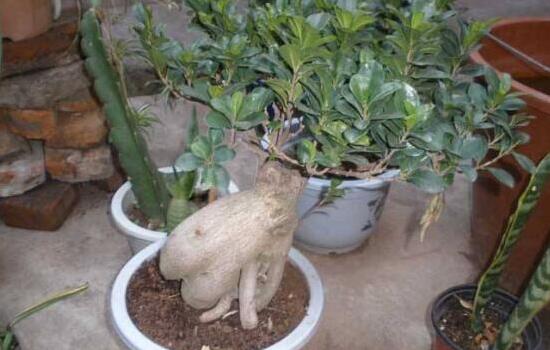
The value of the Ginseng Ficus lies in the shape of its roots. As shown in the picture above, the roots of the Ginseng Ficus look extremely like ginseng, so it is also the best plant for birthday congratulations. To bring out the roots of the Ginseng Ficus, many gardeners want its roots to be bigger, so how do you make the Ginseng Ficus roots swell? Capable gardeners are omnipotent; they have summarized the following techniques, among which sowing is the key. As long as you follow them, you can make the Ginseng Ficus roots grow big!
2. Methods for making the Ginseng Ficus roots thick and large
1. Plenty of growing space
If you want the roots of the Ginseng Ficus to swell, there is one fundamental condition: it must have enough growing space. For this, you can choose to plant it outdoors; after all, outside there is not only ample space, but sunlight and ventilation are also very good. Of course, most gardeners grow it indoors, so it cannot be planted directly in the ground, but we can choose a tall pot for growing it.
2. Suitable soil
How do you make the Ginseng Ficus roots swell? Besides space, soil can be said to be very crucial. For this, gardeners can choose the soil the Ginseng Ficus likes best: a culture soil mixed with sandy soil and river sand. To make the roots of the Ginseng Ficus grow thicker and bigger, it is best to add some potassium fertilizer to the soil.
3. Growing by sowing
There are many propagation methods for the Ginseng Ficus, but if you want its roots to swell, it is best to choose to sow Ginseng Ficus seeds. The reason is that the roots grown from seed-sown Ginseng Ficus are thicker and bigger. Although cutting propagation is fast and layering propagation is convenient, the roots of the Ginseng Ficus grown by these methods are not as big as those grown from sowing propagation!
4. Bury the roots completely in the soil
How do you make the Ginseng Ficus roots swell? There is a very simple method: bury all the roots of the Ginseng Ficus in the soil, so it can fully absorb nutrients and water, and naturally grow fast.
5. Prune branches and leaves
Among the methods for making the Ginseng Ficus roots thick and large, there is one that is very easy to do: timely pruning of branches and leaves. The total amount of fertilizer given to the plant stays the same; if you want the roots to swell, they must absorb more nutrients, and this can be achieved by reducing branches and leaves. Generally speaking, it is best to keep no more than 5 leaves and branches no longer than 10 cm on the Ginseng Ficus.
How to grow the Ginseng Ficus? A detailed introduction to the cultivation methods of the Ginseng Ficus
[Introduction to the Ginseng Ficus] The Ginseng Ficus, which looks like a ginseng plant, certainly cannot be eaten like ginseng. It is actually cultivated from the banyan tree, only much more miniaturized than the banyan; each Ginseng Ficus is only about 15 to 20 cm or so. Because the Ginseng Ficus resembles ginseng, which symbolizes longevity, it has become very popular in recent years. Its swollen basal tuberous roots are actually formed by mutation of the radicle and hypocotyl when its seeds germinate. Some plants also have a Golden Ficus (F. deltoidea) or oval-leaf fig (a variety of the small-leaf fig) grafted onto the base of the trunk, making them appear even more elegant. When cultivating the Ginseng Ficus, if you can choose an antique and charming pot, it will surely add even more to the Ginseng Ficus's elegant charm. The Ginseng Ficus, just like the banyan tree, is a plant with exceptionally strong growth power, and as an indoor decoration or a small gift for others, it is also a good choice. The Ginseng Ficus likes a high-temperature, high-humidity, sunny environment, and it is best to place it somewhere where it can catch slanting sunlight.
[Cultivation methods of the Ginseng Ficus]
Temperature: The Ginseng Ficus has the same requirements for light, heat, water and fertilizer as the ordinary small-leaf fig. It likes a warm humid and sunny environment, is not cold-tolerant, tolerates semi-shade, and its optimum growth temperature is 2 0°C to 30°C. In winter, the greenhouse temperature should be maintained at no lower than 5°C.
Soil: River sand or sandy soil is best for cultivation. To make the roots of the Ginseng Ficus both big and fat, a little fertilizer should be added; a fertilizer with a higher proportion of phosphorus and potassium can be used. When cultivating the Ginseng Ficus, you must use seed sowing to be able to grow fat roots.
Repotting: For a Ginseng Ficus bonsai, it can be repotted once every 2 years, and the best time is before it is brought out in spring. First loosen the soil around the flower pot, then gently take out the large tuberous-root plant, break off part of the old soil, cut off some aged roots with no vitality, and replant it in fresh, fertile, loose, well-draining, nutrient-rich culture soil. As the plant grows, it can be moved into a slightly larger pot to meet its normal growth needs. When repotting, moderately prune and adjust the branches and leaves so it can continue to maintain a good plant shape. Right after repotting, do not water too much; wait until the temperature rises above 20°C, then give normal water and fertilizer management.
Cultivation soil for the Ginseng Ficus bonsai: The banyan tree is vigorous by nature, and its requirements for cultivation soil are not strict. If conditions permit, sandy soil mixed with coal cinders can be used. If not, ordinary flower soil will also do. For finished products, coconut coir as a substrate can also be used as cultivation soil. The cultivation soil should preferably be a loose, fertile, well-draining, organic-rich sandy loam with an acidic reaction; alkaline soil easily causes its leaves to turn yellow and poor growth.
Watering: Water for the roots of the Ginseng Ficus bonsai. When the root substrate (coconut coir or soil) is close to dry, water it thoroughly all at once. Then wait until it dries out again after some time before watering. Generally, watering once every three to five days is enough. In summer, the number of waterings can be increased, depending on the situation. Water for the leaf surface of the Ginseng Ficus bonsai. The leaf surface can often be sprayed with a small amount of water (mist-like water). During the growing period, it requires an adequate water supply and should be kept moist rather than dry, always keeping the pot soil moist. During its branch-sprouting and leaf-growing period, watering should be appropriately controlled, or more misting and less watering can promote short nodes and thick leaves; at the same time, give sufficient light so its leaves are thick and the leaf color is glossy.
Fertilizing: Fertilization management for the Ginseng Ficus bonsai. The banyan tree does not like fertilizer, but a small amount of compound fertilizer (slow-release fertilizer) can also be applied once each season. The main components of the fertilizer are nitrogen, phosphorus and potassium. Fertilize 3 to 4 times each year, and do not apply excessively, otherwise it easily causes its branches and leaves to grow leggy and ruins the plant's composition and shape.
Pest and disease control: Its leaves are often susceptible to leaf spot disease, which can be sprayed with a 800-fold dilution of 70% thiophanate-methyl wettable powder. A small number of diseased leaves can also be removed and destroyed early to prevent them from spreading and causing harm.
Light: Note that during the growing period the pot soil must not be too wet, and even more so there must not be insufficient light, otherwise it will cause a large number of leaves to drop and affect its display and ornamental value.
How to grow the Ginseng Ficus bonsai: cultivation methods for the Ginseng Ficus bonsai
The Ginseng Ficus is endowed by people with the meaning of longevity and good fortune, symbolizing glory and wealth, and is therefore the best gift for birthday congratulations. It is widely planted and also used as various potted plants, placed in courtyards, halls, terraces, corridors and other places to beautify the environment. Today we will briefly introduce how to grow the Ginseng Ficus bonsai and the cultivation methods of the Ginseng Ficus.
Introduction to the Ginseng Ficus
Ginseng Ficus, Latin name Ficus microcarpa. Moraceae, evergreen tree, banyan stump bonsai. Because the banyan tree has a well-developed root system, the roots often bulge and protrude above the ground; because its root tubers have a unique shape, consumers are especially fond of it. In China it is distributed in Guangxi, Guangdong, Hainan, Fujian, Yunnan and Guizhou. It is also cultivated in India, Myanmar and Malaysia. It is a plant that grows in tropical and subtropical regions. It is famous for “one tree forming a forest”, and is produced in Shaxi, Fujian.
The roots of the Ginseng Ficus resemble ginseng, with a natural form, exposed root base, lush crown and unique charm. Appreciating its posture and shape is full of interest and pleasing to the mood, and it is deeply loved by gardeners all over the world. In the Netherlands, the Ginseng Ficus has been named “China roots”, and it can be said to have become a flower variety that has gone global and has a Chinese brand.
1. Morphological characteristics
The Ginseng Ficus is cultivated from seedlings of the small-leaf fig (Ficus microcarpa). Its swollen basal tuberous roots are actually formed by mutation of the radicle and hypocotyl when its seeds germinate. Some plants also have a Golden Ficus (F. deltoidea) or oval-leaf fig (a variety of the small-leaf fig) grafted onto the base of the trunk, making them appear even more elegant. The Ginseng Ficus belongs to the Moraceae family as a shrub or small tree. Its roots are like ginseng, and it is a small banyan type. The shape of the trunk closely resembles a human figure standing watch, hence the name "Ginseng Ficus". It is also called banyan melon or sweet potato ficus.
The roots of the Ginseng Ficus resemble ginseng, with a natural form, exposed root base, lush crown and unique charm. Appreciating its posture and shape is full of interest and pleasing to the mood, and it is deeply loved by consumers all over the world. In the Netherlands it has been named “China roots”, and it is a flower variety that has gone global and has a Chinese brand. It is a beautiful sight as an indoor and outdoor decorative display!
2. Growth habits
Growth temperature 18-33 degrees; in winter it must not be lower than 10 degrees, and below 6 degrees it is very easily damaged by freezing. It likes a warm and humid environment. In spring and autumn it can be placed in a spot with appropriate light, and in summer it should be placed where there is no direct sunlight. When watering the Ginseng Ficus, water when dry and let it dry between waterings; the pot soil should often be kept moist.
#FormatImgID_2#
Cultivation methods for the Ginseng Ficus bonsai
1. Soil requirements:
The Ginseng Ficus is vigorous by nature and is not very strict about its growing substrate. If conditions permit, sandy soil mixed with coal cinders can be used; if not, ordinary flower soil will also do. For adult Ginseng Ficus, coconut coir as a substrate can also be used as cultivation soil. The cultivation soil is generally best as a loose, fertile, well-draining, organic-rich sandy loam with an acidic reaction; alkaline soil easily causes its leaves to turn yellow and poor growth.
2. How to repot:
It can be repotted once every 2 years, and the best time is before it is brought out in spring. First loosen the soil around the flower pot, then gently take out the large tuberous-root plant, break off part of the old soil, cut off some aged roots with no vitality, and replant it in fresh, fertile, loose, well-draining, nutrient-rich culture soil. As the plant grows, it can be moved into a slightly larger pot to meet its normal growth needs. When repotting, moderately prune and adjust the branches and leaves so it can continue to maintain a good plant shape.
3. Fertilization management:
The Ginseng Ficus does not like fertilizer. A small amount of compound fertilizer (slow-release fertilizer) can be applied once each season, and the main components of the fertilizer are nitrogen, phosphorus and potassium. The number of fertilizations each year is 3—4 times, and it must not be excessive, otherwise it easily causes its branches and leaves to grow leggy and ruins the plant's composition and shape. The Ginseng Ficus is not cold-tolerant, tolerates semi-shade, and its optimum growth temperature is 20°C—30°C. In winter, the greenhouse temperature should be maintained at no lower than 5°C, otherwise it will suffer from freezing damage.
4. Watering method:
Water the Ginseng Ficus when dry and let it dry between waterings; the pot soil should often be kept moist, and in summer it should be placed in a shady spot. Fertilization depends on the growth condition; generally, during the peak growing season, a fully decomposed dilute bean cake water, vegetable cake water, rice bran water, etc. can be applied once about every 1 month. In winter, prevent freezing; in summer, prevent exposure to the blazing sun; and all year round, pay attention to pest and disease control. When cultivating the Ginseng Ficus, you must use seed sowing to be able to grow fat roots.
Notes on cultivating the Ginseng Ficus
If a newly bought Ginseng Ficus drops leaves, do not worry too much, because a newly bought Ginseng Ficus needs to adapt to the new environment, so dropping leaves at the beginning is normal. After bringing the Ginseng Ficus home, you can first let it acclimatize to the pot (the process of adapting to the new environment; keep it in diffused light, do not expose it to the sun), and only after it has acclimatized should you consider management methods such as sun exposure and fertilization.
Do not move its position at will. After choosing a good position, besides watering and occasionally tending to it, do not tend to it three times a day. Pay attention to ventilation, because the Ginseng Ficus tolerates semi-shade, and some gardeners choose to grow it indoors, which leads to poor indoor air circulation and causes the Ginseng Ficus to lose its vitality. Pay attention to pruning; if it is not pruned for a long time and allowed to grow leggy, it will lose its ornamental value.