How to propagate maidenhair fern? It cannot be propagated by cuttings; division is the common method
Maidenhair fern is a relatively fast-growing plant, so it easily fills its pot, and after growing it for a while, flower lovers need to consider the question of propagation. Can maidenhair fern be propagated by cuttings? How is maidenhair fern propagated? Below, the editor introduces several common propagation methods for maidenhair fern.
Can maidenhair fern be propagated by cuttings?
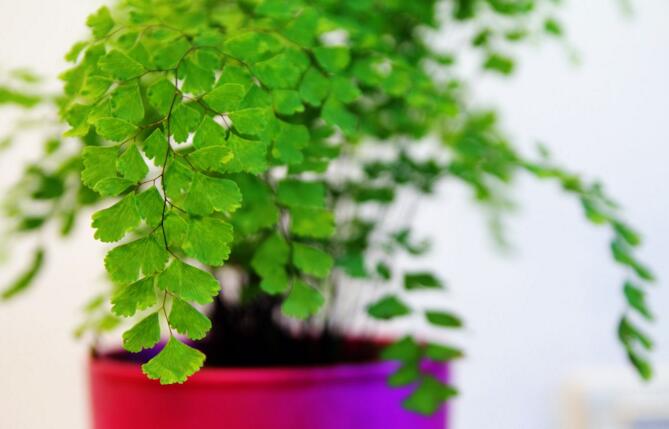
Because the roots of maidenhair fern are rhizomes, it is difficult for leaves and branches to take root when used as cuttings, so maidenhair fern is not propagated by cuttings. It is usually propagated by division and by spores, and in practice both methods have a high survival rate.
How is maidenhair fern propagated?
I. How to divide maidenhair fern
1. Timing
Division is the most commonly used propagation method for maidenhair fern. The timing is generally chosen in April, because it can be done at the same time as repotting, reducing the number of times the maidenhair fern has to be taken out of its pot. In the warmer areas of the south, division can be done all year round.
2. Method
(1) Prepare pots and soil. Prepare several pots of appropriate size as needed, then put some soil into the pots, preferably a mix of leaf mold, garden soil and fine sand.
(2) Take the mother plant of the maidenhair fern out of its original pot, cut off some of the aged rhizomes, then use a knife to divide the mother plant into several clumps, each clump must be guaranteed to have rhizomes and leaves.
(3) Plant the divided daughter clumps separately in the prepared pots, then press the soil down gently and water thoroughly.
(4) Afterward, place the propagated maidenhair fern in a cool, well-ventilated place for care, and once it begins to sprout new leaves, carry out normal watering, fertilizing and so on according to maidenhair fern cultivation methods.
Spore propagation of maidenhair fern
Spores are the most distinctive feature of ferns. Among the propagation methods for maidenhair fern, spore propagation is also relatively simple. So how is maidenhair fern propagated at this time? All that is needed is a sterilized substrate and leaves bearing mature spores, and then a large pot of maidenhair fern can be propagated. The specific operation is as follows.
(1) First, prepare pots and substrate. Generally, a mix of peat soil and fine sand is used as the substrate. Before starting propagation, the soil needs to be sterilized, for example by drying it in the sun or soaking it with disinfectant, etc. Put the substrate into the prepared pot and water thoroughly, and the pot is best a relatively shallow one.
(2) Next, select leaves bearing mature spores. Sprinkle the spores concentratedly into the pot. Note that the substrate should not be covered; instead, just cover the pot with a piece of glass, so that it can enjoy sufficient light.
(3) Afterward, pay attention to care and management. Place the pot in a semi-shaded environment at 20-25 degrees for care, and keep the substrate moist. The method is that when the potting soil is relatively dry, just soak water up from the bottom of the pot; do not lift the glass to water in between.
(4) Finally, transplanting. Generally after 1 month the spores can germinate into prothallia, and once they have covered the pot they can be transplanted. 1-2 days before transplanting, remove the glass to let air in.
Gerbera Gerbera jamesonii Bolus Gerbera profile: how to grow gerbera / how to propagate gerbera
Gerbera profileGerbera Gerbera jamesonii Bolus
Gerbera cultivation methods and precautions Gerbera introduction
Gerbera (English name: Gerbera), a perennial herbaceous plant of the Asteraceae family, the whole plant has fine hairs, the flower heads are terminal, most leaves are basal, pinnately lobed. The plant height is 30-45 cm, the flower heads are solitary, terminal, and the flower colors include red, white, yellow, orange, purple, etc. It rises 20-40 cm above the leaves, the flower diameter is 10-12 cm, the involucre is disc-shaped, bell-shaped, the ligulate petals are 1-2 or multiple in double form, usually flowering in all four seasons, with spring and autumn being the most abundant.
It is an important material in modern cut flowers. Gerbera has a relatively large flower diameter (8 cm-10 cm), and flowering time regulation is easy. At present, the cut flower cultivation area is increasing year by year, and its application is becoming more and more widespread. Gerbera can also withstand long-distance transport, and cut flowers last a long time in water; if cultivation methods are appropriate, each plant can yield 30 cut flowers a year, making it truly an ideal cut flower. Gerbera flowers are large, the flower colors are rich, and management saves labor. In warm areas it can supply fresh cut flowers year-round. The main types can be divided into modern cut flower types and dwarf cultivation types, with various flower colors such as white, pink, red and yellow.
Morphological characteristics of gerbera
Perennial, hairy herb. The rhizome is short, wrapped by residual leaf stalks, with relatively thick fibrous roots. Leaves basal, rosette-shaped, the leaf blades oblong-elliptic to oblong, 10-14 cm long, 5-6 cm wide, the apex shortly pointed or slightly blunt, the base gradually narrowed, the margin irregularly pinnately lobed or deeply lobed, hairless above, short pubescent below, losing hair when old; the midvein is raised on both sides, thick and especially prominent below, the lateral veins 5-7 pairs, curving and arching to connect away from the margin, the reticulate veins slightly obvious; the petiole 7-15 cm long, with thick longitudinal ridges, more or less hairy. The scape is solitary, or rarely several clustered, 25-60 cm long, without bracts, hairy, the hairs densest at the top, the flower head solitary at the top of the scape, 6-10 cm in diameter when the ligules spread out at flowering; the involucre bell-shaped, about as long as the bisexual flowers, up to 2 cm in diameter; the involucral bracts in 2 layers, the outer layer linear or subulate, apex pointed, 8-10 mm long, about 1-1.5 mm wide, pubescent on the back, the inner layer oblong-lanceolate, apex caudate-acuminate. 10-14 mm long, about 2 mm wide, the margin dry-membranous, sparsely pubescent on the dorsal ridge; the receptacle flat, bare, honeycomb-like, 6-8 mm in diameter; the outer female flowers in 2 layers, the outer corolla ligulate, the ligule pale red to purplish red, or white and yellow, oblong, 2.5-3.5 cm long, 2-4 mm wide, the apex with 3 teeth, the inner 2 splits filamentous, curled, 4-5 mm long, the corolla tube short, about 1/8 the length of the ligule, the staminodes filamentous, 3-4 mm long, extending beyond the corolla tube; the inner female flowers more slender than the bisexual flowers, tubular two-lipped, 6-7 mm long, the two lips equal in length, the outer lip with 3 fine teeth or sometimes 2 teeth and 1 lobe, the inner lip 2-parted deeply, the lobes linear, about 4 mm long, curled, the staminodes 4-5, linear or filamentous, hidden inside the corolla tube; the central bisexual flowers numerous, tubular two-lipped, 8-9 mm long, the outer lip large, with 3 teeth, the inner lip 2-parted deeply, the lobes usually wide, curled; the anthers about 4 mm long, with long pointed tails; the style branches of both female and bisexual flowers short, apex blunt, less than 1 mm long. The achene cylindrical, 4-5 mm long, densely covered with white short pubescence. The pappus slightly rough, dirty white when fresh, light brown when dry, 6-7 mm long, united at the base. Flowering period November to April of the following year.
Ecological habits of gerbera
It likes an environment that is warm in winter and cool in summer, with air circulation and sufficient sunlight. It is not cold-tolerant and avoids heat. The optimal growth temperature is 20°C-25°C, the optimal winter temperature is 12°C-15°C, and growth stops below 10°C. It is a semi-cold-tolerant flower and can endure short periods of 0°C low temperature. In South China it can be cultivated as an open-field perennial flower; in East China it must be covered to overwinter or grown in a greenhouse for cut flower forcing cultivation. It likes fertile, loose, well-drained sandy loam rich in humus, avoids heavy clay soil, and prefers slightly acidic soil. It can also grow in neutral and slightly acidic soil, but in alkaline soil the leaves easily show deficiency symptoms. The flowering time of gerbera is very easy to regulate; as long as the room temperature is kept above 12°C, the plant can be kept from entering dormancy and continue to grow and flower. It likes fertile, loose, well-drained sandy loam rich in humus, avoids heavy clay soil, prefers slightly acidic soil, is a semi-cold-tolerant flower, and can endure short periods of 0°C low temperature. Gerbera is a light-loving plant, so choose a site with sufficient light for cultivation. Seedlings should not be planted too deep, and the root crown needs to be exposed above the soil surface. If light is insufficient, the flower stalks become soft and droop, and cut flower quality is not high.
Economic value of gerbera
Yunnan gerbera seedling producers are mainly concentrated in Kunming, about 20 in total, among which more than 10 are relatively large in scale. The annual output of gerbera seedlings is about 20 million plants. Many enterprises or research institutions have collected rich gerbera cultivar resources and possess strong production technology and experience. The gerbera seedlings they produce are deeply loved by growers inside and outside the province. Kunming has become the center of national gerbera seedling production. After nearly 10 years of development, gerbera, which ranks fifth on the international cut flower sales list, has been expanding its planting scale in Yunnan. Its cultivation area is second only to roses, carnations and lilies, making it a major fresh cut flower category in Yunnan.
Market
In March and April, although the upsurge in flower sales in Yunnan has receded, it has ushered in the "golden period" for gerbera seedling sales. Of the gerbera seedlings sold from Kunming to destinations inside and outside Yunnan Province, sales in April reached more than 2 million plants. A national gerbera seedling production pattern centered on Kunming has basically taken shape.
Volume declines, prices fall back
It is understood that Yunnan gerbera seedling producers are mainly concentrated in Kunming, about 20 in total, among which more than 10 are relatively large in scale. Affected by the relatively high price of gerbera seedlings, although household-based seedling production households have appeared, because the production volume of enterprises has declined, compared with the previous period, the total production of gerbera seedlings has decreased somewhat, to about 15 million plants. Prices have also fallen back, from 0.8 yuan/plant to 1.0 yuan/plant in the same period, down to 0.6 yuan/plant to 0.8 yuan/plant.
Sales situation is grim
It is reported that growers in Yunnan Province have significantly reduced their demand for gerbera seedlings. In 2005, the planting area was about 5,000 mu, an increase of 1,000 mu over 2004. Calculating at 4,500 seedlings planted per mu, the newly added 1,000 mu required 4.5 million seedlings. For the remaining 4,000 mu, if 1/3 of the gerbera plants needed replacement with new seedlings (gerbera growers generally replace seedlings once every two or three years), then 6 million seedlings were needed, and the province's total seedling demand was 10.5 million plants. If 1/3 to 1/2 of the gerbera plants were replaced with seedlings, then the seedling demand within Yunnan Province was 6 million to 9 million plants. From this it can be seen that the number of seedlings sold outside Yunnan Province cannot be less than 6 million plants. But in fact, Yunnan gerbera seedling enterprises do not sell much in markets outside the province. Therefore, gerbera seedlings are in a situation of supply exceeding demand, and the sales situation is grim.
In addition, affected by soil continuous cropping obstacles, the gerbera cut flower market is not very prosperous, causing some flower growers in Jinning County, Kunming City, which accounts for nearly half of the gerbera planting area in Yunnan Province, to switch the land originally planted with gerbera to roses or carnations, and the demand for gerbera seedlings within the province has shrunk. Demand for seedlings in markets outside Yunnan Province is in a growing trend, and surveys show that the gerbera planting area in Jiangsu, Liaoning, Shandong and other provinces is increasing.
Seeking joint development
After nearly 10 years of development, many enterprises or research institutions in Yunnan have already possessed relatively strong production technology and experience, collected rich gerbera cultivar resources, and the gerbera seedlings they produce have formed a certain brand effect, deeply loved by growers inside and outside the province. However, due to reasons such as relatively large losses in long-distance transport of gerbera, postharvest handling technology not keeping up, and declining quality of seedling mother plants, the development of the gerbera cut flower and seedling industry has been affected.
Kunming Tongxin Flower Co., Ltd. produces 7 million gerbera seedlings every year, of which nearly 50% are sold to markets outside the province, and some products are also exported to Vietnam and other neighboring countries. Company general manager Bi Xiaoping said that the tissue culture technology for gerbera is not difficult, and it is entirely possible for enterprises or research institutions outside Yunnan Province to catch up with or even surpass Yunnan in seedling production. Facing increasingly fierce market competition, for Yunnan gerbera seedlings to gain a firm foothold in the market, they must start from the following 3 points: first, strive to improve seedling quality, extend the hardening-off period, increase the survival rate of finished seedlings, and at the same time control the propagation coefficient of seedlings to reduce indoor contamination and mold infection of seedlings; second, select suitable cultivars according to the demand conditions of different regions, such as mainly green-centered cultivars outside the province and mainly black-centered cultivars within the province; third, take the path of factory-based and specialized production, expand scale effects, implement small profits but quick turnover, and improve market competitiveness.
In early April, led by the Flower Research Institute of the Yunnan Academy of Agricultural Sciences, heads of enterprises such as Kunming Qianhui, Kunming Yuhui, Kunming Tongxin and Kunming Jinkeyi were invited to a discussion to jointly discuss matters such as establishing the Yunnan Gerbera Seedling Association. At the same time, they will negotiate with foreign breeders in the name of a "large group" to strive to introduce high-quality mother plants and new cultivars at low prices. It is reported that they have already held negotiations with the Dutch company Florist and plan to introduce more than 4 million high-quality mother plants from the company, requiring payment of more than 4.8 million yuan in patent fees.
Gerbera Gerbera and daisy differences Gerbera
Scientific name: Gerbera jamesonii
Family: Asteraceae
Origin and distribution: South Africa
Morphological characteristics: With a rosette leaf cluster. Leaves oblong-spatulate, deeply lobed or lyre-shaped pinnately lobed, the leaf back covered with white down. Flower heads. Flower colors range from white to various yellows, oranges, rose reds, reds, etc. If the ambient temperature is suitable, it can flower all year round.
Growth habits: Likes climate conditions that are mild in winter and cool in summer. Requires well-drained, humus-rich, deep and fertile soil with a pH value of 6-6.5.
Garden use: Barberton daisy is mainly used for cut flowers and potted flowers, and can also be used for flower beds when climate conditions are suitable.
Propagation and cultivation: Potted, mainly by sowing.
Daisy
Aliases: spring daisy, perpetual daisy
Scientific name: Bellis perennis
Family and genus: Asteraceae, Bellis
Habits: A perennial herbaceous plant, often cultivated as an annual or biennial. Likes cool, humid conditions and sufficient sunlight, relatively cold-tolerant, and can overwinter in the open field where the ground surface is not lower than 3-4°C. It has no strict requirements for soil. Flowering period April-May.
Cultivation: Propagated by sowing or division. The suitable temperature for seed germination is 22-28°C. In North China, sow in August-September, move into a sunny cold frame in late October to overwinter, and in April of the following year pot them or plant them into flower beds. During the growing season, as long as appropriate water and fertilizer are guaranteed, they can grow well. After the flowers fade, the roots can be divided and planted in pots, placed in a cool place to spend the summer, and after the autumn cools down moved into a greenhouse or indoors, with strengthened fertilizer and water management, and they can bloom again in winter or the following spring. There are relatively few pests and diseases.
Cultural background, origin and evolution of gerbera
In 1878, Rehman first discovered gerbera in Transvaal, South Africa, and in the same year Blass sent it to Kew Gardens in England. Lynch in England was the first to carry out hybrid breeding of gerbera. He crossed gerbera with green-leaf gerbera (G.viridifolia Sch.-Bip.) and bred hybrids; afterward, Adnet in France selected and bred cultivars for cut flowers; after 1950, new cultivars were bred in Europe; in 1980 dwarf potted cultivars were also bred, with flowering almost continuous throughout the year. Japan also achieved excellent results in breeding double-flowered gerbera. In addition, people have also bred many distant hybrids, using gerbera as the female parent and coreopsis (coreopsis basalis Blake.) or marguerite (Argyranthemum frutescens Sch.-Bip.) as the male parent, and the hybrid flower shapes mostly resemble the male parent.
The flower color genes of gerbera are rich in inheritance and highly heterogeneous, and the flower shape and flower color of its progeny differ greatly. Therefore, excellent hybrid single plants can be rapidly and massively propagated into vegetative lines through tissue culture. As a result, cultivars are replaced very quickly with fashion trends. Its flower colors are mainly white, red, pink, orange, purple, etc. In addition, because interspecific hybridization and fusion are easy, besides the above inherent color lines, there are also many intermediate color lines.
Origin of the name Barberton daisy
In the early 20th century, Madagascar, located in southern Africa, was a small country rich in tropical flowers and grasses. There was a local girl named Slangyini who had loved this kind of wildflower with slightly curved stems and drooping flowers since childhood. When she married, she asked for more of them to be arranged in the hall to add to the wedding atmosphere. Relatives and friends from all sides sang and danced, toasting each other frequently. Unexpectedly, the groom, with very little tolerance for alcohol, became drunk after only three rounds of drinks. He bowed his head and bent his waist, leaning east and west, and the bride had no choice but to support him into the bedroom to rest. Seeing this supporting posture, everyone found it so similar to the growth posture of that wildflower, and many girls said in unison: "Oh, the flower really looks like supporting a husband!" From then on, the name Barberton daisy spread far and wide.
Gerbera is also known as Barberton daisy and is native to southern Africa. The flowers are large and beautiful in color, delicate and pleasing to the eye, and it is an important cut flower decorative material. Large red gerbera flowers are used for bridal bouquets. Together with roses, gladioli and carnations, it is listed among the world's best-selling "four major cut flowers."
Cultivation history
The first person to improve gerbera cultivars was the Englishman Irwin Lynch, who crossed G.jamesonii with green-leaf gerbera (G.vurufolia). Later, the Frenchman M. Adent continued to improve it and bred a large number of cut flower cultivars. In addition, Japan also bred double-flowered cultivars, with diverse flower shapes and colors, collectively called hybrid gerbera (Gerbera jamesonii), used for cut flowers and potted flowers.
Feng shui
Gerbera can promote women's romance. The bedroom is probably the most important space for changing a woman, especially when in love, when wild thoughts mostly occur in the bedroom. Love feng shui all requires confirming the bedroom arrangement. For example, placing a fresh, long-lasting gerbera at the head of the bed, with a fragrance that is somewhat pleasant and will not easily disappear, can encourage oneself.
Gerbera can promote family harmony. Gerbera, like the sunflower, is a flower that represents the sun in everyone's mind, except that the latter is tall and mighty, while the former is elegant and upright. If the sunflower is the blazing sun shining high in summer, then the gerbera is like the warm sun in winter, making people feel cozy. Someone once advocated using gerbera as the flower representing Father's Day, because gerbera is also called sun flower, and the sun can also symbolize fatherly love. The feng shui effect of gerbera, the saying that it can make a family live in harmony and love each other, also arose from this.
For people whose Five Elements belong to fire, gerbera is their lucky flower. In Chinese feng shui theory, it is believed that the types, attributes and placement positions of some plants can affect a person's fate. Plants also have yin-yang and Five Elements distinctions. Using them appropriately in different directions and environments can produce unexpected regulating effects. In feng shui studies, plants are considered to be spiritual and can help people in various aspects to a certain extent. Therefore, plants are often used to regulate the environmental qi field. There are many types of plants and their properties differ greatly, so there are also many particularities when using them. Such plants are called feng shui plants. People whose Five Elements belong to fire should choose red as the main color, because red is the inherent color of fire, or choose the inherent color of wood, green, as the main color, because green wood generates and prospers red fire. From the perspective of feng shui, this can bring prosperous good luck to the homeowner and their family. Of course, besides red, gerbera also has many other colors, so gerbera is the lucky star of many people. As the color of gerbera changes, the group of people it blesses is different.
Cultivar classification of gerbera Cultivar classification
It can mainly be divided into dwarf potted types and modern cut flower types. Potted types are mainly F1 hybrids, with characteristics such as consistent flowering period, rich color variation, short growth period, uniform habit and strong floriferousness; cut flower cultivars have straight flower stalks, flower diameter up to 15 cm, long flowering period, can flower all year round, long ornamental time, and vase life as long as 7-10 d. Cut flower types can also be divided into single, semi-double and double types; according to color they can be divided into bright red lines, pink lines, pure yellow lines, orange-yellow lines, pure white lines, etc. Different types of cultivars on the market can also be divided into:
1. Narrow-petal type Ligulate petals 4-4.5 mm wide, 50 mm long, arranged in 1-2 whorls; flower head diameter 12-13 cm, flower disc small, flower stalk 5-6 mm thick, 50 cm long. Annual yield per plant more than 30 stems.
2. Wide-petal type Ligulate petals 5-7.5 mm wide, 41-48 mm long, about 60 petals, arranged in 1-3 whorls; flower head diameter 11-13 cm, flower stalk 6 mm thick, 50-70 cm long. Annual yield per plant more than 20 stems.
3. Large-flowered double type Flower head diameter 10-14 cm.
Main domestic cultivars
Common cultivars include the red "Passion", the yellow "Sun Dance", the white "Bianca", etc. Miniature small flowers include "Dance Hall" (white), "Ballet" (orange), "Sultan" (yellow), "Kanga" (red), etc.
No. Cultivar Flower diameter cm Ligulate flower layers Ligulate flower color Tubular flower color
1 Cathy 10-12 Many Pink Green
2 Chateau 10-12 2-3 Dark purple Dark purple
3 Diablo 10 Many Purple-red Black-purple
4 Golden Gate 10-12 Many Dark yellow Black-purple
5 Jolly Disc 12-14 3-4 White Pink-purple
6 Lorraine 10-12 Many Dark yellow Green
7 Magnum 10-12 Many Dark pink Black-purple
8 North Star 8-9 3-4 Red Green
9 Oprah 10-12 Many Yellow Green
10 Optima 10-12 Many Orange-red Black-purple
11 Ramona 10 3-many Red with golden edge Green
12 sangria 11-13 Many Purple-red Black-purple
13 Savannah 10-12 3-4 Purple-red Black-purple
14 Shirley 10-12 4 Dark pink Black-purple
15 Sunset 10-12 Many Orange-red Black-purple
16 Twiggy 10-12 Many Blue-purple Yellow-green
17 Venus 10-12 Many Creamy yellow Dark pink
18 Willy 7 Many Dark pink Purple-red
Main species of the same genus
There are about 80 species in this genus, mainly distributed in Africa; China has 20 species, the vast majority concentrated in the southwest region, with no ornamental application seen. Also commonly cultivated for ornament:
1. Orange-yellow gerbera (G. aurantiaca Sch.-Bip.) Flowers orange-yellow or dark red, back yellow or brown
2. Green-leaf gerbera (G.viridifolia Sch.-Bip.) Leaves entire, smooth; flowers smaller, white, back yellow
Distribution area of gerbera
Native to South Africa, with a few distributed in Asia. Now commercial production also occurs in Taiwan, China and Guangdong. With the progress of domestic greenhouse technology and the introduction of new foreign greenhouse technology, it is cultivated in South China, East China and Central China.
Garden use of gerbera
Its flowers are large, the flower stems are upright, the flower colors are gorgeous, it lasts a long time in water, the cut flower rate is high, vase life can reach 15-20 days, and cultivation saves labor and time. It is one of the world's famous top ten cut flowers. It can also be used to arrange flower beds and flower borders, or grown in greenhouses in pots as decoration for halls, meeting rooms and so on.
Potted gerbera is often used to decorate doorways and halls, and its cut flowers are used for vases and flower arrangements, embellishing desks, display windows and living rooms. With pink gerbera as the main flower, paired with dendrobium, baby's breath and orchid leaves, the tone is elegant and the mood is rich. If red gerbera is used as the main flower, paired with sword fern, palm bamboo leaves and dry branches, and dyed walnuts, for wall-hanging decoration, it can produce a relatively strong decorative effect. It is commonly cultivated in gardens across China, mostly as potted plants.
Propagation methods of gerbera Propagation is by sowing or division.
Because gerbera is a cross-pollinated plant and is self-infertile, its seed progeny will inevitably vary. The variation types generally show thinner and softer flower stalks, smaller flower shape, and greatly reduced cut flower value. Therefore, gerbera must be propagated asexually. Usually division propagation is used, but each plant can only be divided into 5-6 new plants each year. In order to accelerate propagation, cuttings and tissue culture can also be used.
Propagation methods
Tissue culture is the main method of propagating gerbera. Gerbera tissue culture commonly uses the receptacle as the explant. Use flower buds about 2 cm in diameter, disinfect and wash them, leave only the receptacle, cut it into 2-4 pieces, and place them on the medium. The medium formula is MS plus BA 1.0 mg/L, plus indoleacetic acid (IAA) 0.5 mg/L. At 22°C with 16 h of light per day, callus gradually forms, and after 1-2 months shoots form from the callus. Transfer the material that has differentiated shoots to the subculture medium; the medium is MS plus BA 0.1/L, plus indoleacetic acid 0.1 mg/L. When the leaves of the test-tube plantlets reach 2 cm, transfer them to the rooting medium. When transferring the plantlets, remove the callus at the base of the test-tube plantlets. The rooting medium formula is 1/2 MS plus naphthaleneacetic acid (NAA) 0.1 mg/l.
After the gerbera explant is induced to sprout, after 4-5 months of test-tube multiplication, thousands upon thousands of test-tube plants can be produced. The most suitable field transplanting period for gerbera is April, when the transplanted seedlings can produce a large number of flowers in August. Therefore, callus differentiation into shoots should be completed before mid-October; the 1st test-tube multiplication is from mid-October to mid-November, then once every month thereafter, ending the 4th multiplication in mid-February of the following year, followed by 2 weeks of test-tube seedling rooting; after rooting, transplant to the seedling bed, maintain for 1 month, and then move to the field in early April.
Gerbera mostly uses tissue culture for rapid propagation; division propagation can also be used, and each mother plant can be divided into 5-6 small plants; sowing propagation is used for dwarf potted cultivars or breeding; single buds or short lateral buds occurring at the base of the neck can be cut and used for cuttings. Its response to photoperiod is not sensitive, and the length of daylight has no effect on flower number and flower quality. It requires loose, fertile, well-drained, humus-rich, deep, slightly acidic sandy loam.
Artificial culture soil cultivation of gerbera can significantly increase yield and quality. Mix 5 parts humus, 2 parts perlite, and 3 parts peat to make culture soil for planting, but this method has relatively high production cost. Field planting can be carried out; choose loam with a deep soil layer of at least 25 cm or more suitable for gerbera growth for planting. Before planting, apply sufficient base fertilizer: apply 5 tons of livestock manure, 600 kg of chicken manure, 100 kg of superphosphate, and 300 kg of plant ash per mu. Organic fertilizer must be fully decomposed. The fertilizer must be thoroughly mixed with the soil of the planting bed and plowed, made into a form of one ridge and one furrow, ridge width 40 cm, furrow width 30 cm, and plants planted on the ridge in double rows staggered. Plant spacing 25 cm. Note that the root crown part should be slightly exposed above the soil to prevent root crown rot. Then irrigate in the furrow.
However, because of its fast propagation speed, it has been listed as an invasive alien species in Guangdong, China. If you want to transplant it outdoors, consider it carefully, otherwise once the flower seeds open, it will cause unnecessary [trouble].
Division propagation
Because old plants flower poorly, division is usually done once every 3 years. The method is to dig up the old plant and cut it apart, each new plant carrying 4-5 leaves, and plant them separately. The disadvantage of this method is that propagation speed is slow.
Cutting propagation
Dig up selected robust mother plants, remove the soil from the roots, remove the leaves, and cut off the growing point. Keep the root crown part and plant it in a planting box for cultivation. Place the planting box under conditions of a temperature of 22-24°C and relative air humidity of 75%-80%. Afterward, the root crown part will successively grow axillary buds and adventitious buds, forming cuttings for propagation. Cut off the shoots after they have 4-5 leaves, insert them into soil or other substrate, and cover the surface with 1-2 cm of perlite. Keep the temperature controlled at about 25°C and the relative humidity at 75%-90%. After 3-4 weeks they can take root, and the rooted cuttings can be transplanted.
Cultivation techniques for gerbera Cultivation points
The suitable temperature during the gerbera growth period is 20-25°C. Below 10°C or above 30°C, growth stops and it enters a semi-dormant state. If you want it to flower all year round, in winter it needs to be maintained above 12-15°C, and in summer not exceeding 26°C. Therefore, in the southern Fujian area it can overwinter in the open field, but to obtain high-yield and high-quality cut flowers, it is best to have insulation equipment such as plastic greenhouses. In summer, shade nets can be put on or water sprayed to cool down, which can ensure a year-round supply of cut flowers.
(1) Soil must be sterilized. Gerbera does not have strict soil requirements, and sandy soil that is loose, breathable and rich in humus is suitable. Because the pathogens of various diseases harmful to gerbera can survive in the soil, and there are also underground pests and earthworms in the soil harming the root system, soil sterilization should be carried out before planting.
(2) Land preparation and fertilization. Because gerbera is afraid of waterlogging, high-bed cultivation is generally used. The beds generally run north-south, with a bed height of about 30 cm, bed width of 1 m, and furrow width of 40-50 cm. Combined with land preparation, apply base fertilizer appropriately, applying 200 kg of barnyard manure per 100 m.
(3) Planting out. It is best to plant out on a cloudy day or in the evening of a sunny day. Apart from the high-temperature period from July to September in summer, planting out can be done at any other time. When planting out, be sure to plant shallowly so that the root crown is exposed above the soil surface, and water thoroughly. Newly planted plants should be shaded with shade netting.
(4) Pay attention to seedling-stage management. Carry out warming or cooling management according to the weather conditions at the time of planting out, keeping the temperature at 20-25 °C so that the plants quickly resume growth. After the seedlings have recovered, apply 1:10 human manure and urine once every two weeks to ensure that each plant has 8-10 healthy leaves when it enters the flowering stage. When watering and fertilizing, be careful not to let water get into the center of the leaf rosette, otherwise the flower buds are prone to rot.
(5) Fertilizer and water management. Gerbera daisies are drought-tolerant but not moisture-tolerant, so never let them become waterlogged. During the seedling stage the soil should be kept appropriately moist to encourage root development. During the growing period, the amount of watering can be determined by how dry or moist the soil is: do not water until it is dry, and when you do water, water thoroughly. In winter, water as little as possible; it is better for the soil to be on the drier side. In summer, when the weather is hot and water evaporates quickly, the plants enter a semi-dormant state, flower production drops noticeably, and plant vigor weakens; at this time pests and diseases are very likely to occur, and this can be combined with topdressing to promote the roots' absorption of nutrients. In summer, loosen the soil promptly, clean the roots to prevent disease, control water and fertilizer, and shade against sun and rain.
(6) Leaf stripping and bud thinning. Gerbera daisies can flower year-round within the range of 5-30 °C, so they need a large amount of fertilizer throughout the growing period. Before flower bud differentiation, increase the application of organic fertilizer and nitrogen fertilizer to promote full plant growth, usually mainly with monopotassium phosphate and urea, plus an appropriate amount of liquid organic fertilizer, applied as a topdressing once a week. When the plants enter the period in which vegetative and reproductive growth proceed together, increase the proportion of phosphorus and potassium fertilizer, generally once a week, while also adding an appropriate amount of organic fertilizer. Before the two flowering peaks from April to June and in September and November, carry out foliar spraying of KH2PO4 as appropriate to meet reproductive growth needs.
(7) Humidity and light. Gerbera daisies are relatively cold-tolerant, and their growth is not sensitive to light, but they do like plenty of sunshine. When cultivated in a greenhouse, adding 2-3 layers of plastic film in winter allows them to overwinter safely. Before the first frost arrives in late October, cover with one layer of plastic film; around November, small tunnels should be built over each bed to keep them warm. From June to September, 50% shade netting can be used to lower the temperature.
(8) Removing dead leaves. The leaves clustered at the base of the gerbera daisy easily turn yellow and age, and should be removed promptly; this not only favors the sprouting of new leaves and new flower buds, but also improves ventilation and light penetration, preventing the lower young flower buds from failing to receive sunlight and hormones and becoming "hidden buds." In addition, excess flower buds or deformed flowers should also be removed promptly to ensure that the retained flower stems have sufficient nutrients and to improve the quality of the cut flowers. Generally, a one-year-old individual plant has 15-20 healthy leaves at the peak flowering stage and can produce 5-6 flowers per month; a two- or three-year-old individual plant can retain 20-25 leaves and can produce 7-8 flowers per month.
(9) Harvesting and preservation. The gerbera daisy can be picked when the outermost two rows of ray florets are perpendicular to the flower stem and show the color characteristic of the variety. The best time is in the morning and evening when temperatures are low, as it is then easy to pick without damaging the plant. The method is to hold the lower half of the flower stem with your hand and shake it side to side, and it can then be picked. Remove flowers with disease spots, insect spots or deformities, cover the flowers with No. 12-15 funnel-shaped plastic bags, then grade them by variety and length, tie them into bunches of 20 with rubber bands, and they are ready for sale. If they are not to be sold immediately, keep them upright in a bucket or other container with clean water, with the water depth preferably covering 5-10 cm of the base of the flower stems.
Cultivation protocol: Soil preparation
1. Soil tillage and base fertilizer: before planting, plow deeply once (30-40 cm); apply chemical fertilizer and barnyard manure (per mu: 2000 kg of decomposed barnyard manure, 5 m3 of humus soil, 65 kg of superphosphate, 50 kg of compound fertilizer) to the soil, then plow deeply again (15-25 cm).
2. Bed making: dig drainage ditches 70-100 cm deep nearby (depending on the water table level), and form raised beds 45 cm high, with a bed width of 1.0 m and a ditch width of 40 cm.
3. Soil disinfection: use formaldehyde disinfection and chemical disinfectants such as Vapam (tentative), taking disinfection with 40% industrial formaldehyde as an example: dilute to a concentration of 1%, spray evenly over the soil, then quickly cover tightly with plastic film for sealed fumigation; after 2-3 days remove the film, let the soil air-dry for two weeks, then flush with water, and only after another two weeks can planting out be carried out. Different disinfectants are decided according to the instructions for use and trials. Soil being planted for the first time does not need disinfection.
Seedling selection
Select seedlings 11-15 cm tall with 4-5 true leaves for planting out. Standards for high-quality seedlings: vigorous seedlings, oily green leaves, well-developed root systems with many fibrous roots that are white in color, and leaves free of disease spots, insect bite notches and mechanical damage.
Planting out
Planting time: planting out can be done year-round, but from the perspective of production and sales, April to June is ideal.
Planting method: plant 3 rows per bed, with the middle row staggered with the side rows, spacing between plants 30 cm, 9-10 plants per square meter, and more than 1,100 plants can be planted per greenhouse.
Planting method: 2-3 days before planting, water the soil thoroughly; carry out planting on cloudy days or in the morning and evening of sunny days; when planting, make deep holes and plant shallowly, with the root crown exposed 1-1.5 cm above the soil surface, otherwise the plants are prone to fungal infection; if the plants are planted too shallowly, the plants are easily loosened or pulled out when harvesting flowers; after planting, water thoroughly promptly.
Cultivation management
1. Management during the small seedling stage: after planting out, shade with 70% shade netting for 7-10 days, and gradually increase light after the seedlings have established; regulate day and night temperatures by opening and closing the side film and top film, keeping the daytime temperature at 22-25 °C and the nighttime temperature at 20-22 °C for 1 month; during this period use sprinkler watering, preferably in the morning. Make a small hole beside the plant to indicate soil moisture; moisture should be neither too dry nor too wet, with watering frequency once every 5 days, but this is not fixed and should be determined specifically according to soil structure, weather conditions, etc.; inspect plant by plant every day, promptly remove diseased plants, and fill in with vigorous small seedlings.
2. Management during the established seedling stage: about 1 month after planting, the gerbera daisy enters a period of vigorous growth, and when light is too strong, appropriate shading is needed; adjust the temperature to 14-16 °C at night, with 18-25 °C during the day as the minimum temperature; every 1 week apply 0.1% compound fertilizer (N:P:K = 15:15:15) once, and every 2 weeks spray 0.1% monopotassium phosphate once as a foliar fertilizer; spray broad-spectrum fungicides, such as 800-**** times dilution of thiophanate-methyl, 2-3 times to prevent disease.
3. Management during the flowering stage: after about 3-4 months, the plants enter the flowering stage. Apply compound fertilizer with N:P:K = 12:12:17 once every week. Use foliar spraying of trace-element fertilizers, generally once every 25 days, each time with 0.1-0.2% Ca(NO3)2.4H2O, 0.1-0.2% chelated iron plus 0.1-0.2% borax plus 5-10 ppm sodium molybdate for alternating foliar spraying; use drip irrigation for watering, with the watering principle of "do not water until dry, and when you do water, water thoroughly," and be sure never to water from the center of the leaf rosette. Keep the relative humidity in the greenhouse at 80%-85%; pull weeds promptly, remove diseased leaves and dead leaves, pull out diseased plants and disinfect the soil in the planting holes with quicklime; during the summer flowering period, pay attention to shading and ventilation for cooling; during the winter flowering period, pay attention to insulation and heating, especially preventing too great a difference between day and night temperatures in order to reduce the production of deformed flowers.
A brief introduction to the cultivation techniques is as follows: I. Growing environment
The gerbera daisy originates from South Africa and adapts to a mild climate; it is heat-tolerant and slightly cold-tolerant, and likes an environment that is warm in winter, cool in summer, well ventilated and sunny. The suitable growing temperature is 20C-25C during the day and about 16C at night. The suitable flowering temperature is not lower than 15C, and in a growing environment not exceeding 26C during the day it can flower year-round. The suitable temperature during the winter dormant period is 12C-15C, and growth stops below 7C. It is not sensitive in its response to photoperiod, and the length of natural daylight has no effect on flower number or flower quality. The gerbera daisy requires loose, fertile, well-drained, humus-rich, deep, slightly acidic sandy loam.
II. Propagation
Gerbera daisies are mostly propagated quickly by tissue culture, and can also be propagated by division, with each mother plant divisible into 5-6 small plants; seed propagation is used for dwarf potted varieties or breeding; single buds or short lateral buds occurring at the base of the crown can be cut and used for cuttings.
III. Planting out
Cultivating gerbera daisies with artificial growing medium can significantly increase yield and quality. Please refer to the formula: 5 parts humus; 2 parts perlite; 3 parts peat, mixed by oneself as growing medium for planting, but the production cost of this method is relatively high. Field planting can also be carried out; choose loam soil at least 25 cm or more in depth and suitable for gerbera daisy growth for planting out. Before planting out, apply sufficient base fertilizer, generally per mu: 5 tons of livestock manure, 600 kg of chicken manure, 100 kg of superphosphate, 300 kg of plant ash; the organic fertilizer must be fully decomposed. All fertilizers must be thoroughly mixed with the soil of the planting bed and plowed in, making a form of one ridge and one ditch, with a ridge width of 40 cm and a ditch width of 30 cm; plants are planted on the ridges in double rows staggered. Spacing between plants 25 cm. When planting, note that the root crown should be slightly exposed above the soil to prevent root crown rot. After planting out, irrigate in the ditches.
IV. Management after planting out
1. Temperature
Use cultivation facilities to meet as far as possible the temperature requirements of gerbera daisies during the seedling stage, growing period and flowering stage, so as to facilitate normal growth and flowering. Except in South China, they cannot overwinter in the open field and require greenhouse cultivation; outside the Yangtze River basin, they can be cultivated in unheated greenhouses. In summer, shade netting needs to be covered over the top of the greenhouse, and the plastic film on both sides of the greenhouse should be opened for cooling. In winter, when the outside nighttime temperature approaches 0C, seal the plastic film tightly for insulation, and an additional layer of plastic film must be added inside the greenhouse. On clear, warm days, open the film at the south end of the greenhouse around noon for ventilation for about one hour.
2. Light
The gerbera daisy is a light-loving flower and needs full light in winter, but in summer attention should be paid to appropriate shading and enhanced ventilation to lower the temperature and prevent high temperatures from causing dormancy.
3. Irrigation
After planting out, during the seedling stage, keep appropriately moist and practice seedling hardening to promote root development and rapid establishment. During vigorous growth, maintain an adequate water supply, watering once every 3-4 days in summer and about once every half month in winter. When watering during the flowering stage, be careful not to let water touch the center of the leaf rosette, to prevent flower bud rot. In open-field cultivation, pay attention to preventing waterlogging. In addition, fertilizing can be combined with irrigation.
4. Topdressing
The gerbera daisy is a fertilizer-loving perennial herbaceous flower with a high demand for nutrients; the ratio of nitrogen, phosphorus and potassium applied is 15:18:25. When topdressing, pay special attention to supplementing potassium fertilizer. Generally per mu: apply 2.5 kg of potassium nitrate, 1.2 kg of ammonium nitrate or ammonium phosphate, once every 5-6 days in spring and autumn, and once every 10 days in winter and summer. If high temperatures or relatively low temperatures cause the plants to enter a semi-dormant state, then stop fertilizing.
5. Removing dead leaves
The lower leaves of the basal leaf rosette of the gerbera daisy easily turn yellow and age, and should be removed promptly; this not only favors the sprouting of new leaves and new flower buds, but also favors ventilation and enhances plant vigor.
6. Pest and disease control
The main diseases of the gerbera daisy are leaf spot, powdery mildew and viral disease. For leaf spot, spray 800-**** times dilution of 70% thiophanate-methyl wettable powder or 500 times dilution of 50% carbendazim wettable powder. For powdery mildew, use 1500 times dilution of 70% thiophanate-methyl or 1000-1200 times dilution of 75% triadimefon wettable powder for control, once every 7-10 days, spraying two to three times consecutively. For viral disease control, strictly control the introduction of seedlings, promptly control aphids to reduce virus transmission vectors, and promptly remove and destroy diseased plants. The main insect pests of the gerbera daisy are tarsonemid mites, cotton bollworm, tobacco budworm, beet armyworm and aphids. For tarsonemid mites, use 1000 times dilution of 40% dicofol for control.
Harvesting
Harvest when the pollen of the outer ring of flowers begins to shed. At harvest, the plants are required to be growing vigorously, with upright flower scapes and open flowers. The quality of cut flowers greatly affects their vase life; never cut flower stems when the plants are wilting or when the flowers are half-closed at night. After harvesting, carry out grading, preservation treatment and packaging for market.
Most of the specialized production bases for gerbera daisy seedlings in China are concentrated in the Yunnan region, and a large number of emerging specialized flower seedling producers, represented by the Yunnan Luxin Flower Seedling Base, are booming.
Disease control of gerbera daisy: 1. Bacterial diseases of gerbera daisy
Gerbera daisy spot disease is a bacterial disease caused by Pseudomonas cichorii. The bacterial cells are single, straight or slightly curved, rod-shaped, motile, with multiple flagella; Gram-negative reaction, aerobic, respiratory metabolism, chemoorganotrophic bacterium. This pathogen mainly infects chicory, lettuce, peas, melon, Chinese cabbage and many other cruciferous plants, and tomato, clover, etc. can also be affected. The pathogen mainly overwinters in diseased field soil and diseased plant residues, and spreads by means of rain, farming operations, insect carriage and so on.
2. Viral diseases of gerbera daisy
2.1 Gerbera daisy spotted wilt
After being affected, gerbera daisies show symptoms such as fading, necrosis and stunting, and flowers are deformed. This disease occurs on gerbera daisies cultivated in Italy, France, Spain and Japan. The pathogen is tomato spotted wilt virus (TSWV); the virus particles are spherical, 85 nm in diameter, with a lipid envelope; the inactivation temperature is 40-46 °C, the survival period in vitro is less than 5 h, and the dilution endpoint is 10-3. It is transmitted by mechanical inoculation, and the insect vector thrips transmits it in a persistent manner. This disease has a wide host range and is an important pathogen of tobacco, tomato, potato and many other crops.
2.2 Gerbera daisy mosaic disease
Diseased plants have chlorotic leaves, deformed leaves and formed patches, weakened growth, and a sharp decrease in the number of cut flowers; as it continues to develop, the diseased plants die. It can infect other crops such as common tobacco and Nicotiana glutinosa, producing mosaic symptoms, and infecting zucchini causes chlorotic yellow spots and mosaic symptoms. The pathogen is cucumber mosaic virus (CMV); the virus particles are spherical, 30 nm in diameter, with three types of particles similar in morphology; it is transmitted by mechanical inoculation, and aphids transmit it in a non-persistent manner. The inactivation temperature is 70 °C, the survival period in vitro is 4 days, and the dilution endpoint is 10-3. This disease has a wide host range, and transmission is mainly by sap and aphids.
2.3 Gerbera daisy mottle disease
Chlorotic ring spots appear on the leaves; some chlorotic spots appear as oak-leaf patterns, and individual tissues on the verge of the spots become necrotic. When the disease is severe, the leaves become smaller, wrinkled and brittle; in some varieties the petals are broken in color, the flowers become smaller (deformed), the flower color is not vivid, and the plants are stunted. The pathogen is tobacco mosaic virus (TMV); the particles are straight rod-shaped, 300 nm x 18 nm, and the inactivation temperature is 90-95 °C. This disease has a wide host range and can be transmitted by mechanical inoculation, contact between plants, contaminated soil, farm tools, etc., and can also be transmitted by sap, soil, nematodes and seeds.
3. Fungal diseases of gerbera daisy
3.1 Gerbera daisy powdery mildew
This disease mainly harms the leaves. In the early stage of the disease, white mold spots appear on the leaves, which gradually expand into round or long oval yellow-white lesions. The lesions are covered with a white coating; when severe, the entire leaf is covered with white powder, and in the later stage the powder layer turns grayish white and the leaves become scorched and withered. The pathogen is (Oidium sp.); the mycelium is white and superficial, penetrating deep into the host epidermal cells with haustoria to absorb nutrients. The conidiophores are upright, unbranched, and produce conidia in a holoblastic manner. The conidia are oblong, single-celled, colorless, produced in chains, and mature successively from top to bottom. This disease is more likely to occur when the temperature is high, the relative humidity is 80%-90%, and ventilation in the greenhouse is poor.
3.2 Gerbera daisy leaf spot
There are mainly two kinds of gerbera daisy leaf spot: (1) Phyllosticta leaf spot. Small purple-brown to tea-brown spots first appear on the leaves, gradually expanding into round or nearly round lesions with dark brown edges, and later black small dots are produced on the lesions. The pathogen is Phyllosticta chrysanthemi; the pycnidia are spherical, embedded, unilocular, with ostioles. The conidiogenous cells are cylindrical, colorless, smooth, and produce conidia in a holoblastic manner; the conidia are elliptical, single-celled, colorless, with a flat base. It grows very quickly on artificial medium, with abundant aerial mycelium, relatively sparse pycnidia formation, and membranous pycnidial walls. The pathogen overwinters as mycelium and pycnidia in diseased fallen leaves. Old leaves are more severely affected than young leaves. (2) Cercospora leaf spot. Small purple-brown dots first appear on infected leaves, gradually expanding into round or nearly round lesions with a dark gray center, slightly raised brown line patterns at the edges, and a purple-brown outer ring; dark green mold spots are produced on both the front and back of the leaves. The pathogen is Cercospora chrysanthemi; the mycelium is mostly embedded, often with stromata; the conidiophores are thick, hypha-like, olive-brown or brown, lighter in color at the top, unbranched or occasionally branched, growing in clusters on the stromatal tissue; the conidia are whip-shaped, straight or slightly curved, colorless, with 3-12 septa. The conidiogenous cells are mostly budding, with sympodial extension, cylindrical, with obvious conidial scars. The conidia are solitary, with a scar at the base, having multiple septa and a smooth surface. This disease mostly overwinters on diseased residues and diseased leaves, and generally occurs severely in environments that are shady and damp with insufficient light, heavy clay soil and poor drainage.
3.3 Gerbera daisy gray mold
Water-soaked round or irregular lesions appear on the stem near the ground of diseased plants, later turning gray-brown to brown, with the diseased part soft-rotting and the surface densely covered with a gray mold layer. When seedlings are infected, the stems and leaves near the ground rot in a brown water-soaked manner, with gray mold produced on the surface, and later small flat sclerotia gather. The pathogen is Botrytis cinerea, belonging to the Deuteromycotina, genus Botrytis; the conidiophores are straight or flexuous, 960-1,200 μm x 16-22 μm, growing in clusters of several, brown, smooth, with 1-2 branches at the top. The ends of the branches often swell noticeably, forming colorless or pale flask-shaped conidiogenous cells; the conidia are short elliptical, 12-18 μm x 9-13 μm. The pathogen overwinters as conidia and sclerotia in infected tissues, and disease is likely when humidity is high.
3.4 Gerbera daisy sclerotinia rot
This disease starts from the base of the stem, causing the stem to rot. In the early stage of the disease, the diseased part shows water-soaked soft rot, brown, gradually spreading to the stem and petiole. In the later stage, black mouse-dropping-like sclerotia can be seen both inside and outside the stem. The typical symptom of this disease is rapid soft rot of the diseased part, densely covered with white flocculent material, or with black mouse-dropping-like sclerotia; each sclerotium can produce 1-9 apothecia. This disease is caused by the fungus Sclerotinia sclerotiorum Fuck. The apothecia are produced on the sclerotia, disc-shaped, with long stalks. The asci are arranged in parallel, with persistent paraphyses between the asci. The asci are club-shaped or elliptical, colorless; the ascospores are single-celled, elliptical, arranged in a single row. The pathogen has a very wide host range; it overwinters as sclerotia in diseased residues and soil, and produces ascospores the following year to infect and cause damage. Plots whose previous crop was a cruciferous crop are severely affected. The disease is severe in the rainy season. This disease spreads through contact between diseased plants and healthy plants and through the growth and spread of mycelium in the soil.
3.5 Gerbera daisy root rot
This disease is one of the most important diseases of gerbera daisy, with a wide occurrence area and great severity of damage; the plants are affected throughout the entire growth period, and are most severely affected during the flowering stage. The pathogen infects from the base of the stem at ground level; the affected part becomes soft, water-soaked and light black; the plant leaves suddenly wilt and turn purplish red. When the diseased plant is pulled out, the diseased part at the stem base breaks easily, and in moist conditions white mold spots can grow on the surface. This disease is mainly caused by Phytophthora cryptogea. Phytophthora cryptogea belongs to the Pseudofungi, Oomycota, Peronosporales, Pythiaceae, genus Phytophthora; its vegetative body is non-septate, multinucleate mycelium, with hyphal swellings produced, and asexual reproduction produces zoosporangia. The sporangia are pear-shaped or elliptical, without papillae, large, averaging 46 μm x 27 μm in size, with a wide host range. It is heterothallic; sexual reproduction produces oogonia, oospores and antheridia; the oogonia are spherical, containing one spherical thick-walled oospore; the antheridia are single-celled, colorless and transparent, and amphigynous. The pathogen overwinters on residues or in the soil, and the overwintering pathogen is the main primary infection source of this disease. Sudden alternation of dry and wet soil or frequent intertillage and loosening of the soil causes many wounds on the plant roots; the pathogen invades through the wounds and, when conditions are suitable, spreads through irrigation water or rainwater, causing major outbreaks of the disease. Plots with poor drainage and continuous cropping are severely affected. 3.6 Gerbera daisy Fusarium wilt
The symptoms of this disease are similar to those of gerbera daisy root rot; it occurs throughout the entire growth period of the gerbera daisy. The root system of diseased plants is dark brown, the cortex of the diseased roots peels off, there are few fibrous roots, and the plants are easily pulled up. When the disease develops slowly, the leaves of diseased plants turn purplish red or dark brown and wither successively; when the disease is severe, the plants die in a green wilt state. This disease occurs in Italy, Australia, China and other countries. Because gerbera daisies are basically cultivated under protected conditions, this disease can occur throughout the year, and April to August each year is the period when the disease occurs more severely. The pathogen overwinters in the soil or in diseased plant residues; contaminated soil and affected plants are the main sources of infection of this disease, and hot, humid weather and heavy-textured soil both promote the proliferation and spread of the pathogen. This disease is mainly caused by Fusarium oxysporum; on artificial medium it produces dense mycelium in a loose cottony form; the conidiophores are colorless, and the conidiogenous cells produce conidia in an enteroblastic phialidic manner, producing two types of spores: microconidia oval to elliptical, 5-12 μm x 2.5-3.5 μm in size; macroconidia 27-46 μm x 3-4.5 μm in size, spindle-shaped to sickle-shaped, with a hooked apex and a small foot cell at the base, with 3-5 septa, mostly 3 septa. Chlamydospores are usually formed in large numbers, intercalary or terminal, solitary, occasionally in chains, with smooth or rough walls.
In addition, the diseases of gerbera daisy also include downy mildew (caused by Bremia lactucae), white rust (caused by A. tragopgonis), ringspot mosaic disease (caused by TBRV) and so on.
4. Pest: whitefly
Key control techniques: thoroughly remove weeds, insert yellow sticky boards for continuous monitoring, and once pests are found, take measures promptly. Choose good pesticides and use them correctly: whiteflies easily develop resistance to pesticides, so pesticides must be rotated. Pesticides with better effects include beta-cypermethrin, abamectin, imidacloprid and so on. Choose dawn as the spraying time; after spraying, keep the greenhouse sealed for 4-5 hours, and spray once more the next morning. Keep the greenhouse ventilated and low in humidity; promptly remove diseased leaves; when the disease occurs, spray 1500 times dilution of 70% thiophanate-methyl, or use 20% Junke smoke for fumigation control, once every 7 days, for 2-3 consecutive treatments. In addition, use sulfur fumigation for control: put 20-30 g of sulfur powder into each fumigator each time, and after lowering the curtain at 17:00 each day, keep the greenhouse sealed and energize for heating for 2 hours, replacing the sulfur powder once every 6 days, and continuing fumigation for 15 days. During the outbreak period of powdery mildew, fumigate 8-10 h every day, and powdery mildew can be eliminated in about 10 days.
Thrips
Key control techniques: promptly cut off insect-infested flowers, thereby reducing the sources of insects in the greenhouse (room). Fumigating pesticides in the greenhouse is the best control method; fumigate with 300-400 ml of 80% dichlorvos for 1 hour, or spray with 1500-2000 times dilution of 5% imidacloprid and then close the greenhouse for 8-10 hours; fumigation can be carried out at 10 a.m. or 5 p.m. when the temperature is slightly higher, to achieve good efficacy.
Cabbage caterpillar ⟧71⟧Key control techniques: for larvae, spray with 2000-2500 times dilution of 10% Chuchujin for control; for older larvae, use 1000 times dilution of beta-cypermethrin for control, once every 7 days, for 3 consecutive treatments.
Key control techniques: For larvae, spray with 10% chongchujin at 2000-2500 times dilution; for older larvae, 1000 times dilution of high-efficiency cypermethrin can be used, once every 7 days, for 3 consecutive treatments.
Note: the above pesticides were determined after trials based on the reference formula provided by the Resources and Environment Institute.
Phytophthora blight
Key control techniques: soil under continuous cropping must be disinfected with Vapam and formaldehyde, etc.; see the instructions for usage and dosage; plant shallowly, with the root crown exposed 1 cm above the surface; prevent the soil from being too wet; when soil 10 cm below the surface does not form a ball after being put in the palm and squeezed hard, then it can be watered; in the early stage of the disease, when part of the leaves turn red and begin to wilt, drench the roots with 400 times dilution of 58% phosethyl-Al plus mancozeb, then 7 days later drench the roots with 500 times dilution of 64% oxadixyl plus folpet powder; apply the pesticide in the morning and evening when the temperature is low, and stop applying when the temperature is above 28 degrees; apply once every 7 days, for 3 consecutive treatments.
Spot disease
Key control techniques: promptly remove diseased leaves when found and destroy them centrally; in the early stage of the disease, spray 300 times dilution of 2.5% myclobutanil emulsifiable concentrate or 800-**** times dilution of 70% thiophanate-methyl wettable powder, once every 7 days, spraying 2-3 times consecutively.
Gray mold
Key control techniques: controlling humidity is the key to controlling gray mold. Thin out densely planted and overly dense leaves; increase ventilation and air permeability, keeping air humidity at 75-85%; water from below the plant canopy; to prevent water vapor from condensing on the flowers, gradually open the side greenhouse film after 10 a.m. on sunny days to avoid a sharp rise in temperature inside the greenhouse; in the early stage of the disease, spray the leaf surfaces with 1500 times dilution of 70% thiophanate-methyl, and combine with smoke agents for control.
5. Physiological diseases
1. Symptoms: dark green spots appear on young leaves; when severe, the young leaves and growing points die first, while the old leaves can still remain in a normal state.
Solution: judging from the symptoms, it may be caused by calcium deficiency. Spray the leaf surfaces with 0.15% Ca(NO3)2.4H2O, once every 25 days.
2. Symptoms: "mosaic" appears in the mesophyll of old leaves, and a green inverted "V" shape forms at the base of the leaf, whose top can also extend all the way to near the leaf tip. The leaves become brittle, curved, and even red; new leaves grow few and small, the petioles are slender, the veins of young leaves protrude, the formation of the inflorescence is inhibited, the flower stalks are thin, and the flowers become smaller. Spray with 0.2% magnesium fertilizer twice. Solution: judging from the symptoms, it may be caused by magnesium deficiency.
3. Symptoms: the leaves turn pale yellow, and even almost white; the veins remain green at first, but eventually also change color.
Solution: judging from the symptoms, it may be caused by iron deficiency. Spray with 0.02% chelated iron, once every 25 days.
4. Symptoms: small leaves curl, thicken and become brittle. The growing point dies, and flower buds abort or produce deformed sterile inflorescences.
Solution: judging from the symptoms, it may be caused by boron deficiency. Spray with 0.05% borax, once every 25 days.
5. Symptoms: spots and "mosaic" appear on young leaves; one side of the leaf develops normally while the other side does not, and the leaf curves to the side.
Solution: judging from the symptoms, it may be caused by zinc deficiency.
7. Quality defects
1. Flower stem breakage: transverse cracks appear on the flower stem, and in severe cases the flower stem breaks, with the cracks appearing like cuts.
Solution: use 1-2‰ calcium nitrate, spraying once a week.
2. Leaf margin scorch: sudden scorching at the tips of leaves or the tips of pinnate lobes.
Solution: caused by too high a concentration of fertilizer; immediately spray clean water to dilute or wash off the fertilizer solution adhering to the leaves; extend the interval between fertilizing and reduce the fertilizer concentration, and it will recover naturally after a period of time.
Prevention first, integrated control
Disease control
The diseases of gerbera daisy include leaf spot, powdery mildew and viral disease. For leaf spot, spray 800-**** times dilution of 70% thiophanate-methyl wettable powder or 500 times dilution of 50% carbendazim wettable powder. For powdery mildew, use 1500 times dilution of 70% thiophanate-methyl or 1000-1200 times dilution of 75% triadimefon wettable powder for control, once every 7-10 days, spraying two to three times consecutively. For viral disease control, strictly control the introduction of seedlings, promptly control aphids to reduce virus transmission vectors, and promptly remove and destroy diseased plants. The main insect pests of gerbera daisy are tarsonemid mites, cotton bollworm, tobacco budworm, beet armyworm and aphids. For tarsonemid mites, use 1000 times dilution of 40% dicofol for control. For other pests, use 2.5% deltamethrin or 1000-1500 times dilution of 40% omethoate for control, once every eight to nine days; spraying has an adverse effect on flower color, so it should not be used during the flowering period.
Spot disease
Gerbera daisies are cultivated under protected conditions year after year, and because the environment is warm, humid and poorly ventilated, this easily leads to the occurrence of pests and diseases. Among them, one of the most common diseases is gerbera daisy spot disease, which is a disease caused by fungi.
Symptoms: small purple-brown spots are produced on the leaves, gradually expanding into large spots with concentric rings (2 mm to 5 mm in diameter). In the later stage the flower center rots, with sparse gray-brown dusty fungal threads on it.
Disease pattern: generally the lower leaves are affected first. Excessive nitrogen fertilizer easily triggers the disease. Heavy clay soil and poor drainage are also important conditions that induce the disease.
Control methods
1. Soil treatment: chloropicrin fumigation can be used to effectively kill the pathogen and reduce the accumulation of inoculum sources from the substrate.
2. Regulate temperature and humidity: the most suitable temperature for gerbera daisy growth is 20 °C to 25 °C, kept above 10 °C at night; under conditions of low temperature and low humidity, the disease is unlikely to occur.
3. Spray fungicides once every 7 to 10 days, such as 500 times dilution of 75% chlorothalonil, 500 times dilution of 50% captan, and 1000 times dilution of 70% thiophanate-methyl; the control effect is obvious.
Control of Phytophthora disease
Gerbera daisy Phytophthora disease, also known as rhizome rot, is severely damaging once it occurs, often causing the death of whole plants and even the death of an entire greenhouse, bringing serious economic losses to growers. After several years of cultivation experience, the author has summarized some effective measures and now introduces them to everyone.
1. Disease pattern: Phytophthora overwinters as chlamydospores and oospores in diseased residues or soil. When there is no host, the resting spores can survive for a long time. The pathogen is spread by water flow, soil and diseased plants.
2. Symptoms: it first infects the rhizome part of the plant; the leaves of affected plants first turn yellow, then gray-brown, and finally die; the rhizome part turns black and rots.
3. Control: (1) Select healthy, disease-free plants for cultivation.
2. Before planting out, carry out soil disinfection of the nursery area; this pathogen mainly spreads through the soil, so before planting out the nursery area must be carefully disinfected. The main disinfection methods are: 1) Chemical disinfection: the chemicals can be a mixture of Dexon plus quintozene (3:1), at a dosage of 4-6 g/m2; during disinfection, spray the chemicals on the soil surface, mix the soil evenly, seal with plastic film, seal the greenhouse for fumigation for 30 hours, then remove the covering, ventilate and exchange air, stir the topsoil again, and plant after 15 days. 2) Steam disinfection: release steam into the soil through pipes; this method has relatively high investment costs, but the effect is good.
3. The planting depth for gerbera daisy follows the principle of shallow planting, requiring the root crown to be exposed about 1.5 cm above the soil surface, with slight lodging as the standard (after 3 days, gently straighten it). Because it has the characteristic of contractile roots, the root crown of the plant will be buried deep in the soil, giving the pathogen convenient access for infection. To be more conducive to the growth and development of seedlings, a planting method using local substrate can be adopted, that is, first dig a round planting hole about 10 cm in diameter at the planting point, then fill it with sun-exposed and disinfected river sand or a perlite + vermiculite (1:1) substrate, plant the seedling on the substrate, and water thoroughly.
4. When diseased plants are found, if it is the early stage of the disease, drench the root zone with captan 0.1 g/l + 1% copper sulfate; if it is already the late stage of the disease, immediately burn the diseased plants and treat the surrounding plants and soil with the above-mentioned chemicals.
Control of whitefly damage
Whiteflies belong to the Homoptera, Aleyrodidae, and can be divided into greenhouse whitefly and silverleaf whitefly. They are important pests of greenhouse horticultural crops in European and American countries. In the 1980s they became a major pest in northern China, and have now spread throughout the country. In the Kunming area, varying degrees of pest damage has already appeared on greenhouse crops such as cucumber, gerbera daisy, rose and poinsettia. Among the growers surveyed at the author's gerbera daisy production site, 100% had whitefly damage. Many growers consider whitefly to be the most difficult pest to manage and the most damaging pest on gerbera daisy. The author takes this opportunity to call on the relevant departments to attach importance to this.
(1) Damage characteristics of whitefly. The Kunming area is warm in winter and cool in summer, which is very favorable for the reproduction and overwintering of whitefly. Under greenhouse conditions, whitefly does not stop reproducing throughout the year; each female insect lays 100-200 eggs, so killing eggs is very important in control, but the vast majority of pesticides only kill adults and do not harm eggs or pupae. Therefore, whitefly resistance to pesticides has become a common problem: a pesticide may have a very good effect in one place but may have a poor effect in another. According to foreign research, to eliminate a relatively severe infestation, it is necessary to spray pesticide at least once every 3-4 days, for 10-12 consecutive sprays. The eggs, older nymphs and pseudopupae of whitefly have strong resistance to temperature and pesticides; once various insect stages occur mixed on the crop, control is very difficult. It can be seen that whitefly is more difficult to control than ordinary pests and is more likely to revive and cause cyclical damage continuously.
The population density of whitefly has the characteristic of rising exponentially. In the early stage of whitefly infection, it occurs only in spots and patches, and on the surface the plants show no obvious symptoms of damage, so it is often overlooked. However, the harm of whitefly in spreading viruses, weakening plant vigor and seriously affecting shipping quality is already developing; once it spreads, it may cause cyclical damage in the greenhouse for many years and be difficult to completely eliminate. Therefore, in daily flower production management and the process of introducing seedlings, attention must be paid to the inspection and control of whitefly, and once it occurs, measures must be taken promptly.
(2) Inspection of whitefly. Whitefly has four forms: egg, nymph, pseudopupa and adult. Adults lay eggs on the underside of leaves, 0.2-0.25 mm long, not easily noticed by the naked eye, requiring observation with a magnifying glass or microscope, and mostly distributed on tender leaves; nymphs and pseudopupae are usually fixed on the middle and lower old leaves and are easy to find. Adults like to attach to the underside of tender leaves and mature leaves; both adults and nymphs can secrete honeydew, which accumulates on the leaves and causes sooty mold. If black gray sooty mold caused by fungal parasitism is found on the leaves, it indicates that the infection has lasted for a relatively long time and is relatively serious. The colors whitefly likes most are lemon yellow and orange yellow, so yellow boards can be hung or set up for monitoring.
Among greenhouse flower crops, the ones that most attract whitefly and suffer severe damage are: gerbera daisy, Alstroemeria, primrose, scarlet sage, dahlia, geranium, cineraria, gloxinia, fuchsia, hibiscus, clematis, Abutilon, Solanaceae plants, columbine and rhododendron. Those with lighter damage are: chrysanthemum, poinsettia, calceolaria, calla lily, rose, lily and marigold. Those not damaged are: cyclamen, carnation, freesia, tulip, narcissus, hyacinth, orchid family plants, lilac, palm family plants and most succulent plants.
Sometimes flower crops and vegetable crops are rotated or planted in contiguous fields, so it is necessary to know the vegetable crops severely damaged by whitefly, such as cucumber, tomato, lettuce, green bean, celery, muskmelon, pumpkin and garlic. Weeds inside and around the greenhouse are breeding grounds for whitefly; the weeds it likes are chickweed, wood sorrel, nettle, dandelion and so on.
(3) Control of whitefly
1. Prevention first, cultivate insect-free seedlings. Seedlings, crop residues and weeds carrying insects are important pathways for the spread of whiteflies, so before planting a new crop, weeds and the previous crop must be thoroughly cleared, and the ground left empty for a period. When introducing seedlings and potted flowers, carefully check whether there are nymphs or eggs, and whether many leaves are missing. Once a greenhouse is infested with whiteflies, the movement of its crops in and out must be handled very carefully to prevent all the greenhouses from becoming infested. Yellow sticky boards should be placed in the greenhouse for monitoring at any time. The field should be patrolled regularly to check growth conditions and whether pests and diseases are occurring. Hanging white or silvery-white plastic strips at the greenhouse entrance can repel invading adults.
2. Choose the right pesticides and use them correctly. Whiteflies easily develop resistance to pesticides, so it is worth knowing more about the available types of pesticide in order to select them. For pesticides to which they were not originally resistant, pest resistance will only develop in the second generation, so a pesticide with good trial results can be used continuously for at least one generation or more, until resistance is found; attention should be paid to correct application methods, and it is not advisable to change pesticides frequently. The table below lists pesticides with good results that have been tried at home and abroad, for reference.
Category English name Chinese name or trade name Precautions
Organophosphates acephate has a fumigant action
chlorpyrifos
etrimfos
Carbamates methomyl has a certain ovicidal action
Pyrethroids sumicidin
Propoxur+methoxychlor
Cypermethrin
Alphamethrin
fluralinate
Acaricide mitac has a fumigant action
Chitin-synthesis-inhibiting pesticide buprofezin
Others Tempo endosulfan
abamectin spray concentration 1000 times
Diazinon
imidacloprid
3. Application of the high-temperature sealed method In the process of controlling whitefly infestation, conventional spraying methods suffer from low efficacy, a rapid decline in efficacy, and an easy tendency for resistance to develop. Whiteflies feed on the sap of leaves by attaching to the underside of leaves, easily creating dead angles that pesticide contact cannot reach, especially when the plants are growing luxuriantly; when disturbed, whiteflies can fly several meters away, thus escaping contact with the spray liquid, so even if a pesticide to which they have not developed resistance is used, its efficacy is limited. The growth, development and reproduction of whiteflies are greatly related to temperature: the developmental threshold temperature of eggs is 7.2°C, the optimum temperature for survival is 20-28°C, and above 30°C the mortality of eggs and larvae is high, adult lifespan is shortened, egg laying is reduced, and they may even fail to reproduce. Whiteflies are poikilothermic animals, so above 30°C their respiration rate rises greatly, making it easy for them to take in more pesticide.
In the practice of whitefly control, the author adopted high-temperature sealing, combining the advantages of fumigation and spraying, targeting the weaknesses of the pest and making full use of solar energy and the greenhouse effect, and achieved remarkable control results. The method is to mix a pesticide with a fumigant action with a pesticide with an ovicidal action (such as chlorpyrifos + methomyl), add an appropriate amount of washing powder as a surfactant, and spray between 3:30 and 5:30 in the afternoon; before spraying or while spraying, close the vents of the greenhouse or plastic tunnel to create sealed conditions, and maintain the temperature between 30 and 35°C for more than one hour. In summer, pull the shade net and delay the spraying time to prevent the temperature inside the tunnel from rising excessively. Where sealed conditions are not available, spraying during the high-temperature period in the afternoon also gives better results than spraying in the morning. When the temperature is high, the greenhouse or tunnel easily rises above 30°C even without being sealed; in this case it is better to spray in the morning when the temperature is lower, keep the tunnel sealed for 1-2 hours, and use a shade net to cool it if necessary, so that there is no concern about excessive humidity causing disease.
4. Other methods Other very effective methods for controlling whiteflies include fumigation, smoke fumigation and smoke methods, which are introduced in other books. Biological control is a more scientific method and should be widely popularized and applied.
Mosaic disease
1. Symptoms. Leaves appear mosaic-patterned, and sometimes markings also appear on the petals. The pathogens include cucumber mosaic virus (CMV) and tobacco mosaic virus (TMV).
2. Control methods. (1) Clear weeds in the flower nursery and its surroundings at any time, and promptly use insecticides to control aphids. (2) Sterilize cutting tools such as flower shears with 10% trisodium phosphate.
Root rot
1. Symptoms. The symptoms of this disease are similar to those of wilt, but there is no pink spore mass on the diseased part. Water-soaked soft rot appears on the stem and roots and turns black. The rotting is pronounced. The pathogen is Phytophthora cryptogea Pethy-br et Laff., belonging to Mastigomycotina; the sporangia are obpyriform, and the oospores are yellow and spherical. It is both parasitic and saprophytic, with an optimum growth temperature of 25°C.
2. Control methods. (1) Select and breed resistant varieties. (2) Before planting in a flower bed where this disease occurred the previous year, first mix dexon 1000-1500 times solution with the soil for sterilization. (3) When diseased plants are found, pull them out and burn them at any time to avoid spreading the pathogen. The diseased soil must also be dug out and replaced with new soil.
Greenhouse pests and diseases
1. Phytophthora disease first infects the root crown; the affected plant's leaves turn yellow, then grayish-brown, until they wither and die, and the root crown turns black and rots.
Control methods:
① Select healthy, disease-free plants for cultivation.
② This pathogen is mainly spread through the soil, so the nursery ground must be carefully sterilized before planting. The pesticide can be dexon plus quintozene (3:1), at a dosage of 4-6 grams per square meter; when sterilizing, spray the pesticide on the soil surface, mix it evenly with the topsoil, seal it with plastic film, and at the same time seal the greenhouse for fumigation for 30 hours, then remove the covering, ventilate, and stir the topsoil again; after 15 days it can be planted. Steam can also be released into the soil through pipes; this approach has a relatively high investment cost but gives better results.
③ When planting, the root crown should be exposed about 1.5 cm above the soil surface, with slight lodging as the standard. Because it has the characteristic of contractile roots, the plant's root crown will become deeply buried in the soil, which makes it easier for the pathogen to infect. To benefit the growth and development of the seedlings, a cultivation method using a local substrate can be adopted, that is, first dig a round planting hole about 15 cm in diameter at the planting point, then fill it with sun-sterilized river sand or a perlite + vermiculite (1:1) substrate, then plant the seedling on the substrate, water thoroughly, firm the roots, and thereafter proceed with normal daily management; this can achieve immediate results.
④ When diseased plants are found, in the early stage captan 0.1 g/L + 1% copper sulfate can be used to drench the roots; in the late stage of the disease, the diseased plants should be immediately pulled out and burned, and the surrounding plants and soil treated with the above pesticides.
2. Virus-infected diseased leaves have indistinct yellow-green spots, and new leaves become narrow. During high-temperature periods the markings are not obvious. Growth is weakened, the number of cut flowers drops sharply, and as it continues to develop, the diseased plant will wither and die.
Control methods:
① Remove diseased plants.
② Thoroughly eliminate the aphids that transmit the virus.
③ When cultivated in a poorly ventilated greenhouse, scale insects often occur and should be removed promptly.
3. Whiteflies For whiteflies, imidacloprid, dichlorvos, phoxim and methamidophos all have good control effects. However, using a single product easily leads to resistance, so it is best to use mixed pesticides or rotate several pesticides; continuous repeated use of the same pesticide is to be avoided. For those that have developed resistance, organophosphate pesticides can be mixed with methomyl water plus pyrethroid pesticides.
4. Leafminers April-May and October-November are the peak periods of damage; abamectin, avermectin, abadin or dimehypo mixed with fenvalerate can be used for killing them.
Causes of root rot
In midsummer, especially under drought and water shortage, the color of Gerbera jamesonii flowers becomes dull and dark; whereas flowers that bloom during the suitable-temperature period of September-October or March-June of the following year are brightly colored. This shows that Gerbera is relatively sensitive to temperature and light intensity; in summer it is necessary to keep the soil moist and free from drought, cover with a shade net of 50% light transmittance, and spray the leaves to increase air humidity and lower the temperature;
In winter, adequate warmth should be provided to protect it from freezing, with night temperature not lower than 10°C and daytime temperature not lower than 15°C; these are all very beneficial for improving the brightness of Gerbera flowers. In addition, mites are a major enemy in Gerbera cultivation; once damaged, not only does it lose its brightness, but the shape of the petals also becomes incomplete.
Therefore, ensuring that it is free from mite damage throughout the entire growing period is a particularly important link in guaranteeing the brilliant colors of Gerbera.
The cause of root rot in Gerbera is mostly root rot disease occurring in the roots, and once it occurs it is difficult to cure. The external conditions that produce root rot are excessively high soil moisture around the roots, long-term water accumulation in the root zone, or prolonged rainfall in the open field, which can cause the death of Gerbera plants.
Potted cultivation techniques of Gerbera Potted production
In the daily production process of potted Gerbera, the following points need attention.
1. The production greenhouse must be equipped with ventilation, shading and heating facilities. If conditions permit, it should also be equipped with benches, ground fabric or an irrigation system. The greenhouse must be sealed to prevent insects from entering.
2. The temperature in the greenhouse should be controlled between 15°C and 25°C, with the maximum not higher than 30°C and the minimum not lower than 13°C. The average daily production temperature is generally 18°C to 19°C; when it exceeds 19°C, ventilation should be carried out. At the same time, the night temperature should not be too high, otherwise it will affect normal flower bud differentiation; the ideal night temperature should be between 15°C and 18°C.
3. Use a medium with good air permeability and drainage, preferably a substrate mixed with peat and perlite. A pH of 5.5 to 6.0 and an EC of 0.7 to 1.0 are favorable for the absorption of trace elements.
4. Potted Gerbera is very sensitive to water, so the correct time for watering must be ensured; water in the morning or evening, and keep the plant relatively dry at nightfall. When the plant begins to grow roots, it must be watered from below, and a bottom infiltration method can be used; during high-temperature periods it can be watered from above the plant, but care must be taken to prevent fungal mold starting from the center of the plant.
5. Gerbera prefers fertilizer; in summer the ratio of nitrogen to potassium when fertilizing is 2:1, and in winter it is 1.5:1. The fertilizer pH should be 5.5 to 6.0.
6. The most suitable day length for Gerbera during growth is 11 hours to 13 hours, so artificial supplementary lighting can be carried out when light is low. Generally, the requirement for artificial supplementary lighting is 3500 to 4000 lux per square meter. It should be noted that supplementary lighting should be carried out 4 weeks after the plant is potted.
7. From potting to flowering, Gerbera takes 8 to 9 weeks for summer production and 11 to 12 weeks for winter production. The pot size is 10 cm to 15 cm. About 30 pots can be produced per square meter in the greenhouse, but care should be taken to space the plants out in time once they have grown to a certain size.
Gerbera - post-harvest handling
Harvesting: For single-petaled varieties, the flowers can be harvested once 2-3 whorls of stamens have matured; double-petaled varieties must be more mature before harvesting, and flowers harvested early will have a shortened vase life. After harvesting, they must first be placed in water immediately, and the water must be very clean. Before placing the fresh flowers in water, 2-5 cm of the hairy, lignified lower part of the flower stem must be cut off so that the stem can absorb water. Vase life is one of the most important components of the commercial value of cut flowers. Post-harvest handling is very important for the vase life of Gerbera; Gerbera cut flowers that enter the market without post-harvest handling will ultimately be difficult to satisfy consumers, which in turn will reduce Gerbera consumption. The methods introduced below can extend the vase life of Gerbera.
Harvesting cut flowers
Gerbera flowers can only be harvested when one or two whorls of stamens have shed pollen; harvesting too early will shorten the vase life. This is because when harvested too early, the energy stored in the outer ray florets is not enough to complete their development. When harvesting, the whole flower stem must be picked rather than cut, because the part left after cutting will rot and infect the sensitive roots, and will also inhibit the sprouting of new flower buds. After the harvested flowers are sorted, cut off 2-4 cm from the bottom of the stem; cut at an angle to avoid crushing the xylem vessels. The bottom of the flower stem is composed of very narrow xylem vessels, which hinder water transport; after cutting them off, the flower absorbs water more easily, which is very important for avoiding cracking and bending at the neck of the flower. In addition, when harvesting, air may be drawn into the vessels and prevent the flower from absorbing water; cutting off part of the stem also removes the air bubbles in the vessels.
Post-harvest pretreatment
After the cut flowers are harvested, the stems should immediately be immersed in a bucket and transported to a cool place. The water and buckets used must be very clean, and must be washed and disinfected before each use to prevent the growth of bacteria, because bacteria will clog the vessels and prevent the flowers from absorbing water. During pretreatment, the pH of the water should be adjusted to 3.5-4.0 with chloride (bleaching powder). Too high a pH will create ideal living conditions for bacteria. Bleaching powder can both lower the pH of the water and sterilize, and the calcium chloride in it can also play a role in extending the life of cut flowers. Studies show that the suitable amount of bleaching powder added is 50-100 mg/L, and the treatment time must not exceed 4 hours. Too long a treatment time will damage the stems, shown as brown markings on the stems or bleaching of the color. For long treatments, the concentration of bleaching powder should be reduced, with a maximum of 25 mg/L and a minimum of 3 mg/L. Below 3 mg/L, bleaching powder should be replenished. The treatment site must not be exposed to sunlight, otherwise the useful components of the bleaching powder will decompose and become ineffective.
Preservative solution treatment
After pretreatment is completed, immerse the stems in preservative solution for 6-24 hours; during treatment, immersing more of the stem in water is beneficial for the flower to absorb water, with an ideal length of 10-15 cm; too high an ambient temperature will cause the flower to lose too much water through transpiration, with 10-15°C being ideal. Loss of water will cause Gerbera flowers to age, so dryness and drafts must be avoided throughout the entire post-harvest handling process. It is best to raise the relative humidity of the environment to 70%. In addition, during preservative solution treatment, care must be taken to prevent the cut flowers from being harmed by ethylene; ethylene is an aging hormone that will shorten the vase life of Gerbera. The exhaust gas from truck engines contains ethylene, so during loading the truck engine should be turned off. The preservative solution for Gerbera consists of the following components: sucrose, 3 g/L citric acid, 150 mg/L dipotassium hydrogen phosphate containing seven molecules of water of crystallization (K2HPO4·7H2O) 75 mg/L. Sucrose provides energy for Gerbera to continue opening during the process and can also promote water absorption by the flower. Citric acid lowers the pH of the preservative solution, thereby preventing the growth of bacteria.
[Preservation management] Cut flowers can be stored in an environment with a relative humidity of 90%-95% and a temperature of 2-5°C. During storage and transport, Gerbera can tolerate a relatively long period of dry storage. However, after opening the box they must be placed in water as soon as possible, and commercially available preservative solutions can also be used to extend vase life.
[Grading] The harvested flower material should be graded on the premise that it has the typical characteristics of the variety, is free from damage and contamination, and has good visual effect: the length of grade-one cut flowers is about 60 cm; the length of grade-two cut flowers is about 55 cm; the length of grade-three cut flowers is about 50 cm. The difference in length among cut flowers of the same grade should not exceed ±2 cm of the standard.
Packaging and transport
During transport, lower the ambient temperature to 6-9°C, so that the life activities of the flowers are slowed down and energy is preserved for use when they reach the consumer. Reusing cardboard boxes for packaging is more economical, but they can become a place where bacteria grow. Therefore, cardboard boxes should not be reused too frequently. In short, throughout the entire post-harvest handling process, cleanliness and hygiene must be maintained in order to effectively extend the vase life of Gerbera. After Gerbera arrives at its destination, the bottom of the stem will become dry; use a clean knife to cut off a little of the stem at an angle, then immerse it in clean preservative solution; if there is no preservative solution, a low-concentration bleaching powder solution can also be used.
Gerbera - daily management Humidity management
It likes relatively high air humidity; too low air humidity will accelerate the withering of individual flowers. It also fears rain, and the leaves need to be kept dry at night. The optimum relative air humidity
is 65-75%. It likes a warm climate and dislikes extreme heat; when the summer temperature is above 34°C, growth is noticeably poor; it is not tolerant of frost and cold, and when the winter temperature falls below 4°C it enters dormancy or dies. The most suitable growth temperature is 15-25°C. It is generally sown in autumn and winter to avoid the high temperatures of summer.
Light management
In spring, summer and autumn, it needs to be maintained under shaded conditions. When the temperature is relatively high (daytime temperature above 25°C), if it is placed in direct sunlight for maintenance, the leaves will become noticeably smaller, the internodes of the branches will shorten, the lower leaves will yellow and fall off, and growth will be very slow or it will enter a semi-dormant state. In winter, because the temperature is not very high, it should be given direct sunlight to facilitate photosynthesis and the formation of flower buds, flowering and fruiting. After the flowering period, after being kept indoors for a period (10-15 days), it should be moved to a place outdoors with shade (and warmth retention) for maintenance for a period (about one month), and alternated in this way, so as to help the plant accumulate nutrients and continue flowering.
Fertilizer and water management
Like other herbaceous flowers, it has relatively high fertilizer and water requirements, but the fertilization (and watering) principle of "light fertilizer applied frequently, small amounts and many times, complete nutrition" should be followed, and after fertilizing, the leaves and flowers should be kept dry at night: Spring and autumn These two seasons are its peak growth seasons; fertilizer and water management follows the cycle of "Huabao" - "Huabao" - clear water - "Huabao" - "Huabao" - clear water (at the very least, "Huabao" must be guaranteed twice a week), with an interval period of approximately: 1-4 days for outdoor maintenance, with shorter intervals on sunny days or during high temperatures, and longer intervals or no watering on rainy days or during low temperatures; 2-6 days for indoor maintenance, with shorter intervals on sunny days or during high temperatures, and longer intervals or no watering on rainy days or during low temperatures. Summer In the high-temperature period of summer it often enters a dormant state and has low fertilizer and water requirements, and may even need fertilizer and water control. Fertilizer and water management follows the cycle of "Huabao" - clear water - clear water - "Huabao" - clear water - clear water, with an interval period of approximately: 3-5 days for outdoor maintenance, with shorter intervals on sunny days or during high temperatures, and longer intervals or no watering on rainy days or during low temperatures; 4-7 days for indoor maintenance, with shorter intervals on sunny days or during high temperatures, and longer intervals or no watering on rainy days or during low temperatures. Watering time should be arranged as much as possible in the early morning when the temperature is lower, and the leaves should be kept dry at night.
The plant should also be sprayed frequently. Winter During the winter dormant period, the main task is to do a good job of fertilizer and water control; fertilizer and water management follows the cycle of "Huabao" - clear water - clear water - "Huabao" - clear water - clear water, with an interval period of approximately 7-10 days, with shorter intervals on sunny days or during high temperatures, and longer intervals or no watering on rainy days or during low temperatures. Watering time should be arranged as much as possible at noon on sunny days when the temperature is relatively high.
Key maintenance points Temperature
Cultivation facilities should meet the temperature requirements of Gerbera at the seedling stage, growth stage and flowering stage, to facilitate normal growth and flowering. Except in South China, it cannot overwinter in the open field and must be cultivated in a greenhouse; outside the Yangtze River basin, it can be cultivated in an unheated plastic tunnel. In summer, a shade net needs to be covered on top of the tunnel, and the plastic film on both sides of the tunnel should be opened to lower the temperature. In winter, when the outdoor night temperature approaches 0°C, the plastic film should be lowered, and an additional layer of plastic film must be added inside the tunnel. On clear, warm days, open the film at the south end of the tunnel for ventilation for about one hour.
Light
A light-loving flower; it needs full light in winter, and in summer attention should be paid to appropriate shading, enhanced ventilation and lowered temperature to prevent high temperatures from causing dormancy.
Watering
At the later seedling stage, it should be kept appropriately moist and the seedlings should be hardened to promote root development and rapid establishment. During the vigorous growth period, an adequate water supply should be maintained, watering once every 3-4 days, and once every half month in winter. When watering during the flowering period, care should be taken not to let water get on the center of the leaf rosette, to prevent the flower buds from rotting. During cultivation, care should be taken to prevent waterlogging. Fertilization can be combined with watering.
Topdressing
Gerbera is a fertilizer-loving perennial herbaceous flower with high fertilizer demand; the ratio of nitrogen, phosphorus and potassium in fertilization is 15:18:25. At this time, special attention should be paid to supplementing potassium fertilizer. Apply 2.5 kg of potassium nitrate, 1.2 kg of ammonium nitrate or ammonium phosphate per mu, once every 5-6 days, and once every 10 days. If high temperatures or relatively low temperatures cause the plant to enter a semi-dormant state, then stop fertilizing.
Removing residual leaves
The lower leaves of the basal leaf rosette tend to yellow and age; removing them in time is beneficial for the sprouting of new leaves and new flower buds, is beneficial for ventilation, and strengthens the plant's growth.
Selection of Gerbera fresh cut flowers Selection
The junction between the flower stem and the flower head of Gerbera is relatively thin and soft, while the flower head is large and heavy, so it easily bends down at the neck. Therefore, when selecting, one must choose those with short, thick stems, so that the neck is stronger and better able to support the flower head.
Only a small section at the bottom of the Gerbera flower stem is solid; the stem above is hollow; however, Gerbera mainly relies on this small solid part to absorb water, so if the solid bottom has been cut off, do not choose it! After buying it home, put it in water as quickly as possible, and try not to cut off the solid stem section at the bottom.
Arranging
The "neck" of Gerbera is thin, and the flower head easily droops and causes it to decline. Therefore, every possible means should be used to fix the neck, such as wrapping it with soft wire to reinforce it and then covering it with green tape to conceal it.
Gerbera petals decline from the outside inward, so when the outer petals are not good, they can be pulled off directly, and the remaining flower center part is also quite ornamental. Because Gerbera petals are very easily damaged and leave scars, they must be handled with care.
Soak in water up to one third of the stem length; because the stem is soft and easily rots, the water level should not be too high.
Preservation methods
Gerbera bought back from the flower market does not need its roots cut, and especially the hard node at the bottom of the root should not be cut off; just put it directly in water, with less water, soaking only its hard bottom part; the flower bucket should be taller, preferably up to the flower head part. Gerbera whose roots have been cut easily rots at the stem, and rots especially quickly.
If newly arrived stock shows dehydration, first put it directly into water; if it has not recovered after a few hours, then cut the bottom of the root into a slanted opening and put it into water.
If it is not dehydrated, then it is a normal bent-stem phenomenon. If you want to straighten its flower head, it is actually very simple: just take it out and lay it flat, or wrap it in paper and leave it for one or two hours before putting it into water.
The flower language of Gerbera
The flower language of Gerbera symbolizes mystery, mutual respect and mutual love, perseverance, and fearlessness of hardship. It likes to pursue a rich life. Single-petaled varieties represent warmth, while double-petaled varieties represent praiseworthy passion. In the Shanghai area, people like to use gerbera flowers tied into bouquets to decorate the bridal room at wedding celebrations. Using its homophonic meaning, it takes the meaning that the newlyweds respect and love each other and that the wife supports her husband in achieving his career. The Gerbera flower shape is radial and is often used as the main body of flower arrangements, mostly configured with sword fern and asparagus fern.
The flower language of Gerbera is -- forever happy. Its most commonly used flower language in China: elegant. noble. reclusive.
Gerbera pictures
Plants suitable for indoor growing, pictures and names of plants suitable for indoor growing
What plants are suitable for indoor growing? The overall requirements for indoor plants are good shade tolerance, strong ornamental value, beneficial to fresh air, harmless and easy to grow; evergreen flowers and trees are most suitable for indoor placement. Plants that are too gaudy and glaring, have an unusual smell, or have too strong a fragrance are not suitable for indoor placement. Many people like to grow some flowers and plants in their homes or offices to decorate them a little, which can both please the mood and purify the air. But not all plants are suitable for indoor cultivation; some are not shade-tolerant, and some release substances harmful to the human body, etc. So which plants to choose becomes the top priority.
Plants suitable for indoor growingIndoor plant name: Adiantum (maidenhair fern) picture
1. Suitable for indoor cultivation: AdiantumOriginally growing wild on wet stones in streamside valleys, it likes a warm, humid and semi-shaded environment and avoids direct sunlight. It likes loose, fertile sandy loam containing lime.
Indoor plant name: asparagus fern picture
2. Suitable for indoor cultivation: asparagus fernAsparagus fern likes a warm, humid, semi-shaded and ventilated environment; in winter it is not tolerant of severe cold, nor of drought, and cannot be watered too much or the roots will rot; in summer it avoids direct sunlight. It is best cultivated in loose, fertile, well-drained sandy loam rich in humus.
Indoor plant name: pothos picture
3. Suitable for indoor cultivation: pothosPothos is a shade-loving plant, avoids direct sunlight, and likes shade. For indoor cultivation it can be placed beside a window, but direct sunlight must be avoided. Too strong sunlight will scorch pothos leaves, and too much shade will make the beautiful markings on the leaf surface disappear; generally, receiving four hours of scattered light gives the best growth and development for pothos.
Indoor plant name: copper coin grass picture
4. Suitable for indoor cultivation: copper coin grassIt likes warmth and moisture; the cultivation site is best with partial sun or shade, and it avoids direct sunlight; the cultivation soil is not particular, but loose, well-drained cultivation soil is best; the most suitable water temperature is 22-28 degrees. It is shade-tolerant, moisture-tolerant, slightly drought-tolerant, and highly adaptable. Copper coin grass is robust, easy to plant, and reproduces quickly; it can grow both in water and on land.
Indoor plant name: Monstera deliciosa picture
5. Suitable for indoor cultivation: Monstera deliciosaNative to the tropical rainforests of Mexico, it likes a warm, humid environment, avoids direct sunlight, and is not cold-tolerant; in northern China it is all grown as an indoor potted plant.
Indoor plant name: spider plant picture
6. Suitable for indoor cultivation: spider plantIt is not demanding regarding soil, generally growing best in well-drained, loose and fertile sandy soil. It likes warm, humid, semi-shaded environments. It is highly adaptable and relatively drought-tolerant, but not cold-tolerant, and it is not strict about light, generally suitable for growing under medium light conditions, and also tolerates weak light. The optimum growth temperature is 15-25°C, and the overwintering temperature is 0°C.
Indoor plant name: Alocasia amazonica
7. Suitable for indoor cultivation: Alocasia amazonicaNative to tropical Asia. It likes warm, humid and semi-shaded environments. The optimum growth temperature is 25-30°C, and the winter temperature should not be lower than 15°C. From March to September it is 22-27°C, and from September to March of the following year it is 16-22°C. When the temperature is below 15°C, growth stalls and it enters a dormant state. Among them, Alocasia macrorrhizos has relatively strong cold tolerance and can withstand low temperatures below 10°C, but not lower than 7°C.
Indoor plant name: Snake Plant picture
8. Suitable for indoor cultivation: Snake PlantIt is highly adaptable, likes warm and humid conditions, tolerates drought, and likes light while also tolerating shade. It is not strict about soil, and sandy loam with good drainage is better. Its optimum growth temperature is 20-30°C, and the overwintering temperature is 10°C. Snake Plant can be propagated by division and cuttings.
Indoor plant name: Lucky Bamboo picture
9. Suitable for indoor cultivation: Lucky BambooIt likes shady, humid and high-temperature conditions, tolerates waterlogging, has strong fertilizer tolerance and strong cold resistance; it likes semi-shaded environments. It is suitable for growing in well-drained sandy soil or semi-muddy sand and alluvial clay, and the suitable growth temperature is 20—28°C. It can tolerate low temperatures of 2—3°C, but frost protection is needed in winter.
Indoor plant name: Clivia picture
10. Suitable for indoor cultivation: CliviaIt is an ornamental flower of the genus Clivia in the amaryllis family. It is native to southern South Africa. It is a perennial herbaceous plant, with a flowering period of up to 30-50 days, mainly in winter and spring, and it also blooms around New Year's Day to the Spring Festival. It dislikes strong light and is a semi-shade plant. It likes cool conditions and dislikes high temperatures. The optimum growth temperature is 15-25°C, and growth stops below 5°C. It likes thick, well-drained soil and moist soil, and dislikes dry environments.