How to propagate Zephyranthes carinata? A detailed guide to three methods: bulb division, offset division, and sowing
Zephyranthes carinata leaves a deep impression on any flower lover who has seen it: those emerald green clumps of leaves paired with pink flowers look especially beautiful grown at home. In daily life, many people keep a pot of Zephyranthes carinata at home; some buy an existing potted plant outright, while others propagate it themselves. So how do you propagate Zephyranthes carinata? Below are three propagation methods for Zephyranthes carinata; follow along with the editor to learn more.
1. How to propagate Zephyranthes carinata: bulb division / offset division / sowing
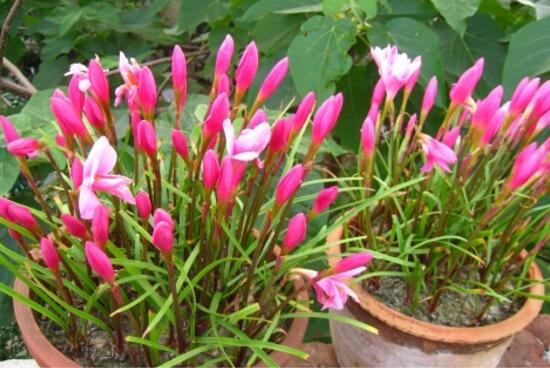
As a common excellent choice for indoor growing, Zephyranthes carinata is fairly easy to cultivate, but propagating it yourself is not so easy. Every plant has propagation methods suited to it, and Zephyranthes carinata generally has three: bulb division, offset division, and sowing.
2. The three propagation methods for Zephyranthes carinata
The propagation methods for Zephyranthes carinata include bulb division, bulb offset division, and sowing. The bulb division method is to dig out the bulbs, separate them from the mother plant, and plant them in soil; bulb offset division is to dig out the underground bulbs from the pot, remove the old soil clinging to them, and place them in fresh growing medium; sowing means sowing Zephyranthes carinata seeds in autumn. Let's take a look at the specific steps.
(1) Bulb division propagation of Zephyranthes carinata
1. Timing of bulb division
The most common way to propagate Zephyranthes carinata is bulb division, and the best time to do it is spring and autumn. Note that during propagation, you must ensure sufficient light, fertilizer, and water.
2. Method of division
Dig out the bulbs, separate them from the mother plant, then plant them in soil so they become independent new plants. After dividing the bulbs, water thoroughly, place in a shaded spot, and after one week they can be exposed to sunlight.
(2) Bulb offset division propagation of Zephyranthes carinata
1. Timing of offset division
The timing of offset division is not fixed, but there is a requirement for the plant itself: Zephyranthes carinata must have grown for 2-3 years.
2. Method of bulb division
Dig the underground bulbs out of the pot, grouping 3-5 Zephyranthes carinata bulbs per clump, then separate them and remove the old soil they carried. Place fresh growing medium in a flower pot, and finally plant the Zephyranthes carinata bulbs in it. Note: if you want to continue dividing and replanting later, you can choose to plant deep, with the soil about three cm above the bulbs.
(3) Sowing propagation of Zephyranthes carinata
About 20 days after Zephyranthes carinata finishes blooming, its seeds mature, usually in mid-to-late September. After collecting the seeds, sow them immediately and cover with a 1 cm thick layer of substrate. Afterwards, water only when the potting soil is slightly dry, but the force of the water must not be too strong, so as not to wash the seeds out.
Overall, when propagating Zephyranthes carinata, whether by bulb division, offset division, or sowing, all can survive, but the one most suitable for flower lovers and with the highest survival rate is bulb division. Of course, methods are fixed but people are flexible; you can choose a method to propagate according to your actual situation. That is all the editor has to share about Zephyranthes carinata propagation methods, and I hope it helps everyone.
Propagation methods and pest and disease control for Zephyranthes candida, and how it differs from Zephyranthes carinata
Zephyranthes carinata has larger flowers that are pink, with petals slightly curved and drooping; Zephyranthes rosea is deep peach-red, and every bulb of a mature plant can bloom. The clustered masses of flowers put on a spectacular display under bright sun, charming in a thousand ways and loved by all who see them. What are the propagation methods for Zephyranthes carinata? What methods are there for its pests and diseases? Come learn with the editor.
Propagation methods and pest and disease control
You can use division or bulb planting, which can be done throughout the year, but spring is best. Simply dig up the bulbs, plant 3-5 bulbs per spot, and water to maintain appropriate
humidity; they root very easily. When digging up the bulbs, be careful not to damage them. If they carry too many leaves and flower stems, cut off the upper part, keeping the intact bulbs and 6-8 cm of leaves for planting. If the bulbs have already sprouted flower buds, water thoroughly after dividing, and they can still bloom. [6]
The seeds of Zephyranthes carinata generally mature in September-October. Because its flowering period is relatively long, the seed collection time is not concentrated either. Watch carefully and, when the fruit skin turns from green to black, select plump, well-filled seeds and harvest them promptly; otherwise the fruit splits open and, once the seeds fall off, they are hard to collect. After collecting the fruit, dry it promptly; once the fruit skin splits, thresh in time and remove debris to obtain pure seeds. Because Zephyranthes carinata has slightly poor cold tolerance, spring sowing should be used.
Seed storage: because Zephyranthes carinata seeds are relatively small and low in moisture content, once fully dried, simply put the prepared seeds into a kraft paper bag for storage to prevent mildew.
Diseases include leaf rust and leaf spot; pests include white grubs. Zephyranthes rosea has strong resistance to pests and diseases. When disease occurs, spray the whole plant with 1:3000 thiophanate-methyl; for underground pests, drench the plant with phoxim.
Differences between Zephyranthes candida and Zephyranthes carinata
(1) Leaves
Zephyranthes candida leaves are round, upright, and not very prone to bending or lodging; Zephyranthes carinata leaves are flat and a bit wider, and more prone to bending or lodging.
(2) Flowers
Zephyranthes candida flowers are generally white, while Zephyranthes carinata flowers are generally pink, and Zephyranthes carinata flowers are slightly larger than those of Zephyranthes candida.
Main varieties
Amaryllidaceae; aliases include jiucai lian (Beijing), sai fan hong hua (Guangxi, Guizhou), han shui xian and kong xin jiu cai (Guizhou), chang pu lian, hong yu lian, feng yu hua (North China), and hong chang pu lian (Beijing). The plant height is about 15-30 cm, and mature plants form clumps. Leaves are linear, very much like chives. Flower stems emerge from the leaf clumps, with 6 petals. Zephyranthes rosea is deep peach-red, and every bulb of a mature plant can bloom. Native from southern Mexico to Guatemala, it has been introduced and cultivated in gardens across northern and southern China, and is commonly seen in Guizhou, Guangxi, and Yunnan.
Growth habits
It is robust by nature, drought-tolerant and resistant to high temperatures, and easy to cultivate. The suitable growing temperature is 22-30 degrees, and fertile sandy loam is best as the growing medium. Zephyranthes carinata likes light but also tolerates partial shade. It likes a warm environment but is also fairly cold-tolerant. It prefers deep, flat, well-drained loam or sandy loam. It likes moisture but fears waterlogging. It has strong adaptability, strong resistance to pests and diseases, and strong bulb sprouting ability, making it easy to propagate.
That is all I have learned today about Zephyranthes carinata. I hope flower lovers find this article helpful. To learn more about Zephyranthes carinata, please keep following Duorou Huapu, and we will provide you with more related knowledge!
Planting methods and cultivation techniques for the herbaceous flower Zephyranthes candida
Zephyranthes candida, also known as cong lian, jiucai lian, gan feng cao, and others, is a perennial herbaceous plant of the genus Zephyranthes in the Amaryllidaceae family. Native to South America, it is now grown all over China, often used as edging material for flower beds, and also suitable for clump planting in green spaces. It is best used as ground cover in semi-shaded areas under trees or planted beside garden paths. Let's take a look below at the cultivation methods and precautions for Zephyranthes candida!
Growth habits of Zephyranthes candida
Zephyranthes candida likes fertile soil, likes ample sunlight, tolerates partial shade and low humidity, and prefers fertile, slightly clayey, well-drained soil. It is fairly cold-tolerant; in the Yangtze River basin it can remain evergreen, and it can survive for a fairly long time below 0°C. At around -10°C it will not freeze for a short time, but over a longer period it may freeze to death. Zephyranthes candida divides its bulbs naturally very easily, and division propagation is easy; when cultivating, take care to protect it from cold appropriately in winter.
Propagation methods for Zephyranthes candida
1. Division: divide Zephyranthes candida after the soil thaws in early spring. Take the mother plant out of the flower pot, shake off excess potting soil, separate the tangled root system as much as possible, and cut it open with a sharp small knife into two or more plants. Each divided plant must carry a considerable root system, and its leaves should be pruned appropriately to help it survive.
2. Sowing: about 20 days after Zephyranthes candida blooms, the seeds mature and must be harvested promptly. The most suitable temperature for sowing is 15-20°C, and autumn sowing is usually done after mid-to-late September. Stick the seeds one by one onto the surface of the substrate, and cover with substrate 1 cm thick. Afterwards, water only when the potting soil is slightly dry, but the force of the water must not be too strong, so as not to wash the seeds out.
Cultivation methods for Zephyranthes candida
1. Environment: choose a wind-sheltered, sunny spot with fertile, moist soil. During the growing period, keep the soil moist. During the full blooming period, if yellow leaves and spent flowers are found, cut and remove them promptly to keep the plant looking good and avoid consuming more nutrients.
2. Potting soil: potting soil is crucial. Heavy clay, powdery soil, and alkaline soil are all unsuitable for growing Zephyranthes candida, because such soils are not good for root development, drain poorly, and have poor aeration; growing Zephyranthes candida in this kind of soil will produce stunted plants with small leaves and short roots.
3. Watering: during the growing period, Zephyranthes candida needs sufficient water; keep the potting soil moist often, but not waterlogged. In dry weather, also spray water on the leaves often to increase air humidity, otherwise the leaf tips tend to turn yellow and wither.
4. Fertilizing: like other herbaceous flowers, Zephyranthes candida has relatively high fertilizer and water needs. Top-dressing with dilute cake fertilizer water 2-3 times a year is enough for good growth and abundant blooming. After fertilizing, keep the leaves and flowers dry at night.
5. Temperature: Zephyranthes candida likes a warm climate, but high temperatures and stuffy heat in summer are not good for growth. It has strict temperature requirements for winter; growth stops when the ambient temperature is below 10°C, and it cannot overwinter safely when frost occurs.
Precautions for Zephyranthes candida
1. Applying fertilizer: Zephyranthes candida has relatively high fertilizer and water needs, but it most fears indiscriminate fertilizing, concentrated fertilizer, and one-sided application of nitrogen, phosphorus, or potassium fertilizer. Follow the principle of “dilute fertilizer applied frequently, small amounts and many times, complete nutrition.”
2. Key watering points: during the growing period, Zephyranthes candida needs sufficient water; keep the potting soil moist often, but not waterlogged. In dry weather, also spray water on the leaves often to increase air humidity, otherwise the leaf tips tend to turn yellow and wither.
3. Replacing potting soil: under normal circumstances, Zephyranthes candida is not repotted specially; instead, repot and replant it once a year when dividing. First put 2-3 cm of coarse substrate at the bottom of the pot as a drainage layer, then place the plant in.
4. Pest and disease control: Zephyranthes candida is mainly harmed by leaf blight, which can be controlled by spraying 65% zineb wettable powder at 600 times dilution. Pests include diamondback moth and thrips, which can be controlled by spraying 2.5% deltamethrin emulsifiable concentrate at 4000 times dilution.