What are the propagation methods for creeping woodsorrel? Spring propagation roots easily
Since creeping woodsorrel is a perennial with bulbs, its propagation usually uses division and sowing, and in terms of difficulty, division is easier than sowing and has a higher success rate; you only need to prepare a flower pot and substrate and use the correct technique to propagate it successfully. So how do you propagate creeping woodsorrel? Let's look at the propagation methods for creeping woodsorrel.
How to propagate creeping woodsorrel
I. How to divide creeping woodsorrel
1. Timing
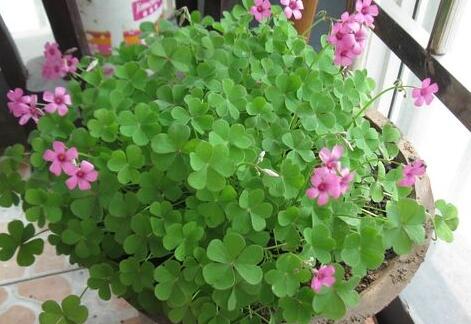
Generally speaking, creeping woodsorrel can be propagated by cuttings all year round, but the ideal time is spring, specifically April to May, because this is the stage most suitable for its growth; after propagation it roots relatively easily and quickly grows leaves.
2. Operation method
(1) How do you propagate creeping woodsorrel when using division? From among many creeping woodsorrel plants, choose the one with the best growth; the criterion is that the rhizome has more branches. Then take it out of the flower pot, keeping the soil around the roots.
(2) Use your hands or a tool to divide the plant into several clumps, each retaining at least 3 bud eyes. If some plants have many leaves, you may appropriately remove some old branches and leaves, leaving only the new, deep green leaves.
(3) After the wounds on the divided plants have dried, plant them in the prepared flower pot, press the substrate firm and water thoroughly, then keep the temperature between 13 and 20 degrees. After 1-2 weeks the creeping woodsorrel will root; once new leaves grow, manage it according to the cultivation methods for creeping woodsorrel.
II. How to sow creeping woodsorrel seeds
1. Timing
Creeping woodsorrel is generally suitable for sowing in spring, because the temperature it needs for germination is 15-18 degrees, and germination takes 2 weeks; spring temperatures are suitable and it is convenient for care and management after propagation.
2. Method
(1) Among the propagation methods for creeping woodsorrel, sowing is also one of the commonly used ways. Because its seeds are relatively small, indoor pot sowing is generally used; before sowing, prepare a flower pot of suitable size and a substrate mixed from garden soil or river sand.
(2) Evenly scatter the seeds on the soil surface, then cover with 1-2 cm of soil, water appropriately to keep the soil moist, then cover with plastic film to ensure the temperature is 15-18 degrees. Usually they will germinate after 15 days, and once small seedlings grow they can be transplanted into flower pots.
Creeping woodsorrel Oxalis corniculata L. Creeping woodsorrel gallery: how to grow creeping woodsorrel / how to propagate creeping woodsorrel
Creeping woodsorrel profileCreeping woodsorrel Oxalis corniculata L.
Cultivation methods and precautions for creeping woodsorrel Introduction to creeping woodsorrel
Creeping woodsorrel, a perennial herb, the whole plant sparsely pubescent; stems prostrate or ascending, much branched. Leaves alternate, palmately compound with 3 leaflets, obcordate, leaflets sessile. Flower colors varied, with red and yellow being common; it likes sunny, warm, humid environments, and in hot summer regions it is suitable to provide half shade; its drought resistance is relatively strong, and it is not cold tolerant; it can generally grow in ordinary garden soil, but grows most vigorously in sandy loam rich in humus, and has a short dormant period in summer. The whole plant is used as medicine, with the effects of clearing heat and detoxifying, reducing swelling and dispersing accumulations.
Because its flowers are yellow, creeping woodsorrel is also called yellow-flowered creeping woodsorrel in some literature from Taiwan, China. However, in some literature it refers to Oxalis pes-caprae; this is hereby clarified.
Creeping woodsorrel (Tang Materia Medica) sour-tasting grass (Guangzhou), jiujiu acid (Tang Materia Medica), sour vinegar sauce (Henan).
Morphological characteristics of creeping woodsorrel
Stem: herbaceous, stems erect or climbing.
Leaves: leaflets heart-shaped, about 0.3-1.5 cm long, 0.5-2 cm wide, usually three leaflets arranged around a central axis, occasionally with multiple leaves growing together. Leaf stalks about 1-7 cm long, stipules very small but clearly distinct.
Fruit: fruit a conical capsule, about 5-20 mm, which bursts open and ejects seeds when mature.
Seeds: immature seeds white, mature seeds brown, the seeds have rough protrusions resembling fingerprints and can easily attach to surfaces.
Flowers: flowers yellow, single-petaled, usually with 5 petals, petals about 0.7-1 cm long, flower stalks about 0.6-1.5 cm long.
Herbaceous, 10-35 cm tall, the whole plant pubescent. Rhizome slightly thickened. Stems slender, much branched, erect or prostrate, rooting at the nodes of prostrate stems. Leaves basal or alternate on stems; stipules small, oblong or ovate, densely long-pilose at the margin, basally connate with the petiole, or in the same plant the lower stipules are obvious while the upper stipules are not obvious; petiole 1-13 cm long, with a joint at the base; leaflets 3, sessile, obcordate, 4-16 mm long, 4-22 mm wide, apex concave, base broadly cuneate, both surfaces pubescent or the upper surface glabrous, more densely hairy along the veins, margin with appressed cilia. Flowers solitary or several gathered in umbel-like inflorescences, axillary, peduncle reddish, nearly as long as the leaves; pedicels 4-15 mm long, extending after fruiting; bracteoles 2, lanceolate, 2.5-4 mm long, membranous; sepals 5, lanceolate or oblong-lanceolate, 3-5 mm long, pubescent on the back and margin, persistent; petals 5, yellow, oblong-obovate, 6-8 mm long, 4-5 mm wide; stamens 10, filaments white and semi-transparent, sometimes sparsely short-pubescent, connate at the base, long and short alternating, the longer ones with larger and earlier-maturing anthers; ovary oblong, 5-locular, covered with short appressed hairs, style 5, stigma capitate. Capsule long-cylindrical, 1-2.5 cm long, 5-angled. Seeds long-ovate, 1-1.5 mm long, brown or reddish-brown, with transverse ribbed reticulate markings. Flowering and fruiting period February-September.
Original morphology
Creeping woodsorrel perennial herb. Rhizome slender, stems slender and weak, often brown, prostrate or ascending, much branched, pubescent. Common petiole 2-6.5 cm long; stipules obvious; leaflets 3, obcordate, 4-10 mm long, apex concave, base broadly cuneate, upper surface glabrous, lower surface sparsely covered with appressed hairs, denser on the veins, margin with appressed cilia; sessile. Flowers solitary or several forming axillary umbels; pedicels as long as the petioles; flowers yellow, sepals long-ovate-lanceolate, about 4 mm long, apex obtuse; petals obovate, about 9 mm long, apex rounded, slightly connate at the base; filament bases connate into a tube; styles 5. Capsule nearly cylindrical, 1-1.5 cm long, slightly 5-angled, beaked, dehiscing elastically when ripe; seeds dark brown, nearly ovate but flattened, with longitudinal groove lines. Flowering period May-August, fruiting period June-September.
Creeping woodsorrel is a perennial herb, the whole plant sparsely pubescent; stems prostrate or ascending, much branched. Leaves alternate, palmately compound with 3 leaflets, obcordate, leaflets sessile. Flowers yellow, 1 to several forming axillary umbels, sepals oblong, apex acute, pubescent; petals obovate, slightly reflexed outward; filament bases connate into a tube. Capsule nearly cylindrical, 5-angled, short-pubescent, ejecting seeds when it splits open at maturity. Seeds small, flat-ovate, reddish-brown, with transverse grooves. Flowering and fruiting period April-August.
Ecological habits of creeping woodsorrel
It grows on hillside grass patches, along river valleys, roadsides, field edges, wasteland, or in shaded and damp places under forests.
Distribution range of creeping woodsorrel
Widely distributed throughout the country. It grows on hillside grass patches, along river valleys, roadsides, field edges, wasteland, or in shaded and damp places under forests. It is distributed in temperate and subtropical Asia, Europe, the Mediterranean, and North America.
Creeping woodsorrel is widely distributed around the world, including Oceania, the Caribbean, Bermuda, China, Taiwan, China, Colombia, Canada, the Cayman Islands, Australia, Costa Rica, Guatemala, Indonesia, Hawaii, Japan, Malaysia, Guam, South Korea, the United States, Vietnam, Mexico, Mauritius, New Zealand, Papua New Guinea, Thailand, and others.
Dietary therapy or medicinal value of creeping woodsorrel
The medical information and health dietary therapy information on Huahua.com is for reference only and cannot be used as a basis for diagnosis or medical treatment. Any health problem should be consulted with professional medical staff, and the treatment of any disease should follow doctor's advice.
Ultimate flower-protecting task: to love yourself, start from reality and strictly follow doctor's advice. For illness, do not be careless, do not delay, do not give up hope, face it bravely, warm the silent world with love, and care for the flower field in your heart with your heart.
The medical content on Huahua.com is for reference only and cannot be regarded as professional advice. For any health problem, you should consult professional medical staff. Medicinal information (I)
The whole plant is used as medicine; it can reduce fever and promote urination, reduce swelling and disperse blood stasis; the stems and leaves contain oxalic acid, which can be used to polish mirrors or wipe copperware to make them shiny. Cattle and sheep can be poisoned to death if they eat too much of it.
Medicinal material name: yellow-flowered creeping woodsorrel, sour grass, baby's breath, three-leaf sorrel, sour-tasting grass, sour rice grass, liujiaofang
Chinese family name: Oxalidaceae
Latin family name: Oxalidaceae
Chinese genus name: Oxalis
Latin genus name: Oxalis
Chinese species name: creeping woodsorrel
Latin species name: Oxalis corniculata L.
Medicinal part: whole plant
Morphological characteristics: perennial herb, 15-22 cm tall, the whole plant sour in taste. Roots slender and long or thick; stems slender and soft, the lower part lying obliquely on the ground in a prostrate manner, much branched, forming clumps, the upper part slightly erect, green, slightly purplish, hairy, with adventitious roots at the nodes. Leaves trifoliolate compound, with long petioles; leaflets 3, obcordate, 5-13 mm long, 6-15 mm wide, apex concave, base cuneate, entire, with short hairs along the veins and margin on the back; leaflets sessile, umbels axillary, with 2-6 flowers, peduncle slender, purplish, hairy; sepals and petals both in 5s; stamens 10, 5 long and 5 short, filament bases connate into a tube; ovary superior, 5-locular; stigma 5-lobed. Capsule nearly cylindrical, with 5 longitudinal angles, hairy, splitting open on its own when mature and ejecting seeds. Flowering period July-August, fruiting period August-September.
Distribution: various places
Habitat: roadsides, fields and gardens, beside houses
Habit: sun-loving
Propagation method: seeds
Functions: rheumatism, traumatic injuries, snake bites
Main indications: cold and fever, nosebleeds, hepatitis, urinary tract infection, stones, neurasthenia, bacillary dysentery, erysipelas, traumatic injuries, carbuncles and sores
Medicinal information (II)
Scientific name: Oxalis corniculata Linn.
English name: Creeping Woodsorrel, Creeping Oxalis
Family name: Oxalidaceae
Aliases: sour grass, sour sour grass, turtledove acid, three-leaf sorrel, hydrochloric acid seedling grass, suanji, three-leaf sorrel grass, sour mother grass, turtledove acid grass, small sour thatch, sparrow woods grass, sour infusion, chisunshi, sour jiujiu, tianzi grass, sparrow grass, sour mother grass, small sour sprout, sour grass, triangular sorrel, sparrow sorrel, turtledove grass, sour-tasting grass, sour mimi grass, three-leaf sorrel infusion, sour spotted amaranth, salty sour grass, sour fermented grass, sour deliu, ground-covering lotus, sour plum grass, three-leaf broken copper coin, yellow flower plum, old duck bill, yellow flower grass, six-leaf lotus, wild royal melon grass, royal melon acid, sky-reaching bubble, long blood grass, sour zhi grass, sour pizi, Dongyang fire grass, crystal flower, pugua acid, bobo acid sanmei grass, old crow acid, seven-leaf grass, sun plum.
Traditional Chinese medicine properties
Introduction: Creeping woodsorrel is truly so ordinary that it cannot be more ordinary. Part the grass and it can be seen everywhere. Its leaves all grow at the top of the stem, and each stem has only three, like helicopter rotor blades, or the bamboo dragonflies children used to play with. The "cu" character in "cujiangcao" is interchangeable with "vinegar," and the Compendium of Materia Medica also says it "tastes like vinegar," and both stems and leaves are so. In the Newly Revised Materia Medica compiled in the Tang Dynasty, there is already a record of "sour infusion," which says this grass is collected in May, dried in the shade, and can be used as medicine to treat difficult childbirth. The whole plant is used as medicine, with the effects of clearing heat and detoxifying, reducing swelling and dispersing accumulations; it can treat snake and insect stings, and can also treat blood in urine, urinary tract infection, jaundice and hepatitis, etc. It can be collected in all four seasons, and when collected in summer and autumn when there are flowers and fruits, the medicinal effect is relatively good; remove mud and sand and dry in the sun. Nature, flavor, and meridian entry: sour, cool. Functions and indications: clear heat and drain dampness, detoxify and reduce swelling. Used for cold and fever, enteritis, urinary tract infection, urinary tract stones, neurasthenia; external use for traumatic injuries, venomous snake bites, carbuncles and sores, athlete's foot, eczema, burns and scalds. Usage and dosage: 0.5-2 liang; appropriate amount for external use, crush fresh product and apply to the affected area, or decoct in water and wash.
Medicinal material traits
Creeping woodsorrel explanation of names: sour infusion, three-leaf sorrel, triangular sorrel, sour mother, vinegar mother, suanji, turtledove acid, sparrow woods grass, small sour thatch, chisunshi.
Odor: sour, cold, non-toxic.
Medicinal value
The whole plant is used as medicine; it can reduce fever and promote urination, reduce swelling and disperse blood stasis; the stems and leaves contain oxalic acid, which can be used to polish mirrors or wipe copperware to make them shiny. Cattle and sheep can be poisoned to death if they eat too much of it.
Creeping woodsorrel (Tang Materia Medica)
[Source] The whole plant of the Oxalidaceae plant creeping woodsorrel.
[Chemical composition] Stems and leaves contain a large amount of oxalate. Leaves contain citric acid and a large amount of tartaric acid, stems contain malic acid.
[Nature and flavor] Sour, cold.
Tang Materia Medica: taste sour, cold, non-toxic.
Lüchan Rocks Materia Medica: taste sour, slightly toxic.
Diannan Materia Medica: nature cold, taste sour and slightly astringent.
[Meridian entry] Depei Materia Medica: enters the Hand Yangming and Taiyang meridians.
[Efficacy of creeping woodsorrel] Clear heat and drain dampness, cool blood and disperse stasis, reduce swelling and detoxify.
Treats diarrhea, dysentery, jaundice, gonorrhea, reddish-white vaginal discharge, measles, hematemesis, epistaxis, sore throat, boils, carbuncles, scabies, hemorrhoids, rectal prolapse, traumatic injuries, and scald burns.
Literature discussion
Tang Materia Medica: mainly for malignant sores and fistula, pound and apply it, kills various small insects. Eating it relieves heat and thirst.
Materia Medica Tujing: treats women's blood stagnation and obstruction; wash clean and grind finely, take with warm wine.
Diannan Materia Medica: treats chronic diarrhea and intestinal slackness, chronic dysentery with red and white, decoct with granulated sugar and take.
Compendium: mainly treats various urinary strangury, reddish-white vaginal discharge; together with Marchantia and earthworm treats sand-stone strangury; decoct in water to wash hemorrhoid pain and rectal prolapse; pound and apply for scald, fire, snake, and scorpion injuries.
Shengcao Yaoxing Beiyao: kills mites and relieves pain, disperses heat and reduces swelling, regulates traumatic injuries, disperses blood stasis, decoct with wine and take; also dries water and relieves itching.
Yilin Zuanyao: tonifies the lung and drains the liver, removes heat qi, removes blood stasis, astringes yin.
Fenlei Caoyaoxing: stops malaria and blocks the nose; stir-fried with wine and applied for fish-mouth sores.
Lingnan Caiyaolu: treats measles, snake poison, scabies.
Luchuan Materia Medica: reduce swelling and relieve pain, remove necrotic flesh. Treats sores, carbuncles, and ulceration.
Guiyang Folk Medicinal Herbs: clear heat, promote urination, set bones. Treats urinary blockage and jaundice.
Chinese Medicinal Plant Illustrated Guide: mix with brown sugar, decoct, and take to treat liuhuo (early stage of filariasis).
Shaanxi Plant Medicine Investigation: strengthen the stomach and relieve cough.
Hunan Materia Medica Record: treats fever and cough, heart and stomach qi pain, sores and ulcers swollen and painful, toxic sores.
Usage and dosage Oral administration: decoct in water, 2-4 qian (fresh 1-2 liang); pound for juice or grind into powder. External use: decoct in water and wash, pound and apply, pound for juice and smear, mix and apply, or decoct in water for mouth rinsing.
Medicinal uses
[Wa medicine] Rixi dagu, daixi dagu: the whole plant treats fractures, traumatic injuries, venomous snake bites, icteric hepatitis, rheumatoid arthritis, from Zhongwa Yao and Dian Yao Lu. Xiduiniao: used for insomnia and many dreams, traumatic injuries, fire burns, respiratory tract inflammation.
[Yi medicine] Creeping woodsorrel, azhajiji, azha'eji, weisairoubai, sour infusion grass: the whole plant or root treats wind-cold cold, irregular menstruation, hemorrhoid bleeding, toothache, waist pain, fractures, heat binding in the large intestine, cold-cold body pain, leg sores and ulceration, from Yi Zhi Yao Xu. The whole plant is used for blood stasis swelling and pain, hemorrhoid fistula and anal fissure, anorectal prolapse, carbuncles, ulcers, and boils, from Ailao.
[Miao medicine] Mahansuan, dongzhenmi: the whole plant treats malignant sores and hemorrhoid fistula, various urinary strangury, reddish-white vaginal discharge, hemorrhoid pain and rectal prolapse, scald, fire, snake, and scorpion injuries, women's blood binding with both urination and defecation obstructed, ringworm sores with itching, and swollen and painful teeth. Treats fever, cough, heart and stomach qi pain, sores and ulcers swollen and painful, toxic sores, from Xianglan Kao. Eshugai: the whole plant treats urinary retention, difficult childbirth, retained placenta, ringworm, herpes zoster, impetigo, from Gui Yao Bian.
[Dai medicine] Songxiangga: used to clear heat and promote urination, cool blood and disperse stasis, reduce swelling and detoxify, from Dai Yi Yao. Songxiangga: the whole plant treats palpitations and dizziness, excessive sweating and prostration, rheumatic arthritis, from Banna Dai Yao. Songxiangga: the whole plant is used for palpitations and dizziness, excessive sweating and prostration, rheumatic arthritis, from Dian Sheng Zhi.
[Bai medicine] The whole plant treats cold and fever, enteritis, hepatitis, urinary tract infection, stones, neurasthenia; external use for traumatic injuries, from Dali Zi Zhi. [Jingpo medicine] byviqzvin: used for enteritis, hepatitis, urinary tract infection, stones, external use for traumatic injuries, from Dehong Yao Lu.
[Achang medicine] Creeping woodsorrel: functions same as Jingpo ethnic group, from Dehong Yao Lu.
[De'ang medicine] Daoburangrui: functions same as Jingpo ethnic group, from Dehong Yao Lu.
[Sui medicine] MaHongdi: the whole plant treats fractures, from Shui Yi Yao.
[Dong medicine] Madengsheng: the whole plant treats unnamed swelling and toxicity, from Gui Yao Bian. Dangtusong: the whole plant treats pediatric asthma [10].
[Maonan medicine] Wozhuncao: the whole plant treats sandworm feet, from Gui Yao Bian. Mal demh semt, Sanba chen (Samp bav semt): the whole plant mainly treats bingxie lanyou yizi, mingdao (sprain), from Dong Yi Xue.
[Yao medicine] Kabi: the whole plant treats dysentery, difficult childbirth, retained placenta, impetigo, knife and gun wounds, from Gui Yao Bian.
[Zhuang medicine] Laoyasuan: the whole plant treats sore throat, traumatic swelling and pain, postpartum bleeding, various hemorrhages, poor urination and defecation, impetigo, eczema, venomous snake bites, fractures, from Gui Yao Bian.
[Lisu medicine] Alachabo: the whole plant is used for cold and fever, enteritis, hepatitis, urinary tract infection, stones, neurasthenia; fresh leaves are pounded and applied externally to the affected area to treat traumatic injuries, carbuncles and sores, from Nujiang Yao.
[She medicine] The whole plant treats diphtheria, pharyngitis, tonsillitis, stomatitis, urethral infection, biliary ascariasis, pediatric night crying, puerperal fever, postpartum abdominal pain, early mastitis, hemorrhoids, rectal prolapse, eczema, ringworm, herpes zoster, unnamed swelling and toxicity, burns, traumatic injuries, from She Yi Yao.
[Hani medicine] Amiwoqian: the whole plant treats cold and fever, enteritis, hepatitis, urinary tract infection, traumatic injuries, from Hani Yao.
[Tujia medicine] Sour-tasting mat (suan wei xir): the whole plant treats cold and fever, urinary tract infection, traumatic injuries and sprains, from Tujia Yao.
Pharmacological effects
It has antibacterial action against Staphylococcus aureus, but is ineffective against Escherichia coli; this plant is said to be toxic to sheep. The related plant Oxalis ranunculoides can damage the kidneys of livestock, causing a marked rise in non-protein nitrogen in the blood.
Clinical applications
1. Treating insomnia: take 10 jin of sour infusion grass and 2 jin of pine needles, add 8000 mL of water, decoct for 1 hour, filter and remove the residue; separately take 1 jin of jujubes, crush them, add 2000 mL of water, decoct for 1 hour, filter and remove the residue. Mix the two liquids, add an appropriate amount of sugar and preservative, and set aside. Take 15-20 mL each time, 3 times a day. After observing more than 5000 cases, there was a certain sedative and sleep-inducing effect.
2. Treating infectious hepatitis: take 1 liang of creeping woodsorrel and 1 liang of lean pork, stew and take. 1 dose per day, taken continuously for 1 week. Treating more than 20 cases (some cases were treated in combination with Chinese herbal compound formulas), all achieved certain therapeutic effects.
Chemical composition
The whole plant contains ascorbic acid, dehydroascorbic acid, pyruvic acid, glyoxalic acid, deoxyribonucleic acid, vitexin, isovitexin, vitexin-2"-O-β-D-glucopyranoside, as well as 17 compounds such as 2-heptenal, 2-pentylfuran, trans-phytol, and also contains neutral lipid, glycolipide, phospholipide, and fatty acids (C10-C14), a-tocopherol, β-tocopherol.
Medicinal Name Verification
Creeping Woodsorrel (Li Dangzhi's "Yao Lu"), Three-leaf Sorrel (Qianjin Fang), Cumo Grass, Jiujiu Sorrel, Small Sorrel (Tang Bencao), Quelin Grass (Waitai Miyao Fang), Sour Jelly, Chisunshi (Bencao Tujing), Cujiujiu, Tianzi Grass (Baiyi Xuanfang), Suanjiang Grass (Lüchanyan Bencao), Que'er Grass, Suanmu Grass (Yonglei Qianfang), Suanjiao Grass (Diannan Bencao), Small Sorrel Sprout (Pinhui Jingyao), Sour Grass (Zhaiyuan Fang), Three-leaf Sorrel, Triangular Sorrel, Que'er Sorrel (Gangmu), Suanmimi Grass (Gangmu Shiyi), Spotted Dove Grass, Sour Taste Grass (Shengcaoyao Xingbei Yao), Three-leaf Sorrel (Zhiwu Mingshi Tukao), Suansuan Grass (Fenlei Caoyaoxing), Sour Spotted Amaranth (Lingnan Caiyao Lu), Salty Sour Grass, Sour Sorrel Grass (Fujian Minjian Caoyao), Suandeliu (Jiangsu Zhiyao Zhi), Pudi Lotus (Nanning Shi Yaowu Zhi), Sour Plum Grass, Three-leaf Broken Copper Coin, Yellow Flower Plum (Jiangxi Minjian Caoyao), Old Duck Bill, Mantianxing (Guangxi Zhongyao Zhi), Yellow Flower Grass, Six-leaf Lotus, Wild Wanggua Grass, Wanggua Sorrel, Chongtianpao, Changxue Grass (Hunan Yaowu Zhi), Suanzhi Grass, Suanpizi (Mindong Bencao), Dongyang Fire Grass, Crystal Flower (Shanghai Changyong Zhongcaoyao), Pugua Sorrel, Bogu Sorrel (Zhejiang Minjian Changyong Zhongcaoyao).
The source is the whole plant of Oxalis corniculata, a plant in the family Oxalidaceae. Oxalis - Purple-flowered Oxalis. Purple-flowered Oxalis is also known as Yansuanzai Grass (Taiwan); Large Sour Taste Grass, Large Old Crow Sorrel, Dimaizi, Purple Oxalis, Large-leaf Oxalis, Large Salty Sweet Sour Grass, Water Suanzhi, One Grain Snow, Geyehe, Sanjiadao, Copper Hammer Grass.
Medicinal Information (Part Three)
Medicinal name: Creeping Woodsorrel.
Chinese pinyin: cu jiang cao.
English name: Creeping Woodsorrel Herb, Herb of Creeping Oxalis.
Latin plant animal mineral name: Oxalis corniculata L.[O.repens Thunb.].
Efficacy classification: Heat-clearing and dampness-drying medicine.
Family and genus classification: Oxalidaceae.
Nature and flavor: Sour; cold.
Meridian tropism: Large intestine; small intestine meridians.
Functions: Clear heat and drain dampness; cool blood and dissipate stasis; resolve toxins and reduce swelling.
Indications: Damp-heat diarrhea; dysentery; jaundice; strangury; leukorrhea; hematemesis; epistaxis; hematuria; irregular menstruation; traumatic injury; sore throat; carbuncle, swelling, and boils; erysipelas; eczema; scabies; hemorrhoids; measles; scald and burn; snake and insect bites.
Usage and dosage: Oral administration: decoct in water, 9-15g, fresh product 30-60g; or grind into powder; or squeeze juice from fresh product and drink. External use: appropriate amount, decoct in water for washing, pound into a paste for application, pound for juice to apply, or decoct in water for gargling.
Ecological environment: Grows in wasteland, fields, and roadsides.
Resource distribution: Distributed in most areas of the country.
Medicinal material source: The whole plant of Oxalis corniculata, a plant in the family Oxalidaceae.
Harvest and storage: Can be harvested throughout the year, with better medicinal efficacy when collected in summer and autumn when there are flowers and fruits; remove mud and sand, sun-dry or use fresh.
Creeping Woodsorrel - Medication contraindications: This plant is said to be toxic to sheep.
Practical Selected Prescriptions
To treat watery diarrhea: Suanjiang Grass 3 qian, brew, add brown sugar and steam before taking. (Yunnan Zhongyi Yanfang)
To treat dysentery: Grind Creeping Woodsorrel into powder, take 5 qian per dose, take with boiled water. (Hunan Yaowu Zhi)
To treat damp-heat jaundice: Creeping Woodsorrel 1 liang to 1 liang 5 qian. Decoct twice in water, take in divided doses. (Jiangxi Minjian Caoyao)
To treat blood strangury and heat strangury: Take the juice of Suanjiang Grass, mix with honey and take together. (Lüchanyan Bencao)
To treat urinary blockage and urinary strangury: Suanjiang Grass 2 liang, sweet wine 2 liang. Decoct together in water and take, 3 times a day. (Guiyang Minjian Yaocao)
To treat inability to urinate and defecate: Sour Grass 1 large handful, Plantain herb 1 handful. Pound to extract juice, add 1 qian of granulated sugar, mix and take 1 cup; if still blocked, take again. (Zhaiyuan Fang)
To treat urinary obstruction with fullness and stuffiness of qi: Suanjiang Grass 1 handful. Grind and take the natural juice, mix with an equal half of mellow wine, and take; for those who do not drink alcohol, use Licorice 3 cun, Ginger 1 jujube-sized piece, chop, grind together, use 5 fen cup of well flower water, filter and take the juice mixed, which is also acceptable. (Shengji Zonglu, Suanjiang Wine)
To treat red and white leukorrhea: Three-leaf Sour Grass, dry in the shade and grind into powder, take 3 qian spoonfuls with warm wine on an empty stomach. (Qianjin Fang)
To treat measles: Sour Taste Grass 2 to 3 qian each time. Decoct in water and take. (Lingnan Caiyao Lu)
To treat nasal bleeding: Fresh Creeping Woodsorrel pound into a paste, knead into small pills, insert into the nasal cavity. (Jiangxi Minjian Caoyao)
To treat vomiting blood and epistaxis: Creeping Woodsorrel 4 qian, several grains of salt. Decoct in water and take. (Mindong Bencao)
To treat malaria: Creeping Woodsorrel 3 qian, decoct in water and take. (Hunan Yaowu Zhi)
To treat putrefaction of the gums: Fresh Creeping Woodsorrel with a little salt, pound into a paste and squeeze out the juice, use sterilized cotton to dip in the juice, wipe and wash the affected area, 3 to 5 times a day. (Jiangxi Minjian Caoyao)
To treat sore throat: Fresh Creeping Woodsorrel 1 to 2 liang, a little salt. Pound together into a paste, wrap in gauze and hold in the mouth; or decoct in water for gargling. Also treats stomatitis. (Mindong Bencao)
To treat asthma and cough: Fresh Creeping Woodsorrel 1 liang, add a little rice and cook, take continuously for 3 doses. (Zhejiang Minjian Changyong Zhongcaoyao)
To treat boils: Fresh Creeping Woodsorrel, mix with a little brown sugar, pound into a paste, apply to the affected area. (Jiangxi Minjian Caoyao)
To treat breast abscess: Creeping Woodsorrel 5 qian. Decoct in water and take, pound the residue and apply externally. (Hunan Yaowu Zhi)
To treat abdominal abscess and swelling: Fresh Creeping Woodsorrel 2 liang. Put in a bowl and pound to extract the juice, mix with hot sweet wine, remove the residue and take. (Jiangxi Minjian Caoyao)
To treat ringworm sores with itching: Rub with Que'er Grass, and it will heal after several times. (Yonglei Qianfang)
To treat hemorrhoids: Quelin Grass 1 large handful, roughly cut. Use 2 large sheng of water, boil down to 1 sheng, take all at once, repeat with 1 dose after 3 days. (Waitai Miyao Fang)
To treat fresh and old traumatic injuries: 1. Creeping Woodsorrel root 3 qian, decoct in sweet wine and take. 2. Fresh Creeping Woodsorrel 4 parts, scallion head 2 parts, ginger 1 part, fermented glutinous rice residue 5 parts. Pound together, stir-fry until hot, wrap in cloth and iron on, and when warm apply to the injured area. (Jiangxi Minjian Caoyao)
To treat wounds with blue swelling: Fresh Creeping Woodsorrel 2 liang. Rub the injured area; also use fresh grass 2 liang, add brown sugar 5 qian. Stew in boiled water and take. (Mindong Bencao)
To treat scald and burn: Wash fresh Creeping Woodsorrel and pound into a paste, mix with sesame oil and apply to the affected area. (Mindong Bencao)
Urinary bleeding strangury. Pound Creeping Woodsorrel to extract juice, decoct Wuling San and take together.
Tooth swelling and pain. Take 1 handful of Creeping Woodsorrel, wash clean, add 49 seeds of Sichuan pepper (remove cores), pound together, knead into bean-sized pills. Insert 1 pill into the painful area each time, effective.
Overview
Creeping Woodsorrel comes from Tang Bencao. Gangmu: Creeping Woodsorrel, this small grass, is three-leaf sorrel, its taste is like vinegar, and it shares the name Suanjiang with Denglong Grass but is a different thing; Tang Shenwei's Bencao included the prescriptions of this grass under that one, which is an error. Zheng Qiao of Fujian in Tongzhi says that the people of Fujian call it Sunshi, so Su Song's Tujing Chisunshi is this. Sunshi is also a corruption of Suanji. Gangmu Shiyi: Suanmimi Grass has red and white types. For red leukorrhea use the red one, for white leukorrhea use the white one, pound to extract half a wine cup of juice, mix evenly, add half a cup of Shaoxing wine, cook thoroughly and take.
Character Identification
It is in segmented pieces. Stems and branches are sparsely covered with long hairs. Leaves papery, wrinkled or broken, brown-green. Flowers yellow, sepals and petals both 5. Capsule nearly cylindrical, with 5 ridges, covered with soft hairs, seeds small, flat ovate, brown. Has a sour odor. Taste salty and sour-astringent.
Variety Classification of Creeping Woodsorrel Main variety Red-flowered Oxalis
Perennial herb, plant height 10-20cm, underground with spherical rhizome, white and transparent. Basal leaves, petioles relatively long, trifoliolate compound leaves, leaflets obcordate, arranged in a triangular pattern. Flowers emerge from the leaf cluster, umbel terminal, common peduncle slightly higher than the leaf cluster, flowering period April to October. Flowers and leaves are both sensitive to sunlight, opening during the day and on sunny days, closing at night and on cloudy and rainy days. Capsule.
Yellow-flowered Oxalis
The stems of Yellow-flowered Oxalis are mostly prostrate, and may also grow obliquely, commonly seen growing on the ground; while Oxalis stricta definitely has erect stems (lodging does not count), and the whole plant appears taller. In other morphological characteristics the two are almost identical. And both are the most common wild oxalis.
One Heart
One Heart Oxalis (Latin scientific name: Oxalis simplex). Each unfolded folded leaf is heart-shaped, and the tip bears only one leaf, not a three-leaf oxalis variety. Although the number of leaves is small, they grow larger and larger, like a complete loving heart. Very cute leaves, super adorable.
Iron Cross
After the German army discovered the true four-leaf clover in 1190, they used the four-leaf clover as inspiration to design the emblem and symbol of the German Crusader army, the cross beams and the Iron Cross Brave Medal. The shape of the cross designed with the lucky clover as inspiration is considered a symbol of freedom, unity, solidarity, and peace. They believed that nothing bad could happen if they possessed a four-leaf clover.
Purple Oxalis
Species name: Creeping Woodsorrel
Latin name: Oxalis corniculata
Family name: Oxalidaceae
Genus name: Oxalis
Suitable regions: North China | Northeast China | East China | South China | Northwest China | Central China | Southwest China
Origin and distribution: Distributed throughout temperate and subtropical Asia, Europe, the Mediterranean and North America, and also distributed throughout China.
Growth type: Herbaceous | Lawn ground cover
Ornamental characteristics: Foliage viewing
Landscape use: Lawn and ground cover
Propagation and cultivation: 1. Land preparation. Creeping Woodsorrel prefers well-drained sandy soil; clay is not conducive to growth, so soil should be appropriately replaced. When preparing the land, apply organic fertilizer and compound fertilizer, finely screen, rake level, compact, and maintain a slope of about 5 degrees to facilitate drainage. 2. Reserve drainage outlets in flower beds. Creeping Woodsorrel is afraid of waterlogging, so sufficient drainage outlets must be left to avoid water accumulation in the rainy season. 3. Cultivation. Creeping Woodsorrel sprouts early and sheds leaves late; cultivation is best in early spring and late autumn. Do not transplant during full bloom; planting spacing 15 x 15 cm. After planting, water thoroughly; it survives easily, sprouts and blooms, and can show results in the same year. 4. Watering. Sprinkler irrigation and drip irrigation are suitable; flooding irrigation is best avoided, so that the soil is moist but not wet, which is beneficial to the growth of Creeping Woodsorrel. 5. Pest and disease control. 6. Weed removal. When preparing the land, screen out grass roots to reduce weeds. Strengthen management in spring so that the lawn grows rapidly and enhances its competitiveness against weeds. Remove small numbers of sprouting weeds promptly, pulling them out whenever weeds appear. Through a year of good management, weeds will no longer grow.
Related species include: White-flowered Oxalis Oxalis acetosella L.
White-flowered Oxalis (Latin-Chinese Seed Plant Names) Mountain Oxalis (Jilin)
Perennial herb, 8-10 cm tall. Roots slender; rhizome horizontal, internodes with brown or white small scales 1-2 mm long and slender adventitious roots. Stem shortened and inconspicuous, base surrounded by remnants of imbricate scale-like petiole bases. Leaves basal; stipules broadly ovate, covered with soft hairs or hairless, connate with the stem part of the petiole; petiole 3-15 cm long, with a joint near the base; leaflets 3, obcordate, 5-20 mm long, 8-30 mm wide, apex concave, lateral angles obtusely rounded, base cuneate, both surfaces hairy or abaxially hairless, sometimes both surfaces hairless. Common peduncle basal, single-flowered, nearly equal to or longer than the petiole; pedicel 2-3 cm long, covered with soft hairs; bracts 2, opposite, ovate, about 3 mm long, covered with soft hairs; sepals 5, ovate-lanceolate, 3-5 mm long, 1-2 mm wide, apex with a short point, persistent; petals 5, white or rarely pink, obcordate, 1-2 times as long as the sepals, apex concave, base narrowly cuneate, with white or purplish-red veins; stamens 10, long and short alternating, filaments slender, connate at the base; ovary 5-locular, styles 5, slender, stigma capitate. Capsule ovoid-globose, 3-4 mm long. Seeds ovate, brown or reddish-brown, with longitudinal ribs. Flowering period July-August, fruiting period August-September. 2n=22, 24.
Distributed in Northeast China, North China, Northwest China and Southwest China and other places. Grows in mixed coniferous and broad-leaved forests and thickets at an altitude of 800-3 400 m. Also distributed in North America, Japan, Korea, Russia to Central Europe.
The whole plant is used as medicine.
White-flowered Oxalis (nominate subspecies) Oxalis acetosella L. subsp. acetosella
Perennial herb, 8-10 cm tall. Roots slender; rhizome horizontal, internodes with brown or white small scales 1-2 mm long and slender adventitious roots. Stem shortened and inconspicuous, base surrounded by remnants of imbricate scale-like petiole bases. Leaves basal; stipules broadly ovate, covered with soft hairs or hairless, connate with the stem part of the petiole; petiole 3-15 cm long, with a joint near the base; leaflets 3, obcordate, 5-20 mm long, 8-30 mm wide, apex concave, lateral angles obtusely rounded, base cuneate, both surfaces hairy or abaxially hairless, sometimes both surfaces hairless. Common peduncle basal, single-flowered, nearly equal to or longer than the petiole; pedicel 2-3 cm long, covered with soft hairs; bracts 2, opposite, ovate, about 3 mm long, covered with soft hairs; sepals 5, ovate-lanceolate, 3-5 mm long, 1-2 mm wide, apex with a short point, persistent; petals 5, white or rarely pink, obcordate, 1-2 times as long as the sepals, apex concave, base narrowly cuneate, with white or purplish-red veins; stamens 10, long and short alternating, filaments slender, connate at the base; ovary 5-locular, styles 5, slender, stigma capitate. Capsule ovoid-globose, 3-4 mm long. Seeds ovate, brown or reddish-brown, with longitudinal ribs. Flowering period July-August, fruiting period August-September. 2n=22, 24.
Distributed in Northeast China, North China, Northwest China and Southwest China and other places. Grows in mixed coniferous and broad-leaved forests and thickets at an altitude of 800-3 400 m. Also distributed in North America, Japan, Korea, Russia to Central Europe.
The whole plant is used as medicine.
Mountain Oxalis (subspecies) Oxalis acetosella L. subsp. griffithii (Edgew. & Hook.f.) Hara
The main difference between this subspecies and the nominate subspecies lies in the leaflets being obtrullate or broadly obtrullate; the capsule is elliptical or nearly spherical.
Distributed in East China, Central China, Southwest China, Shaanxi and Gansu. Grows in dense forests, thickets and valleys and other shaded and moist places at an altitude of 800-3 000 m. Distributed in Nepal and India.
The whole plant is used as medicine, can promote diuresis and relieve fever.
Triangular Oxalis (subspecies) Oxalis acetosella L. subsp. japonica (Franch. & Sav.) H. Hara
Triangular Oxalis (Northeast Herbaceous Plant Flora) Large Mountain Oxalis, Truncate-leaf Oxalis (Latin-Chinese Seed Plant Names)
The main difference between this subspecies and the nominate subspecies lies in the leaflets being broadly obtrullate; the capsule is long cylindrical.
Distributed in Northeast China. Grows in shaded and moist forests in mountainous areas, thickets and beside streams. Distributed in Japan, Korea and the Russian Far East.
White-scaled Oxalis (subspecies) Oxalis acetosella L. subsp. leucolepis (Diels) C. C. Huang & L. R. Xu
The main difference between this subspecies and the nominate subspecies lies in the plant being slender and weak, 5-12 cm tall; leaflet lateral angles broadly rounded; flowers small, 1-1.2 mm long.
Distributed in northwestern Yunnan, southwestern Sichuan and southeastern Tibet. Grows in shaded and moist forests, grasslands or thickets at an altitude of 2 600-3 800 m. The type specimen is from Dali, Yunnan.
Large-flowered Oxalis Oxalis bowiei Herb. ex Lindl.
Perennial herb, 10-15 cm tall. Rhizome prostrate, with thick fusiform rhizomes. Stem shortened and inconspicuous or stemless, base surrounded by membranous scales. Leaves numerous, basal; petiole slender and weak, 7-10 cm long, covered with soft hairs, base with a joint; leaflets 3, broadly obovate or obovate-orbicular, 1.5-2 cm long, 2.5-3 cm wide, apex obtusely rounded, slightly concave, base broadly cuneate, adaxial surface hairless, abaxial surface sparsely covered with soft hairs. Umbel basal or nearly basal, distinctly longer than the leaves, with 4-10 flowers, common peduncle covered with soft hairs; bracts lanceolate, covered with soft hairs; pedicels unequal in length, 3-4 times as long as the bracts; sepals lanceolate, 10-12 mm long, 4-5 mm wide, margins ciliate; petals purplish-red, broadly obovate, 2.5-3 times as long as the sepals, apex obtusely rounded, base with a claw; stamens 10, in 2 whorls, inner whorl 2 times as long as the outer whorl, filaments connate at the base; ovary covered with soft hairs. Flowering period May-August, fruiting period June-October.
Cultivated in Beijing, Jiangsu, Shaanxi, ** and other places. Native to South Africa, introduced into China as an ornamental flower.
Creeping Woodsorrel (variety) Oxalis corniculata L. var. corniculata
Herb, 10-35 cm tall, the whole plant covered with soft hairs. Rhizome slightly thickened. Stems slender and weak, much branched, erect or prostrate, rooting at the nodes of prostrate stems. Leaves basal or alternate on the stem; stipules small, oblong or ovate, margins densely covered with long soft hairs, base connate with the petiole, or the lower stipules of the same plant obvious while the upper stipules inconspicuous; petiole 1-13 cm long, base with a joint; leaflets 3, sessile, obcordate, 4-16 mm long, 4-22 mm wide, apex concave, base broadly cuneate, both surfaces covered with soft hairs or adaxial surface hairless, more densely hairy along the veins, margins with appressed cilia. Flowers solitary or several gathered in an umbel-like inflorescence, axillary, common peduncle pale red, nearly equal to the leaves; pedicel 4-15 mm long, extending after fruiting; bracteoles 2, lanceolate, 2.5-4 mm long, membranous; sepals 5, lanceolate or oblong-lanceolate, 3-5 mm long, abaxial surface and margins covered with soft hairs, persistent; petals 5, yellow, oblong-obovate, 6-8 mm long, 4-5 mm wide; stamens 10, filaments white and semi-transparent, sometimes sparsely covered with short soft hairs, connate at the base, long and short alternating, the longer ones with larger anthers and maturing earlier; ovary oblong, 5-locular, covered with short appressed hairs, styles 5, stigma capitate. Capsule long cylindrical, 1-2.5 cm long, 5-ridged. Seeds long ovate, 1-1.5 mm long, brown or reddish-brown, with transverse rib-like reticulate veins. Flowering and fruiting period February-September.
Widely distributed throughout the country. Grows on hillside grassy ponds, along river valleys, roadsides, field edges, wasteland or shaded and moist places under forests, etc. Distributed in temperate and subtropical Asia, Europe, the Mediterranean and North America.
The whole plant is used as medicine, can relieve fever and promote diuresis, reduce swelling and dissipate stasis; stems and leaves contain oxalic acid, can be used to polish mirrors or wipe copperware to give it luster. Cattle and sheep eating too much of it can be poisoned to death.
Erect Oxalis (variety) Oxalis corniculata L. var. stricta (L.) C. C. Huang & L. R. Xu
Erect Oxalis (Northeast Plant Key) Suanliuliu (Liaoning)
The main difference from the original species lies in the stems being erect, unbranched or few-branched; no stipules or stipules inconspicuous.
Distributed in Northeast China and North China. Grows under forests and in moist places in valleys. Distributed in Northeast Asia, Russia, Europe, the Mediterranean region and North America.
Red-flowered Oxalis Oxalis corymbosa DC.
Red-flowered Oxalis (Guangzhou Plant Flora) Large Sour Taste Grass (Guangzhou), Copper Hammer Grass (Latin-Chinese-English Seed Plant Names), Nantianqi (Hubei Plant Flora), Purple-flowered Oxalis (Taiwan Plant Flora), Many-flowered Oxalis (Xi'an)
Perennial erect herb. No aerial stem, underground part with spherical bulbs, outer scales membranous, brown, abaxial surface with 3 rib-like longitudinal veins, covered with long cilia, inner scales triangular, hairless. Leaves basal; petiole 5-30 cm long or longer, covered with hairs; leaflets 3, flat-rounded obcordate, 1-4 cm long, 1.5-6 cm wide, apex concave, lateral angles rounded, base broadly cuneate, adaxial surface green, covered with hairs or nearly hairless; abaxial surface light green, usually both surfaces or sometimes only the margins with small glands that turn brown-black after drying, especially on the abaxial surface and sparsely hairy; stipules oblong, apex narrowly pointed, connate with the petiole base. Common peduncle basal, dichasial cyme, usually arranged in umbel form, common peduncle 10-40 cm long or longer, covered with hairs; pedicels, bracts, and sepals all covered with hairs; pedicel 5-25 mm long, each pedicel with 2 lanceolate dry membranous bracts; sepals 5, lanceolate, about 4-7 mm long, apex with 2 dark red oblong small glands, apex adaxial surface sparsely covered with soft hairs; petals 5, obcordate, 1.5-2 cm long, 2-4 times the length of the sepals, light purple to purplish-red, darker at the base; stamens 10, the 5 long ones exceeding the style, the other 5 extending to the middle of the ovary, filaments covered with long soft hairs; ovary 5-locular, styles 5, covered with rusty long soft hairs, stigma shallowly 2-lobed. Flowering and fruiting period March-December. Distributed in Hebei, Shaanxi, East China, Central China, South China, Sichuan and Yunnan and other places. Native to tropical South America, introduced as an ornamental plant in areas north of the Yangtze River in China, and has become wild in various places in the south, as well as in Japan. Grows in low-altitude mountainous areas, roadsides, wasteland or paddy fields. Because its bulbs separate very easily, it reproduces rapidly and is often a field weed. The whole plant is used as medicine, treats traumatic injuries, red and white dysentery, and stops bleeding.
Yellow-flowered Oxalis Oxalis pes-caprae L.
Perennial herb, 5-10 cm tall. Rhizome prostrate, with tubers, aerial stem shortened and inconspicuous or no aerial stem, base with brown membranous scales. Leaves numerous, basal; no stipules; petiole 3-6 cm long, base with a joint; leaflets 3, obcordate, about 2 cm long, 2-2.5 cm wide, apex deeply concave, base cuneate, both surfaces covered with soft hairs, with purple spots. Umbel basal, distinctly longer than the leaves, common peduncle covered with soft hairs; bracts narrowly lanceolate, 2.5-4 mm long, about 1 mm wide, apex acute; pedicel nearly equal to or slightly longer than the bracts, covered with soft hairs, drooping; sepals lanceolate, 4.5-6 mm long, 1.5-2 mm wide, apex acute, margins white membranous, with cilia; petals yellow, broadly obovate, 4-5 times as long as the sepals, apex rounded, slightly concave, base with a claw; stamens 10, in 2 whorls, inner whorl 2 times as long as the outer whorl, filaments connate at the base; ovary covered with soft hairs. Capsule cylindrical, covered with soft hairs. Seeds ovate.
Cultivated in Beijing, Shaanxi, ** and other places. Native to South Africa, introduced into China as an ornamental flower.
Cultivation Techniques of Creeping Woodsorrel Artificial Cultivation Biological Characteristics
Effect of temperature on growth:
Red-flowered Oxalis is native to Brazil, South America, prefers shaded and moist environments, and is not cold-tolerant. After 6 years of introduction and cultivation, no freezing of bulbs has been found. In winter, except for some stems becoming soft and a small number of leaves turning yellow, it is basically evergreen. Every year from April to May, and from late August to late October, is the peak growth period, and growth is slow in the hot summer.
Effect of light on growth:
Red-flowered Oxalis is a light-loving plant, and can grow both in full light in the open field and under tree shade, but under full light it grows robustly, with a full plant and many and abundant flowers.
Effect of water on growth:
Red-flowered Oxalis grows well under moist environmental conditions, grows poorly when dry and lacking water, and can tolerate short-term water accumulation.
Cultivation Techniques
Creeping Woodsorrel is a perennial herbaceous plant in the family Oxalidaceae, clustered, 15-20 cm tall, blooming continuously in spring, summer and autumn, with the most abundant flowering during the cool periods of spring and autumn. Because Creeping Woodsorrel is low, grows fast, and has a long flowering period, it is very spectacular when in bloom and is widely used in landscaping. In the cultivation and management of Creeping Woodsorrel, attention should be paid to the following aspects:
Pot Culture and Maintenance
Red-flowered Oxalis is a perennial herbaceous flower, prefers a sunny and moist climate, is not cold-tolerant, and in North China needs to be brought indoors to overwinter; it has no strict requirements for soil, but grows vigorously in loose, fertile and well-drained sandy soil.
Red-flowered Oxalis is generally propagated by division in early spring in April when repotting. Cultivation is simple; during the growth period keep the pot soil moist frequently, and in summer pay attention to appropriate spraying to increase air humidity. Apply a dilute cake fertilizer water once every half month or so, and it will have abundant flowers and luxuriant leaves.
In North China, move the plant indoors in early to mid-October and place it in a sunny place. In winter control watering, as excessively wet pot soil easily causes root rot, stop fertilizing, and keep the room temperature above 6°C for safe overwintering.
Cultivation of Medicinal Plants Biological Characteristics
It prefers a warm and humid climate and thrives in shaded, damp sites. It is best cultivated in loose, fertile sandy loam or loam rich in humus.
Cultivation Techniques
Propagate by seed. Sow in April, either broadcast or in rows, then cover lightly with fine soil, just enough that the seeds are no longer visible, and press down gently. Water regularly to keep the soil moist.
Field Management
During the growing period, weed regularly and apply additional diluted human manure or ammonium sulfate, urea, etc. If there is excessive rain, drain away standing water promptly; in drought, irrigate in good time.
In summer it must not be exposed to blazing sun, otherwise the leaves will turn yellow. As for the soil, it is best to use a fertile one! Water normally. Red spider mites sometimes appear on the underside of oxalis leaves, and this is something to watch out for, as it causes yellowing and white spots on the leaves! It likes light, but in summer when exposed to blazing sun the leaf color looks poor, so it is best to provide about 30% shade in summer. Water according to the "dry-wet" cycle, and do not let it dry out. Plant it not too deep, just deep enough for the tuberous roots to be fully covered with soil. For fertilizing, it is best to water with diluted fertilizer solution, not too concentrated. Remove weeds as soon as they appear, otherwise they will affect its growth. For the soil, it is best to choose a fertile sandy soil.
Two sets of planting guidelines:
1. The recommendations of the International Bulb Flower Centre are mainly aimed at purple-leaf oxalis (also suitable for other purple-leaf varieties). Cover the corms lightly with moist vermiculite, place them in a plastic bag, and store at 3°C to 5°C. If you want to control the growth of the oxalis, you can briefly dip the corms in a plant growth regulator. The specific method is: first dissolve 5 ppm of paclobutrazol in 1 liter of clean water, and soak the corms for 1 minute. Note that you must not treat all corms directly with the growth regulator; a trial must be carried out beforehand. After planting, water lightly and keep the pH of the growing medium within the range of 6.0 to 7.0.
After sprouting, it is recommended to apply Osmocote slow-release fertilizer at a ratio of 14:14:14, and keep the greenhouse temperature continuously at 20°C to 21°C until the first flowering. After flowering, gradually lower the temperature to 17°C to 20°C, and keep the relative humidity at 60% to 80%.
For potted oxalis, the ideal storage, transport and retail temperature is 2°C to 5°C. If this temperature cannot be reached, the temperature should be lowered as much as possible.
Purple-leaf oxalis has no requirement for breaking dormancy, but four-leaf oxalis needs a period of high temperature to break dormancy, while glandular-leaf oxalis needs treatment at a low temperature of 2°C.
2. If Proven Winners oxalis seedlings are used, the plants can cover a 4 to 5 inch pot within 4 to 6 weeks. If planted in early spring, growth can be completed in summer. The company recommends moderately reducing light, with a greenhouse growing temperature of 18°C to 22°C. Growers can apply nitrogen fertilizer at a concentration of 150 to 200 ppm to the plants at a temperature of 10°C to 15°C. Adjust the pH to within the range of 5.8 to 6.2.
Oxalis Propagation Methods: Seedling Propagation
Oxalis is mainly propagated by corms and by division, and is also sometimes propagated by seed. The connected stems of red-flowered oxalis can be separated into three types: mother corms, bud corms and leaf corms. Among these three types of corms, the mother corm has the ability to produce corms directly by division; it is 2 to 2.5 cm in diameter, bears residual leaf scars, and has dormant buds at the leaf scars that can successively sprout and grow into corms. The bud corm is a young corm growing on the mother corm, with a corm diameter of about 0.5 to 0.8 cm. The leaf corm is a leafy corm that grows from the bud corm and has produced leaves; it can flower and is about 1.2 to 1.5 cm, and after it grows and develops it becomes a mother corm. According to trials, the propagation coefficient of a single corm is high, with an average of about 15 to 17 corms obtained per single corm. The survival rates of mother corms and leaf corms planted singly in the open field differ little, but the leaf corm has the highest propagation coefficient.
According to trials, there is not much difference in the survival rate of red-flowered oxalis cultivated at different times; only the corm size and type differ noticeably. In general, red-flowered oxalis is propagated mainly in spring and autumn. To increase the propagation coefficient, in addition to propagation by dividing corms, the corms can also be cut into 2 to 6 pieces according to size for propagation. Corms cultivated for two years can produce 20 to 30 plants per plant, with a high survival rate and fast growth, and they can flower in about one month.
Cultural Background of Oxalis: Historical Inheritance and Documentary Records:The stems and leaves of oxalis contain a large amount of oxalate. It is also said that the leaves contain citric acid and a large amount of tartaric acid, and the stems contain malic acid. This plant is said to be poisonous to sheep. The related species Ranunculus oxalis can damage the kidneys of livestock, causing a marked increase in non-protein nitrogen in the blood. Nature and flavor: sour, cold. Usage and dosage: for internal use: decoct in water, 2 to 4 qian (1 to 2 liang if fresh); mash for juice or grind into powder. For external use: wash with the decoction, apply mashed, apply the juice, apply mixed preparations, or gargle with the decoction.
Oxalis comes in two kinds, yellow-flowered and purple-flowered! What is generally called oxalis refers to yellow-flowered oxalis, while the one with purple flowers is called purple-flowered oxalis. Oxalis belongs to the Oxalidaceae family, is native to tropical and subtropical regions, and is a perennial herbaceous bulbous plant; there are nearly three hundred native species worldwide. It is a perennial creeping herb with runners; the leaves are alternate and composed of 3 leaflets, the leaflets are obcordate, about 0.5 to 1 cm long, sessile, with a notched tip, and taste sour. Oxalis is the national flower of Ireland, and the Scouts also use it as a badge. Ordinary oxalis has only three leaflets, but occasionally a mutant individual with four leaflets appears, called "lucky clover." Legend says that if you have a four-leaf lucky clover you can make a wish and it will come true; the reason lucky clover is special is actually just a mutation phenomenon, so lucky clover comes purely from mutation. Occasionally an individual composed of four mutant leaflets appears, commonly known as "lucky clover." Four-leaf oxalis has always been regarded as a symbol of good luck; in fact, this is the same principle as some people having six fingers: some random mutation makes the plant grow a fourth "finger," just as a genetic mutation makes a person grow an extra finger. The United States Department of Agriculture has confirmed that the scientific name of the oxalis that produces this four-leaf phenomenon is Trifolium repens L., also called white clover, which is a three-leaved perennial herbaceous plant that grows slowly, but about one plant in every 10,000 will grow four leaves.
In any case, many countries do indeed have legends about the four-leaf lucky clover. The early Celtic people of Wales believed that white clover could ward off evil. One saying is that the national flower of Ireland is white-flowered oxalis. The oxalis, which belongs to the Fabaceae, is the flower used to honor Ireland's patron saint, Saint Patrick, and is the national flower of Ireland. In order to win independence, Ireland once waged a long and bloody war of resistance against Britain. Therefore, its flower language is - patriotism. Another saying is that it is white clover. The Republic of Ireland is located on the island of Ireland in the western Atlantic of Europe, with vast grasslands and pastures accounting for about 80% of the country's land area. Animal husbandry holds a pivotal position in the national economy, and its fine forage grass white clover stands out uniquely, so it is not hard to understand why it is expressed as a lofty national symbol.
Cultural Meaning: The Lucky Plant
One saying is that the national flower of Ireland is white-flowered oxalis, and the Scouts also use it as a badge.
Ordinary oxalis has only three leaflets, but occasionally a mutant individual with four leaflets appears, called "lucky clover." Legend says that if you have a four-leaf lucky clover you can make a wish and it will come true; the reason lucky clover is special is actually just a mutation phenomenon, so lucky clover comes purely from mutation.
The United States Department of Agriculture has confirmed that the scientific name of the oxalis that produces this four-leaf phenomenon is Trifolium repens L., also called white clover.
In any case, many countries do indeed have legends about the four-leaf lucky clover. The early Celtic people of Wales believed that white clover could ward off evil. In 1620, Sir John Melton wrote: if anyone happens to find in a field any grass with four leaves, good fortune will come upon them.
The plant height of oxalis varies with variety, from 10 to 40 cm. The purple-flowered varieties have no obvious stem, and the leaves can be said to grow directly from the root crown; they have long, slender petioles, and the leaf blade is composed of three obcordate leaflets, with occasionally a mutant individual composed of four leaflets, commonly known as "lucky clover." The large-flowered yellow varieties have plant characteristics similar to the purple-flowered ones, but the small-flowered yellow varieties are different: although they are in the same family and genus as purple-flowered oxalis, they have long, slender creeping stems, with leaves opposite on the stem, and the leaf blade is also composed of three leaflets, but the leaflets are somewhat smaller than those of purple-flowered oxalis.
Oxalis Flower Language and Festival Flower Language
Oxalis, November 21 - Birthday flower: oxalis (pink-flowered wood sorrel). Flower language: pungent taste. The leaves of oxalis have a pungent taste and can be used as a salad dressing. Therefore, its flower language is - pungent. People born under the blessing of this flower appear on the surface to be harsh and cold, but are actually very kind-hearted. So as long as you remember to use sharp words to criticize others less often, you can avoid others misunderstanding you for a lifetime!
November 23 - Birthday flower: oxalis (wood sorrel). Flower language: Easter. In southern Europe, oxalis is called "hallelujah." Perhaps because it happens to bloom around Easter, its flower language is - Easter. People born under the blessing of this flower are very lively, talkative and often smiling, and get along very harmoniously with others. But in front of your lover, do not be too socially adept, lest you be mistaken for being frivolous.
November 26 - Birthday flower: pink oxalis (pink-flowered wood sorrel). Flower language: neighbor. In Europe, oxalis is the most common weed; wherever you go, it will be in your field of vision, like an intimate neighbor. Therefore, the flower language of pink oxalis is - neighbor. People born under the blessing of this flower are easy to approach, have many friends and a wide social circle. But it is not easy for them to have deeply intimate confidants, so they should put more care into their relationships with others in order to become universally loved.
November 30 - Birthday flower: oxalis (wood sorrel). Flower language: healthy foods. In Soviet Russia, people like to use oxalis leaves to make tea; the slight sourness not only makes it tasty, but it is also very effective for easing fever and regulating the blood, so it can be said to be a flower like a healthy food. Therefore, the flower language of this flower is - health food. People born under the blessing of this flower pay great attention to health and also fully understand the planning of their lives. At what age to marry, at what age to start a family, it is all planned out in their minds. However, the prerequisite is that they must find a good partner.
Oxalis Pictures
Oxalis Knowledge: An Introduction to Oxalis Propagation Methods
Because oxalis has a compact plant form, can cover almost all colors in the spectrum, has abundant flowers and is easy to grow, it is increasingly loved by balcony gardeners. The flowering period of most oxalis is concentrated in winter and early spring, adding a touch of warmth to the cold winter days. How should oxalis be propagated? Succulent Garden has summarized the experience for everyone.
Division: can be done throughout the year, but spring and autumn are best. Use your hands to break a large plant apart into several clumps, then plant them separately. When there are many leaves, some can be removed, and it can also be planted without leaves; a corm without leaves can grow new leaves within a short period. The corm has many bud eyes, so the rhizome can be cut into small pieces, and each small piece must retain no fewer than 3 bud eyes; after placing them in a sand bed and keeping the room temperature at 13-18°C, they can quickly take root and grow leaves and develop into new plants. Because its sprouting ability is extremely strong, it can form a full plant in a short period.
Sowing: carried out in spring. Because the seeds are small, it is best to sow in pots indoors. After sowing, cover the pot with plastic film or glass to retain moisture, and maintain a suitable germination temperature of 15-20°C; after sowing, germination occurs in 10-12 days.