Three Propagation Methods for Tuberose: Master Cuttings and Fill Your Home with Blooms
Every July evening, tuberose opens beautiful flowers and releases an intense fragrance that makes people forget the heat. Such a plant is naturally very popular and is grown in pots at home by many flower lovers. But is one pot of tuberose too plain? It is time to propagate a few pots, so how do you propagate tuberose? Below are three propagation methods for tuberose; follow along with the editor to learn more.
I. How to Propagate Tuberose: Cuttings / Division / Layering
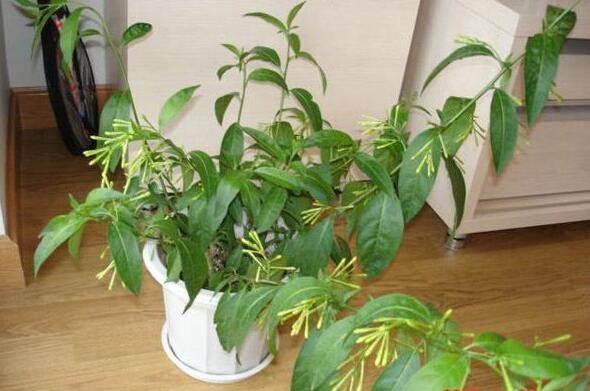
For the average flower lover, mastering how to grow tuberose is enough, but if you are an old hand, understanding how to propagate tuberose is very necessary, because it not only adds to the fun of growing plants but also lets you grow a few more pots of tuberose. As for how to propagate tuberose, there are three methods: cuttings, division and layering. Let us look at the methods together.
II. Three Propagation Methods for Tuberose
(1) Cutting Propagation Method for Tuberose
1. Cutting Time
Among the propagation methods for tuberose, cuttings are undoubtedly the most convenient and have the highest survival rate. Apart from winter, cutting propagation can be carried out at any time. However, the best times are spring and autumn, when tuberose has strong reproductive capacity and readily produces adventitious roots.
2. Selection of Cuttings
In cutting propagation of tuberose, the most important step is the cutting itself; selecting it well directly determines the entire propagation process. For tuberose cuttings, you should choose branches that are robust and free of pests and diseases. On the same plant, choose current-year branches from the middle and upper parts facing the sun, requiring short internodes, thick and strong stems and leaves, and plump buds. Avoid branches that are about to flower and leggy branches.
Cutting treatment: After the cuttings are selected, they must undergo corresponding treatment. Cut the cuttings into sections 8 cm to 12 cm long, each bearing 2 to 3 buds. The lower cut should ideally be 0.5 cm below a node, and the cut should be smooth. Remove the lower leaves, keeping only 2 to 3 leaves at the top. Note that before cutting, treat the cuttings with agents such as ABT rooting powder, which has the effect of promoting rooting.
3. Cutting Medium
Following the growth habits of tuberose, the cutting medium should be a soil mixed with peat soil, leaf mold and sand at a ratio of 3:3:4 respectively. Bed soil prepared this way has the characteristics of raising bed temperature, retaining water, allowing aeration, being fertile and slightly acidic, and is suitable for branch rooting and sprouting.
4. Starting the Cuttings
Once the above steps are done, the cutting propagation of tuberose can formally begin. Insert the treated cuttings into the prepared medium, with a insertion depth generally of about 3 cm.
5. Aftercare After Cutting
After inserting, water thoroughly and cover with plastic film, place in a relatively shady spot, or scatter straw on the film to prevent direct sunlight, and increase light at night to help the cuttings survive. Afterwards, ventilate 1 to 2 times a day to replenish the needed oxygen and prevent disease. When the new roots of the cuttings grow to 2 cm to 3 cm, they can be transplanted into pots at the appropriate time.
(2) Division Propagation of Tuberose
Besides cuttings, division is also a commonly used propagation method for tuberose. Because tuberose has relatively strong sprouting ability, you can divide the plant from the roots into several plants or a number of plants for propagation. This method propagates quickly, but it also has limitations.
(3) Layering Propagation of Tuberose
Tuberose can also be propagated by layering, but its branches are hard and not suitable for bending and guiding, so it is rather troublesome to carry out. Method: during the growing season, use a knife to scrape away the bark at the fork of the current-year or previous-year shoot, smear mud onto the wound, wrap it well with plastic film, and after roots form, cut off the branch and plant it.
In general, when propagating tuberose, whether by cuttings, division or layering, all can survive, but the most suitable for flower lovers and with the highest survival rate is still cuttings. Of course, methods are fixed but people are flexible; everyone can choose a method to propagate according to actual circumstances. That is all the editor has to introduce about tuberose propagation methods, and I hope it helps everyone.
Tuberose olianthes tuberosa Tuberose Illustrated Guide: How to Grow Tuberose / How to Propagate Tuberose
Tuberose ProfileTuberose olianthes tuberosa
Aliases: Yuoxiaxiang, Xiao Yelaixiang
Classification: Perennial herbaceous flower
Family and Genus: Plantae, Angiosperms, Monocotyledons, Asparagales, Agavaceae, Polianthes
Peak Blooming Period: Summer
Tuberose (scientific name: Polianthes tuberosa), also known as Yelaixiang or Yuoxiaxiang, is a perennial bulbous flowering plant in the genus Polianthes of the Amaryllidaceae (or Agavaceae) family. It is a perennial herb with a tuberous rhizome; linear leaves grow in clusters with pointed tips; the flower stem is relatively long, with a raceme at the upper part, bearing white flowers in summer and autumn with a strong fragrance that is even stronger at night. Tuberose flowers open at night, and in eastern India they are called "Ratkirani", meaning "Queen of the Night". When planted in the open ground, the flowering period is usually from early July to early November, with peak bloom in August-September...
Tuberose Growing Methods and Precautions: An Introduction to Tuberose
Tuberose (scientific name: Polianthes tuberosa), also known as Yelaixiang or Yuoxiaxiang, is a perennial bulbous flowering plant in the genus Polianthes of the Amaryllidaceae (or Agavaceae) family. It is a perennial herb with a tuberous rhizome; linear leaves grow in clusters with pointed tips; the flower stem is relatively long, with a raceme at the upper part, bearing white flowers in summer and autumn with a strong fragrance that is even stronger at night. Tuberose flowers open at night, and in eastern India they are called "Ratkirani", meaning "Queen of the Night".
When planted in the open ground, the flowering period is usually from early July to early November, with peak bloom in August-September, making it a summer cut-flower species. Because of its strong fragrance, slender flower stems and soft lines, and because planting and flowering-period regulation are easy, it is one of the very important cut flowers and a main accompanying flower in bouquets, flower arrangements and other applications. Because of its strong fragrance, slender flower stems and soft lines, and because planting and flowering-period regulation are easy, it is one of the very important cut flowers and a main accompanying flower in bouquets, flower arrangements and other applications.
Morphological Characteristics of Tuberose
Tuberose, also known as Yelaixiang or Yuelaixiang. It belongs to the Amaryllidaceae family as a winter-dormant bulbous plant, a perennial bulbous herbaceous flower. It grows about 80 cm tall, with a bulbous tuber (the upper half bulb-like, the lower half tuber-like). The spike-like flower cluster is terminal, with 12 to 32 flowers per spike; the flowers are white, funnel-shaped and strongly fragrant, with the fragrance becoming even stronger at night, hence the name. When planted in the open ground, the flowering period is usually from early July to early November, with peak bloom in August-September, making it a summer cut-flower species. It grows about 80 cm tall, with basal leaves that are lanceolate and slightly reddish at the base, and short stem leaves. The spike has 12-18 paired flowers that open successively from bottom to top; the flowers are white, funnel-shaped and fragrant, stronger at night, hence the name Yelaixiang. The scape is upright, 40-90 cm tall; the flowers are opposite, white, arranged in a relatively long spike, strongly fragrant, with the fragrance stronger at night; the perianth tube is slender with 6 lobes shorter than the tube; there are double-flowered varieties with a lighter fragrance, and the flowering period is July-October. The fruit is a capsule. Tuberose self-pollinates, but because the pistil matures later than the stamens, the natural seed-setting rate is very low, and under ordinary cultivation it does not set seed. It blooms from May to November. Capsule. Cultivated varieties include white-flowered and light purple-flowered types: the white-flowered type is mostly single-flowered with a stronger fragrance; the light purple-flowered type is mostly double-flowered, with up to about 40 flowers per inflorescence.
A winter-dormant bulbous plant, evergreen in its place of origin, with a bulbous tuber (the upper half bulb-like, the lower half tuber-like).
Ecological Habits of Tuberose
Tuberose is native to South America, where it is an evergreen herb that grows year-round and flowers in all seasons when temperatures are suitable, but most abundantly in summer; when cultivated in the open ground in China, because winters are severe in most regions, it can only be grown as a spring-planted bulbous plant: it sprouts and grows in spring, flowers in summer and autumn, and goes dormant in winter (forced dormancy). It likes warm, humid and sunny environments and is not tolerant of frost. The most suitable growing temperatures are 25-30°C during the day and 20-22°C at night. It likes fertilizer and moisture but dislikes waterlogging, and grows well in low-lying but non-waterlogged spots. It is not strict about soil and prefers fertile clay loam. Tuberose self-pollinates, but because the pistil matures later than the stamens, the natural seed-setting rate is very low. Flower bud differentiation occurs during the growth period in late spring and early summer, when the minimum temperature should be around 20°C, but it is also related to the nutritional status of the bulb. It has oblong tubers borne on short thick tubers. Flowers are white, strongly fragrant, especially at night. The flowering period is summer and autumn. There are double-flowered types. Flower bud differentiation occurs during the growth period in late spring and early summer, when the minimum temperature should be around 20°C, but it is also related to the nutritional status of the bulb. Generally, bulbs weighing more than 11 g can bloom in the same year; otherwise they will not bloom that year. It is not strict about soil texture and prefers clay loam; it is relatively sensitive to soil moisture and likes fertile, moist but non-waterlogged soil. In drought, the leaf edges curl and the buds shrink, making it difficult for them to open. Flowering-period control for tuberose is relatively simple. Plant the bulbs in a high-temperature greenhouse, keep plenty of sunlight and air circulation, pay attention to care and management, and they can bloom in just over 2 months. For example, if planted in February, they can bloom in May-June.
Variety Classification of Tuberose
There are 12 species in the same genus as tuberose, but only tuberose is cultivated and used, and there are not many varieties, mainly the following:
(1) Albino: a single-flowered variety formed by bud mutation, with pure white flowers;
(2) Dwarf pearl: a dwarf variety;
(3) Var.flore-pleno Hort: a double-flowered variety;
(4) Mexican early bloomi: single-flowered, an early-maturing variety, blooming year-round, most abundantly in autumn;
(5) Pearl: a double-flowered variety, with stems 75 cm-80 cm tall, short inflorescences, many densely packed flowers, and a short corolla tube;
(6) Tall double: a large-flowered double variety with long flower stems;
(7) Variegale: leaves long and curved, with golden-yellow stripes.
Distribution Range of Tuberose
Native to Mexico and South America, it was introduced and cultivated in China very early and is now cultivated in various places. It is suitable for planting in warm, sunny environments and is relatively cold-tolerant.
Propagation Methods of Tuberose
Bulb division propagation is mostly used. After the aboveground parts wither in late November, dig out the underground stems, remove the shriveled old bulbs; generally each clump can be divided into 5-6 mature bulbs and 10-30 bulblets, which are dried and stored in a dry indoor place. Divide the bulbs in spring; when planting, plant large and small bulblets separately. Usually, bulblets can bloom after one year of cultivation. Large bulblets for cut-flower production should be more than 2.5 cm in diameter. Small bulblets can grow into large flowering bulbs after 1-2 years of cultivation.
Cultivation Techniques for Tuberose
Usually planted in April-May; the seed bulbs should first undergo wet treatment at 25°C-30°C for 10-15 days before planting. Large and small bulbs and old bulbs that flowered last year (commonly called "old remnants") should be planted separately. For large bulbs, the row spacing is 20 cm x 25 cm (or 30 cm), and for small bulbs 10 cm x 15 cm or denser; the planting depth should be slightly shallower than for other bulbs, but it also varies with the cultivation purpose, soil properties and bulb size. Usually "deep planting for bulbs, shallow planting for scapes", that is, deep planting favors bulb growth and enlargement, while shallow planting favors flowering. Generally, when planting large bulbs, the bud tip should be slightly exposed above the soil surface; when planting small bulbs and "remnants", the bud tip should be below or level with the soil surface. Tuberose emerges slowly, taking more than 1 month, but grows quickly after emergence. Therefore, in the early planting stage, because the seedlings are small and have few leaves, watering need not be excessive; when the flower stem is about to emerge and before flowering, water fully and keep the soil moist regularly. Tuberose likes fertilizer and should be top-dressed regularly: generally once 1 month after planting, once before flowering, and then once every 1.5 or 2 months. Pay attention to drainage and lodging of flower stems during the rainy season. Before frost in late autumn, dig out the bulbs, dry them slightly, remove soil and fibrous roots, and thinly slice off a layer from the bottom of the bulb so that white is exposed; continue drying until dry, then braid the remaining leaf clusters into a braid and hang it in a warm, dry place to store over winter. Alternatively, use the method of baking with a stove: hang the bulbs indoors and place a stove below to bake them. Initially keep the room temperature at 25°C-26°C so that the moisture inside the bulbs gradually decreases until the outer skin is dry and wrinkled, then lower the temperature to 15°C-20°C until they are taken out the following spring. After baking, the bulbs can be fully dried, thereby forcing them into complete dormancy, which is beneficial for growth and flower bud differentiation after planting the following spring. Some also dry the bulbs and pile them in a dry, sunny cellar, covering them layer by layer with straw and soil and pressing them down, burying them over winter; or plant them continuously for 2-3 years before digging them up and replanting, but the flowering quality is poor and the flowering period is not uniform.
[Cultivation Management] The planting site should be prepared and base fertilizer applied, and large bulbs, small bulbs and old bulbs that flowered last year should be planted separately. The spacing for large bulbs is 25 cm, and for small bulbs about 10 cm. The planting depth is shallower than for other bulbs; for large bulbs, the bud tip should be slightly exposed above the soil surface, while for small bulbs and old bulbs the bud tip should be below the soil surface. Old bulbs flowered last year and can no longer bloom; they only produce many thin, pointed small bulbs around them. "Deep planting for bulbs, shallow planting for scapes" is the principle to follow for tuberose planting depth. In the early planting stage, because the seedlings are small and have few leaves, water need not be too much; when the scape is about to emerge, give sufficient water and top-dressing; only after the scape emerges can a more concentrated liquid fertilizer be applied. In summer, pay special attention to watering and keep the soil moist regularly. After the aboveground parts wither, in the Jiangnan region people often cover with leaves or dry grass to prevent freezing and let them overwinter in the open ground. But it is best to dig up the bulbs, dry them slightly, remove the soil, braid the remaining leaf clusters into a braid, continue drying until dry, and hang them in a warm, dry place to store over winter; keeping the room temperature above 4°C is sufficient. Tuberose can also be grown in pots, and pot cultivation can be used for forcing. Plant the bulbs in late November and keep them in a high-temperature greenhouse, and they can bloom early in April-May; for home gardening, forcing is inconvenient.
Precautions
[Fertilization] Tuberose likes fertilizer and should be top-dressed regularly: generally once 1 month after planting, once before flowering, and then once every 1.5 or 2 months. Pay attention to drainage and lodging of flower stems during the rainy season. Before frost in late autumn, dig out the bulbs, dry them slightly, remove soil and fibrous roots, and thinly slice off a layer from the bottom of the bulb so that white is exposed; continue drying until dry, then braid the remaining leaf clusters into a braid and hang it in a warm, dry place to store over winter. Alternatively, use the method of baking with a stove: hang the bulbs indoors and place a stove below to bake them.
[Care] "Deep planting for bulbs, shallow planting for scapes" is the principle to follow for tuberose planting depth. In the early planting stage, because the seedlings are small and have few leaves, water need not be too much; when the scape is about to emerge, give sufficient water and top-dressing; only after the scape emerges can a more concentrated liquid fertilizer be applied. In summer, pay special attention to watering and keep the soil moist regularly. After the aboveground parts wither, in the Jiangnan region people often cover with leaves or dry grass to prevent freezing and let them overwinter in the open ground. But it is best to dig up the bulbs, dry them slightly, remove the soil, braid the remaining leaf clusters into a braid, continue drying until dry, and hang them in a warm, dry place to store over winter; keeping the room temperature above 4°C is sufficient. Tuberose can also be grown in pots, and pot cultivation can be used for forcing. Plant the bulbs in late November and keep them in a high-temperature greenhouse, and they can bloom early in April-May; for home gardening, forcing is inconvenient.
Disease and Pest Control of Tuberose
1. Root-knot nematode larvae attack the roots, often causing poor development, stunting and yellowing of the plant.
Control method: when it occurs, drench the soil with 40% omethoate emulsifiable concentrate at 1500 times dilution, or bury 3% carbofuran in the pot soil for control.
2. Powdery mildew mainly damages the leaves.
Control method: when it occurs, spray 50% Yifaling wettable powder at 1000 times dilution. For other control methods, refer to the relevant sections on dahlia and cineraria.
3. Anthracnose.
It can be controlled by spraying 75% thiophanate-methyl wettable powder at 1000 times dilution; 80% anthracnose Fumei wettable powder at 600 times dilution; 75% chlorothalonil wettable powder at 700 times dilution, etc. In normal times, a 1:1:200 Bordeaux mixture can be prepared for control.
4. Pests mainly include yellow-breasted flower thrips and North China mole cricket, yellow-breasted flower thrips.
It can be controlled with 10% cypermethrin emulsifiable concentrate at 200-300 times dilution, or 18% abamectin emulsifiable concentrate at 3000 times dilution; for the North China mole cricket, 5% terbufos granules can be applied as poisoned soil at 45 kg per hectare, then covered with soil and watered, or drenched with 50% phoxim emulsifiable concentrate at 1000 times dilution or 48% Lorsban emulsifiable concentrate at 1000 times dilution.
Landscape Uses of Tuberose
Tuberose is an important bulbous flower for courtyard flower beds and flower borders, and is also suitable for mass planting, clump planting among lawns or flowering shrubs, and accent planting by roadsides and rocks. The leaf clusters and flower branches are elegant and unadorned; at night, the pure white and delicate flowers are even more fragrant, making them indispensable material in the arrangement of night gardens. Tuberose is also an important cut flower, with a vase life of about 10 days; in cut-flower decoration it is often paired with gladiolus, and bouquets, flower baskets and vase flowers made with it are complete in color and fragrance. Dwarf varieties are suitable for potted ornamental display.
Uses and Purposes of Tuberose: Flower Uses
Besides ornamental use and mosquito repellence, the flowers of tuberose can be used to extract essential oil. The leaves, flowers and fruits are used in medicine to clear the liver and improve eyesight, draw out toxins and promote tissue regeneration.
Tuberose has emerald leaves and plain stems, jade-like beauty, a fragrant and clean body, and overflowing delicate scent, making people forget the summer heat in July and feel relaxed and happy.
Tuberose is a raw material for extracting essence. The main components of tuberose concrete include geraniol, nerol, neryl acetate, methyl benzoate, methyl anthranilate, benzyl alcohol, farnesol, eugenol and tuberone, etc. It is used in food and can give food a unique tuberose aroma.
Tuberose is slightly sweet and bland in taste and cool in nature. It clears heat and detoxifies, and is mainly used for carbuncles, sores and swellings.
Tuberose has long flower stems and a long flowering period; it is an important material for cut flowers and also a beautiful flower for arranging flower beds.
Medicinal or Dietary Therapeutic Value of Tuberose
The medical information and healthy dietary information on Huhua Network are for reference only and cannot be used as a basis for diagnosis or medical treatment. For any health problem, consult professional medical personnel, and for the treatment of any disease, follow medical advice.
Ultimate flower-protecting task: to love yourself, start from reality and strictly follow medical advice. Toward illness, do not be careless, do not delay, do not give up hope; face it bravely, warm the silent world with love, and care for the flower field in your heart with your heart.
The medical content on Huhua Network is for reference only and cannot be regarded as professional advice. For any health problem, consult professional medical personnel.
Medicinal Information (1)
[Chinese Name] Wanxiangyu
[Pinyin] Wanxiangyu
[English Name] Tuberose
[Latin Scientific Name] Polianthes tuberosa Linn.
[Family and Genus Classification] Amaryllidaceae, genus Polianthes
[Plant Morphology] Perennial herb, up to 1 m tall. Has a tuberous rhizome; stem upright, unbranched. Basal leaves 6-9 in clusters, linear, 40-60 cm long, about 1 cm wide, pointed at the tip, dark green; leaves on the flower stem are scattered, gradually becoming smaller upward and bract-like. Spike terminal, with 2 flowers in each bract; bracts green; flowers opposite, milky white, strongly fragrant; 3.5-7 cm long; perianth tube 2.5-4 cm long, slightly curved at the base; perianth lobes 6, oblong-lanceolate, 1.2-2 cm long, blunt-tipped; stamens 6, inserted in the perianth tube, included; ovary inferior, 3-locular, style slender, stigma 3-lobed. Capsule ovoid, with persistent perianth at the tip; seeds numerous, slightly flattened. Flowering period July-September.
[Habitat and Distribution] Commonly cultivated in gardens throughout China. Native to Mexico.
[Medicinal Part] The roots are used as medicine. Chinese medicine name: Wanxiangyu.
[Harvesting and Processing] In September-October, dig out the bulbs, cut off the roots, wash clean and dry in the sun.
[Main Components] The roots contain about 1.8% sapogenins, mainly tigogenin, hecogenin and 9-dehydrohecogenin. The flowers contain 0.08%-0.14% volatile oil, whose main components are geraniol, nerol, farnesol, syringol and methyl o-aminobenzoate.
[Nature, Flavor and Functions] Sweet, bland, cool. Clears heat and detoxifies.
[Main Indications and Usage] Carbuncles, sores and swellings. External use: appropriate amount, pound and apply.
Functions and Indications
Mainly treats acute conjunctivitis, keratitis, corneal opacity, boils and traumatic erosions.
Chemical Components of the Chinese Medicine
The roots contain about 1.8% sapogenins, mainly tigogenin, hecogenin and 9-dehydrohecogenin. The flowers contain 0.08%-0.14% volatile oil, whose main components are geraniol, nerol, farnesol, syringol and methyl o-aminobenzoate.
Cultural Background of Tuberose
Legend
It is said that in ancient times there was a handsome young man surnamed Zhang whose flute playing was very beautiful and famous far and near. On a summer evening with beautiful moonlight, the young man leaned against a tree and played the flute. Just as he was playing happily, a patch of purple cloud suddenly flew near above him, and a beautiful fairy gracefully descended from the clouds. The fairy said she was an envoy of the Moon Palace, and that Chang'e had heard his flute playing and specially ordered her to come down to ask for the sheet music. The flute player gladly gave it to her.
After Chang'e obtained the sheet music, she ordered the musicians in the Moon Palace to play it. In her joy, and to express her thanks, she ordered the same fairy to descend to the mortal world and invite the young man up to the Moon Palace. The young man suddenly felt attachment to the mortal world, so he asked the fairy to delay one day before going to the Moon Palace. The fairy did not agree, and only pulled out the jade hairpin from her hair and gave it to him as a keepsake. When she threw it to him, the young man failed to catch it, and the jade hairpin fell to the ground, but no matter how he searched he could not find it. In the end, the jade hairpin turned into a flower, while the young man remained in the mortal world. This flower not only gives off fragrance at night, but especially under the bright moonlight its fragrance is most intense, hence it is called tuberose.
Flower Language of Tuberose
The flower language of tuberose is dangerous pleasure, because tuberose only releases its rich fragrance at night, so it is called tuberose. Because this fragrance is too strong, it can make people feel short of breath, so tuberose is generally not placed indoors. Therefore, its flower language is: dangerous pleasure.
Tuberose Pictures
Tuberose Illustrated Guide: How to Grow Tuberose / How to Propagate Tuberose Rebutia
Chinese Scientific Name: WanxiangyuLatin Name: Rebutia tuberosa F. Ritter 1963
Family and Genus: Rebutia
Introduction: Grows relatively fast, blooms easily, likes low-pH soil, should not contain too much limestone, likes high-potassium fertilizer; if grown entirely in mineral material, pests and diseases will be very few. The soil must be ventilated and breathable; grow in shallow pots to facilitate ventilation and breathability. Very frost-resistant; if kept dry, it can tolerate cold down to -5°C to -18°C. If there is no winter dormancy, it will not bloom in spring or will bloom very little.
Family Name: Cactaceae Genus Name: Rebutia Latin Name: Rebutia tuberosa F. Ritter 1963 Accepted Name: Rebutia deminuta (F.A.C. Weber) Britton & Rose 1923 Chinese Name: Wanxiangyu Korean and Japanese Name: Synonyms: Aylostera tuberosa (F. Ritter) Backeb. 1963 Habitat: Bolivia, rare Shape: Spherical Flower: Red
Cultivation: Grows relatively fast, blooms easily, likes low-pH soil, should not contain too much limestone, likes high-potassium fertilizer; if grown entirely in mineral material, pests and diseases will be very few. The soil must be ventilated and breathable; grow in shallow pots to facilitate ventilation and breathability. Very frost-resistant; if kept dry, it can tolerate cold down to -5°C to -18°C. If there is no winter dormancy, it will not bloom in spring or will bloom very little. Sowing temperature 21-27°C, germination in 7-14 days.