Witch hazel cultivation methods and precautions: ensure ample light
Witch hazel is a plant in the Hamamelidaceae family with high ornamental value, and it is cultivated by people in many regions of China. However, growing it well is not easy, and there are many points to pay attention to. How do you grow witch hazel? What are the cultivation methods and precautions for witch hazel? Below, the editor will walk you through it.
I. How to grow witch hazel: understand its habits
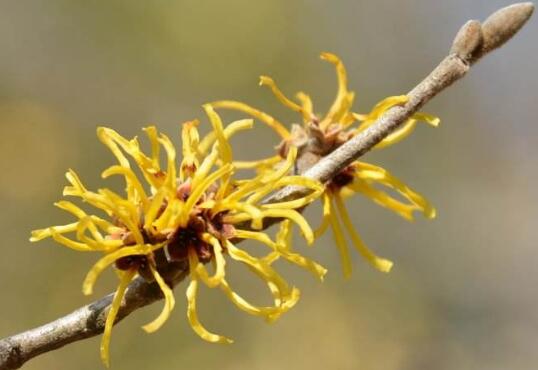
To know how to grow witch hazel, we first need to understand its growth habits. This plant is highly cold-tolerant and can grow normally even at -15°C. However, when growing it, it is best to place it in a spot with ample sunlight, so that it can carry out photosynthesis and the plant will grow better.
II. Cultivation methods and precautions for witch hazel
1. Soil: sandy soil is best
Witch hazel is a plant with strong environmental adaptability and can grow in either acidic or neutral soil. However, to make it grow more vigorously, it is generally best to choose loose, fertile sandy soil, because this kind of soil has good drainage and aeration, allowing the plant to breathe better and absorb nutrients better.
2. Fertilizing: mainly organic fertilizer
Fertilizer is the main source of nutrients during the growth of witch hazel, so when growing it we must pay attention to regular fertilizing, so that it has enough nutrients to grow quickly. As for fertilizer, we generally use organic fertilizer as the main type. Before planting, we should apply an appropriate amount of base fertilizer into the soil, then fertilize once when it enters the growth period, and fertilize once more when it is about to bloom.
3. Water: keep the soil moist
Watering is an indispensable part of growing witch hazel. This plant prefers moist conditions, so we should water frequently to keep the soil at a certain humidity, so that it can grow better. However, we must pay attention to the amount of water; it is best not to cause waterlogging. If too much is poured, promptly clear the standing water to avoid root rot.
4. Light: avoid strong light
Witch hazel is a light-loving plant and also has some shade tolerance. In spring and autumn, because the light is not too intense, we can keep it outdoors to receive light all day. After winter arrives, because the light is relatively strong, at noon it is best to keep it in a semi-shaded spot indoors, to avoid long exposure that can cause the plant to dry out and turn yellow.
5. Pests and diseases: handle promptly
During the growth of witch hazel, if our care is not careful enough, pests and diseases can easily take advantage of the situation. Such problems are very harmful to the plant, so when we find them we must deal with them promptly, because the longer it drags on, the harder it is to cure. As for the specific treatment methods, you can refer to the article on pest and disease control for witch hazel, which has detailed introductions.
Cultivation methods and precautions for Ficus elastica 'Money Ficus'
Chinese scientific name: Money FicusLatin scientific name: Ficus elasticaOther names: round-leaf rubber tree (F. diversifolia)Kingdom: PlantaePhylum: Angiosperms (Magnoliophyta)Class: Dicotyledons (Magnoliopsida)Subclass: HamamelidaeOrder: UrticalesFamily: MoraceaeGenus: FicusSpecies: Money FicusDistribution: native to India and Malaysia, widely distributed in China, with about 120 species.Money Ficus (scientific name: Ficus elastica) belongs to the genus Ficus in the family Moraceae and is commonly known as "round-leaf rubber tree" or "Indian rubber tree." It is an evergreen large tree. Potted plants are 1-2 m tall, with smooth bark and white latex. The leaves are broad, oblong or elliptical, dark green, glossy, thickly leathery, with pointed tips and entire margins. Young buds are red and have bracts. The fruit is borne in pairs in the leaf axils, oblong, and orange-red when mature. Cultivated varieties include: 'Golden Chain' rubber tree, whose leaves have golden-yellow edges that become more obvious in autumn; and variegated rubber tree, whose leaves have yellow-white markings. Medium and large potted plants are used for decoration and are widely used for landscaping decoration in hotel courtyards, theater lobbies, large shopping mall entrances, offices, and other places. In homes, they can be placed along living room walls, in corners, or on both sides of a sofa.1. Morphological characteristics
Money Ficus (a name given by florists) is an evergreen small tree that has risen in popularity not long ago, and its scientific name is round-leaf rubber tree. The Money Ficus sold on the market is not the true Money Ficus; all of them use the trunks of other flowers and trees as rootstock, graft Money Ficus branches onto them, and then prune and train them into a "" shape for sale.Round-leaf rubber tree (F. diversifolia): an evergreen small shrub, 50-80 cm tall, much branched. Leaves broadly obovate, broadly rounded at the tip, 1.5-5 cm long, leathery; upper surface dark green, lower surface pale yellow; leaf margins have dark glands. Syconia spherical to pear-shaped, solitary, yellow or slightly red when mature. It generally grows in mountain sparse forests at altitudes of 400-2500 m and 600-900 m, and also grows in hilly areas and near villages at 100-300 m.
Basic information
Engler systemPhylum Angiospermae
Class Dicotyledoneae
Subclass Archichlamydeae
Order Urticales
Family Moraceae
Genus Ficus
Introduction to Ficus plants
Also known as the fig tree, an evergreen tree or shrub in the family Moraceae. It has latex; leaves are usually alternate, mostly entire; stipules are connate, enclosing the terminal bud, and leave a ring-shaped scar after falling. Flowers are monoecious, borne inside a spherical hollow receptacle. Native to the tropics and subtropics. It likes high temperature, high humidity, and a sunny environment, can also tolerate semi-shade, and requires loose, fertile, well-drained, slightly clayey soil.2. Growth habits
Money Ficus likes a warm, humid, well-ventilated environment. In winter it needs to be placed indoors in a heated room, but do not place the pot too close to a radiator. In summer, when temperatures exceed 30°C, it can be moved to a ventilated room on the north side. Do not water if the topsoil in the pot is not dry; when watering, water thoroughly, preferably until water seeps out. Relatively high air humidity must be maintained, and leaf spraying can be used. If using tap water for irrigation, it is best to let the tap water sit in sunlight for half an hour; light helps break down oxides in tap water. Make sure there is no water on the leaf surface at night, and keep the leaf surface clean regularly; dry soft cloths can often be used to wipe the leaves.Money Ficus likes a warm, humid environment, needs ample sunlight, is relatively cold-tolerant, and also shade-tolerant. The soil should be fertile and well-drained. In winter the temperature should not be lower than 5°C. Because Money Ficus grows relatively quickly, it needs repotting every spring, adding fertile soil, and pruning and shaping. In summer, when temperatures are high, it should be watered more, and the leaves should be sprayed frequently. During the growth period, fertilize once every half month, and avoid strong direct sunlight.
3. Geographical distribution
Native to India and Malaysia, widely distributed in China, with about 120 or more species.4. Cultivation techniques
Propagation and cultivation of Ficus plants
Ficus is mainly propagated by cuttings, and layering can also be used; if mature seeds can even be obtained, sowing propagation is also possible. Variegated rubber trees are best propagated by layering. Greenhouse propagation is not affected by season, but the most suitable season for cuttings is spring. One-year-old terminal or side branches can be selected, generally with 2-3 leaves. To prevent white latex from flowing out, after cutting the cuttings they should be dipped in plant ash or coated with paint, then inserted into sand, vermiculite, or perlite; water rooting is also possible. Keep the temperature at 25-30°C, and roots form in about 3 weeks. For layering, first remove a ring of bark from the stem, then wrap it with sphagnum moss or peat soil and keep it moist. After rooting in 3-4 weeks, cut it away from the mother plant and plant it separately. For potting soil, a mix of 1 part peat soil, 1 part garden soil, and 1 part river sand can be used, with cake fertilizer and other materials applied as base fertilizer. During the growing season, water and fertilizer should be sufficient to keep the potting soil moist. In summer, in addition to keeping the substrate moist, water should also be sprayed on the leaves and ground, and a dilute fertilizer solution should be applied once a month, mainly nitrogen fertilizer. In summer, provide appropriate shading and avoid direct strong light. The overwintering temperature must be kept above 10°C; prolonged low temperatures can cause root rot. However, it can recover.Care points
1) Light, water, soil, fertilizerMoney Ficus likes light, and in northern regions it can receive direct light all year round. After Qingming each year it can be moved outdoors and placed in the open without shading. In winter it is best placed under a sunny-side window; if conditions are suitable, this period is the peak growth season for Money Ficus.
Watering: still water thoroughly only after the soil has dried out. Fertilizing can be combined with watering, for example in summer using soaked liquid of cake fertilizer (sesame paste residue) or organic fertilizer. In summer, if Money Ficus is placed outdoors, it can receive rain and dew, and there is no need to worry about the acidity or alkalinity of the water. In winter, more care is needed, because tap water is weakly alkaline; generally after every 2-4 tap water irrigations, it is better to use a diluted soaking liquid of orange peel once. In winter it is best to spray water once a day, because at noon under an indoor sunny-side window the temperature can reach over 30°C, and after heating the room becomes even drier.
Soil: no special requirements, ordinary soil is fine, and loose, breathable soil is even better.
2) Flowering and fruiting
In this respect, Money Ficus is very similar to the fig: it also flowers and fruits, except that the syconium is green, very small, and hidden in the leaf axils, so it is not easy to notice; it becomes visible only after it develops into fruit and grows larger.
The fruit of Money Ficus is very small, only about half the size of a soybean. When mature it is slightly red, and the fruit is fibrous, making it very difficult to distinguish pulp, seeds (pit), and so on.
After many experiments, it has been proven that Money Ficus fruit cannot be used for propagation. Therefore, if you do not want to enjoy its fruit, it is best to snap it off as soon as the fruit appears or pierce it with a needle (it will fall off on its own after two or three days), so as to avoid consuming too many nutrients and let Money Ficus focus wholeheartedly on development and concentrate its energy on growing branches and leaves.
3) Pruning and cuttings
Money Ficus grows relatively quickly and needs pruning from time to time; otherwise it will keep growing vertically, especially newly rooted cuttings, which will become bare-stemmed commanders if not tip-pruned. The cut branches can be used for cuttings; otherwise they are wasted - the simplest way to propagate Money Ficus is by cuttings.
One of the keys to the survival rate of cuttings is the selection of branches: the branches are required to be woody. Semi-woody branches have more water and fewer nutrients, and even in clean vermiculite they very easily rot, and rooting is difficult. Newly grown branches generally need to grow for more than 8 more months before they are suitable for cuttings; of course, the longer the safer.
Another key to the survival rate of cuttings is the cutting medium, and vermiculite is very good. The vermiculite sold in flower markets for 2 yuan per jin can be washed clean and used. Then buy a one-yuan packet of rooting powder. If the branches are up to standard, the cutting survival rate can basically reach more than 90%. Amorphous granular activated carbon, treated sawdust, and the like can also be used as cutting media.
After cutting, it is best to cover the pot with a white or transparent plastic bag to keep it warm and moist. Roots generally form in 2-6 weeks, and after rooting, the seedlings can be transplanted in 1-2 weeks. When transplanting, plant them in flower pots with loose, fertile soil, also cover them with a plastic bag to keep them warm and moist, and place them under a sunny-side window so they can grow rapidly.
Finally, there are pests and diseases. The only insect that Money Ficus might attract is probably scale insects. Often in shaded, poorly ventilated environments, Money Ficus is somewhat prone to scale insects, which can be picked off one by one with a bamboo stick. Prevention comes first; just pay attention to ventilation.
5. Precautions
Money Ficus likes a warm, humid environment and a well-ventilated environment, needs ample sunlight, is relatively cold-tolerant, and also shade-tolerant. The soil should be fertile and well-drained. In winter the temperature should not be lower than 5°C. Because Money Ficus grows relatively quickly, it needs repotting every spring, adding fertile soil, and pruning and shaping. In summer, when temperatures are high, it should be watered more, and the leaves should be sprayed frequently. During the growth period, fertilize once every half month. In summer, when temperatures exceed 30°C, it can be moved to a ventilated room on the north side. In autumn and winter, in some places Money Ficus will drop its leaves; this is normal, and in the following spring it will still sprout and grow new leaves.6. Main categories
Species of Ficus plants
There are about 1000 species in the same genus. Commonly cultivated horticultural varieties include: ① rubber tree (also known as Indian rubber tree) (F. elastica) (N words omitted here, same below) ② round-leaf rubber tree (F. diversifolia) ③ sacred fig (F. religiosa) ④ fiddle-leaf fig (F. lyrata) ⑤ small-fruited fig (F. microcarpa) ⑥ creeping fig (R. pumila) ⑦ willow-leaf fig (F. variolosa) ⑧ weeping fig (F. benjamina) ⑨ long-leaf fig (F. binnendijkii) ⑩ rooting fig (F. radicans)Money Tree
Also known as the money tree, it belongs to the genus Zamioculcas in the family Araceae. It is a perennial herbaceous flower introduced from abroad, 50 cm to 80 cm tall. On the underground corm grow pinnate compound leaves resembling zamia cycads or ferns. The petioles are fleshy, with 7 to 10 pairs of leaflets; the leaflets are elliptical, like pairs of neatly arranged copper coins. The spathe is reddish brown.The money tree is native to Tanzania. It can grow well in bright or relatively dark places. In summer, maintain relatively high air humidity and pay attention to shading. In winter, a relatively dry environment can be maintained, but there must be bright light. The best cultivation substrate is fertile, loose, rich in organic matter, well-aerated, strongly water- and fertilizer-retentive, but non-waterlogging, slightly acidic soil. During the growth period, apply compound fertilizer once a month. It can be propagated by sowing, leaflet cuttings, tissue culture, and other methods.
Cultivation methods and precautions for red loropetalum
Chinese scientific name: red loropetalumLatin scientific name: Loropetalum chinense var. rubrumOther names: red jimu, red zhimuKingdom: PlantaePhylum: AngiospermsClass: DicotyledonsSubclass: ArchichlamydeaeOrder: RosalesSuborder: SaxifragineaeFamily: HamamelidaceaeSubfamily: HamamelidoideaeTribe: HamamelideaeGenus: LoropetalumSpecies: Loropetalum chinenseDistribution: China, IndiaRed loropetalum, also known as: red jimu, red zhimu, red zhimu, red jihua, red zhihua, red zhimu flower, red-flowered loropetalum. Latin scientific name: Loropetalum chinense var. rubrum. It is a variety of Loropetalum chinense in the family Hamamelidaceae and genus Loropetalum, an evergreen shrub or small tree. The bark is dark gray or light grayish brown, much branched. Young branches are reddish brown and densely covered with stellate hairs. Leaves are leathery, alternate, ovate or elliptical, 2-5 cm long, with short pointed tips, rounded and oblique bases, asymmetrical, both surfaces with stellate hairs, entire margins, dark red. There are 4 petals, purple-red, linear, 1-2 cm long; flowers are borne in clusters of 3-8 at the ends of small branches. Capsules are brown, nearly ovate. The flowering period is April-May, and the flowering period is long, about 30-40 days; it can bloom again around National Day. Flowers are borne in clusters of 3-8 on a common peduncle in terminal head-like inflorescences, purple-red. The fruiting period is August. It is mainly distributed in the middle and lower reaches of the Yangtze River and areas to the south, and northern India. The flowers, roots, and leaves can be used medicinally.1. Morphological characteristics
Shrub, sometimes a small tree, much branched, branchlets with stellate hairs. Leaves leathery, ovate, 2-5 cm long, 1.5-2.5 cm wide, with sharp tips, obtuse bases, unequal-sided, slightly rough-haired or glabrous above, dark green and lusterless after drying, stellate-haired beneath and slightly grayish white, with about 5 pairs of lateral veins, obvious above and raised beneath, entire; petiole 2-5 mm long, with stellate hairs; stipules membranous, triangular-lanceolate, 3-4 mm long, 1.5-2 mm wide, early deciduous. Flowers borne in clusters of 3-8, with short pedicels, white, opening before the new leaves or at the same time as the young leaves; inflorescence peduncle about 1 cm long, hairy; bracts linear, 3 mm long; calyx tube cup-shaped, with stellate hairs, calyx teeth ovate, about 2 mm long, falling after flowering; petals 4, ribbon-like, 1-2 cm long, apex rounded or obtuse; stamens 4, filaments very short, connective protruding into a horn-like shape; staminodes 4, scale-like, alternating with the stamens; ovary completely inferior, with stellate hairs; style very short, about 1 mm long; ovule 1, pendulous from the inner upper corner of the carpel.2. Growth habits
It likes light and is slightly shade-tolerant, but in shade the leaf color easily turns green. It has strong adaptability and is drought-tolerant. It likes warmth and is cold-tolerant. It has strong sprouting and branching ability and is tolerant of pruning. It tolerates poor soil, but grows best in fertile, moist, slightly acidic soil.3. Geographical distribution
It is mainly distributed in the middle and lower reaches of the Yangtze River and areas to the south; it is also distributed in northern India. It is produced in Liuyang City and Changsha County in Hunan, and Suzhou, Wuxi, Yixing, Liyang, and Jurong in Jiangsu.4. Main value
Ornamental value
Red loropetalum has luxuriant branches and leaves, a graceful posture, and is tolerant of pruning and training. It can be used for hedges and also for making stump bonsai. When it blooms, the whole tree is full of red flowers, which is extremely spectacular. Red loropetalum is an evergreen plant, and its new leaves are bright red. Different strains differ in leaf color and flower color when mature, and leaf size also differs. In garden applications, the different effects brought by the two factors of leaf color and leaf size are mainly considered.Red loropetalum is a precious native colorful-leaf ornamental plant unique to Hunan, with strong ecological adaptability, tolerance of pruning, and easy shaping. It is widely used in color hedges, pattern flower beds, shrub balls, small colorful-leaf trees, stump, bonsai, and other urban greening and beautification.
Economic value
China's industrial development of red loropetalum has a history of more than 20 years, and Hunan is the central production area. In 2004, the province's production area was 3500 hectares, with an annual output of 500 million seedlings and annual sales of 600 million yuan. After many years of promotion and application, in 2004 China's red loropetalum production area reached 6000 hectares, with an annual output of 800 million seedlings and annual sales of 900 million yuan. Products are sold to more than 20 provinces and cities and exported to Japan, South Korea, Singapore, the United States, the Netherlands, the United Kingdom, France, Germany, and Italy, becoming one of the specialty products of China's flower industry.Red loropetalum is a variety of Loropetalum chinense in the family Hamamelidaceae and genus Loropetalum. It is an evergreen shrub or small tree, uniquely produced in the evergreen broad-leaved forest zone at altitudes of 100-400 m in the Luoxiao Mountains at the border of Hunan and Jiangxi. It was discovered and named by the late famous forester Professor Ye Peizhong in spring 1938 in Tianxin Park, Changsha. According to research, the tree from which the type specimen was collected was a wild plant transplanted from Dawei Mountain in Liuyang in spring 1935 by the park. This tree still exists; it is now 5 m tall, with a diameter at breast height of 20 cm, a crown diameter of 42 sq m, and an age of about 150 years. Due to many years of digging, wild resources are on the verge of extinction, and it has been listed as a key protected plant in Hunan Province.
The use of wild red loropetalum resources in Hunan has a history of more than 70 years. In the early 1930s, farmers in the Dawei Mountain area of Liuyang dug wild seedlings and sold them to Changsha, Xiangtan, Zhuzhou, and other places, and some landscaping departments in the province also came to Liuyang to purchase wild seedlings. In 1963, units such as Changsha Yuelu Park succeeded in cultivating seedlings by the branch air-layering method; in 1978, Changsha Martyrs' Park succeeded in raising seedlings from seeds, but the genetic stability of seedling plants was not strong, with 15.8% reverting to the ancestral form and becoming Loropetalum chinense, so seed propagation is rarely used in production; in 1982, the Changsha City Nursery succeeded in raising seedlings by cutting young shoot branches. Because cutting seedlings can maintain the excellent traits of the mother plant, can be cut multiple times within a year, and can be propagated in large quantities, since the 1980s this technique has been widely used in seedling production. Large-scale production of red loropetalum seedlings began in Yonghe Town, Liuyang. In 1983, local farmers took advantage of the abundant wild red loropetalum resources from Yonghe Town to the Dawei Mountain area and began relatively large-scale production of a series of products such as cutting seedlings, transplanted seedlings, shrub balls, bonsai, and grafted ancient stump trees, thereby driving the formation and development of the province's red loropetalum industry. In October 1999, the Organizing Committee for the Recommendation and Publicity Activity of China's Hometowns of Specialty Products awarded Liuyang City the honorary title of "Hometown of Chinese Red Loropetalum," greatly enhancing the domestic and international visibility of Hunan red loropetalum. Red loropetalum has become one of China's specialty flower brand products.
5. Tissue culture
Explant: select vigorous, pest-free red loropetalum stem tips, buds, and branches as explants. Among these, explant collection is best in July-August, when the contamination rate is relatively low.Medium: tissue culture of red loropetalum includes primary culture, subculture proliferation, and rooting culture. Experiments show that for primary culture and subculture proliferation media, MS+BA1.0mg/l+IBA1.0mg/l can be used as a reference; for rooting medium, 1/2MS+NAA1.0-1.5mg/l+0.1% activated carbon can be used as a reference.
Culture conditions: the culture conditions for red loropetalum are generally: temperature about 20°C, light duration 14h/d (14 hours per day), and light intensity 1500LX (lux).
6. Cultivation techniques
Propagation methods
Grafting propagation: mainly two methods, cut grafting and bud grafting. Grafting can be carried out from February to October. Cut grafting is best done before sprouting in spring, while bud grafting is best in September-October. Use medium and small plants of white loropetalum as rootstock for multi-head grafting, strengthen water, fertilizer, and pruning management, and they can leave the nursery within 1 year.Cutting propagation: can be carried out from March to September. Choose loose loess as the cutting substrate to ensure that the cutting substrate is aerated and water-permeable and has relatively high air humidity, keep it warm but avoid direct sunlight, and at the same time pay attention to ventilation and air permeability in the cutting environment. Under warm and humid conditions, red loropetalum cuttings form red callus in 20-25 days, and after 1 month grow 3-9 new roots 0.1 cm thick and 1-6 cm long. Cutting propagation has a high propagation coefficient, but the growth vigor is weaker and the time to leave the nursery is longer, while multi-head grafted seedlings have strong growth vigor and leave the nursery quickly as finished seedlings, but are more labor-intensive. Softwood cuttings are taken from May to August, using current-year semi-woody branches, cut into 7-10 cm long cuttings with a heel, and inserted 1/3 into the soil; the cutting bed substrate can be perlite or a mixture of 2 parts river sand and 6 parts loess or mountain soil. After cutting, build a shade frame, spray water in a timely manner, keep the soil moist, and roots can form in 30-40 days.
Sowing propagation: sow in spring and summer. Red loropetalum seeds have a high germination rate. They germinate about 25 days after sowing, and in 1 year can grow to 6-20 cm tall and produce 3-6 branches. The new roots of red loropetalum seedling plants are red and fleshy, and careful management is required in the early stage. Only when the root system becomes woody and turns brown can extensive management begin. Because sexual propagation has a long seedling stage, slow growth, and the appearance of white loropetalum seedlings (atavism), it is generally not used for seedling production, but for red loropetalum breeding research. Seeds are generally collected in October, sown in winter in November, or sealed and dry-stored until the following spring for sowing. After rubbing the seed coat with sand, sow in drills in a semi-sandy seedbed; germination occurs about 25 days after sowing, and the germination rate is relatively low. One-year-old seedlings can reach 6-20 cm in height and produce 3-6 branches. After 2 years they can leave the nursery for field planting.
Management
Before transplanting red loropetalum, the fertilizer should be base fertilizer mainly composed of decomposed organic fertilizer, combined with broadcast application or hole application of compound fertilizer. Be careful to mix thoroughly to avoid damaging the roots. During the growing season, use a neutral foliar fertilizer diluted 800-1000 times for foliar topdressing, spraying 2-3 times a month to promote new shoot growth. In the plum rain season in the south, pay attention to maintaining good drainage. In hot and dry seasons, ensure watering once each in the morning and evening, and combine with water spraying at noon to lower the temperature; in northern regions, because the soil and air are dry, water must be applied in a timely manner to keep the soil moist, and in autumn, winter, and early spring pay attention to spraying water to keep the leaves clean and moist.1. Pruning: red loropetalum has the characteristics of strong sprouting ability and tolerance of pruning. Carrying out light and moderate pruning in early spring, early autumn, and other growing seasons, combined with normal water and fertilizer management, can bring it into bloom after about 1 month, and the flowering period is concentrated. This method can promote new branches and new leaves, make the tree shape more beautiful, prolong the red leaf period, and can promote and control the flowering period. It is especially suitable for red loropetalum bonsai participating in flower exhibitions and trade fairs, can enhance the exhibition effect, and promote product sales.
2. Leaf removal and shoot tip removal: during the growing season, remove the mature leaves and branch tips of red loropetalum. After normal management for about 10 days, young shoots can be produced again and bright red new leaves can grow.
3. Site selection for cultivation: choose a sunny environment for cultivation, or thin out plants arranged to the southeast of and above the red loropetalum, so that the red loropetalum can grow healthily under ample sunlight, making the flower color and leaf color more brilliant, thereby enhancing ornamental value.
Shaping
(1) Artificial spherical form: Chinese fringeflower (Loropetalum chinense var. rubrum) is extremely tolerant of pruning and wiring for shaping, and the tree form is mostly trained into an artificial spherical shape. During the growing season, if the mature leaves and branch tips of the Chinese fringeflower are removed, new shoots can emerge again in about 10 days under normal care, producing fresh red new leaves.(2) Natural clumping form: Chinese fringeflower has strong sprouting and branching ability, and can naturally grow into a clumping form.
(3) Single-trunk round-headed form: select a thick, strong branch and train it into a trunk, remove the other branches, and when the trunk reaches the height above [the specified point], head it back; on it select a robust, upright, upward-growing branch as the extension branch of the trunk, that is, train it as the central leader, then on the central leader select and retain 4-5 strong main branches evenly arranged around it, with the branches distributed in staggered layers above and below.
Chinese fringeflower is often used to make bonsai, and can be made into different forms of bonsai such as single-trunk, double-trunk, withered-trunk, curved-trunk and forest styles. The crown can be shaped into either an unrestrained natural form or into round pad shapes of varying sizes arranged in a well-balanced, staggered manner. Processing methods can include wiring, pulling and pruning. To make the trunk more rugged and aged-looking, a sharp knife can be used to carve the trunk, and its wounds heal very easily. In addition, it is also often used as a hedge.
Pest and disease control
Main insect pests
These include aphids, geometer moths, yellow noctuid moths, Daopan noctuid moths, large and small cutworms, and scarab beetles. Red fringeflower (Loropetalum chinense var. rubrum) has relatively strong resistance to pests and diseases, but branch dieback and insect boring have also been found during cultivation. According to investigation, the former is mostly caused by planthopper damage, while the latter is a symptom of damage by the star longhorn beetle and the brown longhorn beetle.
1. Condition: aphids affect plant growth and induce sooty mold.
Control method: to control aphids, spray 5% diesel oil emulsion or 3 to 5 degrees Baumé lime sulfur mixture before budding to kill overwintering adults and eggs. Spray the second application after flower drop, and spray the third application in October in autumn.
2. Condition: geometer moths and noctuid moths damage by larvae feeding on leaves, and in severe cases can eat all the tender shoots in 2 to 3 days.
Control method: to control geometer moth and noctuid moth larvae, spray 50% methamidophos 1500-fold solution, and control early and when small.
3. Condition: cutworms and scarab beetles bore into and feed on the root system with their larvae. Cutworms mainly harm cuttings and seedlings, while scarab beetles harm large, medium and small seedlings alike.
Control method: the larvae of cutworms and scarab beetles are underground pests. The control method is to strengthen nursery management and not apply undecomposed organic fertilizer. Plow in winter to turn overwintering larvae to the soil surface to freeze to death. Use 3% carbofuran granules at a rate of 2 kg per mu, applied in furrows 10 to 20 cm deep in the soil.
Planthoppers
Planthoppers often use their ovipositors to cut red fringeflower branches and lay eggs in the branch tissues, which is one of the main causes of branch dieback. Planthoppers also use their piercing-sucking mouthparts to pierce the branch tissues of red fringeflower and suck the sap, causing the affected branches and leaves to wither and die.
There are 4 control methods for planthoppers
1. Spray 40% omethoate emulsifiable concentrate or 80% dichlorvos emulsifiable concentrate 1000-fold solution during the damage period.
2. After winter begins, thoroughly clear the surrounding weeds and fallen leaves, gather and burn them, and eliminate overwintering pests.
3. In combination with pruning, cut off damaged branches and leaves and burn them promptly to reduce the source of insects.
4. Protect the natural enemies of planthoppers, such as birds, ladybugs, parasitic wasps, etc. Longhorn beetles have omnivorous feeding habits; adults gnaw the tender bark of red fringeflower branches and trunks, and larvae bore into and feed on the trunk, mostly entering from the base of the trunk. The damaged branches and trunks form holes, and the tunnels are filled with wood shavings and insect frass. Control is generally carried out by manually catching adults and hooking out and killing larvae.
Common diseases of red fringeflower
Anthracnose, damping-off, and mosaic disease. Anthracnose: mainly harms old leaves and basal leaves. Because the leaves themselves are red, the lesions appear as black round spots, or nearly round, causing early leaf drop. Damage is severe in the rainy season from July to August. The pathogen is Actinomycetes. The fungus overwinters as mycelium on diseased leaves and is the primary infection source for the disease the following year.
Control methods: a. Remove diseased leaves, gather and burn them, and reduce the source of disease. b. Improve management, strengthen field drainage, prune appropriately, and improve light and ventilation conditions. c. Chemical treatment: spray 70% thiophanate-methyl 1000-fold solution or 75% chlorothalonil 800-1000-fold solution; zineb 800-1000-fold solution has a good control effect. If spraying multiple times, it should be used alternately to prevent resistance.
Damping-off
A serious disease at the seedling stage. It can affect plants from seedlings to mature plants. The pathogen infects young plant branches from the base and roots. Dark brown lesions appear at the damaged area and become water-soaked. The bark and woody layer separate easily, then constrict and turn dark brown, resulting in death. The pathogen is a fungus.
Control methods: a. Use disease-free new soil for transplanting, sowing, or cutting, and disinfect the soil. b. Pull out and destroy diseased plants. Fertilizer used must be thoroughly decomposed. Do not use fresh household manure as base fertilizer. c. Before transplanting or sowing, apply 20% quintozene powder mixed with fine soil at a ratio of 1:30 onto the seedbed soil, or use dexon at 4-6 grams per square meter.
Mosaic disease
Old and new leaves appear mottled white and green. Mosaic disease is caused by a virus and can be treated with virus A or other antiviral agents.
Planting methods
It can be used as a specimen planting, clump planting, or mass planting.Specimen planting:Select a plant with a tall, full shape and plant it alone in an important position or at a focal point of sight, such as near an entrance, in a courtyard or lawn, forming a scene by itself, and pay attention to creating a strong contrast with the surrounding landscape to achieve the effect of "a single red among ten thousand greens." It can serve as the central focal point of the landscape or guide the line of sight.
Clump planting:Plant red fringeflower balls and other plants in clumps as accents in garden green spaces, which both enriches the landscape color and enlivens the garden atmosphere. If planted in clumps with green tree species, it can all produce a flower-enhancing effect. Planting red fringeflower balls as the main tree species in groups and patches forms a scenic forest; its unique leaf color and posture are beautiful throughout all four seasons. Its beautifying effect is far better than that of a purely green scenic forest.
Mass planting:Color blocks and carpet flower beds: use annual small red fringeflower seedlings planted densely in green spaces to form color blocks. They can be combined with golden privet, spring-flowering azaleas, summer-flowering azaleas, golden-leaved elm, golden-edged boxwood, etc. This can not only form color contrast through the contrast in leaf color, but also stagger the flowering periods. For this type of use, it is advisable to choose the "Touguhong" series.
Shrub balls
Prune red fringeflower into spherical shapes and arrange them in green belts. Shrub balls are mainly divided into two types: rough balls and fine balls. Rough balls are mainly formed after 1 to 3 years of pruning and shaping, and are mainly used in large green spaces with relatively extensive management. Fine balls require at least 3 years of pruning and shaping, and are mainly used in refined gardens such as villa courtyards. For this type of use, it is advisable to choose the "Touguhong" series.
Colored hedges
Plant red fringeflower densely to form colored hedges that serve to enclose and divide space. The specifications of the seedlings should be selected according to the specific use of the colored hedge. For example, in green spaces, a 70-80 cm colored hedge can be used to divide space, while colored hedges higher than 2 m are mostly used on the outer periphery of green spaces to serve as a green wall.
Large colored sculptures: directionally cultivate or shape red fringeflower into green sculptures such as animals and geometric forms, and place them in green spaces as garden ornaments. For this type of use, it is advisable to choose the "Touguhong" series.
Stump bonsai: taking advantage of the fast growth, large leaves and sparse branches of the double-faced red type of red fringeflower, directionally cultivate it into large stump bonsai for use in the landscaping of high-grade gardens, and it can also be used as the focal point of a flower bed for layout.
Street trees in residential compounds: through pruning control, red fringeflower can be trained into a small colorful-leaved tree, and it can also be trained by grafting onto white fringeflower. It is mostly used as a street tree in residential compounds. For this type of use, it is advisable to choose the "Touguhong" series.