What to Do When Your Fiddle-Leaf Fig Drops Leaves? Get Light, Water, and Fertilizer Management Right, Plus Pest and Disease Spraying
The fiddle-leaf fig, named for its cello-shaped leaves, is an evergreen foliage plant that is deeply loved by plant enthusiasts. But during cultivation, many people run into the situation of fiddle-leaf figs dropping leaves, which is heartbreaking. So what should you do when a fiddle-leaf fig drops leaves? For this, the editor has summarized several causes. Let's take a look together!
I. When a Fiddle-Leaf Fig Drops Leaves, Find the Cause
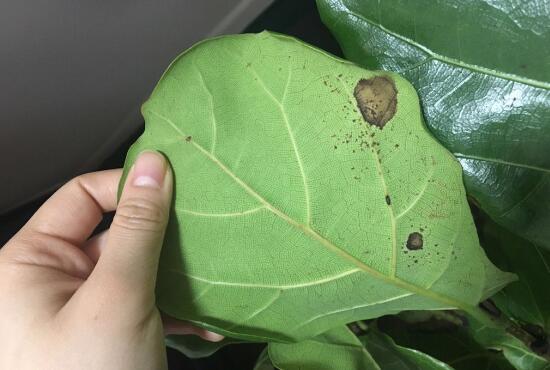
As a beautiful foliage plant, the fiddle-leaf fig can be said to be quite easy to grow, but with so many beginners, they often end up growing fiddle-leaf figs that drop their leaves. At times like this, plant enthusiasts must be very anxious! So what should you do when a fiddle-leaf fig drops leaves? For this, the editor has summarized 5 causes and attached remedy methods. Let's continue reading for the details.
II. What Causes a Fiddle-Leaf Fig to Drop Leaves and How to Treat It
1. Light too strong
The fiddle-leaf fig likes light, and during growth, sufficient light can make it grow more luxuriant and green. However, under the strong summer sun, it must be properly shaded, otherwise, after direct exposure to strong light, the fiddle-leaf fig's leaves will turn yellow and even drop.
Remedy: If the fiddle-leaf fig's leaves have been sunburned and dropped, enthusiasts should promptly move the fiddle-leaf fig to a semi-shaded spot indoors, ensure ventilation, and after it recovers, water it moderately. With careful care for a period of time, the plant will return to health.
2. Improper watering
Too little water: The fiddle-leaf fig likes a humid environment and needs plenty of water during the growing season. If it is not watered for a long time, or if the water is never given thoroughly, the fiddle-leaf fig's leaves will become dull and lusterless because they cannot absorb water, and will drop at the slightest touch. Remedy: Water sparingly and mist the plant (do not add too much at once), and only return to normal watering once the fiddle-leaf fig's leaves stop dropping.
Too much water: Although the fiddle-leaf fig likes water, we cannot water too much at once, otherwise it will cause water accumulation in the pot, ultimately leading to root rot, which affects the plant's water and nutrient absorption, and the leaves will easily drop. Remedy: Stop watering and frequently loosen the soil to improve aeration, then slowly return to normal watering.
3. Insufficient fertilizer
The fiddle-leaf fig likes fertilizer, and sufficient nutrients can make it grow quickly, but if fertilizer is insufficient, its leaves will drop due to lack of nutrients.
Remedy: Supplement fertilizer promptly and water moderately to dilute the fertilizer in the pot; for regular fertilizing, light and frequent applications are best, and the concentration should not be too high.
4. Pests and diseases
When asking what causes a fiddle-leaf fig to drop leaves, it is actually also related to pests and diseases. It is understood that in poorly ventilated and dry environments, fiddle-leaf figs will develop scale insects and red spider mites. These are small in size but cause severe damage, often leading to yellowing leaves and even leaf drop.
Remedy: Wash the insects off with water and spray the relevant insecticide. For exactly what to spray, refer to fiddle-leaf fig pest and disease control.
5. Normal phenomenon
When asking what causes a fiddle-leaf fig to drop leaves, besides the above points, you should also consider whether it is a normal phenomenon. It is understood that newly purchased fiddle-leaf figs easily drop leaves, and this is actually a very common thing, because although the fiddle-leaf fig has strong adaptability, it also needs a process to adapt to a new environment, and during this period, it usually drops leaves.
Remedy: When encountering this situation, enthusiasts do not need to worry, because this kind of leaf drop is normal. For this, everyone only needs to place the potted plant in a spot with diffused light for care, and after the plant slowly recovers, resume normal watering and fertilizing, and it will gradually recover.
Regarding the treatment methods for fiddle-leaf fig leaf drop, after reading the comprehensive analysis of the above 5 aspects, everyone should know what to do! Actually, fiddle-leaf fig leaf drop is caused by one reason, but it is often the result of multiple factors, so when encountering this situation, everyone must make a correct diagnosis, so that the right remedy can be applied.
What to Do When Fiddle-Leaf Fig Leaves Turn Yellow, Causes of Fiddle-Leaf Fig Leaves Turning Yellow / Light Is Key
As for the fiddle-leaf fig, everyone should have seen it. It has broad leaves and a graceful plant shape, and is currently one of the most popular indoor potted plants. As a foliage plant, the fiddle-leaf fig's greatest fear is naturally problems with its leaves, especially yellow leaves, which are a headache just to look at. So what should you do when fiddle-leaf fig leaves turn yellow? The following are several causes of fiddle-leaf fig leaves turning yellow. Let's take a look together!
I. When Fiddle-Leaf Fig Leaves Turn Yellow, Find the Cause
As a common foliage plant, the fiddle-leaf fig is not difficult to grow, but because there are many beginners, they often fail to get light and fertilizing right, and as a result, the leaves turn yellow. As for what to do when fiddle-leaf fig leaves turn yellow, first of all, everyone should not panic, but calmly find the cause and then solve it accordingly. Let's continue reading for the details.
II. Causes of Fiddle-Leaf Fig Leaves Turning Yellow and Solutions
1. Sudden environmental change
When asking about the causes of fiddle-leaf fig leaves turning yellow, if it is a newly purchased potted plant, then it should be due to a major environmental change, and the plant has not adapted in time, resulting in yellow leaves; besides this, if the flowerpot has recently been moved frequently, or has just been repotted, or has been placed near an air conditioner blowing hot or cold air, the fiddle-leaf fig may also develop yellow leaves.
Solution: Place the fiddle-leaf fig pot in a ventilated, semi-shaded spot with good light, and with careful care for a period of time, it will return to health.
2. Improper light
Insufficient light: The fiddle-leaf fig likes light and grows well in an environment with sufficient light. But if it is placed in a place with weak light for a long time, its leaves will do less photosynthesis, nutrients will be lacking, and yellowing is inevitable. Solution: Just place it in a spot with good but not strong light for care.
Light too strong: In a place with good light, the fiddle-leaf fig's leaves grow large and green, but in summer, if there is no shade and it is exposed to direct strong light, its leaves will also turn yellow and wither. Solution: Promptly move it to a cool spot indoors, water it moderately after it recovers a bit, then slowly increase the light.
3. Improper fertilizing
Insufficient fertilizer: The fiddle-leaf fig likes fertilizer, and sufficient nutrients can make its leaves large and green. So when everyone applies too little fertilizer, especially too little nitrogen fertilizer, the fiddle-leaf fig will develop yellow leaves due to poor growth. Solution: You can add nitrogen fertilizer, but do not apply too much at once; apply diluted fertilizer.
Too much fertilizer: Although the fiddle-leaf fig's large leaves require a lot of fertilizer, too much is not acceptable. Once too much fertilizer is applied, it easily causes root burn, and the leaves will turn yellow and wither. Solution: If the root burn is not serious, irrigate with water to dilute the fertilizer and let it flow out from the bottom of the pot; if the roots have already rotted, you need to remove the plant from the pot, cut off the rotten roots, then repot with fresh soil and replant.
4. Soil alkalization
The cause of fiddle-leaf fig leaves turning yellow may also be caused by the soil. It is understood that the fiddle-leaf fig likes slightly acidic soil. When it is in alkaline soil, or when long-term watering with tap water causes the soil to become alkaline, its leaves will turn yellow.
Solution: Use purified water for daily watering, or let tap water sit for a few days or expose it to the sun for a few days, which avoids the problem of soil alkalization. If the soil has already become alkaline, the simplest method is to change the potting soil, so the plant can become fresh again.
5. Pests and diseases
Besides the above points, the cause of fiddle-leaf fig leaves turning yellow may also be that it has become diseased or infested with insects. In daily care, if the environment is not ventilated, the temperature is too high, and care is improper, the fiddle-leaf fig will suffer from pests and diseases, causing the leaves to turn yellow.
Solution: Move the pot to a ventilated place, identify exactly which pest or disease it is, then spray accordingly. As for what to spray, refer to fiddle-leaf fig pest and disease control.
Overall, the fiddle-leaf fig is still very easy to grow, but if you want its leaves to stay green and not turn yellow, you must pay attention to light, water, and fertilizer. Of course, do not panic when you find yellow leaves; just solve them according to the methods above. That is all the editor has to introduce about fiddle-leaf fig leaves turning yellow, and I hope it can help everyone.
What Flowers Bloom in October and What Flowers and Plants Are Suitable for Planting in October
We all know that different flowers have different growth cycles and different ornamental periods, so different months will have different flowers blooming. So what flowers bloom in October?
What flowers bloom in October
Osmanthus
Blooms from September to early October. Osmanthus is one of China's ten traditional famous flowers, an excellent garden tree species that combines greening, beautification, and fragrance, with both ornamental and practical value. Osmanthus can be pure enough to cleanse the dust, and its fragrance can spread far when strong, and can be called superb. Especially in mid-autumn, when clusters of osmanthus bloom in full glory, on a quiet night with a full moon, drinking wine and admiring osmanthus, with its aged fragrance rushing to the nose, makes one feel refreshed. In ancient Chinese poetry about flowers, the number of works praising osmanthus is also quite considerable. Since ancient times, it has been deeply loved by Chinese people and regarded as a traditional famous flower. Osmanthus flowers grow in the leaf axils, with a gamopetalous corolla split into four lobes, small in shape, and there are many horticultural varieties, with the most representative being golden osmanthus, silver osmanthus, red osmanthus, and laurel, etc.
Chrysanthemum
Blooms from September to November. The chrysanthemum is the third of China's ten famous flowers, one of the four gentlemen among flowers (plum, orchid, bamboo, chrysanthemum), and also one of the world's four major cut flowers (chrysanthemum, rose, carnation, gladiolus), with production ranking first. The chrysanthemum is fully deserving of being the master of autumn. Whether it is the many artificially cultivated varieties such as specimen chrysanthemums, desk chrysanthemums, cliff chrysanthemums, dahlia chrysanthemums, small dahlia chrysanthemums, and Japanese small chrysanthemums, or wild chrysanthemums such as sweet wild chrysanthemum, galinsoga, saussurea, aster, small red chrysanthemum, and aster, they all bloom competitively in autumn, making people dazzled and full of praise.
Spider lily
Blooms from September to October. The Japanese alias of the spider lily is "Manjusaka", which comes from<<法华经>> and is a transliteration of the Sanskrit "Mahamanjusaka". Its original meaning is a flower in heaven, a large red flower, and it is one of the four auspicious flowers sent down from heaven (Manjusaka, Mahamanjusaka, Mandarava, Mahamandarava). It is said in the scriptures that whoever sees this flower will have evil removed.
By spider lily, we usually mean the red spider lily. The common white spider lily and yellow spider lily cannot be considered true "spider lilies" in the strict sense; they are close relatives of the spider lily, and another famous ornamental flower is also named "hudixiao", also known as "iron-colored arrow". Hudixiao and the spider lily look very similar, but their flowering periods are different, and their meanings are also different. The flower language of hudixiao is: happiness, joy, and surprise.
Morning glory
Blooms from June to October. Under the warm autumn sun, morning glories bloom recklessly amid the rustling sound of wind blowing fallen leaves. There are many kinds of morning glories with varied flower colors. Besides being ornamental, their seeds are also commonly used Chinese medicinal materials, called erchou. The most common in Beijing are the round-leaf morning glory (Pharbitis purpurea) and the ivy-leaf morning glory (Pharbitis hederacea), which are among the most common climbing ornamental flowers in parks and courtyards in autumn.
Epiphyllum
Blooms from June to October. Epiphyllum originates from South Africa, Mexico, and other places, and belongs to the epiphytic cactus family. Epiphyllum can increase the negative ion content indoors. Although its flowering period is very short, when it blooms it is beautiful and noble, with a rich fragrance spreading all around.
Epiphyllum enjoys the reputation of "beauty under the moon". After the flower gradually opens, it slowly withers again after 1-2 hours, and the whole process lasts only about 4 hours. Hence there is the saying "a fleeting epiphyllum appearance". It is widely cultivated in various regions of the world; it is commonly cultivated in all provinces and regions of China.
Verbena
Blooms from May to November. Verbena is a perennial herbaceous plant in the Verbenaceae family, Verbena genus, with a suitable growth temperature of 5~25°C. It is native to South America. The flowering part is corymbose, and the flower colors include white, red, blue, lavender, pink, etc. It is very robust and can be used as flowerbed and flower border material, and can also be used as pot flowers or planted in large areas in places suitable for potted viewing or for arranging flower terraces, garden gaps, and tree beds.
Cotton rose
Blooms from August to November. The cotton rose flower is a shrub or small tree native to China's Yellow River basin and various places in East China and South China. Its flowers may be white, pink, or red, as bright as a lotus emerging from water, and as gorgeous as a lotus opening its petals. Because it grows on land and is a woody plant, it is also called "cotton rose". The flowers of the cotton rose change three times in a day, so it is also called "three-change flower". Its flowers begin to bloom in late autumn, and despite frost and dew they remain full of grace and gorgeous, dominating the mood of deep autumn, and therefore it is also called "frost-defying flower".
Rose of Sharon
Blooms from July to October. In the south it is mostly used as flower hedges and green hedges; in the north it is used as courtyard decoration and indoor potted plants. Aliases include white hibiscus flower, palm tree flower, big bowl flower, hedge flower, Qingming hedge, white rice flower, chicken flower, lard flower, and open-at-dawn-fall-at-dusk flower. The rose of Sharon is bright and colorful, and is an excellent plant for free-growing flower hedges. It is suitable for planting on both sides of roads, in parks, courtyards, and other places, and can be planted alone, in rows, or in patches. The rose of Sharon can be used as medicine and can also be eaten. The rose of Sharon is the national flower of South Korea, also known as the endless flower, and in North America it has the elegant name "rose of the desert". Some rose of Sharon flowers appear light purple, and some deep purple; they grow quickly and have luxuriant branches and leaves. The national flower of Malaysia is also the rose of Sharon (also called big red flower) Bunga Raya.
Globe amaranth
Blooms from August to November. Globe amaranth aliases: ten-thousand-year red, thousand-day white, spherical cockscomb, globe amaranth, belonging to the Amaranthaceae family, Gomphrena genus. Globe amaranth likes sunlight, tolerates dry heat, and is very robust by nature. It is native to tropical America and is a common flower in tropical and subtropical regions. It is for ornamental use, and its capitulum remains unchanged for a long time. Besides being used for flowerbeds and bonsai, it can also be used for wreaths, flower baskets, and other decorations. It is distributed in most areas of China and not only has great medicinal value, but is also a raw material for flower tea suitable for clearing heat, reducing internal heat, and health preservation. In ancient times, people regarded globe amaranth as a symbol of sincere friendship, and many touching stories spread because of this.
What Flowers Are Suitable for Planting in October
Flowers suitable for courtyard display
In October, temperatures drop in most parts of the country, with monthly average temperatures between 10°C and 19°C.
There are many kinds of potted ornamental plants suitable for courtyard display in October, among which woody ornamental plant species include: Norfolk Island pine, five-needle pine, Japanese umbrella pine, lacebark pine, Japanese fir, spruce species, Buddhist pine, podocarpus, sago palm, Canary Island date palm, Dutch iron, Chinese jasmine orange, Cinnamomum kotoense, osmanthus, cotton rose, rubber tree, schefflera, variegated ficus, hibiscus, golden larch, croton, Brazilian wood, money tree, bamboo palm, ponytail palm, Mahonia bealei, Japanese fatsia, spotted aucuba, thick-leaf ficus, fishtail palm, areca palm, king coconut, cordyline, beautiful phoenix palm, fiddle-leaf fig, desert rose, South American cycad, Garcinia subelliptica, Buddha belly bamboo, red maple, silver birch, orchid tree, white orchid, Pandanus tectorius, orange jasmine, heavenly bamboo, etc.
Herbaceous flowers include: scarlet sage, large-flowered canna, dahlia, aster, chrysanthemum, small chrysanthemum, bamboo begonia, dragon's mouth flower, French marigold, marigold, five-color pepper, cockscomb, calendula, periwinkle, globe amaranth, petunia, Guinea impatiens, etc. It should be noted that in North China, Northeast China, and other places, when the temperature drops below 10°C, attention should be paid to cold protection for southern flower species planted in the north.
Propagation of courtyard flowers
1. Sowing Woody flower species that can be sown include: peony, red-flowered camellia, Michelia species, magnolia species, manglietia species, horse chestnut species, summer calycanthus, rich seed, soapberry, kuding tea, Buddhist pine, podocarpus, French holly, Elaeocarpus, beautiful phoenix palm, yew, Chinese fan palm, privet, small-leaf privet, camphor tree, Weigela florida, palm, bald cypress, etc. Among them, when sowing horse chestnut, the hilum should face downward, and before sowing summer calycanthus, the seeds should first be soaked for 24 to 36 hours. Except for summer calycanthus and Weigela florida seeds, which can be dry-stored until the next spring for sowing, the other species can all have their seeds cleaned, then stored in wet sand to promote germination until the next spring when the seeds crack and show white, and then sown. Note that before storage and germination promotion, the seeds should be rinsed clean. The moisture content of the sand should be such that it forms a ball when held in the hand and disperses when released. The ratio of seeds to sand is about 1:3. During the storage and germination promotion process, the seeds should be checked frequently to prevent the seeds from drying out or becoming moldy.
Herbaceous flower species that can be sown include: hollyhock, mallow, corn poppy, calendula, snapdragon, dianthus species, pansy, Boston ivy, blackberry lily, dwarf catchfly, tall catchfly, California poppy, daisy, black-eyed Susan, iris, verbena, etc. Greenhouse flowers such as nasturtium, gloxinia, petunia, cineraria, four-season primrose, African daisy, and calceolaria can also be sown in plastic greenhouses.
2. Cuttings Woody flower species that can be propagated by cuttings include: red-back croton, schefflera, night-blooming jasmine, lantana, firethorn, Mahonia, finger citron, clerodendrum, cordyline, Michelia, aucuba, hibiscus, bougainvillea, jasmine, pearl orchid, red-leaf barberry, golden-leaf privet, four-season osmanthus, gardenia, Weigela florida, snowball viburnum, red-flowered spirea, spiraea, hypericum, red-leaf plum, rose, Viburnum macrocephalum, crape myrtle, rose of Sharon, oleander, fig, Chaenomeles, etc. The cutting medium can be ordinary sandy loam or yellow subsoil, or a mixture of half sand and half chaff ash, using fully closed moisture-retaining cuttings. In addition, for some southern flowers and trees propagated by cuttings, when Frost's Descent arrives, attention should be paid to cold protection work.
Herbaceous flower species that can be propagated by cuttings include: scarlet sage, globe amaranth, marigold, four-season begonia, bamboo begonia, inch plant, golden pothos, clearweed, coral flower, golden shrimp plant, shrimp plant, golden vein justicia, cold chrysanthemum, etc.
Succulent flowers that can be propagated by cuttings include: jade plant, aeonium, orchid cactus, epiphyllum, purslane tree, etc.
Tips for planting flowers in October
1. Light should be sufficient
Some light-loving woody flowers that bloom in summer, such as jasmine, hibiscus, and orange jasmine, should still be placed in a place with sufficient sunlight, so that the plants can fully receive light, allow the leaves to carry out photosynthesis better, supply nutrients in time, promote the maturity of current-year branches, enable them to overwinter safely, and ensure they remain full of flowers and leaves next year. Potted flowers that bloom around the Spring Festival, such as azalea, clivia, cyclamen, poinsettia, and Christmas cactus, should also be placed in a place with sufficient sunlight to receive full sun, otherwise the flowering period will be delayed, or they may even fail to bloom. Generally, foliage plants are more shade-tolerant and can be given some light appropriately, but direct strong light at noon should be avoided.
2. Water and fertilizer should be appropriate
In early autumn, especially in early and mid-September, the temperature is still relatively high, and the plant transpiration rate is large. Most flowers should be watered thoroughly once every 1 to 2 days. From mid-to-late September, the amount of watering should be controlled and fertilizing should be stopped, so as to avoid root rot from too much water and leggy branches and leaves from too much fertilizer, which would affect overwintering. Some flowers that bloom around the Spring Festival, such as cyclamen, clivia, Christmas cactus, and azalea, have already passed dormancy and begun to enter the peak growing season, so from autumn until Spring Festival flowering, fertilizer and water should be continuous, and phosphorus and potassium fertilizer can be appropriately increased to help flower bud formation and budding and blooming.
3. Pruning should be reasonable
Except for flowers that bloom in early spring, most flowers such as jasmine, crape myrtle, and pomegranate can be pruned and shaped in autumn, with branch pruning carried out in late autumn and early winter. This can reduce nutrient consumption in winter, promote the health of potted flowers, and lead to more blooms next year. When pruning, remove diseased branches, dead branches, overly dense branches, and leggy branches, laying a good foundation for potted flowers to overwinter.
4. Pest and disease control should be thorough
Autumn is still a season with a high incidence of pests and diseases, and plants are easily harmed by pests such as scale insects, red spider mites, aphids, and whiteflies. Diseases include leaf spot disease, branch and trunk rot, etc. Before potted flowers are brought indoors, these pests and diseases must be thoroughly treated, and they must never be allowed indoors to cause harm. For those with no pests or diseases found, pesticides can be sprayed for prevention.
5. Propagation should be timely
After the Start of Autumn, the temperature drops. Some biennial herbaceous flowers, such as pansy, dianthus, cineraria, and hollyhock, are at a good time for sowing. Sowing can be done from September to October, and after sowing, pay attention to misting to keep the soil moist. Some woody flowers are suitable for cuttings in autumn, such as fuchsia, rose, geranium, jasmine, bougainvillea, and golden-edged daphne, and the survival rate of autumn cuttings is relatively high. For perennial flowers that grow densely and need division, such as peony and Chinese peony, division propagation should be carried out in time. For bulb flowers that bloom around the Spring Festival, such as hyacinth, tulip, and amaryllis, potting should be done promptly.
6. Bringing indoors should be timely
The time for bringing potted flowers indoors differs according to the flower species. Warm-loving flowers and trees such as hibiscus, poinsettia, begonia, cyclamen, jasmine, coleus, and monstera should be moved indoors when the temperature is 10°C; spider plant, asparagus fern, cast-iron plant, schefflera, rubber tree, and others should also be moved indoors when the temperature drops to 5°C. The vast majority of flowers should preferably be brought indoors before Frost's Descent. Potted flowers indoors should be kept ventilated, and when the temperature is relatively high at noon, doors and windows can be opened for ventilation and heat dissipation.