What to Do When a Ficus Tree Drops Its Leaves? Causes of 6 Diseases and Remedies
The ficus tree, loved by plant enthusiasts for its well-developed roots and lush, leafy upper half, is kept in many homes. But during cultivation, for various reasons, the ficus tree can drop its leaves, causing immense frustration. So what do you do when a ficus tree drops its leaves? What causes a ficus tree to drop its leaves? Below, the editor brings you remedies for a ficus tree dropping its leaves.
I. When a Ficus Tree Drops Its Leaves, Find the Cause
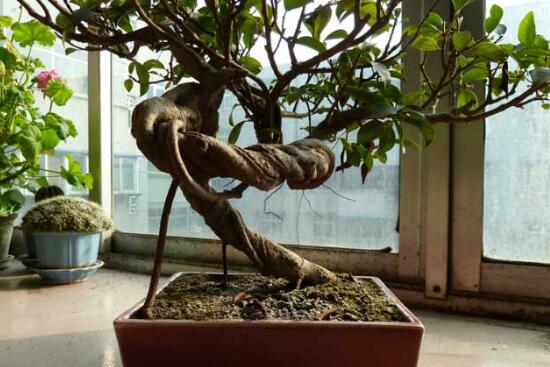
As a common ornamental plant, the ficus tree is actually quite easy to grow, but with so many beginners, who due to unfamiliarity or negligence often end up with a ficus tree that drops its leaves, plant enthusiasts must be very anxious! So what do you do when a ficus tree drops its leaves? For this, the editor has summarized 6 causes, along with remedies, and we will continue below for the specifics.
II. What Causes a Ficus Tree to Drop Its Leaves and How to Treat It
1. Too Much Light
The ficus tree likes light, and during growth, sufficient light can make it grow more luxuriant and green. However, during high summer temperatures, appropriate shading is needed, otherwise direct strong light will cause the ficus leaves to turn yellow and even drop.
Remedy: If the ficus tree's leaf drop is caused by too much light, plant enthusiasts should promptly move the ficus to a semi-shaded spot indoors, ensure ventilation, and after it recovers, water moderately and care for it carefully for a period, and the plant will return to health.
2. Improper Watering
If you ask what causes a ficus tree to drop its leaves, the most common cause is improper watering. The ficus tree is quite sensitive to moisture, and both overwatering and underwatering can cause the plant to drop its leaves. The specific symptoms and remedies are as follows:
Too Little Watering: The ficus tree likes a humid environment, and during its peak growing season, we must keep the potting soil moist. If it is not watered for a long time, or never watered thoroughly, the ficus leaves will become dull and lusterless because they cannot absorb water, and will drop at a touch. Remedy: Water sparingly and mist (do not add too much at once), and after the ficus leaves stop dropping, return to normal watering.
Too Much Watering: Although the ficus tree needs a fair amount of water during growth, it cannot be overwatered, otherwise water will accumulate in the pot, eventually causing root rot, which affects the plant's water and nutrient absorption, and the leaves will easily drop. Remedy: Stop watering, frequently loosen the soil to improve aeration, and then slowly return to normal watering.
3. Too Much Fertilizer
The ficus tree likes fertilizer, and sufficient nutrients can make it grow quickly, but too much fertilizer will cause fertilizer burn, affecting the plant's growth, ranging from leaf drop to death in severe cases.
Remedy: Immediately stop fertilizing and increase watering to dilute the fertilizer in the pot; for regular fertilizing, apply light and frequent doses, and do not use too high a concentration.
4. Pests and Diseases
If you ask what causes a ficus tree to drop its leaves, it is actually also related to pests and diseases. It is understood that in poorly ventilated and dry environments, the ficus tree will develop scale insects and red spider mites, which are small but cause serious damage, often resulting in yellowing and even leaf drop.
Remedy: Wash the insects off with water and spray the relevant insecticide; for the specific pesticide to spray, refer to ficus pest and disease control.
5. Repotting Too Frequently
When growing a ficus indoors, plant enthusiasts with too much free time sometimes frequently change the pot's position. This is actually a wrong practice, because it makes the ficus's growing environment insufficiently stable, thereby affecting the plant's growth and causing leaf drop.
Remedy: If the ficus tree's leaf drop is caused by repotting, it is easy to remedy; simply place it in a ventilated semi-shaded spot, then do not move its position, and it will recover within a few days.
6. Normal Phenomenon
If you ask what causes a ficus tree to drop its leaves, besides the above points, you should also consider whether it is a normal phenomenon. It is understood that a newly purchased ficus tree easily drops its leaves, and this is actually a very common thing, because although the ficus tree has strong adaptability, it also needs a period to adapt to a new environment, during which it usually drops its leaves.
Remedy: In this situation, plant enthusiasts need not worry, because this leaf drop is normal. Simply place the pot in a spot with diffused light for care, and after the plant slowly recovers, resume normal watering and fertilizing, and it will gradually recover.
Regarding the treatment methods for a ficus tree dropping its leaves, after reading the comprehensive analysis of the above 6 aspects, everyone should know what to do! Actually, a ficus tree dropping its leaves is caused by one reason, but is often the result of multiple factors, so when encountering this situation, you must make a correct diagnosis, so as to suit the remedy to the case.
A Complete Guide to Shaping and Processing Methods for Tree Stump Bonsai
A Complete Guide to Shaping and Processing Methods for Tree Stump Bonsai
(I) Processing Methods
Shaping and processing mainly involves two methods: pruning and wiring. The pruning method is the main shaping method of Lingnan bonsai, and is most suitable for tree species with strong sprouting ability, such as Fujian tea (Carmona retusa), elm, orange jasmine (Murraya paniculata), and serissa (Serissa japonica).
The pruning period should be handled separately according to tree species. Generally, deciduous trees should be pruned after leaf drop and before bud break, evergreen trees should be pruned during vigorous growth, tree species that bud periodically should be pruned before bud break, and flowering tree species should be pruned after flowering. In addition, generally in spring and summer, it is best to let the trees grow naturally for a period before pruning.
Metal Wire Wiring Method: This means winding copper wire or iron wire around the branches, then bending the branches in various ways. The thickness of the metal wire depends on the size of the branch. First fix one end of the metal wire at the base of the branch or at a crossing point, then wind it in a screw shape, must be pressed tightly against the branch, but do not use too much force, to prevent damaging the bark or snapping the branch. The bending of the branch must be slow, to prevent breaking the branch.
Palm Fiber Wiring Method: This means using palm ropes twisted from palm fiber of different thicknesses to tie the branches into various curved shapes. When wiring, first tie a loop knot in the palm rope and fix it at the lower end of the branch to be bent, such as the base of the branch, a crossing point, or the branch at the leaf stalk; then cross the two palm ropes after the loop knot a few times, place them at the upper end of the branch to be bent, tie a slip knot, and place the branch within it. Then slowly bend the branch to the required arc, tighten and tie a dead knot, and one bend is complete.
Regardless of whether the metal wire or palm fiber wiring method is used, after a certain time, it must be removed promptly; if left on the branch, it will sink into the cortex as the branch grows, causing "metal wire injury" or "palm fiber sinking."
(II) Processing Standards
The forms of trees in nature are ever-changing, and as a miniature of natural trees, tree stump bonsai shapes should of course also be diverse. Different styles and schools in different regions have different standards, and admirers also have their own preferences. Therefore, it is difficult to set down specific standards for tree shaping and processing.
First, the tree must conform to nature and be rich in painterly quality. Conforming to nature means making people feel they have seen such a tree scene in nature, which requires attention to avoiding artificiality and striving to maintain the tree's inherent posture. But merely conforming to nature is not enough; it must also be rich in painterly quality. Being rich in painterly quality means carrying out artistic processing on the basis of nature. Through various means, the goal of originating from nature yet surpassing nature must be achieved, which is the same principle as painting.
The form of the tree's trunk is the most important, and its quality determines the shaping of the entire tree. The trunk is generally better when thick and strong, and should be able to express the posture of a large tree. The trunk should taper gradually from bottom to top, and should not suddenly become thinner, or conversely have a section thicker than the part below it. In addition, the trunk can be straight or curved, depending on the needs of the shaping, but it must all be natural.
The form of the tree's roots is also very important, second only to the trunk. Exposed roots bring out the characteristics of an old tree, but too much exposure is not necessarily good, and instead loses naturalness. It is best to have both exposure and concealment, with concealment within exposure. Root forms are diverse; some are shaped like steel claws gripping the soil surface; some resemble dragons and snakes, coiled and curious. But all must coordinate with the trunk and merge into one whole.
The trunk and roots are the foundation. With a good foundation, good branches and foliage are still needed. Generally, branches should be curved to have beauty. Curves formed by pruning are more vigorous; curves formed by wiring are more gentle; each has its strengths, and can be chosen according to shaping needs. Branches and foliage should achieve a balance of density and sparseness, and the density should be determined according to different styles and different tree species. In addition, leaf size also has a certain relationship; if it is a medium or small bonsai, trees with smaller leaves should be chosen, so that the whole appears more coordinated.
(III) Processing and Shaping
1. Cultivation and Accumulation
Cultivation and accumulation and maintenance are different concepts. Maintenance refers to the care and upkeep of tree bonsai during growth, while cultivation and accumulation refers to adopting cultivation methods combined with wiring, pruning, grafting, and carving during the shaping process of tree bonsai to make the forms of roots, trunk, and branches develop according to human wishes. For a good pot of tree bonsai, its roots, trunk, and branches must have reasonable and proportionate ratios. During the shaping process, the bending of branches and the trimming of the crown shape are relatively easy to handle, but coordinated thickness, symmetry, and reasonable proportions must rely on cultivation and accumulation to be completed. Cultivation and accumulation is like "addition," while pruning and carving is like "subtraction." Tree shaping requires the combined use of "addition" and "subtraction," cleverly complementing each other. Cultivation and accumulation can develop the root system, help wound healing, make the proportions of branches, trunk, and roots reasonable and proportionate, make the tree shape full, natural, and beautiful, and make up for the deficiencies of wiring and pruning.
(1) Root Cultivation: Roots are the main component on which trees depend for survival, and to a large extent determine the quality of the tree's growth. From the perspective of tree bonsai, root shaping is an important part of expressing bonsai beauty. Cultivating good roots, besides benefiting tree growth, can also enhance the artistic appeal of tree bonsai shaping, making it more perfect. As the saying goes: "without roots" it is just a cutting; without a good root base, it cannot be called an excellent bonsai work.
Tree stumps collected from the wild generally have a longer tree age and larger roots. Due to natural growth, the branch posture is very beautiful, but the roots often have deficiencies. During the stage of cultivating the raw material, the root supplementation method can be adopted to induce new roots. If one side of the tree stump has no roots, the approach grafting method can be used, selecting seedlings of the same species and planting them close against the roots. In the second year, the tree stump and the supplementary seedlings are cut away. This root supplementation method can restore vitality to the incomplete root system of an old stump and renew its growth. Using the tree stump root cultivation method, ideal root forms can be created.
In addition, in the techniques of root cultivation, one can also usethe suspended root method, the cushion root method, the coiled root method, the squeezed root method, and the enclosing sleeve method, etc., to cultivate various types of root systems (such as flat-spreading roots, raised suspended roots, coiled roots, connected roots, etc.), which is even more suitable for the root cultivation of propagation.
The illustration shows the root stump lacking roots on the left side of the root base, affecting the shaping.
Take a small plant of the same species, remove the right-side roots, and use a knife to trim it into a wedge shape, so that it fits the gap at the base of the tree stump to be root-supplemented, and fix it for cultivation.
After the graft has survived for a period, the upper part of the scion can be cut off, leaving only the root joined with the rootstock.
Root Supplementation Method
Induced root cultivation.
Cushion Root Method: Select healthy bonsai tree material, dig up the entire root system, wash off the soil, cut off all downward-growing roots, being careful to retain the lateral roots on all sides, clean them into a radial pattern, place a flat object such as a wooden board or tile under the lower end of the roots, and then evenly bind the root system to the cushioning object with palm fiber or easily rotting string.
Schematic diagram of the cushion root method
Coiled Root Method: Select bonsai material with soft roots that are easy to coil, such as ficus and elm, dig up the entire root system in spring, wash off the soil, retain the long roots suitable for coiling, insert an awl-opened press into the middle of the roots, spread the roots along the outer palm fiber, then arrange and coil the long roots, with differences in thickness, naturally appropriate, making the root form trumpet-shaped, then bind with easily rotting string. Plant the coiled and processed tree material in the ground, or in a slightly larger clay pot.
Schematic diagram of the coiled root method
Squeezing Method: During the tree's growth process, continuously adopt physical processing methods to suppress and squeeze the main root at the base of the root, making it form a buttress root shape. The squeezing should be carried out gradually in multiple methods, and must not be rushed, otherwise it will cause irreparable trauma to the plant's roots, and in severe cases cause the plant's death.
Schematic diagram of the squeezing method
Enclosing Sleeve Method: Use the enclosing sleeve method to control the expansion of roots, force the root system to grow downward, and cultivate different forms of suspended roots. This method can be used to cultivate raised-root style tree stump bonsai.
Schematic diagram of the enclosing sleeve method
(2) Trunk Cultivation: The trunk is an important component of the tree's form, connecting the crown and roots into a whole, and playing the role of transporting nutrients and supporting the crown. From the perspective of tree bonsai processing, the thickness, strength, and momentum of the trunk have a decisive influence on the overall shaping. If one wants to create an excellent tree bonsai work, one must, according to the tree material's own characteristics, first cultivate the roots and trunk well, then cultivate the branches and side branches. For trunk cultivation of wild-collected tree stumps, one must flexibly grasp it according to the habits of different tree species. For tree species that grow slowly and whose cut surfaces are very difficult to heal, such as pines and cypresses and miscellaneous trees like Sageretia thea, Chinese wolfberry, and serissa, one should retain as much of the roots, trunk, and branches as possible during collection, seeking completeness. For tree species that grow relatively fast and whose wounds heal easily, with a very good root base but an unsatisfactory trunk shape, one can resolutely cut off the unsatisfactory part of the trunk and re-cultivate the trunk. Those with large cut surfaces can be cultivated into double trunks, and those with small cut surfaces can be cultivated into a single trunk.
Split-Trunk Cultivation Method: For wild-collected miscellaneous tree stumps such as trident maple, elm, and Fujian tea (Carmona retusa) that grow relatively fast and have a very good root base but whose upper trunk is not ideal, one can saw them off and split the cut surface of the trunk into a double-trunk or triple-trunk form. In the second spring, determine the trunk form according to the situation of the shoots. For the double-trunk form, cut the main trunk into one tall and one short, one main and one secondary, with an irregular but orderly arrangement. And let it grow freely, using the branch cultivation and trunk truncation method to cultivate the main trunk. When the cultivated main trunk is basically ideal, then use metal wire to wire the branches and side branches. After several years of trunk cultivation and wiring, the branches and trunk cultivated at the split-trunk position will gradually become full and take shape.
Schematic diagram of the split-trunk cultivation method
Single-Trunk Cultivation Method: For tree material with intact roots, if the upper main trunk is not ideal, it can be cut off at an appropriate height and the branches and trunk re-cultivated; those with small cut surfaces can be cultivated into a single trunk.
Schematic diagram of the single-trunk cultivation method
(3) Branch Cultivation: Branches are an important part of the shaping beauty of tree bonsai; without branches there is no crown. In the processing and shaping of tree material, it is often because the thickness ratios and arrangement positions between branches and trunk, and between branches and branches, are unreasonable, that it is difficult to create an excellent work. The natural growth law of trees is thick at the bottom and thin at the top; if due to improper shaping, the lower part is dry and weak while the top branches are instead thick and strong, then natural beauty is lost. Therefore, measures to suppress the top and nourish the bottom must be adopted, with sufficient nutrients supplied to the lower branches to make them grow thick and form a full branch crown.
Branch cultivation should be carried out after the root and trunk shaping is basically completed, then the branch crown should be made. But do not rush for success; proceed gradually from bottom to top, and the closer to the top branch crown, the faster it takes shape. Therefore, for the top branches, carry out positioning and binding, promptly cut off water shoots and the four strong branches, and cultivate the lower branches, letting them grow thick. When the lower branches and trunk have been cultivated to a certain thickness, then cultivate the side branches; according to shaping needs, either mainly pruning or mainly wiring, carry out different shaping treatments. After the lower branches and trunk shaping is basically completed, then gradually move upward. In this way, the proportions between branches and trunk, and between branches and branches, are coordinated and reasonable, forming a beautiful branch crown.
Schematic diagram of the branch cultivation method
(4) Cut-Surface Cultivation: For tree stumps dug from the wild, during the raw material cultivation process, shaping cuts are needed, forming cut surfaces of varying sizes. If the cut surfaces do not heal well and gradually rot, it not only hinders appreciation but also affects their growth and lifespan. Due to different tree species, as well as differences in cut surface size and growth speed, their healing abilities differ. Broadleaf tree species have strong healing ability, while pines and cypresses have poor healing ability. For tree material with large cut surfaces, it is best to cultivate the raw material in the ground, not rushing to shape it; after the branches are positioned, let them grow without restraint, and the cut surfaces will heal much faster.
After oblique sawing, use a knife to pare away part of the surrounding area of the cut surface, forming a small arc shape, to facilitate healing of the cut surface. The position of retained shoots should be according to shaping needs, retained on one side of the cut surface, and should not be retained symmetrically. The branches for cut-surface cultivation should be placed at positions that need thickening; when the retained branches grow to 1.5-2 cm thick, they can be cut off; if the cut surface has not yet healed well, one can continue to retain shoots until the cut surface heals.
When the cut surface is too large and healing is difficult, the approach grafting method can be used, using the tree's branches to approach graft at the cut surface. After the graft heals, cut off the grafted branch, and continue to let shoots grow and cultivate the cut surface on the grafted branch in the middle of the cut surface.
2. Shaping
(1)Wiring and Bending: In the shaping process of tree bonsai, bending of branches and trunk is an indispensable and important content of shaping; through bending, the original form of the branches and trunk is changed, reasonably occupying spatial positions to achieve formal beauty. In China's traditional tree bonsai shaping, palm fiber and palm bark are mostly used for wiring and bending to adjust the branches and trunk. Its palm techniques are still worth learning from.
Traditional palm fiber wiring is not easy to damage the plant, and is neat and elegant, but has high technical requirements and long working hours. Metal wire wiring is easy to operate, can be done at will, handy, saves labor and time, and is difficult to remove. Therefore, when bending and wiring, one can, according to the maker's preference and shaping needs, choose palm fiber or metal wire, or use both metal and palm.
For the bending of branches and trunk, one must understand the habits of different tree species, grasp the timing and season according to thickness, and flexibly use different methods. Especially for the bending of the main trunk, one must have a well-thought-out plan, bending to the extent that it can be bent. One can also gradually increase the degree of bending in stages, and when bending, pay attention to protecting the xylem and epidermis. For some thick trunk shaping, one can bend or not bend, and bend as little as possible or not at all. Bonsai tree material cultivated from small seedlings should be bent and wired from a young age; for large bonsai tree stumps collected from the wild, one can reduce the degree of bending by changing the planting form or cleverly borrowing the tree's momentum.
①Metal Wire Wiring: Commonly used metal wires include copper wire, lead wire, and iron wire; according to the thickness, toughness, and color of the tree material being wired, choose metal wire of different thicknesses. Because metal wire has high strength and easily damages the plant epidermis, one can use kraft paper, cotton cloth, or plastic with good elasticity and soft texture made into strips to wrap the metal wire, and when necessary, also wrap the tree trunk being wired. Pay attention to timely removal, to prevent the metal wire from embedding into the xylem.
Wiring should first be done on the main branches, then the secondary branches, then the small branches, from bottom to top, from inside to outside, from thick to thin. Fix the starting end of the metal wire; one strand can be used, or two strands together, pressed tightly against the branch and trunk, winding upward at a 45-degree angle tangent to the metal wire and branch and trunk, and when reaching the required position, press the end of the metal wire tightly against the bark, not allowing it to stick up.
Miscellaneous trees are wired during the growing season, most suitable when semi-lignified, when the branches have particularly strong vitality, and even if cracked, heal easily. Pines and cypresses are best wired during the dormant period.
②Palm Fiber Wiring: According to the thickness of the branch and trunk being wired, twist palm fiber into palm ropes of different thicknesses; according to the growth position and bending form of the branch and trunk, find the best wiring points and knotting positions. The starting wiring point should try to choose branches, tree nodes, or rough places, to prevent the palm rope from slipping. If the wiring point is smooth, it can be wrapped with cotton fabric. The bending spacing should be flexibly grasped according to the thickness and hardness of the branch. For thin and soft branches, the spacing can be shorter; for hard and thick ones, the spacing can be longer; at the inner arc of the bend, use a saw to make a notch, with a depth less than 1/2 of the trunk diameter, and wrap the wound with hemp bark. As for wiring time, besides traditional wiring, natural-style shaping can be wired at appropriate times as needed. When wiring may damage the trunk, it can be done in early spring, which facilitates wound healing. The wiring order is: first wire the main trunk, then the large branches, then the small branches. When wiring branches and leaves, first wire the top, then the bottom.
Click: Schematic diagram of palm fiber wiring
③Combined Metal and Palm Fiber Wiring: Metal wire binding of small branches is fast, effective, and has strength, but bending thicker branches and trunk is relatively difficult. Palm fiber wiring can be used regardless of thickness. Palm fiber wiring mainly uses the contraction of two points to bend the branches, and its bending form is more soft than rigid. Therefore, using metal wire and palm fiber together can make up for each other's shortcomings, combining rigidity and softness. The bending of main trunk branches uses palm fiber wiring and pulling, and the bending of small branches uses metal wire binding.
Click: Schematic diagram of metal and palm wiring
④ Other Wiring Methods: Besides using metal wire and palm rope for wiring, the bending of branches and trunk can also usethe methods of trunk splitting, saw cutting, grooving, twisting, hanging, pulling, and propping。Click
For tree species whose main trunk is not too thick and whose wounds are relatively difficult to heal, one can, at the middle position, cut perpendicular to the bending direction with a length equal to the arc. After cutting, wrap the cut tightly with palm bark or hemp bark, put a palm fiber loop over the base of the trunk, twist the two strands of rope together and tie them at the upper end of the trunk with a slip knot, and after bending into place, tie a dead knot to fix it.
(2) Pruning: From the perspective of shaping, pruning and wiring are both for changing the bending form of branches and trunk and the occupied spatial positions, thereby achieving the purpose of tree shaping. From the perspective of maintenance and management, pruning is for maintaining and preserving the landscape of an already shaped tree. According to the order of shaping, it can be divided into positioning pruning, reduction pruning, and thinning pruning, etc.
Pruning time: Miscellaneous tree bonsai can be pruned all year round, while pines and cypresses are best pruned during the dormant season. The plum rain season has a lot of rain and high air humidity, and trees grow vigorously, so one should prune less, or not heavily, because a large amount of branches and leaves being cut off will affect normal growth and, in severe cases, cause death. In addition, near the end of autumn, heavy pruning is not allowed; after strong pruning, new buds will successively sprout, and when a cold snap comes, the tender buds will freeze to death. The best time for heavy pruning and strong pruning is January-February, when trees are in the dormant period. But some cold-intolerant tree species should not be pruned in winter, because wounds are relatively difficult to heal and easily leave scars.
Generally speaking, trees with strong growth and vigorous growth can be pruned more, while those that grow thin and weak should be pruned less. According to the needs of tree shaping, one usually needs to cut off messy crossing branches, overlapping branches, parallel branches, whorled branches, opposite branches, thin and weak branches, diseased branches, etc. The nutrients of the retained branches are concentrated, and they can grow robustly.
Click: Various forbidden branches
Various forbidden branches
Pruning Methods: The end face of the cut should, as much as possible, avoid the large surface and be cut at a 45-degree angle tangent to the branch and trunk, with the leaf bud retained on the upper side of the slant. During the growing period, one can prune close to the leaf bud, which facilitates wound healing. During the non-growing period, one can prune above the leaf bud.
Positioning Pruning: This refers to the first pruning in bonsai shaping, determining which branches at different positions to retain and cutting off excess branches. For tree stumps collected from the wild, after cultivation and survival, many branches sprout, and most of them must be cut off, retaining the skeleton branches needed for shaping; this is called positioning pruning. After positioning pruning, the number, positions, and mutual distances of the branches are determined, which directly affects the morphological beauty of the tree bonsai. Therefore, before pruning, one must carefully conceive and consider the form of tree shaping; as the saying goes, "the idea precedes the brush," and at the same time one must "have a well-thought-out plan" before cutting. Because the retention or removal of branches depends on the establishment of the tree landscape form. The retained branches should grow robustly, with coordinated thickness from top to bottom, avoiding parallel, symmetrical, and overlapping as much as possible, achieving a balance of density and sparseness, unfolding around the main trunk up, down, left, and right, with momentum.
Reduction Pruning: This is a pruning method that shortens branches, and is also an important measure for tree shaping and maintaining the tree landscape. From the perspective of shaping, reduction pruning makes the tree dwarfed, the branches full, with controlled thickness from top to bottom and variation in bending, so shaping should pay attention to three points: ① the transition ratio of thickness between the pruned branch and trunk and the upper section branch and trunk is suitable; ② when reduction pruning, retain the direction and angle of the bud eye well, to adjust the new shoots to reasonably occupy spatial positions; ③ reduction-pruned branch nodes should be short rather than long, with the first node branch longer than the second node, and the second node branch longer than the third node. From the perspective of maintaining the tree landscape, for the vast majority of shaped foliage tree bonsai, the water shoots that emerge each growing season need reduction pruning to maintain a beautiful posture.
Shaped pine and cypress bonsai mainly rely on bud picking and heart picking to control overlong branches and maintain the original appearance. As for the reduction pruning of flowering and fruiting bonsai, different pruning methods should be adopted according to their different growth habits. For example, crape myrtle, pomegranate, and crabapple bloom and bear fruit on newly sprouted branches of the current year, so reduction pruning can be done during the dormant period, but not during the growing period. Early spring bloomers such as winter jasmine, plum blossom, and ornamental peach should be pruned after flowering, which can promote the formation of flower and fruit branches the following year. Foliage tree bonsai can be reduction-pruned twice in early summer and early autumn, and strong pruning during the dormant period to remove various forbidden branches. Firethorn and Chinese holly bloom and bear fruit more on short branches, so besides strong pruning during the dormant period, in late spring and early summer one can also reduction-prune the long branches of the current year, and frequently apply light fertilizer, increase light, and promote the growth of short branches in summer and autumn, increasing the amount of flowers and fruit. Strong pruning during the dormant period must appropriately retain short branches to ensure the flowers and fruit of the following year.
Click: Positioning pruning, reduction pruning methods
Positioning pruning
Forcing buds and reduction pruning
Reduction pruning
Pruning and shaping
Pruning of flowering and fruiting bonsai
Bending branches during pruning
Thinning: maintains the tree's landscape, and can increase ventilation and light penetration, reduce the occurrence of pests and diseases, concentrate nutrients, and promote lush branches and leaves with abundant flowers and fruit.
The timing of thinning varies according to whether it is strong pruning or weak pruning. During the growing season, when branches and leaves are lush, weak pruning can be done at any time, but strong pruning is not advisable. For tree species with strong sprouting ability, such as Japanese privet (Ligustrum japonicum) and Chinese elm (Ulmus parvifolia), strong pruning can be carried out avoiding the plum rain season. After pruning, watering should be reduced, thin fertilizer applied frequently, and light increased. Generally, the amount of thinning at the upper part of the tree can be greater, and the amount at the lower part can be smaller, because lower branches are harder to grow. The main targets of thinning are various undesirable branches and overly dense crowns. When upper and lower crowns are equally important, it is best to leave lower branches and prune upper ones, so that the volume of the upper crown is smaller than that of the lower crown. After thinning, crown growth is suppressed and many new shoots will sprout, which should be removed promptly. Pruning methods also include bud removal, pinching, and leaf removal.
Bud removal: For tree species used in bonsai with strong sprouting ability, during the growing season, buds sprout both abundantly and quickly; all unwanted buds, including root buds, trunk buds, and axillary buds, must be promptly removed tirelessly. At the same time, attention should be paid to preserving the direction, position, and density of buds, so as to avoid the sprouting of forked branches, opposite branches, and overlapping branches that affect the beauty of the tree shape.
Pinching: This means removing the tender tips of new shoots during the tree's growing period, inhibiting excessive elongation of new shoots, promoting lateral branch growth, and shortening internodes to maintain a beautiful tree form. The timing of pinching differs among tree species because their sprouting periods differ. For foliage-type bonsai, pinching can be done once 2-4 new leaves have unfolded. For flowering and fruiting bonsai, it should be handled flexibly according to the different flowering and fruiting periods. Pinching can stimulate lateral branch growth and increase the number of flowers.
Leaf removal: Proper leaf removal can make leaves smaller and enhance the ornamental value of bonsai. Some people call this method "taking off clothes and changing to brocade." Generally, the new leaves that sprout in spring are the most attractive. As the seasons progress, with summer exposure to the sun, the originally glossy and brightly colored leaves gradually become old-looking. Through leaf removal treatment, fresh tender new leaves can be produced once again, adding another period of the best ornamental effect. Some old stumps, with iron-like branches and gnarled trunks, full of towering strength, while new leaves are as green as jade and drip with verdure, present a scene full of vitality in spring. The timing of leaf removal varies by tree species; foliage-type trees can have leaves removed in early summer or early autumn. Evergreen trees should not have leaves removed. During leaf removal, water should be properly withheld, and the potting soil should not be too moist. In addition, fully decomposed cake fertilizer water should be applied frequently, and ventilation and light should be strengthened to promote the sprouting of new leaves.
(3) Grafting: Grafting of tree bonsai is a shaping method. Through grafting, not only can excellent bonsai tree material be obtained, but the speed of bonsai formation can also be accelerated, achieving twice the result with half the effort. For example, grafting small-leaved podocarp onto large-leaved podocarp, or grafting red-flowered Chinese fringeflower onto white-flowered Chinese fringeflower, can improve varieties and enhance ornamental effect. Grafting can also be used to supplement roots, supplement branches, and replace crowns, making the shaping of tree bonsai more perfect. In the process of shaping tree bonsai, combining wiring, pruning, and grafting techniques will have the effect of adding beauty to what is already beautiful.
To improve the survival rate of grafting, the main thing is to master grafting technique well. The cambium layers of the scion and rootstock must match and align, and be tied tightly. The closer the genetic relationship between scion and rootstock, the easier it is to survive. Master the grafting time well; generally a temperature of 20-25 degrees is most suitable. At this time cambium cells are most active and divide quickly, which is favorable for graft survival. For the scion, choose an excellent mother tree that grows robustly, is free of pests and diseases, has small leaves, and has strong compatibility, preferably a nutrient branch with plump tissue. When grafting flowering and fruiting tree species such as crabapple and pomegranate, flower and fruit branches should be selected as scions, which can make the grafted plant flower and bear fruit earlier, with more flowers and more fruit.
Before grafting, tools should be prepared, such as a budding knife, a cutting graft knife, a hand saw, a wooden mallet, pruning shears, as well as plastic strips and hemp fiber needed for tying. During grafting, the technical requirements of flat, accurate, fast, strict, and tight should be met as much as possible, which can greatly increase the survival rate. The commonly used grafting methods are as follows:
① Branch grafting: Selecting a one-year-old branch or a new shoot of the current year as the scion and grafting it onto the rootstock is called branch grafting. Commonly used branch grafting methods include cleft grafting, cut grafting, side grafting, and approach grafting. The best time for branch grafting is within the half month when trees just begin to sprout in early spring, choosing the morning or evening of a clear day; cloudy and rainy days are not suitable. The method used can be decided according to specific circumstances. Generally, when the rootstock diameter is larger than the scion or the rootstock is relatively thick and strong, cleft grafting or cut grafting can be used, such as for flowering and ornamental trees like crabapple, flowering peach, pomegranate, wintersweet, spring plum, banyan, and osmanthus. For pines and cypresses, side grafting can be selected because these tree species must retain branches and leaves to survive. For some precious tree species that are difficult to graft successfully, the approach grafting method must be used.
② Branch supplementation: When a bonsai has a missing branch on its trunk, the approach grafting method can be used to supplement the branch using branches from the same tree or from trees of the same genus outside the tree itself. At the site of the missing branch, cut a horizontal groove in the shape of lips, reaching the xylem. The length and depth of the cut should be suitable for fully matching the cut surface of the approach graft branch. Then cut the T-shaped connecting surface of the selected T-shaped approach branch into a shape matching the rootstock cut, then place the T-shaped branch against the groove of the branch to be supplemented, align the cambium, and tie it firmly with strip-like material.
③ Root supplementation: When a beautifully shaped stump is dug up in the mountains and fields, it often appears imperfect due to missing roots. If no new roots can be induced at the missing root area, the approach grafting method can be used to supplement roots. During the tree's growing season, select a seedling of the same species whose root thickness, size, and direction basically meet the needs of the rootstock's missing root. Dig it up, keep only the main root, cut off all other lateral roots, and prune part of the branches and leaves. Retain as many bud points as possible at the approach grafting surface. After the joint heals, when cutting off the upper part of the approach seedling, keep that bud point as a branch to promote wound healing. The method of approach grafting is similar to branch supplementation. For example, a trident maple collected from the mountains may have a good shape, but its root disk is not perfect enough because of missing roots. First plant the stump. After it survives, in the second year, in summer, open a groove reaching the xylem at the missing root area. Select a trident maple whose root size is similar to the root needed to supplement the rootstock, dig it up, and cut the approach grafting surface into a shape matching the groove at the rootstock root. Then align the cambium layers of the two. If the root surface is uneven, after the approach grafting surface heals, cut off the upper branch of the approach graft, or use iron nails to fix the scion at the root supplementation site of the rootstock.
④ Bud grafting: Bud grafting is a method of grafting using buds from the scion. In the process of shaping tree bonsai, bud grafting can improve the crown and can also serve as a remedial measure for branch grafting. Its advantage is that several scion buds can be grafted onto a small branch of the rootstock. After they survive, according to the density requirements of shaping, they can then be pruned and selected. For improving some tree species with thicker bark, the bud grafting method can be used. For example, bud grafting flowering peach onto wild peach stumps, bud grafting plum blossom onto wild plum stumps, and bud grafting small-flowered rose onto old roots of wild rose. Bud grafting includes many methods such as T-shaped budding, I-shaped budding, chip budding, and ring budding. The best time for bud grafting is from July to August, when sap flow is vigorous and the bark and xylem are easy to separate. Bud grafting should avoid rainy days and is best done in the morning and evening. Within 4-5 days before bud grafting, the rootstock should be loosened in the soil, fertilized, and watered to promote sap flow and facilitate bark separation. For rootstocks being crown-changed, branches and leaves at the bud grafting site need to be pruned before grafting to facilitate operation. The epidermis at the bud grafting site of the rootstock is required to be smooth and flat. Apart from the scion bud being from an ideal variety, the axillary buds must also be plump. Because the climate during bud grafting is relatively dry and water at the cut is very easily lost by evaporation, bud collection and bud grafting should be completed in one continuous action as much as possible: take one bud and graft one bud.
⑤ Root grafting: When digging up stumps in the mountains and fields or when repotting and pruning, relatively ideal root forms can often be obtained, and the root grafting method can be used to change the crown. When repotting and transplanting in March, take a well-formed root, wash it clean in water, cut off fibrous roots and excess lateral roots, and according to the thickness of the root use cleft grafting or cut grafting to change the crown. Take 1-2 year old branches of the same tree species as scions, retaining 2-3 buds. After the graft survives, loosen the binding material and gradually expose the root, thereby obtaining a new stump bonsai.
(4) Carving: In the production of tree bonsai, carving is often needed to express a kind of incomplete beauty that seems dead yet still alive, namely the so-called dry-trunk style and dead-top style, also called shari trunk and divine branches. This incomplete beauty is not a hollow trunk with decayed and fallen wood, terminally diseased, but rather trunks and branches after carving that are like clanging iron and steel, ringing when struck, rotten like iron, decayed like steel; though made by human hands, it appears as if naturally formed, with an artistic charm that shakes the heart. Bonsai artists in Japan and Taiwan, China often use true juniper, juniper, and five-needle pine to make shari trunks and divine branches, condensing the landscape of coexisting life and death of trees in nature into a bonsai that can be touched by hand, showing extremely high artistic attainment. The xylem of tree species used for carving should be dense, hard, resistant to decay, not prone to aging and peeling, and able to be preserved for a long time.
Introduction and Conservation of Amazon Rainforest Plant Species
Humanity cannot do without the tropical rainforest. People need to use the tropical rainforest. As long as development is carried out within the tropical rainforest's carrying capacity, the tropical rainforest can be renewed and used sustainably.
Many herbaceous plants in the Amazon rainforest have enormous leaves, such as those of banana, giant taro, and Tacca chantrieri. Their leaves are large enough to shelter several people underneath from the rain. Giant leaves can capture more light, and this is generally considered to be the result of understory herbaceous plants in tropical rainforests adapting to low light.
Some herbaceous plants under the rainforest do not have leaves that are entirely green, but are mixed with markings in various colors such as yellow, white, and red. This is called the variegated leaf phenomenon. The cause of the variegated leaf phenomenon is still not fully clear. Tropical variegated-leaf plants were used as floral material by people very early on, and can be seen in many greenhouses.
The trees, shrubs, and herbaceous plants in the understory of tropical rainforests generally have leaves with tail-like tips, called drip tips. A typical example is the leaf of the bodhi tree, whose curved tail-like leaf tip reaches several centimeters in length. The interior of the tropical rainforest is very humid. Water vapor in the air and frequent rainfall often form a film of water on the leaf surface. Drip tips allow the water film on the leaf surface to gather into water droplets and flow away, causing the leaf surface to dry quickly. This is beneficial to leaf transpiration and also prevents some tiny epiphytic plants (mosses, algae) from growing on the leaf surface and hindering photosynthesis.
The striking red-leaf phenomenon
No matter when you look down at the tropical rainforest from the air, you will find scattered patches of red glinting in the sunlight amid the vast green sea. Those are not flowers, but red leaves. In seasonal tropical rainforests, during the season when old leaves fall and new leaves sprout, patches of red stand out strikingly against the green sea.
In many tree species of tropical rainforests, new leaves are red and drooping when they first emerge, and only gradually turn green and become firm after several days or weeks. Temperate trees are different. For example, the famous maple and smoke tree become red only in autumn when the leaves age and are about to fall. The former symbolizes new life, while the latter means aging.
Epiphytes: Aerial Gardens
Upon stepping into a tropical rainforest, what meets the eye, besides the trees, shrubs, and grasses growing on the ground, is that on various branches and lianas hang all kinds of small plants in dazzling array, like an aerial garden. These hanging plants are called epiphyte synusiae.
The tropical rainforest habitat is superior, and competition among plant species for living space is extremely fierce. Because the understory is dim, many small plants find it difficult to obtain enough light and have to expand into other spaces. The multi-layered structure of tropical rainforests, together with the humid air within the forest, allows litter to accumulate frequently at various branch forks and bark crevices, forming a little soil and providing a hotbed for some seeds. Many small plants can gain a foothold and develop in these positions, becoming epiphytes. The more humid the tropical rainforest, the greater the variety and number of epiphytes.
Tropical rainforests create the most effective use of solar energy. The light that escapes the thick layers of trees and leaks through often cannot escape capture by epiphytes either. No wonder the understory is so dark; very little light remains by the time it reaches the ground.
Lianas That Are One Foot Taller Than the Demon
In tropical rainforests, there is a category of plants that rely on twining around or climbing on other trees, using trees to support their own bodies; these are called lianas. Large lianas are very abundant in tropical rainforests. Sometimes they lie along the ground, and sometimes they twine, thread, and hang on large trees. In the understory, only their stems can be seen, not their branches and leaves. The branches and leaves of lianas generally spread above the forest canopy, filling gaps in the canopy, which is also a form of competition for light. In some types of tropical rainforest, lianas are so numerous that travelers find it hard to pass through. When trees are cut down, they are often caught by large vines and hang suspended in the air without falling. Logging in such forests is very difficult.
The Insatiable Strangler Plants
Early European botanists and travelers were often puzzled by the strange phenomenon in tropical rainforests of trees growing on trees. From the branches and leaves, any careful observer could distinguish that they were two different plants, but their stems were intertwined and merged with each other, or the stem of one plant enclosed the stem of another plant. Gradually, people noticed that the tree wrapped and enclosed inside would eventually die, while the plant wrapping it would develop into a large tree. People called the wrapper a strangler plant and the wrapped one the host plant.
Strangler plants are mostly plants called banyans. Their fruit is a staple food for animals, and their seeds are very tiny. When animals carry banyan seeds to tree forks or bark crevices, these seeds germinate. Young banyans can produce adventitious roots and behave like epiphytes. As the banyan continues to grow, its adventitious roots gradually wrap around the host tree, using the host tree to support its own body. When these banyans gradually grow into large trees, their roots and stems have completely enclosed the host tree. The host tree eventually dies from being too heavily burdened and from nutrient deficiency, and these strangler banyans finally become independent large trees.
Root Parasitic Plants with a Unique Lifestyle
In the shady and humid tropical rainforest, from time to time some strange flowers without leaves suddenly emerge from the soil. Some are as small as mung beans (Lecanorchis), while some are enormous, with a diameter reaching 1 m; this is the largest flower in the world (Rafflesia). These flowers parasitize the roots of other plants and are usually invisible, emerging from the soil only when they bloom. They are called root parasitic plants. Rafflesia is a type of root parasitic plant unique to tropical rainforests. Its flower is extremely large, bright red in color, with fleshy petals, giving off a strong stench of decay, like a pile of rotten meat, attracting flies to pollinate it.
The Silent World of Fungi
In the dark and damp tropical rainforest, on dead branches, fallen logs, or loose humus, people often overlook a category of small plants without chlorophyll. They have diverse forms and mottled colors, and live by decomposing litter and humus to obtain nutrients; they belong to the fungi. The mushrooms people know well are this kind of plant. They do not have huge bodies or sturdy branches and leaves, but they are indispensable in forest regeneration and nutrient cycling.
Rare Flowers and Exotic Plants
The hot and humid climate of tropical rainforests has bred extremely rich species and diverse plant life forms. Some flowers and fruits have bizarre shapes; some seem to be flowers yet not flowers; some have flowers and fruits integrated so that they cannot be distinguished. The largest flower in the world (Rafflesia), the smallest flower, the strangest flower, and the most beautiful flower are all hidden in the rainforest.
The World of Orchids
Orchidaceae is one of the largest families in the world. There are more than 2,000 species worldwide, mainly distributed in tropical regions, and most concentrated in tropical rainforests. China has more than 1,240 species of orchids, also mainly concentrated in tropical regions. Xishuangbanna has 334 genera and species of orchids, mainly distributed in tropical rainforests. Tropical rainforests are the center of orchid differentiation and formation.
Habitat of Rare and Endangered Species
Tropical rainforests are the forest type with the richest species in the world, the most complex structure, the most diverse plant life forms, the most special ecological phenomena, and currently the forest type most unfamiliar to humanity and the fastest being destroyed by humanity. Because tropical rainforests were not affected by Quaternary glaciation, they have become refuges for many ancient species. Tropical rainforests also contain very rich rare and endangered species. Tropical rainforests are undoubtedly the essence and most precious treasure of our planet. Their protection and study are becoming the focus of scientific and technological development, and are also the greatest project determining the survival of humanity and our planet.
Postscript
The Yesterday and Today of Tropical Rainforests
Today tropical rainforests still cover vast areas of the Earth, especially in the Amazon River basin of South America, where an endless expanse of tropical rainforest still exists. Compared with other types of vegetation in the world, it is still the vegetation type with the largest coverage area. However, compared with several hundred years ago, today's tropical rainforests have greatly decreased, and in many places have become small fragments or even disappeared entirely.
Since the nineteenth century, capitalist industry has developed rapidly, and demand for timber and forest products has soared, thus beginning the frenzied exploitation of tropical rainforests. Especially in recent years, population has surged, and population in tropical rainforest regions has also increased markedly. Large areas of tropical rainforest have been turned into farmland, plantations, and towns in an instant. In tropical Africa and tropical Asia, large tracts of rainforest have already disappeared and become fragmented. Even in the Amazon River basin of tropical America, with the opening of crisscrossing roads, large numbers of migrants from densely populated areas have poured into the tropical rainforest, settling and multiplying there, nibbling away at the tropical rainforest.
The boundless rainforest seen several decades ago now appears limited and fragile. At present, the rate of destruction of tropical rainforests is still increasing rather than decreasing. If effective protection is not strengthened further, they will soon disappear completely from the Earth.
Rationally Protecting Tropical Rainforests Is Protecting Humanity Itself
More and more discoveries reveal that humanity originated in tropical rainforests, and tropical rainforests nurtured humanity. Even today, many different human ethnic groups still depend on tropical rainforests for their livelihood.
Tropical rainforests are the forests with the largest coverage area in the world. In human life, they have always selflessly provided timber and forest by-products to meet people's needs for clothing, food, housing, and transportation. At present, the world consumes 3,350 million sq m of timber each year, half of which is used as fuelwood, and 84% of that fuelwood is tropical timber. The annual trade volume of rattan from tropical rainforests reaches more than 15,000 tons, worth 1.5 billion pounds. Many of humanity's major food crops, such as rice, corn, and sugarcane, originated in tropical rainforests. Tropical fruits famous for their unique flavors also mainly come from tropical rainforests. The industrial raw material rubber comes from a riverside tree species in the rainforest of the Brazilian Amazon River basin. At present, 2/3 of plant medicines come from tropical rainforests. For example, the specific antimalarial drug quinine is extracted from the bark of the tropical tree cinchona; the anesthetic cocaine is extracted from coca leaves; the antihypertensive drug reserpine is extracted from the root of Rauvolfia; and one component of oral contraceptives, diosgenin, is obtained from yam roots.
Tropical rainforests are the plant communities with the richest species in the world, containing endless diverse genetic resources. What people currently rely on and use is only a very small number of rainforest species and the products of their genetic genes. The development of modern science and technology is clearly turning toward tropical rainforests to discover new resources and medicines.
Plants of tropical rainforests usually have small distribution ranges, and some species are unique to a certain community or a certain local habitat. Plants in temperate regions are generally widespread species with large distribution ranges. For example, the broad-leaved forests of England have been reduced to only 4% of its land area, but no woody plant species have become extinct. If the area of tropical forests decreases, undoubtedly a large number of plant species will become extinct.
The reduction of tropical rainforests will also lead to the reduction and extinction of rainforest animals. Rainforest plants provide animals with the food they depend on for survival, and animals in turn help plants pollinate and disperse seeds. They have already formed a very complex interdependent relationship with each other. There is a rough rule: to keep an animal species existing in the short term requires preserving 50 adult individuals; to keep an animal species existing in the long term requires preserving 500 individuals. Research conducted in the tropical rainforests of Malaysia showed that to maintain the species helmeted hornbill, 500 individuals need to be preserved, which requires 100 square kilometers of rainforest; to maintain the species siamang, 186 square kilometers of rainforest are needed; and to maintain the species long-tailed macaque, 90 square kilometers of rainforest are needed.
The destruction of tropical rainforests not only leads to environmental deterioration and soil erosion, but more importantly to the extinction of large numbers of animal and plant species. The environmental benefits of rainforests can be mitigated and partly replaced by various artificial vegetations (plantations, plantations, etc.) and secondary vegetation, but forming a species requires tens of thousands of years, and the extinction of large numbers of animal and plant species is something humanity cannot remedy.
Humans themselves are also an animal species and have an extremely close and complex interdependent relationship with other biological species. The disappearance of rainforests and the breaking of the balance among species may completely destroy humanity itself.
Fortunately, large areas of rainforest still remain. The protection of tropical rainforests has aroused the concern of people all over the world. Internationally, many non-governmental and governmental organizations are actively and continuously working to raise funds, train personnel, and establish nature reserves. Since 1970, more than 3,000 national parks and nature reserves have been established in tropical regions worldwide, and the protected area has reached 400 million hectares. Ecotourism is also gradually being developed in nature reserves to awaken people's interest in and awareness of biodiversity conservation. The Xishuangbanna Tropical Botanical Garden of the Chinese Academy of Sciences is a specialized institution for studying the conservation and sustainable use of tropical rainforest biodiversity. Its scientists are working day and night to explore new paths for the rational protection and development and utilization of tropical rainforests.