6 Causes and Solutions for Yellowing Peace Lily Leaves: Watch Out for Light, Water and Fertilizer
The peace lily (Spathiphyllum), also known as "smooth sailing," is a flower with an auspicious meaning and great ornamental value, deeply loved by gardening enthusiasts. In daily life, many people grow peace lilies, but during cultivation, many growers' plants develop yellow leaves. So what should you do when peace lily leaves turn yellow? For this, the editor has summarized 6 causes. Let's take a look together!
I. When peace lily leaves turn yellow, find the cause
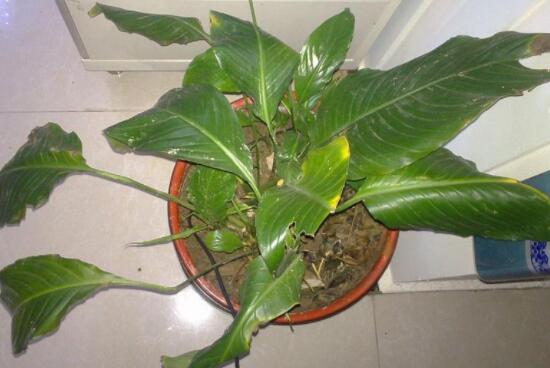
As a common flower, the peace lily is not difficult to grow, but there are many beginners who mostly don't know how to care for it, and don't know the right amounts of light, water and fertilizer, so at the slightest misstep the plant shows symptoms of yellow leaves. As for what to do when peace lily leaves turn yellow, we first need to find the cause and then address it specifically. Let's continue reading for the details.
II. Causes and solutions for yellowing peace lily leaves
1. Improper light
When it comes to the causes of yellowing peace lily leaves, the most common is improper light. The peace lily likes light but dislikes strong light; once it is placed directly in strong sunlight, the plant will react badly to the sudden change in environment and develop yellow leaves.
Solution: In summer, avoid strong light exposure. Once sunburn causes the leaves to turn yellow, quickly move the pot to a shaded place, then water it, and with careful care for two days the problem can be solved.
2. Unsuitable temperature
Besides light, growing temperature being too low or too high is also one of the main causes of yellowing peace lily leaves. It is understood that the optimal growing temperature for peace lilies is 22-28°C; once the temperature drops below 5°C or rises above 35°C, the plant easily develops yellow leaves.
Solution: When the temperature is low, adjust the room temperature to above 15°C; when the temperature is high, cool it down and water in a timely manner to speed up the cooling.
3. Overwatering
The peace lily likes a moist environment but dislikes waterlogging. Once overwatered, the plant's roots will be affected in their respiration. When the peace lily's roots cannot breathe smoothly, root rot results, and the leaves turn yellow and black.
Solution: Take the peace lily to a ventilated place to air out, and once the potting soil dries, bring it back indoors for careful care, after which normal watering can resume. Specifically: water once every 2-3 days in summer, and once every week in winter; each watering should not just wet the surface but soak through at once.
4. Improper fertilizing
Having covered watering, let's talk about fertilizing, which is also one of the causes of yellowing peace lily leaves. The peace lily likes fertilizer and needs sufficient nutrients during growth, but once overfertilized, the opposite effect occurs: its leaves turn yellow and wrinkled, and in severe cases root rot, or even death, results.
Solution: Irrigate promptly to dilute the fertilizer and let it flow out from the bottom of the pot; besides this, do not fertilize too much. During the growing season of young plants, growers should apply diluted decomposed liquid fertilizer at 10 times dilution once every 15 days, and apply compound fertilizer once every 30 days for mature plants. Doing this well solves the yellowing peace lily leaves.
5. No repotting for a long time
Another possible cause of yellowing peace lily leaves is that you never repotted it after buying it. This is because in the early growth stage, the peace lily absorbs nutrients from the soil, and over time the nutrients in the soil decrease, causing nutrient deficiency, so yellow leaves become very common.
Solution: If it's a potting soil problem, it's simple to solve: just replace the potting soil. Pour out the old soil and replace it with loose, moist, airy soil.
6. Pest infestation
Besides the above points, yellowing peace lily leaves can also be caused by pests. It is understood that if mite pests are present, the peace lily's leaves show symptoms such as wilting, loss of gloss, and yellowing and withering.
Solution: Spray miticides specifically for mites to control them; for specific products, refer to peace lily pest and disease control.
As a beginner, many people find that when they first buy a peace lily, its leaves are still very green, but after growing it for a while, the leaves start to turn yellow. This is actually because you haven't done things properly. As long as you follow the requirements above, yellowing leaves and the like are no big deal. That's all the editor has to share about yellowing peace lily leaves, hoping it helps everyone.
What to Do When Peace Lily Leaves Wilt: Proper Shading / Reasonable Water and Fertilizer / Spraying Pesticides for Pests and Diseases
Gardeners should be familiar with the peace lily, also called white sail or "smooth sailing"; it is a flower deeply loved by gardening enthusiasts. In daily life, many people keep peace lilies at home, but during cultivation, for various reasons, the plant's leaves can show wilting symptoms. So what should you do when peace lily leaves wilt? Today the editor will help everyone solve this problem.
I. When peace lily leaves wilt, find the cause
As a common flower, the peace lily is not difficult to grow, but growers easily overlook some details, and the results show in the leaves, causing symptoms such as yellowing peace lily leaves and wilting peace lily leaves. As for what to do when peace lily leaves wilt, the editor has summarized 6 causes and attached solutions. Let's continue reading.
II. Causes and solutions for wilting peace lily leaves
1. Light too strong
The peace lily likes light but fears direct strong light, and grows best in indoor indirect light. If in summer you place the peace lily in direct sunlight, it will react badly, mainly showing as wilting and withered yellow peace lily leaves.
Solution: If the exposure time was short, promptly move it to a cool indoor spot to let it recover, water it a little, then slowly move the plant to a spot with indirect light for care; if the exposure time was long, the plant may be beyond saving, so summer care must pay attention to shading.
2. Unsuitable temperature
The peace lily likes a warm environment, with the most suitable growing temperature being 22-28°C. Once the temperature exceeds 35°C or drops below 5°C, wilting peace lily leaves easily occur.
Solution: In summer, move the plant to a ventilated indoor spot for care and water in a timely manner to cool it down; in winter, keep the room temperature above 15°C.
3. Air too dry
The peace lily likes a moist environment and needs relatively high air humidity. If the air is too dry, the peace lily's leaves will wilt and look listless.
Solution: During the peace lily's growth, besides meeting its water needs, also spray water around the plant from time to time to increase air humidity.
4. Overfertilizing
The peace lily likes fertilizer, and during growth, sufficient nutrients can make it bloom more beautifully. However, when fertilizing, be sure not to apply too much or too concentrated fertilizer, otherwise fertilizer burn occurs, causing poor growth and wilting leaves in the peace lily.
Solution: If overfertilizing caused the wilting peace lily leaves, promptly irrigate to dilute the fertilizer and let it flow out from the bottom of the pot.
5. Pests and diseases
When it comes to the causes of wilting peace lily leaves, pests and diseases are actually a point everyone should consider. It is understood that when mite pests occur, the peace lily's leaves wilt, lose their gloss, and become withered and yellow.
Solution: Identify which specific pest or disease it is, then spray accordingly to solve it; for specifics, refer to peace lily pest and disease control.
6. Sudden environmental change
Besides the above points, a sudden environmental change is also one of the causes of wilting peace lily leaves. This situation generally appears in newly bought peace lily potted plants. The reason is that the environment has changed, with relatively large changes in temperature and humidity, which easily weakens the root system's absorption function and reduces water uptake.
Solution: At this point, don't worry; this is a process every new potted plant must go through. Growers only need to meet its growth needs, and after a period of time it will recover to health.
What measures should be taken after "smooth sailing" leaves turn yellow?
Summary: "Smooth sailing," whose scientific name is peace lily (Spathiphyllum), is recorded under Araceae; it is an angiosperm, with aliases such as spathe flower, white sail, and lily intent. Cultivation is relatively complex. So what measures should be taken after "smooth sailing" leaves turn yellow?
[Yellowing "Smooth Sailing" Leaves]
Causes of yellowing
Waterlogging: "Smooth sailing" is a warmth-loving plant. Daily overwatering causes water accumulation in the pot, leading to yellow leaves. At this time, symptoms mostly occur on tender leaves, while old leaves over one year old show no obvious change; new branches and leaves first shrink, then turn yellow, and finally wither, which can also affect the whole plant.
Drought: Yellow leaves caused by lack of water mostly show as withered, dry leaf edges, but mostly affect old leaves, which wither and yellow from the bottom up, while new leaves show no change in the short term.
Sunburn: Sufficient light absorption and prolonged care under the hot sun can also cause yellow leaves. Because "smooth sailing" is a shade-loving plant, excessive light will cause its flowers and foliage to wither and dry; the first sign is yellow spots on the leaves, which can spread and also infect others. But at the same time, insufficient daily light can also cause yellow leaves, mostly showing as the whole plant's leaves turning yellow, which may later fall off.
Overgrowth: This cause of yellow leaves is mostly due to inadequate daily pruning, making branches and leaves too dense, so the roots and the center of the rhizome fail to get enough nutrients in time; lacking chlorophyll, the leaves turn yellow and fall off.
Nutrient deficiency: Nutrient deficiency is mostly due to daily water and fertilizer issues. Due to lack of fertilizer, new leaves become lighter in color, lose freshness, and change from green to yellow.
Pest and disease damage: In growing "smooth sailing," the most common disease is leaf spot, and yellow leaves caused by pests and diseases also include anthracnose and brown spot, mostly induced by parasitic scale insects; after attaching to the flowers, branches and leaves of "smooth sailing," they transmit the virus, and after the leaves turn yellow, they mostly die.
Solutions
1. After leaves turn yellow, first observe whether root rot has already appeared. For severe cases, soil and pot replacement is needed, because once root rot occurs, the soil can no longer provide nutrients and the roots have difficulty breathing; but after changing the soil, avoid direct sunlight, and the soil should remain loose.
2. Determine the cause of the plant's yellowing. If it is due to overly dense growth, you can directly use division, which can both improve the yellowing and achieve propagation.
3. If the plant's yellowing is too severe and caused by infectious disease, it is recommended to discard it; in such cases, even changing soil and pot is hard to improve.
4. If "smooth sailing" leaves turn yellow due to excessive environmental moisture, or because the environment is too dry, you can spray water on the leaf surface, and in the short term avoid watering the roots; you can also wrap the yellowing "smooth sailing" leaves in a plastic bag, but when the climate is suitable, you need to open it to let the plant breathe. This method, because the internal temperature rises after wrapping, has a certain inhibitory effect on leaf diseases.
5. If yellowing at the leaf tips is caused by a lack of soil nutrients, you can change the soil, or apply nutrients to the soil to adjust the soil's acidity and alkalinity; after the plant absorbs nutrients, the yellowing can be avoided.
6. For yellowing leaves caused by too much light, discover it promptly and apply moisture treatment, move it indoors, or directly protect the leaves with water and move it away from the hot sun in time. But if it is still left under the hot sun for a long time, the yellowing will worsen and eventually cause death.
7. Improve care details in time. For example, when fertilizing, avoid contact with farmyard manure or raw manure, and after applying solid fertilizer, irrigate with clean water in time; you can also dilute the fertilizer before irrigating, which not only aids absorption but also improves the yellowing of "smooth sailing" leaves caused by improper fertilizing.
8. For yellow leaves caused by scale insects, yellow spots mostly appear on "smooth sailing" leaves. At this time, you can choose to use carbendazim, directly dilute it and spray an appropriate amount, which can help remove pests and diseases and also serve a preventive effect.
Prevention methods
1. In daily care, adopt scientific water and fertilizer application to avoid plant disease caused by excessive or insufficient water and fertilizer. At the same time, regarding light, "smooth sailing" suits mild light; intense light easily causes sunburn.
2. Mostly from May to September each year, "smooth sailing" plants develop yellow leaves because the environment is too dry, so the soil needs to stay moist and the surface should be sprayed with water, avoiding deep watering; fertilizing should remain at twice a month, and by November the plant needs to be moved indoors to avoid overwintering outside.
3. Learn the correct methods for growing "smooth sailing" and pay attention to daily details, which can avoid disease, death and yellow leaves caused by incorrect care methods.
Summary: The causes, solutions and prevention methods for yellowing "smooth sailing" leaves are introduced above. Pay attention to the daily growing environment, and also pay more attention to cultivation techniques, which is more conducive to growth.
[More related information] Tea-oil tree cultivation Bamboo palm pictures Arrowhead pictures The harms of eucalyptus What is the flower language of water lily Bauhinia tree prices