Can Fiddle-Leaf Fig Be Grown in Water? Hydroponic Growing Methods and Leaf-Cutting Water Propagation Tips
As a common foliage plant, the fiddle-leaf fig (Ficus lyrata) has many benefits: it is not only attractive and able to purify the air, but can also be used medicinally to treat illness. Such a plant is naturally kept in many homes, and compared with growing it in soil, many plant lovers prefer growing it in water. So can the fiddle-leaf fig be grown in water? If it can, what are the hydroponic growing methods for the fiddle-leaf fig? Let's take a look together!
1. Can the fiddle-leaf fig be grown in water? Yes
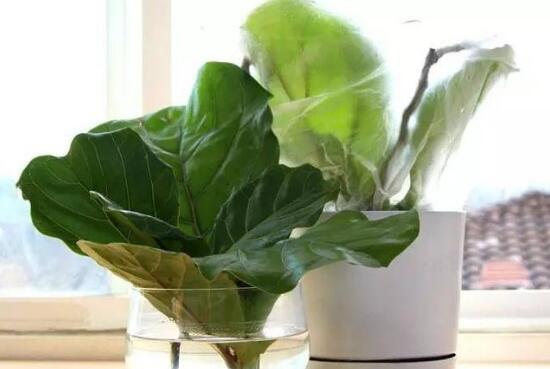
The fiddle-leaf fig likes a humid environment, and it has strong vitality; even a single leaf inserted into water can survive. So can the fiddle-leaf fig be grown in water? Clearly it can. In fact, a small fiddle-leaf fig leaf grown in water can also grow into a complete fiddle-leaf fig plant. Of course, it's easier said than done; let's continue reading for the details.
2. Hydroponic methods for the fiddle-leaf fig
1. Water propagation of cut fiddle-leaf fig leaves
When it comes to hydroponic methods for the fiddle-leaf fig, the first step is cutting the leaves: from a potted fiddle-leaf fig, cut 1-2 healthy, plump leaves. Wash the leaves clean; if there are two, tie their petioles together for use as cuttings.
2. Choosing a container
Speaking of hydroponics, you naturally need to choose a container. To make it easy to observe the rooting of the fiddle-leaf fig, it is best to find a transparent bottle, preferably with a narrow mouth, so it can hold the leaves in place.
3. Starting the hydroponics
Insert the prepared fiddle-leaf fig leaves into the transparent container and add clean water. Generally, the water added should just cover the petioles; too much is not suitable. Remember to change the water regularly. After doing this, the fiddle-leaf fig will root in about 4 weeks.
4. Hydroponic growing methods for the fiddle-leaf fig
① Light
During the process of growing the fiddle-leaf fig in water, you can initially shade it, then gradually let it receive some weak light, and finally expose it to natural light.
Note: Although the fiddle-leaf fig likes light, newly water-propagated leaves are very fragile, so never place them directly under strong sunlight. Because even slightly stronger light will make the leaves wilt quickly, plant lovers should place the glass container in a semi-shaded, cool spot.
② Changing the water
In the hydroponic growing methods for the fiddle-leaf fig, one point is very important: changing the water. If the outside temperature is high, to prevent the water from spoiling, change the water about every 3 days; if the outside temperature is low, change the water about every 15 days. In addition, no nutrient solution is needed during the rooting process.
Can the fiddle-leaf fig be grown in water? Grown this way, the ornamental effect is even better!
Characteristics of the fiddle-leaf fig
Everyone says that only by understanding it can you better conquer it, and this saying can also apply to growing flowers. Only by understanding the characteristics of the fiddle-leaf fig can you care for it more perfectly in future cultivation. The fiddle-leaf fig is a green plant; it does not have very high soil requirements for normal growth, but loose, breathable soil is essential. If possible, soil with a slight amount of fertilizer is best. Keep the air at a certain humidity and provide appropriate light.
Is the fiddle-leaf fig suitable for hydroponics?
The answer is naturally yes. In fact, growing a whole fiddle-leaf fig plant from a single fiddle-leaf fig leaf is not impossible; a fiddle-leaf fig leaf grown in water can also grow into a complete fiddle-leaf fig plant.
The hydroponic process
Pick 1-2 fiddle-leaf fig leaves, tie their petioles together, find a transparent bottle, and put a little water in it. Generally speaking, control the amount of water so it just covers the petioles; too much is not suitable. Remember to change the water for the plant. In this way, under hydroponic conditions, it will generally take about four weeks for it to root. Note that during the hydroponic process, do not expose it to strong sunlight; prevent direct sunlight. The degree of sunlight it receives should be controlled according to the degree of rooting and how well it is growing, and should not be done blindly. Generally speaking, at the beginning you can shade it, then gradually let it receive some weak light, and finally expose it to natural light.
Fiddle-Leaf Fig Growing Techniques | Origin and Habits | Morphological Characteristics | Management Techniques
Fiddle-Leaf Fig Growing Techniques | Origin and Habits | Morphological Characteristics | Management Techniques
Origin and habits:
The fiddle-leaf fig is native to the humid forests of India and Malaysia, and was later cultivated indoors in Southeast Asia, thus developing into today's indoor foliage plant. The fiddle-leaf fig likes high temperatures and high humidity, and generally requires higher humidity than other kinds of rubber plants. In winter it can overwinter in an environment below 5°C.
Morphological characteristics:
The fiddle-leaf fig is a perennial evergreen tree, growing upright, with very few natural branches. The leaves are broad, violin-shaped, dark green, glossy on the surface, and thickly leathery. The leaf margins are entire and wavy, with sunken veins; the leaves are 25-38 cm long and 15 cm wide, with an enlarged tip. Small black stipules remain at the base of the leaf stalk, and it has milky sap.
Growing techniques:
The fiddle-leaf fig can be propagated by layering or cuttings, with layering being the most suitable method. You can use the top branch or a side branch, with cuttings no more than 3-4 leaves. To prevent the white sap from seeping out, dip the cut end of the cutting in water or charcoal powder. At the same time, also sprinkle a little flour or charcoal powder on the cut surface of the original plant. Cuttings can be rooted by the hydroponic method; rooting is fastest when the temperature is kept at 25-35°C.
Management techniques:
From when the new leaves unfold until mid-August, fertilize once every 10 days, mainly with nitrogen fertilizer. When growth is abundant, you can fertilize more; when growth stops or the plant is dormant, do not fertilize. Choose a pot with a larger volume, and repot every 2-3 years in spring. Cover the bottom of the pot with a tile with its convex side facing up, first put in a layer of old potting soil, then add a new medium mixed from garden soil, peat soil and a small amount of sandy soil; the soil should be slightly acidic.
The amount of watering should depend on the surrounding environmental temperature. Water demand is greater in spring and summer; during the dormant period, reduce the amount of water and keep the potting soil moist. In summer, a light shower of rain can appropriately help growth; spraying warm water regularly will make growth even better, and watering with slightly acidic water is also preferable. Excessive short-term temperature fluctuations or exposure to direct sunlight are both unfavorable for growth. If kept at low temperatures for a long time while the plant is overwatered, it can cause the plant to die.