How to water a bonsai ficus? Master the right method; in summer it needs watering morning and evening
Bonsai ficus is probably familiar to gardening enthusiasts. It comes in many shapes and is beautiful overall; paired with home decor, it has an excellent ornamental effect. However, if you want the benefits of the ficus to show, you must be careful during cultivation, especially with watering, which cannot be done sloppily! So how do you water a bonsai ficus? Below are the correct methods for watering ficus; let's take a look together!
1. How to water a bonsai ficus: the method matters
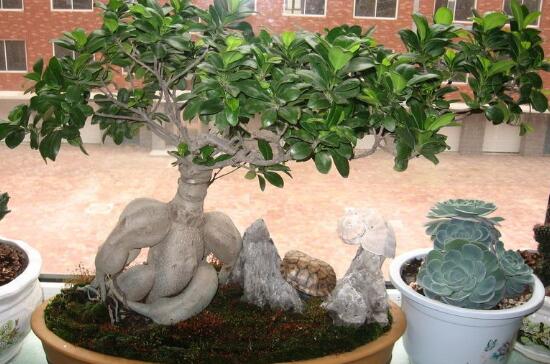
When growing ficus, the thing gardening enthusiasts love to do most is water it, but watering is a skill; neither too much nor too little will do. With too little water, the ficus grows poorly; with too much water, symptoms such as yellowing ficus leaves, blackening ficus leaves, and leaf drop can occur. So for how to water a bonsai ficus, there must be a method; for the specific requirements, let's continue reading.
2. The correct methods for watering ficus
(1) Watering principles
Although the cultivation method for ficus is simple, you cannot be sloppy with watering; each time you water, you must water thoroughly. Of course, when we say water thoroughly, many gardening enthusiasts surely have no clear idea. For this, you should decide based on the condition of the potting soil, but when you see that the ficus potting soil has turned pale and hard, it means it is time to water. As for how often to water ficus, it also varies depending on the plant's growth stage.
(2) How often to water ficus: it differs across the four seasons
1. Spring watering, once a day
Ficus likes a humid environment. In early spring, it has just sprouted, the temperature is relatively low, and water evaporation is slight. At this time, do not water too much; keep the watering interval at once a day.
2. Summer watering, twice a day
In summer, the temperature rises and water evaporates quickly. At this time, the ficus is also in its growing season, so both the amount and frequency of watering should increase, with 2 waterings per day as the standard, preferably once in the morning and once in the evening.
3. Autumn watering, once every 1-2 days
In autumn, the temperature drops, water evaporation slows, and the ficus's growth also slows. At this time, watering once every 1-2 days is enough.
4. Winter watering, once every 3-10 days
In winter, the temperature will be very low, and since ficus is not cold-tolerant, it will enter a dormant period. At this time, water sparingly, and keep the potting soil slightly dry; watering once every 3-5 days or about 10 days is fine. For the specific watering time, it is best to choose noon when the temperature is higher.
(3) Watering techniques
Now that you know when to water ficus and the watering intervals, let's look at the watering methods. When watering ficus, you can spray the leaves or pour water at the roots; generally, combine the two by spraying first and then pouring. However, do not spray too much, to prevent the plant from growing leggy.
Watering is a technical task. Although it is very simple, you must pay attention to some small details. Especially when watering ficus, regarding watering frequency and intervals, you do not need to be too rigid; instead, you should observe the potting soil and water accordingly. Only in this way can you grow a good pot of ficus. That is all for the correct methods of watering ficus; I hope it can help everyone.
Watering techniques for bonsai ficus
Watering is one of the most important and most frequent steps in the process of caring for a bonsai ficus. For a potted ficus, whether in a deep pot or a shallow pot, the soil is limited, and the water it contains is also limited. If it is not watered for a long time, the plant will die from lack of water.
Watering principles for bonsai ficus
Every time watering is mentioned, it is said that you must water thoroughly, but cold text cannot explain anything; still, I have to say it. Each time you water, you must water thoroughly. Before watering, check the potting soil. If the soil has turned pale and hard, it means it is time to water. Or tap the edge of the pot with a wooden stick; if the sound is crisp, it also needs watering.
Each time you water, stop after water flows out from the bottom of the pot. If you only moisten the soil surface or half the soil, the roots in the lower part of the pot will die from lack of water, and growth will likewise be poor. More importantly, it will cause salts in the pot to accumulate, turning it into saline-alkali soil, further affecting the plant's growth.
Watering methods for bonsai ficus
Depending on the plant's growth stage: in early spring, the plant has just sprouted, the temperature is relatively low, water evaporation is slight, and the water requirement is also lower, so water once a day; in spring and summer, the temperature rises, evaporation strengthens, and the plant is in its growing season, so water 2 times a day, preferably morning and evening; in autumn, the plant's growth slows, so water once every 1-2 days; in winter, the plant enters dormancy, so water once every 3-5 days or about 10 days, choosing noon when the temperature is higher.
In addition, watering can be done by different methods: you can spray the leaves or pour water at the roots; generally, combine the two by spraying first and then pouring water. Do not spray too much, to avoid leggy branches and leaves.
How to grow a bonsai ficus: ficus cultivation methods and precautions / it needs shade in summer
Ficus is surely familiar to everyone. It is the provincial tree of Fujian Province and has a very beautiful appearance. Making it into a bonsai to decorate a courtyard or bedroom gives extremely high ornamental value. In daily life, many people want to grow a pot of ficus, so how do you grow a bonsai ficus? Below are the ficus cultivation methods and precautions carefully selected by the editor, very detailed; friends who want to grow one must take a look~
1. How to grow a bonsai ficus: understand its habits
Ficus likes a warm, humid environment with ample light. It is not drought-tolerant and not cold-tolerant, but it is relatively tolerant of wet conditions, and short-term waterlogging will not cause root rot. When growing it indoors, place it in a spot with good light, and take good measures to keep it warm in winter. As for soil, it is best to choose loose, fertile acidic soil. So how to grow a bonsai ficus is very simple: just satisfy its growth habits.
2. Ficus cultivation methods and precautions
1. Soil
For how to grow a bonsai ficus, first you should reselect the potting soil. The reason is that many gardening enthusiasts' bonsai ficus are existing potted plants bought from flower shops or online; normal care can ensure the plant's growth. But that soil is very cheap, and if you want the ficus to grow well, it is best to choose again.
Soil selection: according to the ficus's growth habits, it likes loose, fertile acidic soil; in alkaline soil the leaves turn yellow, which will cause ficus leaves to yellow. For this, the editor recommends using loose, well-draining leaf mold soil, usually in the ratio of garden soil: humus soil: sand = 2:2:1.
2. Light
As a green plant, ficus has a great demand for light. In general, we should place it in a ventilated environment with ample light, but ficus dislikes strong light, so in summer when sunlight is abundant, shade measures should be taken.
Precautions: during the ficus's growth process, you must give it ample light; otherwise, with prolonged lack of light, the plant can turn yellow and dry out, leading to pest and disease problems, and eventually death.
3. Temperature
For how to grow a bonsai ficus, adjusting the temperature in a timely manner is also very important. Ficus likes a warm environment, and the difference between day and night for its suitable growth temperature should not be too large. Once the day-night temperature difference is above 10°C, it is very prone to leaf drop and death. Ficus is not cold-tolerant, so in winter the indoor temperature should be kept above 5°C.
4. Watering
Water is the source of life, so in the ficus cultivation methods and precautions, watering is a very important part. Ficus likes a humid environment, and it is tolerant of wet conditions; short-term waterlogging will not cause root rot. So when watering ficus, water until water flows out from the drainage hole at the bottom of the pot. After watering once, wait until the soil surface turns pale before watering again.
Precautions: watering ficus should be determined according to weather conditions, keeping the growing soil moist but not waterlogged. Once too much water is given, causing water to accumulate in the pot, it easily causes the roots to blacken and necrose. In addition, ficus is more difficult to care for in the north; households should spray more water on the leaves to increase the humidity in the surrounding air.
5. Fertilizing
After watering, let's talk about fertilizing. In the ficus cultivation methods and precautions, it is also indispensable. To meet the ficus's growth needs, gardening enthusiasts should apply decomposed fertilizer water once a month in summer and autumn, and fertilize less or not at all in winter.
Precautions: although ficus likes fertilizer, applying fertilizer too many times or too concentrated can harm the plant's growth, so everyone should vary the amount of fertilizer according to the season.
6. Pruning
Ficus is very tolerant of pruning and grows relatively fast. To maintain the beautiful shape of the bonsai, gardening enthusiasts need to prune it in a timely manner. Pruning time is generally chosen in early spring; appropriately thin out branches to enhance ventilation and light transmission and reduce the occurrence of pests and diseases. When pruning, you can reshape it according to your own preferences to improve its ornamental value.
7. Repotting
In the ficus cultivation methods and precautions, repotting is also a point that cannot be ignored. Because for any potted plant, the nutrients in the soil will eventually be exhausted, so timely repotting is indispensable. You should repot once every two years. When repotting, add a small amount of base fertilizer. It is best to choose early spring or late autumn for repotting.
8. Pest and disease control
During the ficus's growth process, the plant will inevitably get insects and diseases. The main pests are aphids, red spiders, scale insects, etc.; their appearance will all affect the ficus's growth. So once discovered, pesticide should be sprayed immediately for control. As for what pesticide to spray, you can refer to ficus pest and disease control.