What to do when banyan tree leaves turn black? Adjust temperature, water and fertilizer, and spray pesticide to prevent pests and diseases
The banyan tree is currently the most popular bonsai plant. It has strong adaptability, looks beautiful, and can also purify the air and be used medicinally to treat illnesses, so it is deeply loved by flower enthusiasts. However, during cultivation, many flower enthusiasts encounter the symptom of leaves turning black, which is a headache. So what should be done when banyan tree leaves turn black? Today the editor will help everyone solve this problem.
1. When banyan tree leaves turn black, find the cause
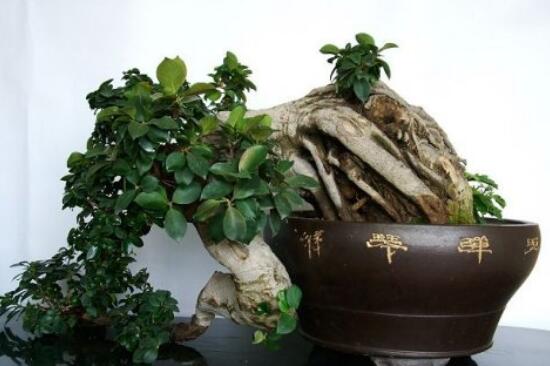
As an ornamental plant, the banyan tree is not difficult to cultivate, but because beginners are in the majority, they run into all kinds of problems because they do not know how to grow it, such as banyan tree leaves turning yellow, banyan tree leaves turning black, and banyan tree leaves dropping. Yellowing and leaf drop have been solved earlier, so what should be done when banyan tree leaves turn black? For this, the editor has summarized 5 causes and attached solutions. Let us continue reading.
2. Causes of banyan tree leaves turning black and solutions
1. Insufficient light
The banyan tree likes light, and sufficient light can make it grow lush branches and leaves. But if it is placed in a dark indoor place for a long time, its leaves will turn black due to insufficient photosynthesis.
Solution: It is very simple. Move it to a semi-shaded indoor place, and put it in the sun to bask in moderation.
2. Too large a temperature difference
The banyan tree is relatively sensitive to temperature. It is suitable for growing in places with a small day-night temperature difference, otherwise it is not suitable for banyan tree growth. It is understood that once the day-night temperature difference is greater than 10°C, the banyan tree will show large-area yellow leaves and black leaves.
Solution: When caring for the banyan tree, do not move the flowerpot frequently, and place it in a ventilated and light-transmitting position. Provide shade in time in summer, and keep it warm in time in winter.
3. Too much watering
The banyan tree likes a humid environment. During its peak growing season, we should water frequently to keep the potting soil moist. However, watering must not be excessive, otherwise it will cause water accumulation in the pot, which will prevent the plant from absorbing oxygen and also cut off the plant's nutrient absorption. After a long time, the plant's leaves will definitely turn black.
Solution: If the banyan tree leaves turn black, first observe whether the roots have rotted. If not, place it in a ventilated place to let the water drain away quickly; if the roots have already rotted, you also need to cut off the rotted roots, then soak them in disinfectant water before replanting.
4. Improper fertilizing
The banyan tree likes fertilizer and needs sufficient nutrients during growth, but when fertilizing, we must pay attention: it must not be too much or too concentrated, otherwise it will harm the growth of the banyan tree, and the leaves may also turn black afterward.
Solution: Irrigate in time to dilute the fertilizer, then let it flow out from the bottom of the pot; if the roots are burned and rotted, you also need to cut off the rotted roots, replace the potting soil, and replant. After that, reduce fertilizing in winter or do not fertilize at all, and fertilize once a month in the other seasons, choosing dilute fertilizer water, preferring light over concentrated.
5. Pests and diseases
Besides the above points, there is another reason for banyan tree leaves turning black, and that is infestation by pests and diseases. In a high-temperature and high-humidity environment, if care is improper, it is often accompanied by the appearance of scale insects and aphids. When the disease occurs, black spots appear on the leaves, and black powdery substances appear, causing the plant to develop sooty mold.
Solution: Use a brush dipped in water to clean the diseased spots, and spray insecticide in time. As for what pesticide to spray, it is introduced in detail in the pest and disease control of banyan trees, so it will not be discussed further here.
Overall, the banyan tree is a plant with extremely strong adaptability. As long as it is cared for attentively in normal times, it will grow very beautifully. But if everyone is careless in care, over time, black leaves can also appear. The editor has introduced the content about banyan tree leaves turning black up to here, hoping it can help everyone.
What to do when banyan trees get insects? Pest and disease control of banyan trees / 3 insects and 2 diseases, spray with pesticide
Everyone must be familiar with banyan tree bonsai. It is the most common bonsai in daily life and has extremely high ornamental value. Generally speaking, the banyan tree is a plant with strong adaptability and is not prone to pests and diseases, but under improper care, it can also get insects and become sick. So what should be done when banyan trees get insects? The following are several common pest and disease control methods for banyan trees. Let us take a look together!
1. When banyan trees get insects, spray with pesticide
As a common ornamental plant, the banyan tree is very simple to cultivate, but no matter how easy a plant is to grow, it still needs people to grow it! Once the indoor environment is too poor, combined with neglected management, the banyan tree will get insects and become sick. As for what to do when banyan trees get insects, it is actually very simple. Everyone only needs to find out exactly which pest it is, and then spray pesticide accordingly.
2. Pest and disease control of banyan trees
1. Banyan tree scale insects
During cultivation, pests and diseases of banyan trees are rare, but when the environment is not ventilated and care is improper, scale insects occasionally cause damage. There are many kinds of scale insects, and those that commonly harm banyan trees include mealybugs and tortoise wax scales. They mainly parasitize leaves and tender branches, sucking plant nutrients, and cause relatively great harm.
Control method: If banyan tree leaves are found turning yellow, check whether it is scale insects. If a small number of scale insects is found, they can be washed off with water in time; if there are many scale insects, after manual removal, pesticide should also be sprayed. The pesticide can be Kuangshajie 800-1000 times liquid, and generally one application can achieve the control effect.
2. Banyan tree aphids
Besides scale insects, aphids are also one of the insects that harm banyan trees. This insect has piercing-sucking mouthparts and often gathers on tender shoots and the undersides of leaves to suck plant sap, causing the plant to grow slowly. At the same time, the large amount of honeydew excreted by aphids can induce sooty mold, seriously affecting photosynthesis.
Control method: When a small amount of pest damage is found, use a cloth dipped in clean water or soapy water to wipe it and remove the insects, preventing the pest damage from continuing to spread; when there are many aphids, after manual cleaning, spray 40% omethoate 1000 times liquid or 50% dichlorvos 1000 times liquid for control, spraying once every 7—10 days, with 2—3 consecutive sprayings giving excellent results.
3. Banyan tree red spiders
In fact, red spiders are the most common among banyan tree pests. Under high temperature conditions, if care is improper, banyan trees are prone to red spiders, and they often gather in large numbers on the undersides of leaves to suck sap. After being damaged by red spiders, yellow spots will appear on the plant's leaves, and in severe cases, banyan tree leaf drop will occur.
Control method: Red spiders cause the most serious damage from May to June each year. When found, spray pesticide in time. Choose 10% fenbutatin oxide emulsion 1000 times liquid, spraying once every 10 days, and after 3-4 times they can be completely eliminated.
4. Banyan tree brown spot disease
When talking about banyan tree pests and diseases, after finishing pests, let us look at diseases. Among them, the most common is brown spot disease. It mainly harms the plant's leaves and is one of the main causes of banyan tree leaves turning black. Symptoms: In the early stage, diseased leaves show round or oval spots, appearing purplish brown and later turning black. In severe cases, the leaves even wither and fall off.
Control method: When the above symptoms are found, remove the diseased leaves in time and burn them in a concentrated manner to reduce the source of disease. In the early stage of the disease, spray 70% mancozeb wettable powder 400 times liquid, once every 10 days, for 3 to 4 consecutive times, with good control effect.
5. Banyan tree sooty mold
In a high-temperature and high-humidity environment, if care is improper, it is often accompanied by the appearance of scale insects and aphids. When the disease occurs, black spots appear on the leaves, and black powdery substances appear, causing the plant to develop sooty mold.
Control method: Use a brush dipped in water to clean the diseased spots, and spray insecticide in time, according to the pest control methods above. In addition, in normal times, strengthen care, reduce air humidity, and improve ventilation.
Overall, the banyan tree has good effects and is very easy to grow, making it very suitable for indoor cultivation. But once management is neglected, it will be targeted by pests and diseases, seriously affecting its ornamental value. Therefore, for the health of the banyan tree, everyone must care for it attentively. The editor has introduced the pest and disease control of banyan trees up to here, hoping it can help everyone.
What to do when banyan tree leaves turn yellow? 6 causes and solutions / improper water and fertilizer are key
The banyan tree, a beautiful plant, is often made into bonsai and kept at home, with good ornamental value. The beauty of the banyan tree lies in its sturdy roots and its lush upper body, so when its leaves turn yellow and affect its appearance, flower enthusiasts must be very anxious! So what should be done when banyan tree leaves turn yellow? Today the editor will help everyone solve this problem.
1. When banyan tree leaves turn yellow, find the cause
As a common ornamental plant, the banyan tree is not difficult to cultivate, but because there are many beginners and because many people grow it carelessly, the result is usually yellowed leaves. They very much want to know what to do when banyan tree leaves turn yellow. For this, the editor will analyze it one by one from 5 aspects: environment, light, watering, fertilizing, and pests, and tell everyone how to solve it.
2. Causes of banyan tree leaves turning yellow and solutions
1. Sudden environmental change
As for the causes of banyan tree leaves turning yellow, generally speaking there are many, but everyone should first consider the environmental problem. For newly purchased potted plants online, because the regional span is large, the banyan tree may not adapt for a while due to the great change in growing environment, and its leaves may turn yellow.
Solution: If it is a newly bought banyan tree bonsai, yellow leaves are actually a very normal thing. Everyone only needs to satisfy its growth habits, and after careful care for a period of time it will recover.
2. Improper light
Insufficient light: The banyan tree likes light, and sufficient light can make it grow lush branches and leaves, making it more ornamental. But if the banyan tree is placed in a dark place for a long time, its leaves will turn yellow because they cannot get sufficient photosynthesis. Solution: Move the banyan tree to a semi-shaded place for care, and from time to time let it go outside to bask in the sun, of course when the sunlight is not too strong.
Excessive light: Although the growth of the banyan tree requires sufficient light, it is averse to strong light. Once exposed to strong sun in summer, its leaves will be scorched and turn withered yellow. Solution: Move the banyan tree to a semi-shaded indoor place in time for care. After it recovers for a period, water it appropriately, then care for it carefully for a few more days, and it will recover.
3. Improper watering
Insufficient watering: When banyan tree leaves turn yellow, it is generally caused by excessive drought. The banyan tree likes a humid environment. If it is not watered for a long time, or if it is never watered thoroughly, over time the leaves will turn yellow due to lack of water. Solution: Water a small amount in time, and spray water on the leaves so the leaves can replenish water as soon as possible.
Too much watering: Although the banyan tree likes a humid environment, this “humidity” also needs a limit. Once excessive and causing water accumulation in the pot, the banyan tree roots will rot due to insufficient oxygen and poor air permeability, thereby causing the leaves to turn yellow. Solution: Dry the potting soil in time, or directly replace the potting soil.
4. Insufficient fertilizing
The banyan tree likes fertilizer and needs sufficient nutrients during growth. If fertilizing is insufficient, the plant cannot get enough nutrients, which can also cause weak branches and leaves and yellowing leaves.
Solution: Appropriately increase the amount of fertilizer. In order to satisfy the growth of the banyan tree, flower enthusiasts should apply decomposed fertilizer water once a month in summer and autumn, and fertilize less or not at all in winter. Only when the banyan tree has sufficient nutrients will the leaves recover quickly.
5. Soil leaning alkaline
The banyan tree likes slightly acidic soil. If fertilizing is improper, especially when too much nitrogen fertilizer is applied, causing the soil to become alkaline, it will easily cause banyan tree leaves to turn yellow.
Solution: Stop watering, then water more, so the fertilizer can be discharged from the soil as soon as possible, or, if you are willing to take the trouble, directly replace the potting soil, so the plant can become fresh again.
6. Pests
Under high temperature and non-ventilated indoor conditions, even banyan trees that are not prone to pests can be damaged by insects, thereby causing leaves to turn yellow.
Solution: At this time, everyone must discover the pest damage in time, and control it as soon as possible through manual insect removal and pesticide insect removal. As for what pesticide to spray, it is introduced in detail in the pest and disease control of banyan trees, so it will not be discussed further here.
Overall, the banyan tree is still very easy to grow, but if you want its leaves to stay green and not turn yellow, you must pay attention to light, water, and fertilizer. Of course, do not panic when you find yellow leaves; just solve it according to the methods above. The editor has introduced the content about banyan tree leaves turning yellow up to here, hoping it can help everyone.