How to grow Chinese hibiscus: cultivation methods and things to note / plenty of sunlight
Chinese hibiscus, also known as fuchsang, is a flowering plant in the mallow family (Malvaceae) with high ornamental value, and it is cultivated by people in many regions of China. However, to grow it well, there are many things to pay attention to. How do you grow Chinese hibiscus? What are the cultivation methods and things to note? Let the editor take you through it below.
I. How to grow Chinese hibiscus: understand its habits
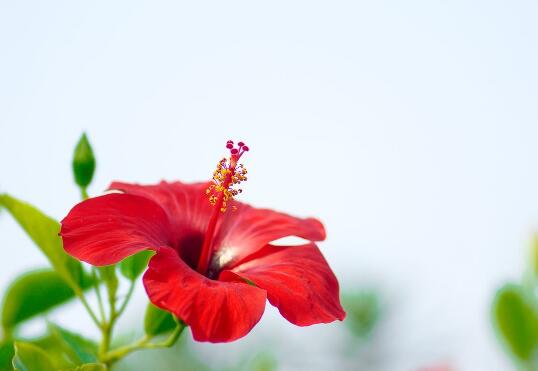
To know how to grow Chinese hibiscus, we first need to understand its growth habits. It is a strongly sun-loving plant that likes to grow in environments with plenty of sunlight and is rather intolerant of cold, so when growing it we must control the temperature well and not let it get too low, otherwise the plant can easily suffer cold damage.
II. Cultivation methods and things to note for Chinese hibiscus
1. Soil: rich in organic matter
Before growing Chinese hibiscus, we first need to choose the soil, which is the step that lays the foundation, so everyone must pay special attention. Generally, it is best to choose a slightly acidic soil rich in organic matter with a pH of 6.5-pH7. This kind of soil is nutrient-rich and can let the plant grow better.
2. Temperature: 12°C-15°C
The Chinese hibiscus plant likes to live in a warm environment and is rather intolerant of cold, so when overwintering we must control the temperature well, keeping it between 12°C-15°C in a greenhouse or other protected place, so that it can overwinter safely. If the indoor temperature is below 5°C, its leaves will dry up and fall off, and if it is below 0°C, it will suffer freezing.
3. Fertilizing: once a month
Fertilizer is one of the main nutrients in the growth process of Chinese hibiscus, especially after it enters the growing season, when its demand for fertilizer is very high, and basically it needs fertilizing once every month so that it has enough nutrients to grow. However, when fertilizing we must note that we should apply thin fertilizer; if the fertilizer concentration is too high, it can easily burn the plant.
4. Water: once a day
Chinese hibiscus likes a warm and humid environment, so water is very important to it. When the climate is suitable, we should water it once every day, and water it thoroughly. After summer arrives, because the weather is rather hot, water also evaporates faster, so we should water it in both the morning and the evening, and also spray its leaves from time to time to maintain air humidity.
5. Light: 8 hours of sunlight per day
Chinese hibiscus is a strongly sun-loving plant that likes to grow in environments with plenty of sunlight, and it must receive no less than 8 hours of light every day, so that it can grow better. If there is not enough light, its flower buds will fall off, the flowers will also shrink, and the flower color will become dull, so when growing it we must keep it in sufficient light.
6. Pests and diseases: chemical control
Pests and diseases are a problem that all plants rather fear, and Chinese hibiscus is no exception. This kind of problem is very harmful to the plant, so when we find it we must deal with it promptly. The most direct and effective way to deal with it is to use chemicals for control, but because different pests and diseases have different control methods, the editor will not introduce them one by one here. You can refer to the article on pest and disease control for Chinese hibiscus.
Cultivation methods and things to note for Chinese hibiscus: teaching you how to grow Chinese hibiscus
Fuchsang aliases: fusang, Chinese hibiscus, big red flower. Because fuchsang is easy to cultivate and has a long ornamental period, people of all countries like it very much. What are the cultivation methods and things to note for Chinese hibiscus? Today, the editor of wed114 wedding website brings you content related to how to grow Chinese hibiscus. Let's take a look together.
Chinese hibiscus pictures
I. Introduction to Chinese hibiscus
Chinese hibiscus (scientific name: Hibiscus rosa-sinensis Linn.): also known as fuchsang, fusang, Chinese rose. Because the flower color is mostly red, the Lingnan area of China commonly calls it big red flower. It is an evergreen shrub, about 1-3 m tall; the branchlets are cylindrical and sparsely covered with stellate soft hairs. The leaves are broadly ovate or narrowly ovate, hairless on both sides except for a few sparse hairs along the veins on the underside. The flowers are solitary in the upper leaf axils, often drooping; the corolla is funnel-shaped, 6-10 cm in diameter, rose-red or pale red, pale yellow, etc., the petals are obovate, rounded at the tip, and sparsely covered with soft hairs on the outside. The capsule is ovate, about 2.5 cm long, smooth and hairless, with a beak. The flowering period is all year round.
Chinese hibiscus was already a popular ornamental plant in ancient times, and its place of origin is China. Records of Chinese hibiscus already appeared in a work from the Western Jin period, "Nan Fang Cao Mu Zhuang" (Plants and Trees of the South). The flowers are large and brightly colored, blooming constantly through the four seasons, and it is mainly used for garden ornament. It is planted in many places around the world, especially in tropical and subtropical regions.
Chinese hibiscus pictures
II. Propagation methods of Chinese hibiscus
Cuttings
Carried out from May to October, or in winter in a greenhouse, but the survival rate is highest during the plum rain season. The best cuttings are one-year-old semi-lignified ones, 10 cm long; cut off the lower leaves, keep the top leaves, make the cut smooth, insert into a sand bed, maintain relatively high air humidity, keep the room temperature at 18-21°C, and they will root 20-25 days after insertion. Treating the base of the cuttings with 0.3%-0.4% indolebutyric acid for 1-2 seconds can shorten the rooting period. When the roots are 3-4 cm long, transplant them into pots.
Grafting
Carried out in spring and autumn. It is mostly used for fuchsang varieties that are difficult to root from cuttings or root slowly, especially double-petaled varieties with a low cutting survival rate. Either branch grafting or bud grafting can be used, with single-petaled fuchsang as the rootstock. Grafted seedlings sprout branches and bloom in the same year.
Chinese hibiscus pictures
III. Key cultivation points for Chinese hibiscus
Soil
Chinese hibiscus is not demanding about soil and can generally adapt to any soil except saline-alkaline soil. However, loose, fertile, well-drained slightly acidic loam or clay soil is best. For the potting soil, you can use 4 parts loam and 1 part dried manure to make a nutrient soil.
Light
If Chinese hibiscus does not get enough light, the flower buds will fall off, the flowers will shrink, and the flower color will be dull. Therefore, Chinese hibiscus needs more than 8 hours of light every day. However, in midsummer it needs shading to prevent the scorching sun from burning the plant. Cultivate the soil once in early spring, and weed and cultivate the soil once each season. After October every year, potted Chinese hibiscus should be moved indoors where the room temperature is 15-22°C for cultivation, and after being brought indoors, attention should be paid to ventilation and appropriate light.
Watering
Chinese hibiscus needs sufficient watering. Usually water once a day, with thorough watering as the standard. During the dog days, water once in the morning and once in the evening every day, and also spray the ground several times to lower the temperature and increase air humidity, preventing the leaves and flowers from falling early. In winter, watering should be reduced and fertilizing stopped, so that it can overwinter safely.
Fertilizing
Chinese hibiscus has a relatively large need for "fertilizer". When raising seedlings in the field or growing in pots, apply 50 grams of dried pig manure per plant, mixed with an appropriate amount of phosphate fertilizer and decomposed compost as a base fertilizer; apply a dilute fertilizer mainly of 0.2% urea water solution and phosphate fertilizer 2~3 times a month as a top dressing. If the rainy season is encountered, you can instead apply compound granular fertilizer at the roots, 100 grams per plant.
Chinese hibiscus pictures
IV. Things to note when growing Chinese hibiscus:
Fuchsang is a summer flower, with gorgeous flower colors, but sometimes home cultivation does not grasp its habits, and in the summer flowering period it is prone to bud drop. In northern China, because the climate is rather cold, it only blooms once in the summer of that year. Based on the author's practice and experience in growing fuchsang, if you want fuchsang not to drop buds during the flowering period and to bloom continuously, you need to pay attention to the following issues:
1. Choosing pots and watering.
For potted fuchsang, it is best to use unglazed clay pots or wooden buckets (pots); these two kinds of flower pots have good air permeability, making it easy for the fuchsang root system to breathe and absorb water and fertilizer. Although the flowering period of fuchsang is relatively long (meaning it can continuously produce buds, and the number of buds is very large, laying the foundation for a long flowering period), the flowering period of each branch's flower is very short. In summer, when the weather is hot and dry, it can only bloom for a little more than a day; on cloudy and rainy days and when the temperature drops somewhat at the end of summer and beginning of autumn, each flower can only bloom for 2 to 3 days. Because fuchsang produces many buds, it needs plenty of water, plenty of fertilizer, and sufficient sunlight. Especially during the peak flowering period in summer, water 1 to 2 times a day depending on the temperature and the dryness of the potting soil, and water thoroughly when dry. Prevent half-watering and excessive watering from causing water shortage and root rot. At noon, you can spray water on the leaves and around the flower pot to lower the temperature and maintain air humidity, which is beneficial to growth. Never spray water on the flowers, because with the scorching sun high in the sky in midsummer, it can damage the flowers and affect the ornamental effect.
2. How to fertilize.
It is best to fertilize with homemade fertilizer alum water, which is well absorbed and quick-acting. Use a plastic bucket with a lid, put discarded items such as the intestines of chickens and fish that cannot be eaten at home, together with the wastewater from washing chickens, fish, and meat and rice-washing water, into the bucket, add an appropriate amount of black alum (ferrous sulfate), tighten the lid and ferment it; in summer it can be fermented into fertilizer alum water in 2 months, and in autumn in 3 months. When using it, be sure to add water to dilute it, and do not make it too concentrated, to prevent root damage. If you are worried that the fertilizer alum water has an odor, you can put an appropriate amount of vinegar or orange peel into the bucket to reduce the odor. You can also directly buy ready-made bagged acidic flower fertilizer at the flower market, put it into the flower pot, shallowly bury it by breaking the soil, and then water with clean water to eliminate the odor.
3. Ensure safe overwintering.
The reason most northern households fail at growing fuchsang is that it freezes to death because it does not overwinter safely. Because fuchsang is a tropical summer flower from the south, likes sunlight, and is not cold-tolerant, and the northern climate is cold while home flower growing has no conditions for building a greenhouse, whether fuchsang can overwinter safely is the key. When the temperature drops to 6°C, fuchsang must be moved indoors to prevent cold damage. You can cover fuchsang with a plastic bag and poke several small holes in the plastic bag to let it breathe. Note that it is enough to keep the potting soil slightly moist, because fuchsang has the habit of winter dormancy and cannot be watered too much, to prevent artificially causing freezing damage.
4. How to prune branches and remove buds.
After spring begins, the temperature gradually rises and fuchsang begins to sprout. To make fuchsang bloom continuously in summer, you must pay attention to pruning its branches and removing buds in time. When growing potted fuchsang at home, you must prevent the plant shape from becoming too large and too tall, making it difficult to move and affecting placement, while also making its branches luxuriant and produce more flowers. This is a contradiction. The best way to solve this problem is to cut the main stem of fuchsang back when it emerges about 10 cm from the soil, keep 3 to 5 main branches, and keep 2 to 3 branchlets on each main branch, pruning it into a shrub-like shape, which can make the fuchsang branches full and luxuriant with many buds, laying the foundation for continuous blooming. The second is to remove buds in time. Every bud that fuchsang sprouts in spring can develop into a flowering branch. At this time, you must remove buds in time; otherwise, letting them develop will cause disordered branch growth, thin and spindly leggy growth, dispersed nutrients, and fewer and smaller flowers. The specific requirements for bud removal are usually: remove diseased and weak buds, keep thick and strong buds; remove overlapping buds, keep sparse buds; remove inner buds, keep outer buds.
Chinese hibiscus pictures
V. Cultivation techniques for Chinese hibiscus
Repotting and pruning
For potted plants, the soil should preferably be loose, fertile sandy loam. Before moving them outdoors in early spring each April, they should be repotted.
When repotting, do 3 things: first, replace with new cultivation soil; second, cut off some of the overly dense, curled fibrous roots; third, apply sufficient base fertilizer, with a little phosphate fertilizer added at the bottom of the pot. To maintain a beautiful tree shape and a large number of flowers, according to the characteristic that fuchsang has a strong ability to send out branches and sprout suckers, pruning and shaping can be carried out around early spring before and after being taken out of the house. For each branch, except for keeping 2-3 buds at the base, cut off the entire upper part; pruning can promote new branches, make growth more vigorous, and also make the plant shape more beautiful. After pruning, because the aboveground part consumes less, water and fertilizer should be appropriately controlled.
Care and management
Chinese hibiscus is a sun-loving tree species. In early May it should be moved outdoors to a place with plenty of sunlight. This is also the growing season for fuchsang, so management work such as fertilizing and watering, loosening the soil, and pulling weeds should be strengthened. Apply a dilute liquid fertilizer once every 7-10 days. Watering should depend on whether the potting soil is dry or wet; too dry or too wet will both affect flowering.
If there is not enough light, the flower buds easily fall off and the flowers shrink, so daily sunlight must not be less than 8 hours. Fuchsang has a relatively large demand for fertilizer, and light should be supplemented in time during cultivation. Potted fuchsang is generally taken out of the house in April, repotted before being taken out, and appropriately shaped and pruned to maintain a beautiful crown. During the growing period, watering must be sufficient; it must not lack water, nor be waterlogged. Usually water once a day; during the dog days, water once in the morning and once in the evening. Sprinkle water on the ground frequently to increase humidity and lower temperature, preventing tender leaves from scorching and flowers from falling early. After the weather turns cool at the end of October, move it into a greenhouse, keeping the temperature above 12°C. Management after autumn should be careful, and attention should be paid to applying less fertilizer in the later period to avoid sending out autumn shoots. Autumn shoots have tender tissue and weak cold resistance, and will suffer freezing damage in cold weather.
Freeze prevention and warmth
Chinese hibiscus is not tolerant of frost. After frost's descent and before the beginning of winter, it must be moved indoors for warmth. The overwintering temperature should not be lower than 5°C, to avoid freezing damage; and not higher than 15°C, to avoid affecting dormancy. Poor dormancy will make growth and flowering weak the next year. Any house facing south with good warmth conditions can be used for overwintering. When the weather is rather cold, you can cover it with paper or plastic film for warmth. Just after moving indoors, open the windows for ventilation every day during the day, pay attention to changes in the dryness of the potting soil, and water appropriately. On the coldest days, watering has the effect of preventing freezing damage, but fertilizing should be stopped.
Chinese hibiscus pictures
VI. Pest and disease control for Chinese hibiscus
Leaf spot disease
Chinese hibiscus leaf spot disease is a fungal disease. It mostly occurs in the late autumn when the weather turns cold, and is even more likely to occur in northern regions if the plants are not moved into storage in time. The initial symptom is pale yellow and red-yellow spots appearing on the leaves. After the lesions expand, they become round or oval. Under relatively humid conditions, black granular objects can appear on the lesions, namely the pathogen's pycnidia. In the later stage, the leaves dry up and fall off. The key to preventing and controlling this disease is to do a good job of cold protection. When there is a strong wind and temperature drop after autumn, take protective measures, and on this basis promptly spray 500-800 times dilution of zineb or 1500 times dilution of ammonium, both of which can achieve very good control effects.
Stem rot
Chinese hibiscus stem rot is a fungal disease that is seriously harmful and has a relatively wide occurrence range. The disease mostly occurs in the rainy season, and is severe under high temperature and rainy conditions. The pathogen mostly infects from the junction of the plant's root and stem. The initial symptoms are not very obvious, only that the cortex at the affected part shrinks and appears slightly dark brown, but the subcutaneous tissue has already begun to rot and turn brown. After the lesion circles the stem once, the plant dries up and dies. Looking at the leaf surface, in the early stage of the disease, the leaves wilt, yellow-brown necrotic spots appear at the edges, gradually spreading inward, and in the later stage the leaves dry up and fall off. The key to preventing and controlling this disease is to prevent rainstorms from washing the plant for long periods, and around the rainy season to apply 200-500 times dilution of thiophanate to the stem every 10 days or so. Experiments show that this method has very good control effects.
Root-knot nematode disease
Chinese hibiscus root-knot nematode disease is also a disease with a wide distribution and serious harm. Observed from the aboveground part of this disease, in the early stage the leaves grow weakly, and red-brown necrotic spots appear at the edges, spreading inward, and in the later stage the leaves dry up and fall off. Observed from the underground part, tumor-like objects of various sizes appear among the plant's root system, smooth and flesh-colored in the early stage, and rough and brown in the later stage, containing pear-shaped female nematodes the size of needle tips. This disease is relatively difficult to control. If there are few plants, you can change the soil; the soil must be exposed to the sun for a relatively long time, and the old soil should not be used again. For more plants, you can also apply aldicarb granules, and plan on burying about 0.5 grams per 5-cun pot.
How to grow double-petaled Chinese hibiscus? Cultivation methods and things to note for double-petaled Chinese hibiscus
Double-petaled Chinese hibiscus, also known as Chinese hibiscus peony, month-after-month bloom, sour vinegar flower, etc., is the main variety of Chinese hibiscus, a plant in the Malvaceae family, Hibiscus genus. Its biggest difference from the original variety is that the petals are double, and the flower colors are also more abundant, including red, pale red, orange-yellow, etc. So, how do you grow double-petaled Chinese hibiscus? The cultivation methods and things to note for double-petaled Chinese hibiscus are introduced below.
Picture: double-petaled Chinese hibiscus flower
I. Cultivation methods for double-petaled Chinese hibiscus
1. Light:Double-petaled Chinese hibiscus is a sun-loving tree species. In early May it should be moved outdoors to a place with plenty of sunlight. If there is not enough light, the flower buds easily fall off and the flowers shrink, so daily sunlight must not be less than 8 hours.
2. Fertilizing:During the growing season, double-petaled Chinese hibiscus has a relatively large demand for fertilizer, so apply a dilute liquid fertilizer once every 7-10 days.
3. Watering:During the growing period, double-petaled Chinese hibiscus must be watered sufficiently; it must not lack water, nor be waterlogged. Usually water once a day; during the dog days, water once in the morning and once in the evening. Sprinkle water on the ground frequently to increase humidity and lower temperature, preventing tender leaves from scorching and flowers from falling early.
Picture: double-petaled Chinese hibiscus flower
4. Overwintering:After the weather turns cool at the end of October, move double-petaled Chinese hibiscus into a greenhouse, keeping the temperature above 12°C. Management after autumn should be careful, and attention should be paid to applying less fertilizer in the later period to avoid sending out autumn shoots. Autumn shoots have tender tissue and weak cold resistance, and will suffer freezing damage in cold weather.
5. Pruning:Double-petaled Chinese hibiscus can be pruned and shaped around early spring before and after being taken out of the house. For each branch, except for keeping 2-3 buds at the base, cut off the entire upper part; pruning can promote new branches, make growth more vigorous, and also make the plant shape more beautiful. After pruning, because the aboveground part consumes less, water and fertilizer should be appropriately controlled.
6. Repotting:For potted double-petaled Chinese hibiscus, the soil should preferably be loose, fertile sandy loam. Before moving them outdoors in early spring each April, they should be repotted. When repotting, replace with new cultivation soil, cut off some of the overly dense, curled fibrous roots, apply sufficient base fertilizer, and add a little phosphate fertilizer at the bottom of the pot.
Picture: double-petaled Chinese hibiscus flower
II. Things to note when growing double-petaled Chinese hibiscus
The flower pot for double-petaled Chinese hibiscus must be sufficiently breathable. When preparing a flower pot for double-petaled Chinese hibiscus, choose an unglazed clay pot or wooden bucket pot with sufficiently good air permeability. For nutrients, you cannot apply a single fertilizer only; you must provide complete nutrients. For light, it is best to give 8 sunbaths every day. In early May, move it outdoors to a place with plenty of sunlight. This is also the growing season for fuchsang, so management work such as fertilizing and watering, loosening the soil, and pulling weeds should be strengthened. Apply a dilute liquid fertilizer once every 7-10 days. Watering should depend on whether the potting soil is dry or wet; too dry or too wet will both affect flowering.
[Editor's closing words]Double-petaled Chinese hibiscus likes high temperatures and fears low temperatures, so special attention is needed during the care process. The above has introduced the cultivation methods and things to note for double-petaled Chinese hibiscus, and I hope it can be helpful to everyone!