How to grow a banyan bonsai and things to watch out for: shade is needed in summer
Everyone is surely familiar with the banyan tree. It is the provincial tree of Fujian Province and has a very beautiful shape. Made into a bonsai, it decorates courtyards and bedrooms with extremely high ornamental value. In daily life, many people want to grow a banyan tree, so how do you grow a banyan bonsai? Below are the banyan growing methods and precautions selected by the editor. They are very detailed, so friends who want to grow one should definitely take a look~
1. How to grow a banyan bonsai: understand its habits
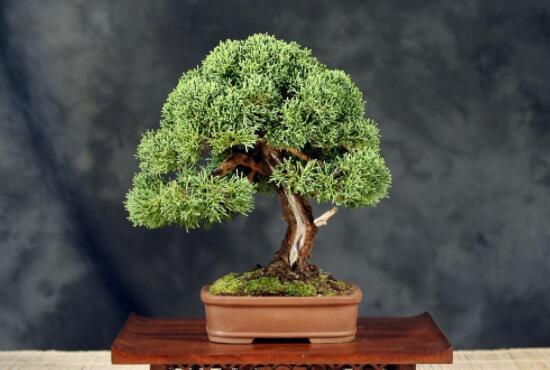
The banyan tree likes a warm, humid environment with plenty of light. It is not drought-tolerant and not cold-tolerant, but it is relatively tolerant of water and wetness, and short periods of waterlogging will not cause root rot. When grown indoors, it should be placed in a spot with good light, and warmth should be provided in winter. As for soil, it is best to choose loose, fertile acidic soil. So how do you grow a banyan bonsai? It is very simple: just meet its growing habits.
2. Banyan growing methods and precautions
1. Soil
How do you grow a banyan bonsai? First of all, you should choose new potting soil. The reason is that many flower lovers' banyan bonsai are existing potted plants bought from flower shops or online. Normal care can keep the plant growing. But that soil is very cheap, and if you want the banyan to grow well, it is best to choose new soil.
Soil selection: according to the growing habits of the banyan tree, it likes loose, fertile acidic soil, and in alkaline soil the leaves turn yellow, which will cause the banyan leaves to turn yellow. For this, the editor recommends using loose leaf mold with good water permeability. The usual ratio is garden soil: humus soil: sand = 2:2:1.
2. Light
As a green plant, the banyan tree has a great need for light. Under normal circumstances, we should place it in a ventilated environment with plenty of light, but the banyan tree dislikes strong light, so shade measures should be taken in summer when sunlight is abundant.
Note: during the growth of the banyan tree, it must be given sufficient light. Otherwise, prolonged lack of light can make the plant turn yellow and dry out, leading to pests and diseases, and eventually death.
3. Temperature
How do you grow a banyan bonsai? Adjusting the temperature in good time is also very important. The banyan tree likes a warm environment, and the difference between its suitable daytime and nighttime growing temperatures should not be too large. Once the day-night temperature difference is above 10°C, it is very prone to leaf drop and death. The banyan tree is not cold-tolerant, so the indoor temperature in winter should be kept above 5°C.
4. Watering
Water is the source of life, so in the banyan growing methods and precautions, watering is a very important part. The banyan tree likes a humid environment, and it is tolerant of water and wetness, so short periods of waterlogging will not cause root rot. Therefore, when watering the banyan tree, water until water flows out of the drainage holes at the bottom of the pot. After watering once, wait until the soil surface turns pale before watering again.
Note: when watering the banyan tree, it should be done according to the weather conditions, keeping the potting soil moist but not waterlogged. Once too much water is given and water accumulates in the pot, it can easily cause the roots to turn black and rot. In addition, the banyan tree is more difficult to care for in the north, and households should spray the leaves with water more often to increase the humidity of the surrounding air.
5. Fertilizing
After watering, let's talk about fertilizing. In the banyan growing methods and precautions, it is also indispensable. In order to meet the growth needs of the banyan tree, flower lovers should apply decomposed fertilizer water once a month in summer and autumn, and fertilize less or not at all in winter.
Note: although the banyan tree likes fertilizer, applying fertilizer too often or too strongly will harm the plant's growth, so everyone should vary the amount of fertilizer according to the season.
6. Pruning
The banyan tree is very tolerant of pruning and grows quickly. In order to maintain the beautiful shape of the bonsai, flower lovers need to prune it in good time. The pruning time is generally chosen in early spring. Properly thinning the branches enhances ventilation and light penetration and reduces the occurrence of pests and diseases. When pruning, everyone can reshape it according to their own preferences to improve its ornamental value.
7. Repotting
In the banyan growing methods and precautions, repotting is also a point that cannot be ignored. This is because for any potted plant, the nutrients in the soil will eventually be exhausted, so timely repotting is essential. Everyone should repot once every two years, adding a small amount of base fertilizer when repotting. The best time to repot is early spring or late autumn.
8. Pest and disease control
During the growth of the banyan tree, the plant will inevitably suffer from insects and diseases. The main pests are aphids, red spider mites, scale insects, etc., and their appearance will affect the growth of the banyan tree. Therefore, once discovered, pesticide should be sprayed immediately for control. As for what pesticide to spray, you can refer to banyan pest and disease control.
How to grow a banyan bonsai: growing methods for banyan bonsai
The banyan bonsai is one of our most common bonsai, evergreen all year round with a graceful posture. The banyan tree originally belongs to tropical plants and does not grow in the north. However, after being transplanted to the north, changes in the geographical environment have condensed the banyan tree, which can form a forest from a single tree, into a small bonsai to show its unique bearing. The banyan bonsai is evergreen all year round, with aerial roots winding and hanging down, creeping roots intertwined, tuberous roots full of ancient charm, and verdant branches and leaves. It is a perfect bonsai plant material, and its care is relatively simple. Below, we will explain the growing methods for banyan bonsai, hoping to help everyone.
The banyan bonsai should be placed in a warm, humid, well-lit, and well-ventilated place. The day-night temperature difference during growth should not be too large; exceeding 10°C will cause the banyan bonsai to drop its leaves and die. In summer, proper shading should be carried out, and when the winter temperature is below 5°C, it should be promptly moved indoors to a warm environment for overwintering.
The banyan tree belongs to subtropical plants and likes a sunny, well-ventilated, warm, and humid environment. It is drought-tolerant and tolerant of partial shade. Generally, it should be placed in a ventilated and well-lit place with a certain amount of spatial humidity. Insufficient sunlight, poor ventilation, and no certain spatial humidity can make the plant turn yellow and dry out, leading to pests and diseases, and eventually death.
Watering is one of the most important and most frequent measures in banyan bonsai management. The banyan tree is planted in a pot. Whether it is a deep pot or a shallow pot, the soil is always limited, and the water it contains is also limited. If water is not added for a long time, the plant will wither due to lack of water. Therefore, it is necessary to observe in time and water according to the dryness and wetness of the soil to maintain soil moisture. Of course, watering should not be excessive either. If watering is excessive and the potting soil remains too wet for a long time, it can easily cause root oxygen deficiency and rot. At the same time, the amount of watering also depends on seasonal changes and whether the weather is cold or warm. Generally speaking, in summer or during drought, it is best to water once in the morning and once in the evening. In spring and autumn, water once a day or every other day. In spring, when the tree stump begins to sprout, you can also water once in the morning and once in the evening as conditions allow. During the plum rain season or on rainy days, there is no need to water, and attention should also be paid to drainage. Sandy soil can be watered more, while clay soil should be watered less.
Watering can be done by spraying the leaves or by watering the roots. Generally, the two are combined: first spray the leaves, then water the roots thoroughly. Be careful not to give "half watering," which causes the pot surface to be wet while the inside of the pot is dry. Also, do not spray the leaves too much, as it can easily cause excessive growth of branches and leaves. Households growing it in the north should frequently spray water on the leaves to increase air humidity.
Banyan bonsai is suitable for planting in loose leaf mold with good water permeability. The best potting soil is a mixed soil of garden soil: humus soil: sand = 2:2:1. Placing moss on the bonsai will help drainage and ventilation. Fertilizing the banyan bonsai should be done differently according to the season. From April to September each year, applying decomposed cake fertilizer water 3-4 times is enough. Do not make it too strong, to avoid excessive growth of branches and leaves. In winter, apply organic fertilizer once as base fertilizer.
The banyan tree is tolerant of pruning, has strong sprouting ability, and grows quickly. In addition to pruning in early spring, during ordinary care the new branches and leggy branches should also be pruned according to shaping requirements, so as to maintain the beauty of the tree shape and improve its ornamental value.
The above are the growing methods for banyan bonsai explained for everyone. Is everyone clear now? For more home decoration knowledge, please stay tuned.
How to grow a banyan bonsai, growing methods for banyan bonsai
The banyan bonsai has a unique appearance and extremely high ornamental value. Among home plant bonsai, the banyan bonsai is relatively popular because it is evergreen all year round. Is the banyan bonsai easy to grow? The author had such a question when growing a banyan bonsai for the first time, afraid that the survival rate would not be high. After all, what is invested is all effort. Fortunately, at that time I consulted quite a few methods and precautions for growing banyan bonsai and successfully grew the first banyan bonsai of my life. Overall, growing a banyan bonsai is a simple matter. As long as you grow it according to the growing habits of the banyan bonsai, the survival rate is very high!
Banyan bonsai growing method 1. Soil selection for growing banyanThe banyan tree likes a sunny, well-ventilated, warm, and humid environment. When the weather is hot in summer, it should be properly shaded, and water should often be sprinkled on the ground to maintain a certain humidity in the microclimate. In the north, in late autumn or early winter, the banyan bonsai should be moved indoors for overwintering.
2. Fertilizing method for growing banyanDuring the growing season, apply decomposed dilute organic liquid fertilizer once a month, and apply "alum fertilizer water" once each in May and August every year. Do not fertilize the banyan too much. Too much fertilizer makes the branches grow leggy, and the leaves enlarge, which is instead unattractive. Do not fertilize when the weather is hot in summer or in winter.
Because the banyan grows quickly, once it is growing normally it can be given foliar topdressing once a day, using decomposed human or animal urine or rotted fertilizer as topdressing. Base fertilizer can also be applied when repotting. Sufficient fertilizer can make the trunk grow thick and strong. If the potting soil is fertile, there is no need for topdressing. Instead, during the summer and autumn growing period, a nutrient solution can be sprayed on the leaves to make the branches and leaves dense and emerald green, giving people a sense of beauty.
3. Watering method for growing banyanThe banyan tree is a tropical plant and likes plenty of water and fertilizer. It has strong adaptability and can grow in stone cracks and also in water. But after the banyan has grown, the potting soil should be kept moist, and water should not accumulate in the pot. In summer, watering twice a day is appropriate.
The banyan tree likes humidity, so during the growing period it should be watered frequently to keep the potting soil at a certain moisture level, but water should not accumulate in the pot. In winter, the temperature is low and water evaporation is low, so watering should be appropriately reduced. The banyan tree likes humidity, so during the growing season the potting soil should be kept moist. In summer, in addition to watering the pot, water should also be frequently sprinkled on the ground to keep the local microclimate at a certain humidity. But water should not accumulate in the pot. In winter, water less; if the potting soil is moist, there is no need to water.
4. Light requirements for growing banyanThe banyan tree likes sunny, warm, humid, and ventilated places, and can be properly shaded when the weather is hot in summer. In the northern winter, it should be moved indoors for overwintering, with the room temperature at around 8°C. The banyan tree is not afraid of sunlight and is also quite shade-tolerant. When displayed indoors for a long time, its leaves will not turn yellow. In winter, it should be given more sunlight.
5. Bonsai shaping methods for growing banyanBecause the banyan tree has many aerial roots, it is suitable for root-exposed claw styles and multi-trunk leaf bonsai. When making these two kinds of bonsai, in the first year first cultivate its root base and nurture its vitality. After it grows vigorously, raise the roots and repot into a shallow pot.
Because the banyan tree grows quickly and has well-developed roots, it can be made into a root-over-rock bonsai. Before cultivation, use metal wire to bend the tree into curved shapes of different sizes, plant it obliquely in a soil pot, and after 2-3 months of cultivation, when the aerial roots have increased and the crown has taken shape, take the sapling out, remove all the potting soil, and attach the sapling to a selected stone. At this point, note that the banyan and the bent tree and stone should have a consistent directional force, and the roots should be embedded into the crevices of the stone as much as possible. Use cotton cloth strips or metal wire to bind the roots firmly, and place them in a tall large pot for cultivation. Root-over-rock bonsai can, according to the tree's momentum, be created as far as possible into forms such as root-embracing-rock, rock-piercing, and rock-hugging styles.
6. Repotting method for growing banyanA banyan bonsai that is not very old should be repotted once every 2 years, and an old-stump bonsai once every 3-4 years. The best time is from late April to early May, and it is not easy to repot in winter. Remove 1/2 of the old potting soil, cut off dead roots and short roots, shorten overly long roots, thin out some overly dense roots, add some new culture soil with a certain fertility, and plant the banyan well. Sometimes the opportunity of repotting is used to change the tree's shape, or to replace it with a pot of higher ornamental value.
Precautions for growing banyan(1) Pruning and shaping of the banyan tree is mostly carried out during the dormant period. During the growing period, the sap flows quickly, and after pruning more white viscous sap flows out, which is unfavorable to the plant's growth. The banyan tree can be bent and tied in all four seasons. When bending and tying during the growing period, be careful not to damage the bark, so as to avoid sap flowing out.
(2) During the growing season, the banyan tree should always keep the potting soil moist. Special attention should be paid to increasing air humidity. In dry air, the leaf edges will scorch, turn yellow, and gradually fall off.
(3) When displayed indoors, the banyan tree should be placed in a ventilated place with bright scattered light. When displayed outdoors in spring and summer, it should be properly shaded, and in winter it can receive more sunlight. In winter, the room temperature should be kept at 5-8°C, and the potting soil should be prevented from becoming too dry or too wet. Wash the leaf surface once a week with warm water close to room temperature to keep the leaves clean and bright green. If the indoor temperature is too high in winter, open the windows for ventilation; otherwise, after being taken outside in the following spring, a large number of leaves will fall.
Propagation methods for growing banyan (1) Banyan cutting propagationChoose thick branches, cut them for planting, and insert them into a mixed soil of slightly acidic stone powder, river sand, and coal cinder that is loose and breathable, to a depth of about 3 cm. After watering thoroughly, move them to a cool, wind-sheltered place for care. For ground planting, use a cover to shade the sun. If cutting in early spring when the temperature is relatively low, it is best to cover with a plastic film bag to maintain a constant temperature and facilitate survival. Normally, the soil should be kept moist without water accumulation. The banyan tree first sprouts and then roots. When the sprouts grow to 5-6 cm, gradually let the stump material receive sunlight. After its sprouts and roots grow strong, transplant it into a pot.
(2) Banyan division propagationThe banyan tree has the characteristic of rooting and sprouting quickly. You can choose stump material with twisted trunks, ancient and unusual, and suitable for bonsai, and divide and transplant it from each plant, retaining as many aerial roots as possible. After one to two years of careful cultivation, once aerial roots have grown, it can be cultivated into shape according to the author's conception.
Pest and disease control methods for growing banyanThe banyan tree has relatively few pests and diseases. Poor ventilation and light penetration or excessive nitrogen fertilizer may cause powdery mildew, which can be sprayed with 50% carbendazim wettable powder at 500 times dilution. For insect pests, scale insects occasionally occur, which can be sprayed with 80% dichlorvos emulsifiable concentrate at 1500 times dilution. Alternatively, shallowly bury an appropriate amount of carbofuran granules in the potting soil and then water thoroughly for quick efficacy.