Dracaena pest and disease control: red spider mites, scale insects and black spot disease - prevention is key
Dracaena is quite sensitive to environmental changes. Sometimes improper cultivation methods can trigger pest and disease problems, causing leaves to turn yellow, wilt and drop, which greatly distresses plant lovers. So what should you do when Dracaena is affected by pests and diseases? Let's look at Dracaena pest and disease control methods.
Dracaena pest and disease control
1. Red spider mite
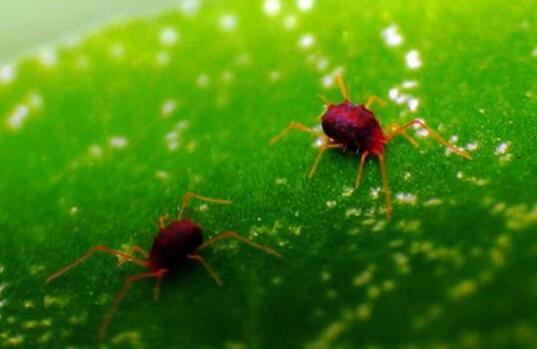
Characteristics: The leaves begin to fade, the green color starts to be lost, and dense small yellow spots appear on the leaf surface, which then become small yellow patches. The Dracaena begins to show signs of shrinking, yellowing and wilting. Its ornamental value is greatly reduced, and its health condition is also worrying.
Cause: Air that is too dry, combined with prolonged direct sunlight - for example, placing the Dracaena on a balcony or by a window but not watering it regularly - makes red spider mites likely to appear.
Control: During normal care, make sure air humidity does not get too low and pay attention to watering regularly. Because red spider mites hide among the branches and are difficult to catch by hand, chemical control is commonly used - for example, 50% dichlorvos emulsion diluted with 1000-1500 times water for spraying.
2. Scale insect
Characteristics: Scale insects suck the sap from Dracaena leaves, causing poor plant growth. They often appear earlier than red spider mites, emerging in spring as soon as temperatures begin to rise. If not removed promptly, they can cause sooty mold.
Cause: Usually too little fertilization leads to weak disease resistance in the Dracaena. In addition, unsuitable temperatures allow scale insects to hide in the plant or soil to overwinter, and they begin to reproduce in large numbers as soon as temperatures rise.
Control: Pay attention to reasonable fertilization during normal care. Ensuring adequate phosphorus and potassium fertilizer can improve the plant's resistance to pests. When scale insects are numerous, spray with 800-1000 times diluted Supracide.
3. Black spot disease
Characteristics: Brown rings appear around the edges of the leaves, the center of the lesions is grayish-white, and then small black mold spots appear densely distributed within the lesions. The lesions change from their initial irregular shape to oval. This is extremely harmful in Dracaena pest and disease control.
Cause: High air humidity during the rainy season and poor air circulation easily trigger black spot disease. In addition, lack of fertilizer is also one of the causes. The pathogen remains on fallen leaves to overwinter, and then spreads to other leaves via wind and rain.
Control: Maintain good air circulation, reduce the time of direct sunlight exposure, and keep the Dracaena in a humid, semi-shaded environment. Replenish water promptly, and spray with 40% chlorothalonil suspension diluted 400-500 times.
Orchid Cymbidium orchid guide: how to grow orchids / how to propagate orchids
Orchid profileOrchid Cymbidium
Aliases: Hu Ji Hua, Chinese orchid, Zhi Lan
Classification: Orchidaceae flowering plants
Family and order: Plantae, Angiosperms, Monocotyledons, Asparagales, Orchidaceae, Cymbidium
Peak flowering season: all four seasons
Orchid (scientific name: Orchidaceae), belonging to the family Orchidaceae, is a monocotyledonous perennial herbaceous plant, also called Hu Ji Hua. Because most varieties of terrestrial orchids originated in China, orchids are also called Chinese orchids. The roots are long and cylindrical, and the leaves grow in clusters from the stem base, linear-lanceolate, with 2-3 leaves per cluster. The roots, leaves, flowers, fruits and seeds of orchids all have certain medicinal value. The orchid is a flower known for its fragrance, with characteristics of nobility and elegance. Notable figures throughout history have rated it very highly, and it is likened to the gentleman among flowers. Among ancient literati, the beauty of poetry and prose was often compared to "orchid chapters," true friendship to "orchid bonds," and good friends to "orchid guests."...
Orchid cultivation methods and precautions - introduction to orchids
Orchid (scientific name: Orchidaceae), belonging to the family Orchidaceae, is a monocotyledonous perennial herbaceous plant, also called Hu Ji Hua. Because most varieties of terrestrial orchids originated in China, orchids are also called Chinese orchids. The roots are long and cylindrical, and the leaves grow in clusters from the stem base, linear-lanceolate, with 2-3 leaves per cluster. The roots, leaves, flowers, fruits and seeds of orchids all have certain medicinal value. The orchid is a flower known for its fragrance, with characteristics of nobility and elegance. Notable figures throughout history have rated it very highly, and it is likened to the gentleman among flowers. Among ancient literati, the beauty of poetry and prose was often compared to "orchid chapters," true friendship to "orchid bonds," and good friends to "orchid guests."
The orchid is one of China's top ten famous flowers, loved by all. It has a pleasant fragrance: "Orchids grow among roadside grasses, hiding their elegance and splendor; only when the subtle fragrance permeates the senses does one realize a rare bloom lies hidden in the garden." This orchid that gives off a subtle fragrance has always been favored by people.
The alluring and mysterious subtle fragrance of the orchid is incomparable to the scent of any other flower in the world. Whether it is the delicate fragrance of Cymbidium faberi, the strong fragrance of Cymbidium goeringii, the osmanthus-like scent of certain Cymbidium ensifolium, or the sandalwood-like scent of certain Cymbidium sinense, they all share one common characteristic: clear and subtle.
Orchids are often used for tea. Orchid tea has a jade-green color, with silvery tips visible, a clear liquor, and a pure, mellow taste. It smells pleasantly of orchids and has a sweet aftertaste when drunk. It can stand alongside famous teas such as Huangshan Maofeng and Taiping Houkui. If you want to store orchids for a long time, you can cut the orchids, dry them, and mix them into tea leaves for later use. Take a small amount, pour in boiling water, steep briefly, and it is ready to drink. The floral fragrance of orchids comes from the volatile oils secreted by the aromatic oil glands in the column of the orchid flower. Due to the plant's physiological processes, the secretion of these volatile oils may be intermittent, which is why people feel the fragrance comes and goes, appearing and disappearing, sometimes light and sometimes strong. The main chemical components of these volatile oils are mixtures of esters or lactones of organic compounds and enol and enal-ketone compounds of terpenoids.
Morphological characteristics of orchids
Orchids are perennial herbaceous plants. The roots are fleshy and enlarged, without root hairs, and have symbiotic fungi. They have pseudobulbs, commonly called "reed heads," covered with leaf sheaths, often connected together with multiple pseudobulbs existing in a row at the same time. Leaves are linear or sword-shaped, leathery, upright or drooping. Flowers are solitary or in racemes, with numerous bracts on the pedicel. Flowers are bisexual and fragrant. The corolla consists of 3 sepals, 3 petals and the column. The middle sepal is called the main petal. The lower 2 are the lateral sepals, and the extent of their spread is called the "hu." The upper 2 petals are upright, relatively thick and fleshy, with tips curled inward, commonly called the "pong." Bilateral symmetry, the lip, pollinia and the gynostemium are the basic characteristics of Orchidaceae plants: the characteristic of pollen forming masses has some exceptions - except for Apostasioideae and Cypripedioideae, most other orchid plants also have a pollinium stalk. The ancients considered "one stem with one flower as lan," and one stem with multiple flowers as hui.
Cymbidium goeringii and Cymbidium faberi are classified according to differences in the shape and texture of the main petal, lateral sepals, pong and lip into plum petal, narcissus petal, lotus petal, butterfly petal, rare varieties and pure-color varieties. Plum petal: sepals are short and round, relatively thick and fleshy, slightly curved inward, narrow at the base; the lip is short and hard; the pong petals are thick and fleshy with tips curved inward forming a pouch; the flower faces slightly upward when first opening. Famous varieties include Song Mei, Xi Shen Mei and others. Narcissus petal: sepals are slightly longer than plum petals, tapering to a point at the tip; the pong petals are thick in texture with pouch-shaped tips; the lip droops slightly or curls backward. Famous varieties include Wang Zi, Cui Yi Pin and others. Lotus petal: sepals are broad and large, thick in texture, narrow at the base, broad with a protruding tip at the apex; the pong petals do not form a pouch; the lip is relatively smooth, slightly curled backward. Famous varieties include Da Fu Gui, Cui Gai Hua and others.
Butterfly petal: the inner side of the two downward sepals becomes thicker in texture, forming wavy wrinkles, with red patches. Sometimes the number of sepals or petals suddenly increases (such as in Lü Yun, whose corolla often has about 8 segments), or the flower shape has special changes. Pure-color variety: the perianth, flower stem and bracts are the same color - pure green, yellow-green, etc. - without variegated markings of mixed green or yellow-green, without miscellaneous stripes. Precious varieties include Zhang He Su, Lao Wen Tuan Su and others.
Ecological habits of orchids
Orchids prefer shade, fear direct sunlight, like moisture, avoid dryness, and prefer fertile environments rich in humus with good air circulation. Therefore, the growing medium should be: aerated, soft, well-draining, and slightly acidic. The most commonly used medium for outdoor cultivation is mud flower soil. Climate and environment in different regions can all affect orchid growth, so the choice of growing medium varies. For example, in the Minnan area of Fujian, the weather is relatively warm year-round and does not get too cold. Orchids grow quickly there, making small pebbles suitable for planting - first, it saves resources. Second, pebbles are good for ventilation and do not retain water. Orchids grow well when relative air humidity is 60-70%. Too dry or too wet conditions can easily trigger orchid diseases.
Controlling moisture is the most fundamental condition for growing orchids well. Orchid leaves are relatively thick in texture, with a cuticle layer on the surface for protection; therefore, orchid leaves do not consume large amounts of water. The pseudobulbs and fleshy roots of orchids can store certain nutrients and moisture, so they are relatively drought-tolerant. Except during the rooting and sprouting stages and rapid growth stages when more water is needed, water consumption is low at other times. If there is too much water, causing waterlogging in the soil and blocking root respiration, root rot easily occurs. Too much water also causes orchid leaf cell walls to become water-filled, opening leaf stomata, resulting in diluted nutrient content, which in turn causes weak tissues, poor growth and disease. Orchids like rain but fear waterlogging; they like moisture but fear wetness. Because air humidity differs across spring, summer, autumn and winter, orchid growth rates differ, and water requirements also differ. Accordingly, there is a saying that whether you can grow orchids mainly depends on whether you can water them.
Orchids prefer light feeding; when fertilizing, it is better to err on the light side than the heavy side. Like other plants, nitrogen promotes lush stem and leaf growth. Phosphorus promotes well-developed orchid roots, robust development of reproductive organs, and spreading stems and leaves. Magnesium, sulfur, iron and other trace elements can make leaves green and flowers strong. During the peak growth period, orchids need more fertilizer; during dormancy or weak growth periods, no fertilizer is needed. If over-fertilized, roots and leaves will be burned, causing irreparable loss.
Additionally, Zhi Lan is a metaphor for fragrant herbs.
Orchid cultivation techniques
We Chinese have been viewing and cultivating orchids for much longer than the Western cultivation of tropical orchids. As early as the Spring and Autumn period 2,400 years ago, the Chinese cultural sage Confucius said: "Zhi Lan grows in a secluded valley, yet does not cease to be fragrant because no one is there; a gentleman cultivates the Way and establishes virtue, and does not change his integrity because of poverty."
Lan, is a fragrant herb. -- Shuowen
Heng Lan Zhi Ruo. -- Book of Han, Biography of Sima Xiangru
The root of Lan Huai is Zhi. -- Xunzi, Encouraging Learning
The root of the Chinese orchid is white angelica, which symbolizes the common people. Hui Zhi has been the essence of the traditional virtues of benevolence, righteousness and civil governance since ancient times. The great Tang dynasty poet Li Bai wrote: "The secluded orchid's fragrant wind travels far; the hui grass's flowing fragrance reaches its roots." Cymbidium faberi's roots are in the people.
When cultivating, divided orchid clumps should not be separated too sparsely. Each clump should have at least 3-5 shoots. It is best to keep one-year-old plants, two-year-old plants and three-year-old plants in the same clump.
Pot bottoming
Cover the drainage hole at the bottom of the pot with a piece of tile, then gradually fill with bricks, tiles or shells, filling large gaps with mud granules or bean-sized stones, generally about 1/2 to 1/3 of the pot's inner height. The remaining clear height above should be about 10-15 cm, reserved for the growing medium layer. The specific height should be determined according to the orchid species, the length of the orchid roots, and the height of the pot. The bottoming material should not be packed too densely; some pore space should be retained. Practice has shown that some new roots can grow well in the pores of the bottoming layer.
Planting
On top of the bottoming layer, first add 2-3 cm of growing medium and press it down lightly by hand. Then place the orchid upright on top. Depending on the size of the plant and pot, you can plant several individual plants, 2 clumps, 3 clumps or more clumps in one pot. 3 clumps should be planted in a tripod arrangement. 4 clumps can be planted in a square arrangement. 5 clumps should be arranged in a plum blossom pattern. The orchid roots should spread out naturally, and the leaves should spread in all four directions. Slowly place the orchid roots into the pot so that they spread naturally and avoid rubbing against the inner wall of the pot as much as possible. After the orchid plant is in the pot, gradually fix its position. When planting one clump per pot, the old pseudobulbs should be positioned to one side, leaving room for new shoots to develop. When planting several clumps per pot, the old pseudobulbs of each clump should be gathered relatively toward the center of the pot, so that new roots and new shoots have enough space to develop outward.
Filling with soil
When planting, hold the leaves with one hand and add nutrient soil with the other. Hold the base of the orchid plant and lift slightly upward to spread the root system, while shaking the pot. Let the growing medium go deep into the root zone; continue adding soil and shaking the pot to adjust the position and height of the orchid plant. Press along the edge of the pot with your hand, but do not press too hard as to damage the roots. Continue adding soil and pressing until the soil surface is 2-3 cm above the pot rim, slightly mound-shaped. The growing medium should cover all the orchid roots, up to the base of the pseudobulbs. Regarding the depth of soil filling, tradition holds that: Cymbidium goeringii should be planted shallow, Cymbidium faberi should be planted deep, but generally the leaf base on the pseudobulb should not be buried. When newly collected orchids grow in the wild, the plants bear clear markers above and below the soil surface, which can be used as a guide. The size of the pot should also match the size and number of plants - neither a large pot with few small plants, nor a small pot with many large plants. Generally, the number of plants should be such that the pot will just be full after 2-3 years of growth. The size of the plants should match the height of the pot. This is both beneficial for growth and meets ornamental requirements.
Top dressing
After planting is complete, spread a layer of small gravel or moss on the soil surface - preferably high-quality moss from under the forest. This is both attractive and helps regulate moisture. It also protects the leaf surface from being soiled by muddy water, prevents new shoots from being infected by soil-borne pathogens and rotting at the core; in addition, it can reduce the washing effect of rain on the potting soil and keep the soil loose.
Watering
After planting is complete, water for the first time. The potting soil must be thoroughly wet. Water droplets should be small, and the force should not be strong. If placing the pot in a water basin to soak, do not soak for too long. Once the potting soil is soaked, immediately remove the pot, then move it to a shaded place for care.
Watering orchid plants should be based on various natural factors affecting transpiration - humidity, temperature, light, wind, season, weather and so on - so as to adopt different water management measures.
First, look at humidity. If air humidity is low and transpiration is strong, water more; conversely, if air humidity is high or even saturated and transpiration has nearly stopped, water less or even not at all.
Second, look at temperature. When temperatures are high, transpiration accelerates, water demand is greater, and watering frequency should increase accordingly; conversely, when temperatures are low, water molecule activity is slow, diffusion is weak, and water demand is lower.
Third, look at light. Strong light accelerates transpiration and water molecule diffusion, increasing water demand; conversely, water demand is lower. Therefore, different light conditions and different shading levels require different water management - water more for those receiving sun, less for those in shade.
Fourth, look at wind. Strong wind evaporates water quickly; weak wind evaporates water slowly. Dry southwest winds enhance evaporation, while moist southeast winds relatively reduce transpiration. Orchid pots placed in windy openings receive more wind and evaporate water faster; those in sheltered spots receive less wind and evaporate water more slowly.
Fifth, look at the season. Different seasons have different temperatures, humidity and light, and orchid transpiration varies greatly. Water more in the hot, dry summer; water less or not at all during the plum rain season; do not water in the cold, overcast winter; water less in the cool early spring; water more during the mild late spring when it is the sprouting period; water more in the dry autumn.
Sixth, look at the weather. Weather in nature is ever-changing, and different weather brings different light, temperature and humidity, so orchid transpiration also varies greatly. The basic approach is: water more on sunny days, less on cloudy days, no need to water much when rain is imminent, and do not water on rainy (or snowy) days.
Test-tube cultivation
With the continuous development of orchid tissue culture techniques and sterile sowing techniques, the phenomenon of orchids flowering in test tubes is receiving increasing attention. The main reason this phenomenon attracts the attention of breeders is that artificially hybridized new varieties that originally required many years of conventional cultivation to flower can, in test tubes, be artificially induced to flower through 1-2 culture cycles. This allows purposeful selection of individuals with excellent traits based on flowering performance, and elimination of relatively inferior individuals, thereby shortening the entire breeding cycle and greatly reducing the workload of cultivating large numbers of varieties that have not yet flowered, making breeding work more targeted.
Since we have long been engaged in the development and research of several conventionally cultivated terrestrial orchid species in the genus Cymbidium, the orchids mentioned below all refer to these few orchid species, including Cymbidium goeringii, Cymbidium ensifolium, Cymbidium goeringii var. longibracteatum, Cymbidium tortisepalum, Cymbidium faberi, Cymbidium kanran and others.
Based on observation results, the flowering patterns of orchids in test tubes can be roughly divided into three types. The first type is when the axillary buds of the orchid seedling develop into flower buds. This pattern is the same as the flowering pattern of orchids in conventional cultivation, except that in conventional cultivation it is a clump of seedlings that flowers, while in test tubes it is a single seedling that flowers. This situation is relatively common in Cymbidium ensifolium, and relatively rare in varieties such as Cymbidium goeringii and Cymbidium goeringii var. longibracteatum. The second type is when the terminal bud of the orchid seedling develops into a flower bud, similar to what is commonly called "grass arrow" (grass-heart arrow), where the flower grows from the very center of the orchid seedling. This situation occurs in all orchid species, especially commonly in Cymbidium goeringii. The third type is when flower buds differentiate directly from the tip of the protocorm. This type is entirely controlled by hormone levels in the culture medium, flowers quickly and uniformly, and has a high differentiation frequency. It is the main method for inducing flowering.
Another convenience brought by orchids flowering in test tubes is that it makes in-bottle hybridization of orchids possible, which is a completely new applied research field. Some breeding work requires repeated hybridization, backcrossing and selfing to achieve breeding goals and select excellent new varieties. For example, when crossing a pure-color variety with a plum petal variety, the first filial generation is usually plum petal but definitely not pure-color. This requires backcrossing the first filial generation with the pure-color parent once, or selfing the first filial generation once, and then selecting pure-color plum petal from the second filial generation. Using conventional methods, this process would definitely take more than ten years. Now with the method of inducing orchids to flower in test tubes, we can let the first filial generation flower in test tubes, and perform self-pollination or cross-pollination between first filial generation plants in test tubes, and cultivate seeds. These seeds can be sown directly onto the culture medium without disinfection to obtain the second filial generation, and then flowers can be induced, allowing selection of the desired variety from the second filial generation. This process can save at least two cultivation cycles from flask seedling to flowering compared with conventional methods.
Orchid propagation methods
Orchids are commonly propagated by division, sowing and tissue culture.
Division propagation: Can be done in both spring and autumn, generally once every three years. Any plant with robust growth and dense pseudobulbs can be divided. After division, each clump should retain at least 5 connected pseudobulbs. Before division, reduce watering to make the potting soil relatively dry. When repotting after division, first cover the drainage hole at the bottom of the pot with broken tiles, then spread coarse gravel, occupying 1/5 to 1/4 of the pot depth, then add coarse-grained soil and a small amount of fine soil, and then plant with humus-rich sandy loam. The planting depth should be such that the pseudobulbs are just barely buried in the soil, leaving a 2 cm rim at the pot edge, topped with Selaginella uncinata or fine gravel, and finally watered thoroughly. Place in a shaded area for 10-15 days, keeping the soil moist, then gradually reduce watering and carry out normal care.
Sowing propagation: Orchid seeds are extremely fine, containing only one incompletely developed embryo, with very low germination capacity. In addition, the seed coat does not easily absorb water, so sowing by conventional methods will not germinate. Therefore, orchid mycorrhizal fungi or artificial culture medium is needed to supply nutrients for germination. For sowing, it is best to select fruits that have not yet split open. After surface-sterilizing with 75% alcohol, remove the seeds, soak in 10% sodium hypochlorite for 5-10 minutes, remove and rinse 3 times with sterile water, then sow onto culture bottles containing medium, and place in a dark culture room, maintaining a temperature of about 25°C. After germination begins, move to light and protocorms will form. From sowing to transplanting takes half a year to a year. Tissue culture has been successfully achieved, and this method can be used for propagation where conditions permit.
Propagation techniques
Site selection: The site should be open on all sides, well-ventilated, close to water, with moist air and no coal smoke pollution. On the southwest side of the site, evergreen broadleaf trees can be planted, with a canopy density of about 0.7. This can reduce afternoon sunlight exposure and regulate humidity and temperature.
Watering: Rainwater or spring water is preferable. Do not use saline-alkaline water. If using tap water, let it sit for several days before use. Watering should depend on temperature conditions. In spring, water less; in summer, water more. During the plum rain season, which is when orchids are sending out leaf buds, the potting soil should be kept slightly dry. After autumn when the weather turns cool, reduce watering and just keep it moist. In winter indoors, keep it dry, reduce watering frequency, and water at noon. Orchids can tolerate light rain, but continuous rain or heavy rain can easily cause heart rot and leaf rot, so attention must be paid to rain protection.
Fertilizing: For orchid cultivation, cake fertilizer is suitable. Mix 4 parts plant ash, 10 parts soybean cake and 10 parts bone meal evenly, place in a vat, add water several times until the soybean cake is soaked through, then cover and seal. After one year of decomposition, make into dry granules. When using, just place on the soil surface. If using full manure, it should also be decomposed for one year, diluted with water and filtered before use. Generally, start fertilizing from May and stop at the beginning of autumn, applying thin fertilizer frequently. Fertilizing should be done in the evening, and water once with clear water the next morning.
Shading and cold protection: Except in early spring and winter, orchids should be placed under an open-air shed. The shade shed should be well-ventilated. When orchids are first brought out in March-April, they can get more sunlight, and afterward the shading time gradually increases. In winter, orchids must be moved indoors for cold protection, with room temperature maintained at 1-2°C. In addition, after orchids are brought out in spring and before they are brought in in autumn, attention should be paid to frost protection.
Precautions
Wounds need anti-bacterial treatment - When repotting or dividing, if the roots have wounds, first apply fungicide to the wounds to prevent pathogen invasion.
Do not use too large a pot - Planting small plants in a large pot uses more growing medium, easily leading to poor aeration, and watering is also harder to control. If too much water is absorbed, the growing medium does not dry easily, and bacteria invade causing root rot.
Orchids should be planted shallow - Do not plant orchid plants too deep, otherwise prolonged moisture will cause rot. When planting, fill growing medium around the roots, and the base or pseudobulbs must be exposed.
Roots should be spread out - When planting orchids, the roots should be evenly spread out and not squeezed together, so that each root can contact the growing medium and aeration is good.
Do not water for several days - Newly planted orchids may have injured roots. After applying fungicide to the wounds, do not water for 3-5 days to allow the fungicide to take effect and to promote new shoot and new root growth.
Avoid strong light - Newly planted orchids must avoid direct strong light to prevent dehydration. They should be placed in a warm, shaded place, and misting can be used to increase air humidity until the orchids return to normal growth.
Leaves turning yellow
This is generally due to root rot or hollow roots. It is necessary to improve watering, and adjust environmental humidity and light levels.
Another reason orchid leaves turn yellow is normal leaf senescence, because it is exactly the sprouting period, and with metabolism, nutrients cannot keep up, so old shoots fade and leave nutrients for new shoots to grow. However, other reasons cannot be ruled out, such as root rot, soft rot and stem rot. These require frequent observation and decisive handling when discovered, otherwise the whole plant may be lost.
Distribution and collection
Collecting wild orchids in the mountains is of great significance for discovering new varieties and selecting excellent hybrid parents. During collection, consideration should be given to choosing the flowering period, improving the survival rate, local climate and local orchid soil moisture, and factors such as different growing environments in different regions. At the same time, attention should be paid to safety, fire prevention, not trespassing into restricted areas, and keeping collection records.
In the process of orchid cultivation and business, due to the frenzied speculation by orchid merchants on some novel orchid varieties, orchid prices once rose abnormally, with "sky-high orchids" constantly appearing. Driven by huge economic interests, large-scale destructive collection of wild orchid resources occurred, and many wild orchid habitats were severely damaged. For this reason, the state has adopted protective measures such as establishing no-collection reserves, establishing variety protection levels, improving legislation on wild resources, and strictly punishing illegal collectors.
From the perspective of long-term, effective use of orchid resources and respect for and advocacy of environmental protection, orchid enthusiasts should establish a scientific, reasonable, environmentally friendly and law-abiding awareness of orchid collection.
City flower of Guiyang, city flower of Shaoxing, and provincial flower of Zhejiang. During the Republic of China period, the Nanjing Special Municipal Government promulgated the orchid as the city flower of Nanjing.
Cold regions
To grow orchids well in northern regions, one should try to create environmental conditions suitable for their growth and development, and meet the requirements of the orchid's biological characteristics, so that they can grow and flower well. Specifically, the following tasks should be done well.
1. Choose good pots and growing medium
For ordinary household orchid growing, clay pots are still the best choice. If you want to increase the decorative effect and add beauty, you can put a colored-glazed porcelain pot outside the clay pot. The pot size should be such that the orchid roots can spread out completely inside the pot. For potting soil, orchid soil is best. You can also mix your own. You can use 6 parts leaf mold or peat soil, 3 parts sandy soil, 1 part cake fertilizer, or mix 5 parts leaf mold, 3 parts compost soil and 2 parts coarse sand evenly. For repotting methods, see: Common knowledge for selecting orchids and cultivation techniques.
2. Apply thin fertilizer skillfully
When fertilizing orchids, apply thin fertilizer and never apply heavy fertilizer. There is a saying: "Clear orchids, cloudy jasmine." Newly planted orchid plants should not be fertilized in the first year; start fertilizing from after Qingming in the second year until the beginning of autumn. Apply fully decomposed dilute cake fertilizer water 1-2 times a month. Because orchids have fleshy roots, never apply undecomposed fertilizer, to avoid root rot. Before each fertilization, withhold water for 1-2 days, and apply when the potting soil is slightly dry. Water once the next morning to prevent unclean matter in the fertilizer solution from contaminating the roots and harming the orchid roots. When applying liquid fertilizer, be careful to avoid splashing the leaves. For orchid plants that have been cultivated for several years and reached flowering age, apply mainly nitrogen fertilizer in the early stage to promote new shoot sprouting and rapid growth; apply mainly phosphorus and potassium fertilizer in the later stage to help pseudobulbs enlarge, leaves become wide and thick, and provide sufficient nutrients for flower bud differentiation. Specifically, in autumn each year before flower bud differentiation, apply liquid fertilizer mainly of phosphorus and potassium fertilizer twice in succession; during the bud gestation period, on a clear evening, first wash the leaves with clean water, and after they dry, use a small sprayer to spray 0.2% potassium dihydrogen phosphate solution on the leaf surface and underside, or apply plant ash water at the roots. Foliar fertilization at this time is beneficial for promoting the development of orchid roots, stems and flowers. Do not fertilize on cloudy and rainy days, and stop fertilizing during the winter dormancy period. About 20 days after flowers fade, apply liquid fertilizer or compound chemical fertilizer mainly of nitrogen fertilizer twice more, which can promote plant growth. [6]
3. Suitable light
Orchids prefer shaded, cool environments and fear direct sunlight. Therefore, in the north, from April to early May, they can get some sunlight before 9 a.m. After mid-May, shading is needed, and at this time they should be placed in a cool, ventilated place for cultivation. In winter, place near a south-facing window to receive more light, to enhance vitality and promote flower bud differentiation. Especially for Cymbidium sinense and Cymbidium kanran that bloom in winter, they should be placed in a sunny indoor spot in winter; without light they will not flower well. [6] In short, orchid growing should follow "no going out in spring, no sun in summer, no dryness in autumn, no wetness in winter," meaning: in spring, guard against cold wind invasion and do not move them outdoors; in summer, fear direct sunlight and place them in a cool, ventilated place; in autumn, guard against the potting soil drying out, as this is the orchid's bud gestation period and watering should be appropriately increased; in winter, they are in a dormant state, and too much water easily causes root rot, so follow the principle of alternating dry and moist.
Orchid disease control - The main pests and diseases of orchids include:
Southern blight: Mostly occurs during the plum rain season. Attention should be paid to ventilation and light transmission, and good pot drainage for prevention. After onset, remove the infected potting soil and sprinkle with quintozene powder or lime.
Anthracnose: Occurs year-round, and is more rampant in hot, rainy seasons. In addition to improving environmental conditions, during the disease period, first spray with 50% thiophanate-methyl wettable powder diluted 800-1500 times, once every 7-10 days, then supplement with 1% Bordeaux mixture of equal proportions, once every half month.
Scale insect: Reproduces fastest under high temperature, high humidity and poor air circulation conditions. Use conventional control methods.
Root rot, also called nematode disease. Nematodes parasitize orchid roots, causing root rot. Above-ground leaves grow poorly, leaf color fades and turns yellow, and even causes plant wilting. Nematode damage creates numerous wounds and also causes infection by other soil-borne pathogens, leading to plant disease and accelerating plant death. The growing medium should be disinfected - 100°C steam sterilization can be used to kill eggs. For severe cases, repot immediately, soak the diseased plant in the medicinal solution for 20-30 minutes, remove and air-dry, and replant with new growing medium.
In summary, to grow orchids well, one must master their natural growing environment conditions, adopt reasonable measures, and strengthen care and management. According to the "Orchid Growing Formula": "No going out in spring, no sun in summer, no dryness in autumn, no wetness in winter" - this is a summary of China's orchid growing experience.
Pollution-free pest and disease control methods:
Below are some folk remedies for pollution-free control of orchid pests and diseases. "Small" remedies can often solve "big" problems, and orchid enthusiasts may want to give them a try.
1. Tea seed cake
Tea seed cake, also called tea bran or tea seed cake, is the residue left after pressing oil from tea seeds. Farmers often use it to wash clothes. Tea seed cake contains saponins and glycosides, and its water extract is alkaline, with good stomach-poison and contact-killing effects on pests.
Control methods:
Soak crushed tea seed cake powder and boiling water at a 1:5 ratio for a day and night. Use it to drench orchid pots, and also drench the area where orchid pots are placed and other orchid pots. It has a good control effect on snails.
Spraying tea seed cake water on orchid plants has a very good control effect on aphids and red spider mites, reaching over 90%.
Tea seed cake water can also kill earthworms. Drench the potting soil thoroughly with tea seed cake water, and after a moment, earthworms will emerge from the soil surface; pick them out and remove them. There are differing views in the orchid community on whether earthworms are beneficial or harmful to orchids. One view holds that earthworms in pots disrupt some orchid mycorrhizal hyphae and damage orchid root tips during their activity, making them pests that must be removed. Another view holds that earthworms in orchid pots can eat many decaying substances and rotten orchid roots, and their activity helps loosen the soil, while their droppings can serve as orchid fertilizer, so their benefits outweigh the harm and they need not be killed. Which is right and which is wrong remains for orchid enthusiasts to judge based on their own practical observation and weighing of pros and cons.
2. Strong-smelling vegetables (scallions, garlic, chives, ginger, onions, etc.)
Strong-smelling vegetables each have their own distinctive odor, and these odors can play a role in killing pests and sterilizing.
Control methods:
Take 25 g of garlic, crush and squeeze the juice, dilute in 10 L of water, and immediately spray on orchid plants. It can control aphids, red spider mites, scale insects and gray mold. Press peeled garlic into small pieces and place them at equal distances on the surface soil of orchid pots. After a few days, earthworms and ants will be gone.
Soak chopped scallions and water at a 1:30 ratio for a day and night, then filter. Spray on orchid plants several times a day for several consecutive days. It has good effects on controlling aphids, mollusk pests and preventing powdery mildew.
Use 1 jin of ginger, add half a jin of water, crush and extract the juice. Add 6 jin of water per jin of juice, and spray on orchid plants to control aphids.
Mix chive juice and clean water at a 1:60 ratio, and spray on orchid plants twice a day for several consecutive days. It can cure black spot disease.
Take 15 g of chopped onion bulbs, place them in 2 jin of water, seal and soak for 7 hours, then filter. Spray the filtrate on orchid plants to control red spider mites and aphids.
3. Cigarette butts
Tobacco leaves contain about 3% nicotine. Nicotine has a strong contact and stomach poison effect on pests. Take about 20 smoked cigarette butts and one portion of quicklime, add water, stir, soak and filter, then add 30 portions of water. Spray this on orchid plants, potting soil and the bottom of pots to eliminate ants and other pests without a waxy coating.
4. Laundry detergent and detergent
Laundry detergent can dissolve the waxy shell of scale insects and at the same time form a layer of foam that wraps around the insect body, causing the scale insects to suffocate and die. Laundry detergent solution can prevent and control some diseases and pests.
Control method:
Dissolve laundry detergent in a small amount of warm water, then dilute with water to a 1000-fold solution and spray on orchid plants to kill aphids, whiteflies and red spider mites. Dilute to a 600-fold solution, spray once every three days, and continue for three sprays; all scale insects will die.
Mix pig bitter bile and clean water at a ratio of 1:100, and add a small amount of laundry detergent. Spray this on orchid plants to prevent and control anthracnose and soft rot. After spraying orchid plants with laundry detergent solution, once the pests are dead, the leaves must be rinsed several times with clean water so that the orchid plants can grow normally.
5. Baijiu
Mix baijiu and water at a ratio of 1:2 and spray on orchid plants once a week, continuing for three sprays, to kill scale insects.
6. Orange peel
Place orange peel at the bottom of the pot to prevent ants and other pests from entering the potting soil and harming the orchids. Orange peel can also be cut into small pieces and scattered on the surface of the potting soil; if watering is withheld for a few days, it can control aphids, scale insects and others.
7. Brown sugar
Mix powdered brown sugar and boiling water at a ratio of 1:100. After it cools, spray the brown sugar liquid on orchid plants once every 3 days, continuing for three times. It has a relatively good effect on preventing and controlling downy mildew, powdery mildew, black spot and leaf blight.
8. Diesel
Mix diesel and water at a ratio of 1:60 into an emulsion, then dilute with 100 times water and spray on orchid plants to control scale insects and others.
9. Plant ash
Soak plant ash and water at a ratio of 1:50 for two days and nights, then filter. Spray the filtrate on orchid plants; it can both control aphids and increase potassium fertilizer.
10. Vinegar
Mix vinegar and clean water at a ratio of 1:8. Spray it evenly on the front and back of orchid leaves to control scale insects. If the scale insects have already become adults, the acidity of the mixed liquid can be slightly increased, spraying once every three days, continuing for three times, and the adult scale insects can be killed. Spraying vinegar liquid on leaf surfaces can also eliminate black spot, powdery mildew, leaf spot, yellowing disease and others. Industrial acid vinegar must not be used.
Orchid cultivation methods: spring care
In spring there is often cloudy and rainy weather, temperatures change greatly, and cold waves easily occur. If orchids are not properly cared for and managed, root rot and bud rot can occur, seriously affecting their normal growth.
Household balcony-type orchid-growing sites should have cold-proof and rain-proof facilities. Cymbidium sinense and Cymbidium goeringii must be placed indoors for protection and management. Cymbidium ensifolium, Cymbidium kanran and others can be placed outdoors, but attention must be paid to drainage and moisture protection for the orchid pots. It is best to set up plastic film above the orchid pots to shield them from rain, pulling it open when clear and covering it when rainy, so as to prevent invasion by cold wind, cold rain, frost and snow.
When growing orchids, good ventilation must be ensured everywhere. Orchid seedlings in greenhouses and warm sheds should be equipped with exhaust fans to replace the air and regulate humidity. Ordinary simple warm sheds and low ground-planted sheds covered with plastic film for freeze protection and rain shielding should also frequently open windows or lift part of the film to allow air convection, ensuring fresh air and moderate temperature inside the shed.
After the Spring Festival, for Cymbidium sinense and others, cut off the flower stalks and do not let them bear fruit. Use 0.1% omethoate or dichlorvos liquid to lightly wipe the upper and lower surfaces of orchid leaves, and use sterilizing agents and insecticidal agents to spray once every 7 days and 10 days respectively on the balcony, the surrounding area of the site, and the potted orchids where orchids are cultivated. Two hours after using insecticidal agents, spray clean water once on the leaf surfaces of potted orchids to remove residual chemicals.
Before dividing orchid pots, stop watering for 3-5 days. When the potting medium is about 70-80% dry, carefully pour out the orchid plants and medium, trying as much as possible not to break the orchid roots. Wash clean with disinfectant water or clean water and air-dry. Wait until the orchid roots become soft and whitish before repotting. For repotting, use sterile new medium, with roots close to the medium, new plants facing outward and old plants facing inward, and the orchid crown exposed one-third above the soil surface. After planting, place in a shaded shed and mist the leaf surfaces morning and evening. After 24 hours, water thoroughly to settle the roots, and after 15 days transfer to normal management.
For orchids planted with new medium, apply a light, thin fertilizer once every half month to one month. During the large-seedling and strong-seedling stage, nitrogen fertilizer should be applied frequently, once every three to five days. For rejuvenated orchids, fertilization can be changed from once every half month to once a week, depending on whether the orchids can absorb it. Weak plants, rootless plants and leafless pseudobulbs, however, absolutely need plain cultivation and must not be given additional fertilizer; otherwise, haste makes waste and they will instead suffer harm.
Distribution areas of orchids
Orchids are world-famous flowers. Chinese orchids have more than 15,000 varieties. In Asia, Chinese orchids are Cymbidium faberi; in Oceania and Africa, most are Cymbidium; Singapore has Vanda; Finland has lily of the valley; Yugoslavia has lily of the valley; Seychelles has Yucca; Zimbabwe has Gloriosa; South American countries have designated national orchids: Brazil has Cattleya, Costa Rica has Cattleya. Ecuador and Guatemala both have Cattleya, Colombia has Cattleya, and Ecuador has white orchid.
Because most varieties of terrestrial orchids originated in China, orchids are also called Chinese orchids and are ranked first among China's top ten famous flowers. In China, except for North China, Northeast China, and Ningxia, Qinghai, and ** in the Northwest, every province and region has different species of Cymbidium plants. Generally speaking, terrestrial orchids mostly grow in temperate and subtropical regions, such as Jiangsu and Anhui; epiphytic orchids mostly grow in tropical and subtropical regions, such as Guangdong, Fujian and Taiwan, China.
Chinese orchids are mainly divided into seven major categories: Cymbidium goeringii, Cymbidium faberi, Cymbidium ensifolium, Cymbidium kanran, Cymbidium sinense, Cymbidium tortisepalum and Cymbidium lianpan, with thousands of horticultural varieties.
Cymbidium goeringii is also known as caolan and shanlan. Cymbidium goeringii is widely distributed and rich in resources. The flowering period is from February to March each year and can last about 1 month. The flowers have a rich and pure fragrance. Famous and precious varieties include lotus, plum, narcissus, butterfly and other petal types in various colors. In terms of petal type, the famous varieties from Jiangsu and Zhejiang are the most typical.
Cymbidium faberi has thick and long roots, narrow strap-shaped leaves, relatively rough and hard texture, grayish green color, obvious serrations on leaf margins and prominent midribs. The flowering period is from March to May. The flowers have a strong fragrance that spreads far and lasts long. Flower colors include yellow, white, green, light red and compound colors, mostly variegated flowers, and there are also plain flowers and butterfly flowers.
Cymbidium ensifolium is also called four-season orchid, including summer orchid and autumn orchid that bloom in summer. Four-season orchid is robust and upright, with green leaves and abundant flowers, strong fragrance and beautiful flowers. It is not afraid of heat or cold, has strong vitality and is easy to cultivate. Different varieties have different flowering periods, and flowers can be seen from May to December.
Cymbidium sinense, also known as baosuilan, baisuilan, fengsuilan and others, is native to Guangdong, Guangxi, Fujian, Yunnan, Taiwan, China, Hainan and other places in China. Orchid growers in various parts of southern China, especially Guangdong and Yunnan, most enjoy cultivating and viewing it.
Cymbidium tortisepalum is often called authentic Sichuan orchid. Although Yunnan, Guizhou and Sichuan all have famous varieties, the famous Sichuan orchid varieties are the most precious. Flower colors include red, yellow, white, green, purple, black and compound colors. They are dazzling and brilliant, with graceful appearance, elegant charm, rich fragrance and pure taste, and are often the first choice praised by orchid growers.
Cymbidium kanran is distributed in Fujian, Zhejiang, Jiangxi, Hunan, Guangdong and the southwestern regions of Yunnan, Guizhou and Sichuan. The leaves of Cymbidium kanran are thinner and longer than those of four-season orchid, especially narrower at the leaf base. The leaf posture is elegant and unrestrained, green and delicate. There are varieties with large, medium and fine leaves and edged leaves. Flower colors are rich, including yellow, green, purple-red and deep purple. They generally have variegated veins and spots, and there are also clean, flawless plain flowers. The sepals and petals are relatively narrow and fine, with a unique style, delicate and lovely, and striking fragrance.
Variety classification of orchids
Variety identification is an appraisal of the overall quality of orchids and is a discipline that best demonstrates the skill of orchid cultivation. Therefore, orchid masters through the ages have been especially cautious about this, never drawing conclusions rashly, and always adhering to the "three looks" principle.
Leaf shape
In seasons without flowers, the main basis for people to identify famous orchid varieties is leaf shape, including leaf buds and plant form. The color of orchid buds when they emerge from the soil has a certain reference value for appreciating orchid varieties, and the bud stage requires careful observation. Generally speaking, if new buds are white, white-green or green, Cymbidium goeringii is generally a plain-hearted variety, and Cymbidium faberi is mostly plain-hearted or green Cymbidium faberi; if the bud tip has a white rice-grain-like "white peak", it may produce fine flowers.
Flower buds
Traditional famous orchid varieties not only have their own characteristics in leaf shape, but their flower buds are also full of distinctive features.
Therefore, when identifying, people should look at both leaf shape and flower buds. Regarding the identification of flower buds, predecessors summarized the "nine shapes and eight forms" of Cymbidium and Cymbidium faberi head shapes and the "five gates and eight forms" of Cymbidium faberi small bud arrangement. These valuable experiences are of great benefit to us in identifying varieties and are worth thoroughly digesting and absorbing.
Things all develop and change. In orchid cultivation practice, people have found that even for the same pot of orchids, the color of the flower buds may differ in different years, and even in the same year. I have experienced this. After many years of observation, the flower buds of famous orchid varieties I cultivate, such as Dafugui and Yuanzi, sometimes differ in different years; in some years the flower bud color is deeper, and in some years it is lighter.
Flowering performance
The most direct and effective way to identify Cymbidium varieties is to look at their flowering performance. This is also the main reason why introduced varieties should be introduced when in flower. Generally speaking, as long as the flowering performance is up to standard, the variety can be identified when the flower is seen. But everything has its particularity. The same variety of Cymbidium often produces different flower performances sometimes due to different cultivation methods.
Special varieties
[Shaoxing orchid]
Shaoxing is one of the earliest places in China where orchids were planted and has long been called the "hometown of orchids". The Southern Song Dynasty Baoqing "Kuaiji Xu Zhi" records: "Orchid, 'Yue Jue Shu' says: Goujian planted orchids at Lanzhu Mountain. The old classic says: Lanzhu Mountain is the place where Goujian planted orchids." Lanzhu Mountain is in present-day Lizhu Lanting and is still famous at home and abroad for its abundant production of Cymbidium goeringii. Shaoxing orchids have many varieties, and their flower shapes, colors and fragrances are all unique. With one branch in a room, a clear fragrance fills the air and refreshes the heart.
The Ming Dynasty calligrapher and painter Xu Wei wrote in a poem "Orchid": "Do not be surprised that spring light does not belong to me; one fragrance is enough to surpass a thousand reds. Even if the fragrance is picked to scent Han Niang's sleeve, it does not make the brain-musk style of the world." Traditional famous orchid varieties such as "Song Mei", "Lou Mei", "Huanqiu Hedin" and "Zan Die" all come from Shaoxing. The rare Shaoxing variety "Lüyun" is a national-level protected rare resource. In 1959, a rare-petaled famous Shaoxing orchid was named "Zhongshan Hudie He" by Beijing Zhongshan Park. In 1982, the Standing Committee of the Shaoxing Municipal People's Congress designated the orchid as the city flower of Shaoxing, and the Shaoxing Orchid Association, the first orchid association in the country, was established.
[Chinese orchid Cymbidium faberi]
Chinese orchid Cymbidium faberi usually refers to a part of terrestrial species in the genus Cymbidium. The pseudobulbs are relatively small, leaves are linear, and roots are fleshy; the flower stem is upright, with 1 to more than 10 flowers. The flowers are small and fragrant, usually light green with purple-red spots. Different species vary greatly in leaf and flower morphology and flowering period. It is produced south of the Qinling Mountains and in the southwestern region. Its cultivation history is long, at least more than a thousand years, and it is one of China's top ten traditional famous flowers. Since ancient times, people have regarded orchids as a symbol of nobility, elegance, patriotism and unyielding integrity.
It has formed an orchid culture with strong Chinese national characteristics. It is propagated by division, sowing or tissue culture. Pot cultivation with humus soil requires good ventilation and drainage; it likes a semi-shaded and moist environment. The overwintering temperature for Cymbidium sinense, Cymbidium ensifolium and Cymbidium kanran is about 10°C, and for the other species about 5°C. What is now called Chinese orchid was called "hui" in ancient times. As Huang Tingjian of the Northern Song Dynasty (1045-1105) described orchids in "Youfang Pavilion": "One stem with one flower and surplus fragrance is orchid; one stem with five or seven flowers and insufficient fragrance is hui."
[Chinese orchid]
Confucius, "Kongzi Jiayu: Zai E": angelica and orchid grow in the forest, and do not cease to be fragrant because no one is there; a gentleman cultivates the Way and establishes virtue, and does not change his integrity because of poverty. The Song Dynasty was the heyday in the history of Chinese orchid cultivation, with numerous books and descriptions related to orchid art. For example, Luo Yuan of the Song Dynasty wrote in "Erya Yi" that "the leaves of orchid are like sedge, and it sprouts in early spring.
The flowers are very fragrant and mostly grow in forests. When a gentle breeze passes, their fragrance rises and reaches outside, hence it is called angelica orchid. Orchids in Jiangnan bloom only in spring, while those in Jingchu and Minzhong bloom again in autumn and summer." Zhao Shigeng of the Southern Song Dynasty wrote "Jinzhang Lanpu" in 1233, which can be said to be the earliest surviving work in China devoted to the study of orchids and also the world's first monograph on orchids. The whole book is divided into three volumes and five parts. It briefly describes the morphological characteristics of more than 30 varieties of purple orchids (mainly Cymbidium sinense) and white orchids (that is, plain-hearted Cymbidium ensifolium), and discusses the grade of orchids. After "Jinzhang Lanpu", Wang Guixue wrote "Wangshi Lanpu" in 1247, which gave detailed descriptions of more than 30 orchid varieties.
In addition, the Song Dynasty also had "Lanpu Aofa", which mainly described cultivation methods and was divided into seven parts: division and planting method, flower planting method, placement and watering method, watering method, flower fertilizer and mud method, ant and louse removal method, and miscellaneous methods. As for Wu Zan's "Zhongyi Biyong", it also introduced orchid cultivation. In 1256, Chen Jingyi's "Quanfang Beizu" gave a relatively detailed account of orchids. The complete block-printed edition of this book was collected in the Japanese Imperial Household Agency library, and in 1979 Japan returned a photocopy to China. In the Song Dynasty, works entering Chinese painting with orchids as the theme included "Spring Orchid Painting" by Zhao Mengjian, which is considered the earliest surviving famous orchid painting and is now treasured in the Palace Museum in Beijing.
In the Ming and Qing dynasties, orchid art entered a flourishing period. With the continuous increase of orchid varieties and increasingly rich cultivation experience, orchid cultivation had become an object of public appreciation. At this time, there were relatively many books, albums, poetic lines and orchid patterns printed on porcelain and handicrafts describing orchids, such as Zhang Yingmin's "Luoli Zhai Lanpu" in the Ming Dynasty and the orchid-related records in Gao Lian's "Zunsheng Bajian".
Li Shizhen, a pharmacologist of the Ming Dynasty, in "Compendium of Materia Medica", gave a relatively complete discussion of orchid names, categories and uses. The Qing Dynasty also produced many monographs on orchid cultivation, such as "Lanhui Tongxin Lu" in 1805, written by a Mr. Xu from Jiaxing, Zhejiang. He was addicted to orchids and also good at painting orchids, with rich experience in orchid cultivation. The book is divided into two volumes. Volume one discusses knowledge of orchid cultivation, and volume two describes methods for identifying and classifying orchid varieties. The whole book records 57 varieties and includes line drawings by him. Others such as Yuan Shijun's "Lanyan Shulüe", Du Wenlan's "Yilan Si Shuo", Mao Xiang's "Lanyan", Zhu Kerou's "Diyi Xiang Biji", Tu Yongning's "Lanhui Jing", Zhang Guangzhao's "Xinglan Pu Lüe", Yue Liang's "Yanglan Shuo", Wang Hao's "Guang Qunfang Pu", Wu Qijun's "Zhiwu Ming Shi Tu Kao", and Ou Jince's "Linghai Lanyan" in the late Qing Dynasty still have certain reference value today.
Medicinal food or medicinal value of orchids
The medical information and health medicinal food information on Hugarden are for reference only and cannot be used as a basis for diagnosis or medical treatment. Any health problem should be consulted with professional medical personnel, and treatment of any disease should follow medical advice.
The ultimate flower-protecting task: love yourself, start from reality, and strictly follow medical advice. For illness, do not be careless, do not delay, do not give up hope, face it bravely, use love to warm the silent world, and use your heart to care for the flower field within.
Medicinal value
According to records, the roots, leaves, flowers, fruits and seeds of orchids all have certain medicinal value. The roots can treat pulmonary tuberculosis, lung abscess and sprains, and can also set bones; decocting Cymbidium ensifolium roots and taking the soup is said to be an excellent medicine for inducing labor. The leaves treat whooping cough, the fruit can stop vomiting, and the seeds treat eye films. The whole plant of Cymbidium faberi can treat women's diseases, and the whole plant of Cymbidium goeringii treats neurasthenia, roundworms and hemorrhoids and other diseases. Cymbidium ensifolium leaves can treat lung qi deficiency in weak people (also written as liver qi). Orchid flower stalks can treat malignant ringworm. Plain-hearted orchid petals can induce labor. Dried plain-hearted Cymbidium faberi petals can also induce labor.
In rural areas of some parts of Sichuan, orchids are called "labor-inducing flowers". It is said that if a woman encounters difficult labor, one should quickly bring a pot of "labor-inducing flower" into the delivery room, and when the pregnant woman smells the orchid fragrance, she will give birth smoothly. Whether this has a scientific basis still awaits verification by obstetrics and gynecology experts.
China's traditional orchids are precious flowers with graceful posture and rich fragrance (the fragrance of kings). But physicians through the ages have summarized their medicinal value very little. The whole plant of orchids can be used as medicine. Its nature is neutral, its taste is pungent and sweet, and it is non-toxic. It has effects such as nourishing yin and moistening the lungs, promoting diuresis and draining dampness, and clearing heat and detoxifying. It can be applied to various clinical internal medicine and gynecological symptoms. The summary is as follows:
1. Nourish yin fluid, promote body fluid and moisten dryness, and treat the sequelae of dry mouth and excessive thirst after radiotherapy for malignant tumors.
[Ming] Li Shizhen, "Compendium of Materia Medica": "Orchid herb, odor pungent, neutral, sweet, non-toxic." "Its qi is clear and fragrant, promotes body fluid and quenches thirst, moistens muscles, and treats diabetes and jaundice." "...To treat diabetes and promote body fluid, use orchid leaves; this is probably the basis." Modern medical science uses radium (cobalt-60) for radiotherapy after surgery for some malignant tumors or cancers, achieving certain therapeutic effects, but causing a certain degree of damage to tissues and organs near the tumor and affecting their function. For example, radiotherapy for nasopharyngeal carcinoma, malignant tumors of the salivary glands (mucoepidermoid carcinoma), and upper and middle esophageal cancer damages various glands in the oral cavity, especially the three pairs of major salivary glands, the parotid, submandibular and sublingual glands, and the mucosal gland cells of the upper digestive tract, causing a large reduction in glandular secretion and producing symptoms of upper diabetes such as dry throat and burning sensation, dry tongue and scorched lips, and thirst with desire to drink. Using orchids can treat this condition after radiotherapy for malignant tumors, with very good results.
According to clinical experience, radiotherapy patients with malignant tumors in different sites and organs have better results when combined with some Chinese herbal medicines. For example, radiotherapy patients with laryngeal cancer should be used together with shandougen, baimaogen and dandelion; radiotherapy patients with esophageal cancer should be used together with ban zhilian, baihua sheshecao, xiakucao and lingxian.
2. Clear heat and cool blood, nourish yin and moisten the lungs, and treat dry cough with prolonged coughing and pulmonary hemoptysis.
Modern traditional Chinese medicine research shows that the whole plant of Jianhua has the effects of clearing heat and cooling blood, nourishing yin and moistening the lungs, and is commonly used clinically for hemoptysis due to pulmonary tuberculosis and for regulating prolonged dry cough that does not stop.
To treat patients with mild to moderate hemoptysis due to pulmonary tuberculosis, use 50-100 g of fresh Cymbidium ensifolium roots, mash and squeeze the juice or decoct in water and take, twice a day, with obvious effects in 4-6 days.
To treat patients with dry cough that does not stop, use 30-50 orchid stamens, decoct in water, add rock sugar, twice a day, and take for 3-5 days for remarkable effects. This conforms to the discussion in "Compendium of Materia Medica" that "orchid herb mainly treats blood generation, regulates qi, nourishes the nutritive qi, and removes phlegm accumulation in the chest."
3. Regulate qi and harmonize blood, drain dampness and reduce swelling, and treat urinary tract infections and women's leukorrhea.
According to "Ben Cao Gang Mu Shi Yi": "The yellow orchid is called honey orchid and can stop diarrhea and leukorrhea, promote water passages, kill gu poison, reduce carbuncle swelling, regulate menstruation; taken for a long time it boosts qi, lightens the body and prevents aging, and connects with the spirits." Modern traditional Chinese medicine believes that orchid roots have effects such as regulating qi and harmonizing blood, draining dampness and reducing swelling. They treat urinary tract infections and excessive leukorrhea in women.
Use 50 g of orchid roots, 30 g of cogon rhizome and 30 g of winter melon peel, decoct in water and take continuously for 6-10 days to treat urinary tract infections.
For excessive leukorrhea in women, use 50 g of orchid roots, 30 g of Asparagus cochinchinensis, 30 g of lily and 1 free-range farm chicken, stew together, take the soup and eat the meat, once every 2-3 days, continuously for 2-3 times.
4. Soothe the liver and relieve depression, harmonize qi and blood, and treat dizziness and vertigo and neurasthenia.
Modern pharmacological research shows that the aromatic component of orchids, aromatic oil, makes people feel relaxed and happy, clears stale qi, relieves depression and dispels stuffiness, and refreshes the mind.
It is effective in treating dizziness and vertigo (Meniere's syndrome). Prescription: 30 g orchid stamens, 15 g chrysanthemum, 15 g Ophiopogon japonicus, 20 g Agrimonia pilosa, decoct in water and take, 1 dose per day. Take continuously for 4-6 days. This is based on the records in "Ben Cao Gang Mu Shi Yi" that "plain-hearted Cymbidium ensifolium removes stale qi and relieves depression." "Honey-pickled green orchid flowers steeped as tea harmonize qi and blood, ease the middle and sober one from alcohol."
Use 50 g of orchid roots, 20 g of Canna indica rhizome and 20 g of Cynanchum paniculatum, decoct in water and take, 1 dose per day, continuously for 10-15 days, to treat neurasthenia.
5. Other medicinal uses
According to the record that "orchid leaves receive the qi of metal and water and seem to have fire; people know the value of their floral fragrance but do not know that their leaves have medicinal prescriptions; indeed their leaves are very powerful in dispersing long-accumulated stale and depressed qi, namely what is now placed on the right," to treat constipation, stagnation and accumulation of the large and small intestines, thick greasy tongue coating, dry throat and lung dryness, and foul breath, use 20-30 autumn orchid flowers and 50 g orchid leaves, decoct in water, and when slightly warm, mix in 30 g honey and take, continuously for 2-3 times. This conforms to the theory that the lungs and large intestine are interior-exterior paired.
Use 50-100 g of fresh orchid roots, wash clean, mash and apply to the affected area, to treat traumatic injuries, subcutaneous bleeding and muscle tumors.
Edible value
(1) Floral fragrance can scent tea
Orchid fragrance is clear and mellow, and when used to scent tea, the quality is highest. In orchid-producing areas or large orchid nurseries, orchid tea has development prospects.
According to records: "Flowers can assist tea, and the paste can replace drink." In Fujian Province, villagers preserve Cymbidium ensifolium flowers in honey and then drink it. There is also the record: "Using salted plum dried to extract juice called plum oil, soaking fresh flowers with it to make fragrance." In the ancient capital of Japan, to the east of Kyoto, there is an old small shop that for decades has sold the ancestral "orchid tea." This is made by picking Cymbidium goeringii flowers produced on the mountains north of Kyoto, drying them semi-dry by a special method, then salting them and packing them in small clay bottles. When using, take two flowers, put them in a teacup, and pour boiling water over them to drink. After soaking in water, the orchid flowers recover their original shape, are both beautiful and have a special fragrance, and the flavor when drinking is extraordinary. The flowers can also be eaten at the same time.
(2) Flowers can be eaten
Flowers can be made into soup. According to records, flowers can be added to soup; when about to add them, first blanch them with hot water, and the flower color will be fresh and the soup taste delicious. Orchids can be used in dishes and are a famous Sichuan dish at banquets, with a clear fragrance filling the air and lingering around the table, unforgettable for a lifetime after eating. Famous Sichuan dishes include "orchid shredded tripe", "orchid shredded pork" and others, and "orchid buns" are also endlessly delicious.
Cultural background of orchids: Chinese painting orchids
China's orchid culture has a history of more than 2,000 years since the beginning of orchid appreciation. The ancient esteem for orchids embodies the characteristics of traditional Chinese aesthetics. Literati and poets through the ages have chanted and praised orchids everywhere, referring not only to the elegant form of orchids but even more to their clear, secluded fragrance.
The orchid's outer form is simple and elegant, with slender, soft leaves, graceful flowers, and a plain, quiet fragrance. It has the temperament of "clear color, clear qi, clear spirit and clear charm," and is also called junzilan, which shows that orchids are close to gentlemen. Literati prefer to plant orchids, appreciate orchids, chant orchids, paint orchids and write about orchids, with an orchid complex that cannot be shaken off.
Poetry, songs and fu
(Tang) Li Bai
A lone orchid grows in a secluded garden, among the many grasses all overgrown.
Though it is lit by the spring sunshine, it again grieves under the high autumn moon.
Flying frost already patters down; its green brilliance may cease.
If there is no clear breeze to blow, for whom will its fragrance be released?
Guang Qunfang Pu
(Qing) Liu Hao
An orchid grows in a secluded valley and no one knows it; a traveler plants it by the eastern window and leaves me its fragrance.
I know it has a clear fragrance that can remove foulness, and I love even more its fine leaves that cleverly brave the frost.
Its roots settle among dense stones and its autumn fragrance comes early; the clump leans by tall bamboo and is cool in midday shade.
I want to leave it with xiongqiong together beneath the hall; before my eyes I always see the verses of Chu.
Guang Qunfang Pu
(Qing) Liu Hao
Weeping dew, its light is especially disordered; facing the wind, its shadow slants by itself.
How can vulgar people understand this? Looking at the leaves is better than looking at the flowers.
Ode to Orchid (Yuan) Yu Tonglu
With my own hands I cultivated two or three orchid plants; as the days warmed and the breeze was gentle, they bloomed one after another.
Sitting long, I did not know the fragrance was in the room; when I pushed open the window, sometimes butterflies flew in.
Huanxisha: Orchid
As if in a bronze vase one sees dew-covered sprouts, sparse flowers cold and lonely, faintly holding charm.
Clear tears of the Xiang River drip into the spring tide; how could it have heart-to-heart tenderness like this?
And no leaf adds to its graceful bearing; one heartbroken collection is Li Sao.
Ode to Orchid (modern) Zhu De
In Yuexiu Park's grove of flowers and trees, a hundred flowers bloom together, each contending in spring.
Only the orchid's fragrance is just right, for a time prized in the city of the five rams.
Orchid (Tang Dynasty) Cui Tu
Hidden in seclusion, who would know? Its fragrance is held only in secret.
It is not that no gentleman wears it, nor that its national fragrance has faded.
White dew moistens it long before others, and the spring wind always reaches it late.
It is not like the grass by the roadside. What use is all its rich fragrance!
Orchid (Song Dynasty) Yang Wanli
On a snowy path it stealthily opens pale blue flowers, and from icy roots small red buds burst forth in profusion.
It has no peach-or-plum face of spring breeze, yet its name rests in the home of a recluse amid mountains and forests.
Just because its national fragrance reaches court and marketplace, it will not let its frosty integrity grow old among clouds and mist.
The river thoroughwort and garden hui are not its peers; leave it to the poets to decide their ranks.
Inscription on a Painting of an Orchid (Qing Dynasty) Zheng Xie (Zheng Banqiao)
Its body is atop a thousand mountain peaks, where in sudden crags and deep crevices its wondrous fragrance is thick.
It is not that there are no floating clouds below making a clamor; they come without knowing it and leave without staying.
Contemporary Poems in Praise of Orchids
Ancient-Style Poem [Huzhou] Yao Danping
It does not vie for favor with the jade grasses, but only seeks to meet the clear breeze often;
It wishes to spread its fragrance everywhere, fulfilling its heart full of ardent devotion.
Orchid Yu Yafei
Among the clumps of grass by the roadside there is an orchid, showing no heroic bearing and displaying no splendor;
Only when its subtle fragrance permeates the heart and lungs does one realize that a rare blossom hides in the garden of plants.
Celebrities and Orchids
Confucius Praises the Orchid
Confucius was extremely fond of orchids. Because he placed special emphasis on the cultivation of personal moral character, he reposed deep feelings in the orchid. In the book Kongzi Jiayu (The School Sayings of Confucius), collected and compiled by Wang Su of the Wei of the Three Kingdoms, there is a recorded anecdote of Confucius praising the orchid.
"Confucius said: 'After my death, Shang will improve day by day, while Ci will decline day by day.' Zengzi said: 'What do you mean?' The Master said: 'Shang likes to associate with those who are better than himself, while Ci likes to associate with those who are not as good as himself. If you do not know a son, look at his father; from this one can draw the conclusion that "a gentleman must be careful about where he places himself."' From then on, "the chamber of irises and orchids" became a byword for a good environment and an idiom praising and beautifying the orchid.
The Kongzi Jiayu also excerpts another passage from Confucius: "The iris and orchid grow in deep valleys, and do not cease to be fragrant because no one is there; the gentleman cultivates the Way and establishes virtue, and does not change his integrity because of poverty and hardship." This was a passage in which Confucius answered Zilu. At that time King Zhao of Chu invited Confucius, and Confucius responded to the invitation and set out from Chen and Cai. "The great officers of Chen and Cai plotted together, saying: 'Confucius is a sage and worthy; all his criticisms hit the maladies of the feudal lords. If he is employed by Chu, then Chen and Cai will be in danger.'" So they sent troops to surround Confucius. "Confucius could not proceed, and went without food for seven days. There was no communication with the outside, and even wild-herb soup was not enough. His followers all fell ill, yet Confucius lectured all the more ardently, and his singing to the zither did not cease." At this time Zilu said: "I have heard that Heaven repays those who do good with blessings, and repays those who do evil with calamity. Now you, Master, have accumulated virtue and embraced righteousness, and have practiced them in person for a long time. Why then should you be reduced to such poverty and hardship?" Thereupon Confucius enumerated the worthy and virtuous men of history, such as Boyi and Shuqi, Prince Bigan, and Wu Zixu, who in the end met with misfortune, explaining that "whether one meets with recognition or not is a matter of timing; whether one is worthy or unworthy is a matter of ability. There are many gentlemen of broad learning and deep planning who do not meet with the right time. Why should it be only I, Qiu?" He also cited the iris and orchid, which "do not cease to be fragrant because no one is there," as a vivid metaphor to demonstrate the view that "a gentleman does not change his integrity because of poverty and hardship."
Goujian Plants Orchids
The place where Goujian planted orchids -- Lanzhu Mountain -- is a small hill on the south side, twenty-five li from the city, facing the ancient Jian Lake to the east and backed by Kuaiji Mountain to the west. It was truly a good place for planting orchids. From the pottery unearthed from the cultural layer of Hemudu in Yuyao, it can be determined that at that time people already possessed the awareness and technique of potting plants. In the Yue state 4,000 years later, it can be confidently affirmed that King Goujian of Yue planted orchids on Zhushan. Goujian's orchid planting had not only motivation but also technical guarantees.
Regarding Goujian planting orchids on Zhushan, there are many historical records. Besides the Baoqing Continued Kuaiji Gazetteer, for example, the Shaoxing Prefecture Gazetteer from the Wanli period of the Ming Dynasty records: Lanzhu Mountain, there is a plant there, with long leaves and white flowers, and the flower has a national fragrance; its name is lan (orchid), and it was planted by Goujian. The Ming scholar Nan Fengji, in his annotation of Wang Shipeng's "Kuaiji Customs Rhapsody," also said: Lanting is Lanzhu. The Yuejueshu says: Goujian planted orchids on Zhushan. The Ming scholar Xu Wei also mentioned in "Lange Song" that Goujian would surely choose the ground when planting orchids, and that Lanzhu today is that place. The Shaoxing Local Records Brief records: Lanzhu Mountain is twenty-seven li south of the city, and Goujian planted orchids there. Because Goujian planted orchids on Zhushan, later generations named Zhushan Lanzhu Mountain, named the market below Lanzhu Mountain Flower Street, and named the post pavilion below Lanzhu Mountain Lanting.
Qu Yuan Wears the Orchid
Qu Yuan (c. 340 - early 278 BCE) was a great poet of the Warring States period. His given name was Ping, his courtesy name was Yuan, his style name was Lingjun, and he was also known as Zhengze. He was a man of the state of Chu. The Records of the Grand Historian: Biographies of Qu Yuan says of him: "He was broadly learned and strongly retentive, understood the principles of order and disorder, and was skilled in speech." But his political views met with fierce opposition from the old bureaucratic aristocracy, and King Huai of Chu, on whom he relied, was muddled and incompetent, unable to distinguish the loyal from the treacherous. As a result, he believed slander and became angry with Qu Yuan. By the time of King Qingxiang of Chu, Qu Yuan suffered even greater misfortune and was exiled for a long time to the Yuan and Xiang region. Qu Yuan met with poverty and hardship, but his will did not change and his conduct became even more upright: "I cannot change my heart and follow the vulgar crowd; I would rather suffer sorrow and end in poverty!" He expressed this loyalty to his ruler and love for his country, and this desire to save the age and order the world, through many fragrant flowers and rare plants, rousing emotion through contact with things and entrusting his aspirations to objects, and he developed this technique of comparison and evocation in a new way. This blended object and self, emotion and scene, into one, fusing them in a single furnace, thereby greatly expanding the realm and expressive power of poetry. Among the fragrant flowers and rare plants he selected, Qu Yuan especially chose the orchid. Thus in many poems in Li Sao, Nine Songs, and Nine Chapters, he writes of how he cultivated orchids, wore orchids, threaded orchids, plucked orchids, and cut orchids. He placed infinite hope in the orchid: "I had already cultivated nine hundred mu of orchids, and again planted a hundred mu of hui... When their branches and leaves are tall and luxuriant, I hope to wait for the time and cut them." He took the orchid as a friend and made it his intimate confidant: "The time grows dim and is about to end; I tie the hidden orchid and linger." He took the orchid as an ornament to express his own purity and self-regard: "I wear Jiangli and Bizhi, and thread autumn orchids to make a girdle." He also worried that the orchid might wither in the autumn wind and cold dew and follow the vulgar crowd, changing its integrity and losing its fragrance: "The times are tangled and changing; how can I remain long? The orchid and angelica have changed and lost their fragrance; the quan and pu have turned into thatch." The above are only a few examples of orchids cited in Li Sao, from which one can see how deeply Qu Yuan loved the orchid, praised the orchid, placed his feelings in the orchid, and used the orchid to remonstrate. Here the orchid is not a simple metaphor or a thing touched upon to stir feeling, but a symbol, a reposing, a pursuit of spirit and character.
Zheng Sixiao Paints Orchids
Zheng Sixiao (1241-1318) was a poet and painter of the late Song and early Yuan, a native of Lianjiang (present-day Fujian). His original name is unknown; after the fall of the Song he changed his name to Sixiao, because the character "Xiao" is a component of Zhao, the national surname of the Song dynasty. His courtesy name was Yiweng, expressing that he did not forget his former country; his style name was Suonan. In the Yuan dynasty, Zheng Suonan (that is, Zheng Sixiao) was most famous for painting orchids, and his implied meaning was also the most explicit. After the fall of the Zhao Song regime, it is said that he always sat and lay facing south, to show that he cherished the former dynasty and was ashamed to serve as a turncoat official of the Yuan dynasty. The orchids he painted never included soil or roots, as if floating in the air. When people asked him about it, he said: "The land has been seized by the foreigners. Do you not know?" Or he would answer: "The territory has already been seized by the foreigners. How could I be willing to let it touch the ground?"
After the fall of the Song, Zheng Suonan vowed never to associate with northerners. People knew he was eccentric and did not find it strange. He lived in seclusion in Wuxia, had several tens of mu of land, and entrusted it to the Baoguo Temple south of the city, using the annual income from the land to the temple to make offerings to his ancestors. Whenever he encountered a taboo name, he would weep greatly below the temple, and the gentleman also lodged and boarded at the temple. His room was bare and quiet, and he always sat facing south. When the powerful and eminent sought his orchids, he especially refused to give them. But to ordinary people and children who rather matched his intentions, he would instead give them. When the county magistrate sought them and could not get them, knowing that he had land, he threatened him with taxes and corvee to obtain them. The gentleman angrily said: "My head may be cut off, but the orchid cannot be painted!" Whenever seasonal sacrifices came around, he would weep toward the southern fields and bow twice. He delighted in Buddhist and Daoist teachings and was skilled at painting orchids, with sparse flowers and simple leaves, not seeking great refinement. Once finished, he would destroy them and not recklessly give them to others. Therefore very few of his orchids survive; today only one "Ink Orchid" remains, stored in the Osaka City Museum of Fine Arts in Japan.
Zheng Banqiao Paints Orchids
Zheng Banqiao was an outstanding representative of the "Eight Eccentrics of Yangzhou," and in particular a master of a generation in painting orchids, bamboo, and flowers.
Historically it is said that "Banqiao had three excellences: painting, poetry, and calligraphy; and within the three excellences there were also three truths: true spirit, true intention, and true delight." His calligraphy formed its own style, half clerical and half regular, called "six-and-a-half-tenths script," with an interest that is crisscrossing and scattered, lean, hard, strange, and steep. His poetry reflected life, said something substantive, and also had the characteristics of being vivid and accessible. Matching such poetry and calligraphy with his orchid works made his paintings even more interesting and full of true spirit. His "three truths" were the expression of his inner heart, centrally manifesting sympathy for the suffering of the people. He said: Among all people between heaven and earth, the first class is only the farmers... they all suffer in their bodies and labor with their strength, plowing, sowing, and harvesting in order to nourish the people of the world. If there were no farmers in the world, everyone in the world would starve to death. Therefore his painting of orchids was precisely to express this sincere and intense feeling of "treating all people and things as one's own." He said: "Whenever I paint orchids and paint rocks, it is to comfort the laboring people of the world, not to serve those who enjoy ease and comfort." With such a breadth of mind, his paintings possessed the "three truths."
Banqiao liked to paint potted orchids, and also often painted cliff orchids and thorn-bush orchids. Among Banqiao's orchid paintings, the most numerous and most worth savoring are the pictures of orchid, bamboo, and rock. This was certainly the tradition of ancient orchid painting and a characteristic of the "Eight Eccentrics" flower paintings, but it was also his creation and his outstanding achievement. In his orchid-and-bamboo paintings he often added rocks, believing that "one bamboo, one orchid, one rock: there is integrity, there is fragrance, there is bone," and that "orchid, bamboo, and rock come forth in succession; the great gentleman cannot be without them."
Banqiao's orchid, bamboo, and rock paintings reached the peak of perfection, and his inscription poems also played the role of adding the finishing touch, such as: "Half green mountain and half bamboo, half green shade and half jade. Please, when your tea is brewed and you wake from sleep, facing this is just like being in a stone house." "A stretch of green mountain and a stretch of orchid, orchid fragrance and bamboo green are pleasing to view. Dongting and Yunmeng for three thousand li, filled with spring wind without feeling cold." "On the rock spreads the orchid and further spreads the bamboo, a beauty accompanies them in the hidden valley. May I ask from where the east wind blows? It blows into the Xiang waves, a river of green."
Lu Xun Gathers Orchids
Several generations of Lu Xun's family loved orchids. On November 14, 1933, Lu Xun said in a letter to Yamamoto Hatsue: "My great-grandfather once cultivated many orchids and even specially built three rooms for this purpose." On March 18, 1911, Lu Xun, Zhou Jianren, and Wang Hezhao went to visit the Mausoleum of Great Yu at the foot of Kuaiji Mountain. Before setting out, Lu Xun had everyone bring two enameled tin buckets and a copper tool that he had prepared in advance. After arriving at the Mausoleum of Great Yu and touring the Yu Temple and the Bianshi Pavilion, they went up Kuaiji Mountain to gather orchids. Later, Lu Xun wrote about this mountain trip as "Record of an Excursion in the Xinhai Year," published in the first issue of the Yueshe Congkan in February 1912, under the signature "Qiaofeng, Zhou Jianren of Kuaiji."
Regarding that orchid-gathering trip on Kuaiji Mountain, Zhou Jianren often brought it up in his later years: "After the eldest brother (Lu Xun) gathered the 'one-leaf orchid,' he was extremely excited and said to me: 'Third brother, this trip was truly not in vain!' Back home, we carefully potted the orchids. Later, when the eldest brother was invited by Mr. Cai Yuanpei to take up a post in Beijing, at first he wanted to take the orchids with him, but in the end he did not take them because the journey was so far. Before leaving, he specially instructed me to take good care of these few pots of orchids. Not long after, I too was invited to teach at a school and seldom returned home. Later, the 'one-leaf orchid' finally died. To keep the eldest brother from being heartbroken, I never told him this news."
In the late 1920s, Lu Xun moved to Shanghai. Whenever around the time of Awakening of Insects, people passing by Lu Xun's residence would be greeted by the subtle fragrance of orchids. In Shanghai he also became acquainted with the Japanese orchid enthusiast Obara Eijiro. Obara ran a Chinese curios shop in Tokyo called "Keikado" and also dealt in orchids. Before the War of Resistance, Obara Eijiro had visited Hangzhou, Shaoxing, Shanghai, Suzhou, Wuxi, and other places many times to collect Chinese spring orchids. He was on old terms with Zhu Zhangfu, Wang Shuping, and others, and once wanted to invite Zhu Zhangfu to Japan to grow orchids. He authored the Lanhua Pu (Orchid Register). In 1931, when the Kuomintang suppressed the writers of the League of Left-Wing Writers, Lu Xun took refuge in the Japanese-run Huayuanzhuang inn. It happened that Obara was about to return to Japan with orchids he had purchased. Moved by the scene, Lu Xun used the matter of a friend carrying orchids eastward to return home as a way to express his feelings through the orchid:
Pepper is burned and cassia broken, the beauty has grown old; alone it relies on the hidden cliff to display its pure heart.
Why begrudge sending its fragrance to one far away? The old hometown is like drunkenness, with brambles and thorns.
Zhu De Loves Orchids
Throughout his life, Zhu De had a special affection for orchids. Whether in wartime or in peacetime, his love for orchids remained consistent. Orchids not only brought great pleasure to Zhu De's life, but also let people see his side full of life's delights and delicate feelings.
As early as his early years serving in the army in Yunnan, Zhu De had already begun to like orchids. In the intervals between marching and fighting, he often gathered orchids everywhere and transplanted them for appreciation, thereby accumulating some knowledge about orchid varieties and cultivation.
In 1928, Zhu De led the Nanchang Uprising troops and Mao Zedong led the Autumn Harvest Uprising troops in a victorious meeting at Jinggangshan. The mountains southeast of Ciping in Jinggangshan abound with all kinds of orchids, especially Jinggang orchids, and the place is called "Orchid Flat." Seeing wild orchids again many years later, Zhu De was extraordinarily excited. He often went into the mountains in his spare time to seek out and admire flowers, and when he encountered rare specimens, he would gather them and cultivate them carefully. The story of Zhu De loving orchids spread widely among the masses in Jinggangshan, leaving the much-told tale that "back then Commander Zhu introduced orchids, and their fragrance drifted eight hundred li along the Hunan-Jiangxi border," and it was even compiled into a red ballad and sung: "Commander Zhu carried the waters of the Xiang River and watered the Jinggang orchids into bloom."
Far from the era of raging war, Zhu De had the conditions to seriously study orchids. Whenever he went out on inspection, as long as the local area produced orchids and he had leisure, he would always go with great interest to parks or the mountains and fields to seek orchids, and when he encountered good varieties, he would bring them back to Beijing and cultivate them carefully. If he encountered a flower exhibition, he would certainly not miss it either. His footprints covered almost all the main orchid-producing regions, including Jiangsu and Zhejiang, Fujian and Jiangxi, Guangdong and Guangxi, Sichuan and Guizhou, and Hainan Island. It is said that in February 1961, when he visited Mount Gu in Fuzhou, he passed an old tree, looked up, and said there were orchids on the tree; everyone was half doubtful. So someone climbed the tree to check, and indeed gathered a bundle of orchids from the tree.
Under Zhu De's both scientific and careful care, the several thousand pots of rare and precious orchids kept at Zhu De's home grew well. Yet he was not satisfied with this alone. He often gave away orchids he had carefully cultivated to others or to landscaping departments, sharing the fragrance and beauty of orchids with everyone. Beginning in 1961, he sent people specially to give more than 160 pots of orchids suitable for cultivation in subtropical regions to the Du Fu Thatched Cottage in Chengdu in three batches. Many of the orchids in Beijing's Zhongshan Park were given by Zhu De. According to the recollection of an old gardener at the park: "Marshal Zhu often gave us orchids, such as 'Haiyan Qifei' from Hainan Island, Guangdong's ink orchid, 'Yuchen Dagong,' 'Yinbian Dagong,' 'Jinsi Mawei,' Sichuan's multi-flowered orchid, Xia Hui, 'Longchang Su,' 'Heqi Lüyi,' Jiangsu and Zhejiang's 'Quzhou Su,' Yunnan's 'Dahong She,' and autumn orchids, and so on." In addition, Zhu De also gave the orchid-related books he had collected to landscaping departments, encouraging them to study carefully and improve cultivation techniques.
Orchids added much delight to Zhu De's life. Whenever he saw orchids vying in splendor and blooming in competition, or discovered a new orchid variety, Zhu De would often be inspired to poetry. On March 3, 1961, when Zhu De visited the orchid garden in Yuexiu Park in Guangzhou, he improvised the poem "Visiting Yuexiu Park": "In Yuexiu Park's grove of flowers and trees, a hundred flowers all bloom, each vying for spring. Only the orchid's fragrance is just right, for a time prized throughout the city of the Five Rams." In late autumn of the same year, Zhu De once wrote a seven-character quatrain to describe the pleasure he gained from his diligent labor: "The hidden orchid flourishes, waiting for winter to open; green leaves and verdant hues reflect the painted terrace. Just as the red blossoms open, pearl-like dew drips down; fragrance fills ten paces and comes out from the courtyard."
On January 1, 1962, Zhu De visited the orchid exhibition at Beijing's Zhongshan Park and wrote the poem "Singing of the Orchid Exhibition": "Spring comes and purple air rises from the east; all things grow and together shine. The hidden orchid newly displayed in the new city; everyone praises the national fragrance. The hidden orchid puts forth its beauty beneath the tall forest, yet still coils its roots beside the common grasses. Even if no one sees and admires it, it still obtains its place and naturally holds its fragrance." Its last four lines were later printed on the special stamp souvenir sheet "Chinese Orchids," issued on December 25, 1988.
In 1963, during a visit to the Du Fu Thatched Cottage in Chengdu, Zhu De wrote more than 10 poems under the title "Spring Inspirations at the Thatched Cottage," among which there is one poem on orchids: "The hidden orchid comes out of the valley, delicate and slender; moved to the thatched cottage, it is willing to bow. It is said its fragrant bearing does not understand intent, yet accompanying the Ministry of Works it sends forth new shoots."
On April 20, 1963, while inspecting Sichuan, Zhu De once went to Shisun Peak on Mount Emei to seek orchids. He personally planted the orchids he had gathered into pots and said to the accompanying staff: "The ancients said bamboo has integrity but no flowers, plum has flowers but no leaves, pine has leaves but no fragrance; only the orchid has leaves, flowers, and fragrance. Please take good care of these few pots of orchids for me. In the future I will come to Emei again, and I will come to see these orchids again." He also improvised a ci poem, "Parrot Song: Gathering Orchids at Shisun Peak": "On Mount Emei I dwell as fate allows; in the hidden valley of Shisun I serve as the immortal father. Pine and bamboo as friends and companions always shine together, together enduring mist, clouds, wind, and rain. The wise man, knowing me, comes to visit and seek; my vow follows you as you go forward. If I may be offered as national fragrance, my immortal fragrant name will remain everywhere."
Over his lifetime, Zhu De created about 40 poems on orchids. These poems truly reflect what Zhu De felt and realized in the process of seeking, cultivating, and appreciating orchids, and they are full of Zhu De's praise and love for orchids. In Zhu De's view, growing orchids had many uses. On February 6, 1961, when Zhu De visited Fuzhou West Lake Park and walked to the orchid nursery, he said to Chen Shizhang of the Fuzhou Municipal Landscape Management Office: "The Liuxiang Ravine in the Wuyi Mountains produces many orchids. They should be widely collected and propagated in large quantities as export materials, which can both participate in international cultural exchange and enrich the contents of orchid registers." On January 1, 1963, while inspecting the South China Botanical Garden, he again said to the person in charge of the garden: "Do not look down on orchids; orchids can be exported. We should plant orchids widely and earn more foreign exchange." At a time when China's industrial level was backward and its export capacity limited, developing the cultivation of orchids and other flowers could indeed serve as a way to increase exports and earn foreign exchange.
The orchid is a traditional famous flower of our country. It is dignified and elegantly plain, simple and noble, tough and resolute, and is highly esteemed by people. Together with plum, bamboo, and chrysanthemum, it is called one of the "Four Gentlemen." The noble character of the orchid is precisely what Zhu De greatly valued, esteemed, and required of himself. Throughout his life he fought with unwavering determination for the pursuit and practice of truth. He was modest and cautious, approachable, indifferent to fame and fortune, and broad-minded, just like the plain and noble orchid whose fragrance lasts long!
The Flower Language of the Orchid
The flower language, symbolism, and representative meaning of the orchid are: indifferent to fame and fortune, elegant. There are many varieties of orchids. According to incomplete statistics, there are more than 20,000 orchid varieties in the world, among which the more famous ones include the Phalaenopsis, the orchid, and the cymbidium, and so on. In fact, they each have their own flower language, but the general flower language of the orchid is indifference to fame and fortune, and elegance. [8]
Violet: everlasting beauty
Freesia: purity, innocence
Cattleya: noble lady
Phalaenopsis: happiness gradually arrives
Oncidium: hidden love
Gladiolus: elegance, longevity, peace and health
The flower language of the orchid: indifferent to fame and fortune, elegant, beautiful, noble, and virtuous
Orchid pictures