Why won't African violets bloom? They need plenty of light to flower
As a beautiful flowering plant, the beauty of an African violet in bloom goes without saying. Its flowers are elegant in shape and rich, vivid in color, making it extremely pleasing to the eye. It is precisely because African violets are so beautiful that many people keep them at home. But as they care for them, quite a few growers find that their plants are not blooming. So why won't African violets bloom? Today the editor will help everyone solve this problem.
I. Why won't African violets bloom
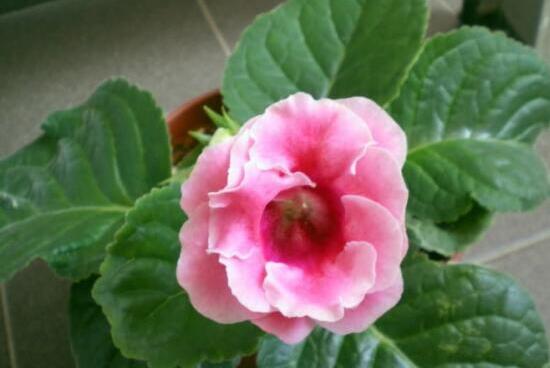
Normally, if you follow the African violet growing methods strictly when caring for it, it will bloom. If it does not bloom, there are generally two reasons: light and fertilizer. If it stays in a dark spot for a long time during growth, the African violet may not bloom; at the same time, blooming consumes a large amount of nutrients, so if too little fertilizer is applied, it can also lead to a failure to bloom.
II. Reasons African violets do not bloom and solutions
1. Insufficient light
When it comes to the reasons African violets do not bloom, light should be considered first. It is understood that although the African violet is fairly shade-tolerant, it needs sufficient light to bloom. Once light is insufficient, it will be difficult for it to bloom.
Solution: Very simple, just supplement its light. Except in summer, at other times it can be placed in a bright spot indoors so it can fully receive light.
2. Too much nitrogen fertilizer
Besides insufficient light, improper fertilization is also a reason African violets do not bloom. During the growing season, we need to give the African violet sufficient nutrients so that it will bloom. But at this time, if too much nitrogen fertilizer is applied, it will cause the African violet's leaves to grow rampant while making blooming very difficult.
Solution: When too much fertilizer has been applied, if you notice it in time, just water the soil to dilute it; if you do not notice in time and root rot appears, you will also need to take the plant out of its pot, then cut off the rotted roots, replace the soil, and replant it.
III. How to grow African violets so they bloom
1. Control light
Now that you know why African violets do not bloom, how should you grow them so they bloom? For this, you need to give them sufficient light. In spring and autumn, needless to say, give them bright, indirect light; in winter, place the plant near a windowsill where it can receive sunlight; in summer, because the light is very strong, you need to provide shade, because it does not need overly strong light.
2. Regulate temperature
If you want African violets to bloom, temperature is also extremely crucial. It is understood that if the ambient temperature can be kept at around 20°C, African violets can bloom in all four seasons. Those with the means can try adjusting the temperature accordingly.
3. Reasonable water and fertilizer
How to grow African violets so they bloom? Besides light, reasonable water and fertilizer are key. Blooming requires the African violet to consume a large amount of nutrients, so during cultivation, appropriate watering and fertilizing are very important. For this, you should master the African violet watering method and the African violet fertilizing method. As long as its growth needs are met, the African violet will bloom.
Why won't African violets bloom
Reasons African violets do not bloom
The effect of light
An African violet not blooming may be due to the effect of light. African violets need sufficient light to bloom. If light is insufficient, it will be difficult for the African violet to bloom.
Too much nitrogen fertilizer
When growing African violets, although appropriate nitrogen fertilizer is needed, during the growing period, if too much nitrogen fertilizer is applied, it will cause the branches and leaves to grow luxuriantly while making blooming very difficult.
How to grow African violets so they bloom more
Control light
When growing African violets, reasonable light can make them bloom better, so light must be controlled. In winter, the African violet's light needs must be met; it can be placed near a windowsill where it can receive sunlight, with bright, indirect light being best. In summer, shade is needed, because it does not need overly strong light.
Reasonable fertilizing
When growing African violets, pay attention to fertilizing and do not apply too much nitrogen fertilizer. Generally, a compound fertilizer with relatively balanced elements such as nitrogen, phosphorus, and potassium should be used, and it is best to follow the principle of applying thin fertilizer frequently so that it blooms more.
Other key points
In addition, when growing African violets, a suitable temperature must be maintained, because temperature is the main factor in whether the African violet blooms. Basically, if the temperature is kept at around 20°C, the African violet can bloom year-round.
Watering is also a point that needs attention. African violets relatively prefer moisture, so during cultivation you should not water until the soil is dry, and when you do water, water thoroughly. This can make them grow better.
When do African violets bloom, and how long is the African violet blooming period? With proper care they bloom in all four seasons
The African violet, also known as the African violet (Saintpaulia), has emerald-green leaves and vivid leaf color. It is a perennial herbaceous plant and is often grown indoors in pots. In daily life, many people grow African violets, and they all look forward to it blooming. So when do African violets bloom? How long is the African violet blooming period? How can African violets bloom in all four seasons? For this, the editor will answer your questions.
I. When do African violets bloom? All four seasons
First of all, African violets can definitely bloom. As for when African violets bloom, the time is actually not fixed, because it is related to the time of cutting propagation. It is understood that the African violet propagation method usually uses leaf cuttings, and depending on the time of leaf cutting, the blooming time also differs, specifically as follows:
Because it takes 4-6 months from cutting to blooming, if cuttings are taken in June-July, they bloom in October-November; if cuttings are taken in September-October, they bloom in March-April of the following year. If propagation does not use cuttings but instead uses sowing, it is usually sown in February and blooms in August-September. So when do African violets bloom? The answer can be said to be that they bloom in all four seasons.
II. How long is the African violet blooming period? 2 months
According to the editor's research, no matter when it blooms, the African violet blooming period is quite long. If you follow the African violet growing methods strictly when caring for it, its blooming time can last as long as 2 months, which is completely enough for everyone to admire it carefully! It is worth mentioning that by controlling temperature, African violets can be made to bloom in all four seasons!
III. How can African violets bloom in all four seasons? Temperature control
Generally speaking, the African violet blooming period can be all four seasons, but this is very difficult to achieve with normal care, so we need to create the conditions. It is understood that as long as you can ensure the environment stays at around 20°C, you can make African violets bloom in all four seasons. Of course, besides temperature, there are several points you need to pay attention to:
1. Light
If you want African violets to bloom in all four seasons, besides temperature, light also needs your attention: give it bright light during the day, with the time controlled at around 8 hours; keep it in complete darkness at night, and it is best to cover it with a large box. Many people only focus on temperature and ignore light, which is unwise.
2. Nutrition
For African violets to bloom, water and nutrients are essential factors. If the soil lacks water and nutrients, it is very difficult for African violets to bloom. For watering, follow the African violet watering method, and it is best to use rainwater, followed by purified water and distilled water; for fertilizing, follow the African violet fertilizing method.