Is Orchid Grass Poisonous? Can Orchid Grass Be Placed in the Bedroom? / Non-toxic / Many Benefits of Growing It Indoors
As a beautiful ornamental plant, orchid grass (Cymbidium) has strong benefits: it not only looks good, but is also edible and has good medicinal uses. With a plant like this, naturally many people want to grow it at home. But no matter what plant it is, when growing it indoors we first need to figure out whether it is poisonous. So, is orchid grass poisonous? Can orchid grass be placed in the bedroom? Let us clear this up for you.
1. Is Orchid Grass Poisonous? Non-toxic
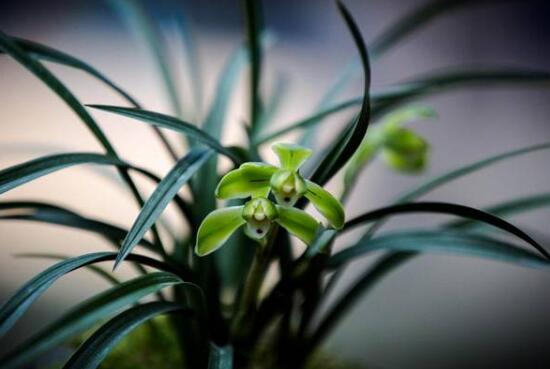
In daily life, many people like orchid grass, not only because it looks good, but also because its fragrance is refreshing. However, some say its fragrance is poisonous. So is orchid grass poisonous? We can tell you clearly: orchid grass is non-toxic! The reason some say it is poisonous is that some people are very sensitive to floral scents and cannot tolerate the fragrance of orchid grass, so they call it poisonous.
2. Can Orchid Grass Be Placed in the Bedroom? Not Recommended
Now that we know orchid grass is non-toxic, many people want to grow it in the bedroom. So can orchid grass be placed in the bedroom? Our answer is that it is not suitable, for the following two reasons:
1. At night, orchid grass carries out respiration, absorbing oxygen and releasing carbon dioxide just like people do. If the bedroom is small and closed off, this creates a situation of competing with people for oxygen, affecting sleep;
2. In a relatively enclosed bedroom, if you smell the rich floral fragrance for a long time, people will show reactions of varying degrees, such as nausea and vomiting. Of course, this does not mean orchid grass is poisonous; it is simply bodily discomfort.
3. Benefits of Growing Orchid Grass Indoors
1. Highly ornamental, pleasing to the eye
Although the bedroom is not suitable for placing orchid grass, the benefits of growing it indoors are still quite obvious, such as its strong ornamental value and how pleasing it is to the eye. As shown in the picture above, orchid grass is 20-40 cm tall, with elegant leaves that stay green all year round, and its flowers are delicately fragrant and naturally graceful, making it extremely pleasing to the eye when grown indoors.
2. Beautifies the home, purifies the mind
The beauty of orchid grass is beyond doubt; as a whole it looks uniquely charming and has the effect of purifying the mind. In addition, in daily life people often display orchid grass as an ornamental plant in the living room, bedroom, study, entrance hall and other places, playing a role in beautifying the home. A monotonous interior becomes more elegant and distinctive with the addition of a pot of orchid grass.
3. Absorbs toxic gases, purifies the air
When it comes to the benefits of growing orchid grass indoors, besides its ornamental value, the greatest benefit is purifying the air. Orchid grass absorbs carbon dioxide, carbon monoxide and other toxic gases and releases the oxygen people need; moreover, when orchid grass blooms, its delicate fragrance can make indoor air even fresher.
4. Calms the mind, cultivates character
Besides the points above, growing orchid grass indoors can also cultivate our character and elevate our temperament. Moreover, growing orchid grass for a long time can also regulate mood, relieve stress and have a calming effect. It can be said that growing orchid grass can keep the environment from being too dull, which helps prolong the life of the grower.
Overall, if the bedroom is large or well ventilated, growing a pot of orchid grass is very good; but if the bedroom is not large, we suggest you not grow it there, and if you do, it should be moved out of the bedroom at night. That is all on whether orchid grass is poisonous. If you are tempted, why not try growing a pot? If you do not know how to grow it, you can also look at the methods for growing orchid grass. We hope this helps.
Home Feng Shui Plant Placement
In home spaces, many people place plants to decorate the space, but little do they know that both the choice of plants and their placement require careful consideration. How much do you know about home plant feng shui placement? Below, a feng shui master will explain the placement of feng shui plants for you!In home spaces, many people place plants to decorate the space, but little do they know that both the choice of plants and their placement require careful consideration. How much do you know about home plant feng shui placement? Below, a feng shui master will explain the placement of feng shui plants for you!
1. Plants and Human Health
Plants are living things, and the life fields and properties of hundreds of plants all differ; broadly they fall into two categories: toxic and non-toxic. Non-toxic plants benefit human health, while toxic ones cause mild or severe harm to human health, and this unfavorable factor is the kind of harm our eyes cannot see. So when choosing plants and flowers to grow, we mostly favor plants that are good for health; such as pollution-resistant plants: aloe, citrus, spider plant, chrysanthemum, cactus ball, cactus, agave, snake plant, ivy, golden osmanthus, banana shrub, Aglaia odorata, turmeric, gardenia, bamboo palm, clivia, water lily, lucky bamboo, and the orchid grass family, which benefit home life. For example, placing aloe and parlor palm in a student's bedroom will guide him (her) to study hard, make progress, think sharply, have a strong constitution and a good appetite.
Grow fewer toxic plants; such as: peace lily, crown of thorns, night-blooming jasmine, oleander, Araceae rohdea, lantana, poinsettia, oleander, Daphne, impatiens, Chinese rose, African jasmine, etc.; these plants should not be grown in large numbers.
Because plants themselves all have an energy field and magnetic field, and these energy fields are easily received by the human body. Through the flow of the atmosphere, they convert the energy field and magnetic field into an information energy field that is transmitted and conducted to people; whether their energy is good or bad directly affects people's health.
2. The Five Elements Generation and Overcoming Between People and Plants
Growing flowers at home requires attention to the yin-yang and Five Elements classification of plants. Research and practice on plants and the Five Elements both show that plants can match the Five Elements and obey the laws of the Five Elements, and therefore can correspond to a person's Five Elements. Using the correspondence between people and plants in the Five Elements, one can cultivate the mind and treat many illnesses.
A person's magnetic field information and a plant's magnetic field information can reach a resonance point. Human life is limited by innate factors, that is, the time-space positioning of a person's birth time determines their Five Elements fate; likewise, plants also possess these conditions. The Five Elements of plants and the Five Elements of people are closely linked in generation and overcoming.
For example, if a family has three brothers, then the time-space positioning, direction positioning and birth-order positioning of these three brothers are completely different; even if a certain life palace is the same, the above conditions will not be the same. If a certain person's magnetic field belongs to metal, and the room grows many plants whose magnetic fields belong to fire, then living in this energy field will cause harm to the person's health; leading to poor thinking, unstable low mood, poor spirits, irritability, drowsiness, reduced appetite, meridian pain, restlessness at work and low efficiency. If a certain life magnetic field belongs to wood, living in the magnetic field of water-natured plants and wood-natured plants will be beneficial to health, motivation, ambition, love of learning, politeness and civility; it is pleasing to the eye, regulates the mind and mood, eliminates static electricity, purifies the air, reduces noise, absorbs toxins, and elevates life and spirit.
Therefore the magnetic field of home-grown flowers should generate and support a person's magnetic field, and should not overcome it. If the home has a sense of stagnation or poor flow of qi, plants can also play a softening and activating function, prompting areas lacking energy to become full of vitality and come alive. So plants are also a kind of vigorous, uplifting energy.
Plants are divided by yin-yang and the Five Elements, and possess the natural laws of generation and overcoming and the principles of yin and yang;
Plants whose Five Elements belong to metal, such as: orange, spider plant, orange jasmine, Daphne, narcissus, silver osmanthus, white lilac, Yutangchun (Edgworthia chrysantha), night-blooming jasmine, Michelia chapensis.
Plants whose Five Elements belong to wood: Norfolk Island pine, orchid grass, cedar, cinnamon, pine and cypress, lucky bamboo, rubber fig, dragon bone (Euphorbia), lychee, bamboo palm, Japanese cedar, holly, boxwood, longan, cypress, Brazilian iron, cactus.
Plants whose Five Elements belong to water: lotus, water lily, beautiful phoenix palm, three-medicine betel nut, canna, camphor tree, banyan, Fujian tea, Buddhist pine, Hainan rose apple, fishtail palm, clivia, bamboo pine, palmetto, dragon juniper, rohdea, dragon bone, etc.
Plants whose Five Elements belong to fire: red iron, dragon's blood tree, kapok, flame tree, red mulberry, fire pomegranate, plum, peach blossom, red apricot, firethorn, flame tree, red chrysanthemum, wisteria, red flower Bauhinia, hibiscus, bougainvillea, red pear, crape myrtle, red iron, osmanthus, cherry blossom, red maple.
Plants whose Five Elements belong to earth: yellow locust, ironwood, golden shower tree, five-stamen fruit, yellow chrysanthemum, daylily, nandina, Buddha belly bamboo, Aglaia odorata, yellow oleander, dragon-claw locust, yellow jasmine, croton, forsythia, golden heart spider plant, yellow cypress, golden osmanthus, banana shrub, Coptis chinensis, Ashoka tree (Saraca), Scutellaria baicalensis.
Toxic Plants
Botanists have determined that plants to be used with caution include flowers and trees that promote cancer, cause allergies, or are toxic; Araceae dieffenbachia, golden pothos, white candle also called peace lily, butterfly bush, dragon bone, crown of thorns (Euphorbia), oleander, African jasmine, plants of the Strychnos family, Strophanthus, derris, antiaris, yellow azalea, large tea medicine, lacquer tree, datura, Aristolochia.
The yin-yang and Five Elements growth of plants follows fixed laws; for example: the Five Elements magnetic fields of wheat and rice are one yin and one yang, with opposite growth patterns. Wheat's Five Elements magnetic field is yang,
the ears grow upward in a right-handed spiral, growing during the day, and its nature is warm; rice is yin, left-handed, flowers from top to bottom, ears drooping downward, growing at night, and its nature is cold.
Another example:
Mutually overcoming plants: grape and elm, pine (grapes grown under pines bear few fruits, and grown beside elms the fruit tastes sour) overcome each other, rice and bamboo overcome each other, narcissus and lily of the valley overcome each other.
Mutually generating plants: sandalwood and olive generate each other, mung bean and rice generate each other, Microstegium and fir grow mutually.
Between people and plants there also exists the Yijing principle of mutual generation and overcoming. Plants differ in Five Elements, yin-yang and color, and also produce different regulating and treating effects on human health.
Five Elements Plant Placement:
Metal-natured plants: place in the west, suitable for supporting the lungs.
Wood-natured plants: grow in the east, beneficial to the liver.
Fire-natured plants: cultivate in the south, beneficial to heart health.
Earth-natured plants: according to the Later Heaven trigram principles, mostly plant in the center, can nourish the stomach and strengthen the spleen.
Water-natured plants: grow in the north, can tonify the kidneys and treat the intestines.
Sun-loving plants should be placed near windows, while shade-loving plants should be kept in a cool, ventilated place.
Therefore growing plants and flowers at home must be done scientifically; if the commonly grown flower varieties introduced above are placed in improper positions for a long time, they will cause great harm to the human body, leading to some strange and unusual illnesses; bringing unnecessary losses in body, spirit, economy and career to oneself and one's family. As early as 2003, the Chinese Academy of Preventive Medicine pointed out in a research project that 52 species of plants have been found to promote cancer in the human body. Among common plants are: crown of thorns, poinsettia, impatiens, snow-on-the-mountain, red-backed eucalyptus, firethorn spurge, rohdea (Araceae), thorny begonia, dragon bone, croton, etc. These plants have been verified in the formation of esophageal cancer, and their disease-promoting rate in inducing nasopharyngeal cancer is even greater. Home-grown flowers must be kept away from toxic plants.
Friends who like growing potted plants must pay attention to feng shui; good placement can dissolve misfortune and attract blessings for you and your family. We hope everyone will pay attention to this!
[Feng Shui] Bringing Good Luck in 2015: Home Plant Placement to Change Feng Shui
Home plant feng shui placement: in home spaces, many people place plants to decorate the space. But little do they know that both the choice of plants and their placement require careful consideration, let alone the feng shui aspect. Home plant feng shui placement: good-looking plants can add color to the home space, but if the placement is problematic, then it will not do. Home plant feng shui placement: let a feng shui master explain the placement of feng shui plants for you, so that clever placement can dissolve misfortune and attract blessings for your family.Plants and Human Health
Plants are living things, and the life fields and properties of hundreds of plants all differ; broadly they fall into two categories: toxic and non-toxic. Non-toxic plants benefit human health, while toxic ones cause mild or severe harm to human health, and this unfavorable factor is the kind of harm our eyes cannot see. So when choosing plants and flowers to grow, we mostly favor plants that are good for health; such as pollution-resistant plants: aloe, citrus, spider plant, chrysanthemum, cactus ball, cactus, agave, snake plant, ivy, golden osmanthus, banana shrub, Aglaia odorata, turmeric, gardenia, bamboo palm, clivia, water lily, lucky bamboo, and the orchid grass family, which benefit home life. For example, placing aloe and parlor palm in a student's bedroom will guide him (her) to study hard, make progress, think sharply, have a strong constitution and a good appetite.
Grow fewer toxic plants; such as: peace lily, crown of thorns, night-blooming jasmine, oleander, Araceae rohdea, lantana, poinsettia, oleander, Daphne, impatiens, Chinese rose, African jasmine, etc.; these plants should not be grown in large numbers.
Because plants themselves all have an energy field and magnetic field, and these energy fields are easily received by the human body. Through the flow of the atmosphere, they convert the energy field and magnetic field into an information energy field that is transmitted and conducted to people; whether their energy is good or bad directly affects people's health.
The Five Elements Generation and Overcoming Between People and Plants
Growing flowers at home requires attention to the yin-yang and Five Elements classification of plants. Research and practice on plants and the Five Elements both show that plants can match the Five Elements and obey the laws of the Five Elements, and therefore can correspond to a person's Five Elements. Using the correspondence between people and plants in the Five Elements, one can cultivate the mind and treat many illnesses.
A person's magnetic field information and a plant's magnetic field information can reach a resonance point. Human life is limited by innate factors, that is, the time-space positioning of a person's birth time determines their Five Elements fate; likewise, plants also possess these conditions. The Five Elements of plants and the Five Elements of people are closely linked in generation and overcoming.
For example, if a family has three brothers, then the time-space positioning, direction positioning and birth-order positioning of these three brothers are completely different; even if a certain life palace is the same, the above conditions will not be the same. If a certain person's magnetic field belongs to metal, and the room grows many plants whose magnetic fields belong to fire, then living in this energy field will cause harm to the person's health; leading to poor thinking, unstable low mood, poor spirits, irritability, drowsiness, reduced appetite, meridian pain, restlessness at work and low efficiency. If a certain life magnetic field belongs to wood, living in the magnetic field of water-natured plants and wood-natured plants will be beneficial to health, motivation, ambition, love of learning, politeness and civility; it is pleasing to the eye, regulates the mind and mood, eliminates static electricity, purifies the air, reduces noise, absorbs toxins, and elevates life and spirit.
Therefore the magnetic field of home-grown flowers should generate and support a person's magnetic field, and should not overcome it. If the home has a sense of stagnation or poor flow of qi, plants can also play a softening and activating function, prompting areas lacking energy to become full of vitality and come alive. So plants are also a kind of vigorous, uplifting energy. Plants are divided by yin-yang and the Five Elements, and possess the natural laws of generation and overcoming and the principles of yin and yang;
Plants whose Five Elements belong to metal, such as: orange, spider plant, orange jasmine, Daphne, narcissus, silver osmanthus, white lilac, Yutangchun (Edgworthia chrysantha), night-blooming jasmine, Michelia chapensis.
Plants whose Five Elements belong to wood: Norfolk Island pine, orchid grass, cedar, cinnamon, pine and cypress, lucky bamboo, rubber fig, dragon bone (Euphorbia), lychee, bamboo palm, Japanese cedar, holly, boxwood, longan, cypress, Brazilian iron, cactus.
Plants whose Five Elements belong to water: lotus, water lily, beautiful phoenix palm, three-medicine betel nut, canna, camphor tree, banyan, Fujian tea, Buddhist pine, Hainan rose apple, fishtail palm, clivia, bamboo pine, palmetto, dragon juniper, rohdea, dragon bone, etc.
Plants whose Five Elements belong to fire: red iron, dragon's blood tree, kapok, flame tree, red mulberry, fire pomegranate, plum, peach blossom, red apricot, firethorn, flame tree, red chrysanthemum, wisteria, red flower Bauhinia, hibiscus, bougainvillea, red pear, crape myrtle, red iron, osmanthus, cherry blossom, red maple.
Plants whose Five Elements belong to earth: yellow locust, ironwood, golden shower tree, five-stamen fruit, yellow chrysanthemum, daylily, nandina, Buddha belly bamboo, Aglaia odorata, yellow oleander, dragon-claw locust, yellow jasmine, croton, forsythia, golden heart spider plant, yellow cypress, golden osmanthus, banana shrub, Coptis chinensis, Ashoka tree (Saraca), Scutellaria baicalensis.
Toxic Plants
Botanists have determined that plants to be used with caution include flowers and trees that promote cancer, cause allergies, or are toxic; Araceae dieffenbachia, golden pothos, white candle also called peace lily, butterfly bush, dragon bone, crown of thorns (Euphorbia), oleander, African jasmine, plants of the Strychnos family, Strophanthus, derris, antiaris, yellow azalea, large tea medicine, lacquer tree, datura, Aristolochia.
The yin-yang and Five Elements growth of plants follows fixed laws; for example: the Five Elements magnetic fields of wheat and rice are one yin and one yang, with opposite growth patterns. Wheat's Five Elements magnetic field is yang,
the ears grow upward in a right-handed spiral, growing during the day, and its nature is warm; rice is yin, left-handed, flowers from top to bottom, ears drooping downward, growing at night, and its nature is cold.
Another example:
Mutually overcoming plants: grape and elm, pine (grapes grown under pines bear few fruits, and grown beside elms the fruit tastes sour) overcome each other, rice and bamboo overcome each other, narcissus and lily of the valley overcome each other.
Mutually generating plants: sandalwood and olive generate each other, mung bean and rice generate each other, Microstegium and fir grow mutually.
Between people and plants there also exists the Yijing principle of mutual generation and overcoming. Plants differ in Five Elements, yin-yang and color, and also produce different regulating and treating effects on human health.
Five Elements Plant Placement:
Metal-natured plants: place in the west, suitable for supporting the lungs.
Wood-natured plants: grow in the east, beneficial to the liver.
Fire-natured plants: cultivate in the south, beneficial to heart health.
Earth-natured plants: according to the Later Heaven trigram principles, mostly plant in the center, can nourish the stomach and strengthen the spleen.
Water-natured plants: grow in the north, can tonify the kidneys and treat the intestines.
Sun-loving plants should be placed near windows, while shade-loving plants should be kept in a cool, ventilated place.
Therefore growing plants and flowers at home must be done scientifically; if the commonly grown flower varieties introduced above are placed in improper positions for a long time, they will cause great harm to the human body, leading to some strange and unusual illnesses; bringing unnecessary losses in body, spirit, economy and career to oneself and one's family. As early as 2003, the Chinese Academy of Preventive Medicine pointed out in a research project that 52 species of plants have been found to promote cancer in the human body. Among common plants are: crown of thorns, poinsettia, impatiens, snow-on-the-mountain, red-backed eucalyptus, firethorn spurge, rohdea (Araceae), thorny begonia, dragon bone, croton, etc. These plants have been verified in the formation of esophageal cancer, and their disease-promoting rate in inducing nasopharyngeal cancer is even greater. Home-grown flowers must be kept away from toxic plants.