What to Do When Pothos and Spider Plants Get Pests? 2 Pests and 3 Diseases Control Methods
As a plant that combines ornamental value and air purification, pothos and spider plants are kept in many flower lovers' homes. However, many people grow them and many are beginners, and because they often do not follow the proper cultivation methods for pothos and spider plants, the plants frequently get pests and diseases, which affects their ornamental value. So what should you do when pothos and spider plants get pests? Let's take a look together at the pest and disease control for pothos and spider plants.
I. When pothos and spider plants get pests, find the right pesticide and spray
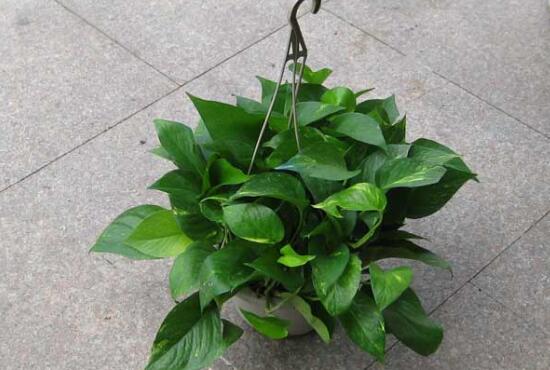
Generally speaking, pothos and spider plants have strong adaptability and rarely suffer from pests and diseases, but when growth is poor or care is inadequate, they can also be attacked by pests and diseases. As for what to do when pothos and spider plants get pests, it is actually very simple: identify the pest, then spray with pesticide. The following are 4 common pests and diseases of pothos and spider plants; let's take a look at the control methods.
II. Pest and disease control for pothos and spider plants
1. Aphids
One of the main pests of pothos and spider plants. It mainly harms leaves and buds, sucking large amounts of sap and causing poor plant growth. Because aphids reproduce in large numbers, they are usually discovered in dense clusters, which is not only frightening but also very disgusting.
Control method: If a small number of aphids are found, you can apply plant ash to the leaf surface and rinse it off to remove them; when there are many aphids, spray 40% omethoate emulsifiable concentrate at 1000 times dilution, or 50% fenitrothion emulsifiable concentrate at 1000 times dilution for control, and the effect is quite good~
2. Scale insects
Once you find pests on pothos and spider plants, you can consider scale insects. This pest easily breaks out in poorly ventilated environments. It attaches to leaves and makes them lose their luster. Symptoms of infestation: pothos and spider plant leaves turn yellow, and in severe cases the plant will die.
Control method: If there are relatively few scale insects, use medicinal cotton dipped in 75% alcohol to wipe off the live insects, or dip it in laundry detergent solution to wipe off the insects; when there are many pests, immediately spray dichlorvos at 1000-15000 times dilution, or 50% malathion emulsion at 1000 times dilution for control.
3. Root rot
During cultivation, pothos and spider plants often suffer from root rot, which mainly harms the roots of pothos and spider plants. Symptoms: roots rot, leaves turn yellow and fall off, until death.
Control method: When the above symptoms are found, spray 50% carbendazim wettable powder at 500 times dilution, or directly drench the roots with it; in severe cases, pull out the pothos and spider plant, remove the rotten root parts, change the soil and pot, and replant.
4. Anthracnose
Anthracnose is also a disease very easily triggered when cultivating pothos and spider plants, and it mainly harms the leaves. Symptoms: diseased leaves first show several light yellow, dark brown, or light gray small areas, with many black spots inside. As time goes on, it will infect the stems and branches, seriously affecting plant growth.
Control method: Cut off diseased leaves and burn them centrally to reduce the source of disease; in severe cases, spray 50% carbendazim at 1000 times dilution or 70% thiophanate-methyl at 1000 times dilution for antisepsis, and it takes effect after 2-3 applications.
5. Leaf spot disease
When indoor temperatures fluctuate greatly in a short period, or when too much water is given during the dormant period, pothos and spider plants are prone to leaf spot disease. Symptoms: in the early stage of the disease, many small brown spots appear on the leaves, and in severe cases the spots cover the entire leaf.
Control method: Promptly remove diseased leaves and destroy them centrally to reduce the source of disease; during the disease period, spray 65% zineb at 500 times dilution or 25% myclobutanil emulsifiable concentrate at 800 times dilution for control. Spray 1-2 times every 10-15 days, and it takes effect.
What to Do When Variegated Spider Plants Get Pests? Pest and Disease Control for Variegated Spider Plants / 3 Pests and 2 Diseases
As a type of spider plant, the variegated spider plant inherits many advantages from its ancestors. It not only has strong adaptability and grows well, but can also absorb formaldehyde, and these are the reasons flower lovers keep it at home. However, when grown indoors, due to various reasons, the plant will inevitably get pests and diseases. So what should you do when variegated spider plants get pests? The following are several pest and disease control methods for variegated spider plants. Follow along with us to learn more.
I. When variegated spider plants get pests, spray with pesticide
Although variegated spider plants are not prone to pests and diseases, if you do not care for them according to the cultivation methods for variegated spider plants, once water accumulates in the pot soil and ventilation is poor, pests and diseases will also be attracted. As for what to do when variegated spider plants get pests, it is actually very simple: identify the pest, then spray the corresponding pesticide to solve it. For specific symptoms and control methods, let's continue reading below.
II. Pest and disease control for variegated spider plants
1. Aphids
When it comes to pests on variegated spider plants, more than 80% of the time it is aphids. They mainly harm leaves and buds, sucking large amounts of sap and causing poor plant growth. Because aphids reproduce in large numbers, they are usually found in dense clusters, which is not only frightening but also very disgusting.
Control method: If a small number of aphids are found, manual aphid control can be used, brushing the aphids off with a writing brush or small brush and burying them in the pot soil. When there are many aphids, use 40% phosmet diluted to a 1000 times solution and spray, generally once every 7-10 days, and continuous spraying 2-3 times can eliminate the damage.
Other control methods: 1. Take 50 grams of fresh chili peppers or dried red chili peppers, add 30 to 50 grams of water, boil for about half an hour, and spray the filtrate on the parts infested by aphids; 2. Take 3-4 grams of laundry detergent, add 100 grams of water, stir into a solution, and spray continuously 2 to 3 times. The effect on controlling aphids is excellent.
2. Scale insects
When variegated spider plant clumps are dense and ventilation is poor, they are prone to damage by scale insects. They attach to leaves and make them lose their luster. Symptoms of infestation: the leaf tips of variegated spider plants dry up, and in severe cases the plant will die.
Control method: First move the plant to a ventilated place, then observe the condition. If there are relatively few scale insects, dip laundry detergent solution to wipe off the insects; when there are many pests, you can spray 40% omethoate diluted to a 1000 times solution, or use 50% malathion diluted to a 1500 times solution for spray control.
3. Red spider mites
Besides aphids and scale insects, red spider mites are also one of the pests and diseases of variegated spider plants, mainly harming the leaves. After infestation by red spider mites, the diseased leaves of variegated spider plants initially show small yellow-white spots, gradually turn red, then spread to the whole leaf, and even cause leaf curling, yellowing, and falling off.
Control method: After discovering red spider mites, spray 40% dicofol emulsifiable concentrate at 1500-2000 times dilution for control, once every 7 days, 2-3 sprays are enough, and the effect is good.
4. Root rot
During cultivation, because of water accumulation in the pot soil and poor ventilation, variegated spider plants will rot at the roots, causing the plant to suffer from root rot. Symptoms: roots rot, leaves turn yellow and fall off, until death.
Control method: When the above symptoms are found, spray 50% carbendazim wettable powder at 500 times dilution, or directly drench the roots with it, once a week; in severe cases, pull out the variegated spider plant, remove the rotten root parts, change the soil and pot, and replant.
5. Anthracnose
One of the common diseases of variegated spider plants, mainly occurring under conditions of high humidity and stuffiness, water accumulation in the pot, overly dense clumps, and poor ventilation. The affected part is the leaves. Symptoms: diseased leaves show yellow-brown and sunken small spots, which then expand into dark brown round spots, the leaf tips dry up, and then the whole plant dies.
Control method: Cut off diseased leaves and burn them centrally to reduce the source of disease; in severe cases, spray 50% carbendazim at 1000 times dilution or 70% thiophanate-methyl at 1000 times dilution for antisepsis, and it takes effect after 2-3 applications.
What to Do When Aptenia Gets Pests? Pest and Disease Control for Aptenia / 3 Pests and 2 Diseases
As a common indoor potted plant, aptenia has strong benefits. It is not only good-looking, but also not prone to pests and diseases, and even has good edible value. However, when grown indoors, due to certain reasons, aptenia will still inevitably contract diseases and be disturbed by insects. So what should you do when aptenia gets pests? The following are 5 pest and disease control methods for aptenia. Let's take a look together.
I. When aptenia gets pests, spray with pesticide
The cultivation method for aptenia is not difficult. You only need to pay a little attention to water and fertilizer and give it sufficient light, and it will grow very well. But during cultivation, because of water accumulation in the pot soil, poor ventilation, and other situations, it will attract pests and diseases. As for what to do when aptenia gets pests, it is actually very simple: identify the pest, then spray the corresponding pesticide to solve it.
II. Pest and disease control for aptenia
1. Aphids
The most common pest of indoor potted plants, it also harms the health of aptenia. This pest mainly harms leaves and buds, sucking large amounts of sap and causing poor plant growth. Because aphids reproduce in large numbers, they are usually found in dense clusters, which is not only frightening but also very disgusting.
Control method: After discovering aphids, if there are very few, manual aphid control can be used, brushing the aphids off with a writing brush or small brush and burying them in the pot soil; if there are many aphids, it is necessary to spray relevant pesticides, such as 40% omethoate at 1000 times dilution or 50% dichlorvos at 1000 times dilution, spraying once every 7—10 days, and continuous spraying 2—3 times takes effect.
2. Scale insects
Besides aphids, when clumps are dense and ventilation is poor, aptenia is also easily attacked by scale insects. This pest attaches to leaves and makes them lose their luster, causing aptenia leaves to turn yellow, and in severe cases the entire plant will die.
Control method: Move the plant to a ventilated place and cut off diseased leaves to reduce the source of insects; then spray 40% omethoate diluted to a 1000 times solution or 50% malathion diluted to a 1500 times solution for control.
3. Red spider mites
In addition, red spider mites are also one of the pests and diseases of aptenia. Although they are rarely seen, once they appear the harm is great. It is understood that this pest mainly harms the leaves, causing small yellow-white spots on aptenia leaves, which then gradually turn red and spread to the whole leaf, and even cause leaf curling, yellowing, and falling off.
Control method: After discovering red spider mites, spray 40% dicofol emulsifiable concentrate at 1500-2000 times dilution for control, once every 7 days, 2-3 sprays are enough, and the effect is good.
4. Root rot
When it comes to the pests and diseases of aptenia, the most common is still root rot, mainly caused by water accumulation in the pot soil and poor ventilation. Symptoms: roots rot, leaves turn yellow and fall off, until death.
Control method: When the above symptoms are found, spray 50% carbendazim wettable powder at 500 times dilution, or directly drench the roots with it, once a week; in severe cases, pull out the aptenia, remove the rotten root parts, change the soil and pot, and replant.
5. Leaf blight
Under conditions of relatively high environmental temperature, relatively high humidity, and poor ventilation, aptenia can also suffer from leaf blight. Symptoms: aptenia leaves first turn yellow, then become brown diseased spots, and finally spread to the entire plant.
Control method: When the above symptoms are found, spray 70% zineb diluted to a 600 times solution for control, once every 15-20 days, and 2-3 times takes effect.
In general, during the process of cultivating aptenia, as long as you place it in a ventilated place and pay attention not to water it too much, it will not attract pests and diseases. Of course, if you find that aptenia has pests or diseases, do not be afraid; just solve it according to the control methods above. That is all we have to introduce about pest and disease control for aptenia, and we hope it can help everyone.