What to do when Caladium gets pests? 2 Pest and 2 Disease Control Methods
When growing Caladium, the last thing we want to encounter is pests and diseases. These problems are extremely harmful to Caladium, not only affecting its appearance but, in severe cases, causing it to wither and die. So what should you do when Caladium gets pests? How should pest and disease control for Caladium be done? Let's take a look below.
I. What to do when Caladium gets pests: find the cause
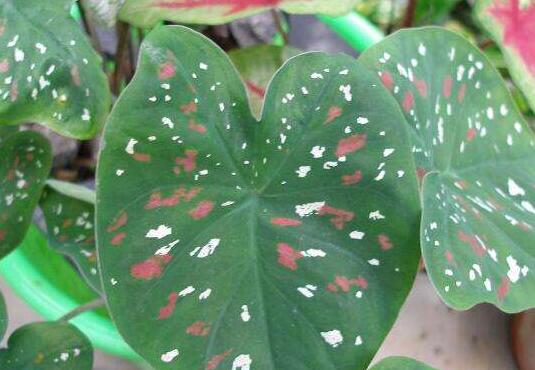
To know what to do when Caladium gets pests, we first need to know what kind of pest it is, so we can deal with it in a targeted way, because the control methods for each pest and disease are different. The details are described below in the Caladium pest and disease control section. Let's take a look.
II. Pest and disease control for Caladium (pests)
1. Aphids
Aphids are a type of phytophagous insect that mainly suck the sap from Caladium leaves, causing the leaves to gradually lose their green color. In severe cases, the leaves will continuously shrivel and drop off, and it will also affect flowering.
Control method: When controlling aphids, we can use a 1500-2000 times dilution of 40% imidacloprid water-soluble concentrate to spray and kill them. Generally, 2-3 consecutive sprays can completely eliminate this pest.
2. Red spider mites
Among the pests and diseases of Caladium, red spider mites are a relatively common one. Their peak period is every summer, so everyone must pay special attention at this time. When this pest appears, the plant's leaves will gradually turn yellow and white. If left untreated for a long time, it will also cause the plant to wither.
Control method: When controlling red spider mites, we can use a 1000 times dilution of 10% fenbutatin oxide and pyridaben emulsifiable concentrate to spray and kill them directly.
III. Pest and disease control for Caladium (diseases)
1. Leaf spot disease
Leaf spot disease is a disease caused by fungi. Its peak period is every spring and autumn. Leaf spot disease mainly harms the leaves of Caladium. When it occurs, many round lesions appear on the leaves, and the lesions gradually expand and become irregular in shape, eventually causing the plant to gradually wither and die.
Control method: When controlling leaf spot disease, we can use a 700 times dilution of 50% thiophanate-methyl wettable powder spray to apply to Caladium. Generally, spray once every 7-10 days, and it can be cured after 2-3 times.
2. Dry rot
Dry rot, also known as wilt disease, is a fungal disease. This disease is harmful to the entire Caladium plant. When it occurs, many water-soaked dark lesions appear on the affected parts. As time goes on, the lesions gradually expand into irregular shapes, ultimately causing the plant to gradually shrivel and rot.
Control method: When controlling dry rot, we can directly use a 500 times dilution of 50% carbendazim to soak or dust the diseased plants. Generally, apply once every 12-15 days, and it can be cured after 1-2 times.
Pest and disease control for Caladium (Caladium bicolor)
Caladium, also known as Caladium bicolor, is an indoor foliage plant of the genus Caladium in the Araceae family. Its leaf colors are brilliant and eye-catching, forming a beautiful natural pattern in summer and autumn, and it is a top-grade foliage plant. Caladium is native to tropical regions such as Brazil, Thailand, and Guinea, and was cultivated earlier in Europe. In the 1970s, new Caladium cultivars kept emerging. According to incomplete statistics, there are currently close to 400 cultivated varieties of Caladium, making it one of the important foliage plants in European and American countries.
Disease control: Tubers are prone to dry rot during storage, which can be controlled by soaking or dusting with a 500 times dilution of 50% carbendazim. If leaf spot disease occurs during the growing period, use a 700 times dilution of 50% thiophanate-methyl wettable powder spray for control.
Notes on growing Caladium
Guard against pests and diseases
Pests and diseases are rare, but care should be taken to protect the tubers. Tubers are prone to dry rot during storage. Once discovered, spray carbendazim promptly. Leaf spot disease is prone to occur during the growing period, so prevention should be the main approach. Spray fungicide every month to protect the healthy growth of the plant.
Protect the tubers
April to August is the peak growing season for Caladium, and at this time sufficient nutrients should be ensured. After September, the leaves will gradually wither, so watering should be reduced and fertilizing stopped, allowing the tubers to safely overwinter in the soil. Wait until the next spring when it warms up and flowers bloom for growth to continue.