What to do when the kapok tree gets pests? I'll teach you the pesticide methods for controlling 2 pests and 2 diseases
The kapok tree, also called the hero flower, has large red blossoms and is incomparably beautiful, making it deeply loved by flower enthusiasts. In daily life, because of its beauty and also because of the benefits of the kapok tree, many people want to grow it. However, during the cultivation process, for certain reasons, the kapok tree can suffer from pest and disease damage, so what should be done when the kapok tree gets pests? Now let's take a look together at the pest and disease control for the kapok tree.
I. When the kapok tree gets pests, find the right pesticide and spray
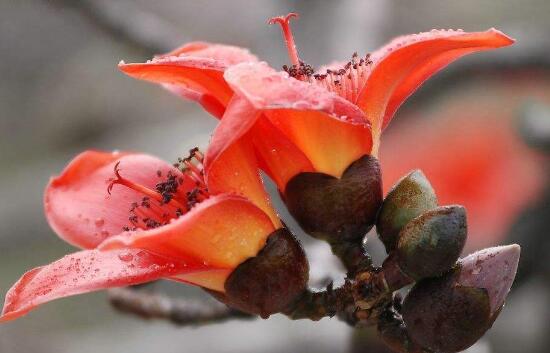
Through the cultivation methods of the kapok tree, we know that it likes high temperatures and dry conditions, and is a plant with very strong adaptability. Generally speaking, the kapok tree rarely suffers from pests and diseases, but they can still appear when growth is poor or care is inadequate. As for what to do when the kapok tree gets pests, it is very simple: identify the pest, then spray with pesticide. Below are 4 common pests and diseases of the kapok tree; let's take a look at the control methods.
II. Pest and disease control for the kapok tree
1. Cotton leaf roller
Because the kapok tree rarely gets pests or diseases, when pests do come calling, flower enthusiasts are very anxious. At this point, you can get to know the cotton leaf roller, because once the kapok tree gets pests, it is highly likely to be this insect. Its larva is green with a glossy sheen, about 25 mm long; the adult is pale yellow, with 12 brown-black small spots on the back of the head and thorax arranged in 4 rows.
Control method: After confirming this pest, first manually cut off the tubular leaves of the cotton leaf roller and eliminate the larvae to reduce damage in the next generation. Then, when the infestation is severe, promptly spray 20% taoxiaoling emulsifiable concentrate or 20% jusha emulsifiable concentrate at 2000 times dilution for control.
2. Cotton green leafhopper
Besides the cotton leaf roller, another major pest of the kapok tree is the cotton green leafhopper. This pest uses adults and nymphs to pierce and suck the sap of tender shoots of the kapok tree and other plants, causing the kapok tree's leaves to become distorted, affecting growth and even causing leaves to wither and fall off.
Control method: Detect the cotton green leafhopper promptly, then spray 40% omethoate, 50% fenitrothion, 50% phoxim, or 80% dichlorvos emulsifiable concentrate at 1000-1500 times dilution for control. Spraying once more after 7 days gives better results. In addition, clear weeds and fallen leaves in winter and spring, and if necessary spray the ground once to reduce the source of the pest.
3. Kapok anthracnose
Anthracnose is one of the main diseases of the kapok tree, and it mainly harms the leaves. Symptoms: lesions appear at the leaf tips and leaf margins of diseased leaves; the lesions are nearly round, semicircular, or irregular in shape, and range from tea-brown to black; as time passes, it will infect the stems and branches, seriously affecting the plant's growth.
Control method: Cut off diseased leaves and burn them in a centralized manner to reduce the source of the disease; when severe, spray 50% carbendazim at 1000 times dilution or 70% thiophanate-methyl at 1000 times dilution for control, spraying continuously and alternately 3-4 times depending on the weather and disease condition, once every 7-15 days.
4. Kapok leaf spot disease
If the kapok tree is not suffering from anthracnose, then you can directly determine that it is leaf spot disease. This disease generally causes more serious damage to seedlings 1-3 years old. Symptoms: in the early stage, small brown spots appear on the leaves, gradually expanding into round, nearly round, or mutually connected irregular lesions; when severe, it can also cause leaf perforation and early leaf drop.
Control method: After confirming it is leaf spot disease, spray 1% Bordeaux mixture or 0.5% zineb, or 0.01-0.05% benlate solution for control, with good results. In addition, during the disease period, applying more phosphorus fertilizer can improve the plant's disease resistance.
What to do when the lantern flower gets pests? Pest and disease control for the lantern flower / 3 pests and 2 diseases treated by spraying pesticide
As a common and beautiful flower, the lantern flower has strong benefits; its flowers look like lanterns, and not only are they good-looking, but medicinally they can also treat kidney deficiency! Such a plant naturally attracts people's affection, but if it suffers from pests and diseases, the beauty of the lantern flower will be gone forever, and at that time flower enthusiasts will surely be very anxious! So, what should be done when the lantern flower gets pests? Below are 5 pest and disease control methods for the lantern flower; let's take a look together!
I. When the lantern flower gets pests, spray pesticide
Among indoor potted plants, the cultivation method of the lantern flower is not difficult, but no matter how easy a plant is to grow, if it is not cared for or is cared for blindly, problems will still arise, such as getting pests and diseases, which seriously affect the plant's ornamental value. So what should be done when the lantern flower gets pests? Actually it is very simple: find out exactly which pest it is, then solve it by spraying pesticide. Let's continue reading for the specifics.
II. Pest and disease control for the lantern flower
1. Aphids
One of the most common pests of flowers, it also harms the health of the lantern flower. Aphids mainly harm the tender leaves and stems of the lantern flower, parasitizing on the leaves and sucking sap. Once aphids appear, they are densely packed and look very frightening, so protection must be timely.
Control method: When only a few aphids are found, you can remove them manually, using tools such as a brush to brush the insects off; when there are many aphids, use 2.5% rotenone emulsifiable concentrate at 1200 times dilution to spray and kill them. After spraying continuously several times, the effect is excellent.
2. Red spider mites
One of the main pests of the lantern flower, it mainly harms the underside of leaves, surviving by sucking the sap of the lantern flower's leaves. Symptoms of damage: the plant will become nutritionally imbalanced, and may show symptoms such as yellowing lantern flower leaves and lantern flower leaf drop.
Control method: After discovering red spider mites, rinse the whole plant thoroughly with a large amount of water, then spray 20% dicofol emulsifiable concentrate at 2000 times dilution; several consecutive applications will show results. If you have no pesticide, you can also use chili water or tobacco water spraying and other methods to repel the insects.
3. Whiteflies
If the lantern flower gets pests and you rule out aphids and red spider mites, then it is basically whiteflies. This pest sucks the sap of the leaf tissue, mainly harming the tender leaves of the lantern flower, causing the leaves to curl and dry up.
Control method: After discovering whiteflies, promptly spray 25% buprofezin wettable powder at 1500-2000 times dilution for control, and spray once more after 15 days; the plant will basically recover its health.
4. Gray mold
Besides getting pests, under improper care the lantern flower can also get diseases, and one of the most common diseases is gray mold. This disease often occurs when the temperature is relatively high and the humidity is also relatively high, and its scope of damage is relatively broad; the leaves, flowers, and stems of the lantern flower can all be harmed.
Control method: Clean up the parts that have already been affected by the disease to reduce the source of the disease; then spray metalaxyl for control, once every 5 days, with 2 consecutive applications, which can effectively control the condition; generally after 7—10 days it no longer shows harmful symptoms.
5. Root rot
When watered too much, or when drainage is not timely during the rainy season, the lantern flower is prone to root rot. Symptoms: in the early stage, rot occurs at the roots of the lantern flower; in the later stage, because it cannot absorb water and nutrients, the entire plant may die.
Control method: When the above symptoms are found, if the condition is mild, spray 500 times diluted zineb solution; if the rot is severe, just throw it away.
On the pest and disease control of the lantern flower, that is all from me. I believe everyone will know what to do when encountering pests or diseases again! Overall, the lantern flower is still quite easy to grow, but if you are not careful it can also be troubled by pests and diseases, so everyone must take care in cultivation; only then will pests not come calling. Finally, may everyone's lantern flowers bloom into beautiful flowers!
What to do when the sago palm gets pests? Pest and disease control for the sago palm / 2 pests and 2 diseases treated by spraying pesticide
The sago palm is toxic, and I believe many flower enthusiasts know this, but even so, people still keep it at home, because the sago palm is truly very beautiful. However, during the cultivation process, due to negligence, the sago palm can also get pests and diseases, which will damage its ornamental value. So what should be done when the sago palm gets pests? Below are 4 pest and disease control methods for the sago palm; follow me and take a look!
I. When the sago palm gets pests, spray pesticide
During the cultivation of the sago palm, due to factors such as high temperature, dryness, poor ventilation, and high air humidity, the plant can get pests and diseases. The main pests include scale insects and lycaenid butterflies, and the main diseases include white spot disease and sooty mold. Once pests and diseases occur, they will affect the growth of the sago palm, so as soon as they are discovered, everyone should immediately spray pesticide for control. For specifics, you can refer to the pest and disease control for the sago palm.
II. Pest and disease control for the sago palm
1. Scale insects
The sago palm has strong adaptability and generally rarely suffers from pests and diseases, but under high temperature, dryness, and poor ventilation, its leaves are also easily harmed by scale insects. This pest uses its piercing-sucking mouthparts to suck sap from the leaves and small branches, causing the sago palm's leaves to turn yellow, and in severe cases causing branches or leaves to wither and die.
Control method: When there are few scale insects, you can brush them off with a brush, then rinse clean with water; when there are many scale insects, promptly spray 50% omethoate emulsion or 50% monocrotophos, which has a special effect on scale insects; generally one application can achieve the control effect.
2. Lycaenid butterflies
Besides scale insects, lycaenid butterflies are also one of the main pests of the sago palm, generally appearing from May to November. This pest mainly bites and eats the tender leaves of the sago palm, causing the plant to fail to produce new leaves all year round and lose its ornamental value.
Control method: Knowing the habits of this pest, flower enthusiasts can start from June, observing every day, and after discovering lycaenid butterflies, promptly spray pesticide for control. Options include 21% miehsaibi emulsifiable concentrate at 1000-1500 times dilution, 20% jusha emulsifiable concentrate at 800-1000 times dilution, 5% laifuling at 2500-3000 times dilution, etc.
3. Sooty mold
Sooty mold, also known as black mold disease or soot disease, is one of the main diseases of the sago palm. This disease mainly harms the leaves, and a black mold layer forms on the surface of the affected parts, looking like a layer of soot. This will seriously hinder the photosynthesis of the sago palm, weaken its growth vigor, and in severe cases cause branches and leaves to wither and die.
Control method: When the above symptoms are found, you can manually wipe and wash them, or spray bijunsha at 800-1000 times dilution, 70% thiophanate-methyl, and other pesticides for control.
4. White spot disease
Under high temperature and high air humidity, besides sooty mold, the sago palm is also prone to white spot disease. This disease mainly harms the leaves of the sago palm, causing irregular lesions to appear on diseased leaves; in the later stage the lesions gradually expand, and purple-red or reddish-brown spots can be seen on both the front and back sides.
Control method: After autumn, thoroughly cut off diseased leaves and burn them in a centralized manner to reduce the source of the disease; in the early stage of the disease, you can use carbendazim 50% wettable powder or thiophanate-methyl 70% wettable powder diluted with water 1000 times, and spray the diseased plants in the early morning.
On the pest and disease control of the sago palm, that is all from me. I believe everyone will know what to do when encountering pests or diseases on the sago palm again! Overall, as long as you cultivate it according to the sago palm's cultivation methods, it generally will not suffer from pests and diseases. Of course, if the sago palm does get pests or diseases, do not be afraid; just solve it according to the methods above. Finally, may everyone's sago palms all grow beautifully~