Philodendron 'Golden Diamond' pest and disease control methods: two insect pests and two diseases that should be prevented and treated early
Philodendron 'Golden Diamond' is often kept indoors as an ornamental plant, and it can also absorb toxic substances, so sometimes the environment where it is kept is relatively enclosed and lacks light, which easily leads to the appearance of some pests and diseases. These affect its beauty and health and need timely prevention and control. Below are several common methods for preventing and controlling pests and diseases of Philodendron 'Golden Diamond'.
Pest and disease control of Philodendron 'Golden Diamond'
1. Red spider mite
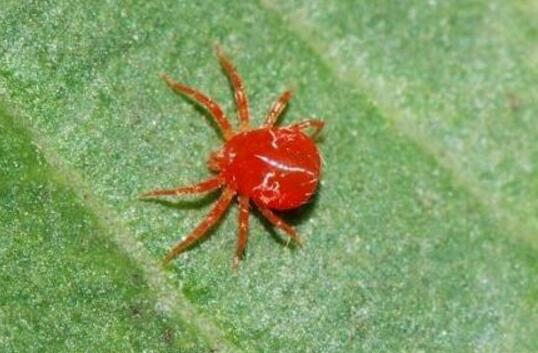
Also known as the leaf mite, it is one of the main pests harming Philodendron 'Golden Diamond'. It feeds on the leaves of the plant and has an extremely strong reproductive capacity. If not removed in time, most of the leaves will become dull and lusterless because their sap is sucked out, losing their original metallic sheen.
2. Aphids
They appear in warm climates and also spread through wind and rain. Although small in body size, they are extremely harmful, and in the pest and disease control of Philodendron 'Golden Diamond', they are one of the most common pests. Like red spider mites, they suck the sap of the plant, causing weakened growth and damaged leaves.
Control measures:
(1) When a small number of red spider mites or aphids appear, they can be gently scraped off with a toothbrush, then rinsed with water, and the diseased and withered leaves removed. Usually pay attention to the cultivation methods of Philodendron 'Golden Diamond', strengthen environmental ventilation and spray water frequently to avoid the air being too dry.
(2) If a large number of pests appear on the plant, chemicals need to be used for control. Generally, a 1000-fold dilution of 40% omethoate emulsifiable concentrate is sprayed on the leaf surface. In addition, light should be appropriately increased to reduce insect eggs overwintering in the soil.
Common diseases
1. Leaf spot disease
Leaf spot disease is a disease that can occur in many plants, such as clivia, fishtail palm, cockscomb, and so on, and it can also occur in Philodendron 'Golden Diamond'. The cause is usually too dense branches and leaves with poor light penetration, along with relatively high humidity.
2. Anthracnose
The leaves of Philodendron 'Golden Diamond' begin to droop, and the color on the leaf surface gradually loses its luster. The lesions are initially irregular in shape, then continuously expand, and the infected leaves gradually increase, ultimately causing the plant to wither and die.
Control methods:
(1) The preventive method is to strengthen daily maintenance and management, ensure that the humidity in the environment where Philodendron 'Golden Diamond' is kept is not too high, then make the environment relatively ventilated, and do not plant too densely. When branches and leaves intertwine, pay attention to pruning to prevent bacteria and fungi from breeding and causing disease.
(2) Remove the diseased leaves, and to prevent fungi remaining on the plant from harming other leaves, spray the plant with chemicals. A commonly used one is an 800-1000-fold dilution of 38% oxadixyl, pyrimethanil and copper fungicide.
(3) If cultivated outdoors, a 300-fold dilution of Trichoderma harzianum can be sprayed on the surface of diseased leaves. Of course, outdoors, attention should also be paid to drainage during the rainy season.
How to grow Philodendron 'Golden Diamond'? Cultivation methods and management points for Philodendron 'Golden Diamond'
Philodendron 'Golden Diamond' is a relatively popular indoor foliage plant in recent years. Placing it indoors is elegant and refined, full of a tropical rainforest atmosphere. Philodendron 'Golden Diamond' has luxuriant plants and large, unusual leaves. The leaf color is emerald green and glossy, and its shade tolerance is relatively strong. It is currently one of the most commonly used indoor foliage plants in homes and public places. It can be potted and placed in spacious places such as living rooms and lobbies, or small plants can be hydroponically grown and placed on desks, windowsills, and other places.
Philodendron 'Golden Diamond' originates from the tropical rainforests of Brazil in South America. It likes a warm, humid, and semi-shaded environment and is not strict about light, but it cannot tolerate long-term shaded conditions, otherwise the leaf color becomes lighter, the petioles lengthen, and the leaves droop, reducing its ornamental value. It also fears direct strong light. After exposure to strong light, the leaves are very prone to dry leaf tips, scorched leaf margins, whitened leaf color, and loss of luster, so it is best to maintain it in semi-shade or diffused light. In winter, it can be cared for with sufficient light so that it overwinters safely.
Philodendron 'Golden Diamond' is a tropical plant and cannot tolerate severe cold or low temperatures. In winter, the temperature is best kept above 10°C to prevent cold damage. The optimum growth temperature is between 18-30°C. When the temperature is higher than 30°C, growth is inhibited, and ventilation and cooling are needed, along with increasing the frequency of water spraying to raise the relative humidity of the air. During normal growth, maintaining humidity at around 50% is enough to meet its needs. When the temperature is higher than 25°C, the air humidity needs to be raised to around 70%. During high-temperature summer periods, it cannot lack water. When the temperature is below 15°C, the frequency of watering needs to be reduced, and the potting soil can alternate between dry and wet. It can tolerate brief waterlogging, but long-term water accumulation easily rots the root system and causes plant death.
In late spring, Philodendron 'Golden Diamond' enters its vigorous growth period and needs supplemental fertilizer mainly based on nitrogen fertilizer to promote rapid growth and restore vitality. Fertilization should follow the principle of light fertilizer applied frequently, and it must not be applied all at once in sufficient amount, which would cause fertilizer damage. If during the growth period a dilute, light fertilizer solution can be used instead of clear water to irrigate the potting soil, growth will be even better. After entering autumn, the amount of nitrogen fertilizer applied should be controlled, otherwise it is unfavorable for overwintering, the petioles will also lengthen, and the plant shape cannot be effectively controlled. When the winter temperature is below 20°C, fertilization should be stopped.
Propagation methods of Philodendron 'Golden Diamond'
Philodendron 'Golden Diamond' is mostly propagated by cuttings, sowing, and division. At home, it is best to use cuttings and division, as the operations are relatively simple. For cutting propagation, May to September is suitable. Cut off a sturdy stem with a relatively long branch, insert it directly into clean river sand, and place it in semi-shade. Maintain relatively high air humidity, with the temperature preferably around 25°C, and roots will form in 20-25 days. Division propagation requires that small plantlets have grown at the base of the old plant. This can be done together with soil and pot changing. Carefully separate the small plantlets from the old plant, trying not to damage the old plant or its roots. You can also pinch off the side shoots in advance, which can both dwarf the plant and produce more side shoots. When the newly grown side shoots are about 15 cm, cut them off with aerial roots and plant them separately.
Common diseases of Philodendron 'Golden Diamond' include leaf spot disease, anthracnose, and so on. They can be controlled with wettable powders such as carbendazim, thiophanate-methyl, and zineb, with obvious effects. If leaves are yellow, withered, or scorched, they need to be pruned in time to reduce nutrient loss. Pests mainly include red spider mites and scale insects, which can be controlled by spraying specific insecticides. In addition, red spider mites can be prevented by increasing air humidity, and scale insects can be prevented by strengthening ventilation.
How to grow Philodendron 'Golden Diamond'? Is it toxic?
Golden Philodendron is a perennial evergreen herbaceous plant with a short stem. Adult plants have aerial roots, and the leaves are oblong and glossy. The apex is pointed, leathery, and green. The leaves are broad, palm-shaped, thick, deeply pinnately lobed, and glossy; the petioles are long and sturdy, and the aerial roots are extremely developed, thick, and hang down in abundance. Arranging it at home is elegant and refined, full of a tropical rainforest atmosphere. It is a very good foliage plant, and it is currently cultivated in many places in China.
Golden Philodendron is a foliage plant and does not bloom. It is cold-tolerant and tolerant of being placed around. The domestically produced Philodendron 'Golden Diamond', which can be used both as a potted plant and for cut leaves, is currently a very popular shade-grown potted foliage plant on the American market. Its leaves are evenly matched, moderately spread, thick and emerald green in texture, with a metallic gloss on the leaf surface. Each leaf lives as long as 30 months.
..........
Propagation of Philodendron 'Golden Diamond'
Golden Philodendron is mostly propagated by cuttings, sowing, and division. At home, it is best to use cuttings and division. For cuttings, May to September is suitable. Cut off a sturdy stem with a relatively long branch, insert it directly into clean river sand, place it in semi-shade, maintain relatively high air humidity, and keep the temperature at around 25°C. Roots will form in 20-25 days.
Division propagation requires that small plantlets have grown at the base of the old plant. Do it together with soil and pot changing. Carefully separate the small plantlets from the old plant, trying as much as possible not to damage the old plant or its roots. You can also pinch off the side shoots in advance, which can both dwarf the plant and produce more side shoots. When the newly grown side shoots are about 15 cm, cut them off with aerial roots and plant them separately.
.....
.....
Key care points for Philodendron 'Golden Diamond'
During the cultivation of Golden Philodendron, attention should be paid to care. The temperature needs to be kept at around 20°C and cannot be lower than 10°C. Air humidity can often be increased by spraying and sprinkling water. It likes light but avoids direct strong light, so semi-shade or diffused light is best. It should not be placed in a shaded environment for a long time, otherwise the leaves very easily turn yellow. For watering, it is best when the surface of the potting soil is dry. In high-temperature summer, it can be kept moist. In winter, if the temperature is below 15°C, watering should alternate between dry and wet. Fertilization should be light fertilizer applied frequently, mainly nitrogen fertilizer.
During the growth period of Golden Philodendron, attention should also be paid to pest and disease control. Physiological diseases caused by improper care or an unsuitable environment can generally be prevented through good maintenance and management, and when they occur, spraying carbendazim, chlorothalonil, and so on can control them. Pests mainly include red spider mites, generally caused by dry air. Spraying water frequently and wiping the leaves can effectively prevent them. When pests are present, specific insecticides need to be sprayed for control, such as dicofol, and so on.
..........
Toxicity of Philodendron 'Golden Diamond'
The leaf sap of Golden Philodendron is toxic. Once ingested, it causes poisoning. Its roots, stems, and leaves are also toxic. Accidental contact with or ingestion of the sap can cause discomfort in the throat and mouth, and in severe cases can also cause suffocation, lead to cardiac paralysis, and even death. Skin contact with its sap can cause itching or strong irritation, and eye contact with the sap can cause severe conjunctivitis, and even blindness. The editor wants to remind everyone that families with small children had best not grow it.
.....
Editor's summary
Golden Philodendron has very strong vitality; it can purify the air and beautify the environment. It is not only suitable for growing at home, but can also be grown in places such as office buildings, guesthouses, and hotels. Moreover, Golden Philodendron has a very good symbolic meaning, which is its flower language: many children and much fortune. Friends who like this plant can grow a pot of it.